
This Artist Mixes Elvira’s Darkness With Jem’s Glitter to Create Gothic Worlds I Nicole Garcia
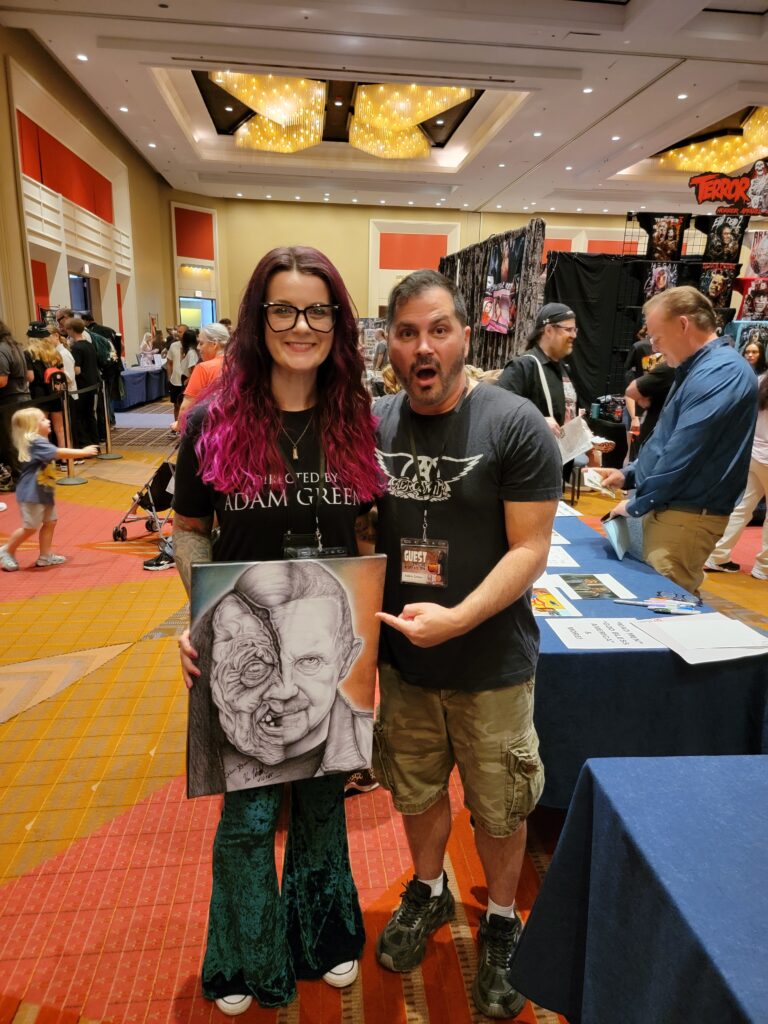
At Women in Arts Network, we’ve featured a lot of quiet, contemplative work for Faces. Portraits that ask you to lean in and sit with something heavy. And that’s powerful. But every exhibition needs the artist who kicks the door open and reminds you that a face can also hold wildness and wonder and the kind of creative confidence that refuses to dim itself for anyone.
Nicole Garcia is that artist. And we’re so glad she’s here.
Nicole is a selected artist for the Faces exhibition and honestly describing her work in one paragraph is like trying to put a costume on a cat, technically possible but you’re going to lose something in the process.
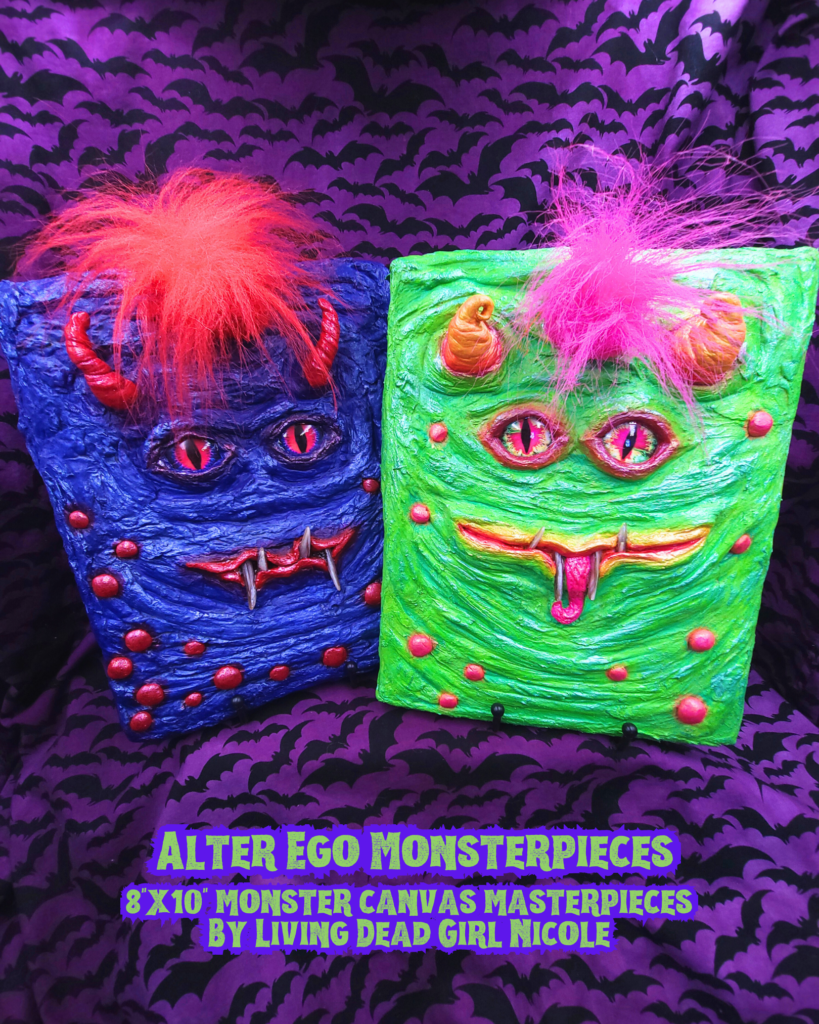
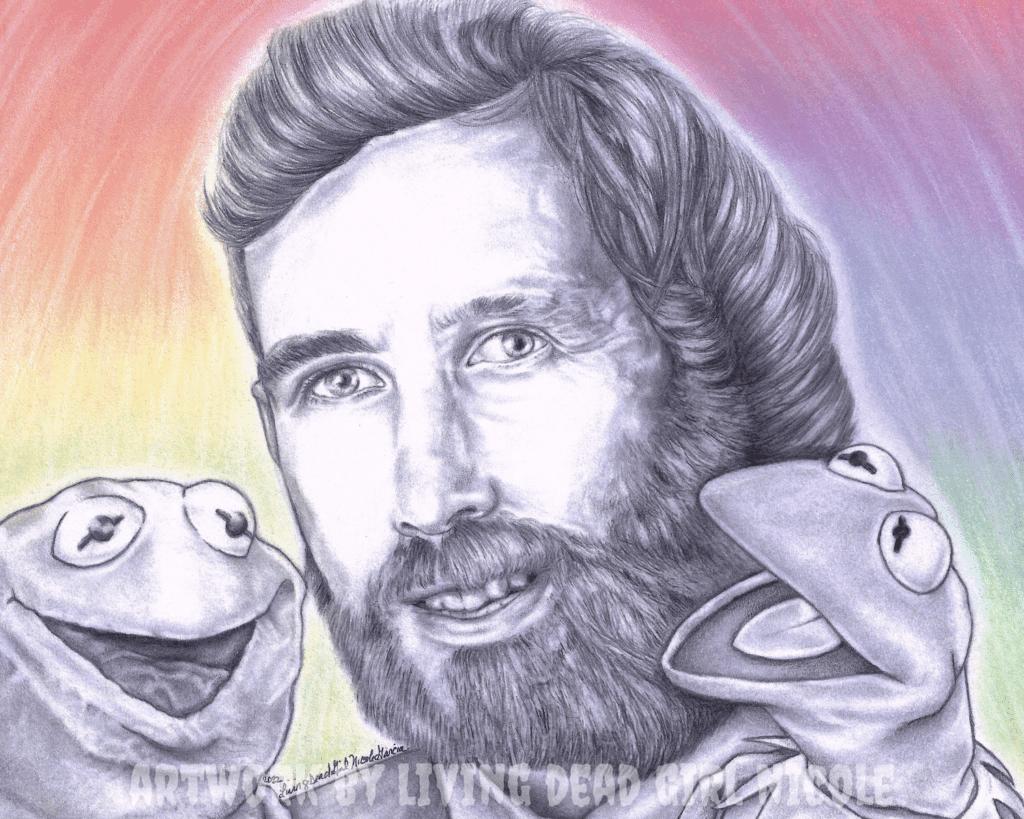
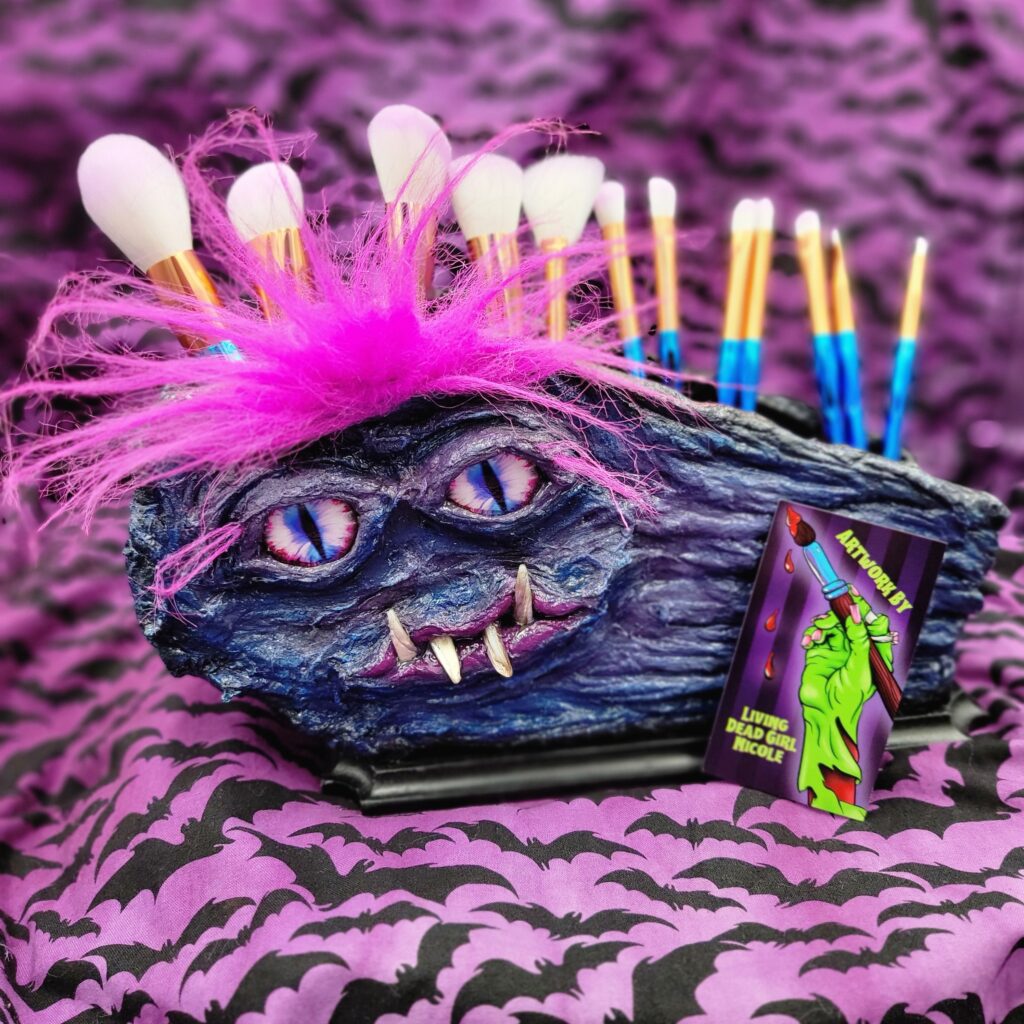
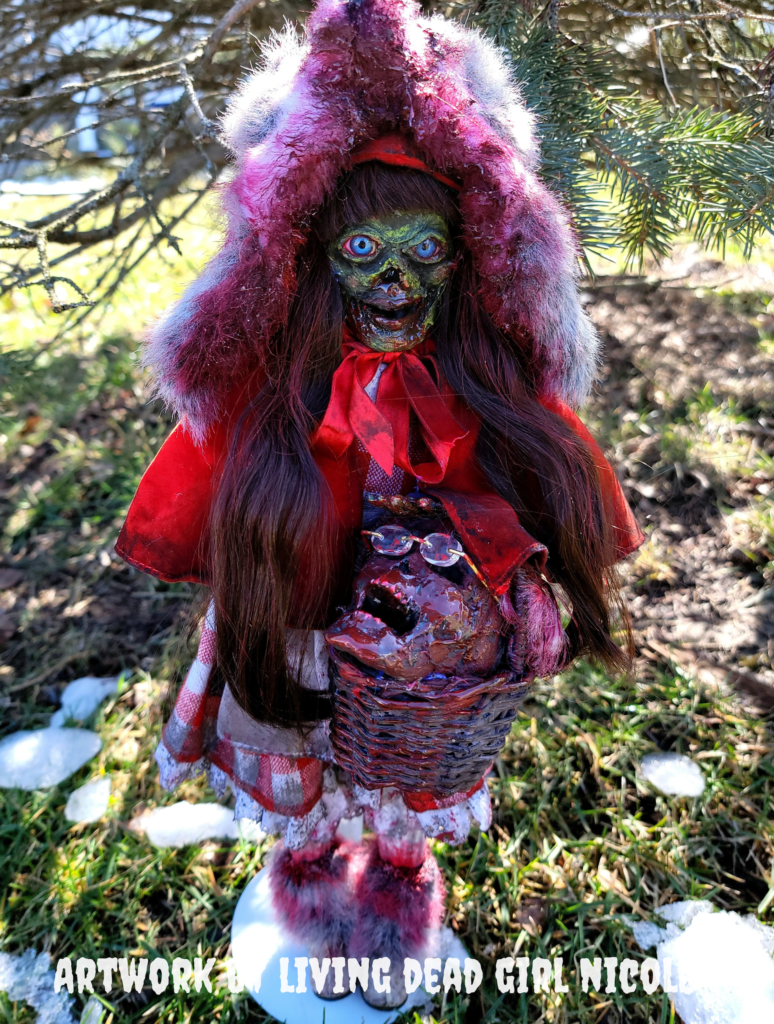
She makes portrait drawings and mixed media pieces and wearable dark accessories and creepy handmade creatures and every single thing she creates comes from the same place, this beautiful chaotic intersection of gothic and whimsy where Elvira meets Jem and nobody has to choose between darkness and glitter.
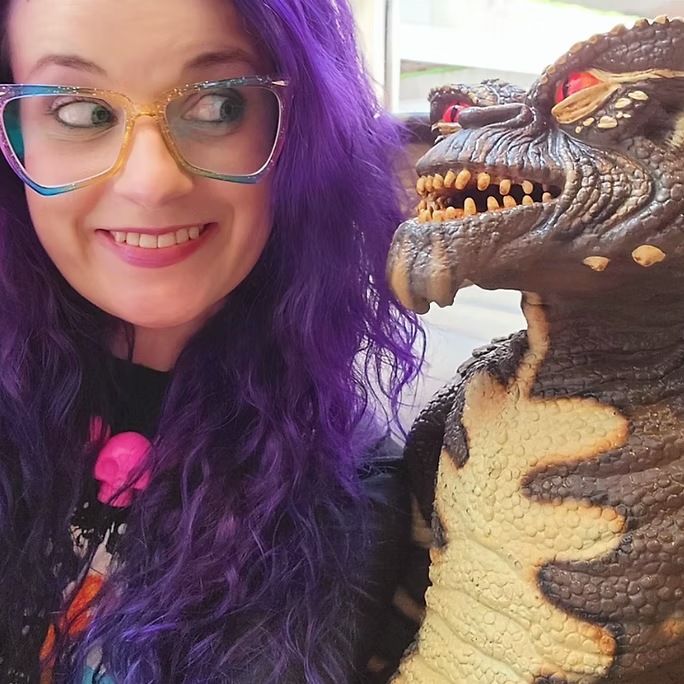
She works across as many mediums as the idea demands. Never one lane. Never one look. When something needs to exist she figures out what materials can make it real and then she dives in headfirst, problem-solving and experimenting and making a glorious mess until the thing comes alive.
She’s quoted David Bowie as a mantra, about going further into the water than you feel capable of, and you can feel that fearlessness in everything she touches.
Her world is built on the strange, the unusual, and the macabre and she’s been living in it since childhood. She grew up dreaming about Labyrinth and The Dark Crystal and Beetlejuice and wishing Edward Scissorhands would come give her a funky haircut. While other girls were becoming ballerinas she was dressing up as Elvira for Halloween in second grade. These weren’t just childhood obsessions. They were the foundation of everything she is now, a self-described whimsical goth weirdo who creates from a place of total authenticity and absolute zero apology.
Art found her early. Colouring books that she turned into vibrant worlds. Contests she entered obsessively. A clown she coloured in a newspaper that won her circus tickets and the first taste of being seen for what she could create.
Her father, also an artist, was her first teacher. Gave her Prismacolor pencils when she was still a kid. Taught her that mistakes in art aren’t failures, they’re invitations to make something better than what you planned. She still keeps her childhood trophies and that newspaper clown in her creative space. They remind her of the little girl who dreamed all of this up in the first place.
There’s a moment in her story that says everything about who she is. A school art teacher once told her to remove a character from a piece before an exhibition because the judges might not like it. Every fibre in her said no.
She kept it. The piece won the show. And the judges told her afterwards that the part she was asked to remove was the part they loved most. She still has that piece hanging in her studio as a reminder to never compromise the vision.
Now let’s hear from Nicole, about Elvira and Jem and the beautiful mess between them, about the clown that started everything, about the teacher who said take it out and the little girl who said no, and why the strangest thing in the room is usually the truest.
Q1. Can you share how your early experiences growing up drawing, winning contests, and experimenting creatively shaped your confidence as an artist?
From the time I could pick up a crayon, I felt destined to add some sort of magic to the world. The plain black and white pages of coloring books always stirred something in me. I loved that I could transform them into vibrant worlds of my own. Even before I understood what art was, I knew it gave me a sense of control, expression, and joy. That feeling deepened when I realized my creativity could be recognized by others. Discovering that I could actually win something just by doing something I loved blew my mind, and I became almost obsessive about entering coloring contests. The moment that stands out most was coloring a clown in our local newspaper and winning tickets to the circus. Being pulled into the ring and announced as a winner made me feel seen in a way I never had before. Walking away with that glitter filled baton as my prize planted the first real seed of confidence in me. As I grew older, that confidence continued to build. My art was featured in school newsletters and hallway displays, and I began receiving trophies from community PTA art shows. I still display those trophies in my creative space, and thanks to my dad for preserving it, I also still have that newspaper clown picture. They remind me of the passion and dreams I had as a little girl and motivate me to never give up on her.
Q2. Your father played a formative role in nurturing your creativity. How did his influence both technically and personally continue to inform your work now?
I owe a lot of my artistic curiosity to my dad, who is also an artist and was my first inspiration and teacher. Growing up, he encouraged me to experiment, taught me techniques, and showed me the joy of exploring new horizons. I always loved getting his hand-me-down art supplies. When other kids were coloring with Crayola colored pencils, I was using Prismacolor and never looked back. Those early lessons pushed me to try materials I never imagined using. Who knew that white-out could create highlights or even stars in the night sky. I have always thought about how incredibly talented he is, how he can work in so many different mediums and move effortlessly from realism to cartoons. When he gives me feedback on my work and is genuinely blown away by it, it is a definite confidence booster. He also taught me that a mistake is not the end of an art piece. Sometimes it is almost like fate, challenging your creativity and asking, “How can I fix this?” Those moments often lead to transformation and sometimes to something even more extraordinary than I originally envisioned. His guidance not only shaped how I approach art technically but also gave me the confidence to take risks, trust my instincts, and embrace the unexpected in my work today.
Q3. Your fascination with the strange, unusual, and macabre comes through in both subject and mood. What artists, films, or cultural figures most deeply shaped that sensibility in you, and why?
Being a kid of the 80s and a teen of the 90s, I was lucky to grow up surrounded by authentic originality in pop culture, long before the era of reboots. Fantasy and art have always been my way of escaping the darkness of the real world, and it was only a matter of time before they collided. I would dream about the day my “I Wish” would call on Jareth to take me away to his castle beyond the Goblin City or Aughra would call on me to help the gelflings save the crystal shard. When I wasn’t writing letters to Pee Wee in hopes he would invite me to his Playhouse in Puppetland, you could find me playing with my Jem dolls, searching for Fraggles or hiding in my room reciting Beetlejuice’s name three times in hopes he would appear and take me to the Netherworld. I even imagined what it would be like to have Edward come to live with me so he could give me a funky haircut and teach me how to trim bushes into animals. When my friends all started to get into dance and become ballerinas (I tried it and hated it) all I wanted was to be like the cardboard cutout of Elvira that my Dad had in the basement. So much so that I dressed up like her for Halloween in the 2nd grade. These childhood obsessions I carry with me to this day weren’t just fun; they sparked my imagination and gave me permission to love the strange, the unusual, and the macabre, setting the foundation not only for what I create but also transforming me into whimsical goth weirdo I am today.
Q4. You alter egos include both Elvira and Jem, two very different icons. What do these identities represent to you as an artist, and do they influence specific creative decisions?
As kids we always have fun idols we want to be like. For me, that was Elvira and Jem. Despite being so different, I was always intrigued by both of them. I loved how Elvira made friends with monsters, was dark and mysterious, and had that unforgettable mix of sex appeal and personality. At the same time, I adored how Jem and her bandmates and rivals didn’t look like everyone else, rocking out with their brightly colored hair and flashy neon clothes. Elvira taught me to embrace the dark, the unusual, and the macabre with confidence, humor, and a splash of dagger blood. Jem showed me the power of bold color, individuality, and self-expression with a dash of glitter. Together, they still influence me by encouraging me to blend contrasting elements…gothic meets whimsy, dark meets playful, strange meets sparkle. Loving two such different icons growing up also reminds me as both an artist and a person that I don’t have to fit into one category. I can explore multiple styles, moods, and aesthetics and, in doing so, make work that is unmistakably mine.
Q5. You work across a wide range of mediums, from portrait drawing to wearable Dead Girl Decay accessories and creepy corpsified creations. How do you decide which medium best suits a particular idea or mood?
Each piece I create is its own creature, born from the chaotic corners of my curious brain where the whimsical and the macabre are best friends. Because of that, I have never lived in just one lane as an artist, and everything I make fulfills me. I work across multiple mediums not to be everything at once, but because that is how my creativity naturally shows up. When I get an idea, I ask myself, ‘What materials can bring this to life?’ When I am unsure if I can accomplish a project, my brain goes into David Bowie mode, repeating his words like a mantra: ‘Always go a little further into the water than you feel you are capable of being in. Go a little bit out of your depth. And when you do not feel that your feet are quite touching the bottom, you are just about in the right place to do something exciting.’ Through commission work, my artistic blood really starts flowing. I thrive on the process of exploration, obsessively problem-solving, and letting myself make a mess until it works. Bringing someone else’s vision to life challenges me, pushes my creativity further, and fuels the excitement that keeps me making. Every commission is an adventure, and navigating it while staying true to my own style is endlessly rewarding.
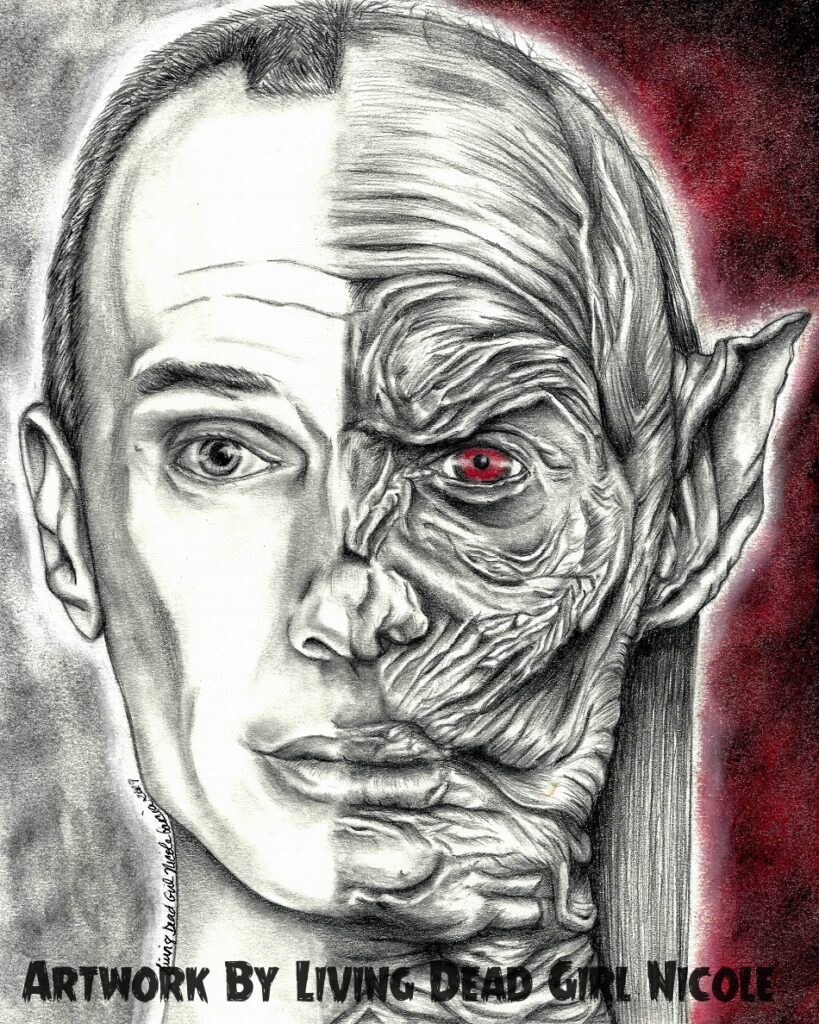
Q6. Early in school, you challenged a teacher’s suggestion to remove a character from your work and were later honoured for it. How has holding onto your vision even when questioned shaped your creative confidence over the years?
Being asked by my art teacher to alter my work because judges at an exhibition might not like a particular element was a life lesson I faced as a young artist. I was at a crossroads. Here was a mentor who had been creating art her whole life, giving advice on what would be best for the show, but every fiber of my being said no, that was not the vision I had for this piece. I knew I risked not placing in the show, but I chose to take that risk anyway. Needless to say, it not only won the show, but some of the judges came up to me after the award ceremony to tell me how much they loved the various elements of the piece and how each part became more intriguing the longer they looked at it, including the part my teacher had suggested I remove. That day, I learned that art has never really been about winning, but most importantly it’s about expressing. I still have that award-winning piece hanging in my creative space as a reminder that no matter who questions the subject matter of my work to always stay true to myself and my visions as an artist.
Q7. You describe adulthood ironically as a “trap” and encourage kids not to grow up. How do you think retaining playfulness, curiosity, or childlike imagination serves your work today?
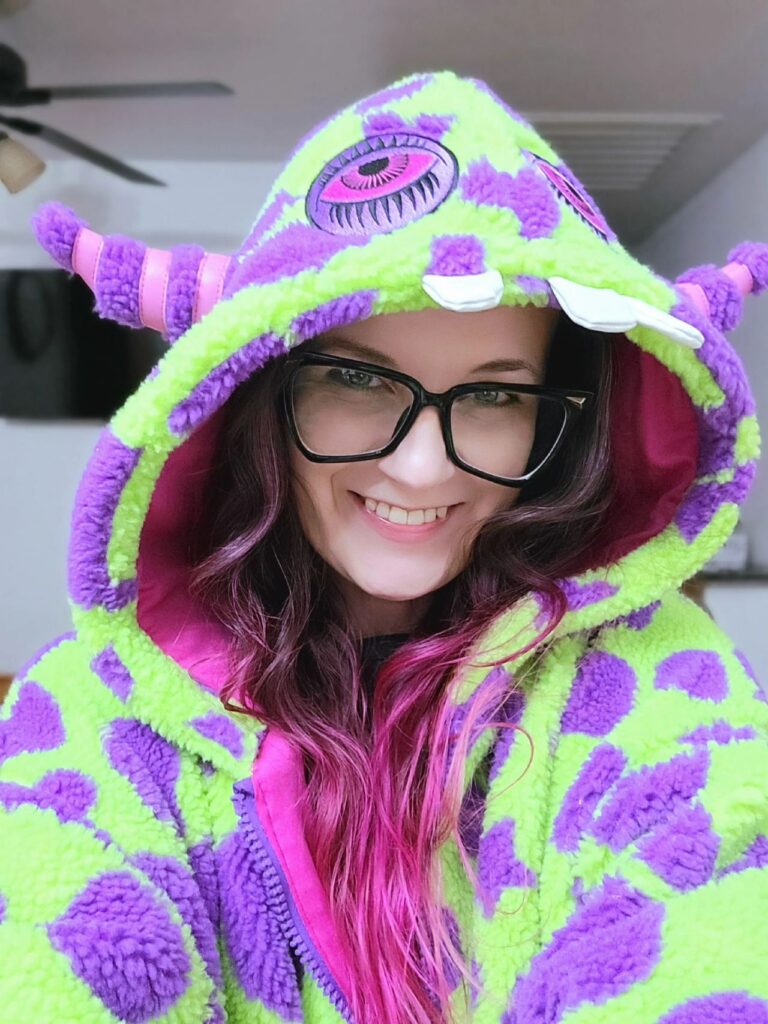
As we get older, it’s easy to get wrapped up in life and lose the whimsy we had as children. We can get sucked into negativity, societal expectations, and the idea that we have to become “boring, plain Jane” adults. But who says that has to be true? Yes, it is important to take care of responsibilities, but it is just as important to do what makes you happy. If that means putting on my furry monster costume hoodie that no one my age would ever get caught wearing, getting a tattoo of Maurice from Little Monsters, or still coloring my hair some funky shade when I am seventy, then no one is going to stop me from doing it. I believe wholeheartedly that the more freedom you give yourself to be who you truly are, the more freedom you have to express yourself fully in your work.
Q8. How has your own understanding of “strangeness” or “unusual beauty” evolved from the time you were first drawing owls and colours to where you are now as a professional artist?
The owl drawing you are referring to was from fifth grade. We were assigned to draw birds for a class project, and all of the artwork was hung in the hall for parent-teacher conference night. Although everyone drew beautiful, colorful birds, my barn owl in mid-flight catching a mouse for dinner seemed to get the most attention. It taught me that art and beauty do not have to fit into a box but and when expressing that it can truly be impactful. Looking back I realize that based on what I was going through at the time, it was really no surprise that I naturally chose the subject that I did. My mom, who had passed away the year before, loved owls. As a single mom, she had done everything in her power to take care of my brother and I while bravely fighting breast cancer. To others, seeing it amongst all the other colorful bird drawings may have seemed like a strange choice for a fifth grader, but for me it was the truest expression of the birds unique character. That experience taught me that following your instincts, even if it feels unusual or unexpected to others, is where true creativity comes from. I still carry that belief with me today, approaching my work with curiosity and a willingness to explore ideas that may feel unconventional or strange, trusting that those choices are often what give a piece its most memorable and authentic impact.
Q9. What advice would you give to artists who feel drawn to unconventional and macabre themes, especially when others around them may not immediately understand or appreciate their aesthetic?
It’s also important to remember that creating art isn’t about pleasing everyone. It’s about expressing what fascinates, inspires, or moves you. Find your people, whether it’s a community of like-minded artists, fans, or mentors who appreciate the strange and the beautiful in their own way. Let that encouragement fuel your confidence. Most of all, have fun with it. The more you allow yourself to play, experiment, and take creative risks, the more your work will reflect your authentic self. The world needs your weird, your whimsical, your dark, and your strange… never dull your sparkle for anyone!
As our conversation with Nicole drew to a close, we kept thinking about that little girl colouring a clown in a newspaper and winning circus tickets and walking out of the ring with a glitter-filled baton thinking this is what I’m supposed to do.
She was right. She’s been right this whole time. And here’s what we want every person reading this to sit with. Nicole never stopped being that kid. She never let the world sand down her edges or convince her that strange wasn’t valuable or tell her that loving monsters and glitter at the same time was too much.
She dressed as Elvira in second grade and she’s still channelling that energy decades later. The only thing that changed is the tools got better and the work got deeper.
For anyone who’s ever been told they’re too weird, too dark, too much, too scattered, too obsessed with things nobody else understands, Nicole’s entire career is proof that those things aren’t flaws. They’re your foundation.
The stuff that made you strange as a kid is the stuff that makes your work unmistakably yours as an adult. And the moment you try to sand it off to fit in is the moment your art loses the only thing that made it alive.
She was once told by a teacher to remove the most interesting part of her work and she said no and won the show. That’s not just a good story. That’s a blueprint. Trust the vision. Keep the weird part. Never dull your sparkle for someone else’s comfort.
The world has enough safe, predictable, easily categorised art. What it needs is more artists like Nicole who show up covered in glitter and fake blood with a monster under one arm and a Prismacolor pencil behind their ear and make exactly the thing nobody asked for but everybody needed.
To follow Nicole’s journey and see more of her work, find her through the links below.
