
5 Portfolio Mistakes That Could Be Costing Artists Opportunities
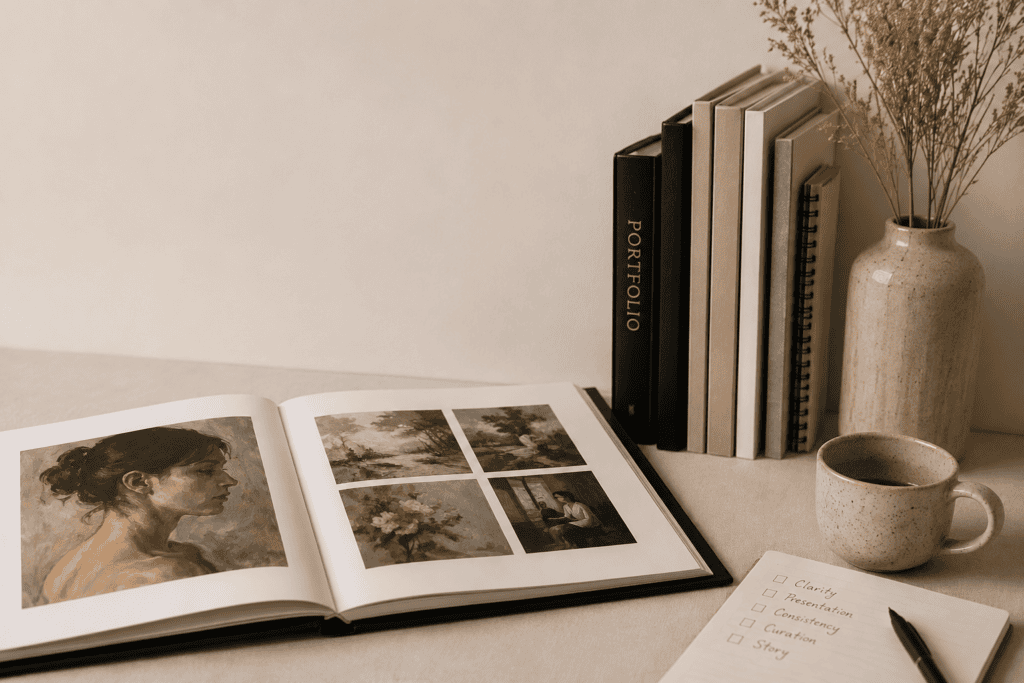
An artist’s portfolio often becomes the deciding factor long before anyone experiences their work in person. Whether you’re applying for a gallery exhibition, residency, grant, publication, open call, or an academic program, your portfolio is usually the first introduction to your practice. In many cases, reviewers spend only a few minutes looking through it before making a decision. During that short time, your portfolio needs to do more than just display beautiful artwork, it needs to communicate who you are as an artist, what your work is about, and why it deserves attention.
Yet this is where many artists unintentionally hold themselves back. Not because the work isn’t strong enough, but because the portfolio doesn’t represent it in the best possible way. A thoughtful, compelling body of work can lose its impact if it’s presented without direction, context, or intention. Sometimes it’s the inclusion of outdated pieces. Sometimes it’s confusing sequencing, too little information, or trying to fit every project into a single portfolio. None of these mistakes reflect an artist’s talent, but they can influence how that talent is perceived.
A strong portfolio doesn’t simply document what you’ve made, it guides the viewer through your artistic world. Every image, every caption, every page, and every decision should help someone understand your work more clearly and leave them wanting to see more. The goal isn’t to include everything you’ve ever created, but to present a focused, memorable body of work that reflects where your practice is today.
In this article, we’ll explore five portfolio mistakes that even talented artists commonly make, why they matter, and how you can avoid them. Whether you’re preparing for your first open call or refining a portfolio that’s been years in the making, these insights will help you present your work with greater clarity, confidence, and purpose.
Mistake #1: Treating Your Portfolio as an Archive Instead of a Narrative
One of the most common portfolio mistakes artists make is trying to include everything they have ever created. It often comes from a genuine desire to demonstrate experience, versatility, or artistic growth. After all, every piece represents hours of work, experimentation, and personal milestones, making it difficult to leave certain artworks behind.
Why It Matters
A portfolio is not meant to function as an archive of your entire creative journey. It is a carefully curated presentation of your artistic practice as it exists today. Curators, gallery directors, jurors, and collectors aren’t looking to see every project you’ve completed; they’re looking for a clear artistic voice and a cohesive body of work. They want to understand your ideas, your visual language, and the direction your practice is taking.
When a portfolio jumps between unrelated styles, subjects, or older experiments without a clear connection, it becomes harder for viewers to identify what makes your work unique. Instead of leaving with a strong impression of your artistic identity, they may come away feeling uncertain about your focus or direction.
How to Avoid It
Approach your portfolio like a curator rather than an archivist. Instead of asking, “What are all the artworks I’ve made?” ask yourself, “Which pieces best represent the artist I am today?”
Choose work that supports a consistent narrative, whether it’s connected through subject matter, themes, materials, concepts, or your visual approach. Every artwork should strengthen the overall story your portfolio is telling. If a piece is technically impressive but no longer reflects your current practice or feels disconnected from the rest of your work, it’s often better left out.
Remember, a focused portfolio is almost always more impactful than a comprehensive one. By carefully selecting work that communicates a clear artistic identity, you make it easier for reviewers to understand your practice—and far more likely to remember it.
Mistake #2: Holding On to Work That No Longer Represents You
Growth is a natural part of every artist’s journey, which is why it can be difficult to let go of older work. Some pieces represent important milestones, successful exhibitions, or the moment you discovered a new technique. Others simply carry sentimental value because they remind you of how far you’ve come.
Why It Matters
While some work may be meaningful to you, it doesn’t always belong in your portfolio. Reviewers are rarely evaluating your entire artistic history, they’re trying to understand your current practice. They want to see where your work is today, what ideas you’re exploring now, and how your artistic voice has evolved.
Including older pieces that no longer align with your present style, themes, or level of technical and conceptual development can unintentionally weaken your portfolio. Even if those works were once among your strongest, they may interrupt the flow of your portfolio or create the impression that your practice lacks consistency. Rather than highlighting your growth, they can distract from the quality and confidence of your current body of work.
How to Avoid It
Review your portfolio with fresh eyes and ask yourself a simple question: If I created this artwork today, would I still choose to include it? If the answer is no, it may be time to let it go.
Focus on selecting work that reflects your current artistic identity rather than every stage of your development. Look for pieces that share common themes, visual language, or conceptual interests, and allow them to speak collectively about who you are as an artist today.
If you want to demonstrate artistic growth, consider doing so in your biography, CV, or artist statement instead of relying on older work. Your portfolio should present a clear, confident snapshot of your practice as it exists now, not a timeline of everything you’ve accomplished.
Mistake #3: Relying on Images Without Explaining Your Ideas
A strong portfolio should always let the artwork take center stage, but that doesn’t mean the images have to do all the talking on their own. While compelling visuals capture attention, they don’t always communicate the ideas, research, or intentions that shaped the work. Reviewers can appreciate what they’re seeing, but without enough context, they may never fully understand why the work exists or what makes it meaningful.
Why It Matters
This is especially important for artists whose practice is rooted in conceptual thinking, personal narratives, cultural research, or process-driven exploration. A photograph can show the finished artwork, but it can’t always convey the questions you were investigating, the materials you intentionally selected, or the themes running through an entire body of work. Without that information, even thoughtful and layered work can be interpreted as purely decorative or visually appealing rather than intellectually engaging.
That doesn’t mean every artwork needs a lengthy explanation. In fact, overexplaining can have the opposite effect. The goal is to provide just enough context through concise captions, project descriptions, or an artist statement so that viewers can connect the visual experience with the ideas behind it.
How to Avoid It
Think about what someone encountering your work for the very first time would need to understand it. Include clear titles, dates, dimensions, and materials where appropriate, but also consider adding a brief description when it helps explain the concept, inspiration, or research behind a series.
Rather than explaining every detail of every artwork, focus on giving reviewers a way into your practice. Let the images create curiosity while your supporting text provides the framework that helps viewers engage more deeply with your ideas.
The strongest portfolios strike a balance between showing and telling. Your artwork should invite attention, while the accompanying context should enrich the experience, not overshadow it.
Mistake #4: Hiding the Process and Showing Only Finished Outcomes
It’s natural to assume that a portfolio should only feature polished, finished artworks. After all, these are the pieces you’re most proud of and the ones you want others to remember. But for many opportunities, particularly grants, residencies, publications, fellowships, and contemporary art programs, the finished artwork is only part of the story.
Why It Matters
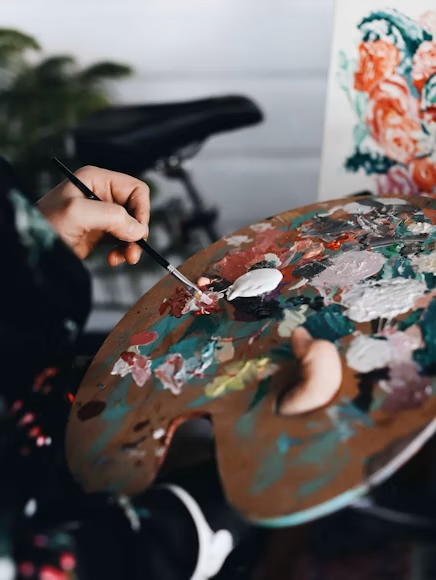
Reviewers are often just as interested in how you think as they are in what you create. They want to see evidence of experimentation, research, problem-solving, and the evolution of your ideas. Sketches, preparatory studies, material tests, installation views, process photographs, or documentation of works in progress can all offer valuable insight into your creative practice. They reveal the decisions, revisions, and exploration that aren’t always visible in the final piece.
When a portfolio only presents finished outcomes, it can unintentionally flatten your practice. Work that is deeply researched and conceptually rich may appear simpler than it really is because the thinking behind it remains hidden. As a result, reviewers may overlook the depth, rigor, and intention that distinguish your work.
How to Avoid It
Consider whether your portfolio would benefit from showing more than the finished result. If your practice involves research, experimentation, installation, or an evolving creative process, include selected documentation that helps illustrate how your ideas develop over time.
This doesn’t mean filling your portfolio with every sketch or studio photograph. Instead, choose process materials that genuinely strengthen the narrative of your work and provide meaningful insight into your practice. A few well-chosen images or brief project descriptions can often communicate far more than pages of finished artworks alone.
A portfolio should showcase not only what you create, but also the curiosity, investigation, and creative thinking that make your work uniquely yours.
Mistake #5: Designing the Portfolio for Yourself Instead of a First-Time Viewer
As the artist, you know every detail behind your work. You remember the ideas that inspired a series, the challenges you faced during its creation, and the connections between individual pieces. But the people reviewing your portfolio don’t have that same familiarity. They’re encountering your work for the very first time, often with limited time to understand it.
Why It Matters
This is where many portfolios unintentionally create barriers. Missing captions, inconsistent formatting, unclear sequencing, or the assumption that viewers already understand the context can leave reviewers confused rather than engaged. Instead of appreciating your work, they find themselves trying to figure out what they’re looking at, how different pieces relate to one another, or why certain works have been included.
A strong portfolio should never feel like a puzzle that needs solving. Every unnecessary point of confusion takes attention away from the artwork itself. When reviewers have to spend valuable time navigating a disorganized portfolio or searching for basic information, they have less time to connect with your ideas, making the overall experience less memorable and impactful.
How to Avoid It
Review your portfolio from the perspective of someone seeing your work for the very first time. Is the sequence logical? Are the captions clear and consistent? Can someone quickly understand the medium, dimensions, dates, and the relationship between different projects or series?
Pay attention to the overall viewing experience. Use a clean, consistent layout, organize your work with intention, and include only the information that helps viewers engage with your practice. Every design choice, from the order of the artworks to the formatting of the text, should guide the viewer naturally through your portfolio rather than distract from it.
A well-designed portfolio doesn’t draw attention to itself; it creates a seamless experience where the artwork remains the focus. The easier you make it for someone to understand your practice, the more likely they are to remember your work long after they’ve closed your portfolio.
The Difference a Strong Portfolio Can Make
A great portfolio isn’t about proving how much you’ve created, it’s about helping someone understand the artist behind the work. Every image, every caption, every page, and every decision contributes to the impression you leave on the person reviewing it. While technical skill and creativity are essential, the way you present your work can be just as influential in determining whether someone chooses to continue the conversation, invite you to exhibit, or shortlist your application.
The good news is that none of these mistakes are permanent. In fact, they’re incredibly common, and they’re often made by talented artists at every stage of their careers. Building a strong portfolio isn’t about achieving perfection; it’s about making thoughtful choices. Curating with intention, refining your selection, providing meaningful context, and considering the viewer’s experience can transform the way your work is perceived without changing the artwork itself.
It’s also worth remembering that your portfolio isn’t a static document. As your practice evolves, so should the way you present it. Revisiting your portfolio regularly allows you to remove work that no longer reflects your direction, strengthen the narrative you’re building, and ensure it continues to represent your artistic voice with clarity and confidence.
Let Your Portfolio Tell the Right Story
At its best, a portfolio doesn’t simply showcase finished artworks, it tells the story of an artist in motion. It reveals your ideas, your curiosity, your process, and the unique perspective that shapes everything you create. When those elements come together, your portfolio becomes more than a collection of images; it becomes a compelling introduction to your practice and an invitation for others to engage with your work more deeply.
So before you submit your next application, take one more look at your portfolio, not as the artist who created it, but as someone seeing your work for the very first time.
Which of these five mistakes might be holding it back? And more importantly, what small changes could help your portfolio tell a stronger, more memorable story?
