
Why Poppy Field’s Bronze Sculptures Are Worth a Closer Look
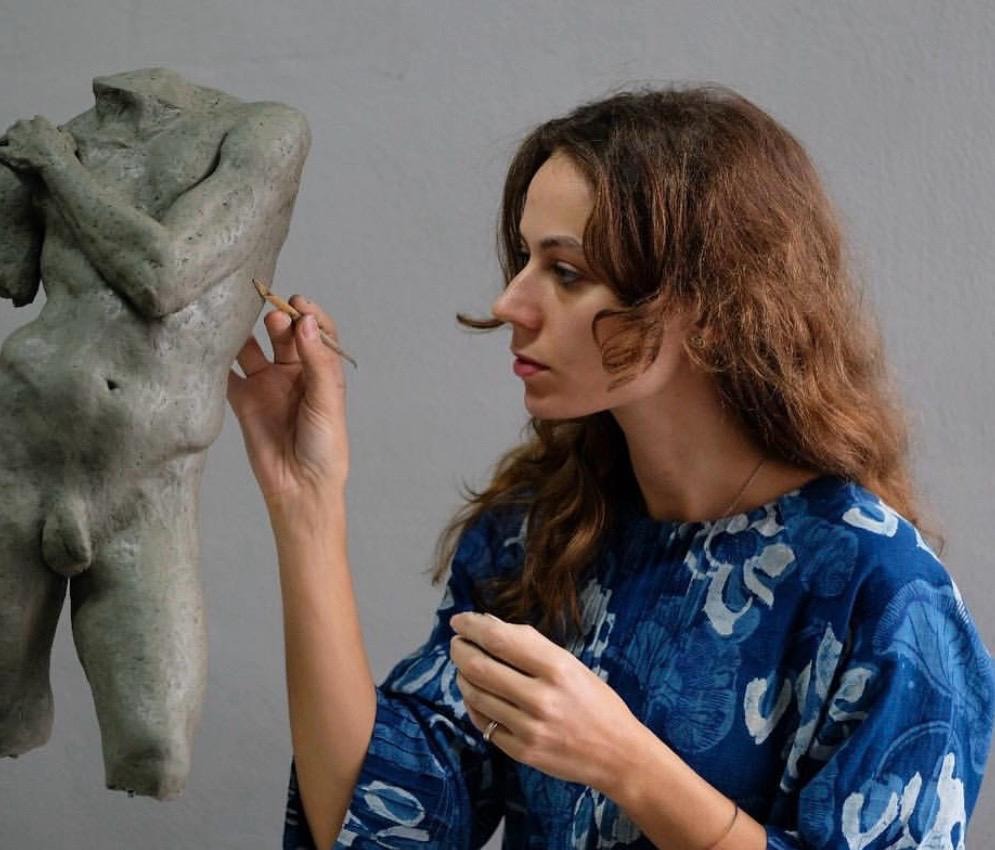
Some sculptures impress you technically. Others stay with you emotionally. The work of Poppy Field somehow manages to do both at once.
Her sculptures feel classically beautiful. The anatomy is carefully observed, and the surfaces carry extraordinary sensitivity. The longer you sit with her work, the more something else begins to emerge beneath the technical precision.
Presence. Not simply the presence of a body, but the feeling of a person existing within it. There is tenderness in the way she sculpts posture. Stillness in the way expressions settle quietly across a face. Even her monumental public works feel deeply human rather than distant or ceremonial. Her figures do not appear frozen in perfection. They feel emotionally inhabited.
For her, sculpture seems less about recreating appearances and more about preserving something fragile and invisible: memory, emotion, identity, grief, vulnerability, and the quiet psychological atmosphere that exists around people long before words do.
“Stories and bodies have always seemed intertwined to me”
she writes in her artist statement, describing her attempt to capture “presence” and “soul” through sculpture.
That emotional sensitivity runs through everything she creates. In an art world that often celebrates spectacle and speed, Poppy’s work quietly reminds us that the most powerful art does not always ask to be noticed immediately. Sometimes, it simply asks us to stay a little longer.
Who Is Poppy Field?
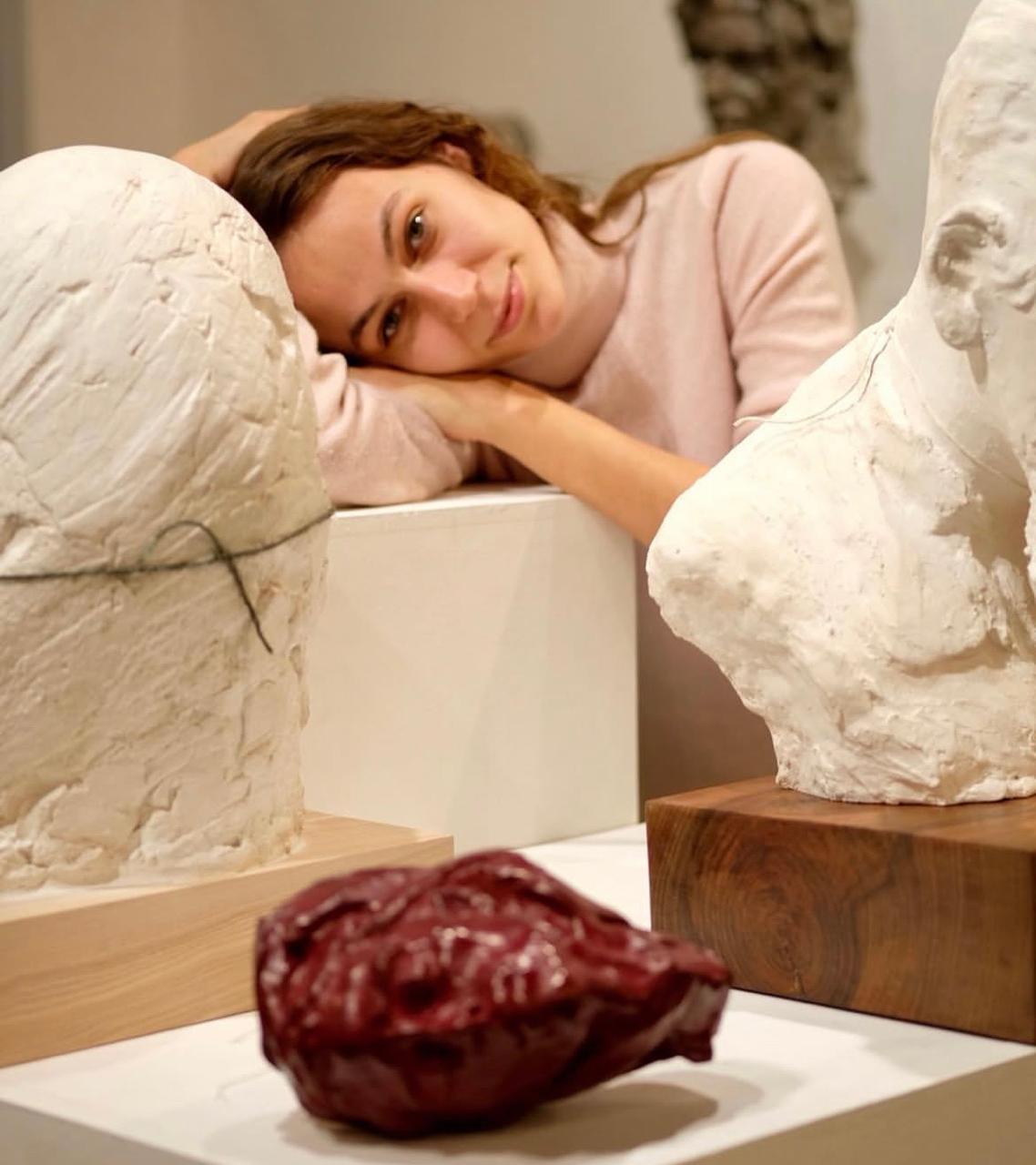
Poppy Field is a London-based figurative sculptor whose work explores the emotional relationship between the human body, memory, and identity. Trained at both The Courtauld Institute of Art and The Florence Academy of Art, she combines classical sculptural discipline with an unusually sensitive and psychological approach to portraiture. Her sculptures often feel less like static objects and more like preserved moments of human presence.
Over the years, Poppy has built a career rooted in observation and emotional honesty. From intimate portraits to monumental public commissions, her work consistently focuses on capturing what she describes as a person’s “essence” or “soul” rather than a simple physical resemblance. Her sculptures have a quiet stillness that invites viewers to slow down and emotionally connect with the work.
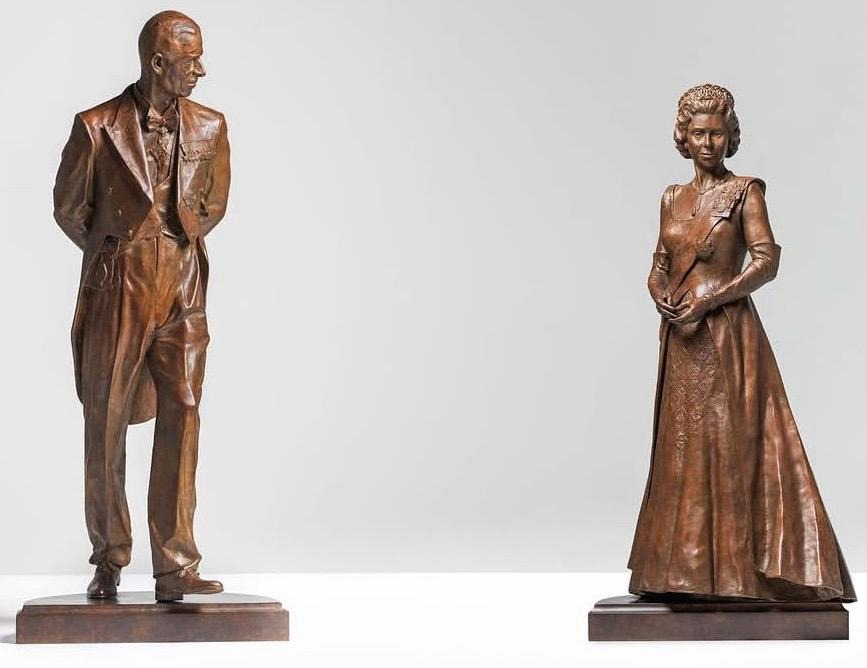
In 2023, her career reached an important milestone when her bronze monuments of Queen Elizabeth II and Prince Philip were permanently installed on the façade of London’s Royal Albert Hall, bringing international attention to her work. Alongside her studio practice, she has continued teaching, lecturing, and contributing to conversations about figurative sculpture and contemporary portraiture.
How Poppy Field Found Sculpture
Long before her sculptures gained international recognition, Poppy’s relationship with art was already shaped by curiosity, history, and close observation.
She first studied History of Art at The Courtauld Institute of Art before later training in sculpture at The Florence Academy of Art, where she specialized in advanced figurative sculpture and received the Graduate in Residence Prize.
That educational journey feels important when looking at her work today.
There is, of course, the technical discipline that comes from years of anatomical study, structural understanding, and sculptural practice. Every sculpture reflects a deep knowledge of form. But there is also something more reflective beneath the surface. Her work feels shaped by someone who has spent just as much time studying people as studying sculpture.
At the Florence Academy, she immersed herself not only in making sculpture but also in art history, lectures, research, and teaching. She delivered talks on artists including Camille Claudel, Benvenuto Cellini, and Michelangelo, exploring not simply how great artists worked, but why their creations continue to resonate emotionally centuries later.
What makes a sculpture remain emotionally alive long after it is finished? What allows clay or bronze to carry vulnerability? What transforms an object into something unmistakably human?
Poppy’s work seems to search for those answers again and again.
From Clay to Bronze: Poppy Field’s Sculptural Process
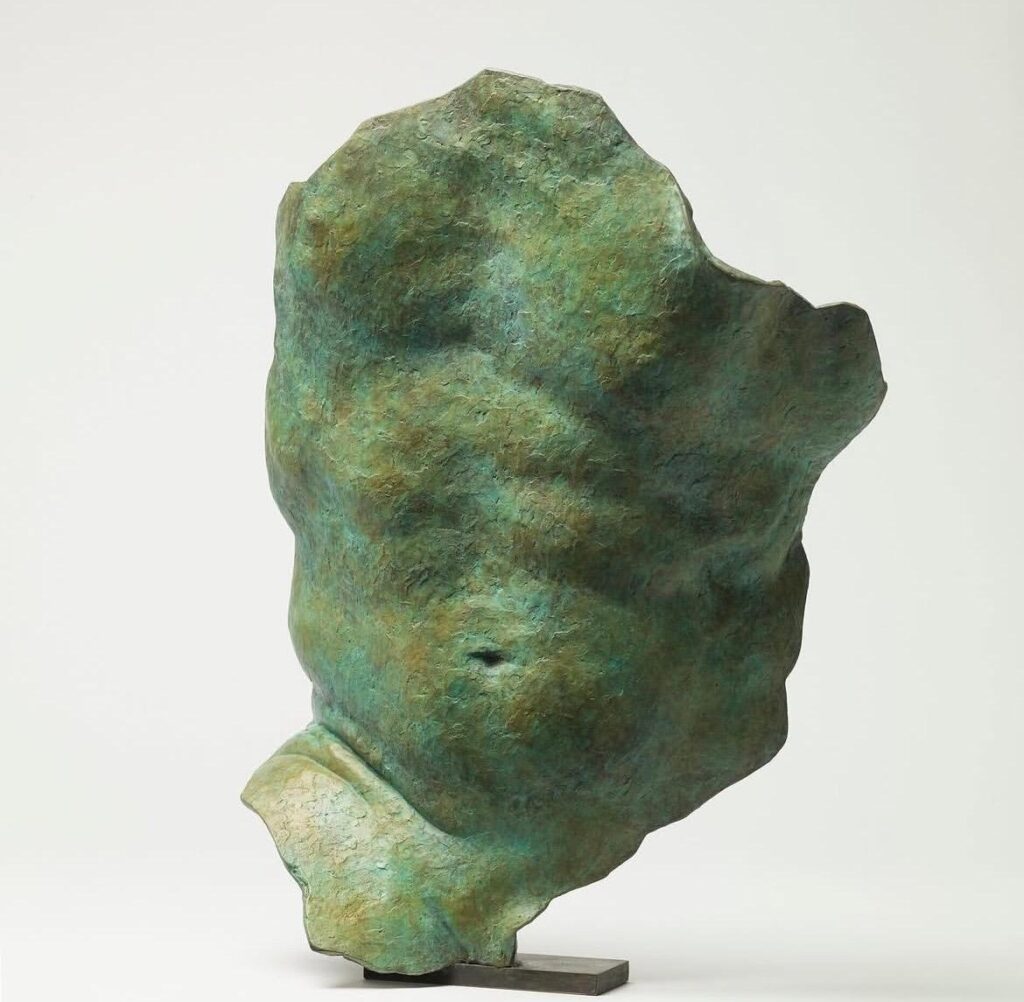
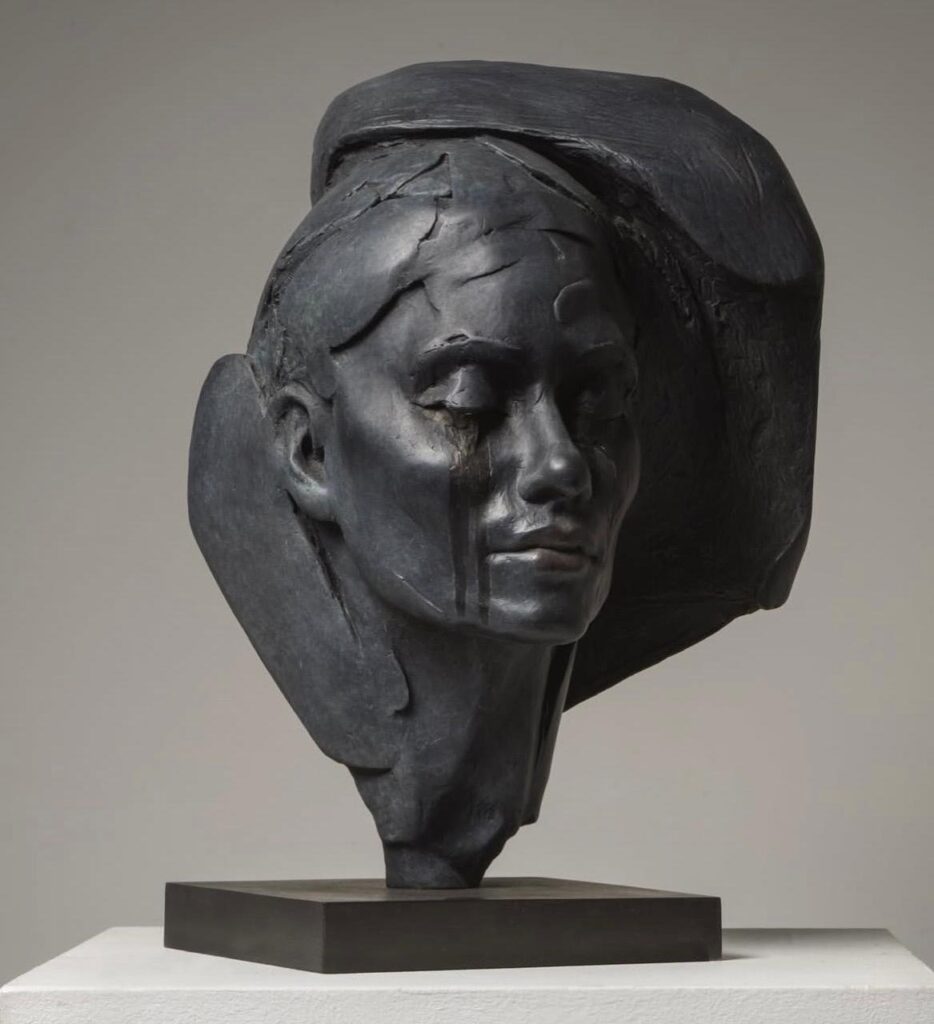
One of the defining aspects of Poppy Field’s practice is her deep understanding of sculptural materials. Like many figurative sculptors, she models her original work in clay, a medium that allows ideas to evolve gradually through touch, observation, and continuous refinement. Unlike stone or wood, clay remains flexible throughout the creative process, giving artists the freedom to adjust proportions, expressions, and gestures until the sculpture feels emotionally complete.
Once a clay model is finished, it often becomes the foundation for a bronze sculpture through the traditional lost-wax casting process. Bronze has been one of the most respected sculptural materials for centuries because of its strength, permanence, and ability to preserve even the finest surface details. It allows sculptures to withstand time while retaining the subtle textures and marks left by the artist’s hands.
After modelling the original works in clay, Poppy collaborates with specialist mould-makers and bronze foundries during casting. Each material serves a different purpose, but together they allow her to transform an initial idea into a finished sculpture that can exist for generations. Whether working in clay, plaster, or bronze, her focus remains the same: using the material not simply to recreate the human form, but to communicate emotion, memory, and presence.
How Poppy Field Brings Sculpture to Life
Choosing sculpture is, in many ways, choosing one of the most demanding paths an artist can take.
Unlike painting or drawing, sculpture asks artists to think in three dimensions from the very beginning. Every angle matters. Every proportion must hold together from every viewpoint. Before a finished bronze sculpture ever exists, it often begins as clay, a material that is wonderfully expressive but equally unforgiving.
Clay must be built patiently.
Forms collapse. Measurements shift. Details disappear as quickly as they are made. A sculpture passes through awkward, unfinished stages before finally becoming coherent. It is a slow conversation between the artist and the material, one that cannot be rushed without consequence.
Figurative sculpture presents an even greater challenge.
The human body is one of the most complex subjects in art. People instinctively recognize when anatomy feels unnatural or when an expression lacks emotional truth, even if they cannot explain why. Capturing a believable figure requires much more than technical precision. It demands observation, empathy, patience, and an understanding of human psychology. These are qualities that cannot be learned overnight.
Her sculptures never feel rushed. They carry the quiet confidence of work that has been carefully observed, reconsidered, and refined. Rather than chasing perfection, she embraces subtle asymmetries, softened gestures, and traces of touch that remind us a real human hand shaped the work.
Those details are easy to overlook. Yet they are often what make her sculptures feel so remarkably alive.
The Emotional Depth of Poppy Field’s Sculptures
Many artists can recreate a face with remarkable accuracy. Far fewer can recreate the feeling of a person. This is where Poppy Field’s work becomes truly distinctive.
Her portraiture moves beyond resemblance into psychological presence. The sculptures do not simply document how someone looks. They attempt to preserve something internal and fleeting, something that cannot easily be measured but can only be deeply felt. That is an incredibly difficult thing to achieve.
Especially because emotional truth in art often exists through restraint rather than exaggeration. Poppy understands this beautifully.
Her figures are rarely theatrical or overly dramatic. Instead, emotion emerges through posture, atmosphere, expression, and gesture. Rather than telling viewers exactly what to feel, the sculptures leave room for quiet interpretation, allowing each person to bring their own memories and emotions into the experience. That subtlety is exactly why her work lingers in memory.
There is also an intimacy within her process itself. According to her studio writings, she approaches sculpture almost like an act of listening, gradually building each form through observation, conversation, and emotional understanding. That approach feels deeply human.
Especially at a time when so much visual culture has become filtered, polished, and emotionally flattened by algorithms and constant performance. Poppy’s sculptures still feel touched by real hands. They still carry emotional texture. They still feel alive.
The Royal Albert Hall Commission
Every artist has moments that mark a turning point in their career.
For Poppy Field, one of those moments came in 2023 when her bronze statues of Queen Elizabeth II and Prince Philip were permanently installed on the South Porch façade of London’s Royal Albert Hall.
It was an extraordinary commission.
Not only because of its scale and visibility, but because public monuments carry an immense responsibility. They become part of a city’s landscape and, over time, part of its collective memory. Long after headlines fade and generations pass, these sculptures remain, shaping how people remember the individuals they represent. For any sculptor, that is an enormous challenge.
What makes Poppy’s achievement especially remarkable is the emotional sensitivity she brought to the commission itself. Rather than creating distant ceremonial figures, she preserved a sense of warmth and humanity within the sculptures. There is dignity in the monuments, certainly, but also softness. Presence. Emotional restraint. They feel less like symbols carved in bronze and more like people remembered with care.
The commission became a defining milestone in her career, earning international recognition and coverage from publications including BBC News, Vanity Fair, and Sky News. Yet despite receiving global attention, the qualities that first defined her work remained unchanged.
The intimacy never disappeared. The careful observation remained. The emotional sensitivity continued to shape every sculpture she created.
That consistency says something important about the kind of artist she is. Recognition may have expanded the audience for her work, but it never changed the heart of it.
Beyond the Studio: Co-Authoring Drawing in Space
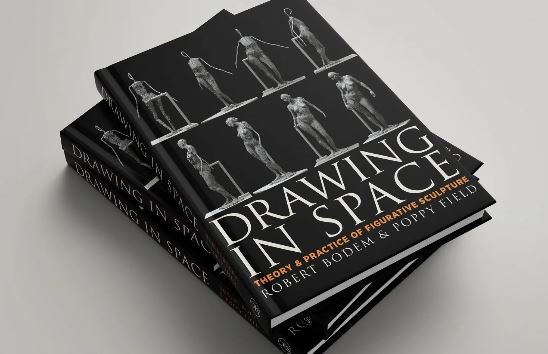
Alongside her sculptural practice, Poppy Field has expanded her contribution to contemporary figurative art through publishing. She recently co-authored Drawing in Space: Theory & Practice of Figurative Sculpture with Robert Bodem, a comprehensive studio guide dedicated to observing, interpreting, and sculpting the human figure from life. Drawing on years of teaching and professional experience, the book offers artists a practical and thoughtful approach to figurative sculpture, blending technical instruction with a deeper understanding of form, anatomy, and observation. As both an educator and practicing sculptor, Field’s involvement in the publication reflects her commitment to sharing knowledge and supporting the next generation of figurative artists.
From a Student to Award-Winning Sculptor
One of the most encouraging aspects of Poppy Field’s story is that it is not one of overnight success, but of sustained dedication: years of study, close observation and technical refinement, alongside the gradual development of the emotional depth that characterises her work. Her training was supported by scholarships from the Queen Elizabeth Scholarship Trust and the Leverhulme Trust, while her sculpture has been recognised with the Tiranti Prize at the Society of Portrait Sculptors’ FACE exhibition and the Chelsea Art Society Sculpture Prize. She has also received commendations at FACE2022 and FACE2023.
Teaching the Next Generation of Sculptors
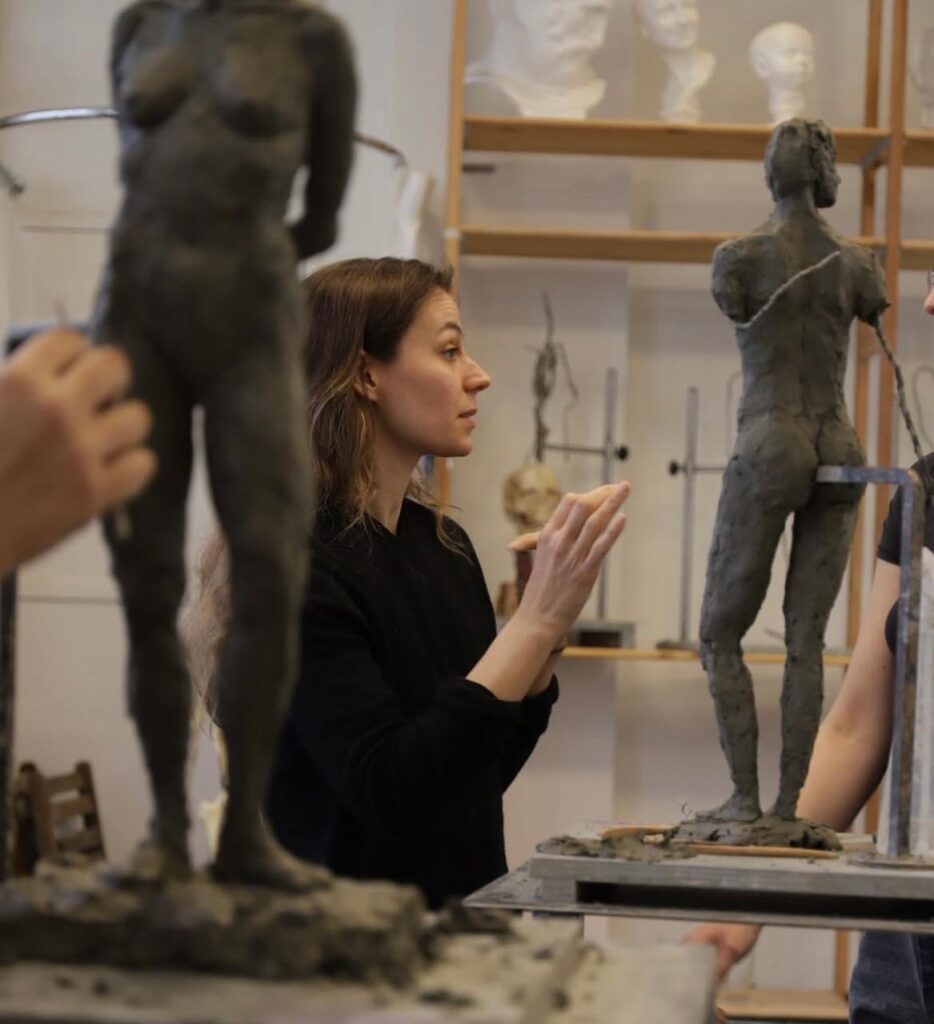
Alongside her studio practice, Poppy Field has remained deeply committed to art education and the wider sculpture community.
She has taught sculpture, participated in educational initiatives, delivered lectures, and is a Council Member of the Society of Portrait Sculptors. Throughout her career, she has continued sharing not only technical knowledge but also the deeper values that shape figurative art.
That commitment feels closely connected to her artistic philosophy, because beneath the technical mastery and public recognition lies a genuine attentiveness toward people. Toward helping others understand that sculpture is not simply about reproducing appearances, but about understanding the emotional life that exists beneath them.
Artists who continue teaching while maintaining their own practice often strengthen the creative community around them, ensuring that knowledge, craftsmanship, and artistic traditions are passed on rather than lost. Poppy’s career reflects that balance beautifully.
She continues making work, while also helping others learn how to see, observe, and create with greater sensitivity.
The Lasting Impact of Poppy Field’s Work
In a world where images are consumed in seconds and quickly forgotten, her sculptures encourage something different. They ask viewers to slow down, to look a little longer, and to notice the emotions that exist beneath the surface.
Whether she’s creating an intimate portrait or a monumental public commission, she approaches every figure with the same sensitivity to memory, presence, and human connection.
Somewhere between clay, bronze, memory, and observation, Poppy Field continues to do what the finest sculptors have always hoped to achieve: not simply preserve a likeness, but create work that helps us feel more connected to one another.
Poppy Field’s journey is a reminder that meaningful art is built through patience, curiosity, and a willingness to keep evolving. As her practice continues to grow, her work invites viewers to pause, look more closely, and find beauty in the everyday. To explore more of her latest sculptures, follow her creative journey, or get in touch about exhibitions, commissions, and available works, visit her website and connect with her through her social media channels below.
