
5 Women Artists Who Created Secret Identities for Their Art
What if the name on a painting was not really the artist’s name?
For some women artists, choosing another name was more than a creative decision. It could mean stepping outside the expectations attached to being a woman, protecting a private life, entering a male-dominated art world, or simply becoming someone new. A different name could open doors that their real names could not, or give them the freedom to make work without being immediately placed into a box.
Some of these identities were carefully constructed. Others became so closely connected to the artist that the pseudonym eventually felt more real than the name they were born with. And sometimes, the name itself became part of the art.
Here are five women artists whose alternate identities tell us almost as much about their work as the art itself.
01. Adèle Philippine d’Affry as “Marcello”
Imagine arriving in 19th-century Paris as an aristocratic woman who wants to become a professional artist, only to discover that the most prestigious art institutions are not particularly interested in letting women through the door.
That was the reality faced by Swiss artist Adèle d’Affry, Duchess of Castiglione Colonna. She eventually adopted the masculine artistic name Marcello, under which she became known as a sculptor. And this was not simply a clever stage name.
When Marcello exhibited at the Paris Salon in 1863, she used the name partly to escape what the French Ministry of Culture describes as the “double handicap” of being both a woman and an aristocrat. Women were already fighting for professional recognition, while her aristocratic background could create another set of assumptions about her seriousness as an artist.
The name Marcello was inspired by the 18th-century Italian composer Benedetto Marcello. Under this identity, Adèle presented Bianca Capello, a sculpture of the notorious Renaissance woman associated with intrigue and poisoning. The work was a success, and critics praised its strength and what they described as its “virile” quality.
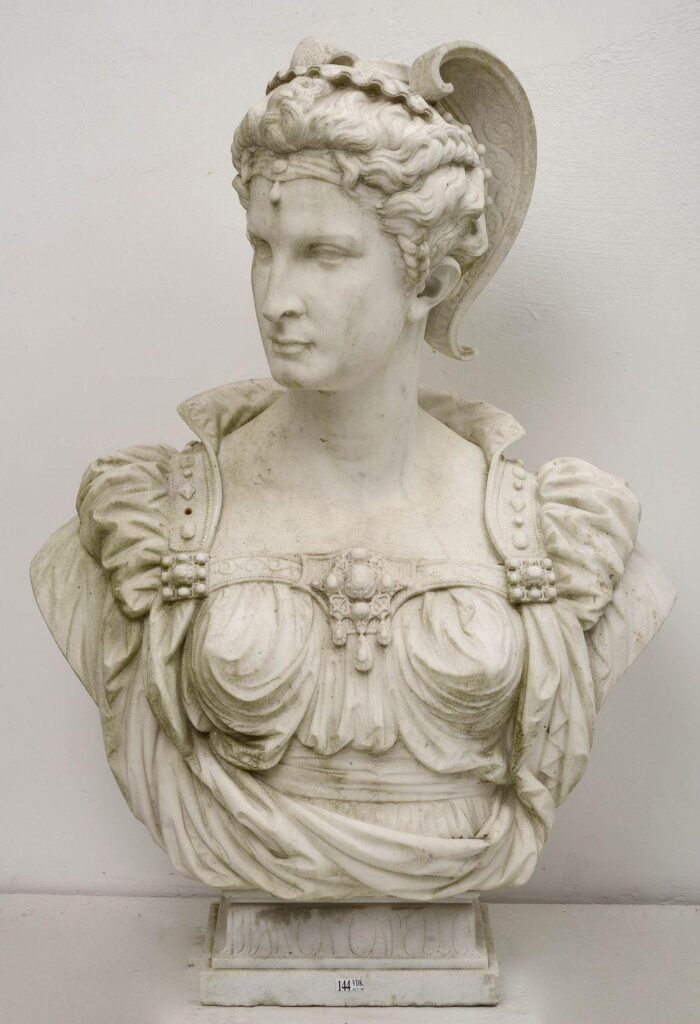
The irony is hard to miss: a woman had to hide behind a man’s name, only for critics to praise the supposedly masculine quality of her work.
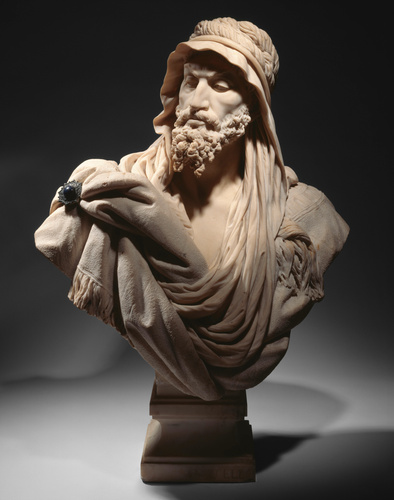
Her artistic persona also allowed her to explore powerful women from history and mythology. Pythian Sibyl, one of her best-known sculptures, was so personal that Marcello used her own neck, shoulders and breasts as models for the figure. The full-size version was later installed at the Paris Opéra.
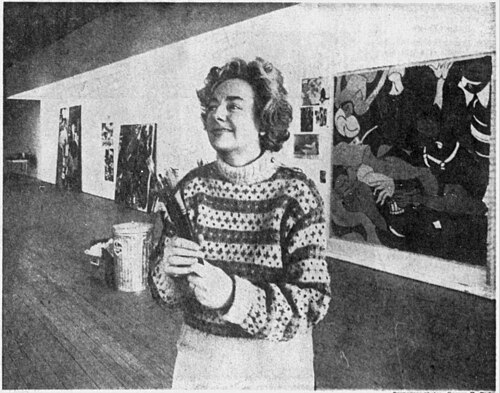
02. Grace Hartigan as “George”
In the New York art world of the 1950s, Grace Hartigan was already surrounded by some of the biggest names in Abstract Expressionism. But for a period early in her career, she did not exhibit simply as Grace Hartigan.
She was George Hartigan.
Unlike artists who permanently reinvented themselves, Hartigan’s use of “George” was relatively brief. But it is one of those details that makes you look differently at the work she made during those years.
Hartigan exhibited under the name George in the early 1950s. Some historians have interpreted the male name as a strategy for being taken more seriously in an art world heavily dominated by men. Hartigan herself later gave a different explanation: she said “George” was a tribute to two women writers she admired, George Eliot and George Sand.
Either way, the name became awkward once her reputation started growing. Hartigan reportedly found herself discussing her own paintings in the third person at gallery events because people knew the artist as George. By 1953, MoMA curator Dorothy Miller encouraged her to abandon the pseudonym, and Hartigan returned to her own name.
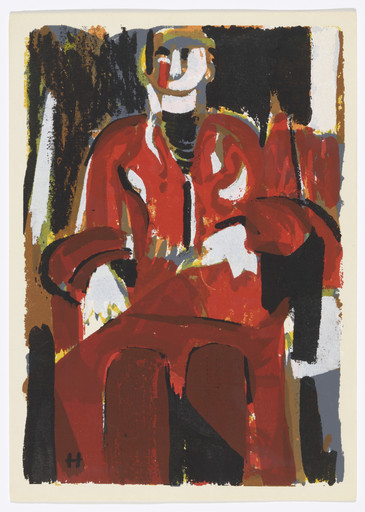
Interestingly, one of her important early works, The Persian Jacket, was published under the name George Hartigan. The Library of Congress still records this connection in its catalogue.
03. Marie Čermínová as “Toyen”
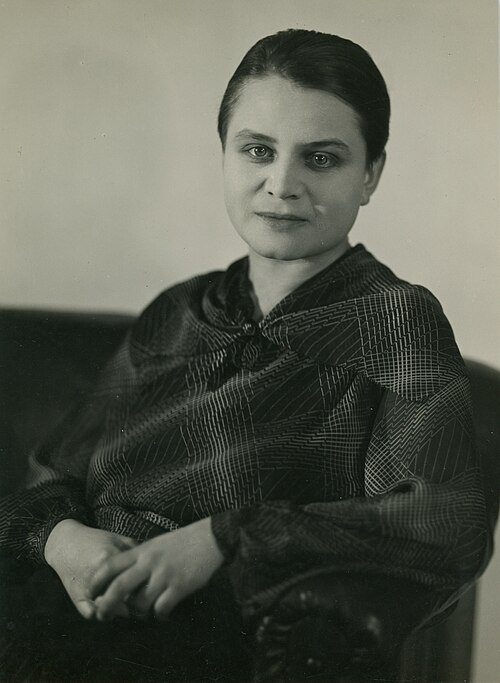
Some artists change their names to hide. Others change them because their original identity simply does not feel large enough for who they are becoming.
Born Marie Čermínová in Prague in 1902, the artist who became known as Toyen created one of the most intriguing identities in European Surrealism.
Around 1922, Čermínová adopted the gender-neutral name Toyen. The name is generally connected to the French word citoyen, meaning “citizen,” while another interpretation links it to the Czech phrase to je on, roughly “it is he.” Toyen also rejected conventional gender expectations in her appearance and language, at times wearing men’s clothing and using masculine grammatical forms in Czech.
The name therefore became much more than a signature. It helped Toyen resist being neatly classified as a “woman artist” in a period when gender could strongly influence how an artist was perceived.
Toyen became a major figure in Czech Surrealism, creating paintings, drawings, prints and collages filled with dreams, eroticism, mystery and political anxiety.
Her identity also existed during genuinely dangerous times. During the Nazi occupation of Czechoslovakia, Toyen was prohibited from exhibiting, but continued producing and secretly publishing work expressing her opposition to censorship. She also hid her Jewish poet friend Jindřich Heisler in her home.
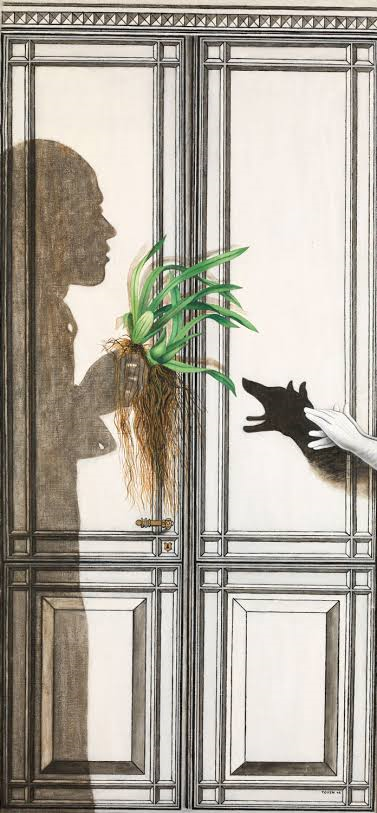
One of her most haunting paintings, The Myth of Light, transforms that wartime experience into a surreal image of shadows, doors and danger.
The Myth of Light, The Shooting Gallery, The Dormeuse
04. Lucy Schwob as “Claude Cahun”
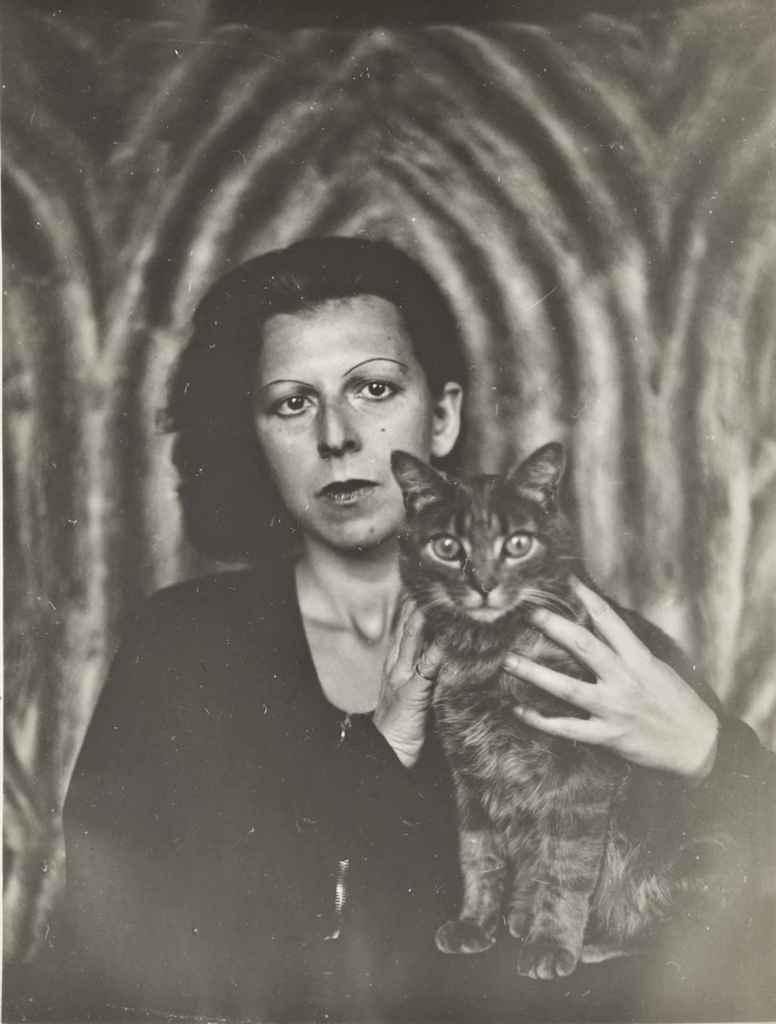
If there is one artist on this list who truly understood the idea of becoming someone else, it is Claude Cahun.
Born Lucy Schwob in France in 1894, Cahun adopted the gender-neutral name Claude Cahun and began building an artistic identity around transformation, performance and ambiguity.
The name itself was part of the experiment. Cahun’s work repeatedly asked a simple but unsettling question: how much of our identity is fixed, and how much can we reinvent?
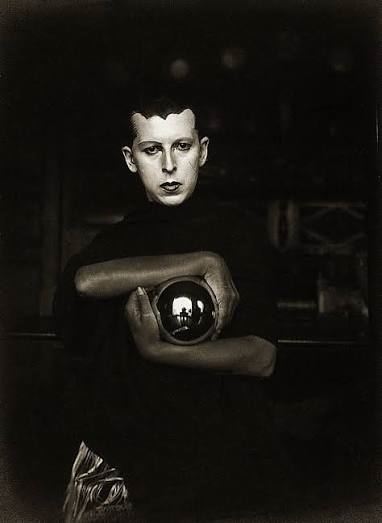
In her photographs, Cahun became a completely different person from one image to the next. A Buddhist monk. A sailor. A weightlifter. An androgynous figure. A theatrical character. A glamorous persona. A strange, almost alien version of herself. Her self-portraits were not simply photographs of an artist; they were experiments in identity.
Cahun worked closely with Suzanne Malherbe, her lifelong partner and stepsister, who used the artistic name Marcel Moore. Together they created the extraordinary 1930 book Aveux non avenus (Disavowals or Disavowed Confessions), combining Cahun’s writing with surrealist photomontages.
Cahun’s masks became almost a visual language of their own. Jersey Heritage notes that Cahun repeatedly used masks to represent the multiple identities she created. And there was a fascinating contradiction at the centre of it all: Cahun used a pseudonym, but rather than using it to disappear, they used it to make identity impossible to pin down.
05. Marie-Joséphine Vallet as “Jacqueline Marval”
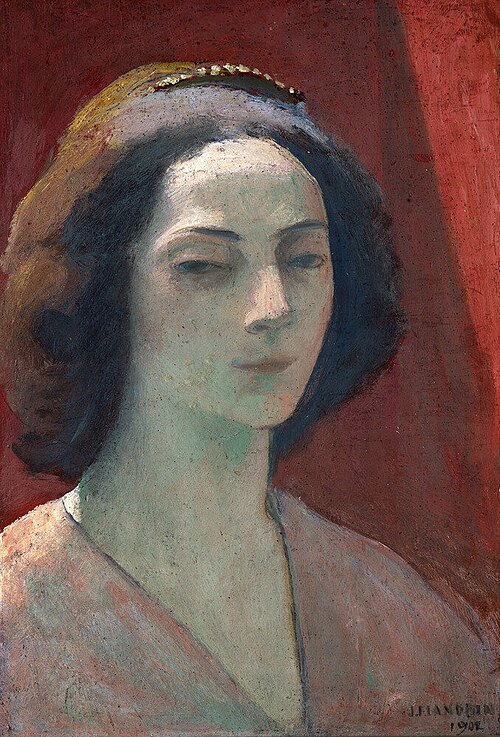
Not every artistic pseudonym was created to deceive an audience. Sometimes, it was a way of becoming someone new.
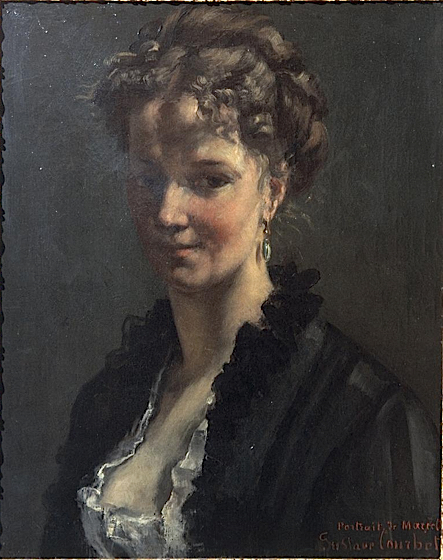
French artist Jacqueline Marval was born Marie-Joséphine Vallet in 1866. She adopted the name Jacqueline Marval around the beginning of the 20th century, creating it by combining parts of her first and last names: MARie and VALlet.
But the timing of the transformation matters. Marval had left her marriage after the death of her young child and had to support herself. Before establishing herself as a painter, she worked as a vest-maker and embroiderer in Grenoble and Paris. Her new artistic name accompanied a new chapter in her life: she was no longer simply Marie-Joséphine Vallet. She was Jacqueline Marval, an artist trying to establish herself in Paris.
Her early career was not glamorous. According to accounts preserved by the artist’s foundation, when money was particularly tight, she sometimes used bedsheets as canvases. Yet the new identity quickly became associated with serious artistic ambition. In 1901, she exhibited ten paintings at the Salon des Indépendants, and all ten were acquired by the influential dealer Ambroise Vollard.
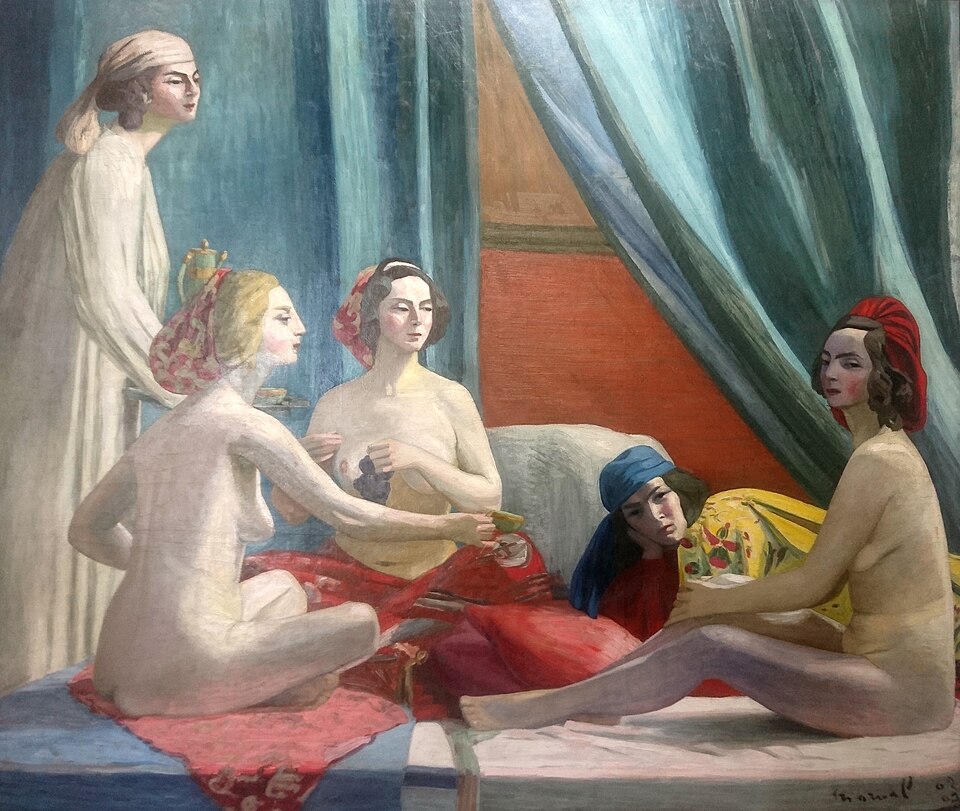
Among the works that reveal her distinctive style is Les Odalisques, a large, intensely colored painting that places women at the centre of the composition. Her paintings often carried a boldness that did not fit comfortably into the expectations surrounding women artists at the time.
Why Hide Behind Another Name?
Looking at these five artists together, their reasons were remarkably different.
Marcello needed to overcome the prejudices attached to being a woman and an aristocrat. Hartigan’s “George” existed partly as an homage to two female writers, while also raising questions about how a male name might change the reception of her work. Toyen used a gender-neutral identity to reject conventional categories. Cahun turned the very idea of identity into an artistic material. And Marval used a new name as part of a larger reinvention of her life and career.
Their stories also remind us that a pseudonym is never just a name. Sometimes it is armour. Sometimes it is a disguise. Sometimes it is a joke, a rebellion, a fresh start, or a way of asking the world to look at the work before deciding who made it.
And perhaps that is the most fascinating part. These artists may have changed the names attached to their work, but they could not completely disappear. The paintings, photographs, sculptures and ideas remained.
Eventually, the real stories caught up with the secret identities. And today, we get to know both.
Editor’s Note
Feelings can be just as complicated as identity. They can be loud or quiet, joyful or uncomfortable, deeply personal or difficult to explain. Sometimes, art gives us a way to express what words cannot.
We are currently accepting submissions for our latest virtual exhibition, Things We Feel. We want to see the emotions, experiences and feelings that artists choose to explore through their work, and we cannot wait to see how you portray what you feel in your own artistic language. If there is a feeling you have been trying to put into words, perhaps it is time to put it into art instead.

Zazie_blue
September 19, 2026 at 11:09 pmThat’s me. Not really gender but just hiding from coworkers and friends and family