
5 Women Artists and the Cities That Inspired Their Art
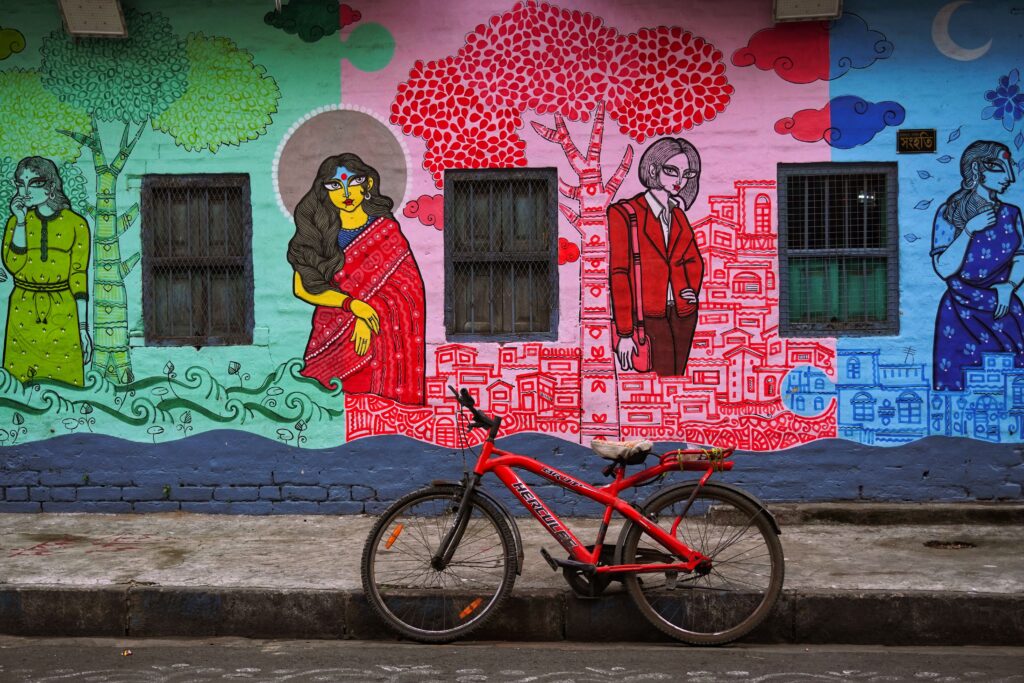
Cities shape us in ways we often do not notice. We remember a city through its streets, its buildings, the light at a particular hour, the sounds coming through an open window, the people we passed without ever knowing their names. A place can become part of our memory long before we realise that we are carrying it with us. Its colours, rhythms, architecture, histories, and contradictions quietly settle into the way we see the world.
For artists, this relationship can become even more visible. A city is not simply where an artist happens to live. Sometimes it becomes a subject. Sometimes it becomes an atmosphere, a source of belonging, a confrontation with politics and society, or simply a landscape that changes the way an artist looks.
Throughout art history, women artists have created remarkably different bodies of work in response to the places around them. From the streets of Berlin and the artistic circles of Paris to the deserts of New Mexico and the historic studios of Florence, their surroundings became woven into their artistic processes.
Here are five women artists from different moments in art history whose work shows just how profoundly a city or place can shape an artist.
1. Frida Kahlo — Mexico City, Mexico
Few artists are as closely associated with a particular place as Frida Kahlo is with Mexico City.
Born in 1907 in Coyoacán, Kahlo spent much of her life at the house that would become known as Casa Azul, or the Blue House. Today, the Frida Kahlo Museum occupies the house, but during Kahlo’s lifetime it was much more than a home. It was a space where her personal life, Mexican cultural identity, politics, friendships, and artistic practice came together.
Kahlo’s relationship with Mexico was deeply personal. She embraced elements of Mexican dress, indigenous traditions, folk art, and pre-Columbian imagery at a time when questions of Mexican national identity were particularly important following the Mexican Revolution. Her distinctive Tehuana clothing, for example, became an important part of the visual identity she presented in her paintings and photographs.
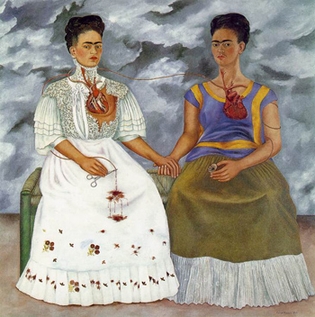
This connection appears powerfully in The Two Fridas (1939), where Kahlo presents two versions of herself against a stormy sky, wearing different forms of dress. The painting is deeply personal, but it also reflects the cultural identities and traditions she drew from her Mexican surroundings.
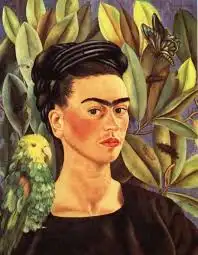
Her home and its objects also repeatedly entered her paintings. In Self-Portrait with Bonito (1941) and many other self-portraits, Kahlo surrounded herself with visual references connected to Mexican culture and her immediate environment.
Even the garden at Casa Azul became part of her visual world. Kahlo did not need to paint a recognisable street in Mexico City for the city to be present in her work. Mexico existed through her clothing, objects, plants, architecture, traditions, and sense of identity.
Her art demonstrates one of the most intimate ways a place can shape an artist: by becoming part of how they understand themselves.
2. Käthe Kollwitz — Berlin, Germany
Where Kahlo’s relationship with place was closely connected to identity, Käthe Kollwitz’s relationship with Berlin was deeply connected to society.
Kollwitz moved to Berlin in 1891 after marrying physician Karl Kollwitz. The city became the setting for much of her mature career, and its working-class communities profoundly influenced what she chose to depict.
Rather than turning away from difficult subjects, Kollwitz looked closely at poverty, labour, motherhood, grief, political violence, and the consequences of war. Her art often focused on people whose lives were rarely represented with dignity in traditional academic art.
One of her most important early works, The March of the Weavers in Berlin, was inspired by the struggles of Silesian weavers. The series established Kollwitz’s interest in working-class life and social injustice.
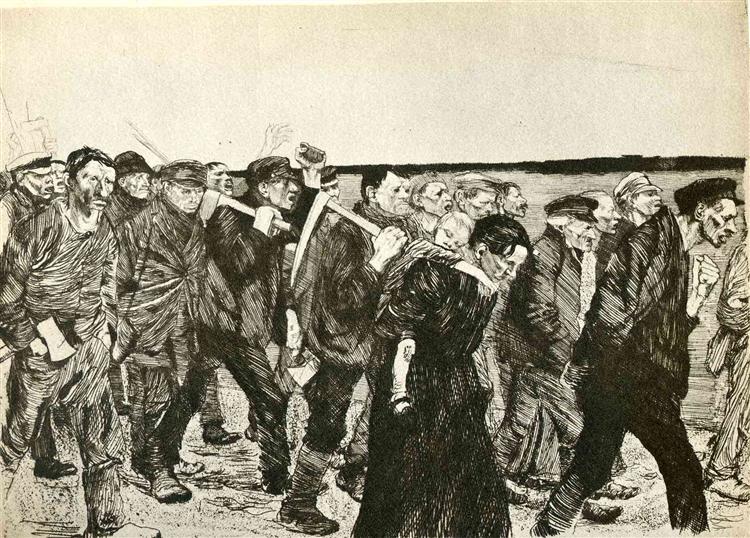
Berlin itself was changing rapidly during this period. Industrialization had transformed the city, creating enormous social contrasts between wealth and poverty. Kollwitz’s proximity to working-class communities helped her develop an artistic language that was direct, emotional, and socially conscious.
Her later series War (1922–23) emerged from the devastating experience of the First World War, including the death of her son Peter. The prints are not conventional battle scenes. Instead, Kollwitz turned her attention towards mothers, children, grief, and the human cost of conflict.
Her Berlin studio and surroundings were therefore not merely a backdrop. The social realities she encountered became central to her artistic concerns.
Kollwitz shows us that a city can shape art not only through its beauty, but through its people, inequalities, histories, and struggles.
3. Tamara de Lempicka — Paris, France
Paris in the 1920s was one of the great cultural centres of modern Europe, and for Tamara de Lempicka, it became the city where her artistic identity truly took shape.
Born in Warsaw and raised partly in St. Petersburg, Lempicka arrived in Paris as a young woman after the Russian Revolution. The city offered her a new artistic and social environment at a moment when European culture was rapidly changing.
Paris in the 1920s was associated with modernity, fashion, cinema, architecture, nightlife, and an expanding sense of female independence. Lempicka absorbed this atmosphere into a distinctive style characterised by polished surfaces, geometric forms, dramatic lighting, and elegant, self-assured figures.
Her Self-Portrait in the Green Bugatti (1929) is perhaps the clearest example of this relationship between artist and city. Lempicka presents herself behind the wheel of a luxurious automobile, wrapped in a fashionable scarf and wearing red lipstick. The painting became an iconic image of the modern woman: independent, glamorous, and in control.

Her portraits of women also reflected the changing social atmosphere around her. In La Belle Rafaëla (1927), the figure is monumental, confident, and sensual, rendered with the polished precision that became characteristic of Lempicka’s work.
Paris gave Lempicka access to artists, designers, writers, collectors, and an international social world. At the same time, she actively constructed her own public image within that world.
Her art is therefore inseparable from the modern Parisian culture of the period. She did not simply document the city. She captured its fascination with modern life, luxury, movement, and the newly visible modern woman.
4. Georgia O’Keeffe — New Mexico, USA
For Georgia O’Keeffe, it was not a crowded city or artistic capital that transformed her work. It was the landscape of New Mexico.
O’Keeffe first visited New Mexico in 1917 and returned repeatedly before eventually making the region her home. The dramatic landscape, adobe buildings, mountains, desert plants, and expansive skies offered her a visual world very different from the urban environments in which she had previously worked.
The landscape became a major source of inspiration, but O’Keeffe did not simply reproduce what she saw. She transformed familiar natural forms through close observation, cropping, enlargement, colour, and abstraction.
In Black Mesa Landscape, New Mexico / Out Back of Marie’s II (1930), the landscape is reduced to powerful shapes and tonal relationships. In Ram’s Head, White Hollyhock-Hills (1935), a ram’s skull appears against the expansive New Mexican landscape, bringing together natural forms that had become central to her visual vocabulary.
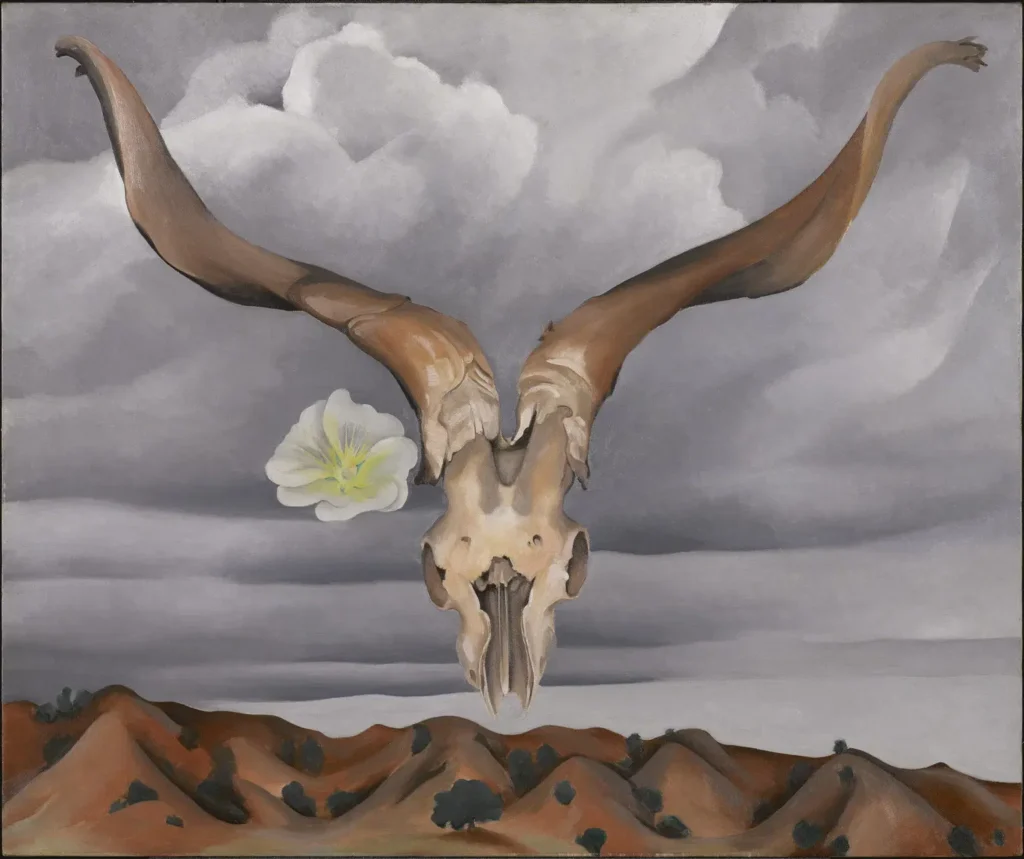
The adobe architecture of the region also fascinated her. Works such as Ranchos Church, New Mexico (1930) demonstrate her interest in the simple geometric forms of Southwestern buildings.
O’Keeffe’s relationship with New Mexico became so profound that the landscape was eventually more than a subject. It became part of her identity as an artist.
Her move toward the region also demonstrates something important about artistic influence: sometimes a place does not simply inspire new subject matter. It changes the way an artist sees.
The vastness of New Mexico gave O’Keeffe a visual language of simplicity, space, repetition, and close attention to the natural world that became unmistakably her own.
5. Artemisia Gentileschi — Florence, Italy
Long before modern art movements transformed Paris, Berlin, or New York, Artemisia Gentileschi was building an extraordinary career within the artistic world of seventeenth-century Italy.
Born in Rome in 1593, Gentileschi moved to Florence in 1614 after marrying the painter Pierantonio di Vicenzo Stiattesi. Florence offered her something particularly significant: professional recognition within a society in which women faced enormous restrictions as artists.
In 1616, Gentileschi became the first woman known to be admitted to the Accademia delle Arti del Disegno, Florence’s prestigious artists’ academy. Membership gave her a level of professional recognition that was highly unusual for a woman of her time.
Florence also exposed her to the city’s rich artistic traditions and its powerful networks of patrons and intellectuals. During this period, she developed a successful independent career and received commissions from important patrons.
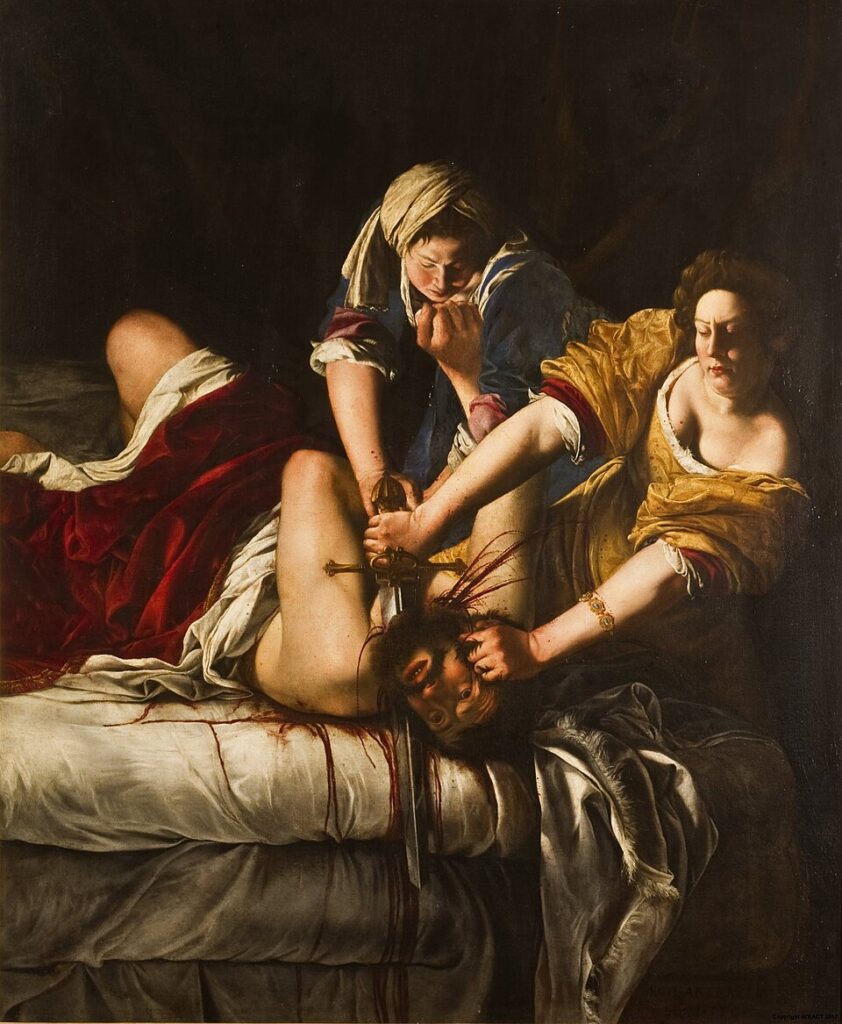
One of the works associated with her Florentine period is Judith Slaying Holofernes (c. 1613–14), painted around the transition into her Florentine years. Its dramatic lighting, physical intensity, and psychologically powerful figures demonstrate Gentileschi’s command of the Baroque visual language.
Another important work, Self-Portrait as the Allegory of Painting (La Pittura) (c. 1638–39), was painted later in London, but it remains particularly revealing when considered alongside the professional independence she established earlier in Florence. Gentileschi represents herself not merely as a woman who paints, but through the personification of Painting itself.
Florence mattered because it provided Gentileschi with a professional environment in which her reputation could expand beyond the limitations placed on women in the art world.
Her story reminds us that sometimes a city shapes an artist by opening doors that had previously been closed.
The Places We Carry Into Art
Looking across these five artists, the influence of place takes very different forms.
For Frida Kahlo, Mexico City became intertwined with cultural identity and personal memory. For Käthe Kollwitz, Berlin brought her closer to the social realities that became central to her work. Tamara de Lempicka absorbed the glamour and modernity of 1920s Paris, while Georgia O’Keeffe found a radically different visual language in the landscapes of New Mexico. For Artemisia Gentileschi, Florence became an important chapter in the development of her professional independence.
None of these artists simply painted their surroundings. They processed them.
That may be the most fascinating thing about the relationship between artists and the places they inhabit. A city does not have to appear literally in a painting to be present within it. It can exist in the colours an artist chooses, the people they notice, the architecture they remember, the subjects they return to, or the questions they feel compelled to ask.
And perhaps that is true for all of us.
The places where we grow up, study, work, travel, or build our homes leave traces on us. We develop preferences from the streets we walk through, memories from the rooms we occupy, and visual associations from the landscapes we repeatedly see. Artists simply have a particularly visible way of translating those experiences into something others can see.
Art history, after all, is not only a history of artists and movements. It is also a history of places, the cities, homes, landscapes, studios, streets, and communities that artists carried with them.
Because sometimes, when we look closely enough at an artist’s work, we are not only looking at what they saw. We are looking at where they came from.
