
5 Women Artists Who Redefined Impressionism And Its Legacy
When we think of Impressionism, we often picture sunlit gardens, rivers shimmering beneath a summer sky, and fleeting moments captured with loose, expressive brushstrokes. The movement changed the way artists looked at the world, encouraging them to move beyond the polished traditions of academic painting and find beauty in ordinary life. Yet, behind many of the images that define Impressionism today were women who helped build its legacy, even when the art world offered them fewer opportunities to succeed.
In nineteenth-century France, women artists faced considerable restrictions. Access to formal artistic training was limited, professional recognition was difficult to obtain, and everyday social expectations often determined which subjects they could paint and where they could work. While their male counterparts could more freely explore cafés, boulevards, and public gathering places, women frequently found themselves working within domestic spaces and social circles.
But these limitations did not prevent them from developing remarkable artistic voices. Berthe Morisot, Mary Cassatt, Marie Bracquemond, Eva Gonzalès, and Anna Ancher each approached modern life with a distinctive perspective. Their paintings captured intimate relationships, changing light, domestic rituals, and the quiet complexity of human experience. Together, they remind us that Impressionism was never simply a story of a few celebrated men. It was also shaped by women who helped expand what modern painting could be.
1. Berthe Morisot: Finding Beauty In The Everyday
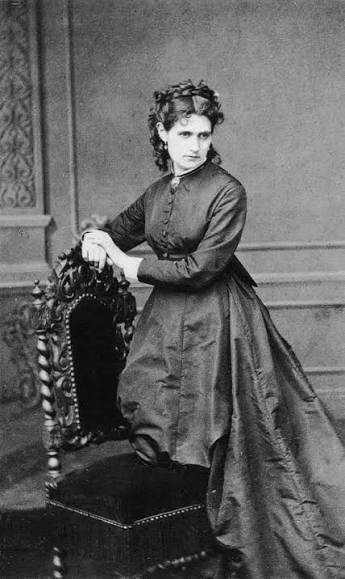
Among the women associated with Impressionism, Berthe Morisot holds a particularly important place. She was not simply a contemporary who happened to share the movement’s interests. She participated in its development from the beginning, exhibiting in the first independent Impressionist exhibition in 1874 and becoming one of its most consistent contributors.
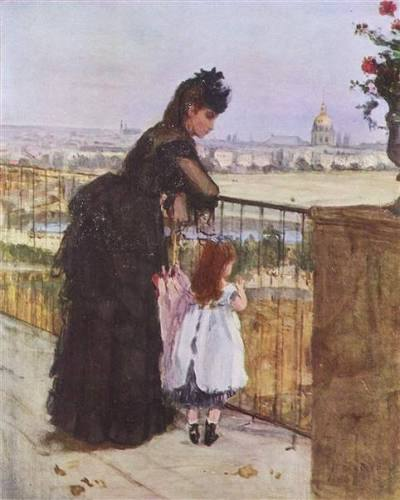
Morisot was born into a well-to-do French family, where artistic education was encouraged. As a young woman, she studied painting with accomplished artists and developed a close artistic relationship with Édouard Manet. She even posed for several of his paintings, including The Balcony (1868–69). Their relationship was an important part of her artistic world, although Morisot’s own achievements deserve to be considered entirely on their own terms.
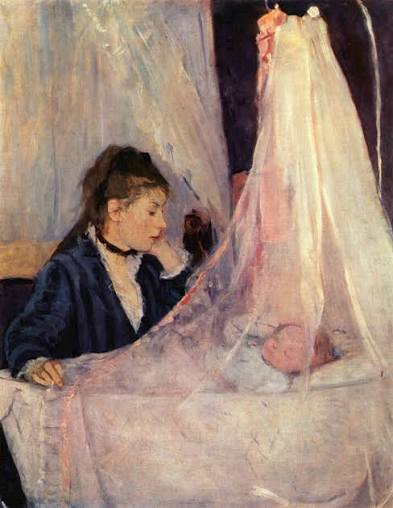
One of her most touching works is The Cradle (1872), which depicts her sister Edma watching over her sleeping baby. The mother gazes tenderly at the infant through a translucent veil, creating a quiet scene filled with affection and delicate observation. Rather than turning motherhood into a grand, idealised subject, Morisot presents it as an intimate moment unfolding naturally before us.
Her brushwork is loose and luminous, allowing the fabric, light, and figures to feel alive. She makes an ordinary domestic scene feel worthy of careful attention, challenging the idea that important art must always depict historical events or dramatic subjects.
Another beautiful example is Summer’s Day (1879), in which two women sit in a boat on a lake. Their reflections, fashionable clothing, and relaxed poses suggest a leisurely afternoon, but Morisot’s quick brushstrokes give the scene a sense of movement and immediacy.
Interestingly, Morisot continued to exhibit with the Impressionists even when doing so meant stepping away from the more prestigious official Salon. Her commitment helped establish Impressionism as a serious artistic alternative. She showed that the everyday world, particularly the experiences of women, could become the subject of ambitious, innovative painting.
2. Mary Cassatt: Making Women’s Lives Worth Looking At
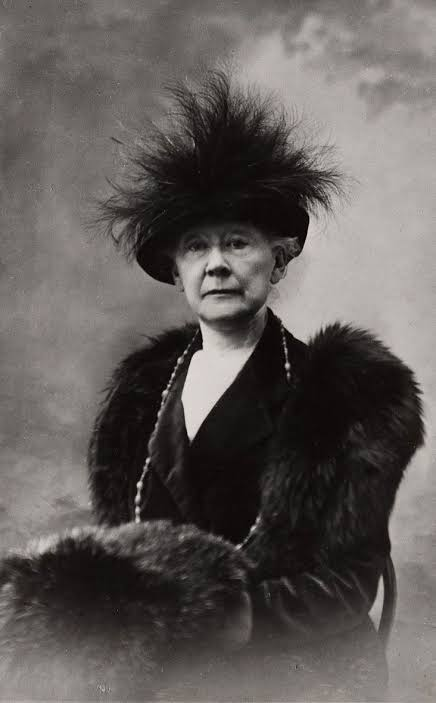
Mary Cassatt was an American artist who travelled to Europe to pursue her ambitions and eventually became one of the most recognisable figures associated with Impressionism. Born in Pennsylvania, she studied art despite her family’s reservations about the career she had chosen. At a time when women were often discouraged from pursuing professional independence, Cassatt was determined to make a life as an artist.
Her artistic path changed significantly when she met Edgar Degas, who invited her to exhibit with the Impressionists. Cassatt joined their exhibitions in 1879 and became one of the movement’s most prominent female participants. Although she admired Degas’s work, she developed a style that was unmistakably her own.
Cassatt is especially celebrated for her depictions of mothers and children. In The Child’s Bath (1893), a woman gently washes a child’s feet while the two figures occupy a closely observed domestic space. The scene feels familiar, yet its unusual viewpoint and carefully arranged shapes make it visually striking.
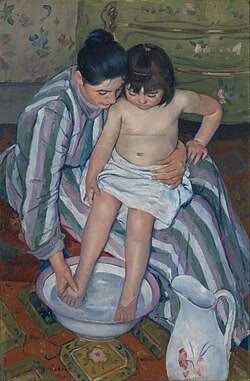
The painting draws attention to a moment of caregiving that might otherwise pass unnoticed. Cassatt does not treat the mother and child as distant symbols of innocence. Instead, she presents the physical closeness, routine, and tenderness of their relationship.
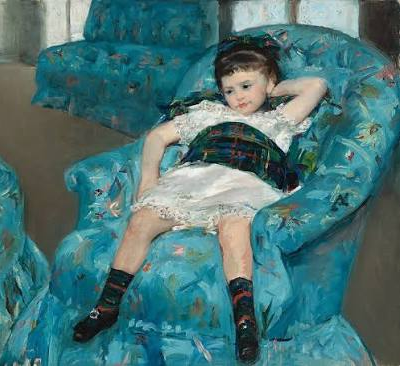
Another well-known painting, Little Girl in a Blue Armchair (1878), captures a child sprawled across a chair in a pose that feels refreshingly unposed. Rather than presenting a perfectly behaved young girl, Cassatt allows her subject to appear restless, comfortable, and entirely herself.
There is a fascinating story behind this painting, too. Degas helped Cassatt rethink parts of its composition, and scholars have identified his influence in the unusual arrangement of the room. The collaboration reveals how artists within the Impressionist circle exchanged ideas and influenced one another, rather than working in isolation.
Cassatt also played an important role in introducing Impressionist art to American collectors. Through her connections and advocacy, she helped bring works by her fellow artists across the Atlantic, expanding the movement’s audience and influence.
Her legacy lies partly in her ability to make intimate experiences feel universal. She reminded viewers that the routines of family life, especially those often associated with women, were not too ordinary to deserve serious artistic attention.
3. Marie Bracquemond: The Impressionist Who Stepped Away
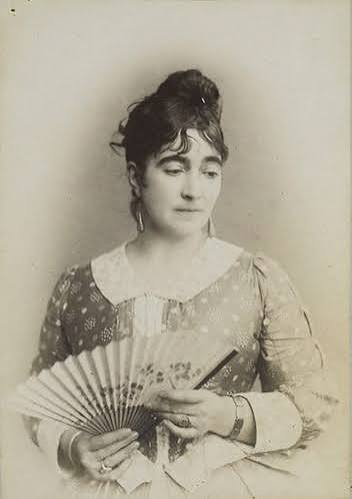
Marie Bracquemond is one of the most intriguing figures in the history of Impressionism because her story combines artistic achievement with the personal cost of pursuing a creative life.
Born in France, Bracquemond received artistic training and developed her skills at a time when women had to work considerably harder to establish themselves in the professional art world. She eventually became associated with the Impressionists and exhibited alongside artists such as Morisot and Cassatt.
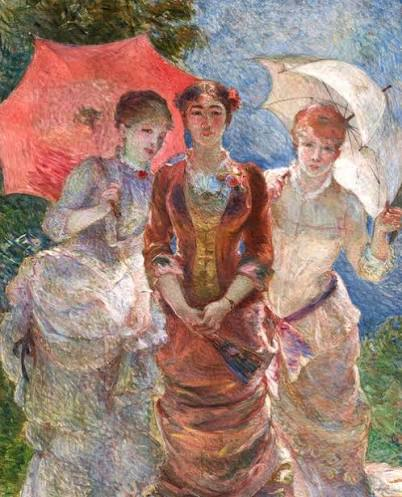
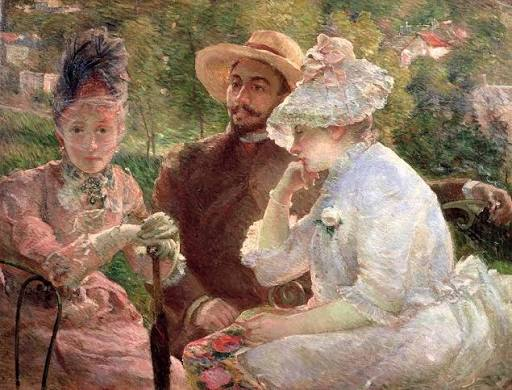
Her painting On the Terrace at Sèvres (1880) is a wonderful example of her approach. It depicts elegantly dressed figures enjoying an outdoor setting, with sunlight and open air becoming essential parts of the composition. The scene has the relaxed atmosphere associated with Impressionism, but Bracquemond’s attention to color, structure, and the relationships between figures gives it a distinctive character.
Another important work, Three Women with Parasols (1880), demonstrates her interest in fashionable outdoor life. The figures are arranged within a landscape that feels both carefully composed and alive with changing light.
Bracquemond’s career was shaped in part by her marriage to Félix Bracquemond, an established artist and printmaker. Although he recognised her talent, he reportedly disapproved of Impressionism and was uncomfortable with the direction of her work. Accounts of their relationship describe the difficulties she faced in sustaining her artistic practice within her marriage.
By the late nineteenth century, Bracquemond had largely withdrawn from public artistic life. Her departure is often discussed as an example of the barriers that women artists faced, even when they possessed the talent and professional connections to succeed. It is important not to reduce her entire life to this one struggle. Bracquemond produced thoughtful, ambitious paintings that deserve attention in their own right. Nevertheless, her story raises an uncomfortable question: how many artists might have developed even further if their circumstances had allowed them the same freedom to work?
Her legacy invites us to look beyond the paintings themselves and consider the personal conditions that shape an artist’s career. Talent matters, but opportunity matters, too.
4. Eva Gonzalès: Developing An Independent Artistic Voice
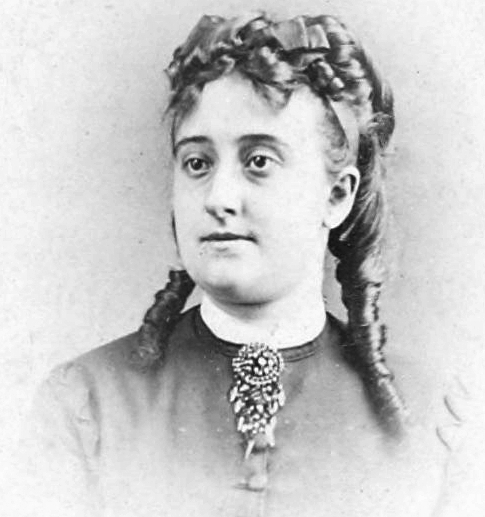
Eva Gonzalès occupied an unusual position within the Impressionist circle. She studied with Édouard Manet and became closely associated with his artistic world, yet she never exhibited in the group’s official Impressionist exhibitions. Her work nevertheless shares many of the movement’s interests, including modern subjects, lively brushwork, and the changing visual experiences of contemporary life.
Born in Paris in 1849, Gonzalès began studying with Manet in 1869. She became his only formal pupil, a distinction that has sometimes overshadowed her own accomplishments. Although the relationship brought her into contact with an influential artistic network, Gonzalès worked to establish an individual style rather than simply imitate her mentor.
One of her notable paintings, A Loge at the Théâtre des Italiens (1874), depicts a woman attending the theatre. The subject belongs to the fashionable world of modern Paris, where public entertainment, clothing, and social visibility had become important features of urban life.
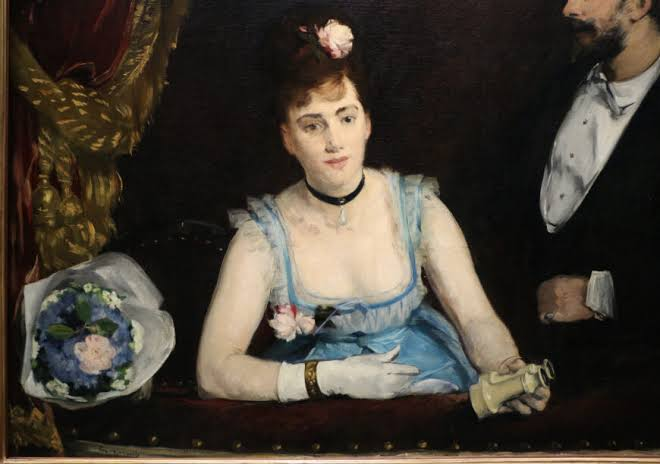
The theatre box offered artists a fascinating subject. It was a place where people watched performances while also watching one another. Gonzalès captures this atmosphere through the sitter’s appearance and the carefully observed details of her surroundings.
Her A White Shoe (1879) offers another glimpse of her attention to contemporary fashion and everyday objects. Like many artists associated with modern painting, she found artistic possibilities in subjects that might have seemed unremarkable to earlier generations.
Gonzalès also painted intimate scenes, including The Little Soldier (1870), demonstrating her interest in portraiture and carefully observed figures.
Her life was tragically short. She died in 1883, aged only thirty-four, shortly after giving birth. Her death came just days after that of Manet, making the loss particularly painful for those within their artistic circle.
Because she did not exhibit with the Impressionist group, Gonzalès is sometimes left out of simplified accounts of the movement. Yet her work reveals how closely connected artists could be to Impressionism without belonging to its formal exhibition history. Her paintings deserve to be encountered not merely as extensions of Manet’s influence, but as the work of an artist with her own interests and ambitions.
5. Anna Ancher: Bringing Light Into Ordinary Life
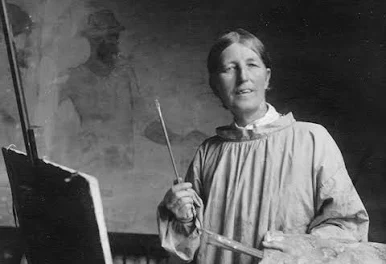
Although Anna Ancher is usually associated with the Skagen Painters rather than the French Impressionist group, her work offers a fascinating parallel to the movement. Like the Impressionists, she was deeply interested in natural light, ordinary experiences, and the ways colour changes the atmosphere of a scene.
Ancher was born in 1859 in Skagen, a coastal town in northern Denmark that attracted a community of artists. She studied painting in Copenhagen and became an important member of the Skagen artists’ colony. Her work often focused on the lives of people around her, particularly women engaged in everyday activities.
One of her most celebrated paintings, Sunlight in the Blue Room (1891), depicts her daughter Helga sitting quietly in a room illuminated by sunlight. The light spills across the blue interior, transforming an ordinary domestic setting into a study of colour and atmosphere.
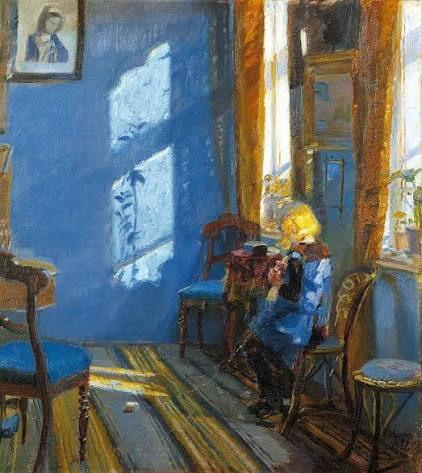
There is no dramatic event to explain the scene. Its beauty comes from the way sunlight touches the walls, furniture, and figure. Ancher encourages us to notice how a familiar room can become extraordinary when we truly look at it.
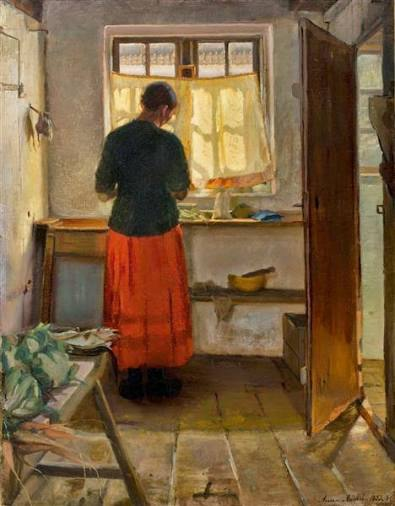
Another remarkable painting, The Maid in the Kitchen (1883–86), focuses on a woman working indoors. Rather than treating domestic labour as background activity, Ancher gives the figure and her surroundings a quiet dignity.
Her artistic interests were also shaped by the distinctive light of Skagen. The region’s coastal atmosphere, long summer days, and shifting natural conditions provided endless opportunities to explore colour and illumination.
Ancher’s work demonstrates that the ideas associated with Impressionism travelled beyond France and developed differently in other artistic communities. She was not a member of the French Impressionist group, but her attention to light and everyday life makes her a meaningful companion to its history. Her paintings remind us that a revolutionary way of seeing does not belong to one city or one movement alone. Sometimes, it begins with the simplest act of paying attention to the light entering a room.
A Legacy That Continues To Grow
Looking at the work of these five artists, we begin to understand that Impressionism was more than a new way of applying paint. It was a different way of deciding what deserved to be seen.
Morisot found remarkable beauty in the intimacy of family life. Cassatt brought the experiences of women and children into the centre of modern painting. Bracquemond demonstrated both the artistic possibilities of Impressionism and the difficulties women faced in sustaining their careers. Gonzalès developed her own voice within a circle dominated by powerful artistic personalities. Ancher, working in Denmark, explored the transformative effects of light in the everyday world.
Their stories were not identical, and neither were their artistic approaches. Some exhibited with the Impressionists, while others worked alongside them or developed related ideas beyond the movement’s formal boundaries. What connects them is their determination to take their subjects seriously and their ability to make familiar experiences feel fresh.
Today, their paintings invite us to look again at the people, places, and moments that fill our lives. A mother bathing her child, a woman sitting beside a window, or sunlight falling across a blue room may seem ordinary at first glance. In the hands of these artists, however, such moments become lasting records of how people lived, felt, and experienced the world.
Their contributions deserve to be remembered not as a footnote to the achievements of male Impressionists, but as an essential part of the story itself. The movement’s legacy is richer when we recognise the women who helped shape it, and the many different ways they taught us to see.
Editor’s Note:
Women In Arts Network has announced an open call for our first ever magazine – Women In Arts Magazine and only two weeks are left to submit your art! The theme for the inaugural magazine is open, so you are free to submit the artwork that speaks the most to you, and defines your practice the best. Submissions are open till October 31, 2026.
