
6 Historic Paintings That Changed The Story of Gold in Art
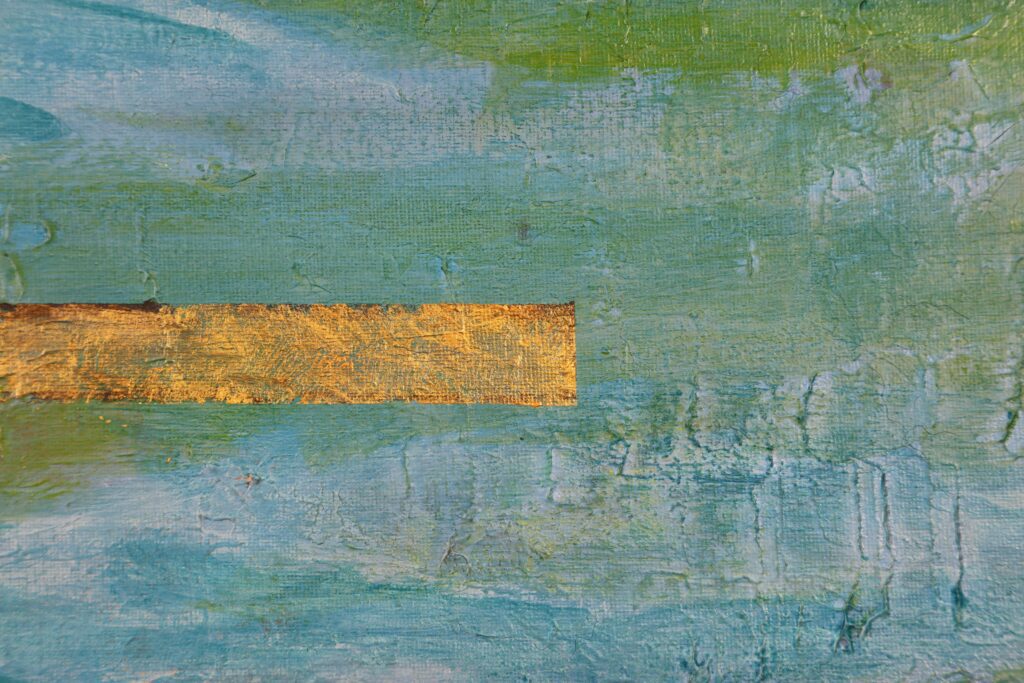
Gold has captivated humanity for thousands of years. Long before it became a measure of wealth or a symbol of luxury, it was prized for something far simpler yet far more extraordinary: its ability to shine without fading. Unlike most metals, gold does not rust, tarnish, or corrode, allowing it to retain its brilliance across centuries. That remarkable quality made it more than a precious material. It became a symbol of permanence in a world where so much was temporary.
Artists quickly recognized its unique power. Across ancient civilizations, religious traditions, royal courts, and contemporary studios, gold has been used not merely as decoration but as a storyteller. It has illuminated sacred icons, enriched illuminated manuscripts, adorned sculptures and ceremonial objects, and transformed paintings into works that seem to glow from within. Whether representing divinity, authority, remembrance, or transformation, gold has consistently carried meanings that extend far beyond its material value.
Its appeal has endured through changing artistic movements and evolving creative practices. From the shimmering mosaics of the Byzantine Empire to the iconic gilded compositions of Gustav Klimt and the experimental works of contemporary mixed media artists, gold continues to inspire new generations of creatives. Its ability to capture light, direct the viewer’s gaze, and evoke emotion makes it one of the few materials that has never truly gone out of style.
So what is it about gold that has fascinated artists for centuries? The answer lies not only in its physical beauty, but also in the rich history, symbolism, craftsmanship, and cultural significance that have made it one of the most enduring materials in the history of art.
Gold Before Galleries: A Material Revered by Ancient Civilizations
Long before art galleries and museums existed, gold had already earned a place at the heart of human creativity. Archaeological discoveries show that people were crafting objects from gold as early as the fifth millennium BCE, making it one of the first metals to be shaped into works of art, jewelry, ceremonial objects, and sacred artifacts. Unlike iron or bronze, gold required no complex refining to reveal its beauty. It could be found in its natural state, soft enough to shape by hand yet durable enough to survive for thousands of years.
For ancient civilizations, gold’s appeal went far beyond its rarity. Its radiant glow reminded many cultures of the sun, leading it to symbolize life, immortality, divine power, and eternal existence. The ancient Egyptians referred to gold as the “flesh of the gods,” using it to adorn temples, sacred statues, royal jewelry, and the burial treasures of pharaohs. Perhaps the most famous example is the funerary mask of Tutankhamun, whose gleaming surface continues to captivate audiences more than three thousand years after it was created.
Similar reverence for gold appeared across the ancient world. In Mesopotamia, Greece, Rome, and civilizations throughout Asia and the Americas, gold became closely associated with authority, spiritual devotion, and cultural identity. It decorated crowns, ceremonial vessels, religious objects, and monuments, reflecting not only wealth but also the values and beliefs of the societies that created them.
What is remarkable is that even in these earliest artistic traditions, gold was rarely chosen simply because it was precious. It was selected because it communicated ideas that other materials could not. Its ability to reflect light gave objects an almost otherworldly presence, making them appear alive, sacred, or timeless. In many ways, these early uses established a visual language that artists continue to draw upon today, proving that gold has always been valued as much for its meaning as for its beauty.
The Symbolism of Gold in Art
If gold were valued only because it was expensive, it would have disappeared from art long ago. Instead, it has endured because artists have continually used it to express ideas that are difficult to communicate through color or form alone. Throughout history, gold has become a visual shorthand for emotions, beliefs, and experiences that transcend time, allowing a single glimmering surface to carry layers of meaning.
One of gold’s most enduring associations is with the divine and the eternal. Because it does not tarnish or decay, many cultures came to see it as a symbol of immortality, making it a natural choice for religious art and sacred objects. In other contexts, it has represented wisdom, enlightenment, triumph, abundance, and hope. Its luminous quality can make a figure appear almost otherworldly, elevating an ordinary scene into something symbolic or spiritual.
Yet gold is equally capable of expressing deeply personal emotions. Contemporary artists often use it to explore memory, healing, resilience, and transformation. A delicate touch of gold might highlight a cherished memory, emphasize a scar that has become a source of strength, or suggest that something broken has gained new meaning through time. In these works, gold is not about luxury. It becomes a metaphor for what is precious in our lives, whether or not it has material value.
What makes gold especially fascinating is that its meaning changes with context. A richly gilded surface may communicate celebration and grandeur, while the same material, used sparingly, can create a quiet moment of reflection. Some artists employ gold to draw the viewer’s eye toward a significant detail, while others use it to create contrast between permanence and fragility, light and shadow, presence and absence.
For contemporary artists, this versatility is one of gold’s greatest strengths. It does not impose a single interpretation. Instead, it invites viewers to bring their own experiences to the work. A gold accent might remind one person of a sacred space, another of family heirlooms, and someone else of a moment they never wanted to lose. Few artistic materials possess such a rich and evolving symbolic language, which is perhaps why gold continues to inspire artists across cultures, mediums, and generations.
Golden Masterpieces That Changed Art History
Across centuries and cultures, artists have turned to gold not simply for its beauty, but for its ability to communicate ideas that transcend words. Whether symbolizing divinity, eternity, devotion, or transformation, these six remarkable works demonstrate how a single material has continually evolved while retaining its timeless appeal. Together, they offer a glimpse into the many ways gold has shaped the history of art.
- Tutankhamun’s Funerary Mask (c. 1323 BCE)
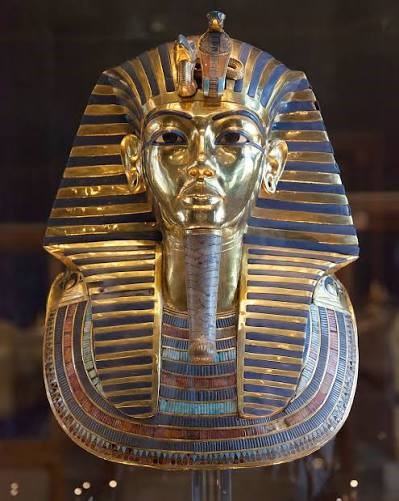
One of the most recognizable treasures of the ancient world, the funerary mask of the young Egyptian pharaoh Tutankhamun was crafted from solid gold and inlaid with precious stones and colored glass. To the ancient Egyptians, gold represented eternity and was believed to be the flesh of the gods, making it the ideal material for objects associated with the afterlife. More than three thousand years later, the mask remains a powerful symbol of both artistic craftsmanship and spiritual belief.
- The Mosaics of the Basilica of San Vitale (6th Century)
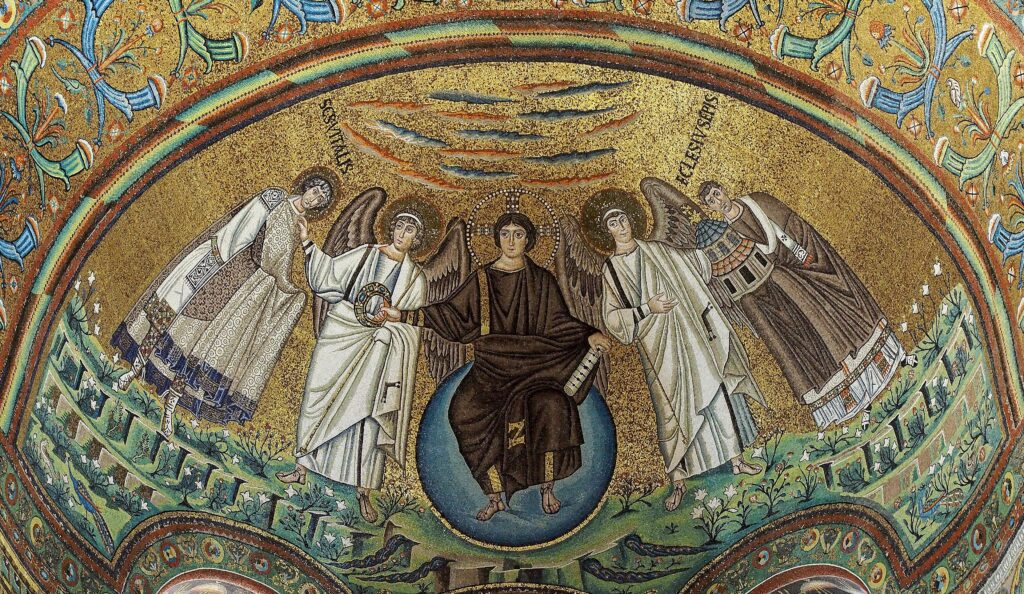
Mosaic in the semi-dome of the apse: Christ Pantocrator with St. Vitalis, two archangels and bishop Ecclesius.
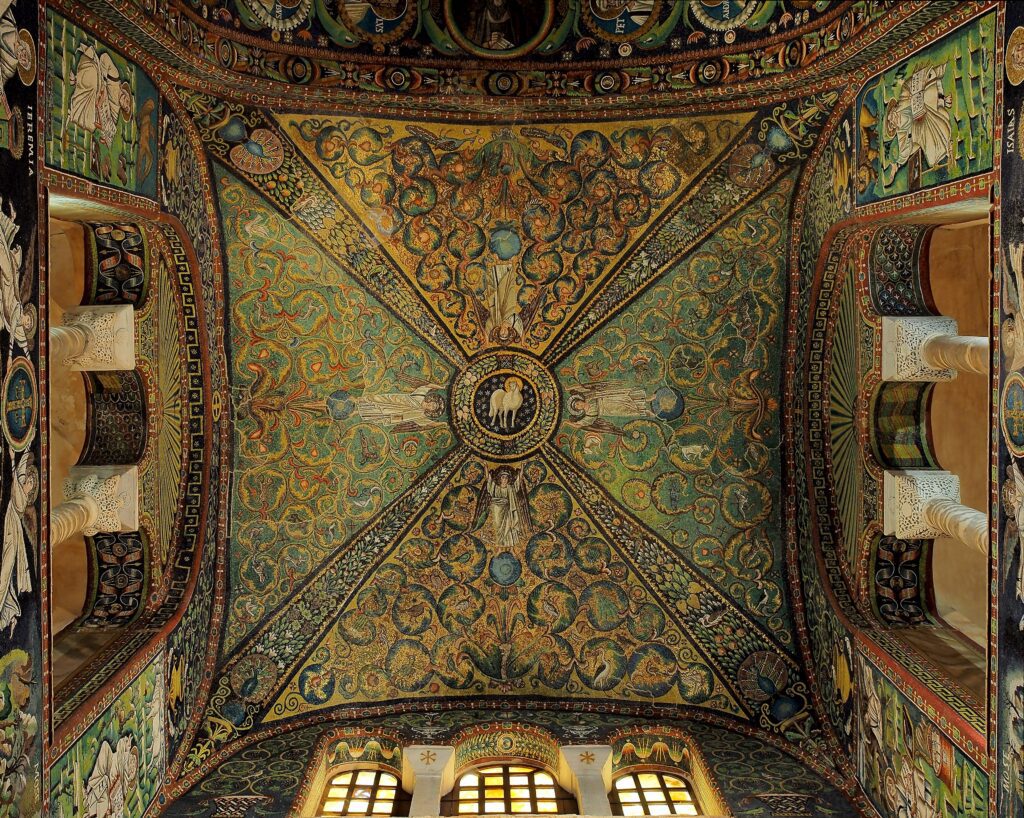
Located in Ravenna, Italy, the Basilica of San Vitale is celebrated for its breathtaking Byzantine mosaics, where thousands of shimmering gold tesserae cover walls and ceilings with radiant light. Rather than depicting a physical place, these golden backgrounds were intended to evoke the timeless, heavenly realm. Their luminous beauty continues to inspire artists today and famously influenced Gustav Klimt after his visit to Ravenna in the early twentieth century.
- Duccio di Buoninsegna, Maestà (1308–1311)
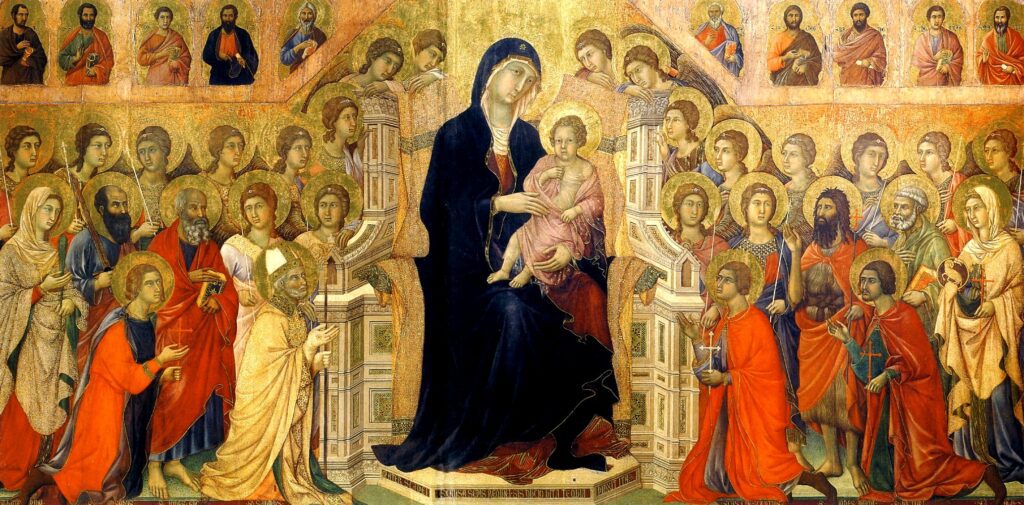
Created for Siena Cathedral, Maestà is one of the defining masterpieces of medieval Italian painting. Its expansive gold background removes the figures from the earthly world, placing them instead within a sacred and eternal space. The work demonstrates how gold was used not merely to embellish religious paintings but to express profound spiritual meaning.
- Giotto di Bondone, Ognissanti Madonna (c. 1310)
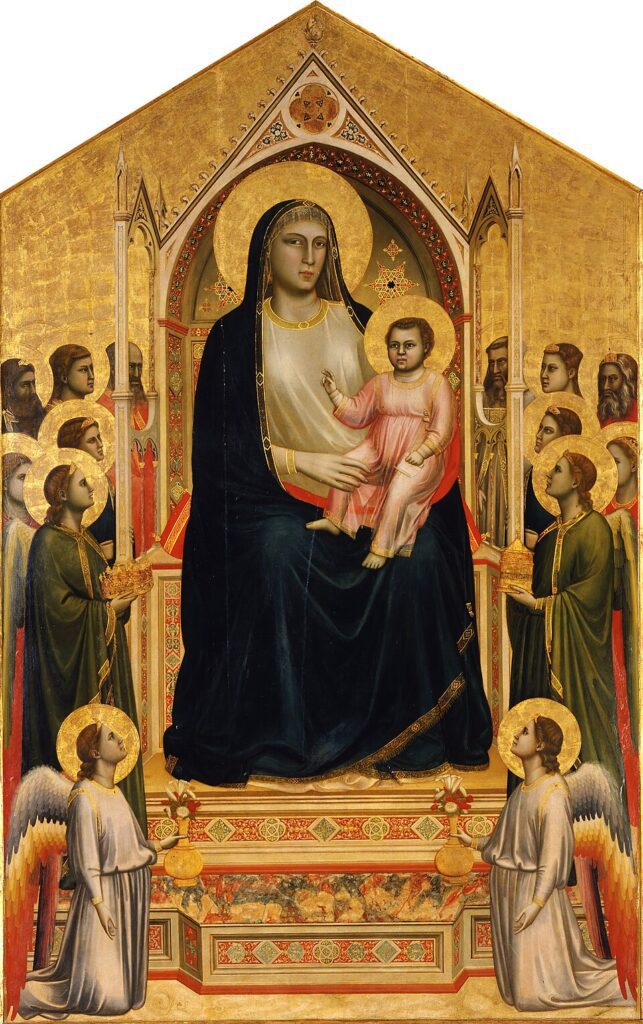
Although Giotto is celebrated for introducing greater realism and naturalism into Western painting, he retained the traditional gold background in Ognissanti Madonna. This combination of lifelike figures with a radiant golden setting reflects a pivotal moment in art history, when artists began bridging medieval symbolism with the emerging ideals of the Renaissance.
- Gustav Klimt, The Kiss (1907–1908)
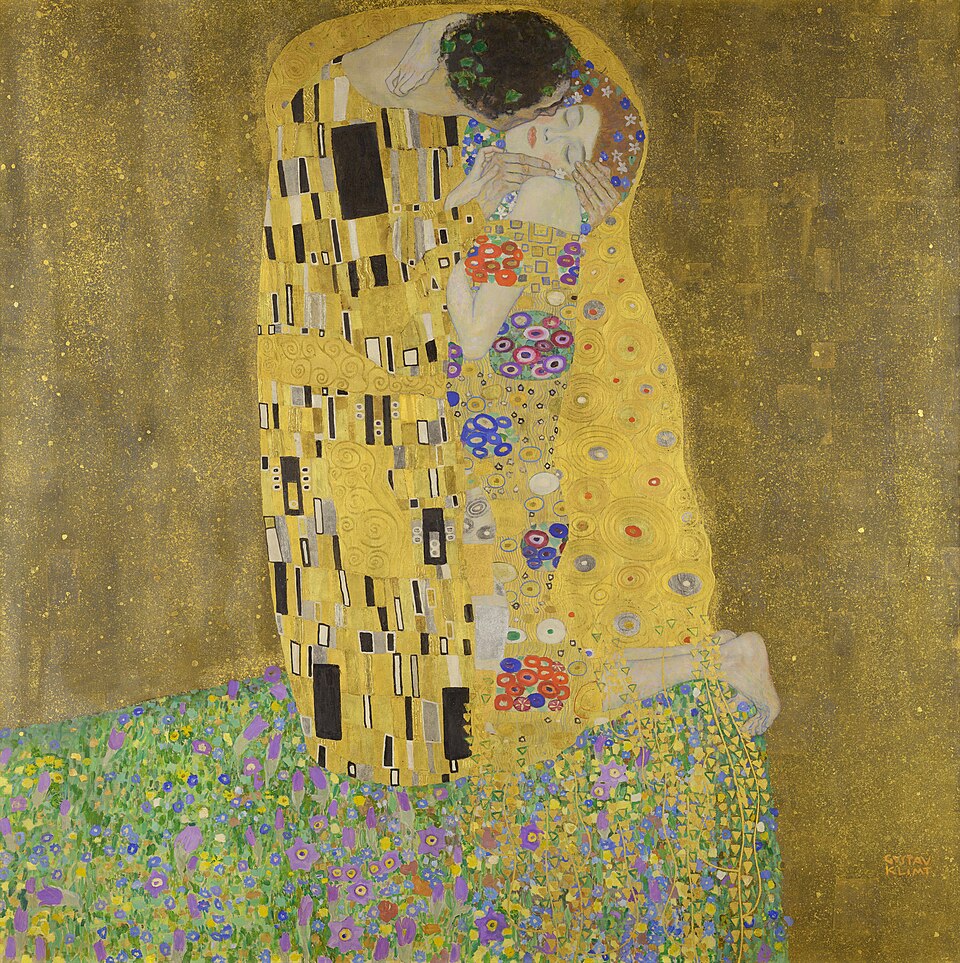
Few paintings have become as closely associated with gold as The Kiss. Created during Gustav Klimt’s celebrated Golden Phase, the masterpiece combines oil paint with genuine gold leaf, silver, and platinum. Inspired in part by the Byzantine mosaics he encountered in Ravenna, Klimt transformed gold into a contemporary language of intimacy, beauty, and symbolism. More than a century later, it remains one of the most beloved paintings in the world.
- El Anatsui, Earth’s Skin (2007)
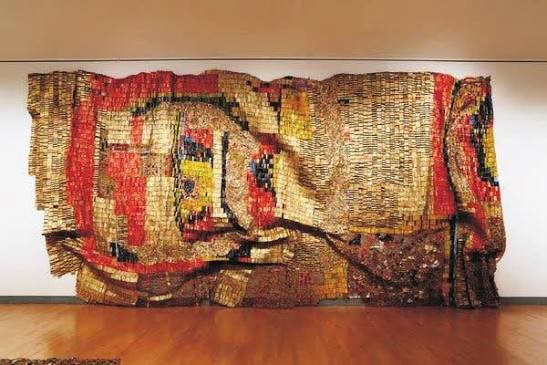
Contemporary artist El Anatsui reimagines the visual language of gold without relying on the precious metal itself. Created from thousands of recycled bottle caps and metal fragments stitched together, Earth’s Skin shimmers like a golden tapestry while exploring themes of history, consumption, transformation, and value. His work demonstrates that the symbolism of gold can be just as powerful as the material itself, proving that its legacy continues to evolve in contemporary art.
Beyond the Canvas: Gold in Architecture and Decorative Arts
The story of gold in art extends far beyond paintings and sculptures. For centuries, architects, craftspeople, and artisans have used gold to transform buildings and decorative objects into spaces of awe, devotion, and celebration. Whether catching the first rays of sunlight on a temple dome or reflecting candlelight inside a sacred sanctuary, gold has long been used to create experiences that feel both visually breathtaking and emotionally profound.
One of the most remarkable examples is the Temple of the Golden Pavilion (Kinkaku-ji) in Kyoto, Japan. Covered in gold leaf across its upper floors, the Zen Buddhist temple appears to shimmer above the surrounding pond, changing with the seasons and the light. Rather than serving as a display of extravagance, the gold symbolizes purity, harmony, and the Buddhist aspiration to transcend worldly attachments. Today, it remains one of Japan’s most celebrated architectural landmarks and a testament to how gold can transform an entire landscape into a work of art.
In Europe, gold reached extraordinary heights in the churches and basilicas of the Byzantine Empire. The soaring interiors of Hagia Sophia in Istanbul and St. Mark’s Basilica in Venice are renowned for their dazzling gold mosaics, where thousands of tiny tesserae reflect natural light to create an atmosphere unlike any ordinary interior. Rather than depicting realistic skies or landscapes, these golden backgrounds were designed to evoke a heavenly realm, surrounding worshippers with a sense of the divine and demonstrating how architecture, light, and art could work together to shape a deeply spiritual experience.

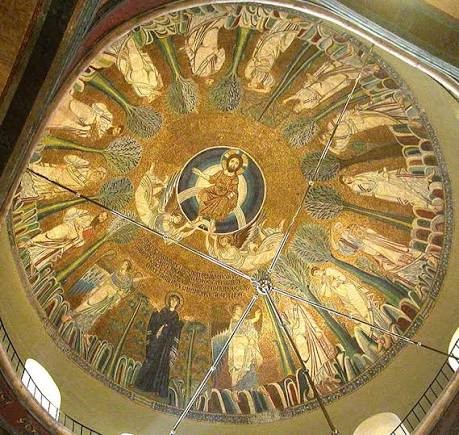
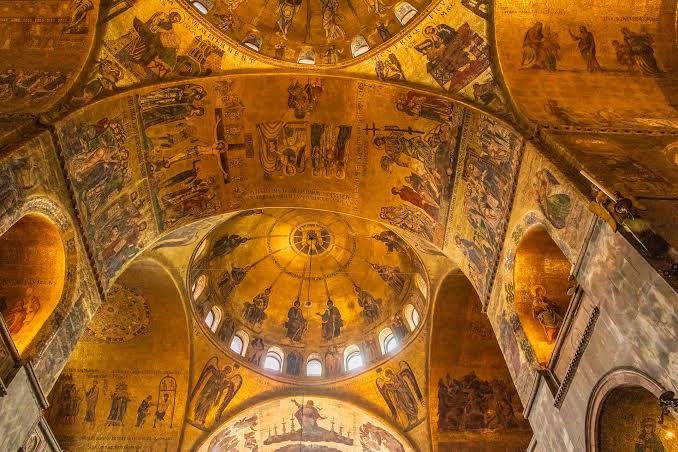
Gold has also played an important role in the decorative arts, where it has elevated everyday objects into extraordinary works of craftsmanship. From illuminated medieval manuscripts adorned with gold leaf to intricately gilded furniture, ceramics, lacquerware, jewelry, and textiles, artisans have used the material to celebrate both technical mastery and cultural identity. Across continents and centuries, these objects reveal that gold has never belonged to a single artistic discipline. Instead, it has remained a timeless medium that connects fine art, architecture, design, and craftsmanship through its enduring ability to inspire wonder.
How Contemporary Women Artists Are Reimagining Gold
While gold has a long history in art, many contemporary women artists are redefining its meaning in powerful and unexpected ways. Rather than using it solely as a symbol of luxury or decoration, they incorporate gold to explore memory, healing, identity, spirituality, and cultural heritage. Their work demonstrates that this ancient material continues to evolve, taking on new relevance in today’s artistic landscape.
Yeesookyung: Translated Vase
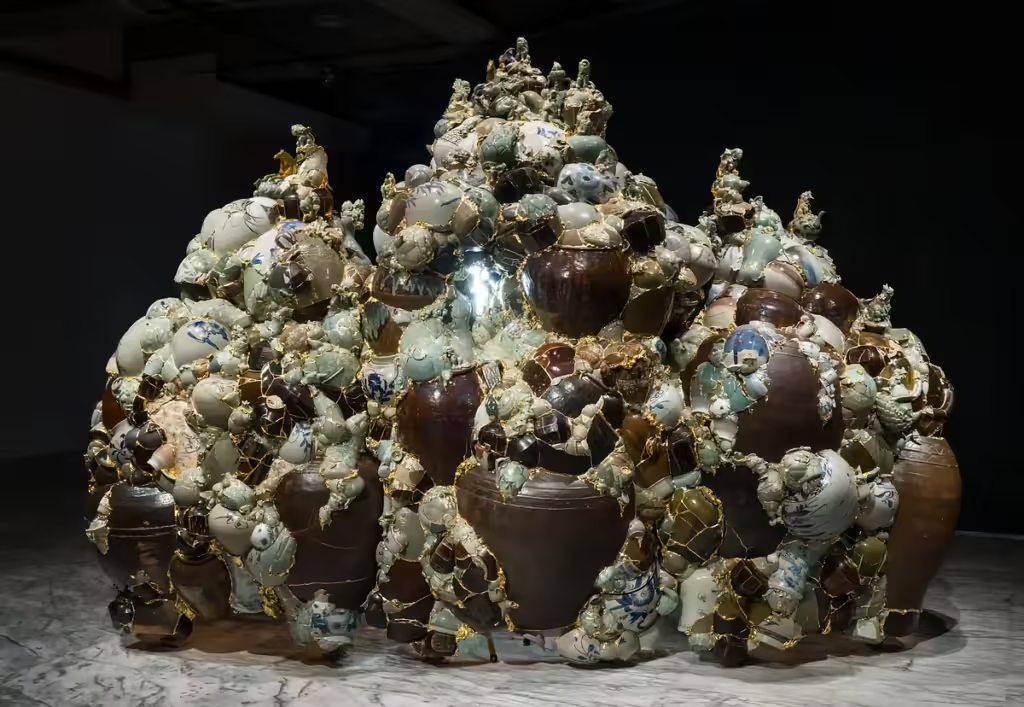
South Korean artist Yeesookyung is internationally recognized for her Translated Vase series, in which shattered ceramic fragments are carefully reassembled using gold-colored joins inspired by the philosophy of kintsugi. Instead of concealing cracks, her sculptures celebrate them, transforming brokenness into beauty and resilience. Her work encourages viewers to see imperfection not as something to hide, but as an essential part of every object’s story.
Shahzia Sikander: Gold as a Bridge Between Histories
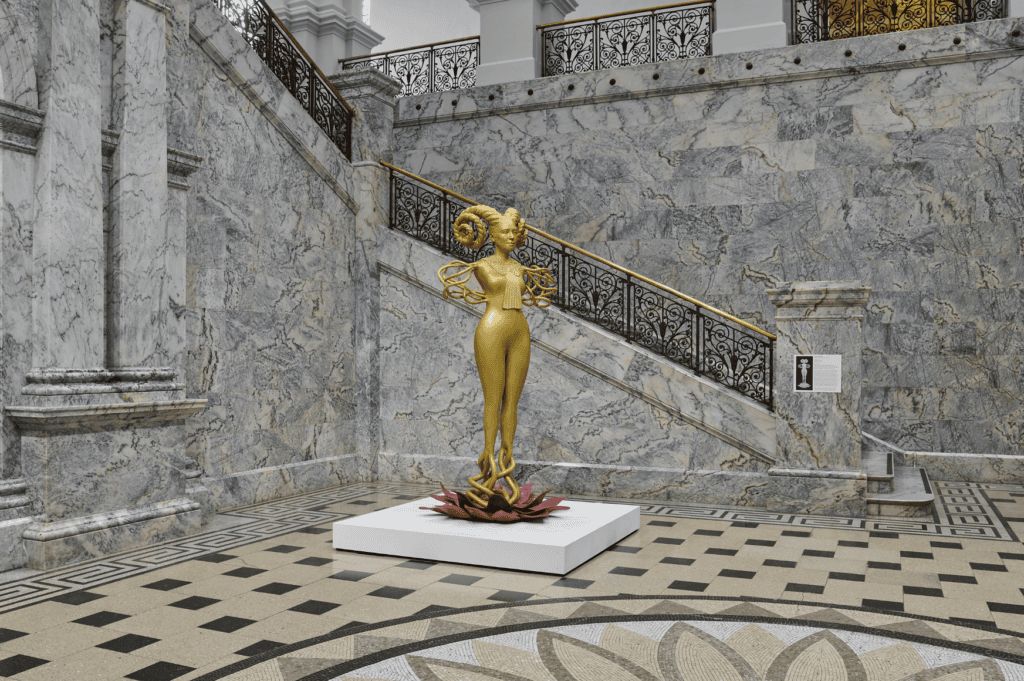
Pakistani American artist Shahzia Sikander frequently incorporates gold into her paintings, drawings, and animations, blending the visual traditions of Persian and Mughal miniature painting with contemporary themes. In her work, gold becomes more than an ornamental element. It acts as a bridge between history and the present, exploring identity, migration, feminism, and cultural memory through richly layered compositions.
Chiharu Shiota: Moments of Gold Amid Memory
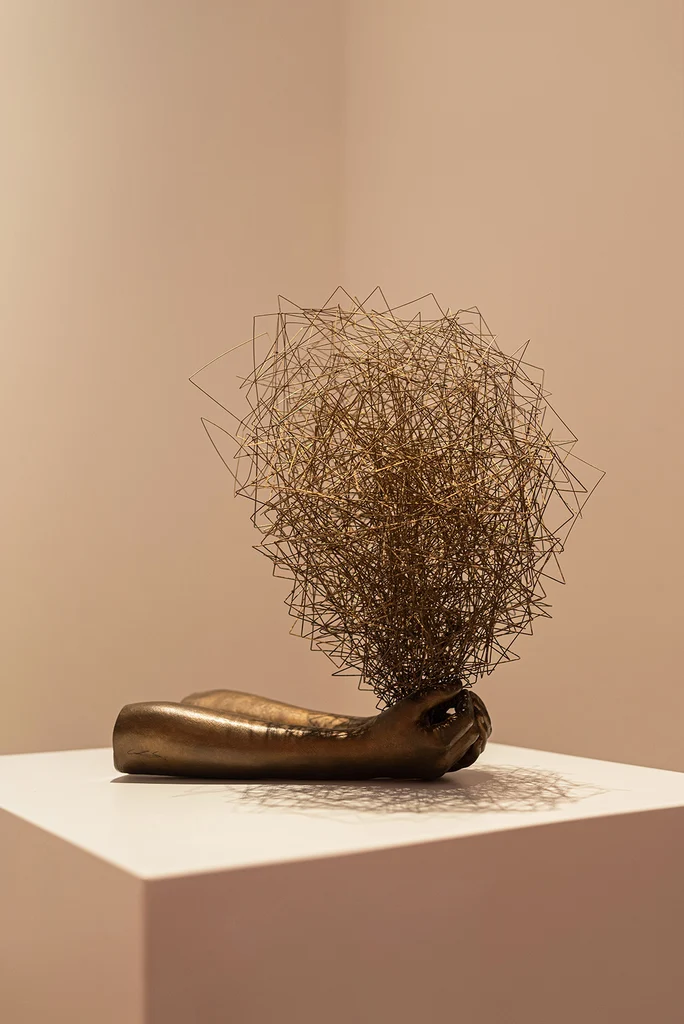
Although Japanese artist Chiharu Shiota is best known for her immersive thread installations, she occasionally introduces gold elements into her sculptures and drawings to create moments of light and reflection within themes of memory, absence, and human connection. In her practice, gold serves as a quiet symbol of hope and remembrance, gently illuminating emotional narratives.
Using Gold in Your Own Art
Gold doesn’t have to be reserved for museums, masterpieces, or expensive materials. Today, artists have countless ways to incorporate its visual and symbolic qualities into their work, whether through genuine gold leaf, imitation leaf, metallic acrylics, pigments, foils, embroidery threads, ceramics, textiles, or even digital illustration. The choice of material matters less than the intention behind its use.
What gives gold its lasting impact is not its price tag, but the meaning it carries. A carefully placed accent can draw the viewer’s eye to a focal point, create contrast within a composition, or emphasize an object, figure, or memory that holds special significance. Used thoughtfully, gold can introduce warmth, luminosity, and a sense of timelessness that few other materials can achieve.
Before adding gold to a piece, it is worth asking what purpose it serves. Does it highlight something sacred, celebrate a moment of joy, symbolize resilience, or simply strengthen the visual balance of the composition? When used with intention rather than excess, gold becomes more than a decorative element. It becomes part of the artwork’s narrative.
Perhaps that is why gold has never gone out of style. Across thousands of years, artistic movements, and cultural traditions, its meaning has continued to evolve while its ability to captivate has remained unchanged. Trends may shift and materials may change, but gold continues to remind us that art has the power to preserve what we value most, transforming fleeting moments into something that feels enduring.
A Legacy That Continues to Shine
Artistic movements have come and gone. Styles have evolved, technologies have transformed creative practice, and countless new materials have emerged. Yet gold remains one of the few artistic elements that has never lost its ability to captivate. Whether glowing from the walls of an ancient temple, illuminating a medieval manuscript, enriching a Klimt masterpiece, or appearing in a contemporary mixed media work, it continues to tell stories that transcend time.
Perhaps that is gold’s greatest gift to artists. It reminds us that materials are never just materials. They carry history, symbolism, emotion, and memory, waiting to be reimagined by every new generation of creators. As you explore your own artistic journey, consider not just how gold can add brilliance to your work, but what it can help you say. Sometimes, the smallest touch of gold is enough to transform an artwork into something unforgettable.
