
How trees become windows into the landscape in Katharine Dufault’s paintings
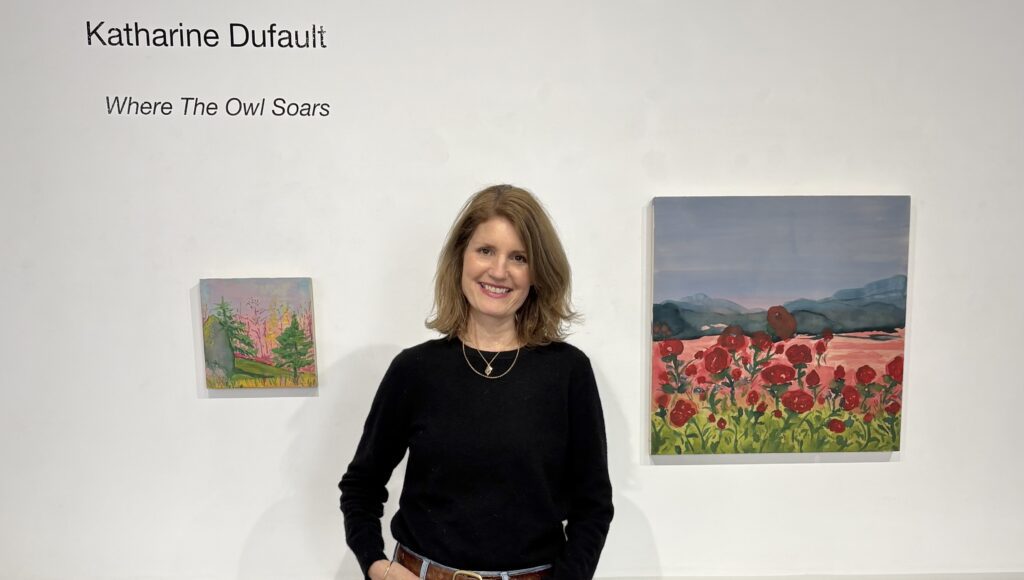
At Women in Arts Network, Flora and Fauna brings together artists who respond to the natural world in remarkably different ways. Some are drawn to its detail. Others to its symbolism, changing seasons, or quiet rhythms.
Katharine Dufault is one of the selected artists whose work explores something else entirely the way memory, observation, and imagination can come together to create landscapes that feel familiar, even when they don’t exist.
Raised in the countryside near Cambridge, England, Katharine grew up surrounded by gently rolling meadows, winding rivers, and long afternoons spent painting outdoors with her artist mother. Those early experiences shaped not only her love of landscape, but also the way she continues to experience nature today. Looking, for Katharine, has become a lifelong practice.
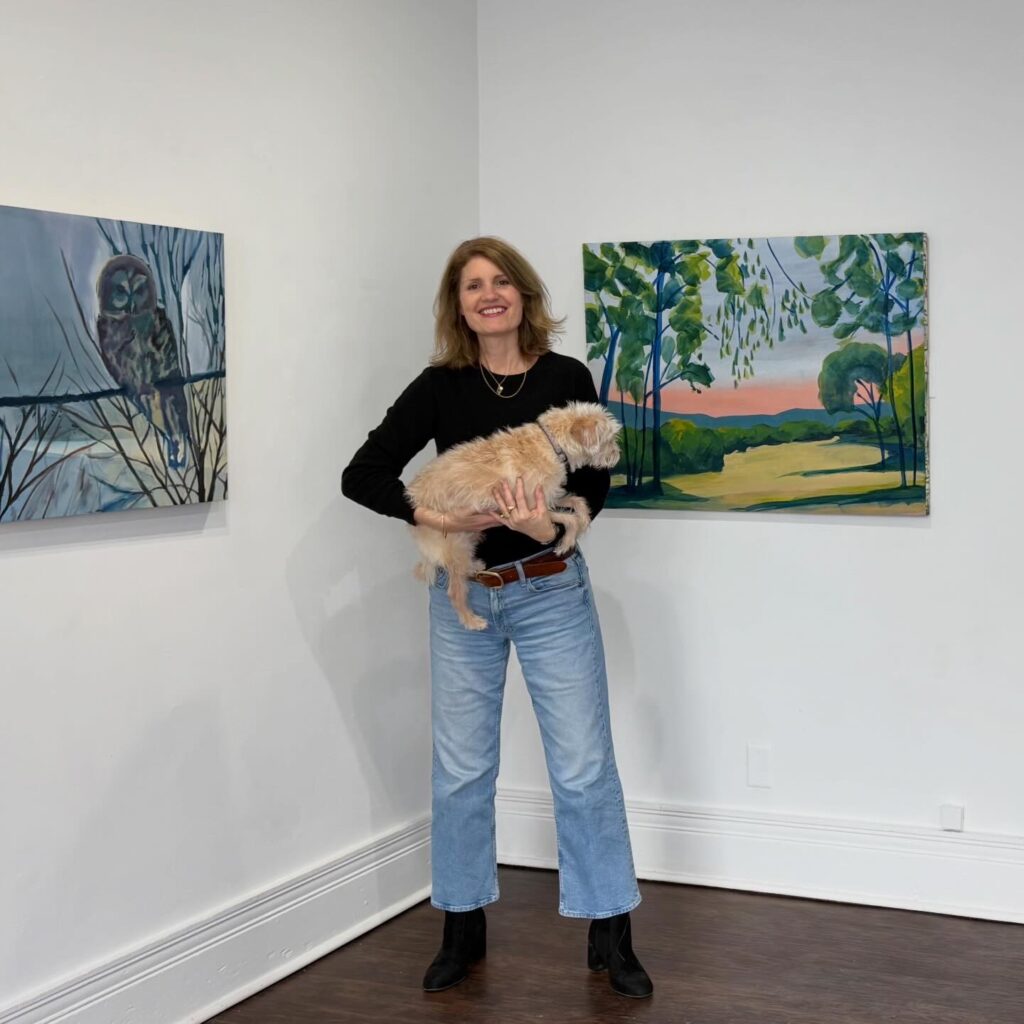
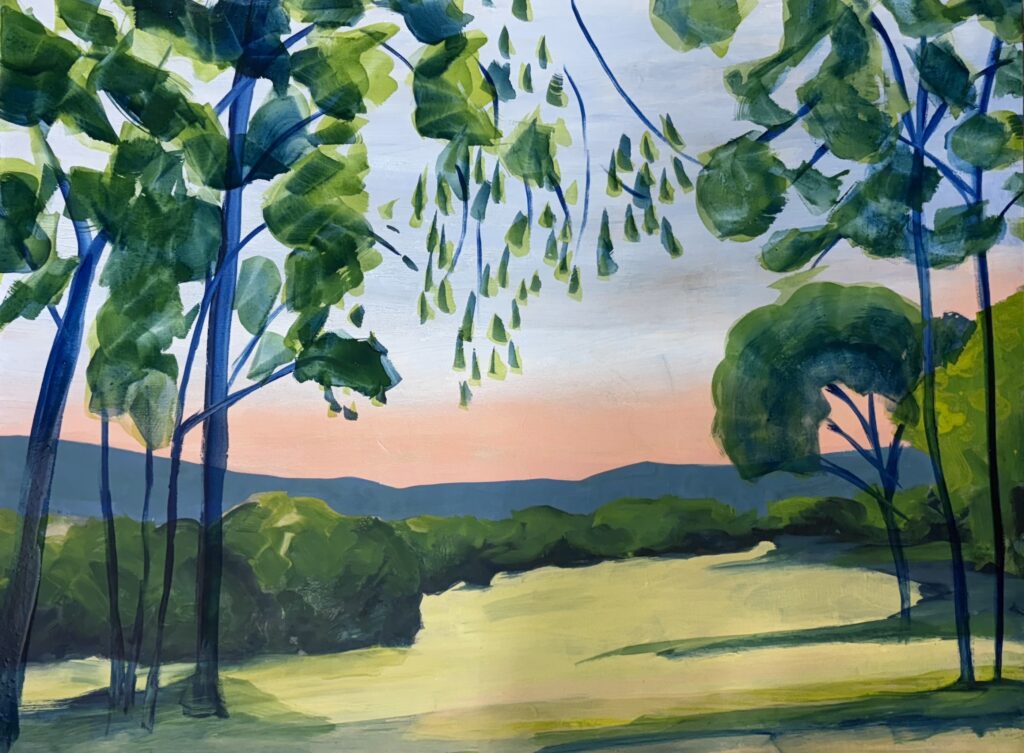
Although her paintings begin with real places, they rarely remain tied to a single location. A line of trees remembered from one walk might meet the colours of another landscape seen years later. A distant hill, a stretch of sky, or a shaft of afternoon light slowly merges with memory and intuition until the painting becomes something entirely its own. That process gives her work a quiet sense of mystery.
Working primarily in oil, while also exploring watercolour, encaustic, printmaking, and monotype, Katharine embraces the freedom each medium offers. Yet regardless of the material, the landscape remains her constant language a place where observation and imagination exist side by side rather than in opposition.
Her paintings don’t recreate nature exactly as it appears. They recreate the feeling of having experienced it.
Now let’s get to know Katharine through our conversation about landscape, memory, abstraction, colour, creative intuition, and why nature continues to be the place she returns to again and again.
Q1. Katharine, you were born and raised in the countryside near Cambridge, England. What was that landscape like? What do you remember from your childhood there?
The landscape was mostly flat, with gentle hills. Verdant meadows sloped down toward a river that curled through the countryside, with old weeping willows here and there leaning toward the water.
Q2. Your mother was an artist before becoming a stay-at-home parent, and she always encouraged you and your siblings to paint. What was that like growing up with an artist mother?
We went on picnics in the meadows and always brought our little watercolour sets. We were encouraged to find a view that engaged us and then paint it. I assumed all children grew up having picnics and painting the landscape.
Q3. You’ve said “the landscape is something I’ve always gravitated toward…it’s always been my default subject.” When did you realize landscape was your language?
I am always gazing intently at the landscape, wherever I am. I look at the shapes of fields, mountains, and tree lines, and at the way light illuminates a stretch of land. I notice how the landscape transforms at different times of day. I am searching for something both familiar and inspiring.
Q4. You create from “a synthesis of views detached from an actual view.” Can you explain that? How is your landscape different from the real place?
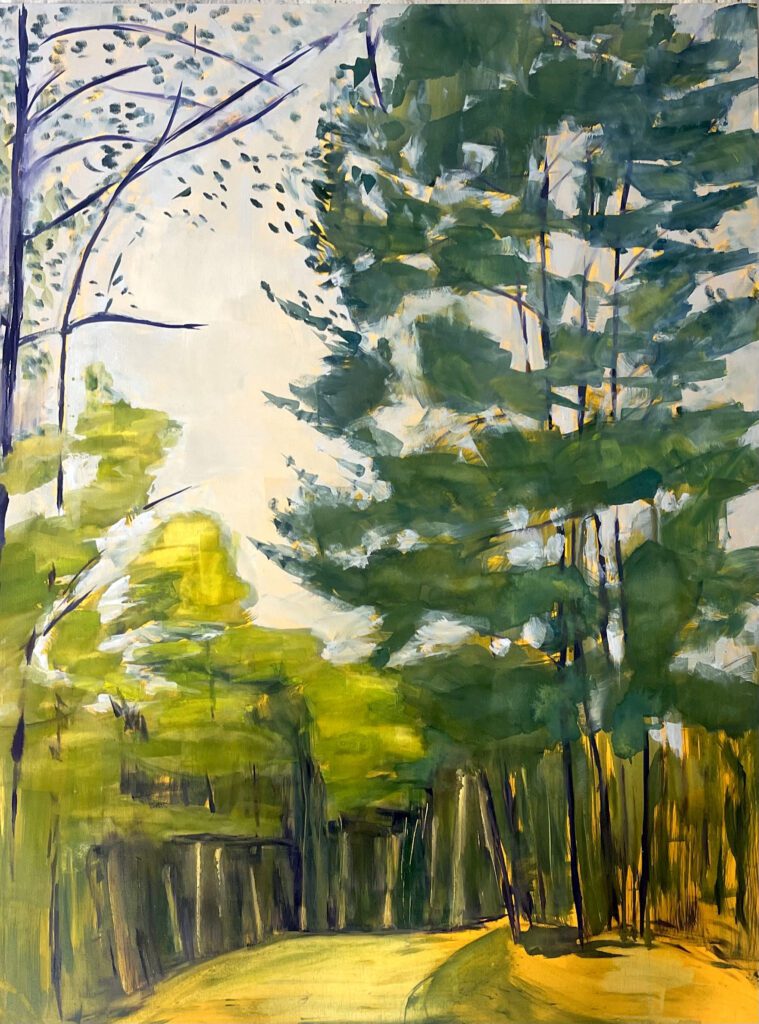
I begin with a landscape I have seen, either held in memory or revisited through photographs or sketches. Perhaps it is the outline of the trees, the colour of the sky, or a distant view glimpsed through an opening in the forest that draws me in. I begin to paint and then allow my imagination to guide me. The painting gradually reveals itself unconsciously. Decisions are made for the reality of the painting rather than the reality of the original image or view. Often, several remembered landscapes merge together and become synthesised into a single place.
Q5. You work in multiple mediums oil, encaustic, watercolour, monotype, block prints. Why work in so many different mediums instead of specializing?
I primarily work in oil paint and sketch in watercolour. However, I enjoy the challenge of image-making in different media, each offering a new way of working and its own set of rules and constraints. I have also taught classes and workshops in many different media, and I find it deeply rewarding to share my knowledge and experience with others.
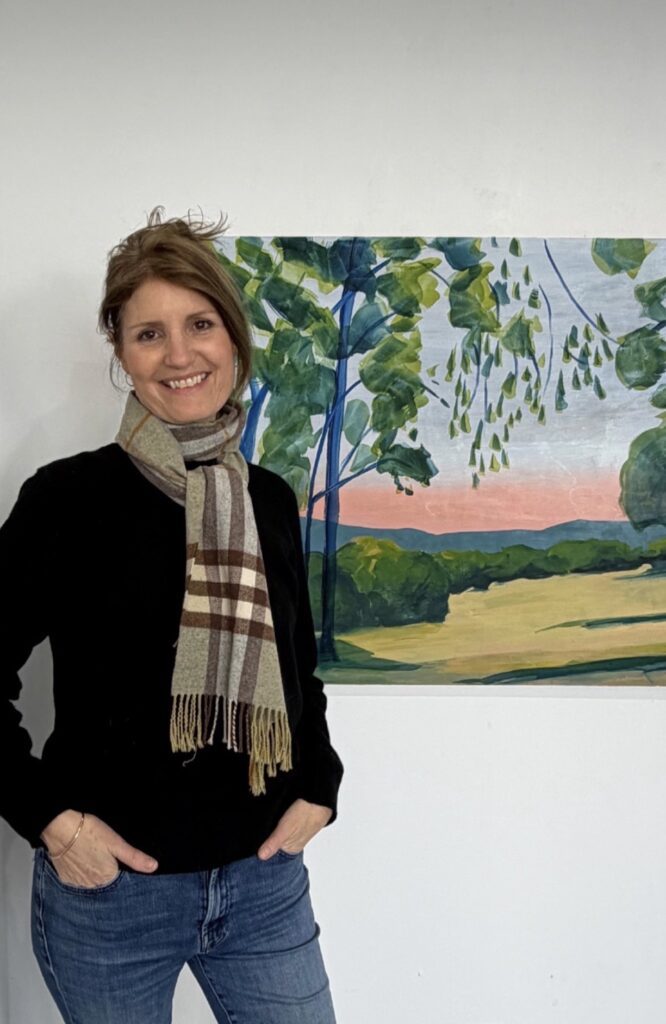
Q6. You’ve described painting as a form of meditation and even a kind of alchemy how does that mindset influence the way a work develops in the studio?
When you become absorbed in the creative flow of painting, you are transported into a kind of magical realm. It feels focused and concentrated, almost like a meditation. In that state, things happen unconsciously, which feels alchemical. Paint moves, colours react, and compositions emerge organically.
Q7. How abstract is too abstract? Where’s the line for you between landscape and pure abstraction?
My abstraction is always grounded in something concrete or real. The lines, shapes, or colours may simplify, fuse, merge, or flatten, depending on how I choose to abstract them, but the work always refers back to a real place or subject. If it lost that connection entirely, it would become too abstract for me, and ultimately would not work.
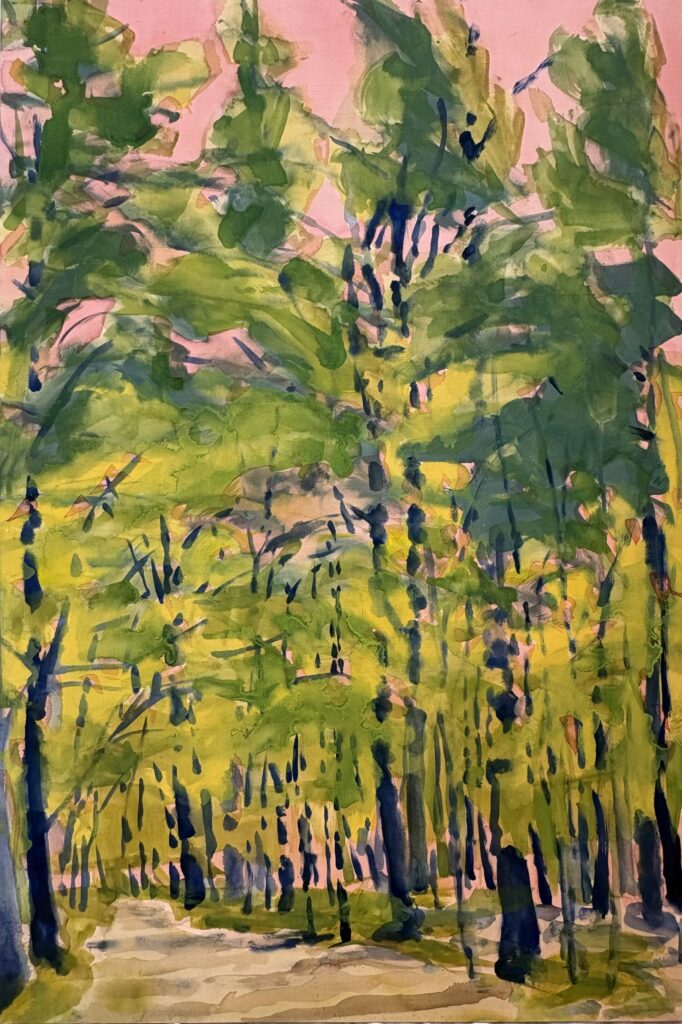
Q8. Do you chase specific lighting conditions golden hour, overcast days, particular seasons?
I enjoy all variations of light throughout the day and across the seasons. It really depends on whether a scene moves or inspires me. A flat winter sky with a monotone landscape is as beautiful to me as bright spring leaves on a tree with branches still visible, or dense afternoon shadows on foliage in the summer
Q9. In your work, color feels less descriptive and more like the subject itself how do you approach color when building a composition?
I often begin by thinking about the colours I intend to use — perhaps inspired by a fleeting glimpse of landscape while driving, a sunset, or the brilliant green of sunlit spring leaves. I usually pre-mix containers of colour so that I can work freely and intuitively, applying paint in either thick passages or thin washes.
Q10. In a time when landscape painting has taken many new directions, what continues to draw you back to nature as a starting point?
I am in awe of nature. The more time I spend in it, and the older I become, the more amazed I am by it. I feel a constant urge to express my response to the natural world through painting. I can’t not respond and paint!
Q11. You’re both an artist and a curator. When did you start curating in addition to making your own work?
I began curating about a decade ago when I started working with a non-profit art centre. As an artist serving on the gallery’s arts committee, I wanted to help create a more dynamic and mature exhibition programme one that moved beyond primarily school or community-based shows toward thoughtfully conceived exhibitions featuring professional artists.
The first abstract exhibition I curated was reviewed by the New York Times, and after that I continued curating every few years. I love the entire process: developing the concept, selecting artists, visiting studios, choosing artworks, and planning the layout within the gallery.
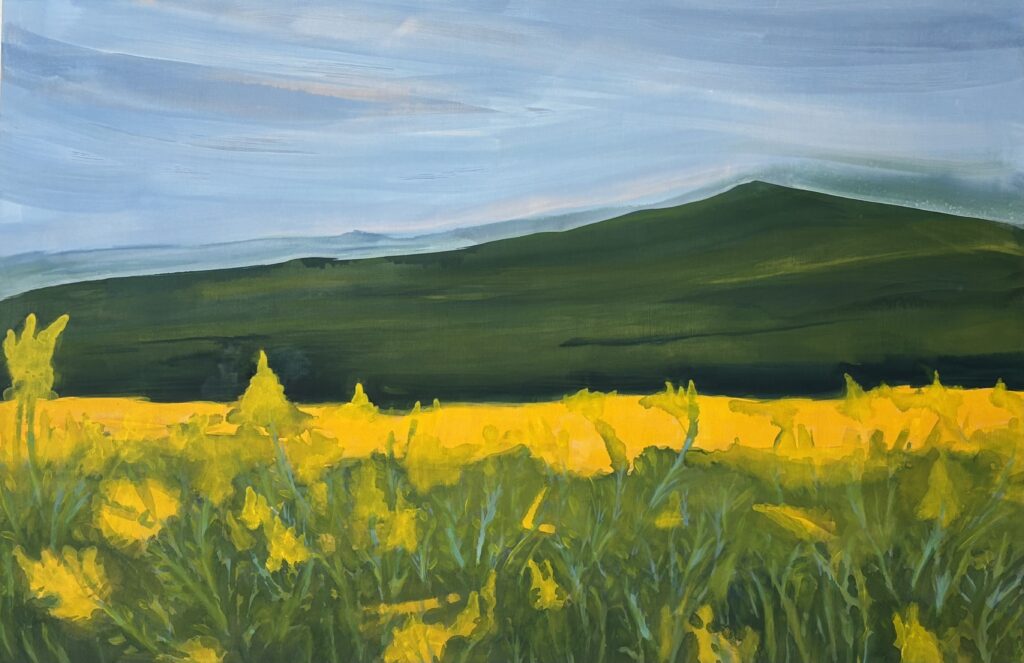
Q12. Looking back at your earlier work, how has your relationship with landscape and abstraction changed over time?
Yes, very much so. There were periods when I pushed my work much further into abstraction, using colour and form to create a more patterned sense of landscape. For several years, I often included an ambiguous orb either a moon or sun to create compositional space within otherwise abstracted colour fields. I enjoyed that kind of formal colour play.
More recently, I’ve moved toward painting landscapes with more distinct characteristics and perhaps a greater sense of narrative. I’ve also developed certain recurring motifs for trees and forests that continue to appear in my work.
Q13. What advice would you give to artists trying to develop a practice that balances observation, intuition, and personal interpretation?
Keep looking and keep painting. Don’t expect every painting to become a finished piece. It can take time and experimentation to discover the visual vocabulary that feels true to you. Give yourself questions to explore or constraints that create a framework within which you can work freely.
Have fun. Continue looking at the work of other artists your contemporaries, as well as artists in galleries and museums. It nourishes and inspires the creative impulse.
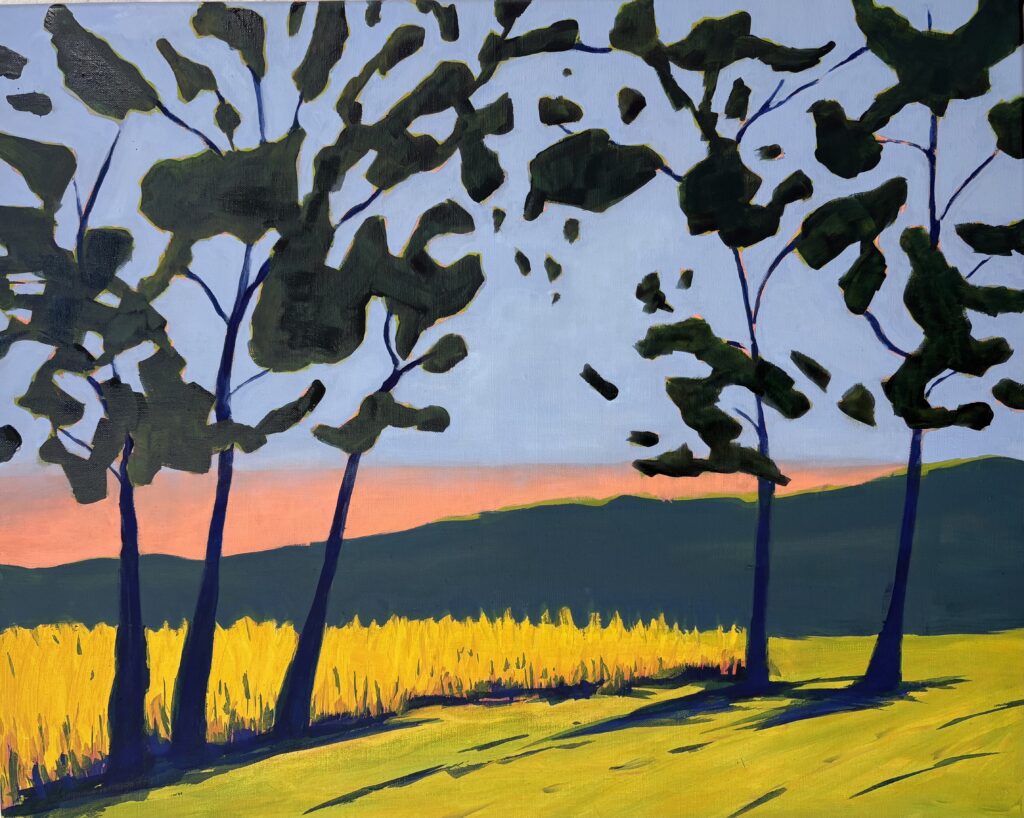
As our conversation with Katharine came to a close, we kept thinking about interpretation.
Landscape has been painted for centuries. Every generation of artists has looked at rivers, forests, fields, mountains, and skies, asking what still remains to be said. Some pursue realism. Others push landscape toward abstraction. Others use it to comment on politics, climate, or identity.
Katharine quietly occupies a space between all of those approaches. She reminds us that a landscape doesn’t have to record a place to tell the truth about it. That feels increasingly meaningful.
In a world where almost, every beautiful view has already been photographed thousands of times, simply reproducing what we see is no longer enough. What gives a landscape painting its value today is not the location itself, but the perspective of the person who experienced it.
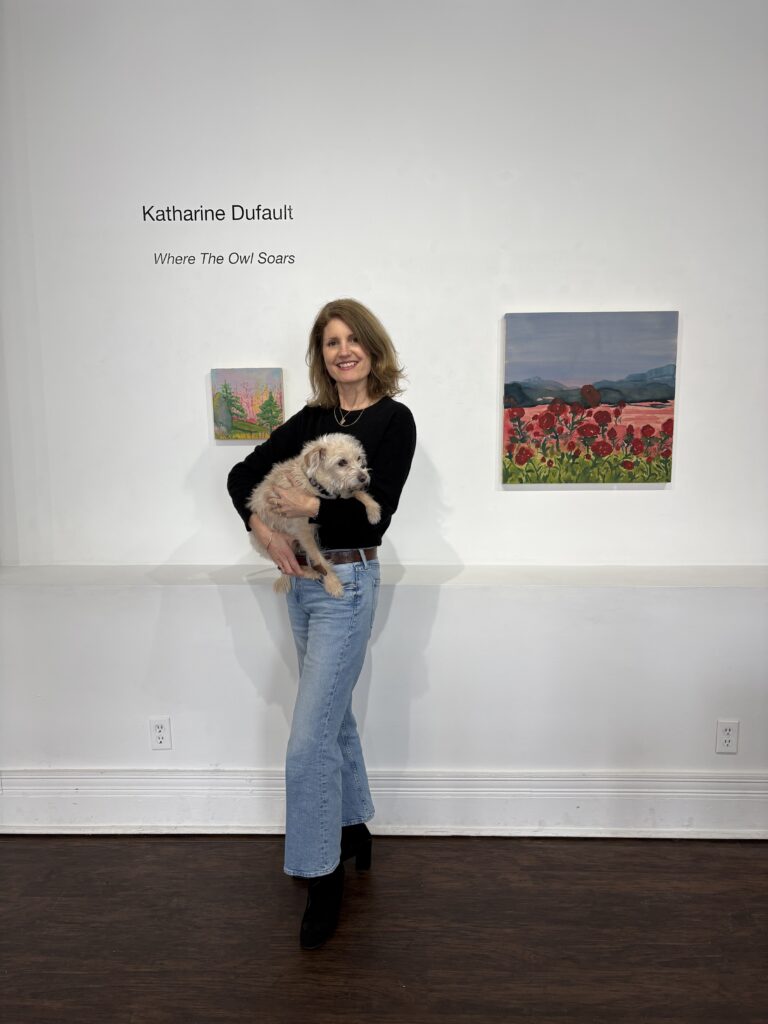
Katharine’s paintings don’t document geography. They document memory, attention, and the emotional residue that places leave behind long after we’ve walked away.
We think there is something important in that for artists. There is often pressure to make work louder, more conceptual, or more dramatic in order to feel relevant. Katharine’s practice reminds us that depth doesn’t always come from adding more. Sometimes it comes from looking longer. From returning to the same subject for years until it slowly becomes your own visual language That kind of patience is becoming increasingly rare.
For collectors, her paintings offer something equally lasting. These are not landscapes that reveal everything at first glance. They continue unfolding over time, changing with the light, the season, and the memories viewers inevitably bring to them. Rather than depicting a single place, they create space for many different experiences to exist within the same painting.
Perhaps that is why the work feels so timeless. It doesn’t ask us to remember her landscape. It quietly makes room for us to remember our own.
To follow Katharine’s journey and see more of her work, find her through the links below.
