
This Canadian artist turns her Coast-to-Coast memories into landscape paintings ┃ Erin Bell
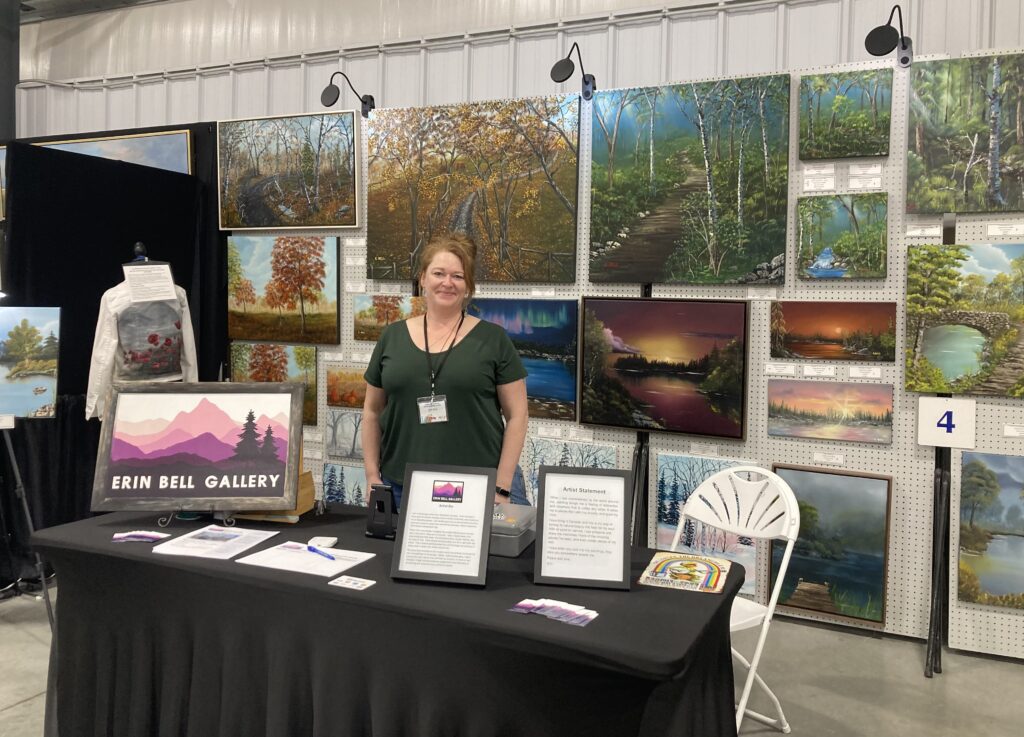
At Women in Arts Network, Flora and Fauna gave us the chance to discover artists whose work grows from a genuine connection to the natural world. Erin Bell is one of them, but her relationship with landscape began long before she started taking herself seriously as an artist.
It began through years of moving, searching for a sense of belonging, and realizing that some of the moments she treasured most were the ones spent outside. In the mountains. Beneath enormous prairie skies. Beside lakes. Deep in forests. Places where, no matter what else was happening, life felt a little less complicated.
Born in Calgary and raised mostly between Manitoba and Alberta, Erin has also lived on both the east and west coasts of Canada and driven across the country more than once. Along the way, she built a collection of places and memories that now find their way into her paintings. The Rocky Mountains still hold a piece of her heart.
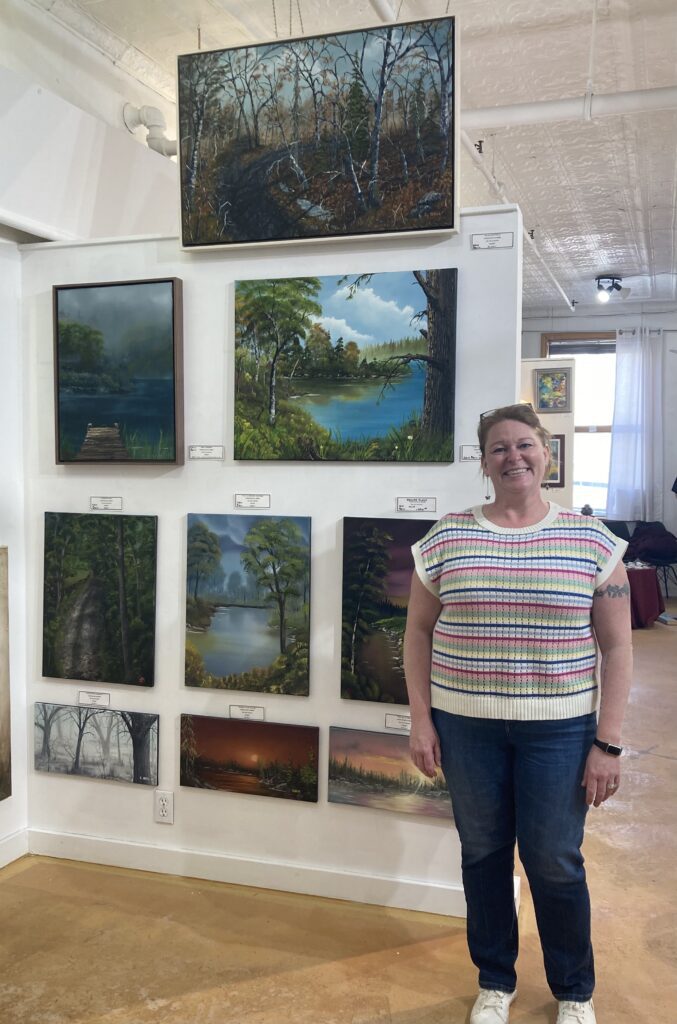
The prairies give her dramatic storms, changing skies, brilliant sunsets, and northern lights. Northwestern Ontario gives her forests, lakes, mist, and sunlight breaking through the trees.
But Erin doesn’t paint landscapes simply to record what she has seen. A few years ago, during a difficult period in her life, she returned to the easel more seriously. Erin describes herself as a slow and steady person living in a world that seems to move faster every day. Painting became somewhere she could go when everything else felt too loud. A place where the constant noise in her head became quite enough for her to hear what she was actually feeling.
That is why her paintings often feel like places you want to step into. Open skies. Still water. Forests without crowds. Sunlight breaking through clouds. Places without screens, demands, or the pressure to keep moving. Erin paints the kind of landscapes where, for a moment, you can simply exist.
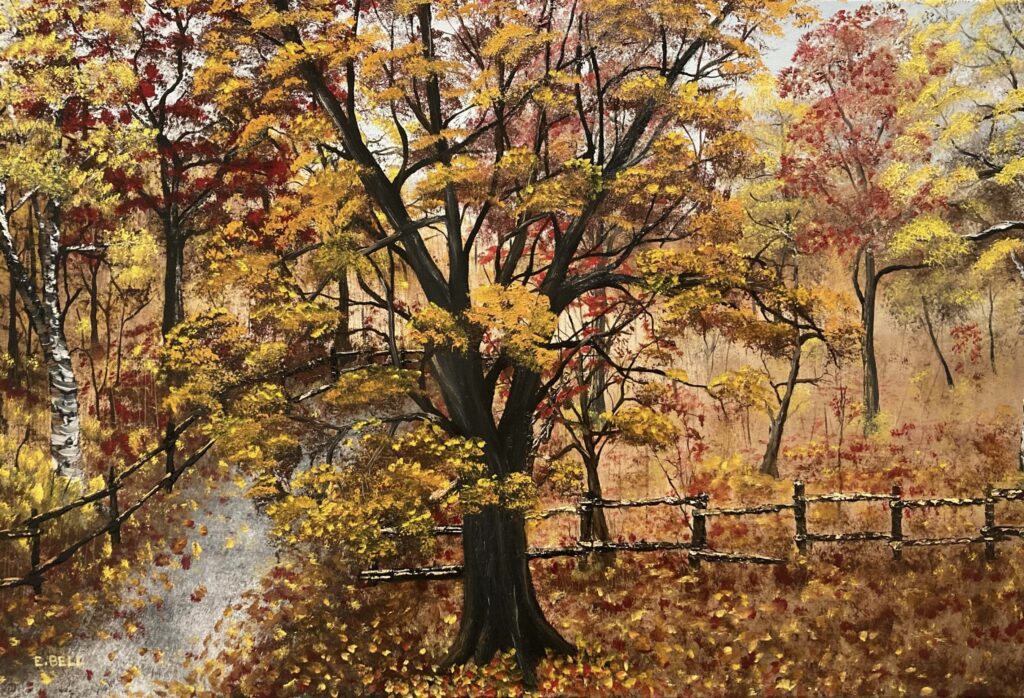
Working primarily in oils, Erin uses brushes and palette knives to respond differently to each landscape. Clear skies need careful blending. Clouds need to hold their shape. Rocks, tree bark, and leaves ask for texture. Reflections require patience. There is no single formula she follows. She chooses the tools and approach based on what each painting needs.
And like many artists today, Erin is also figuring out how to build a career around her work without losing the reason she started painting in the first place. She speaks openly about the hours spent on emails, applications, websites, bookkeeping, and staying visible online when what she really wants is more time in the studio.
Still, she keeps returning to the easel. Because beneath the pressure to grow, promote, sell, and keep up, painting remains the place where things become quiet again.
Now, let’s hear from Erin about the landscapes she carries with her, the role light and weather play in her paintings, and what she has learned about trusting her instincts while building a life around art.
Q1. Erin, before we talk about your work, could you share a little about yourself and how your connection to landscape began?
I was born in Calgary, AB, and grew up mostly in southern Manitoba and Alberta. I always felt like I was searching for where I truly belonged, and constantly weathering some kind of storm. My journey included living on both the east and west coasts of Canada, which of course means I’ve driven this beautiful country coast to coast more than once.
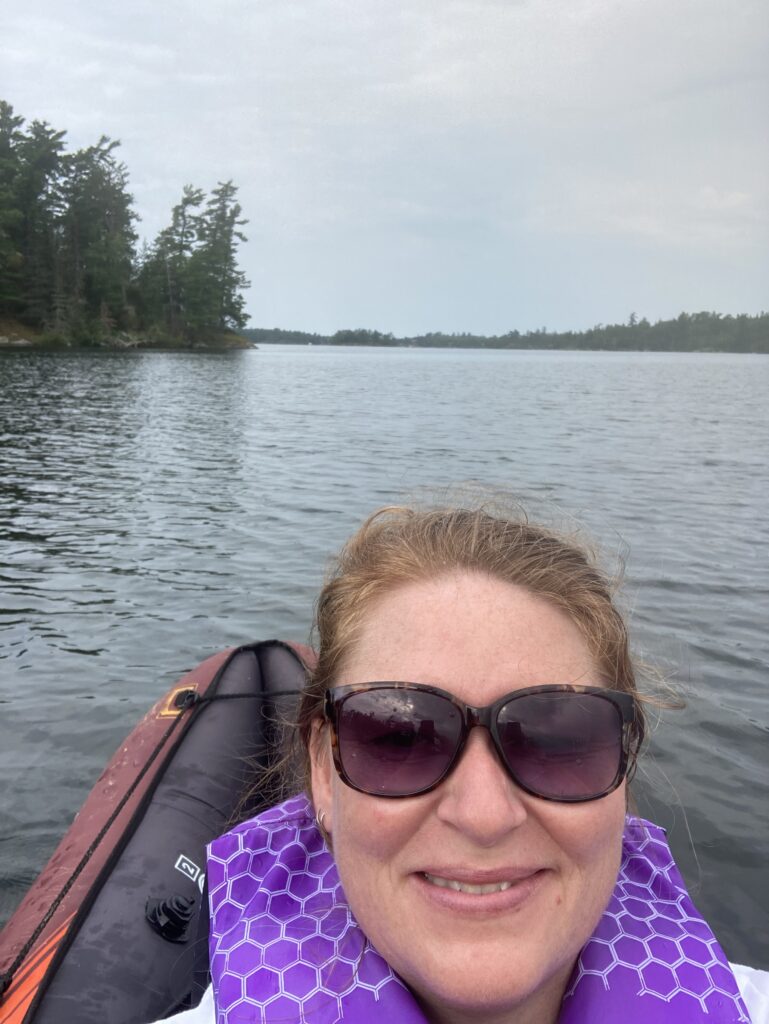
So many of the memories and moments that I treasure most from that bumpy, stormy journey are the ones where I connected to nature. No matter what was going on, those were the moments when everything seemed a bit less complicated. A big piece of my heart still lives in the Rocky Mountains, and I visit it whenever I can. I live in Manitoba with my husband, and also spend lots of time in northwestern Ontario. I use this beautiful, and continually growing catalog of memories to create art that takes me back to those places I’ve been, and to dream up places of my own.
Q2. What continues to inspire you about painting the Canadian landscape, especially its skies, water, and changing light?
My heart is deeply connected to the Canadian landscape. I’m inspired by the beauty and power of nature all over the world, but I’m deeply rooted in Canadian earth, and it inspires me every single day. Living on the prairies, I get to experience big skies and big dramatic storms! We get some amazing cloud formations, brilliant sunsets, reflections on the water, northern lights, and even a sundog in the winter when it’s really cold!
There are also lots of trees, especially when I head east into Ontario.
I LOVE TREES!!! Once you get deep under the canopy of the forest on a warm day, the air is damp and misty, and the sun peeks through. It’s magical. Every day holds the promise of new inspiration right outside my door.
Q3. What draws you to capturing the feeling of a landscape rather than simply documenting it?
When I started taking myself seriously as an artist a couple of years ago, I was going through a really difficult time. A huge part of the ongoing struggle is that I’m a slow and steady person, and it’s getting tougher every day to keep up with the pace of the world we live in, so I retreat. When things got really difficult, I was looking for an off-ramp. Somewhere to pull over and breathe for a minute, and something to quiet the constant running commentary in my head so I could figure out where I was headed.
Painting has always been part of my life, but not one I was always able to pursue for one reason or another. When I went back to my easel and started painting out the feelings, wouldn’t you know it, the background noise in my brain was all but gone. It’s one of very few things I can do that makes my brain quiet enough that I can hear what my heart is saying.
The subject matter of my paintings is the expression of my heart and soul’s dream on canvas (or whatever I’m painting on!). Usually a quiet place where there is space to breathe. No devices, no sounds of civilization, no demands, no judgements. Just to be a human among the flora and fauna – a reminder that it’s really that simple when you strip away all the complications of modern life.
Q4. What interests you about painting changing light, from sunrise and sunset to shifting weather?
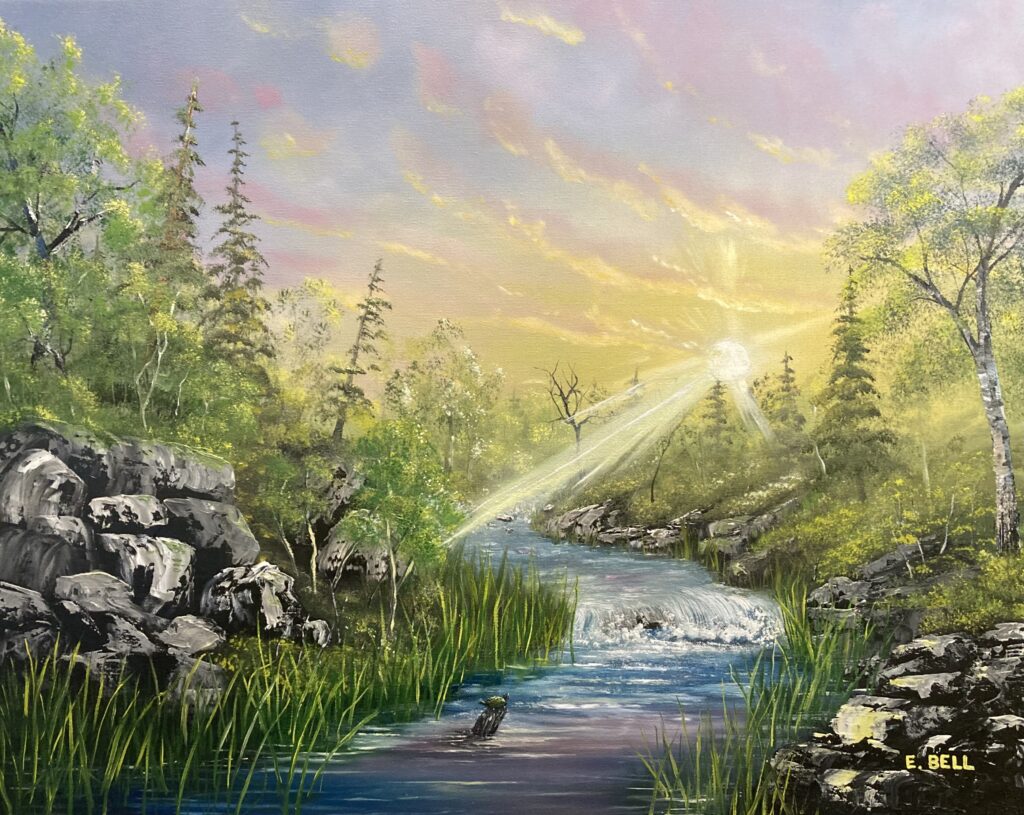
Light (whatever the source) is what brings a landscape to life – it’s what can make the same view look completely different every single day. The same scene on a clear, cold winter day looks entirely different under a summer sunset. I can sit for hours just watching the sky change, or watching the reflection move across a lake as the sun rises or sets. I love using a light source to create drama in my paintings.
It’s a great way to create depth and distance in a landscape, but also it’s where the emotion lives. The sunset takes me to a quiet peaceful moment like a reward at the end of the day, and there’s a new one every single day! The sun peaking through the clouds represents feelings like hope and possibility – like when the sun comes out on a chilly day, and feels warm on your face.
Q5. How do you use colour to create mood in works like “A Walk in the Woods in Peach and Pink Sky in the Morning?
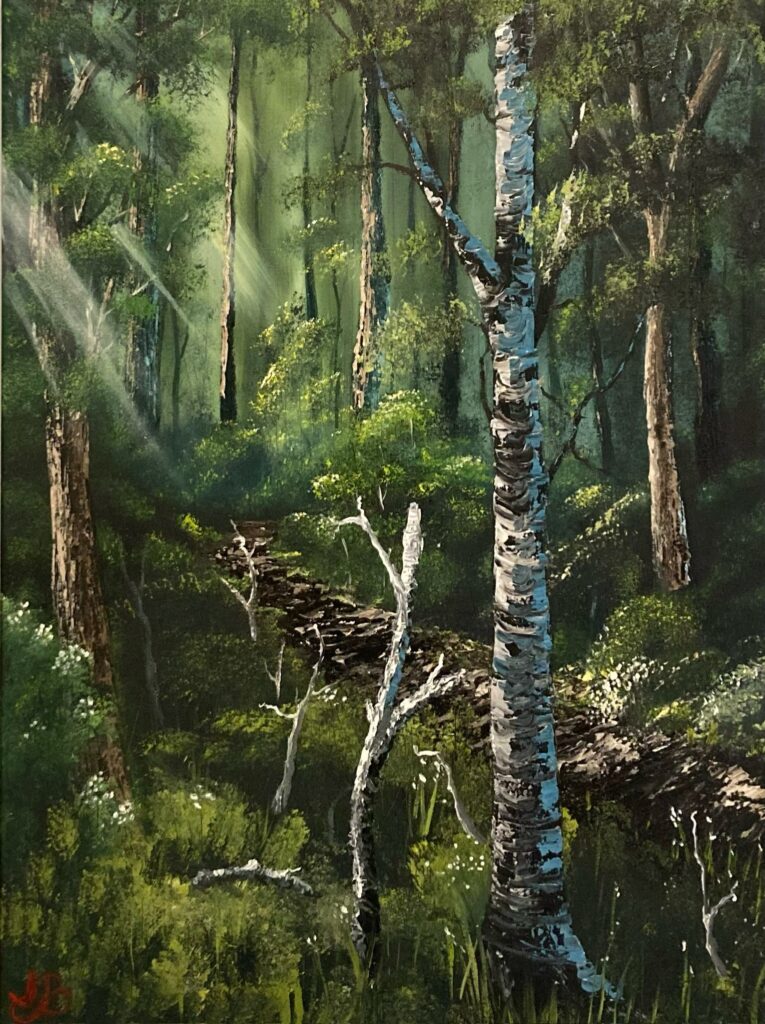
Color is usually one of the first decisions I make when I start a new piece. Both “A Walk in the Woods” and “Pink Sky in the Morning” are perfect examples of this. “A Walk in the Woods” uses mostly shades of green and is grounded by earth tones. I wanted to express the feeling of walking in the woods, surrounded by so much green.
Every breath of the rich fresh air refuels and energizes me more than any cup of coffee ever could. “Pink Sky in the Morning” was born entirely of my need to paint a pink sky. I also adore the connotation that sailors (or shepherds, depending which proverb you’re familiar with) need take warning (that turbulent weather way be on the horizon). I love a good storm, so a pink sky in the morning fills me with anticipation!
Q6. How do oils and your varied tools shape the texture and feel of your landscapes?
I primarily work with oil paints in my landscapes. One of the biggest advantages of working with oils is the extended dry time. It stays workable long enough to do things like blend out smooth clear skies, and create realistic reflections without having to rush. Using heavy body oils with various brushes and palette knives also allows for creation of texture on things like rocks tree bark and leaves, which really helps to create dimension in a painting.
Q7. Do different weather conditions or landscapes influence the way you apply paint and texture physically on the canvas?
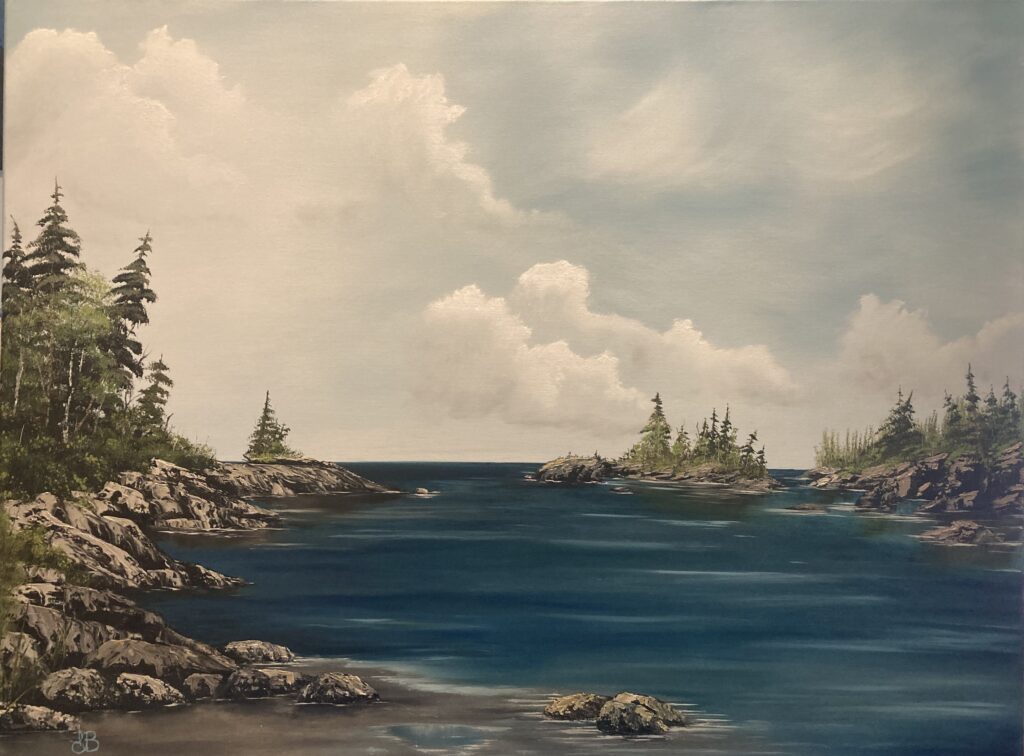
Absolutely! A clear sky has to be very carefully blended, while big fluffy clouds must retain their definition. A strong light source means lots of highlights and building dimension in layers using that light source. A cloudy day or a night time scene can mean being creative with a light source, or working within a smaller range of shades and tones to create the desired effect. I use a different combination of tools every time I paint.
Q8. Why do you think landscape painting continues to resonate so strongly with viewers today?
Landscapes have a way of transporting us. Sometimes by looking familiar, they transport us back to places connected with treasured memories and deep emotions. Sometimes it can be a way of transporting us to a place we dream of going, even when we can’t physically get there. Nature and landscapes are something that we all have in common. No matter who or where we are, the landscapes, weather and ecosystem that surround us impact our day-to-day lives more than most of us recognize or acknowledge.
Q9. In today’s art world, do you think artists feel more pressure to build a personal brand than simply focus on the work itself?
One hundred percent. It’s not quite that simple though. In terms of exposure (this very interview, for example), building a brand is a wonderful thing! Artists in this era can build a brand from the comfort of home, and gain global exposure without going anywhere, making it easier than ever before to have our work seen. That being said, and I can only speak for myself here, but the process and expense of building said brand is something nobody prepared me for.
All I want to do is paint and teach others to paint, but the administration of this venture takes a lot of my time. Posting, updating, applications, memberships, emails, phone calls, branding expenses like business cards, bookkeeping, etc. are all important and necessary parts of my job, but anything that keeps me out of my studio feels like a hinderance to my spirit, and my pocket book.
I can get up in the morning intending to spend all day painting, and then find myself still at the computer finishing my morning coffee and “catching up on a few things” at 2:00 pm, even though I’ve been up since sunrise. It’s tricky to find a balance.
Q10. What has mattered most in your growth as an artist: improving your skills, staying consistent, or trusting your instincts?
Learning to trust my instincts, without a doubt. Technical improvement is certainly important, but losing the fear of messing up is essential to growth in any area of life, and it’s been the key to my growth as an artist. Fear holds us back from so many things if we let it, and realizing we have a choice is so liberating.
Q11. What advice would you give artists trying to build a career while staying connected to why they started creating?
Start small. Art means nothing if it doesn’t come from the heart, and it’s easy to burn out if you go out all guns blazing. Stay true to your own creativity and reasons for creating, and don’t be afraid of rejection. Art is subjective by nature, and finding your audience takes time.
As we come to the end of our conversation with Erin, what stays with us is how closely her paintings are tied to the life she has lived.
The mountains, forests, lakes, storms, and open skies in her work are not simply subjects she finds beautiful. They come from places she has known, memories she has carried with her, and moments when being outside made life feel a little less complicated. That is perhaps why her landscapes feel so easy to connect with.
You do not need to have stood beside the same lake or watched the same prairie storm to understand the feeling behind them. Most of us know what it is like to want somewhere quieter to go. A place with more room. Fewer demands. Somewhere you can stop thinking about what comes next and simply be there for a while.
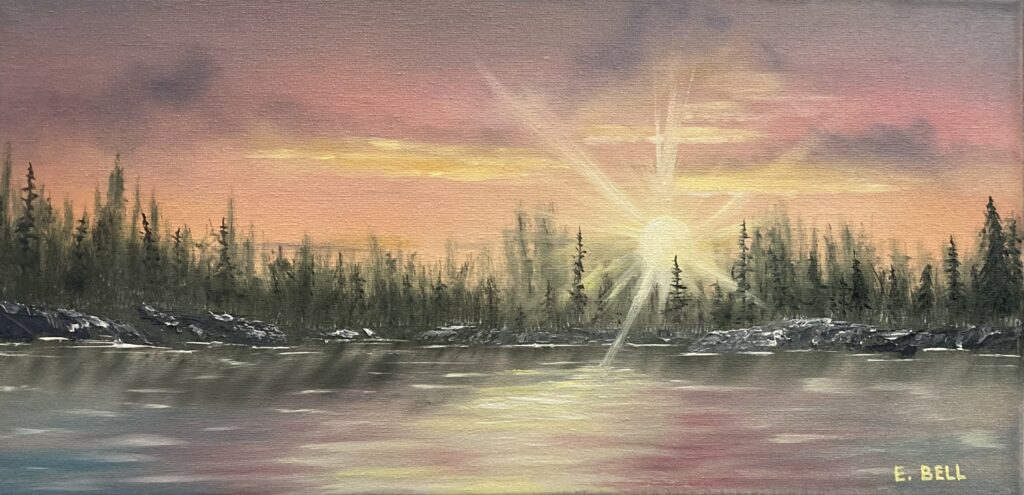
Erin creates those places in paint. She pays attention to the things many of us move past too quickly. The way sunlight changes the same landscape from one day to the next. The reflection moving across water. The warmth of the sun breaking through clouds. The anticipation of a storm arriving.
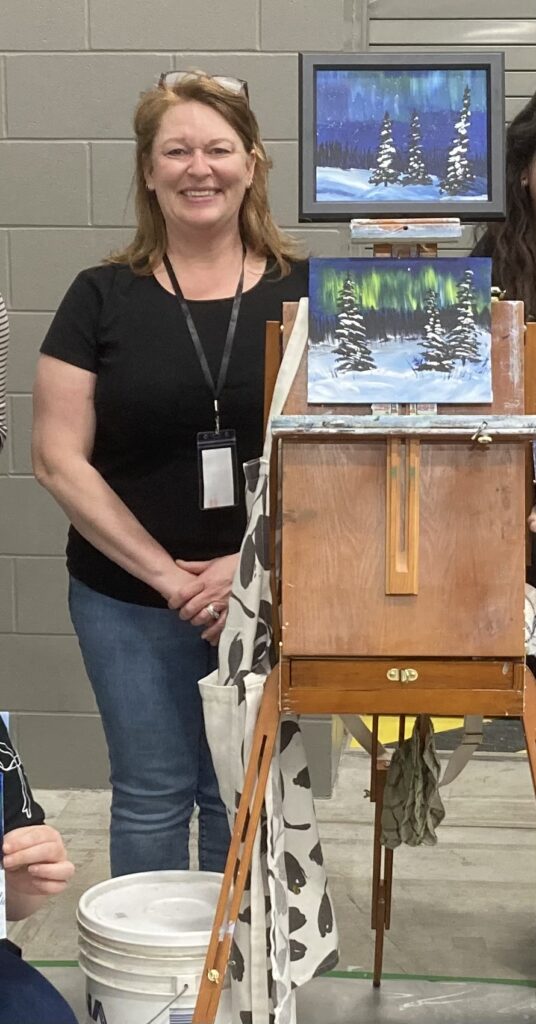
And when you live with a painting like that, the relationship does not end when you bring it home.
For collectors, Erin’s work offers something familiar without becoming predictable. A landscape may remind you of somewhere you have been, someone you travelled with, or a place you still hope to visit. Over time, it becomes part of your own surroundings and gathers memories that have nothing to do with where the painting originally began.
There is something comforting about having work like that in a home. Something you can pass every day and still return to when you need a moment of quiet. Behind those paintings is also an artist learning how to protect the reason she started making them.
Erin is open about the less visible side of building an art career. the emails, applications, websites, expenses, and hours spent at a computer when she would rather be in the studio. Finding a balance is still something she is working through, as so many artists are.
But she has learned to trust herself more. To stop letting the fear of getting something wrong decide what she tries next. To take risks. To listen to her instincts. And to understand that building a meaningful practice, like finding the right audience for your work, takes time.
Maybe that is what Erin’s paintings remind us of too. Not everything needs to happen quickly. Some things need room to grow. Some places are worth returning to. And sometimes, slowing down long enough to notice what is right outside your door can change what you carry back with you.
To follow Erin’s journey and see more of her work, you can find her through the links below.
