
Evi Antonio uses magnification to turn tiny natural details into large-scale art
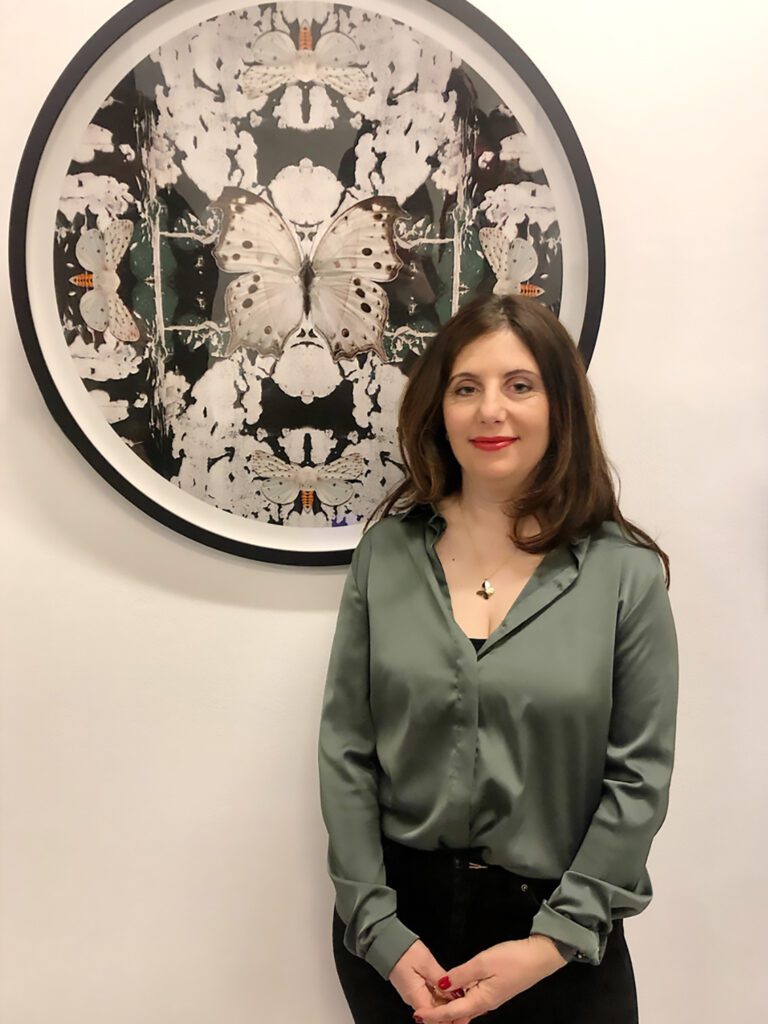
At Women in Arts Network, Flora and Fauna brought us works that revealed just how much of nature remains unnoticed until an artist gives us a reason to look again. Evi Antonio is one of the selected artists whose practice takes this idea quite literally, magnifying butterflies, insects, and natural forms until their smallest details become impossible to overlook.
Evi’s journey began in natural history illustration, where she learned the discipline of careful observation. Working from real specimens taught her to notice the structures, patterns, and colour relationships that most of us would never see at first glance.
But over time, she became interested in what could happen if she took that knowledge beyond documentation and used it to create something more personal, emotional, and immersive.
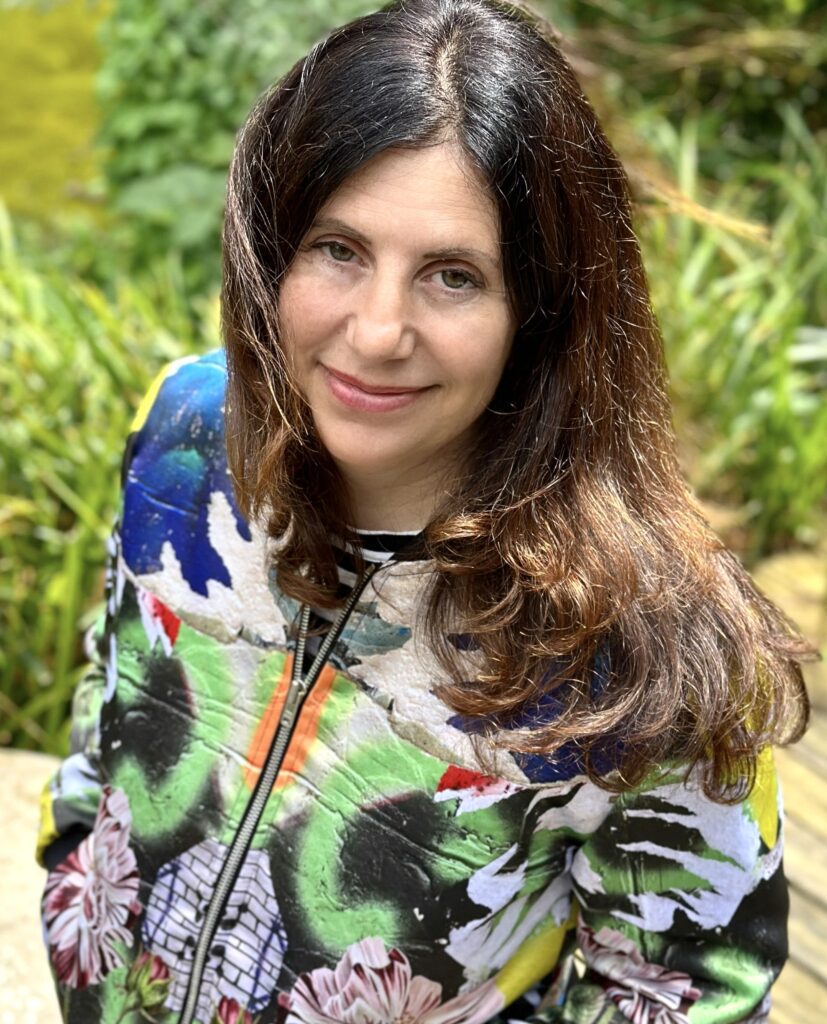
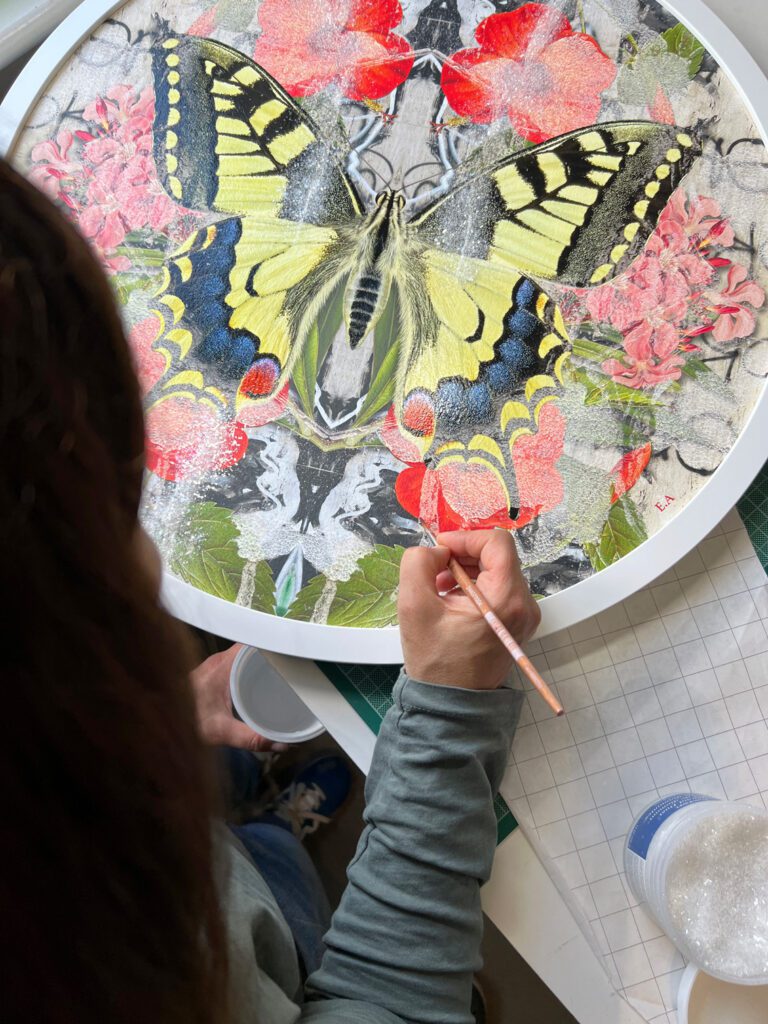
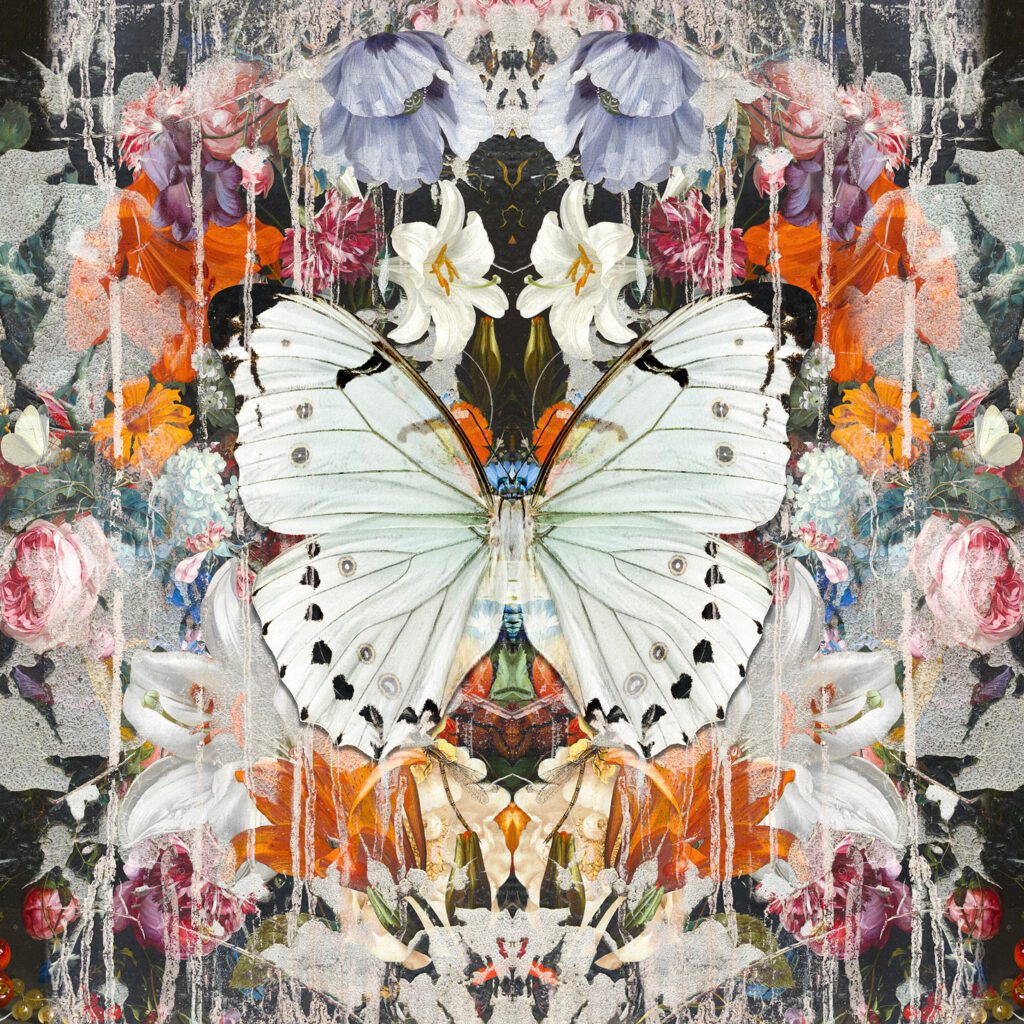
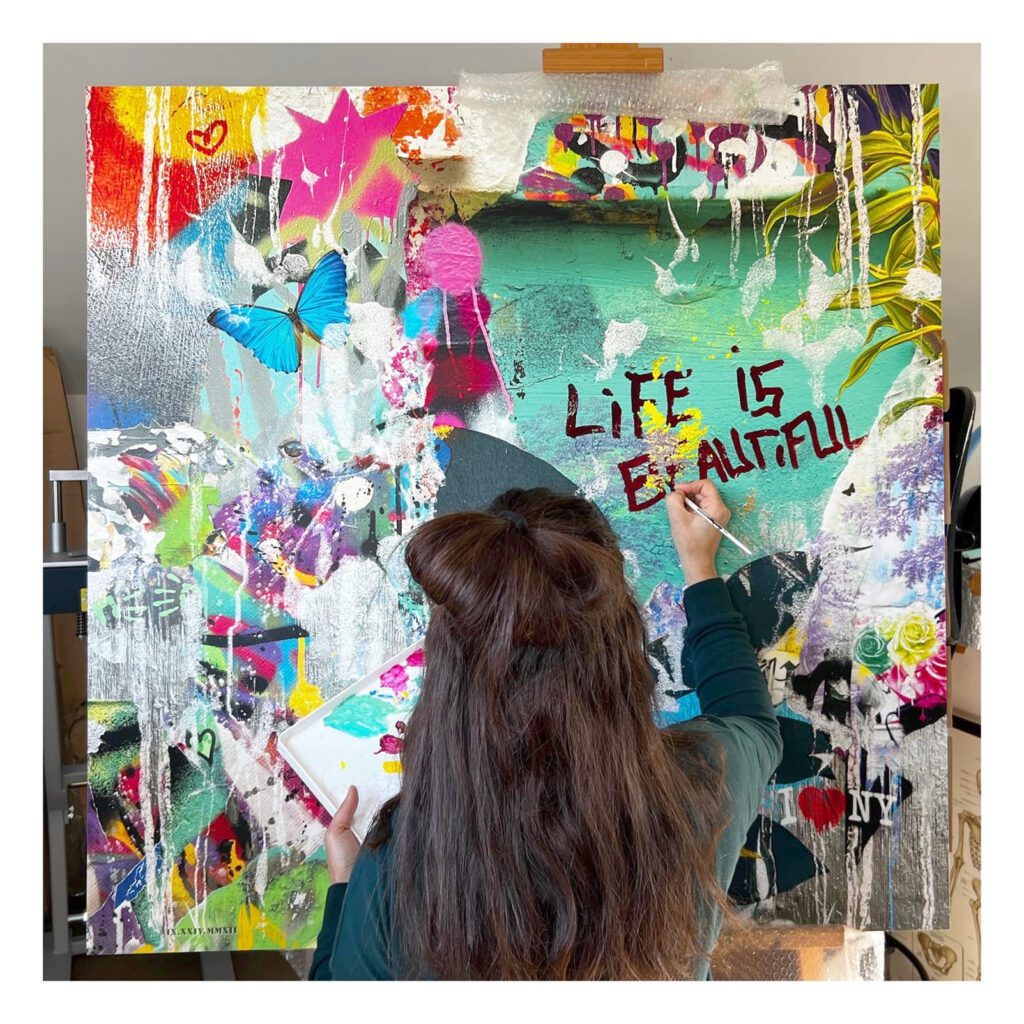
That curiosity gradually led her from watercolour into digital painting and, eventually, toward a process that brings digital and traditional techniques together. Evi builds her compositions digitally, giving herself the freedom to experiment with scale, colour, pattern, and layering, before finishing each work by hand with oil, acrylic glazes, and varnish.
The result is a practice that holds onto the precision of scientific illustration while allowing far more room for transformation and imagination. Butterflies have become central to that exploration.
The closer Evi looks at them, the more they reveal. Their wings hold intricate patterns and unexpected colour relationships, but their significance goes beyond visual beauty. For Evi, they carry ideas about transformation, resilience, renewal, and the constant cycles of change that shape all living things.
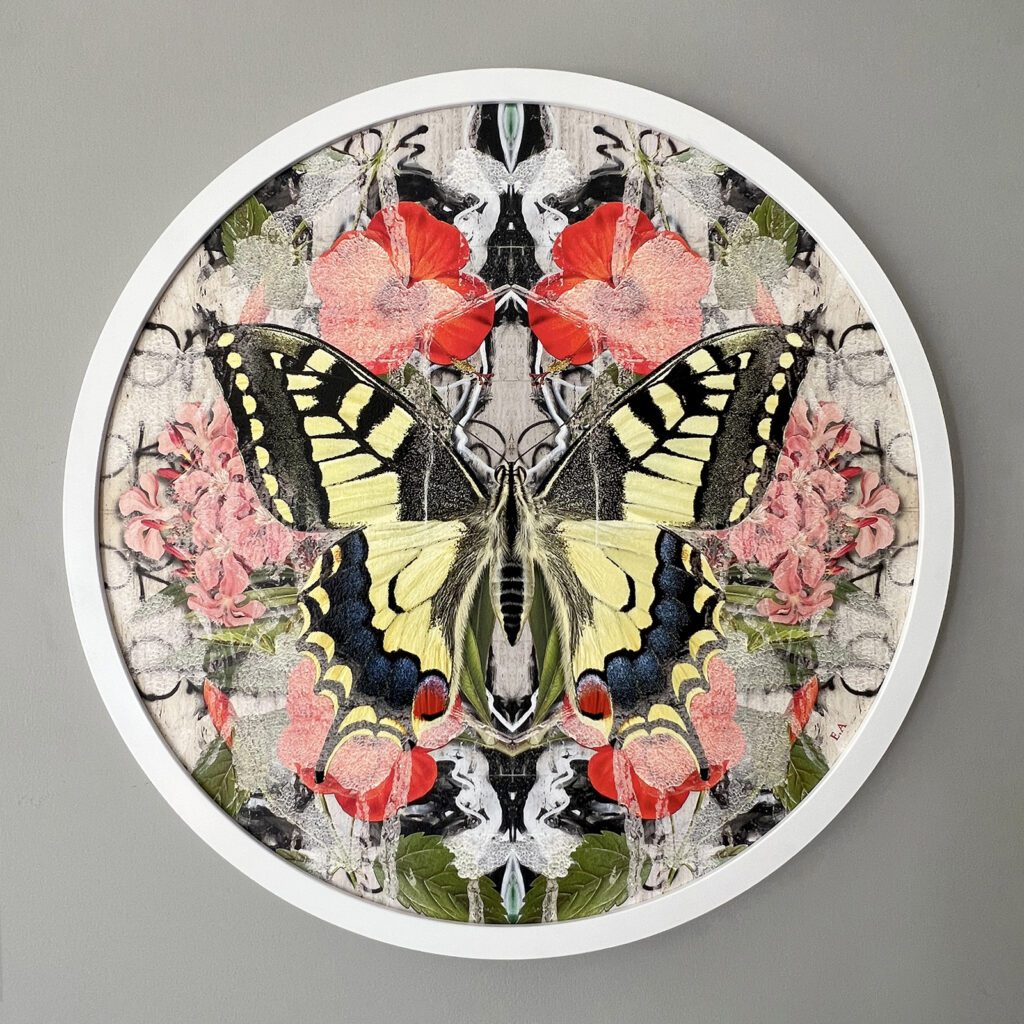
By enlarging these details beyond their familiar scale, she also asks us to reconsider our assumptions about what deserves our attention. Creatures that might normally be overlooked, dismissed, or even met with discomfort become entire visual worlds filled with complexity, balance, and intelligence.
Evi’s work begins with looking closely, but ultimately it asks something more of us: to remain curious long enough for our first impressions to change.
Now let’s get to know Evi through our conversation about natural history illustration, butterflies, magnification, colour, hybrid processes, and why the smallest details in nature can completely change the way we see it.
Q1. Evi, could you share a bit about your background and how your journey from scientific illustration into fine art shaped your creative voice?
My creative journey began in natural history illustration, where through my training, I developed a deep appreciation for close observation and the extraordinary detail found within the natural world. Working in watercolour taught me patience and precision, and the discipline taught me importance of really looking. It wasn’t simply about recording a specimen accurately; it was about understanding its structure, patterns, and unique characteristics.
Over time, I became increasingly interested in moving beyond documentation and exploring the emotional and symbolic potential of the subjects I was observing. This led me to experiment with digital painting and, eventually, to develop a process that combines digital techniques with hand-applied mixed media. While my practice has evolved, the principles of natural history illustration remain at its core. I generally work from real specimens and begin with careful observation, but I now use scale, colour, layering, and composition to create works that invite reflection.
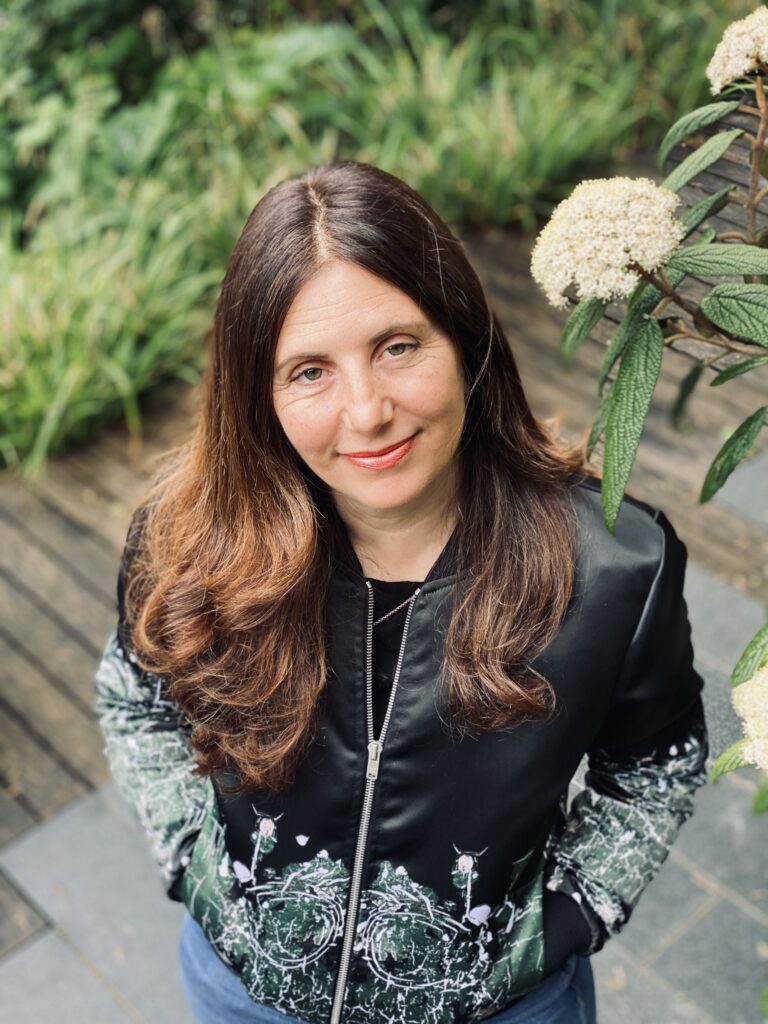
Butterflies became a natural focus because they embody many of the themes that interest me, including transformation, resilience, and renewal, the cycles of life. The transition into fine art gave me the freedom to move beyond representation and create more immersive visual worlds. Through magnification, pattern, and colour, I explore the hidden complexity and balance that exist within nature, while encouraging viewers to slow down, look more closely, and reconnect with a sense of wonder.
Q2. What drew you to combining digital processes with traditional oil painting?
The move towards digital painting happened quite naturally. My background is in natural history illustration, where observation, detail, and craftsmanship were always central to my practice. As my work evolved, I wanted greater freedom to experiment with scale, composition, colour, and layering while maintaining the precision that had become such an important part of my process. Digital painting allowed me to expand on those possibilities.
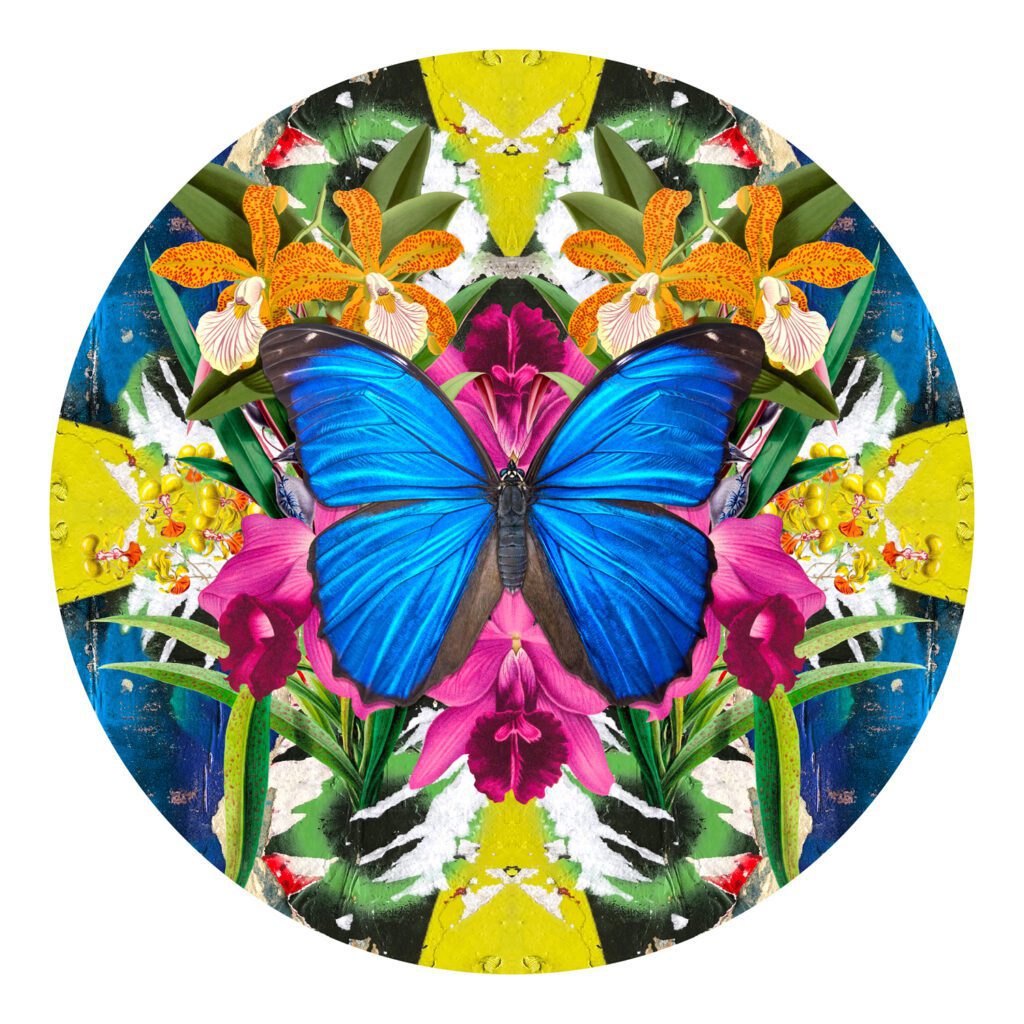
It gave me the flexibility to build complex compositions and explore intricate relationships between colour, pattern, and form in ways that felt both intuitive and expansive. However, I never wanted the work to lose its physical presence or connection to traditional art making. That’s why each piece is individually hand-finished with either oil, acrylic glazes and varnish. The digital and traditional elements are not separate stages but complementary parts of the same process.
The digital allows me to construct detailed visual worlds, while the hand-applied finishes bring texture, depth, and subtle variation, ensuring that each work retains a unique. And hand crafted quality. For me, the combination of technology and traditional techniques reflects a balance between innovation and tradition. It allows me to honour the observational discipline of natural history illustration while creating contemporary works that explore transformation, beauty, and the hidden complexity of the natural world.
Q3. How has growing up in an urban environment while feeling connected to nature shaped your creative perspective?
Growing up in an urban environment made me acutely aware of the contrast between the built up world and the natural world. While nature wasn’t always immediately accessible, I found myself drawn to the small pockets of life that persisted within the city, plants growing through cracks in walls, insects, birds, and the seasonal changes that often go unnoticed amidst the pace of urban life. That experience shaped the way I look at the world. It taught me to pay attention to details that are easily overlooked and fostered a deep appreciation for the resilience and adaptability of nature. I think that’s one reason why butterflies became such an important subject in my work.
They embody both fragility and strength, existing within complex environments while continually adapting and transforming. The contrast between urban and natural environments continues to influence my practice. Many of my compositions combine delicate natural forms with weathered surfaces and layered textures, creating a dialogue between nature and the marks of human activity. Rather than presenting these worlds as separate, I’m interested in exploring how they coexist and what we can learn from that relationship.
The more closely I observe nature, the more I become aware of the balance, pattern, and harmony that exist within it. My work reflects a desire to draw attention to those qualities and to encourage moments of pause and reflection. In a world that often feels increasingly fast paced and disconnected, I hope my work invites viewers to reconnect with the beauty, of the natural world.
Q4. Butterflies appear often in your work, what keeps drawing you to them both emotionally and visually?
My fascination with butterflies began through observation. From a natural history perspective, they are extraordinary creatures. The closer you look, the more you discover. Intricate patterns, delicate structures, and remarkable colour relationships that often go unnoticed at first glance. As an artist, I find them endlessly compelling because they reward sustained attention and reveal new details every time I study them. Visually, they offer an incredible combination of complexity and balance.
Many of their wings contain intricate patterns and vibrant colours, yet everything feels purposeful and harmonious. Through magnification and scale, I’m able to draw attention to these details and invite viewers to experience the sense of wonder that draws me to them. Emotionally, butterflies resonate with me because they embody transformation, resilience, and renewal.
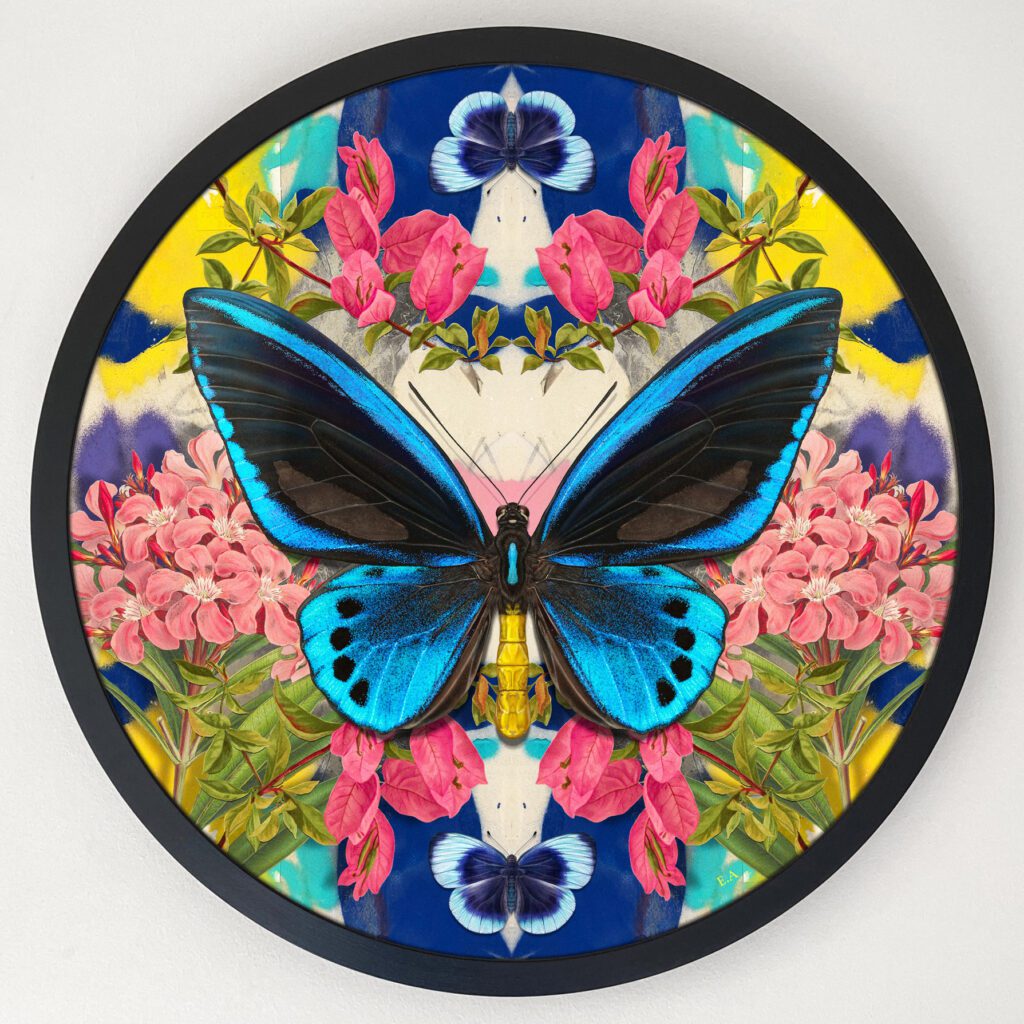
Their life cycle reflects the constant process of change that shapes all living things, including ourselves. Despite their apparent fragility, they are remarkably adaptable and enduring, which I find both inspiring and hopeful. What continues to draw me to butterflies is that they exist at the intersection of beauty and meaning.
They allow me to explore themes of transformation and connection while also revealing the extraordinary complexity, balance, and intelligence that exist within the natural world. In many ways, they have become a lens through which I explore our relationship with nature and our place within it.
Q5. Colour is vivid and immersive in your work; how do you approach it when creating a piece?
Color in your work feels incredibly vivid and immersive, especially in your butterflies and floral compositions. How do you approach colour when creating a piece? Colour plays a central role in my work and is often the starting point for my composition. My approach is rooted in observation, particularly through studying real specimens and the extraordinary colour relationships and palette found in nature.
Butterfly wings, flowers, and insects contain combinations of colour that are both visually striking and surprisingly sophisticated, often revealing patterns and harmonies that feel almost impossible to invent. What fascinates me is that colour in nature is never purely decorative. It serves a purpose, attracting, protecting, communicating, and adapting. The more closely I observe the natural world, the more I appreciate the intelligence and balance behind these colour systems, and that awareness influences every aspect of my work.
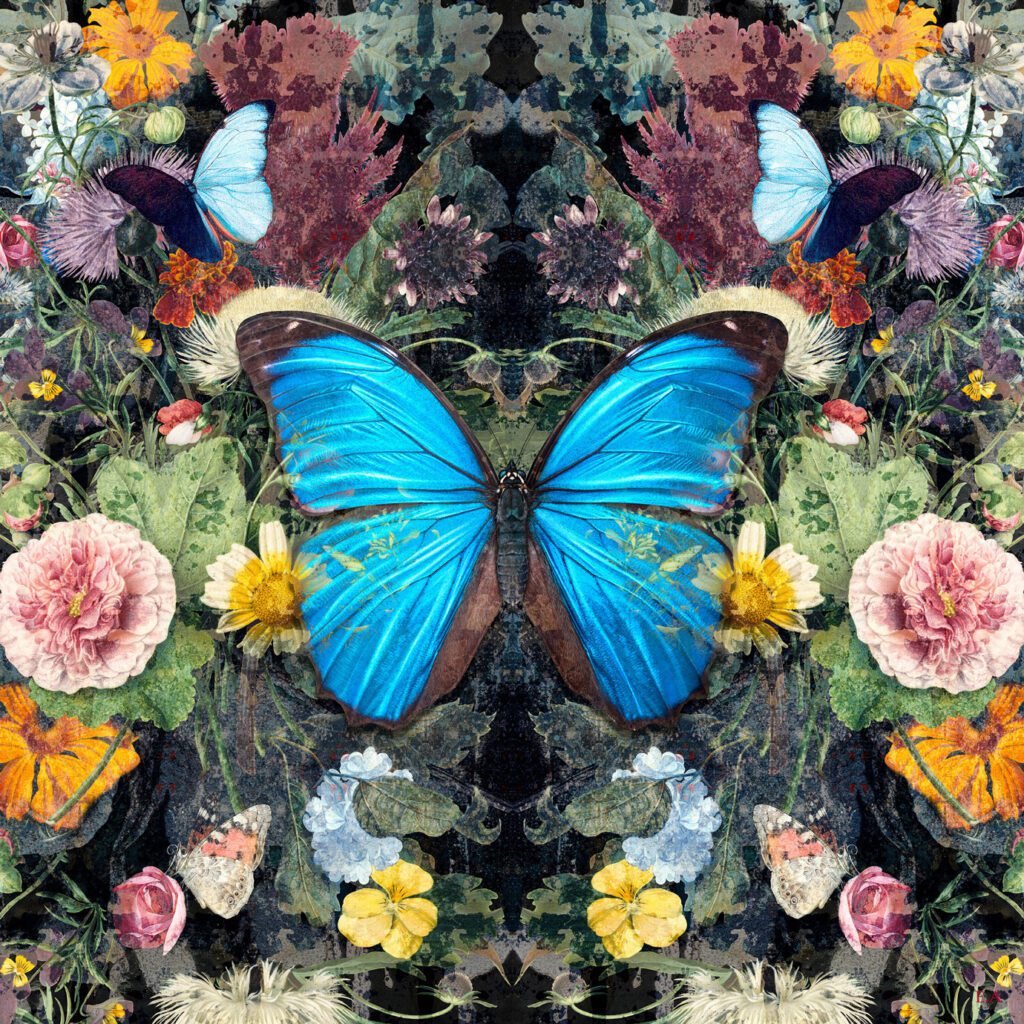
When creating a piece, I’m interested in how colour can guide the viewer’s attention and create an emotional response. I often build compositions around a dominant colour relationship, allowing certain colours to draw the eye while others create depth, rhythm, and balance. Through layering and subtle shifts in tone, I aim to create a sense of luminosity and immersion that encourages viewers to look more closely.
Ultimately, colour is both a visual language and a means of connection. It captures attention initially, but it also invites contemplation. Through colour, I hope to reveal the beauty, complexity, and harmony that exist within the natural world and to encourage a deeper appreciation of the systems and relationships that sustain it.
Q6. Your work often balances beauty and discomfort, what draws you to challenging traditional ideas of beauty?
I’ve always been interested in how perception changes when we take the time to look more closely. Many of the creatures and forms that appear in my work, particularly insects, are often overlooked or even viewed with discomfort. Yet when they are observed in detail, an entirely different world begins to emerge, one filled with intricate patterns, extraordinary colours, and remarkable complexity. Magnification plays an important role in this process.
By enlarging subjects beyond their familiar scale, I encourage viewers to move past their initial assumptions and engage with them in a new way. Details that might ordinarily go unnoticed become significant, revealing a beauty that is rooted not in perfection but in complexity, adaptation, and function. I’m interested in challenging the idea that beauty is limited to what is immediately pleasing or familiar. Nature is full of forms that can appear strange, fragile, unsettling, or extraordinary all at once.
I find that tension fascinating because it reflects the richness and diversity of the natural world. Ultimately, my work is less about redefining beauty than expanding our understanding of it. By inviting closer observation, I hope to encourage curiosity rather than judgement and to reveal the wonder, balance, and intelligence that exist within even the most unexpected forms of life.
Q7. Looking back at your journey so far, what has been the biggest challenge in developing such a distinctive visual language?
Looking back, I think the biggest challenge has been finding a balance between observation and personal expression. My background in natural history illustration taught me to look carefully and to represent the natural world with accuracy and attention to detail. Those skills remain fundamental to my practice, but there came a point where I wanted the work to do more than document what I was seeing. Developing my own visual language meant learning to trust my instincts and allow space for interpretation, symbolism, and emotion alongside observation.
It involved moving beyond simply recording a specimen and exploring how colour, scale, pattern, and composition could communicate ideas about transformation, resilience, and our relationship with the natural world. Another challenge was embracing a process that sits between traditional and digital methods. When I first began combining digital painting with hand-applied finishes, it felt like stepping into unfamiliar territory.
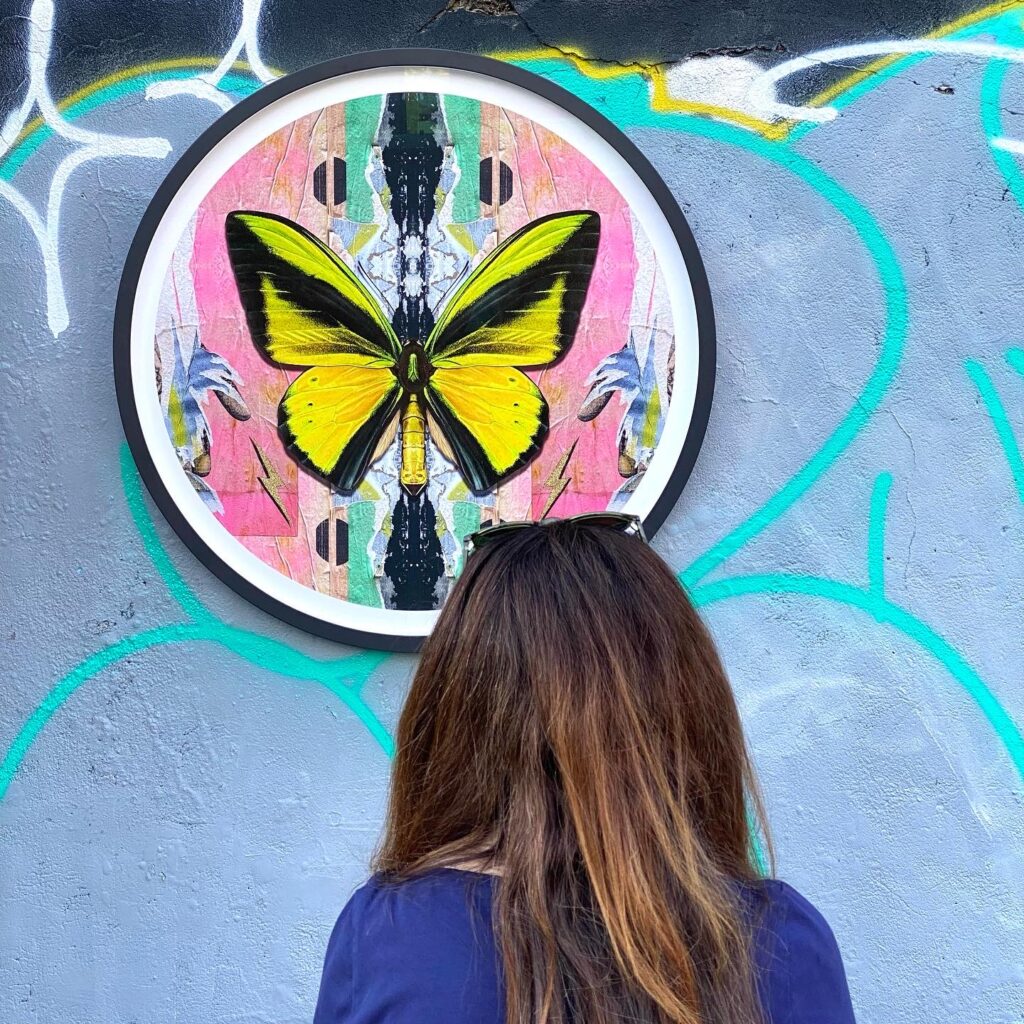
Over time, however, I realised that this hybrid approach allowed me to bring together the precision of illustration with the expressive possibilities of fine art in a way that felt authentic and fulfilling. Perhaps the most important part of the journey has been recognising that the work is not really about butterflies alone.
They remain a central subject, but over time I have come to understand that my practice is ultimately a metaphor for life, exploring the themes of transformation, and revealing the extraordinary complexity and balance that exist within the natural world. That realisation has given me greater clarity and confidence in the direction of the work, and it continues to shape how I approach each new piece.
Q8. Has your idea of success changed over time as your work and career have evolved?
Yes, I think it has changed quite significantly. Early in my career, success was often tied to external milestones like being selected for exhibitions, winning awards, or having my work recognised by others. Those experiences were incredibly important because they gave me confidence and helped validate the path I had chosen and propelled me into my professional art career. Over time, however, my understanding of success has become much more connected to the work itself. I’ve come to realise that success isn’t only about achievements or recognition; it’s about continuing to grow, staying curious, and developing a deeper understanding of my own practice.
One of the most rewarding aspects of being an artist is the opportunity to keep learning. The more I observe the natural world, the more I discover, and that sense of curiosity continues to drive my work. Success, for me, is having the freedom to pursue those ideas, to keep evolving creatively, and to make work that feels authentic and meaningful.
Of course, exhibitions, awards, and opportunities still matter, and I’m always grateful when the work connects with an audience. But today, I think success is less about reaching a particular destination and more about remaining engaged with the process, continuing to develop my visual language, and creating work that encourages others to pause, look closely, and see the world differently.
Q9. What advice would you give to emerging artists trying to balance technical skill with personal expression and emotional depth?
My advice would be not to think of technical skill and personal expression as competing priorities. Technical skills are valuable because they give you the tools to communicate your ideas more effectively, but they are most powerful when they serve something deeper. Early in my career, my focus was very much on observation and developing the discipline required for natural history illustration. Learning to draw accurately taught me how to really look, and those skills continue to underpin everything I do today.
However, there came a point where I realised that technical ability alone wasn’t enough. I wanted the work to communicate something beyond what I was observing. I think personal expression develops through curiosity and persistence rather than being something you can force. The subjects, themes, and questions that genuinely fascinate you will naturally begin to reveal themselves over time if you pay attention to them.
For me, that meant moving beyond documentation and exploring ideas of transformation, balance, and our relationship with the natural world. My advice to emerging artists is to be patient with the process. Develop your skills, but also trust the things that consistently capture your attention. Often the subjects you return to again and again are pointing towards your unique voice. Technical skill may help you create the work, but it is your curiosity, perspective, and lived experience that give it emotional depth and meaning
The longer we spent with Evi’s work, the more we found ourselves questioning how much beauty we miss simply because we do not look long enough. We are used to seeing nature quickly.
A butterfly passes and we notice its colour. An insect appears and we decide almost immediately whether it is beautiful, strange, or something we would rather avoid. We rarely get close enough to discover how much more is there.
Evi does. Her practice is built around the belief that attention can change perception. By magnifying butterflies, insects, and organic forms, she takes details that would normally remain invisible and gives them enough space to become impossible to ignore. Patterns begin to look like landscapes. Colours reveal relationships we could never see from a distance. Even forms that initially create discomfort become fascinating once we understand their complexity.
And that made us think about how often familiarity prevents curiosity. We assume we already know what deserves our attention. What is beautiful. What is worth studying. But Evi’s work shows how incomplete those judgments can be. Sometimes the difference between overlooking something and becoming fascinated by it is simply the amount of time we are willing to spend looking.
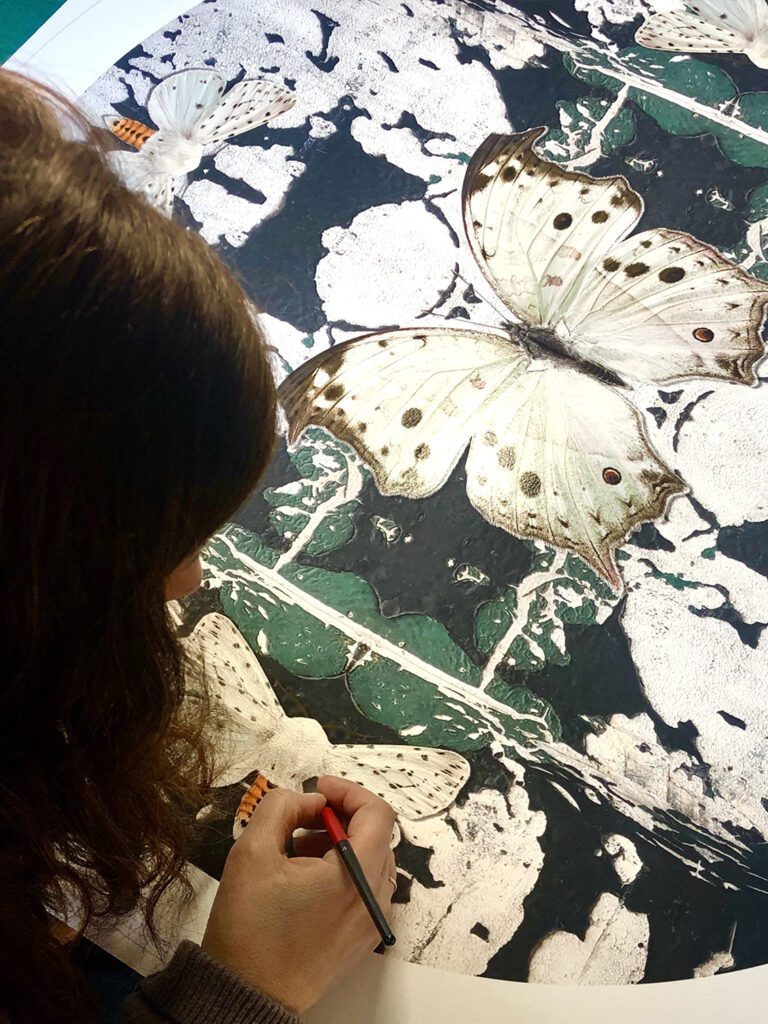
Her own creative journey carries a similar openness. She began with the precision of natural history illustration, but she did not remain confined by it. She kept the discipline of observation and allowed digital painting, scale, colour, and traditional hand-finishing to expand what that foundation could become. She did not have to choose between technical accuracy and personal expression. She found a way to let one strengthen the other.
For artists, there is something meaningful in that kind of evolution. The skills you begin with do not have to define the limits of where your work can go. They can become the foundation you build from, carrying what is useful forward while giving yourself permission to experiment, change, and discover a visual language that feels more like your own.
For collectors and art lovers, Evi’s work offers an experience that continues beyond its immediate visual impact. The vivid colours and magnified forms may be what first bring you closer, but the more time you spend with them, the more you begin to notice: patterns, structures, textures, and relationships that were there all along.
Perhaps that is what Evi’s work does best. It reminds us that the world does not always need to become more extraordinary. Sometimes we simply need to become more attentive.
Follow Evi Antonio through the links below and discover more of the natural worlds she brings into view.
