
Emma Eyre turns plants found on forest floors & rural pathways into vivid botanical paintings
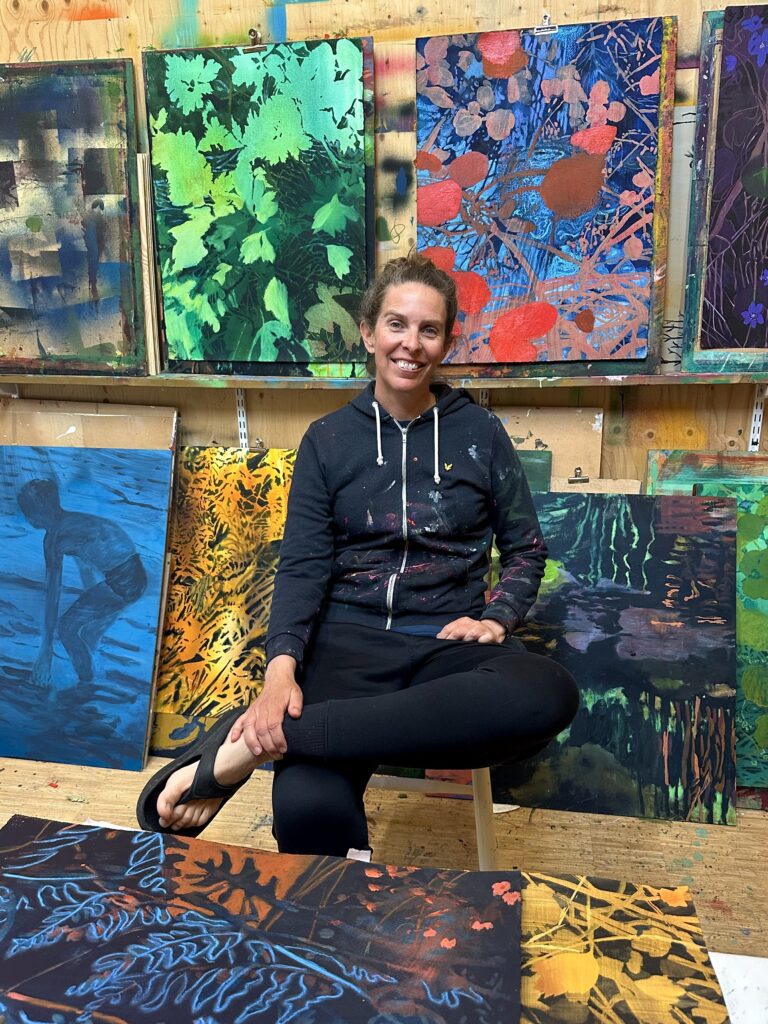
At Women in Arts Network, our Flora and Fauna exhibition gave us the chance to discover artists who approach the natural world from very different directions. Emma Eyre is one of them, and her paintings make a strong case for looking more closely at what is already around us.
Originally from Honolulu and now living and working in rural Sweden, Emma is a painter whose work moves between plants, landscapes, still lifes, and the human figure. Her subjects change, sometimes dramatically, but there is something recognizable in the way she approaches them. She is interested in looking, in spending enough time with a subject for it to become more than the thing it first appeared to be.
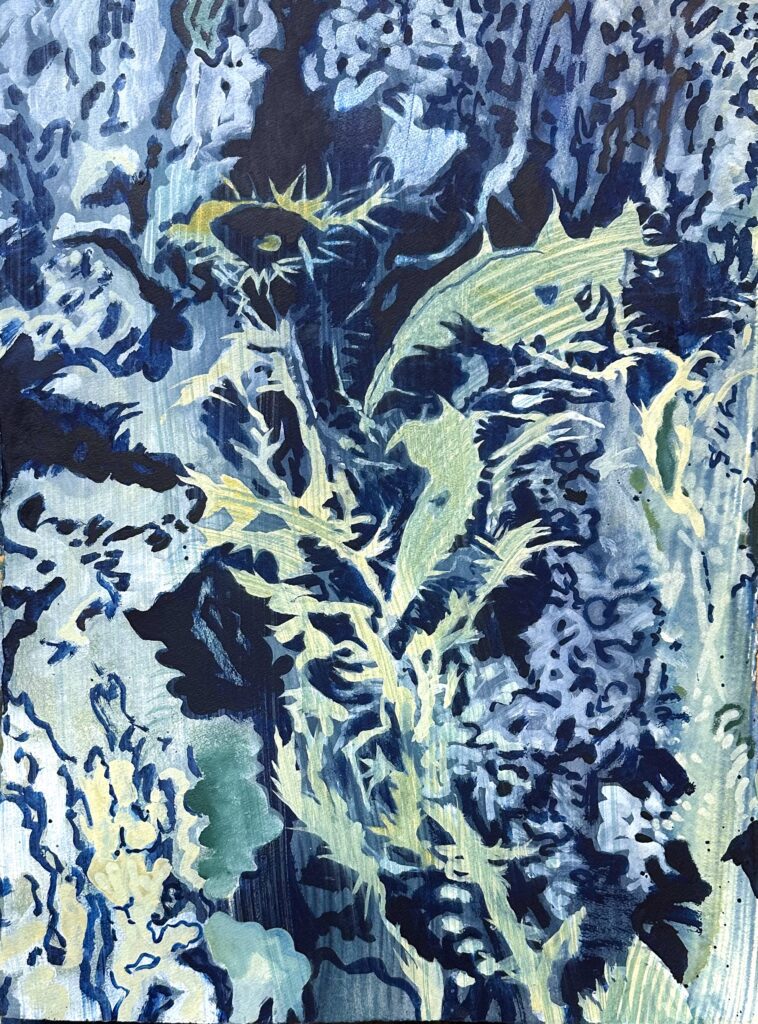
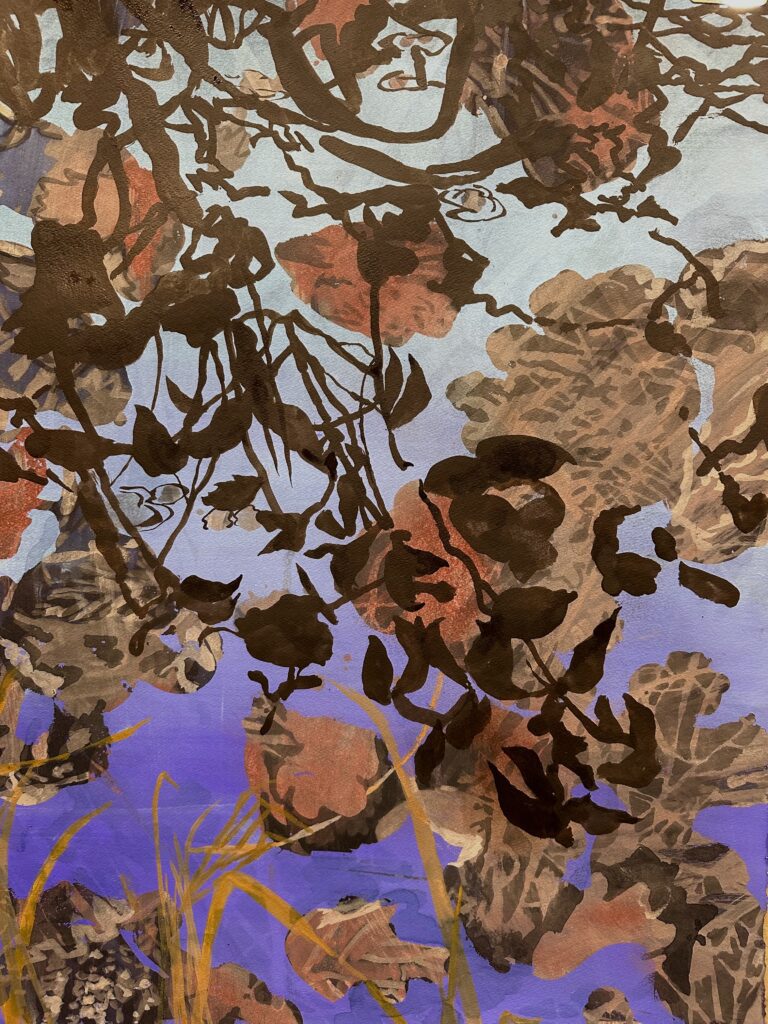
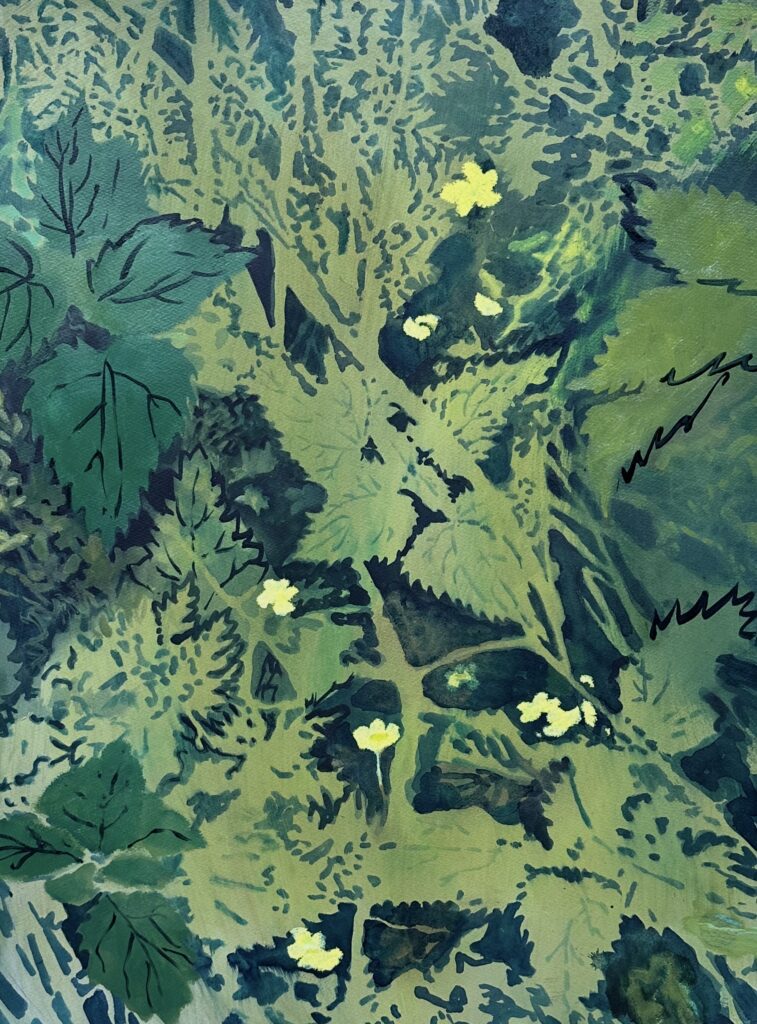
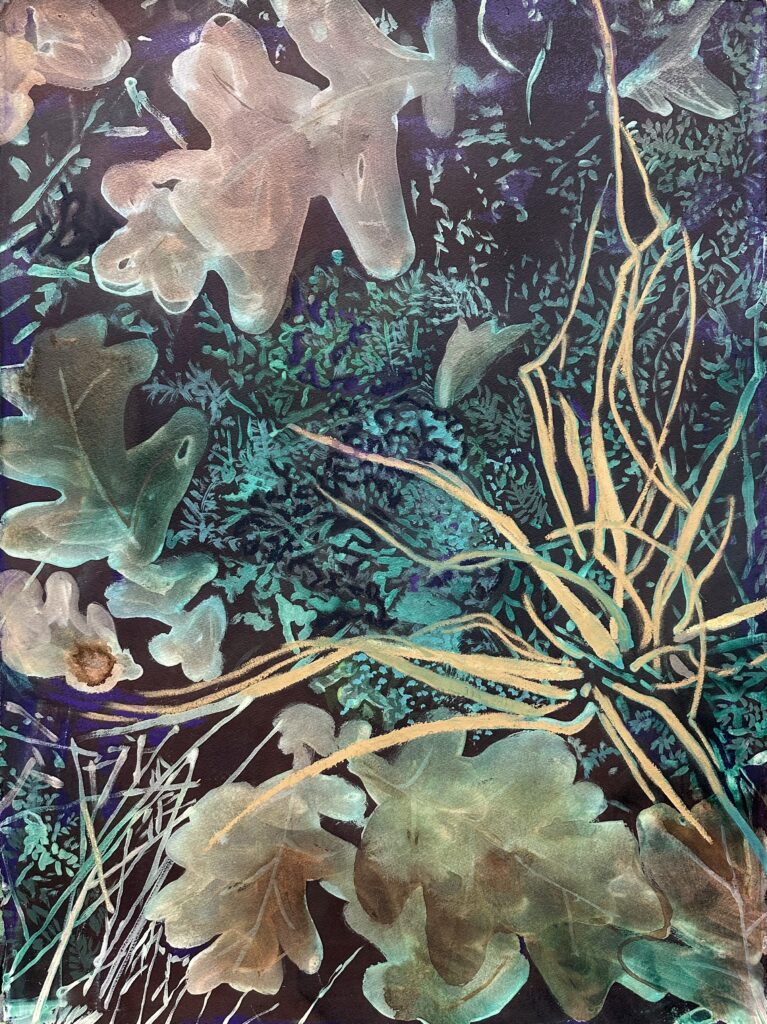
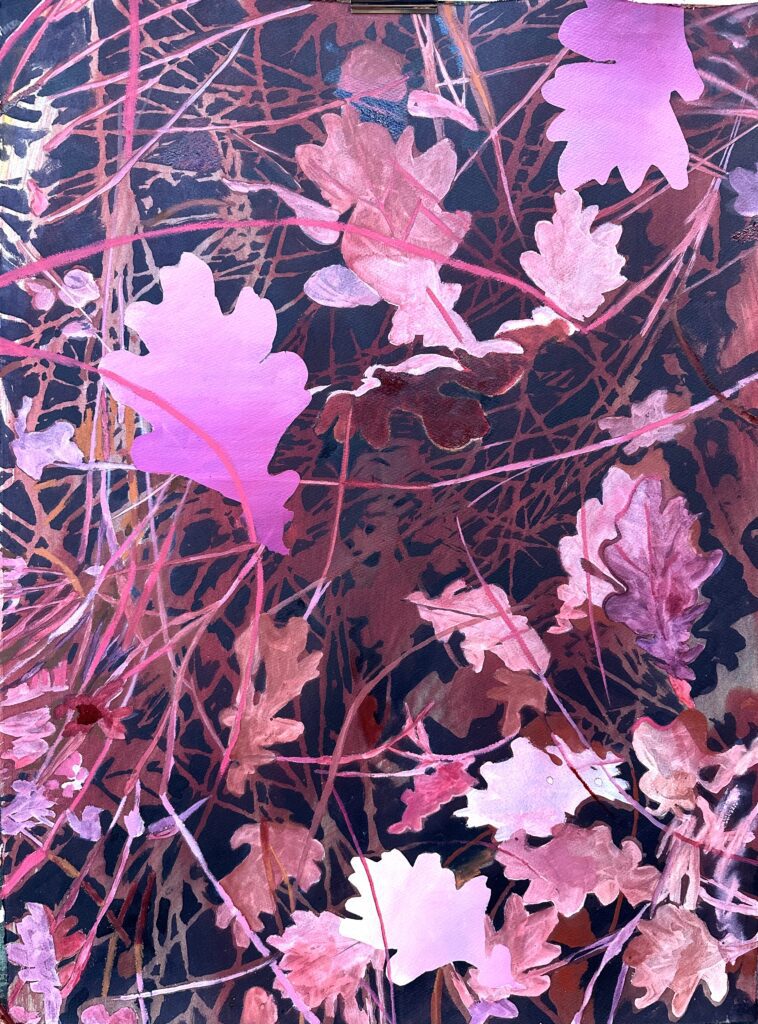
Her recent botanical paintings are a good example. Leaves overlap. Stems cut across the surface. Plants gather together in dense arrangements of colour, shape, and texture. There is no distant horizon or traditional landscape to guide the eye. Instead, the viewer is brought close to the ground and asked to spend time with parts of nature that are usually passed without much thought.
Colour is a big part of what makes these works so immediate. Deep blues sit beside bright pinks, greens, oranges, and unexpected shifts in tone. The paintings feel rooted in observation without being tied to realism. Emma allows the original subject to remain visible, but she also lets paint take over. That balance runs through much of her practice.
In her landscapes, atmosphere and colour become more spacious. Her still lifes bring attention to ordinary objects and arrangements. Her figurative paintings introduce a quieter human presence, often placing people within moments that feel private and absorbed. Seen together, the work of Emma Eyre is difficult to place inside one narrow category. And perhaps it does not need to be.
She has built a practice that allows her to follow a subject for as long as it holds her attention, change materials when the work asks for something different, and move between representation and experimentation without losing the pleasure of painting itself.
There is also something refreshing about discovering an artist who does not seem interested in making every painting explain itself immediately. Emma’s work gives the viewer room to look around. To notice relationships between colours and forms. To find something small that was missed the first time.
And in a world where we are used to passing hundreds of images every day, that kind of attention feels worth protecting.
Now, let’s hear from Emma about the life and experiences behind her work, the freedom she has found in building a practice on her own terms, and why continuing to paint matters more than waiting for the perfect conditions to do it.
Q1. Could you share a little about your journey from growing up in Honolulu and studying Political Science to becoming a painter in rural Sweden?
I grew up in a family of writers and poets who all worked day jobs to pay the bills. My dad was a passionate Hawaiian language teacher, dedicated to his small part in reviving the language while providing for us and quietly writing poetry on the side. Later, I married a Swede and moved to Sweden, where I quickly realized my U.S.-centered Political Science degree wasn’t going to help my job search. I studied fine art and education, and I’ve spent the last 20 years happily working as an art teacher.
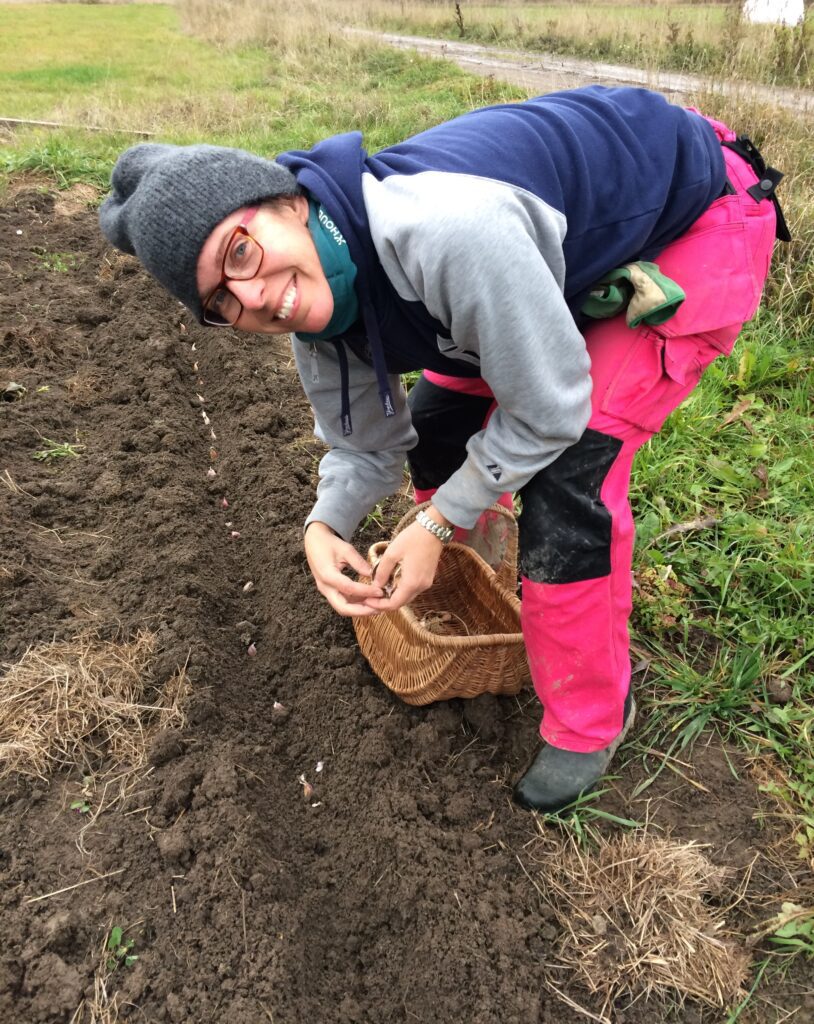
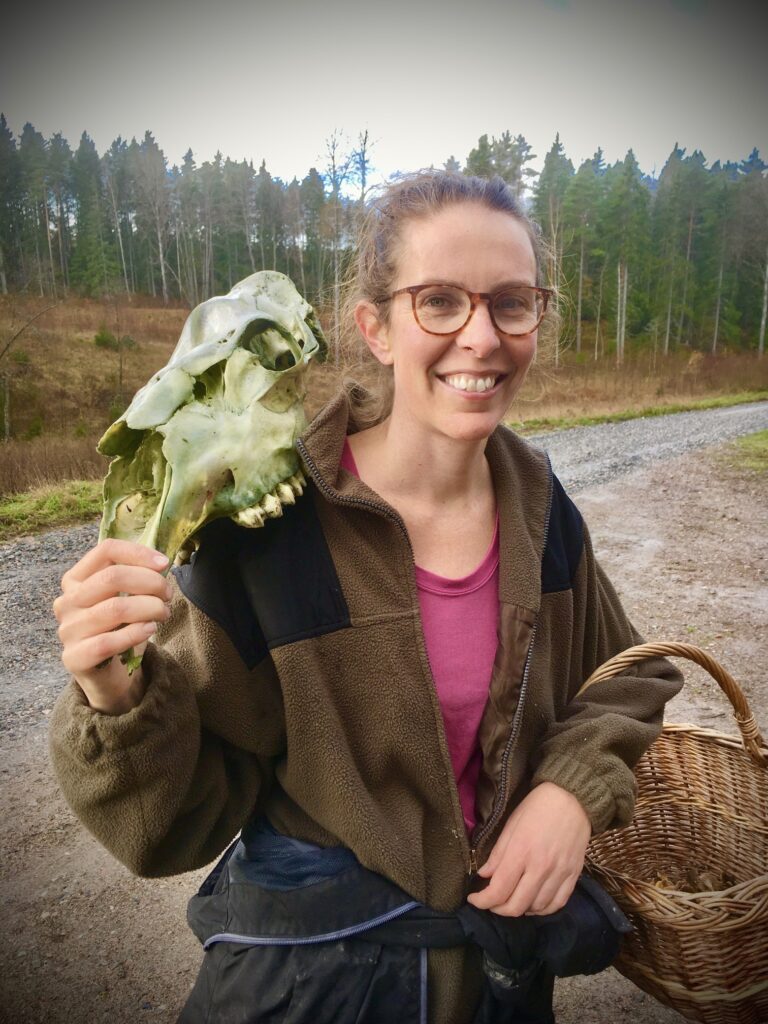
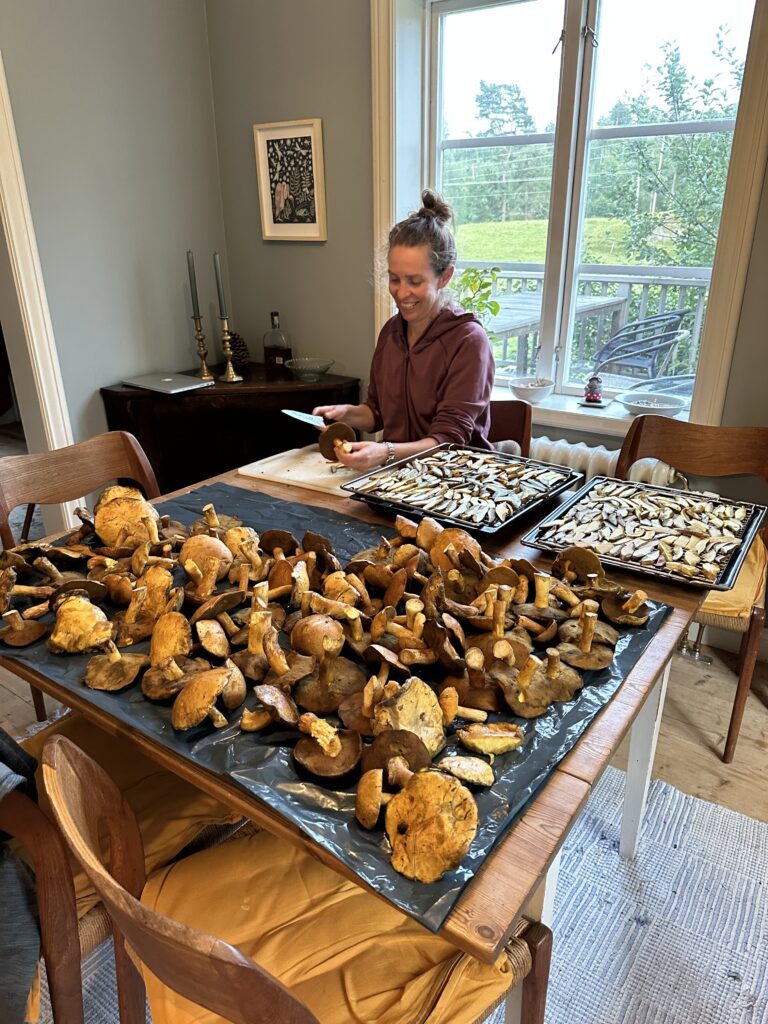
Just like my family before me, I work a day job to support my art, rather than trying to force my art to support me. Additionally, having four kids instead of the planned-for two—spontaneous triplets happen!—helped push us out of our little Stockholm townhouse and make our big-vegetable-farm-in-the-country dream a reality. Now, I have a little studio in our barn and besides painting, get to spend enormous amounts of time among our cabbage rows or foraging for mushrooms in the forest.
Being an American in Sweden, I am reminded constantly of my breathtaking luck. We live in a country that truly cares for families: we don’t have to save for college, childcare is heavily subsidized, and paid leave is generous. This past year, I even had the legal right to take a year off to study Nature Guiding while keeping my work contract intact—though, of course, I did an enormous amount of painting. The ultimate effect of this societal safety net is peace of mind. It grants you the ultimate privilege as an artist and a human: the time, energy, and freedom to pursue a deep passion.
Q2. Your oil paintings and botanical prints feel very different do they come from the same creative practice or different sides of your work?
I work in many different worlds when it comes to my art practice. I love the freedom to go out and paint watercolors en plain air one day, and large, human figures in oil in the studio another. Generally, however, I am absorbed by a subject and work on it for a year or two. Before my most recent series (the series of about 20 botanical paintings on paper called “On the Ground”) I did a series called “Grounding” which were based on my own four children looking at things on the ground or in the water.
In general, I’m interested in the feeling of being so absorbed by an an observation that the self disappears for a moment. Most of us can remember that feeling from childhood; but it can be fostered and rediscovered as an adult – through careful observation and documentation of, for example, accidental compositions of flora under our feet.
Q3. How do your botanical prints begin, do you start by collecting and observing the plants themselves?
My most recent paintings – not prints – document accidental compositions I discover on forest floors and along rural Swedish pathways. Working from my own photographs, I begin each piece with building up translucent ink washes on heavy-duty cotton watercolor paper. Once I’m happy with the underpainting, I switch to opaque oils, deliberately disturbing what has become too convincingly photographic and adding the clumsy or stylized colors that satisfy my painterly impulses.
Q4. You also make figurative work darker, moodier, more narrative. Does it come from a different emotional space than your botanical work?
My previous series of figurative work – capturing silhouettes of my children deep in observation in shallow water or in forests – is deeply connected to my current series. One series is about the absorbed observer and the other is what might be easily missed – some nettles in a ditch, for example – if it weren’t celebrated with the deep observation required for a painting. But both are essentially about ecstatic, quiet focus and losing one’s sense of self for a moment – similar to the flow state that artists and athletes describe.
Q5. Your palette shifts between warm earthy tones and cool Scandinavian blues and greens. How do the seasons and Swedish light influence your colors?
When I first went to art school in Sweden, one of my professors pointed out that I painted in blues all the time. I lived in Stockholm and the light was so many incredible hues of blue. She challenged me to make a whole painting in only orange tones. I did so, loved it, and since then I often choose a pallet based on what I haven’t used for a while.
Q6. How do you use layering, texture, and translucent color to create depth in your compositions?
My “On the Ground” paintings – the floral ones – are meant to have very little distance to them. No feeling landscape, I want them to be quite flat. That said, I like depth of color, and a deep variation of shapes, lines, and textures. Sometimes I start with lighter washes and build up to darker layers before adding opaque finishes.
Other times, I do the reverse: starting with a dark, opaque acrylic underpainting and layering lighter colors on top. I constantly vary my techniques—not because I’m searching for a material voice, but because I have the freedom to paint purely for my own pleasure without the constraint of making a conforming body of work. I find that cohesion happens naturally anyway, simply by staying with a technique, material, or subject long enough to exhaust my interest.
Q7. You had a solo show at KiKK in Katrineholm in 2024. What was it like seeing a full body of your work together in one room?
It was absolutely wonderful. I’m surrounded by my paintings every day in the studio, but there is such a joyful impact to seeing them hung thoughtfully together in a clean and almost sanctified space.
Q8. Where do you see your work within Sweden’s mix of representational and contemporary art?
I look at a lot of Swedish artist exhibitions—most recently a phenomenal show of Sara Vide Ericson’s paintings in Norrköping—and my work is certainly falls in line with the strong resurgence of figurative painting since the early 2000s. Swedes in general may not be highly religious, but we often treat nature and the forest as our church.
The Right of Public Access (Allemansrätten) is embedded in our DNA, granting us the freedom to wander any public or private forest or coastline as long as we don’t disturb or destroy. In that sense, my paintings sit squarely in a contemporary, representational tradition of nature-worship.
Q9. Is there a single painting you’ve made that changed something in you not just as an artist but as a person?
I love this question and wish I did! But no, not a single painting.
Q10. How do you protect the slower, reflective side of your practice from the pressure to constantly create and stay visible online?
I started an artist’s Instagram account very recently, and I actually use it as a way to look at a bunch of my paintings all at once. It’s incredibly useful to see if a new piece—one I’m not entirely sure about—can hold its own next to the rest of my favorites. Sometimes I’ll post something, rest my eyes, and then look back and say, ‘Oh no!’ and take it down a few minutes later. It’s a great way to get distance and see a painting on a digital ‘wall’ next to its buddies.
As far as creating content for others, it hasn’t been a major tool for gaining followers—I understand from fellow artists that the algorithms have shifted to favor other types of content anyway. Because my goal isn’t to transition to a full-time career, I give myself permission to ‘just paint’ rather than spending hours filming process videos, editing clips, or chasing engagement trends. That said, I still thoroughly enjoy watching other artists share theirs!
Q11. Has success changed how willing you are to experiment and take risks in your work?
What success? Just kidding—sure, I’ve sold some paintings, but I base my success on the fact that I paint regularly. I work almost every day, even when I don’t feel like it, even when I’m not inspired, and even when I’m tired. This consistency allows me to be as experimental as all get-out. If my day job is paying the bills and I’m too tired to paint but my practice dictates that I do it anyway, picking up a bamboo brush and some Indian ink to scribble some quick daffodils might not be what the current series requires, but it keeps me experimental and, most importantly, keeps me working. As far as risk goes, I’m a big proponent of the ‘kill your darlings’ school of thought. According to friends and family, I take it way too far—serial-murdering ‘good enough’ paintings by the dozen just to see if I can get any closer to ‘really good’ paintings.
Q12. What advice would you give emerging artists on building a lasting career without losing their creative purpose?
I’m an emerging artist myself, so I can’t pretend to have advice for other emerging artists. But doing the work, regardless of inspiration – sometimes on autopilot, sometimes terribly, even when it feels pointless – is the only way forward as far as I can tell.
As we come to the end of our conversation with Emma, what stays with us is how much freedom she has managed to keep in her relationship with art.
She takes painting seriously. She works regularly, stays with subjects for months or years, experiments with materials, and is willing to destroy a painting that others might consider finished if she thinks there is still somewhere else it could go. But she has never asked art to become everything.
Teaching, raising a family, growing food, walking through forests, and building a life outside the studio have not taken her away from her practice. In many ways, they have given her more to bring back to it.
That feels important. There is so much pressure on artists today to turn a practice into a career, a brand, a stream of content, and something that can be constantly measured. Emma has chosen a different relationship with success. She paints regularly. She keeps working. She gives herself permission to follow an idea, change direction, make something terrible, and come back the next day. And perhaps that is why her work still feels curious.
For anyone who lives with art or is thinking about collecting it, there is something special about work that continues to reward attention in that way. Emma’s paintings do not need to reveal everything immediately. You can return to the colour, the layers, the shapes moving across the surface, and notice something different depending on where your own attention lands that day.
Over time, that kind of work becomes more than something you chose for a wall. It becomes part of how you see. Maybe you notice the plants growing beside a road differently. Maybe you stop for a few seconds longer in a forest. Maybe something you would once have walked past suddenly feels worth looking at.
That is a quiet thing for a painting to do, but it is not a small one. Emma has spent years building a life where art can remain a serious commitment without becoming a burden it was never meant to carry. And within that life, she continues to show up, experiment, take risks, and paint whether inspiration arrives or not.
There is no perfect balance. No final point where the practice is finished and the artist has figured everything out. There is just the work. The willingness to keep doing it. And the freedom to stay curious about what might happen next.
To follow Emma’s journey and see more of her work, you can find her through the links below.
