How Elena Sparke turns old textiles into contemporary book sculptures
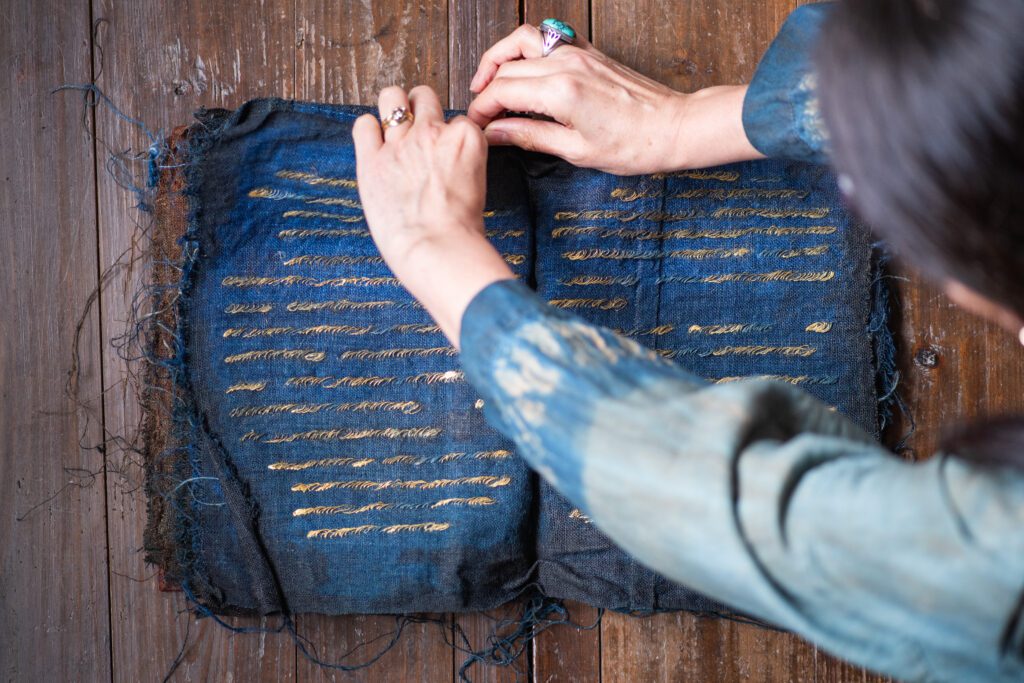
At Women in Arts Network, Flora and Fauna celebrates artists whose work reminds us that nature can be understood through many different creative languages. Elena Sparke is one of the selected artists whose practice moves beyond traditional representation, weaving together textiles, books, language, and the natural world into deeply poetic works that invite contemplation rather than explanation.
Although Elena describes her artistic practice as only seven years old, creativity has been a lifelong companion. Raised in a home where literature, textiles, and cultural traditions were part of everyday life, she grew up surrounded by stories told through both words and cloth.
Long before she formally entered the world of art, those experiences quietly shaped the way she understood materials, memory, and the hidden narratives carried by handmade objects.
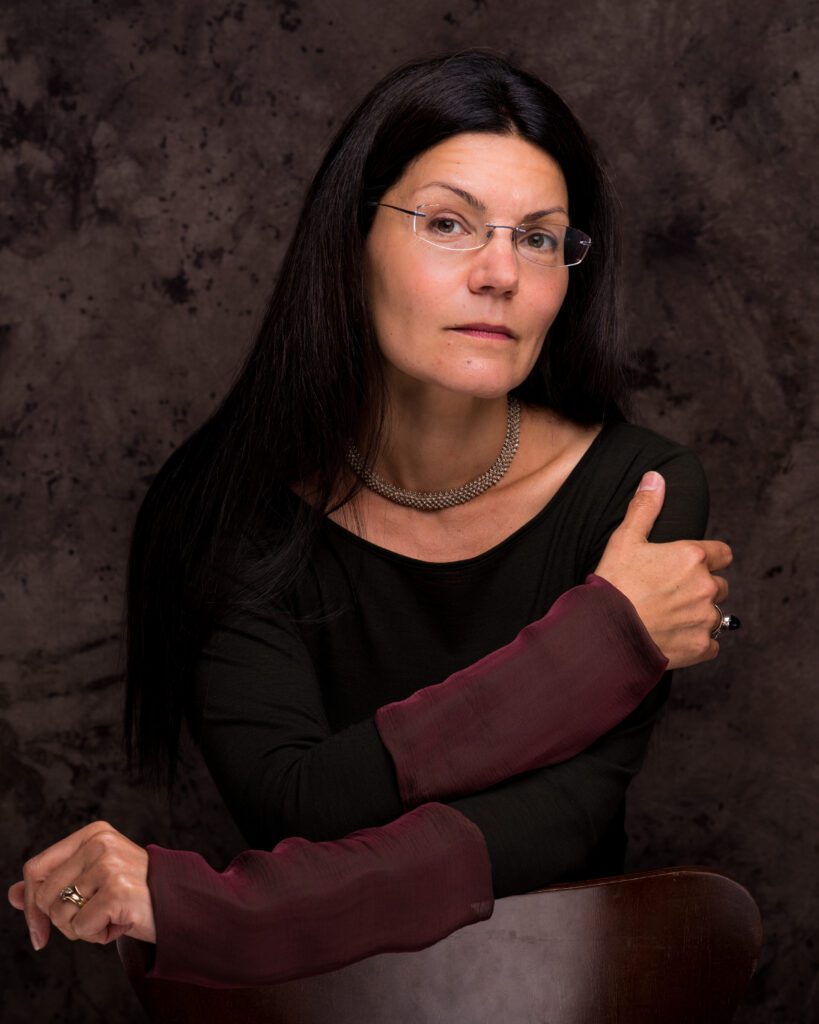
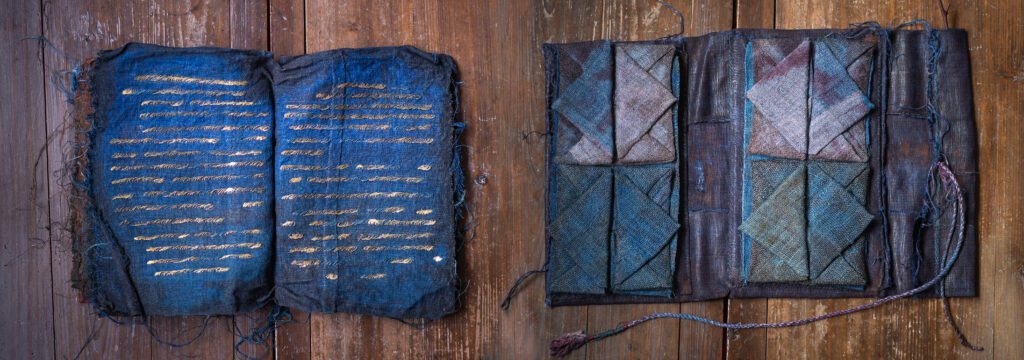
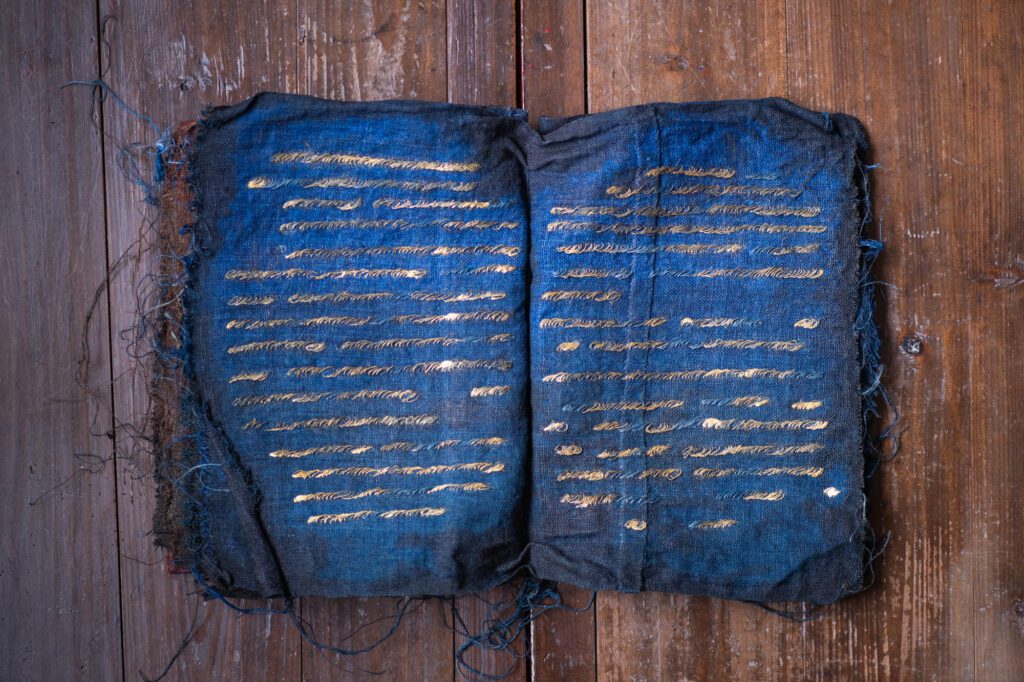
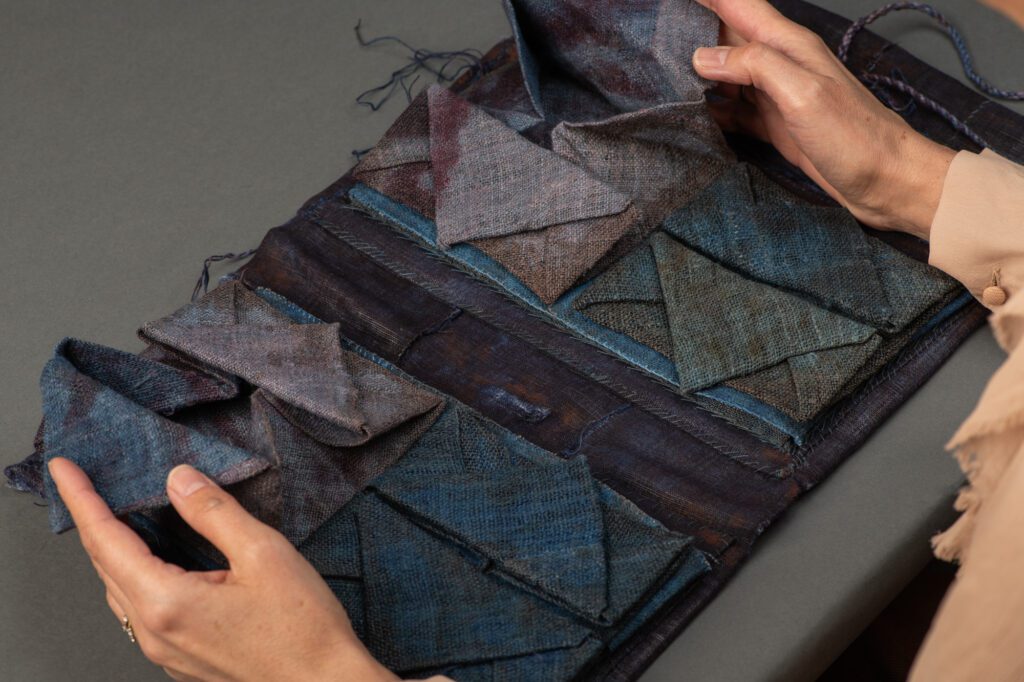
Working at the intersection of textile art, artist books, and visual poetry, Elena approaches cloth not simply as a material but as a language in its own right. Antique textiles, natural fibres, handmade books, botanical dyes, and carefully stitched surfaces become vessels for memory, transformation, and cultural continuity.
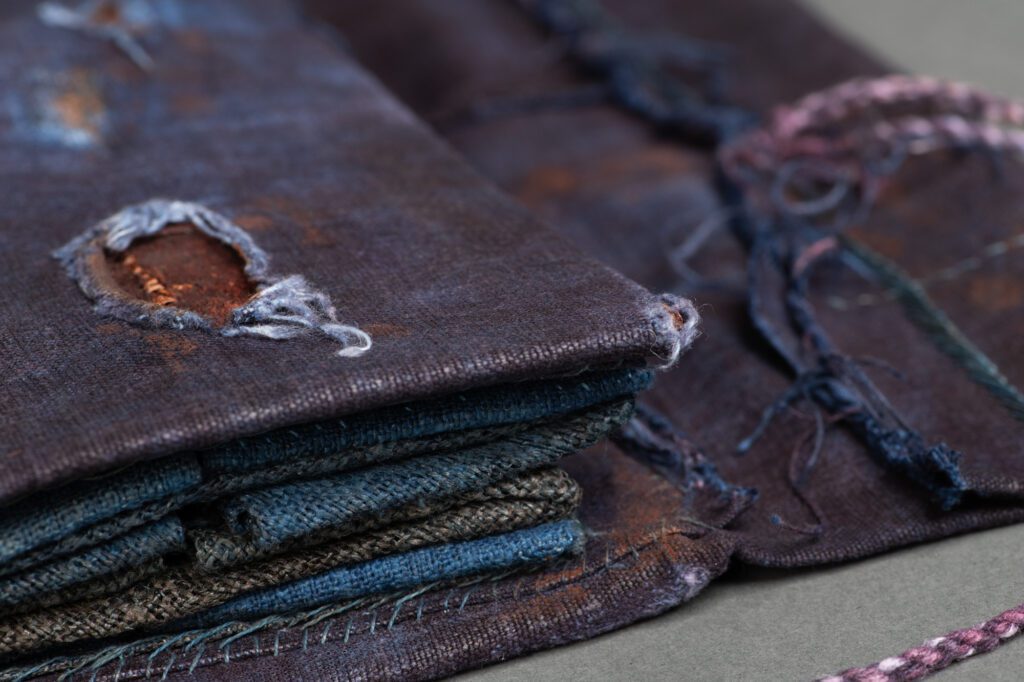
Every fold, tear, stitch, and fragment carries traces of time, inviting viewers to experience the work not only visually but through a profound awareness of touch, history, and human presence.
Nature runs quietly through every aspect of her practice. From natural fibres and botanical processes to the rhythms of growth, decay, and renewal, the living world is never simply a subject to depict but a philosophy that shapes how the work is made.
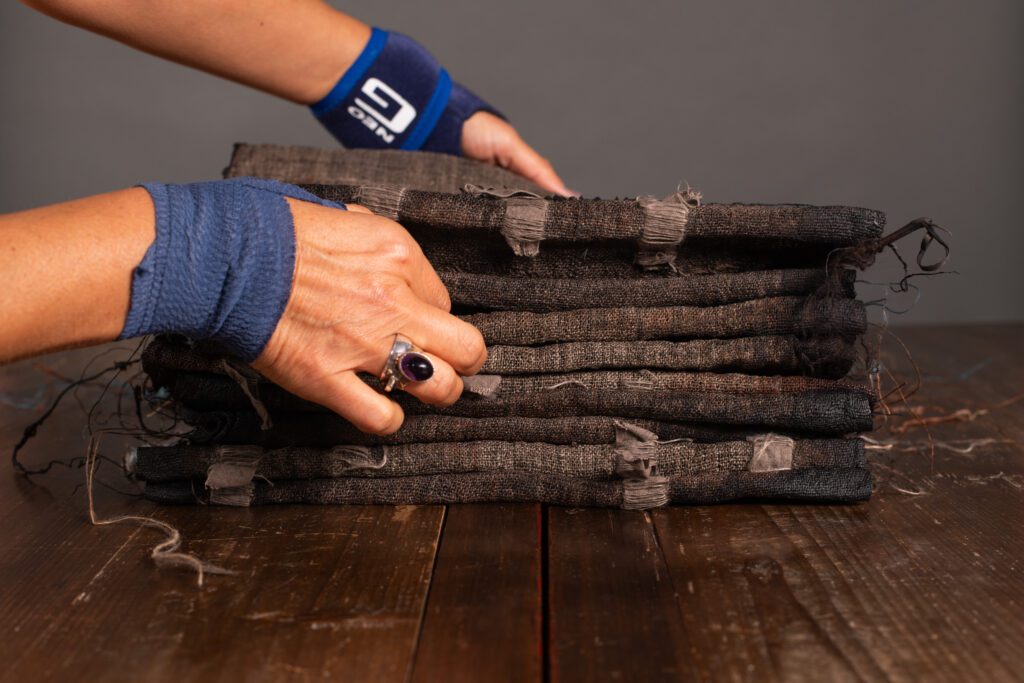
Sustainability, material heritage, and the preservation of traditional craftsmanship become inseparable from her creative process, allowing each artwork to exist as both a contemporary expression and a conversation with the past.
Perhaps what makes Elena’s work especially compelling is its willingness to leave space for mystery. Rather than offering direct narratives, her textile books and sculptural forms suggest stories that remain intentionally unfinished, encouraging every viewer to bring their own memories, emotions, and interpretations into the experience. In doing so, she reminds us that some of the most powerful forms of communication happen beyond language itself.
Now let’s get to know Elena through our conversation about textile art, artist books, memory, materiality, nature, and why cloth has remained one of humanity’s oldest and most enduring forms of storytelling.
Q1. Could you share a little about your journey and what led you to become a textile and book artist?
My practice is only seven years old, my creativity, – a lifetime. The beginning? I never think of it as a certain point in time when a decision was made. Rather that I was born into literary and textile culture and as far as I remember myself, I had a strong awareness of this identity blueprint. Professionally, for most of my life I thought artistic path inaccessible as I was not taught art, even at school. Having moved to UK through marriage, after raising family I found approaching fifty that my previous education qualifies me to apply for research MA in textile art.
Thus, intensely internalised artistic passions and decades of prolific reading found an outlet! My inspiration is rooted in multicultural identity, travel, literature, world craft heritage and nature. Conceptually, intellectual rigor is supported by painstakingly handcrafted artworks and continual inquiry into materiality of language.
Treasured influences are Vladimir Nabokov, Magical Realism school, Edmund de Waal, Maria Lai and Italian ‘Libristi’, Maliheh Afnan, Anselm Kiefer, rich oeuvre of Mariano Fortuny and Venice itself, Russian Silver Age poetry, Virginia Woolf, Japanese sensibilities and craft traditions, Marc Chagall and cinematic legacy of Tarkovsky and Kurosawa, to name but a few.
Q2. When did you realize textiles could become a language of their own in your work?
Empirically, one of my earliest memories is lying in bed aflame with flu and studying designs, patterns and colour fields on an old Turkmen rug hung on the wall. I remember clearly there was absolutely no doubt in my mind I was looking at a story, a language of sorts and feverishly trying to decipher it.
In many ways I am still that child. Brilliantly put by one of the founders of Gramma Epsilon gallery in Athens, Paolo Cortese, fabrics are “primordial forms of writing…” (Cortese, 2020). Later on, at university, initial experimentation with text and textiles helped to separate creative critical writing from textile practice.
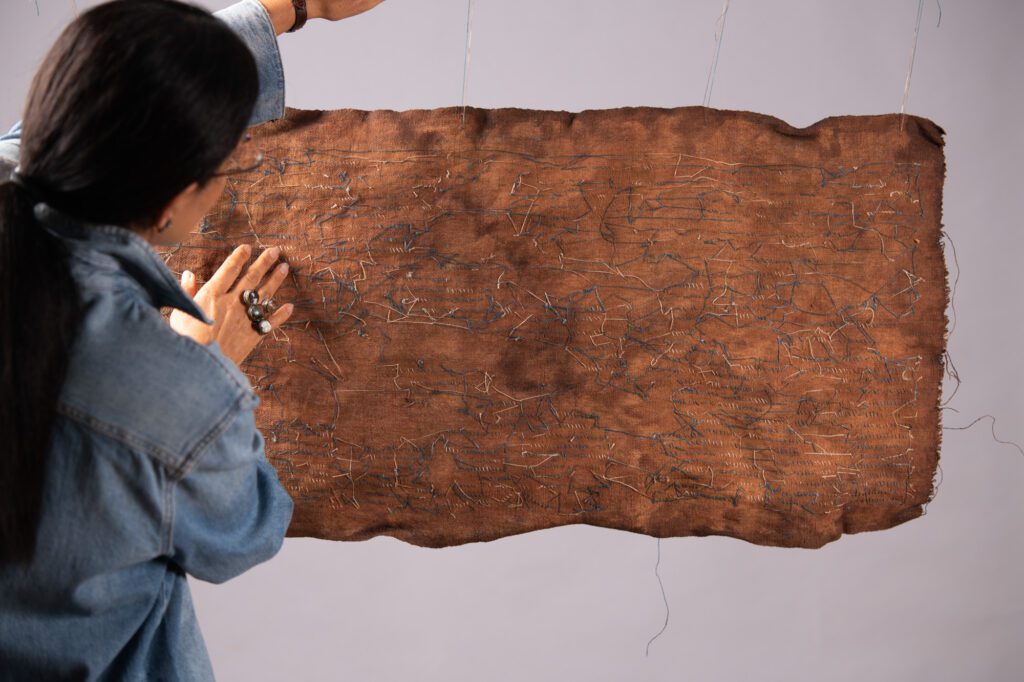
Here, in the quiet and tactile hand-crafting the asemic approach emerged. Examining language poetically and cloth itself as an ancient way of communication, I was drawn to the mystery of a narrative that is merely hinted upon, – more powerful for all its hidden.
Q3. Do you think the labour-intensive nature of your process becomes part of the meaning of the finished work?
Absolutely! I was always attracted to objects marked by time. I come from culture that honours ancestral knowledge, – both books and textiles are custodians of that. I value the scars of existence, – they speak of trauma, resilience and transformation.
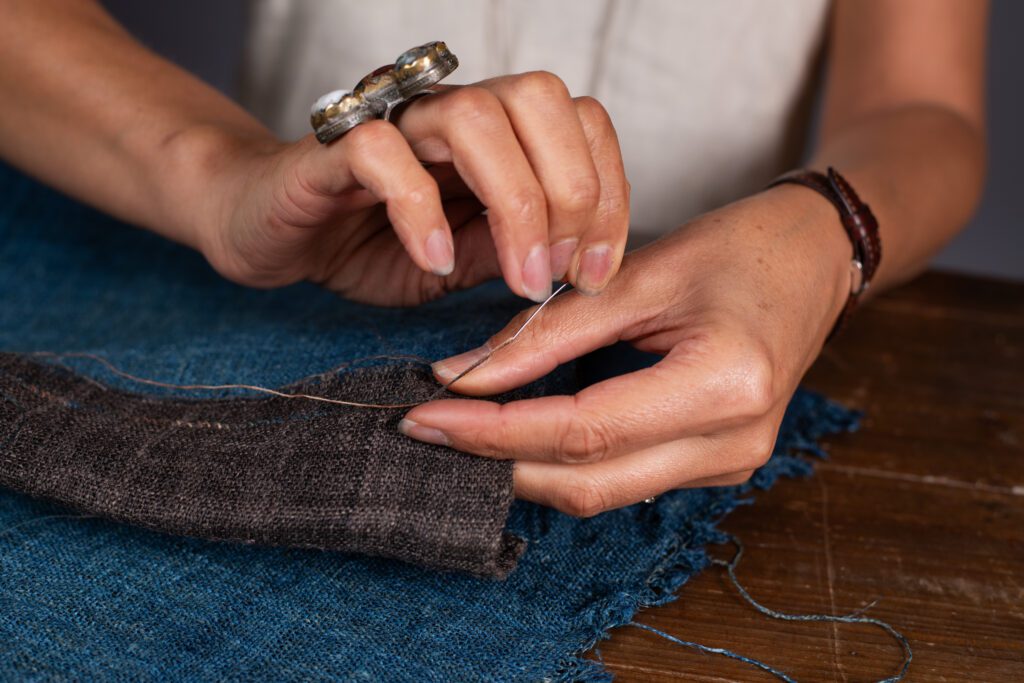
I have to break, to fracture, to forge something new and honest out of this fragmentation. Painstakingly hand-crafting for me is an integral part of that. Imprinting my DNA, my energy, my story is precisely what I ‘read’ and value in textiles and books of the past – the silent mark of makers who stand behind me.
Through my own work and the use of antique textiles I attempt to redeem the past and the meaning of making. Resulting power of knowing that in small measure I am, perhaps, adding to universal narrative of cultural continuity is exhilarating.
Q4. What does cloth allow you to express that paper, paint, or words cannot?
There is an intimacy to cloth, palpable, dizzying sensuality that only touch can compare with. To me, this tactility unlocks both potential to explore human vulnerability and our immense strength, capacity for change and growth, as well as address our darker destructive tendencies. Textiles’ semantic potential underpins materiality of language and my interest to continue on this path.
If you look at history of pigments, origins of language and papermaking you will find textiles and natural fibre are never far away. Thus, to me, they are not opposing mediums, – rather a fluid, excitingly interconnected journey of discovery and innovation, it just happens so that textiles speak more profoundly to me.
Q5. The phrase “At the fore-edge of the book, art and cloth become poetry” beautifully describes your practice. What does poetry offer your work that straightforward narrative cannot?
Thank you, it is a kind and perceptive comment…In short, – the mystery of unspoken, a certain mytho-poetic presence engaging all the senses and challenging the viewer, rather than a direct communication. There is an exciting danger in that, a promise.
There is an ambiguous room to relate privately. Important to differentiate here between poetry as a literary genre, which undoubtedly feeds my work and the visual poetry realm my practice occupies. Essentially, I am continually attempting to recreate similar aesthetic and emotional language but with the alphabets of cloth, colour and book form.
Q6. Has a particular work ever revealed something about yourself that you didn’t expect to discover?
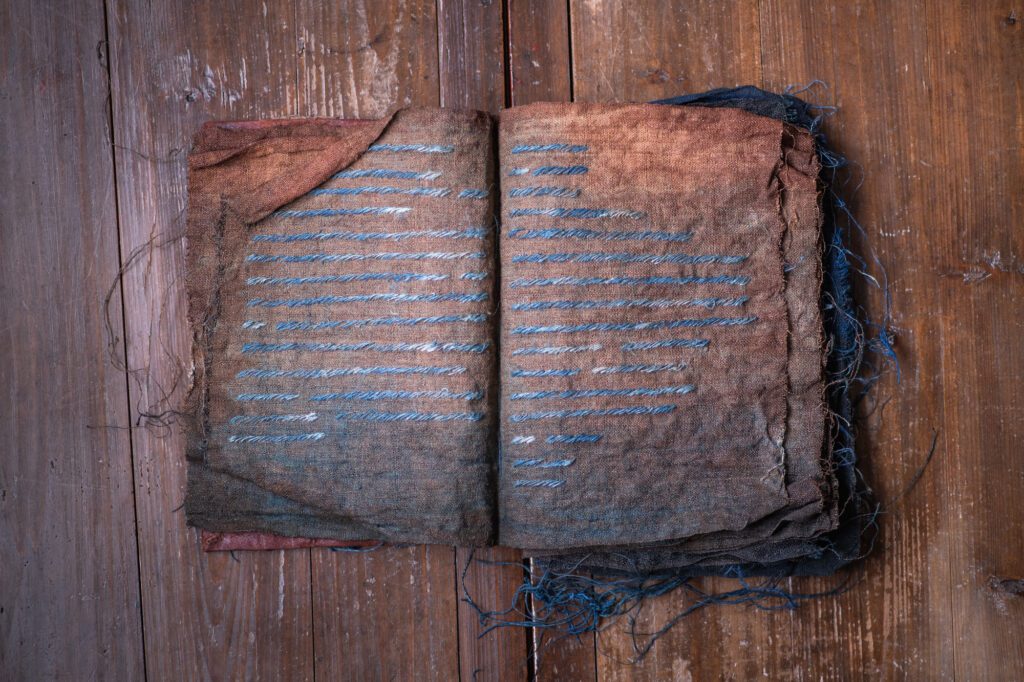
Yes, without a doubt, and particularly pertinent to ‘Rose Perpetual’ book sculpture. What continues to surprise me is its seemingly independent capacity for emotional response from the viewer. I am grateful. I used to think my work is incredibly niche and locked in private intensity, therefore not easily understood. This sculpture was created as a response to medical trauma and became an antidote to despair, my way of transcending darkness into beauty and returning to practice.
I could not have wished for more as the artwork repeatedly finds its own ground and keeps pulling me towards light. I now identify as a disabled artist following devastating arthritis diagnosis last year. This seismic emotion of grief, resilience and endurance has given my practice another depth and an urgency to advocate for my community. For, I can absolutely cannot envision a future without making, without fighting and hope, which also connects to female empowerment.
Q7. Memory runs throughout your practice. Are you more interested in preserving memories or transforming them?
Memory is vital, what makes us human and shapes identity. What fascinates me is how time, perception and complexities of human experience alter and distort how we recollect the past, what we hold on to and what is blown away by the winds of time forging new narratives. This illusory, fleeting nature forms poetry of its own to me.
Similarly, I am mesmerised by the energy of the transitory moment when familiar physical book form becomes an idea or a work of art, – holding that moment, that mystery is what I attempt to portray, to capture a thought before it is spoken and to give memory agency and hapticity.
Q8. Textile art has long existed between craft and fine art. How have you seen attitudes toward it change over your career?
I agree with entangled duality you describe, however, personally I do not draw this line sharply, rather, I see a breathing, living and evolving membrane. My early childhood in South East Asia saw art and craft inseparable and part of daily life, which did not compromise material or conceptual complexity. Instead, – perpetuated deep reverence to heritage, making and nature.
I now recognise this as enormously impactful and formative to who I am today and my work. My practice in art textiles, enriched by parallel perspective of book arts, is relatively recent. As I was starting out, my work was received with caution as in fine art textiles I was perceived as ‘too books’, yet in book arts – ‘too textiles’. Now, textiles are everywhere and increasingly recognised on the highest level.
The realm of artist books is becoming more visible and celebrated. My hope is for even stronger recognition of fine art textiles and an unequivocal acceptance as an art form equal to other arts. I welcome recent revival of heritage textile practice and its experimental, revolutionary potential to engage with other mediums.
Q9. Looking back over your practice, what has remained constant even as your materials, ideas, and techniques have evolved?
My desire to champion textiles as a form of communication, not just historically but evolving, relevant and timeless. My growing commitment to sustainability through natural dyeing practice and incorporation of antique textiles into my artworks, as I am also a rather unhinged collector eager to make relics of the past visible and celebrated for their enduring beauty and craftsmanship.
Privately, also to keep feeding my impassioned hunger for knowledge and wish to connect with global creative community, as I see myself a citizen of the world.
Q10. What advice would you give emerging artists trying to find their own path without fitting into labels?
Defy categorisation! Listen to your instincts and follow what feels true. Once identified, this voice can only grow stronger. Trust yourself.
As our conversation with Elena came to a close, one thought continued to surface. Some of the most meaningful stories we inherit are never spoken. They live quietly inside the things people leave behind a piece of cloth worn soft with time, a handwritten note tucked into a book, an embroidered pattern passed from one generation to the next.
These objects survive not because they are perfect, but because they carry traces of human lives. They become witnesses to memory in ways that words alone often cannot. Perhaps that is why Elena’s work feels so resonant.
She reminds us that making by hand has always been about more than creating beautiful objects. Every stitch, every fold, every weathered textile and handmade page carries evidence of time, care, and presence. In a world increasingly defined by speed and convenience, there is something quietly radical about choosing a process that cannot be rushed.
We also found ourselves thinking about how easily we separate art from craft, books from textiles, language from material. Yet history tells a different story. For centuries, fabrics preserved cultures, books carried knowledge, and handmade objects became vessels for memory and identity.
They have never existed in isolation. They have always been part of the same human desire—to leave something behind that can outlast us.
Elena’s practice feels like a continuation of that conversation. Rather than looking backwards with nostalgia, she takes these ancient materials and asks what they can still communicate today. In doing so, she reminds us that tradition is not something fixed. It is something we continue to shape every time we choose to make, preserve, repair, and create.
For collectors and art lovers, her work offers an experience that unfolds slowly. The remarkable craftsmanship may first capture your attention, but it is the layers of history, texture, memory, and symbolism that invite you to return. The longer you spend with each piece, the more it begins to reveal—not simply about the artwork itself, but about our own relationship with time, heritage, and the things we choose to hold onto.
Perhaps that is the lasting impression Elena leaves with us. That the objects we make today may one day become someone else’s memory, carrying our stories forward long after we are gone.
Follow Elena Sparke through the links below and explore more of her thoughtful textile and book art.
