
3 House Museums of Women Artists Every Art Lover Should Visit
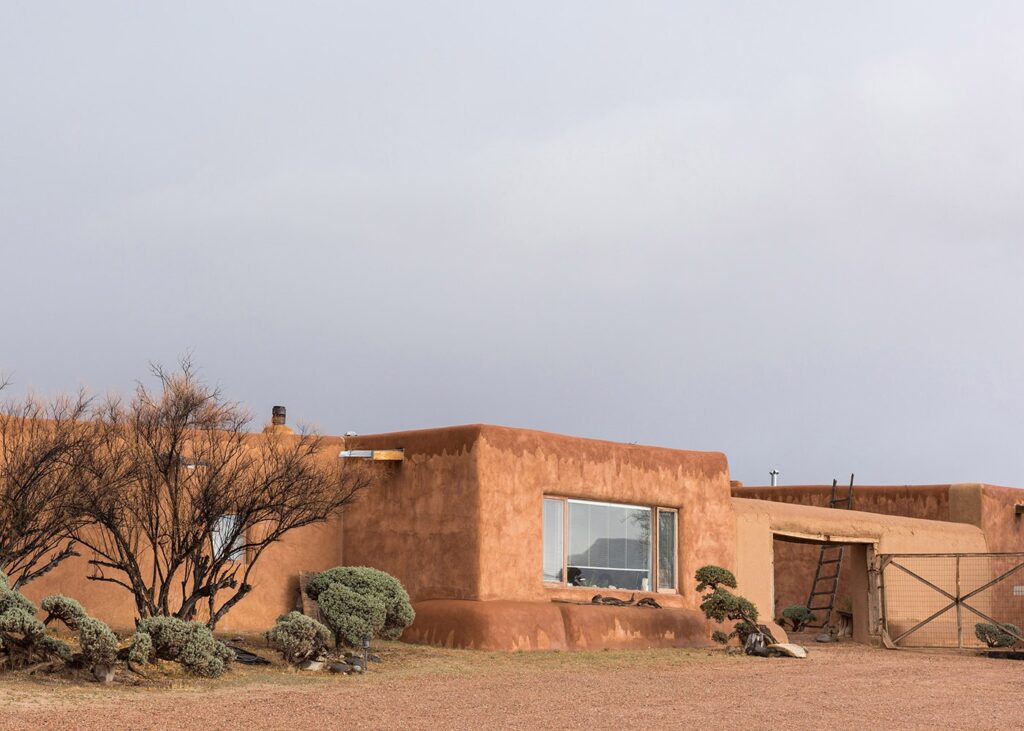
A museum can show you the finished painting, the sculpture, the sketchbook and the photograph. But there is something different about visiting an artist’s home. A house can show you where all of that began. You get to see the rooms they lived in, the objects they kept around them, the spaces where they worked, and sometimes even the gardens or landscapes that became part of their visual language.
For women artists in particular, these spaces can tell an important story. So much of women’s art history has been written around finished works and famous names, while the everyday environments that shaped those artists often remain less visible. A house museum brings some of that context back.
You can stand where an artist once stood, look through the same windows, notice the colours they surrounded themselves with, and understand that their creative life did not happen in isolation. It happened in kitchens, bedrooms, gardens, studios and homes.
If you are an artist, art student, or simply someone who loves seeing the person behind the work, these three historic house-museums are worth putting on your travel list.
1. Casa Azul — Frida Kahlo, Mexico City
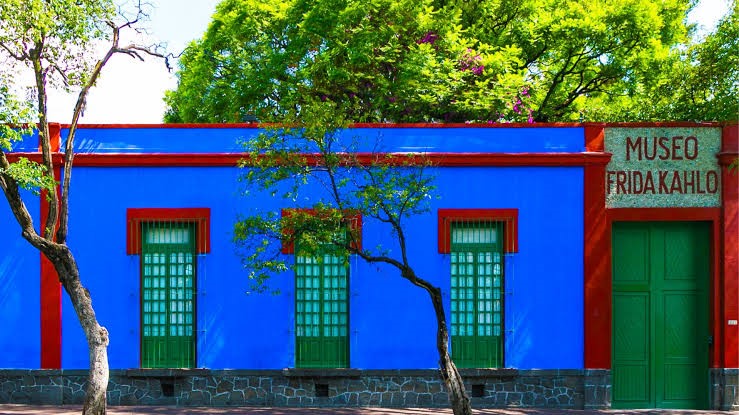
Few artist homes are as instantly recognizable as the bright blue walls of Casa Azul, the home of Frida Kahlo in Coyoacán, Mexico City.
But Casa Azul is much more than a photogenic tourist destination. It was Frida’s home for much of her life, first with her family and later with Diego Rivera, and it was also a place where she created, hosted people, lived through illness, developed her identity and built the visual world that would eventually become inseparable from her name. The house opened as a museum in 1958, four years after her death.
That is what makes visiting it so special. You are not simply walking through a gallery displaying Frida Kahlo paintings. You are walking through the environment in which the artist actually lived.
The museum preserves personal objects, photographs, books, furniture, clothing, traditional Mexican objects, pre-Columbian sculptures and paintings. Some of the most interesting details are not necessarily the paintings themselves, but the things around them. Her clothes, personal belongings and even the domestic spaces of the house help explain how Frida constructed her identity and incorporated Mexican culture into her life and art.
The kitchen, for example, has been preserved in its original condition, with its cookware and dishes offering a glimpse into the everyday environment Frida and Diego inhabited. It is a small reminder that artistic identity is often built through ordinary things: food, colour, clothing, family traditions and the objects we choose to keep close to us. And then there is the garden.
The blue walls, lush plants, traditional objects and colourful details make Casa Azul feel almost like one of Frida’s paintings brought into three dimensions. You begin to understand why Mexican visual culture was not simply a subject she painted. It was something she lived.
For artists, that distinction is worth paying attention to. Frida’s work is often discussed through the lens of symbolism, pain, identity and self-portraiture. But seeing her surroundings can make those ideas feel much less abstract. Her art came from a very specific place, culture and personal environment.
There is also something powerful about seeing a woman’s domestic space treated as part of art history. The home is not presented as an insignificant background to Frida’s career. It is part of the story.
Why visit?
Because Casa Azul lets you see Frida Kahlo beyond the icon. Before the flowers in her hair, the famous eyebrows and the endless reproductions of her self-portraits, there was a woman living and working inside this house. Visiting it gives you a chance to encounter that more intimate version of her story.
2. Georgia O’Keeffe’s Home and Studio — Abiquiú, New Mexico
If Casa Azul shows you the intimate world of an artist through colour, objects and personal history, Georgia O’Keeffe’s Home and Studio in Abiquiú, New Mexico shows you something equally important: the relationship between an artist and her surroundings.
O’Keeffe is famous for her paintings of flowers, bones, landscapes and the dramatic forms of the American Southwest. But visiting her home helps explain why that landscape became such an important part of her visual language.
O’Keeffe bought an abandoned adobe house in Abiquiú in 1945 and eventually made it her permanent home. She lived and worked there for decades, transforming the property into a space that suited both her personal life and artistic practice. Today, the historic home and studio can be visited through tours operated by the Georgia O’Keeffe Museum.
And this is where the experience becomes particularly interesting for artists. The house was not simply somewhere O’Keeffe happened to live. Her environment became part of her practice.
The surrounding New Mexico landscape appears again and again throughout her work. The adobe architecture, the mountains, the desert, the bones and natural forms she encountered were not distant references. They were things she lived alongside.
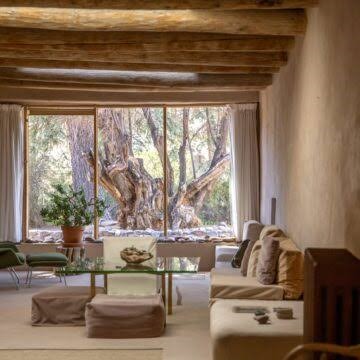
That makes visiting the house feel almost like stepping inside the source material for her paintings. You can begin to notice the relationship between what an artist sees every day and what eventually appears on the canvas. The windows, the landscape, the light and the physical structure of the house all become part of that understanding.
It is also a beautiful reminder that artists do not always need more stimulation. Sometimes they need less. O’Keeffe developed a life in which solitude, observation and repetition became important parts of her creative process. Her home in Abiquiú offers a fascinating contrast to the idea that a successful artistic career has to mean constantly being surrounded by galleries, exhibitions, events and people.
Sometimes a quieter life can produce an incredibly rich body of work.
The studio itself is especially meaningful because it brings the idea of “artist at work” down to earth. We often see photographs of artists standing beside their finished paintings, but a studio tells you much more about the process: where materials were kept, how light entered the room and how the artist physically moved through the space while working. And then there is the landscape outside.
For anyone who paints landscapes, photographs nature, works with colour or simply struggles with finding inspiration, this is the kind of place that can change how you look at your own surroundings. You do not necessarily need a dramatic desert or mountain range outside your window to make meaningful work. O’Keeffe’s example is a reminder to look closely at what is already around you.
Why visit?
Because O’Keeffe’s home shows that an artist’s surroundings can become part of their vocabulary. It is a beautiful place to think about observation, solitude and the connection between where we live and what we create.
3. Dorich House Museum — Dora Gordine, London
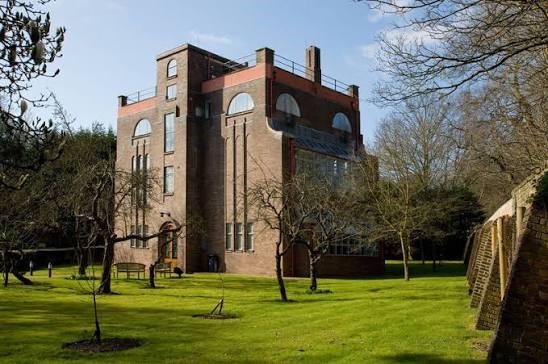
Our third stop takes us to London and to a place many art lovers may not know about: Dorich House Museum, the former home and studio of sculptor Dora Gordine. And honestly, this one deserves much more attention.
Completed in 1936 to Gordine’s own design, Dorich House was created as a studio home for the artist and her husband, Richard Hare. Today, the Grade II listed building is a museum and holds the world’s largest collection of Gordine’s work. What makes it particularly fascinating is that the building itself is part of Gordine’s artistic story.
This was not simply a beautiful house where an artist happened to live. It was designed around the practical needs of her creative life. The building included a plaster studio, modelling studio and gallery, with domestic spaces above them. In other words, Gordine quite literally designed a home where living and making could exist side by side. That idea feels surprisingly modern.
Today, so many artists think about creating a dedicated studio, building a home workspace or finding ways to make their surroundings support their practice. Gordine was doing something similar almost a century ago. And there is another reason this museum is worth visiting: her story challenges the way we remember women artists.
Dora Gordine was a highly accomplished sculptor who worked across Europe and Asia and exhibited internationally. Her career included commissions and recognition during her lifetime, yet her name is nowhere near as familiar to the general public today as Frida Kahlo or Georgia O’Keeffe.
That is precisely why places like Dorich House matter. They help bring artists back into the conversation.
Walking through the building, you can see the relationship between architecture, sculpture and domestic life. Her plaster and modelling studios reveal the physical side of sculpture, a discipline that requires space, tools and an entirely different relationship with materials than painting.
The house also preserves collections of Russian art and objects acquired by Gordine and Hare, adding another layer to the story of the people who lived there. For women artists especially, there is something empowering about seeing a space that was so deliberately built around a woman’s creative ambitions.
It says something very simple but very important: her work deserved room. Not a corner of the dining table. Not whatever space was left after everything else was taken care of. A proper studio. A gallery. A purpose-built environment. And perhaps that is the most inspiring thing about Dorich House.
Why visit?
Because it is a reminder that women artists have always been building creative lives, even when their names have not remained equally visible in art history. Gordine’s home is a fascinating example of an artist designing her physical world around the work she wanted to make.
Why Artist Homes Are Worth Visiting
There is a reason house museums feel different from traditional art museums. In a gallery, we usually begin with the artwork. We stand in front of it and ask what it means, how it was made and why it matters. In an artist’s home, we can begin somewhere else.
We can ask: What kind of life produced this work?
What did the artist see every morning? What objects surrounded them? What did their studio look like? Did they work in solitude or with people constantly coming and going? What colours did they live with? What landscapes did they return to? What did they choose to preserve? These questions can change the way we look at the work itself.
Casa Azul shows us how deeply Frida Kahlo’s identity was connected to Mexican culture, domestic life and personal experience. O’Keeffe’s Abiquiú home shows us what happens when an artist allows a landscape to become part of her creative vocabulary. Dorich House shows us a woman artist who physically designed her environment around the demands of her practice. And there is something else they all have in common.
They remind us that great art does not come from some mysterious place completely separate from ordinary life. It comes from rooms. From routines. From things we collect. From places we return to. From the light coming through a particular window. From the landscape outside the door. From the people we love, the cultures we belong to and sometimes the solitude we desperately need.
For artists planning their next trip, these museums are more than tourist stops. They are opportunities to see creative lives up close. So the next time you find yourself planning a trip around art, do not only look for the biggest museums or the most famous galleries. Look for the blue house in Coyoacán. Look for the adobe home in Abiquiú. Look for the studio house in London. Because sometimes, to understand an artist, you need to see not only what she made, but where she made it.
