
Hailey Harvey on Using Animals & Stitching to Build Meaning in Art
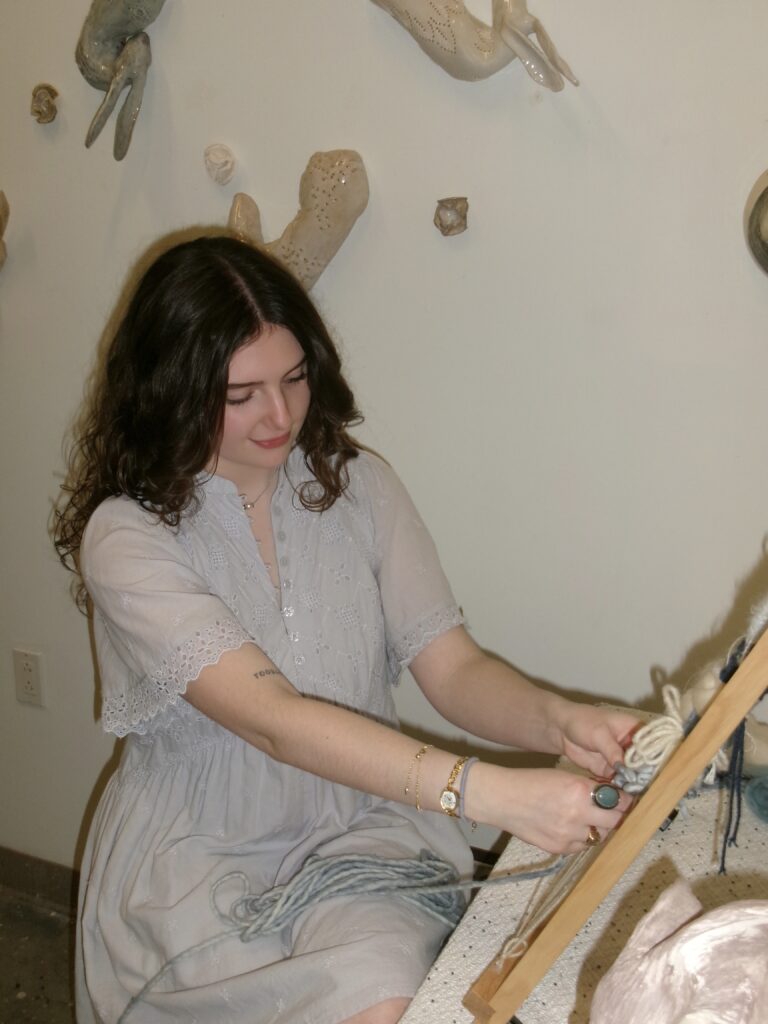
At Women in Arts Network, Spring Through My Eyes became a meeting point for artists who see renewal not only in nature, but also in emotion, memory, and the creative process. Hailey Harvey is one of the selected artists whose work explores these ideas through animals, archetypal imagery, and the tactile language of thread and fiber.
Her practice grew from an early relationship with making. Her grandmother introduced her to cross-stitch, embroidery, and crochet as a child, experiences that taught her not only how to work with her hands but also the patience and attentiveness that continue to shape her art. Later, while studying film photography and digital media, Hailey began sewing directly into her photographs, discovering a way to bring together image, material, and personal history.
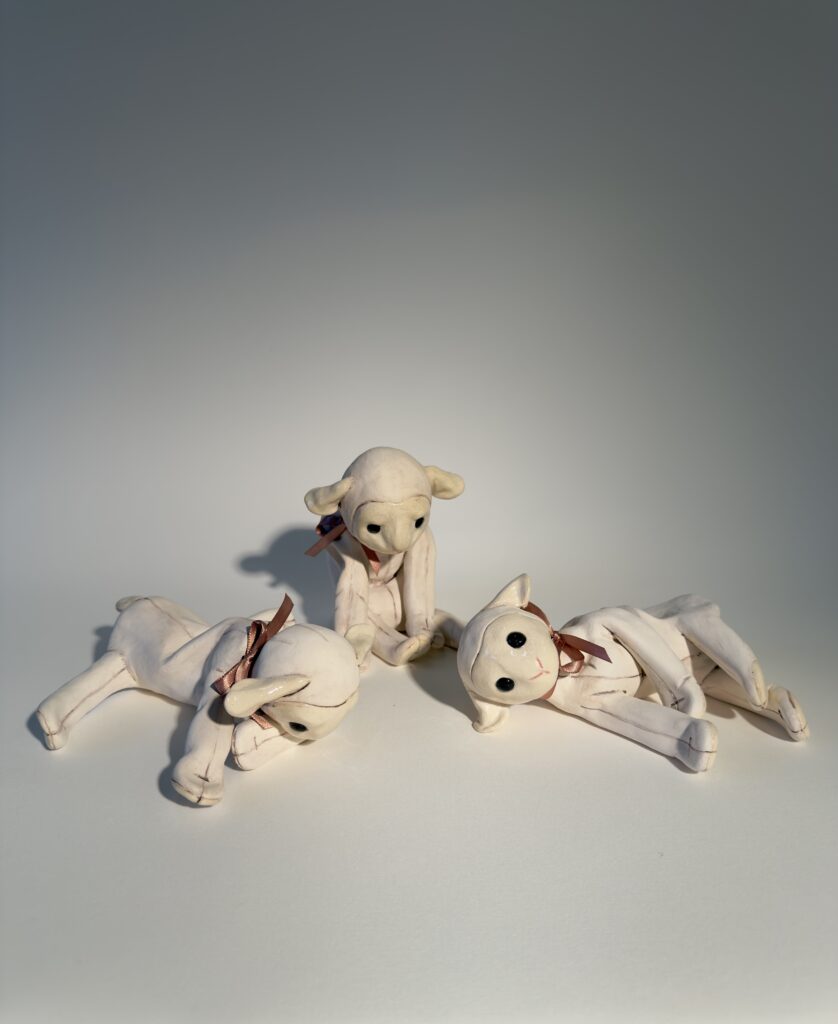
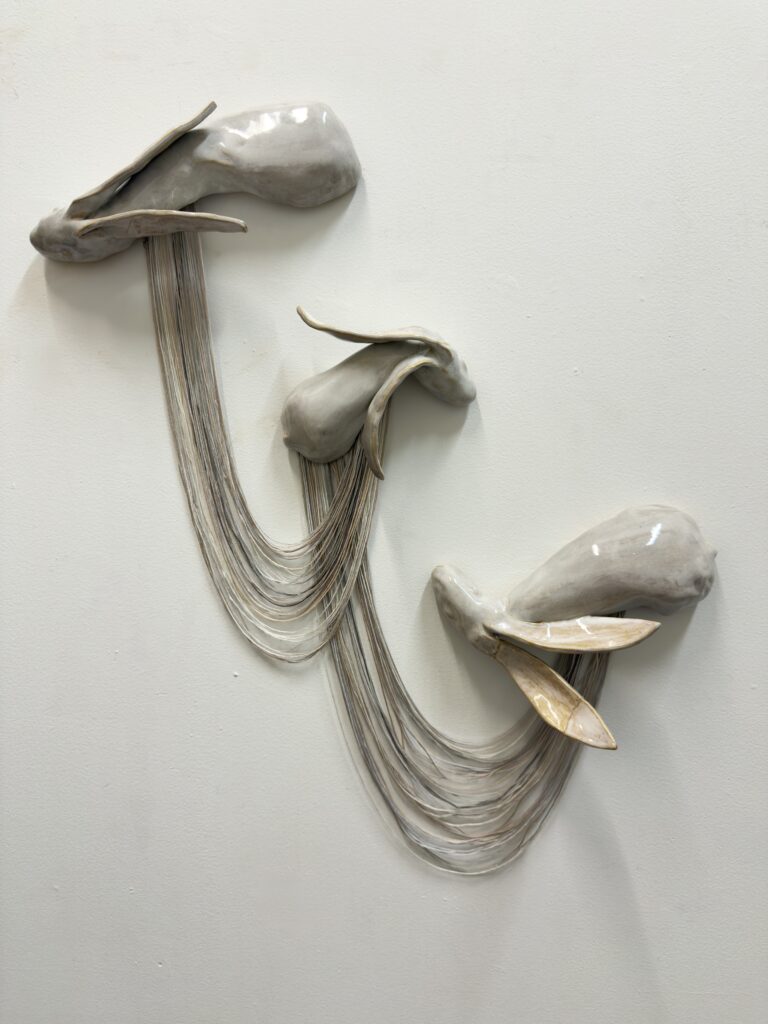
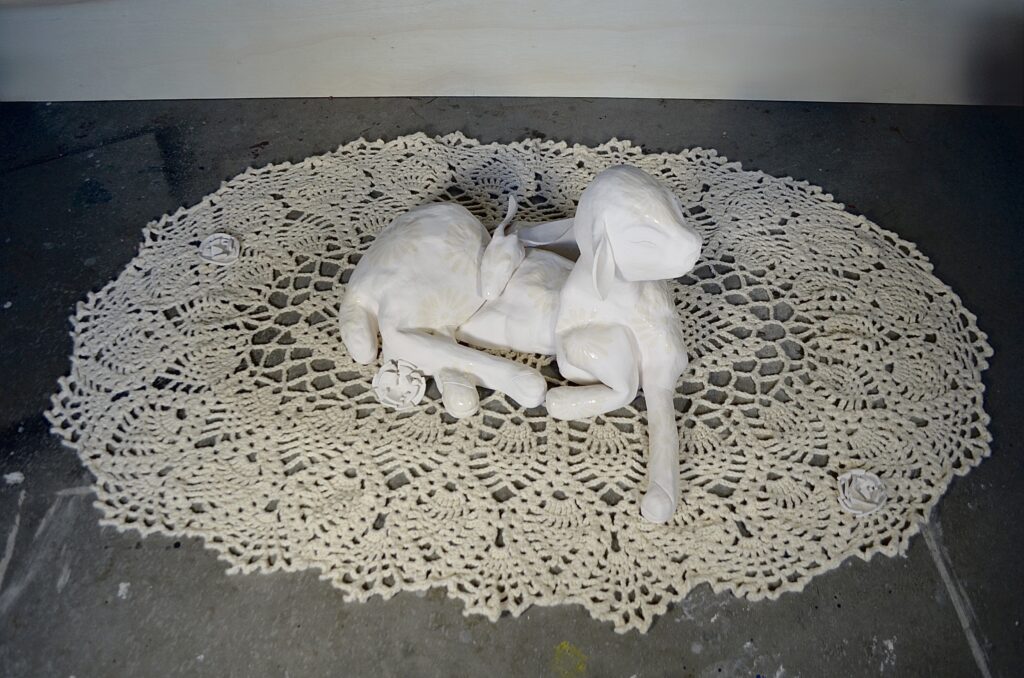
Over time, her work moved beyond family photographs toward animals and symbolic imagery. Hares and lambs became recurring figures, allowing her to explore ideas of memory, vulnerability, transformation, belonging, and the experiences that shape us. Rather than representing a single story, these animals create space for viewers to recognise something of their own lives within the work.
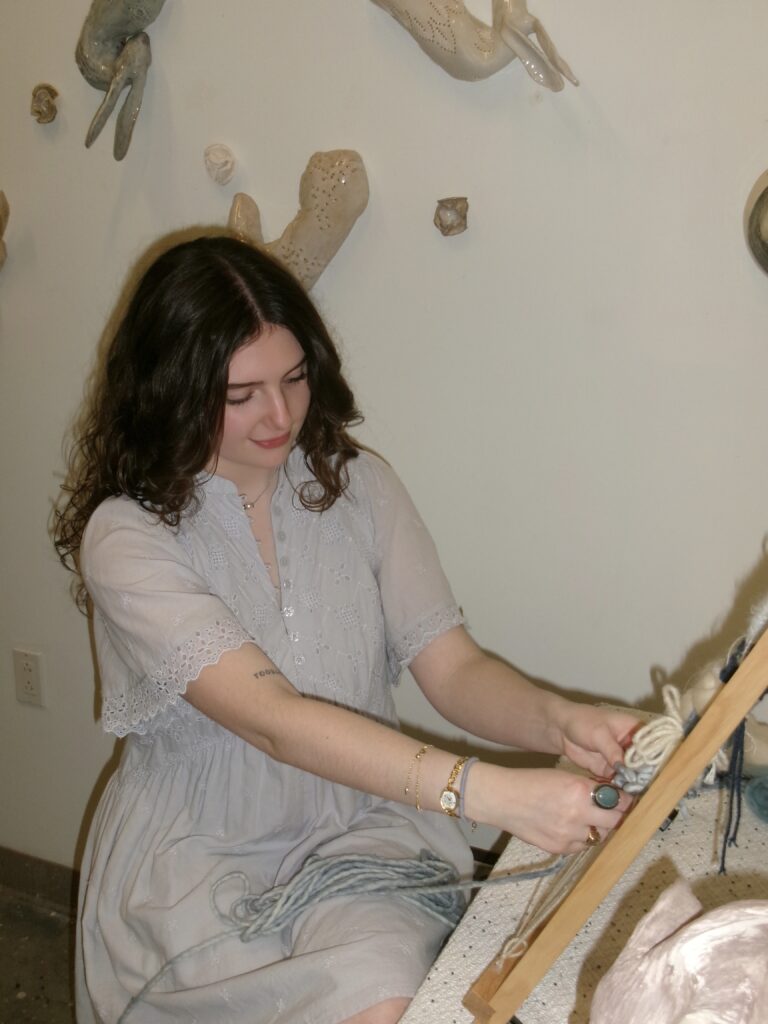
Thread remains central to this visual language. Moving through drawings, photographs, and ceramic surfaces, it introduces traces of touch, time, care, and repair. Alongside charcoal and other materials, it creates a tension between softness and darkness, permanence and fragility, inviting us to look more closely at what lies beneath the surface.
This interest in what is carried beneath the visible also connects to Hailey’s exploration of liminal spaces. Her works often exist somewhere between departure and arrival, comfort and unease, grief and hope. Instead of presenting transformation as a clean or finished process, she gives attention to the uncertain spaces in between, where memory resurfaces and new understanding can begin.
With a practice shaped by both art and psychology, Hailey approaches these themes through an interest in the symbols and archetypes that connect personal experiences to something more universal. Her work does not attempt to provide definitive answers. Instead, it creates a space for reflection, allowing memory, emotion, and interpretation to remain open.
Now, let’s get to know Hailey Harvey through our conversation about memory, animals, thread, transformation, and the quiet spaces where personal experience becomes art.
Q1. Can you share how your journey into art began and what continues to shape your practice?
Looking back, I don’t think there was ever a moment when I decided to become an artist. Creativity was always present in my life because of my grandmother. She taught me how to cross stitch, embroider, and crochet when I was just a little girl, and those moments together became some of my earliest memories of making. More than teaching me techniques, she taught me patience, attentiveness, and that creating something with your hands could be an act of care. I carried that with me into high school, where I became immersed in film photography and digital media.
During my final years in the darkroom, I found myself sewing directly into my prints, adding what felt like the missing pieces to photographs that already held so much personal history. Looking back now, I realize that was the beginning of the language I still use today. That curiosity followed me through undergraduate and graduate school, eventually shifting from photographs of my own family toward animals and archetypal imagery. While the subject matter has changed, the heart of the work hasn’t.
I’m still interested in memory, how it lives within us, and how material can give shape to experiences that are often difficult to put into words.
As I continued through college, I found myself equally drawn to psychology. Studying both disciplines at the same time changed the way I approached making. Psychology encouraged me to look beneath the visible image and ask why certain symbols, memories, and archetypes resonate so deeply across different people. Rather than existing separately, those two fields continually informed one another and ultimately shaped the way I think about art today.
Q2. Lambs and hares recur throughout your work. What draws you to these animals?
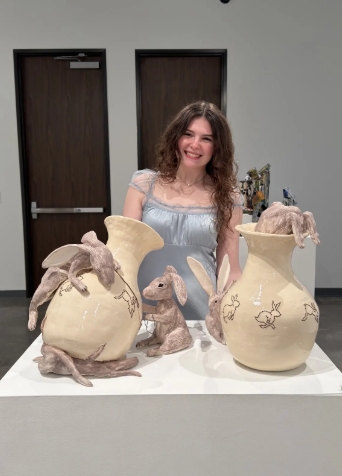
The hare and the lamb entered my work during a period of reflection on how memory shapes identity and how personal experiences can become something more universal. Before working with these animals, I was creating pieces using family photographs and film negatives, which were deeply rooted in my own history. While those works were meaningful, I began searching for imagery that could hold my experiences while also allowing viewers to find their own connections within the work. Animals offered that possibility because they exist within a shared symbolic language.
Rather than using them to illustrate a specific narrative, I see them as archetypal presences, or vessels that can carry emotions, memories, and human experiences beyond one individual story. The hare and the lamb each embody different aspects of this exploration. The hare represents movement, intuition, and transformation, often acting as a guide through uncertainty, while the lamb reflects vulnerability, devotion, and the desire to seek belonging. Together, they inhabit the space between what has passed and what is still becoming, holding both grief and hope within that transitional state.
Q3. Your work often explores liminal spaces. What draws you to moments of transition?
I think I am continually drawn to liminal spaces because they reflect the way we often experience our own lives. So much of being human is moving through transitions, leaving one version of ourselves behind while trying to understand what comes next. I have found myself returning to these moments because they hold both discomfort and possibility. They are spaces where we are no longer who we were, but we have not yet fully become who we are going to be.
Throughout my own experiences with change and transition, I have noticed how quickly we move from one phase of life into another without always having time to acknowledge what those moments have changed within us. My work creates a space to pause within that uncertainty, to recognize what we carry from the past while remaining open to transformation and renewal. The thresholds in my work are not meant to represent a place of being stuck.
Instead, they are reflective spaces where memory can surface, where grief and hope can coexist, and where we can begin to integrate the experiences that have shaped us. The hare and lamb inhabit these in-between spaces because they embody that tension between departure and arrival, stillness and movement, vulnerability and growth.
Q4. Thread is central to your practice. What does it allow you to express?
Thread has become an important material in my practice because it carries a sense of connection, care, and time. Unlike paint or clay, thread physically moves through a surface. It creates a relationship between what is separate, leaving behind visible evidence of touch, labor, and transformation. I am drawn to the way thread can reveal what is often unseen.
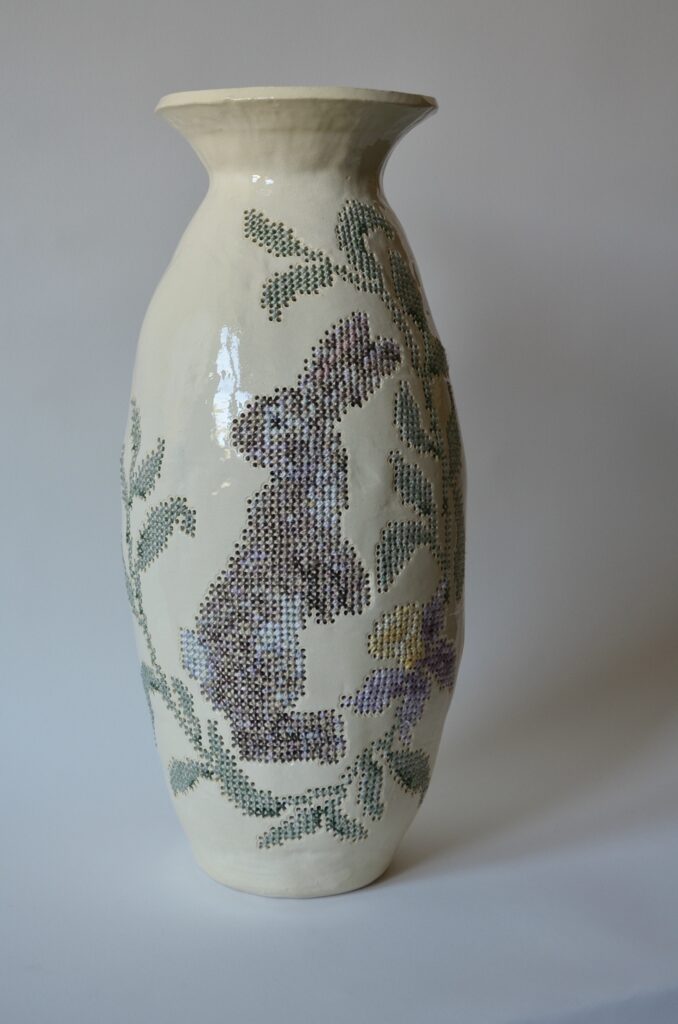
In my drawings, embroidery becomes more than an addition to the image, it introduces another layer of meaning, almost like uncovering a memory that was already present beneath the surface. In my ceramic work, stitching transforms the surface by introducing vulnerability and repair.
The marks, seams, and scars are not meant to be hidden; they become part of the object’s identity.
For me, thread reflects the way memory operates. It gathers, connects, and preserves traces of experience. It allows me to explore how moments of change, healing, and lived history can remain visible rather than being forgotten.
Q5. How do you balance softness and unease through your choice of materials?
I am drawn to the tension between charcoal and fiber because they each hold traces of time and touch in very different ways. Charcoal is immediate and vulnerable, it records every gesture, smudge, and movement of the hand, while also carrying a sense of fragility and impermanence. Thread, in contrast, introduces connection, patience, and a physical presence that asks the viewer to slow down and look closer.
Bringing these materials together allows me to explore the way memory exists between what is fleeting and what is preserved. The charcoal captures impressions, emotions, and moments that feel as though they are resurfacing, while the stitched elements create a sense of repair, accumulation, and continuity.
Together, they create a space where softness and darkness can exist at the same time. I am interested in that balance because memory is rarely one-dimensional. It can be comforting and painful, fragile and enduring. The relationship between charcoal and thread allows the work to hold those contradictions, creating a surface that feels both delicate and deeply lived in.
Q6. What does embroidery add to your exploration of memory and repair?
Embroidery has always been connected to ideas of care and connection for me. Growing up, my grandmother taught me many types of needle point techniques, and through those practices I learned that making could be a slow, intentional act of attention. That history continues to influence the way I approach fiber, not simply as a technique, but as a way of carrying memory, patience, and devotion into the work. When I use embroidery, I am interested in the idea of repair, but not necessarily in the sense of restoring something to how it once was
. Instead, I think of stitching as a way of acknowledging what has been carried, changed, or transformed. The marks remain visible, allowing the process of healing and adaptation to become part of the object’s identity rather than something to conceal. In both my drawings and ceramics, thread becomes a record of touch and time.
Each stitch creates a connection between separate surfaces, while also revealing the vulnerability of the material itself. For me, embroidery reflects the way memory works; it gathers, preserves, and binds together the experiences that shape who we become.
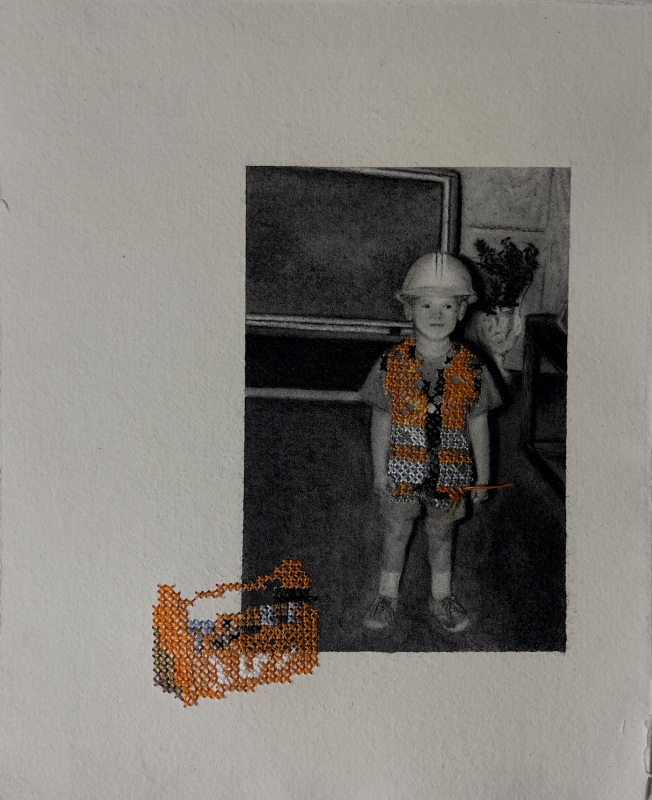
Q7. In Like Father, how did embroidery deepen the story within the photograph?
Like Father is based on an old family film photograph of one of my relatives standing in my grandparents’ living room wearing his fathers hard hat, like he used to do all the time. Like so many children, he had been asked what he wanted to be when he grew up, and his answer was simply, “like my dad.” So I embroidered a safety vest onto his body and stitched a toolbox beside his feet. Those elements never existed in the original photograph, but they existed within the story surrounding it. The embroidery became a way of making that invisible narrative visible.
For me, the thread isn’t an embellishment to the drawing; it’s what completes it.
Charcoal preserves the photograph and the memory it holds, while embroidery introduces something the photograph could never capture on its own; the hopes, identities, and imagined futures attached to that moment. Even the toolbox extends beyond the edges of the image, suggesting that these aspirations aren’t confined to the photograph itself but continue beyond it. Looking back, I see Like Father as an important turning point in my practice. It was one of the first works where I realized thread could do more than alter an image; it could reveal the emotional story that had always existed just beneath its surface.
Q8. Your work often balances comfort with unease. How do you find that balance?
I think I know a work has reached that balance when the viewer feels both invited in and slightly unsettled; when there is a sense of familiarity, but also something that asks them to look closer. I am drawn to creating that tension because memory itself often exists in a similar space. The things we carry can feel comforting because they connect us to who we were, but they can also hold grief, uncertainty, or experiences we have not fully processed. Much of that balance comes through the relationship between my imagery and materials.
The animals, soft surfaces, and familiar forms create a sense of comfort and connection, while the visible marks, scars, stitched elements, and fragmented surfaces introduce vulnerability and complexity. I am not interested in hiding those moments of disruption; they are often where the emotional weight of the work begins to emerge.
Ultimately, I am not looking for the work to resolve that tension completely. I think the most meaningful moments exist when both emotions can coexist, when something can feel familiar and unfamiliar at the same time. That space allows viewers to bring their own experiences into the work and consider the ways memory, change, and transformation shape who we become.
Q9. What makes animals such powerful vessels for exploring human emotion?
I think animals are powerful because they allow us to explore human experiences from a slight distance. We often recognize parts of ourselves in the qualities we associate with animals; their instincts, vulnerability, resilience, and ways of navigating the world. Because they are separate from our own identities, they create space for reflection and allow viewers to connect with the work through their own experiences.
Animals have also existed within our collective imagination for generations, carrying meanings that are often understood intuitively.
They can communicate emotions and ideas that may be difficult to express directly, while still leaving room for personal interpretation. I am interested in that balance between familiarity and openness, the way an animal can feel recognizable while still holding many possible meanings. For me, animals become a way of exploring the human condition without being limited to a single story. They allow me to consider themes of memory, transformation, vulnerability, and belonging while creating a space where viewers can find their own emotional connections within the work.
Q10. How has working with fiber shaped your understanding of art and craft?
I’ve never really experienced fiber as something separate from fine art because it has always been part of how I understand making. Long before I entered an art classroom, my grandmother taught me many fiber-based practices. Those practices became some of my earliest creative experiences, so they never felt secondary to painting, drawing, or sculpture, they simply became another way of thinking and communicating through materials.
As my practice evolved, I realized that fiber carried its own history of care, labor, and connection, and those qualities aligned naturally with the ideas I was already exploring. Rather than seeing embroidery as a decorative element or a craft tradition borrowed into fine art, I see it as an essential part of my visual language.
It allows me to explore memory, healing, and transformation in ways that feel both material and deeply human. For me, the distinction between craft and fine art has never been especially important. What matters is whether a material can carry meaning. Thread happens to do that in a way that feels honest to my own experiences and to the stories I hope to tell.
Q11. What ideas are you continuing to explore through your current body of work?
I think I’m beginning to understand that memory isn’t something we revisit as much as something we continue to live alongside. For a long time, I thought memory belonged to the past, but through making I’ve come to realize that it remains present within the body. It resurfaces through emotion, sensation, and instinct, often revealing itself before I fully understand why.
Rather than arriving with answers, each piece becomes a way of thinking through those experiences. I hope the work always remains open in that way. I don’t want it to provide definitive conclusions. I want it to continue creating space for curiosity, reflection, and discovery, for myself as much as for those who encounter it.
Q12. After years of practice, how do you define success as an artist?
Earlier in my education, I probably would have measured success by external milestones; completing a degree, exhibiting my work, or reaching the next opportunity. Those moments are certainly meaningful and should not be disregarded, but they pass much more quickly than I once imagined.
Over time, my understanding of success has shifted. I now think of it as creating work that allows me to slow down enough to truly reflect and discover something I didn’t know before I began. If a piece changes the way I understand a memory, an experience, or even myself, then it has already been successful. I also hope the work creates that same opportunity for others.
If someone spends time with one of my pieces and feels invited to pause, reflect, or recognize something of themselves within it, then the work has continued beyond me. That’s become a much more lasting measure of success than any single achievement.
Q13. What advice would you give artists creating work that is both personal and universal?
I’ve found that the more honestly I investigate my own experiences, the more space there is for others to find themselves within the work. It can feel counterintuitive, but I don’t think universality comes from making our work broader. It comes from paying close attention to the emotions and questions that genuinely matter to us.
For me, that meant moving away from literal images of my own family and toward archetypal forms like the hare and the lamb. The work still grows from my own life, but it no longer belongs only to me. I think people connect less with the facts of our lives than with the emotions beneath them. If we’re willing to approach those with honesty, curiosity, and care, the work has a better chance of inviting others into the conversation.
As our conversation with Hailey drew to a close, we kept returning to the idea that memory is not always something we leave behind. Sometimes, it remains with us in the objects we keep, the stories we carry, the materials we touch, and the emotions that unexpectedly return.
There is something particularly beautiful about the way Hailey gives these invisible experiences a physical presence. Thread becomes a trace of connection and care, while charcoal holds the immediacy of a gesture. Together, they create surfaces that feel delicate yet deeply lived-in, allowing softness and unease to exist within the same work.
Her animals add another layer to this experience. The hare and the lamb are recognisable, but they are never limited to one meaning. They become vessels for vulnerability, transformation, belonging, and hope, giving viewers enough distance to enter the work through their own memories and associations.
This openness is perhaps what makes Hailey’s practice so engaging. She does not try to resolve every feeling or offer a single interpretation. Instead, her works leave room for uncertainty for the possibility that something can be comforting and unsettling, familiar and unfamiliar, remembered and still becoming.
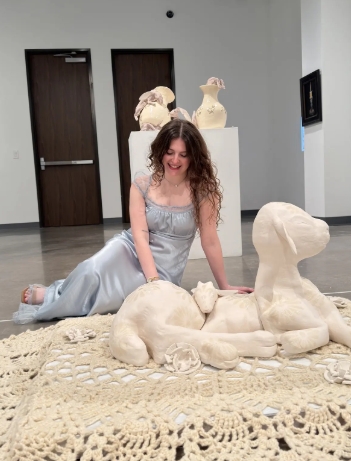
For artists, her journey is also a reminder that the materials we first encounter can stay with us in ways we don’t immediately understand. What began with the simple acts of stitching and making alongside her grandmother has grown into a visual language through which Hailey continues to explore memory, identity, healing, and change.
And perhaps that is where her work quietly meets the spirit of Spring Through My Eyes: renewal does not always mean leaving the past behind. Sometimes, it means learning to carry it differently.
Follow Hailey Harvey through the links below and explore more of her work and creative journey.
