
Agatha Lee’s embroidered landscapes tell the untold stories of moss, coral & nature
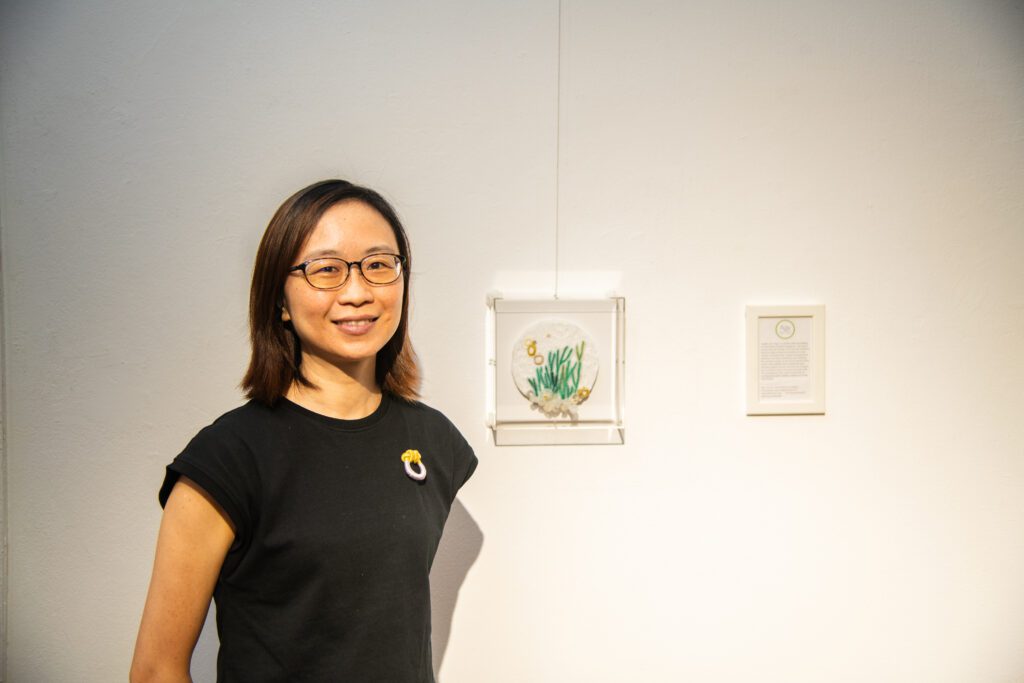
At Women in Arts Network, Flora and Fauna gave us the opportunity to discover just how many materials can become a language for exploring nature. For Agatha Lee, that language is thread. One of the selected artists for the exhibition, Agatha creates richly textured works inspired by moss, coral, and changing landscapes, using free-motion embroidery to draw, build, and even sculpt with stitch.
Agatha Aka Agy Lee describes her process as “drawing with thread,” and her work makes that idea feel completely natural. Using a sewing machine almost as another artist might use a pencil or paintbrush, she experiments with different threads, tensions, stitch lengths, and densities to create surfaces that move between drawing, embroidery, and sculpture.
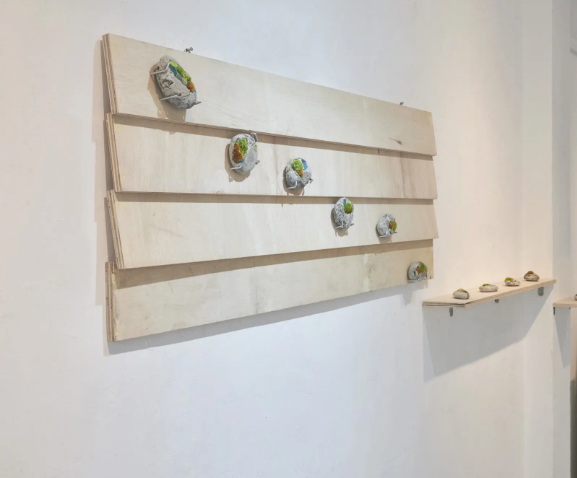
But her practice is not limited to fabric. Agatha also brings thread into conversation with materials such as concrete, placing softness against hardness and delicate stitches against heavier, weathered forms. These contrasts allow her to explore some of the same qualities she observes in nature, where fragility and resilience often exist side by side.
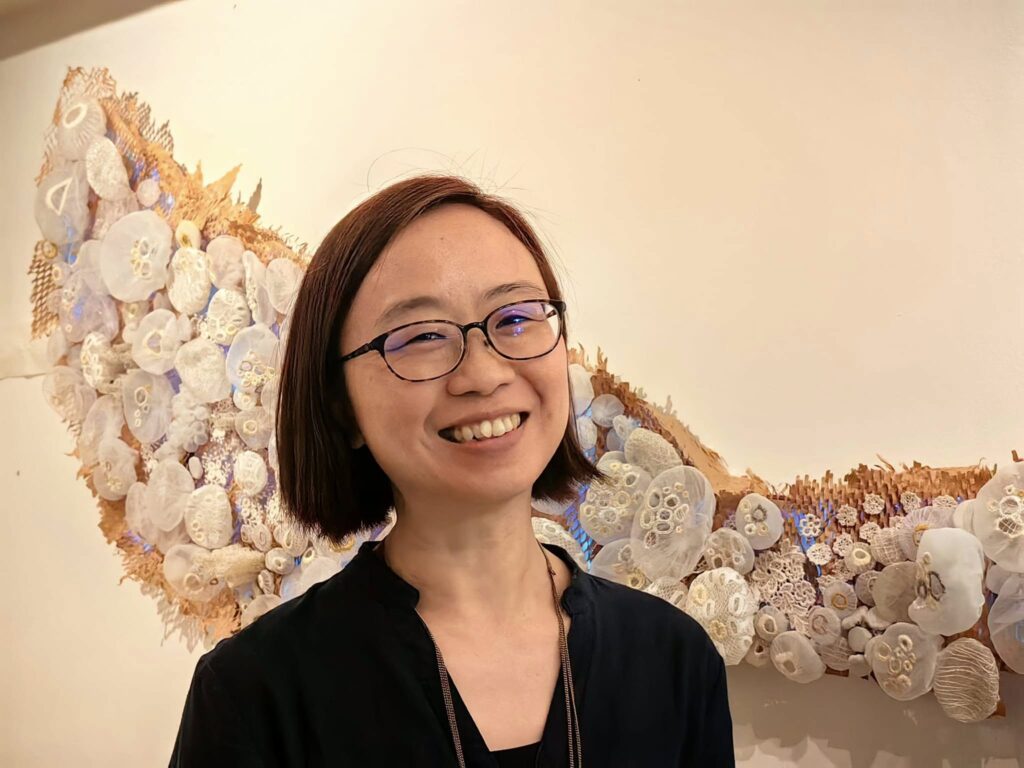
Looking closely is an important part of that process. Moss growing across concrete, the structure of coral, the texture of tree bark, or subtle changes in colour and light can all become starting points for her work. The slow, repetitive nature of stitching has also changed the way she observes these details, encouraging her to spend more time with things that might otherwise be easily overlooked.
That attention becomes especially meaningful in works that touch on environmental vulnerability and renewal. Rather than overwhelming viewers with a direct message, Agatha often begins with beauty, texture, and curiosity. She creates something that draws people closer first, then leaves them thinking about the ecosystems, materials, and natural processes behind what they have seen.
Her background in science brings another layer to this approach. Experimentation remains central to the way she works, whether she is testing unfamiliar materials, exploring new combinations, or discovering how traditional textile techniques can be pushed into unexpected territory.
Through thread, fabric, concrete, and careful observation, Agatha shows us that embroidery can become much more than decoration. It can become a way of looking closely at the living world, understanding its vulnerability, and noticing the remarkable ability of nature to adapt, transform, and begin again.
Now, let’s get to know Agatha Lee through our conversation about drawing with thread, slow making, material experimentation, nature, and the possibilities of contemporary textile art.
Q1. Agatha, can you share a little about your journey and how thread became your way of drawing?
It all started when I began trying out free motion embroidery after I started to get bored with just sewing collages and patterns; I discovered a whole new world of using threads to express myself. I enjoy the process of experimenting with different threads, playing with the tension of my sewing machine, and exploring techniques to push the boundaries of sewing.
I find myself looking at ways to create a variety of textures and form using traditional textile tools like the sewing machine and needle. I’m even combining them with other media such as concrete to create different forms! It’s been quite a journey so far!
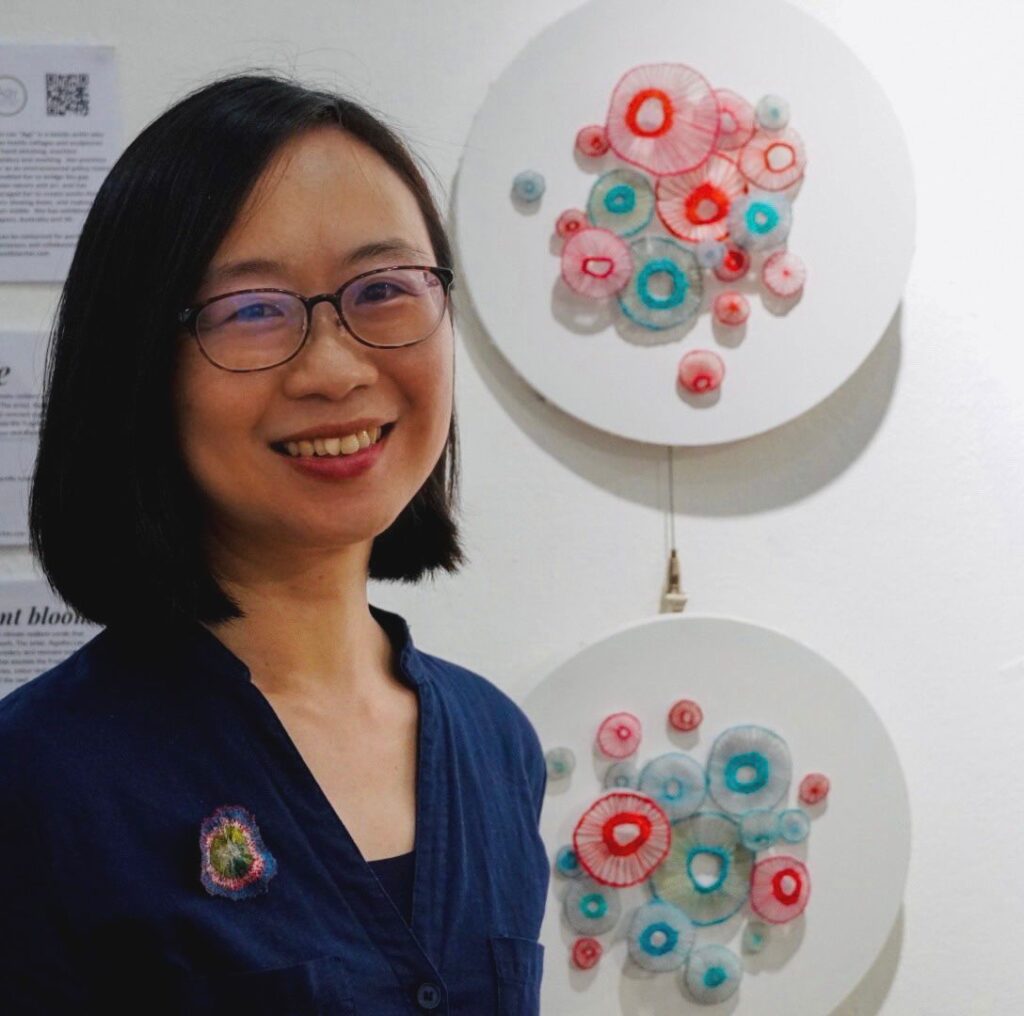
Q2. What made embroidery the right medium for creating landscapes and ecosystems?
I’m drawn to colours and textures in nature, and embroidery is one of the techniques that allows me to recreate this, just like how a oil painter does with his brush. Because there is such a variety of threads, the exploration can take me down a rabbit hole! Although embroidery can be seen as very traditional, I see potential in using the stitches to create something more tactile and structural.
I see my work as a modern reinterpretation of traditional stitches, and I enjoy pushing the boundaries. I have been enjoying how it can be combined with concrete to create different forms.
Q3. How does the physical process of stitching influence the way you observe nature?
The repetitive act of stitching naturally slows me down, and that has changed the way I observe nature too. I find myself paying attention to details that I might otherwise miss: the textures of moss, weathered concrete, tree bark, or the subtle changes in colour and light. Because I’m thinking about how to translate these into thread and stitch, I observe them more carefully. In many ways, stitching has trained me to look more slowly and more deeply.
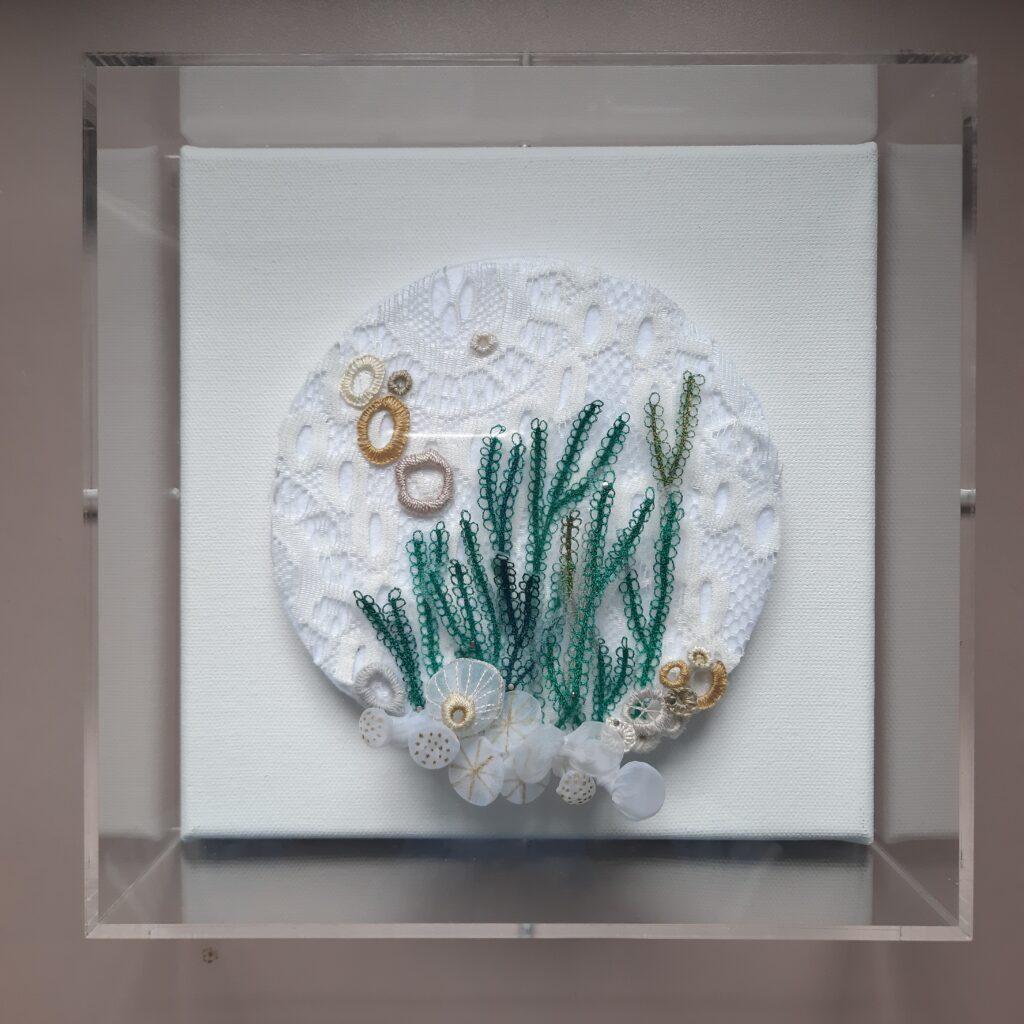
Q4. Embroidery is naturally slow and meditative. How important is that pace to your creative process?
Absolutely! Embroidery gives me permission to slow down and be fully present with the work. Rather than seeing slowness as something to overcome, I’ve come to value it as an essential part of my creative practice.
I believe that the care, patience, and intention behind every stitch become embedded in the artwork.
My hope is that viewers don’t just see my finished piece, but also sense how it was made and perhaps feel invited to also slow down, breathe, and reflect in their own lives.
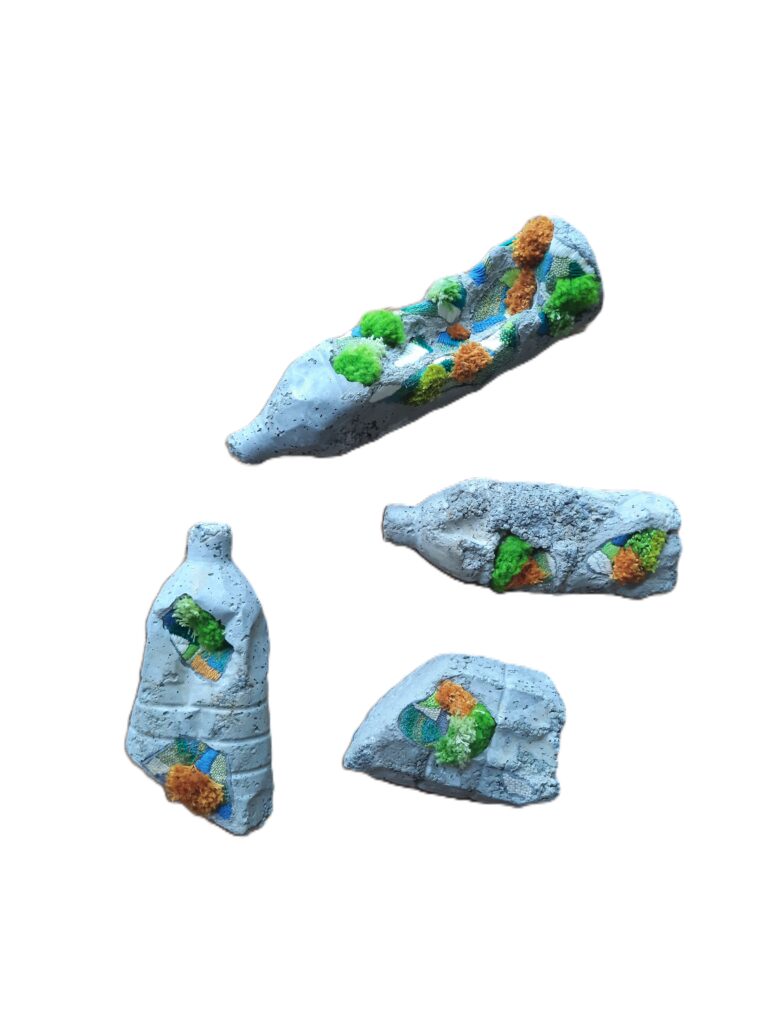
Q5. In Rebirth in Fragments, damaged landscapes carry a sense of renewal. What does “rebirth” mean within this series?
For this series, rebirth isn’t about returning to the way things once were, but about transformation. The concrete bottles represent the weight of emotions that we try to discard but often continue to carry with us. As the bottles weather and moss gradually grows over them, they become a reminder that even difficult experiences can change over time. In my recent works involving embroidered moss, I see the moss as a symbol of resilience and renewal.
It has the remarkable ability to grow in places that seem inhospitable, quietly transforming abandoned surfaces into something living. That process became a metaphor for emotional healing. The burdens we carry don’t simply disappear, but they can become part of our growth and lead to new perspectives. It reminds us that even difficult experiences can evolve into something that supports growth. While some viewers may also see the work through an environmental lens, I hope it ultimately speaks to the possibility of renewal whether in ourselves, in our relationships, or in the natural world.
Rebirth, to me, is about finding hope and life where we might least expect it. More broadly, I hope the work encourages people to slow down and reflect not only on the resilience of nature, but also on their own capacity for healing and transformation.
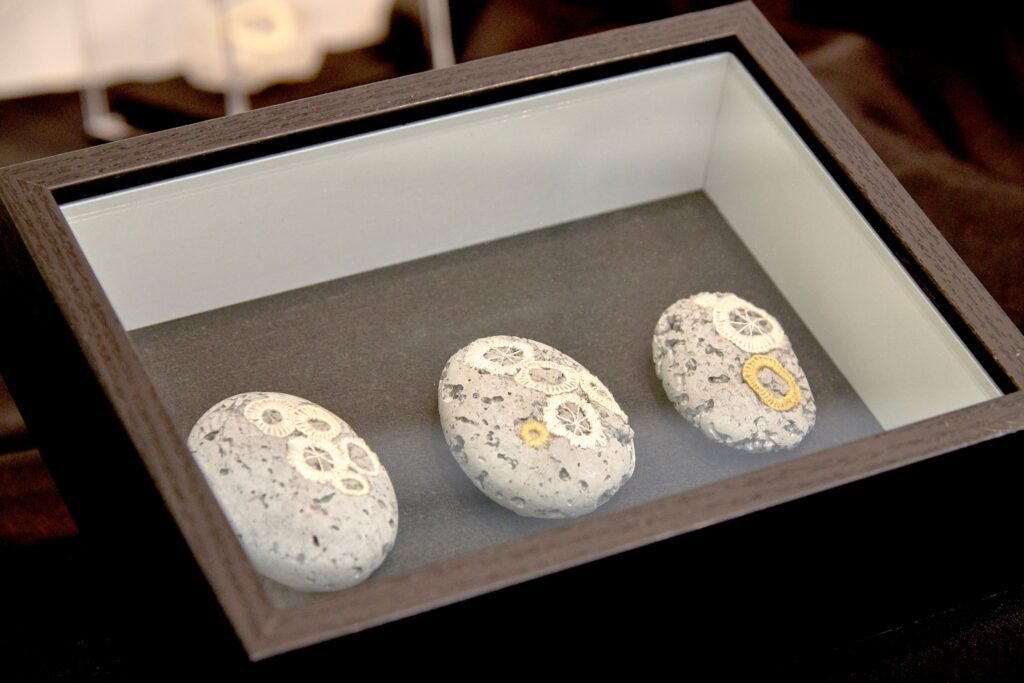
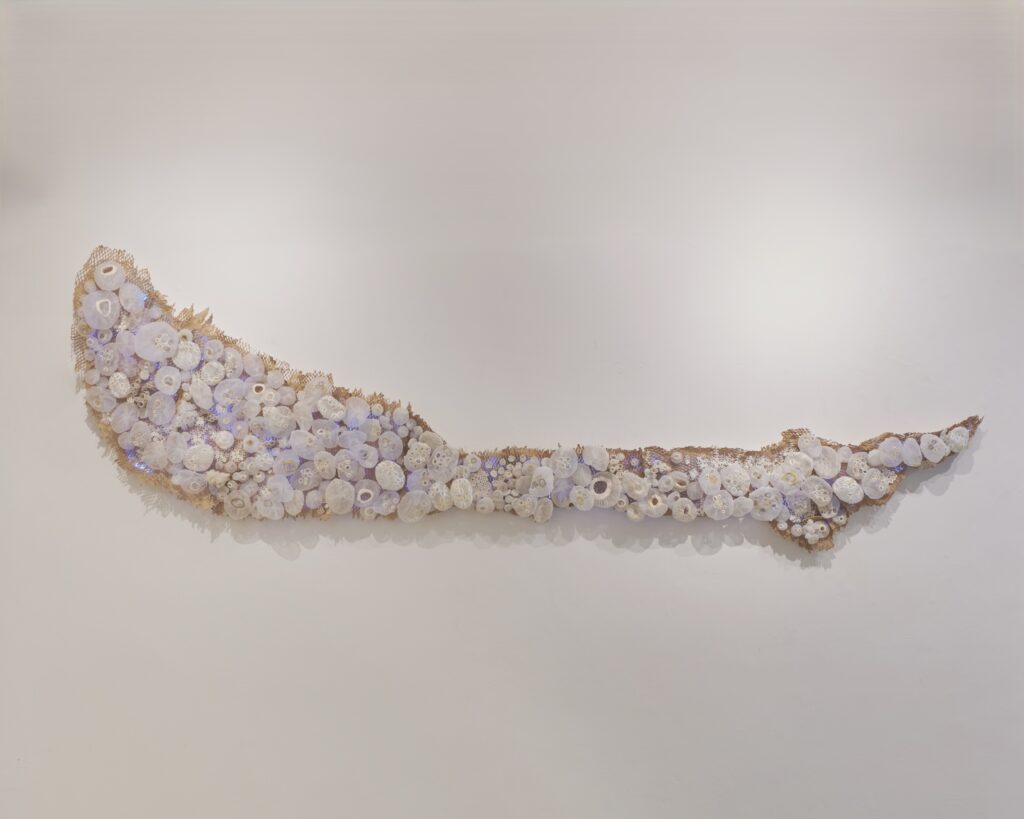
Q6. Your coral works celebrate their beauty while highlighting their vulnerability. How do you balance the two?
I wanted my works in the Hues of Loss series to invite the viewers curiosity rather than be confrontational. This meant creating works where the audience first connects with the delicate nature and beauty of the piece and then leaves thinking more deeply about the vulnerability of our marine environment.
Q7. Do you think we’ve become less attentive to the natural world around us?
I don’t think we have lost them; I think we need to rediscover our observation skills. Our lives have become increasingly fast-paced, and while technology promises to save us time, they often encourage us to fill that time with even more tasks. We’re constantly switching between screens, notifications, and responsibilities, leaving very little room to simply notice what is around us. It also results in us neglecting our own lives.
For me, observation is the beginning of care. When I slow down enough to really look at the moss growing over concrete or the intricate structure of a coral, I begin to appreciate its resilience and fragility. I hope my work offers an invitation to pause. If someone spends a little longer looking at one of my pieces and then walks away noticing the textures, plants, or overlooked details in their own surroundings, then I feel the artwork has done something meaningful.
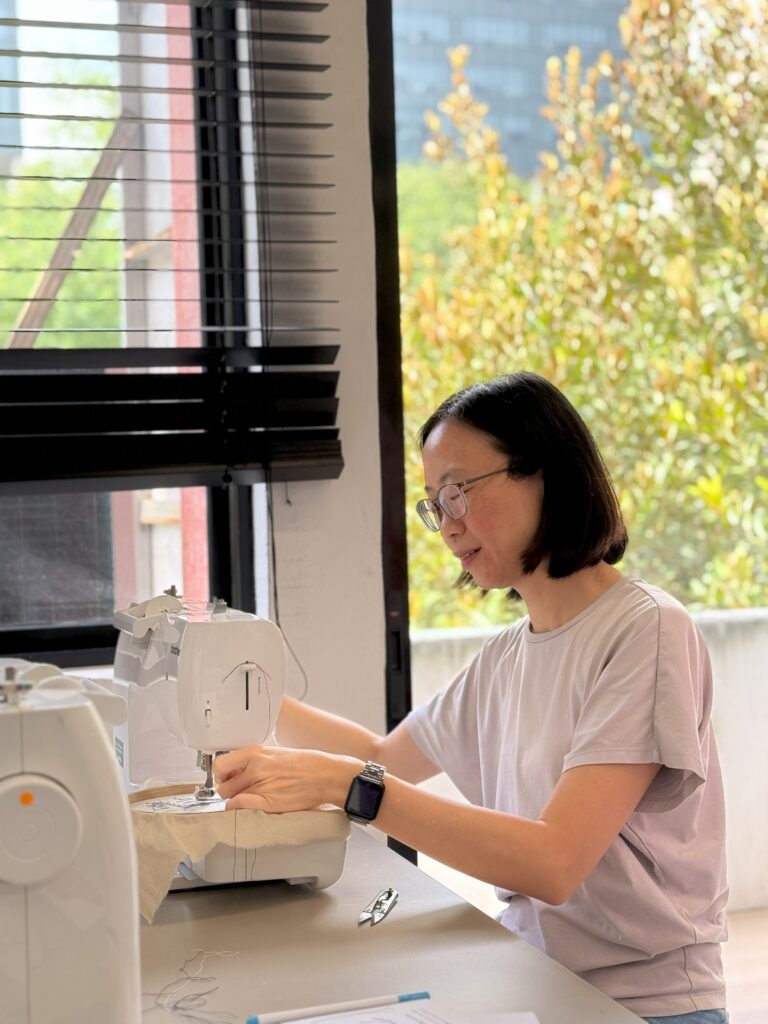
Q8. What does thread allow you to express that pencil or paint cannot?
Although free-motion embroidery can create lines that resemble pencil sketches, thread offers possibilities that graphite or paint simply can’t. By varying the stitch length, density, and tension, it can create texture and depth; I can build different surfaces and forms with stitch! What is exciting is that as I move the fabric through the sewing machine, the stitches can distort, gather, or sculpt the fabric, allowing a flat piece of cloth to take on three-dimensional forms.
It’s almost like drawing and sculpting at the same time. And when I combine thread with materials such as concrete, I can explore an even wider range of textures. The softness of thread against the hardness of concrete creates a contrast that both materials alone couldn’t achieve
Q9. Why do you think contemporary audiences are reconnecting with textile and fibre art?
I think people are beginning to see the possibilities of textiles beyond their traditional, utilitarian purpose. Artists have shown that fibre can be used to explore complex ideas, tell stories, and create sculptural and conceptual works, not just functional objects.
When so much of our experience is mediated through screens, fibre gets us to slow down, to look closely, and to appreciate the time, care, and labour embedded in every stitch. I think that’s something many people are yearning for today.
Q10. When you left a successful scientific career to pursue art, did success begin to mean something different to you?
Leaving a successful career to pursue art definitely changed the way I think about success. The journey has been a process of self-discovery, and my definition of success has continued to evolve as I’ve moved through different stages of life. Earlier on, markers such as career progression, salary, stability, and achievement, were used to define success.
Those things still have value, but over time I’ve come to realise that success also means working in a way that feels true to my values and on my own terms. As an artist, success also means having the freedom to explore ideas that matter to me, remaining curious, and creating work that encourages people to pause and connect with the world around them.
If my work sparks reflection or helps someone see something familiar in a new way, I consider that a meaningful form of success.
Q11. What do you hope your work tells future audiences about our relationship with nature?
I hope that twenty years from now we’ll be in a better place in the way we care for our natural environment. But regardless of where we are, I hope those who experience my work understand that we are not separate from the natural world; we are part of it. Our wellbeing is deeply connected to the health of the ecosystems around us.
If my work encourages people to slow down, observe more closely, and appreciate the quiet beauty and resilience of nature, then perhaps it can also remind them that caring for the natural world isn’t just about protecting something “out there.” It’s about caring for the place that sustains all of us.
Q12. What advice would you give artists bringing experiences from other careers into their creative practice?
I would say to not treat your past experiences / careers as separate chapters, as these phases shape the artist you are today. Each stage of our lives influences the way we see the world, and those experiences become part of our creative voice. What makes your journey different from someone else’s is often what makes your work unique.
My background in science continues to influence the way I work in the studio. It has given me a methodical approach to experimentation where I enjoy testing different materials, observing the results, and refining my process through trial and error.
As our conversation with Agatha came to a close, we found ourselves thinking about how much of the natural world exists in the details we rarely stop long enough to notice. A patch of moss growing over concrete. The complicated surface of coral. The texture of bark. The small changes that happen when something is exposed to weather, water, light, and time.
None of these things demand our attention. And perhaps that is exactly why paying attention to them matters.
We live in a time when bigger, faster, and more immediate experiences often receive the most attention. Yet nature rarely works that way. Growth can be almost invisible. Recovery takes time. Landscapes change gradually. Something as small and seemingly insignificant as moss can slowly take over a surface that once appeared completely inhospitable.
There is something about Agatha’s practice that feels naturally connected to that pace. Thread is not a material that allows everything to happen instantly. Building an image stitch by stitch requires patience, repetition, and an acceptance that meaningful things often take time. In that sense, the process itself seems to echo the natural forms she is interested in. A surface develops gradually. Texture accumulates. One small mark joins another until something larger begins to emerge.
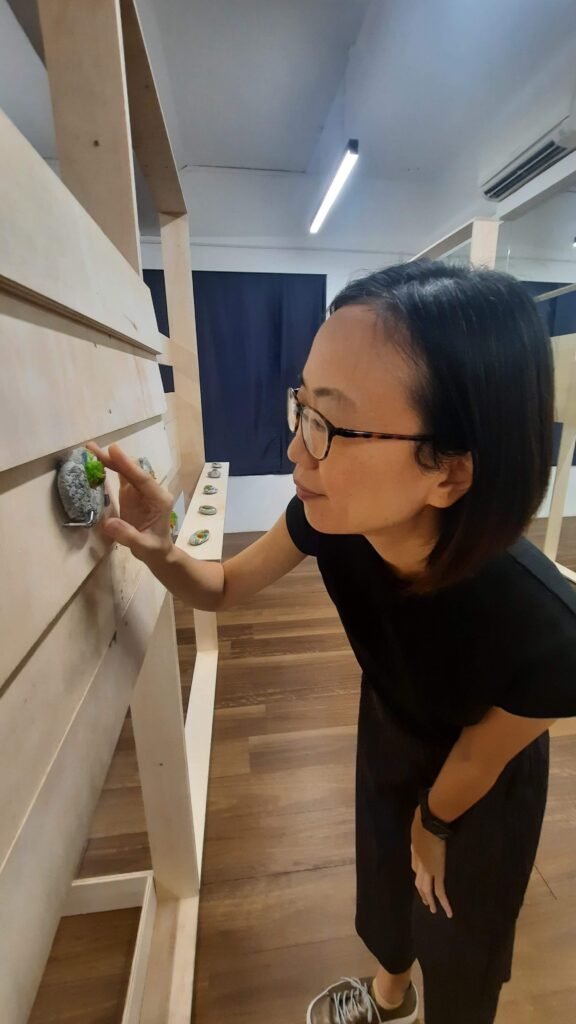
And there is an interesting contrast in the materials she brings together too. Thread can feel soft, familiar, and delicate. Concrete feels heavy, permanent, and industrial. Yet when the two meet in Agatha’s work, those assumptions begin to shift. The fragile material can become surprisingly structural, while the solid one can become weathered, altered, and eventually overtaken by growth.
It is a useful reminder that strength does not always look the way we expect it to. Nature shows us this constantly. Some of its most resilient forms are also among its smallest and most vulnerable. Coral ecosystems can appear incredibly beautiful while remaining deeply fragile. Moss can look almost insignificant while surviving in places where very little else can grow.
For collectors and art lovers, Agatha’s work offers that same balance between delicacy and strength. The craftsmanship and tactile surfaces may be what first invite you closer, but the longer you spend with the work, the more you begin noticing the relationships between material, time, growth, vulnerability, and renewal. These are pieces that reward close looking precisely because close looking is part of how they came into existence.
Perhaps that is what stays with us most about Agatha’s practice. She doesn’t ask us to search for nature somewhere extraordinary. She simply asks us to look more carefully at what has been quietly growing around us all along.
Follow Agatha Lee through the links below and explore more of her textile practice.
