
Why do this artist’s watercolour landscapes feel so different from traditional nature painting │Annett Coumont
While curating Landscapes and Places for Women in Arts Network, we came across many beautiful paintings of nature forests, skies, rivers, fields, landscapes filled with colour and atmosphere.
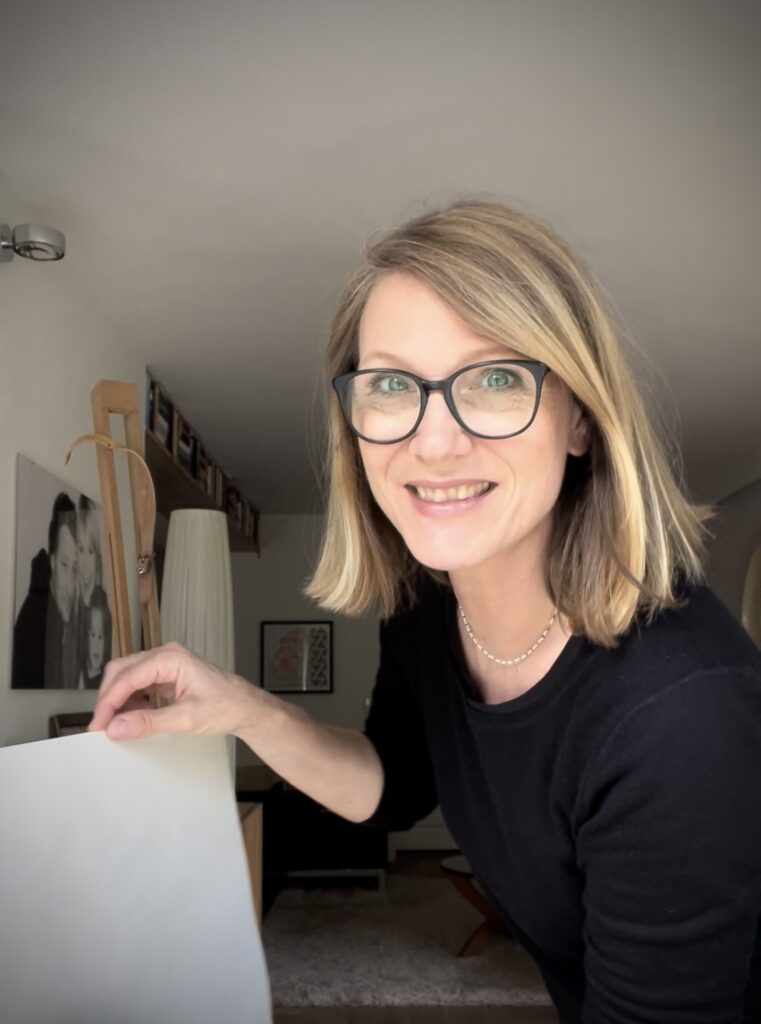
But when we spent time with Annett Coumont’s work, it felt like we weren’t only looking at a landscape anymore. It felt more like stepping into a quiet emotional space shaped by light, memory, stillness, and the feeling of being deeply connected to nature itself.
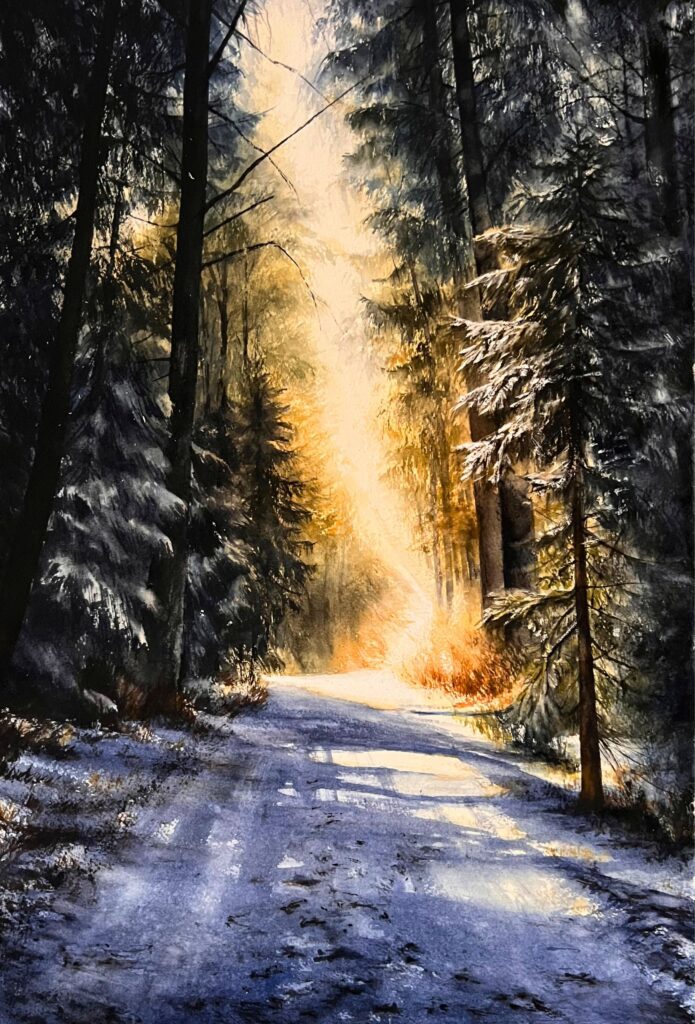
Annett is a selected artist for the exhibition, and her watercolours carry this incredible softness without ever feeling fragile. Mist moving through forests, reflections dissolving into water, fading evening light, quiet meadows, shadows between trees her paintings feel less like fixed places and more like emotional experiences people instinctively recognize.
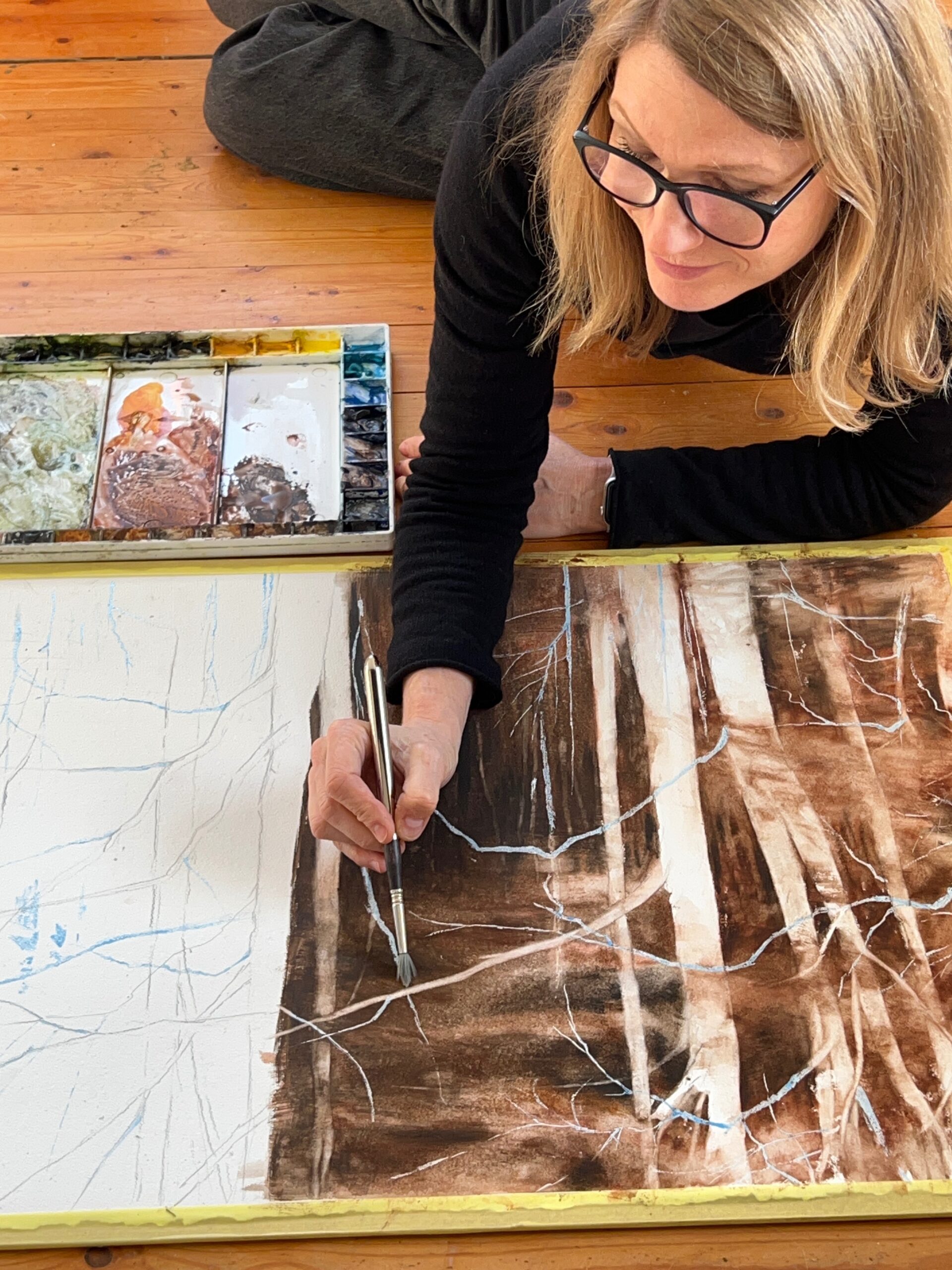
And honestly, hearing her story made the work feel even more personal. Before fully returning to painting, Annett worked in marketing and journalism, always staying close to visual storytelling and creativity even while life moved in different directions.
Then in 2023, a serious illness forced everything to stop. During that time, painting became the one place where she could fully disappear into focus, colour, and process a space where even pain seemed to quiet itself for a while.
That changed her relationship with art completely. And you can feel that emotional honesty throughout the work. Nature in her paintings never feels distant or decorative. It feels lived with. She lives in the Bergisches Land region surrounded by forests, hills, mist, birdsong, and open countryside, and the way she speaks about these places feels deeply personal.
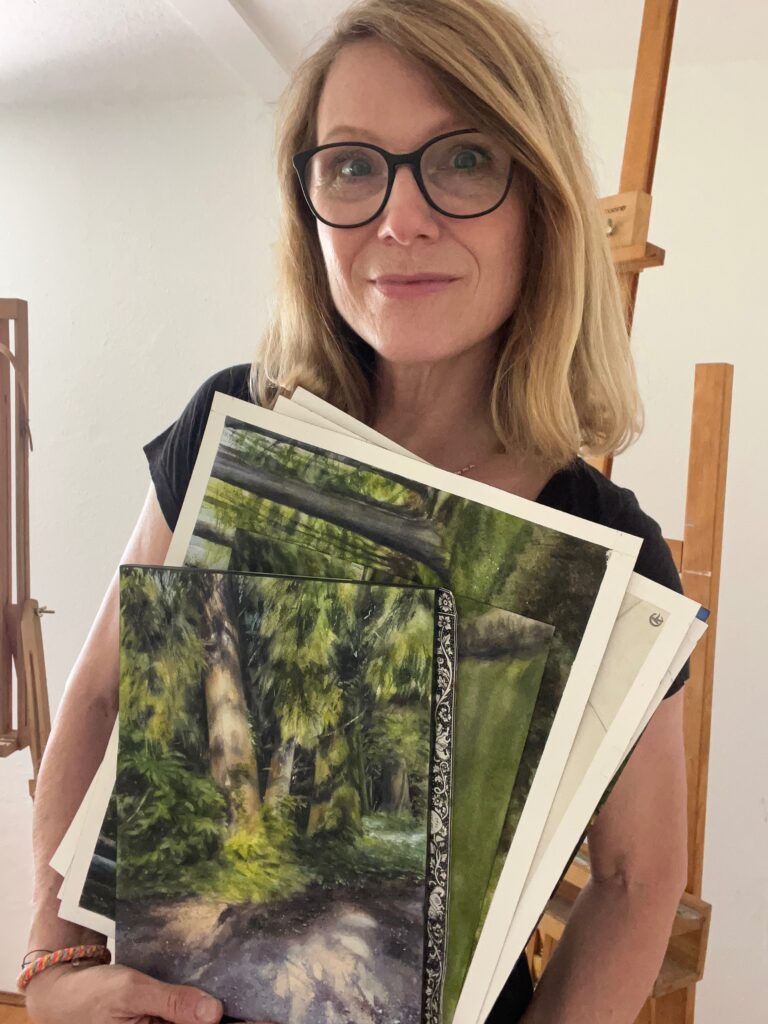
Morning walks, watching light shift across water, hearing owls at night, seeing deer and foxes appear unexpectedly those moments quietly enter the paintings and stay there.
There’s also something beautiful about the way she approaches watercolour itself. For Annett, modern watercolour is rich, layered, immersive, and emotionally expressive.
Her paintings move far beyond the pale traditional image people often associate with the medium. She uses transparency, pigment, atmosphere, and light almost like emotional language.
And beneath everything sits this deep belief that people protect what they feel connected to. That’s why environmental themes naturally exist inside her work too. Forests, bogs, fragile ecosystems not painted through fear alone, but through tenderness, beauty, and emotional connection.
Her paintings gently remind people what it feels like to belong to nature rather than stand apart from it. That feeling stays with you long after you leave the work.
Now let’s get to know Annett through our conversation with her about healing through painting, emotional landscapes, modern watercolour, and creating art that feels like a quiet place to return to.
Q1. Can you share how returning to painting after a serious illness changed your relationship with art and yourself?
It’s always been the case that I’ve drawn and painted during difficult times in my life. Even as a child. I was a wild, creative, imaginative child and was either outside in nature or in my room with my art supplies. Originally, I wanted to study art or design, but things turned out differently, and I studied economics for “practical reasons.” Nevertheless, I’ve always worked in creative, highly conceptual, and aesthetically driven fields. Then, in 2023, I suffered a serious illness that catapulted me out of professional life. I had to give up everything, and it wasn’t clear whether I would ever be able to return to a normal job.
During this time, I also had to take a lot of strong painkillers, but none of them really helped. So, at some point, I simply tried to do things that could bring me joy and relaxation. When I was able to again, I sat down and started painting. I discovered that painting allowed me to block out time and the pain.
I was so engrossed in the creative work that no other thought, and seemingly no other perceptions, could penetrate my mind. What is now considered therapy in medical practice for pain, I carried within me quite naturally: I already possessed the best medicine for the pain: creating art. That was the turning point: I knew I had to combine my love to natur with my artistic drive, and that’s how I found my way back to my “first love”: Painting and art.
Q2. The Bergisches Land landscape appears deeply rooted in your work what keeps drawing you back to it?
I’m originally from Cologne, so a city dweller, but 18 years ago I decided to move to the countryside. I live in a small town in the Bergisches Land region near Cologne, and the surrounding area is beautiful and still largely untouched. There’s no electric light on our street, and at night I can see the stars and hear the tawny owl hooting. In the mornings, I’m woken by birdsong.
And on my morning walks, where I always discover inspiration for my art, I usually see deer, foxes, or hares. I love it. I feel very close to nature then and have a strong desire to live in peaceful harmony with these creatures. That’s why I’ve focused on the emotional presence of nature from the very beginning, because I feel like I’m part of nature and have a deep connection to it.
But it’s not just the Bergisches Land. I feel this connection everywhere in nature. But I live here, and as an artist, I paint what’s closest to me and where I find my daily inspiration. On my daily walks in nature, I lose myself in observing the light in the forests, the trees, the shimmer on the water, the mists, the clouds, the meadows. Sometimes the atmospheric impression is so strong that I want to paint it: the emotional landscape within me.
Q3. Your work is often described as modern watercolor art, what feels contemporary or new about the way you approach the medium?
The term “modern watercolor” can be understood both as “contemporary” and as a more modern continuation of an old painting tradition. Watercolor painting was once a sketching medium; the old masters mostly used it only for their sketches. And because the paint was so easy to use, it also became established as a school painting technique.
Hardly a child exists who doesn’t have a “watercolor set.” But both of these things have fundamentally changed. Today, the paints are as high-quality, highly pigmented, and expensive as oil paints. Since then, pale, watery paintings are a thing of the past. The cotton papers on which it is painted are also extremely high-quality and durable.
Modern watercolor painting, therefore, has nothing to do with that: it is an independent medium of painting and has already re-established itself as such in the international watercolor societies of the world. It is considered the pinnacle of painting because it is the most difficult technique; handling the paint and water requires skill, and mistakes cannot be corrected after the first application of paint. Anyone who has mastered watercolor painting can also work with any other painting medium.
Furthermore, the techniques and motifs have changed dramatically: there are numerous ways to paint with color and achieve such realistic results that even art experts are constantly amazed: Is that painted in watercolor? Modern techniques and materials, as well as a new generation of artists, are thus making watercolor painting a modern art medium once again, one that is gaining increasing recognition.
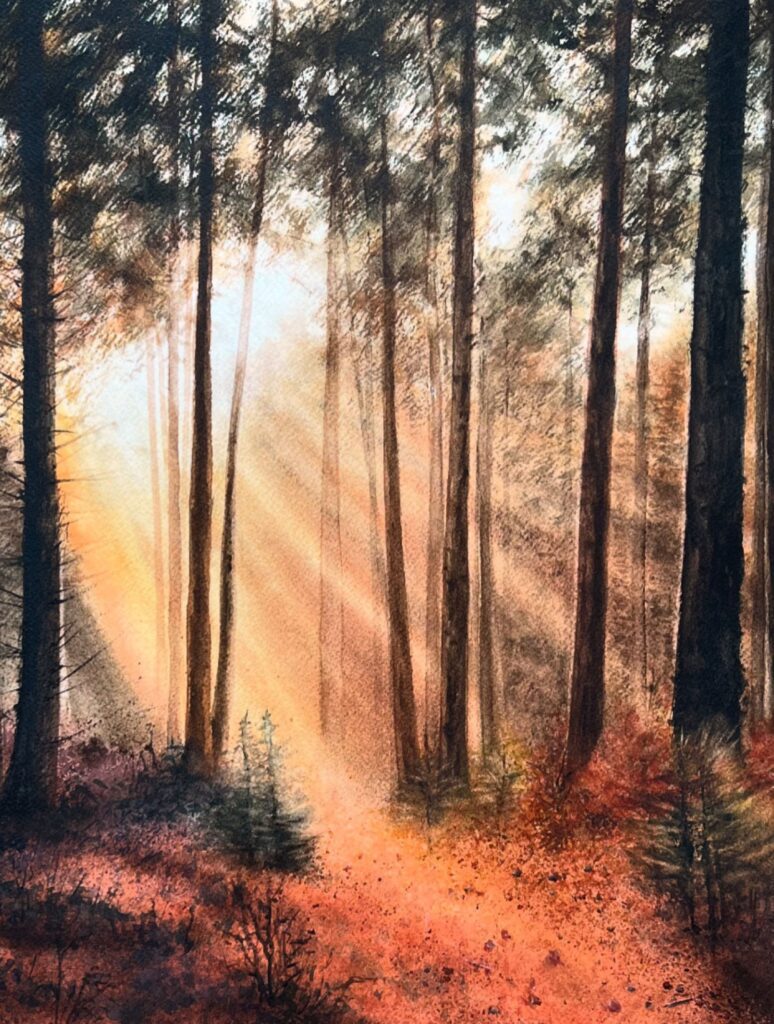
Q4. You create landscapes, still lifes, and climate art, what draws you to environmental themes in particular?
I’ve already described my connection to nature. Today, this connection is disrupted for most people. That’s why climate change might not frighten them as much, and they don’t want to, or can’t, make the sacrifices needed to preserve their natural environment.
A major concern of my art is to offer viewers a resonant experience: perhaps they’ll recognize something in these emotionally charged natural landscapes that they’ve lost: a mood, an atmosphere, something authentic, essential, a part of themselves. That’s one aspect that resonates in all my motifs. The other is that I also paint specific series that address landscapes heavily impacted by climate change. For example, the series on bogs and forests.
Bogs are the largest carbon sinks. If we rediscover their beauty and their value to us, then perhaps we’ll protect them. So, I can also raise awareness a bit with my art. Something similar applies to forests. Trees are busy every day saving our world. They clean and cool our air and absorb harmful CO2. I don’t know if my art will actually change the fact that these natural areas are being destroyed more and more, but maybe it will make a small difference.
I believe we protect what we love. In that sense, my nature-inspired art might also be climate art.
Q5. You’re inspired by Romanticism, Impressionism, and Surrealism, how do those influences appear in your contemporary watercolor work?
In fact, I would most likely categorize my art as modern atmospheric Impressionism. To this day, I love the art of the Impressionists, who were particularly concerned with light and moods. The art of Monet, Manet, Munte, Turner, or Singer Sargent. Today, I’m also increasingly looking at the women, who were often overlooked in the past, such as Cassat, Morisot, Gonzales, or Munzt Lyatt. From today’s perspective, I find that their work always carries a naturally romantic element, but without the pathos of Romanticism itself.
Here, the German artist Caspar David Friedrich was a formative influence for me. It’s not entirely by chance that he’s currently experiencing a major comeback with his romantic nature painting. Much of what Friedrich did even strikes me as modern today.
I think we live in a time with a great longing for nature, which is even idealized, and which is finding expression in a kind of new Romanticism. Perhaps a little of that can be felt in my paintings. It’s possible. And in my opinion, Surrealism could be the most modern form of painting of all. The political world stage actually offers enough material for art. It’s not my current focus, though.
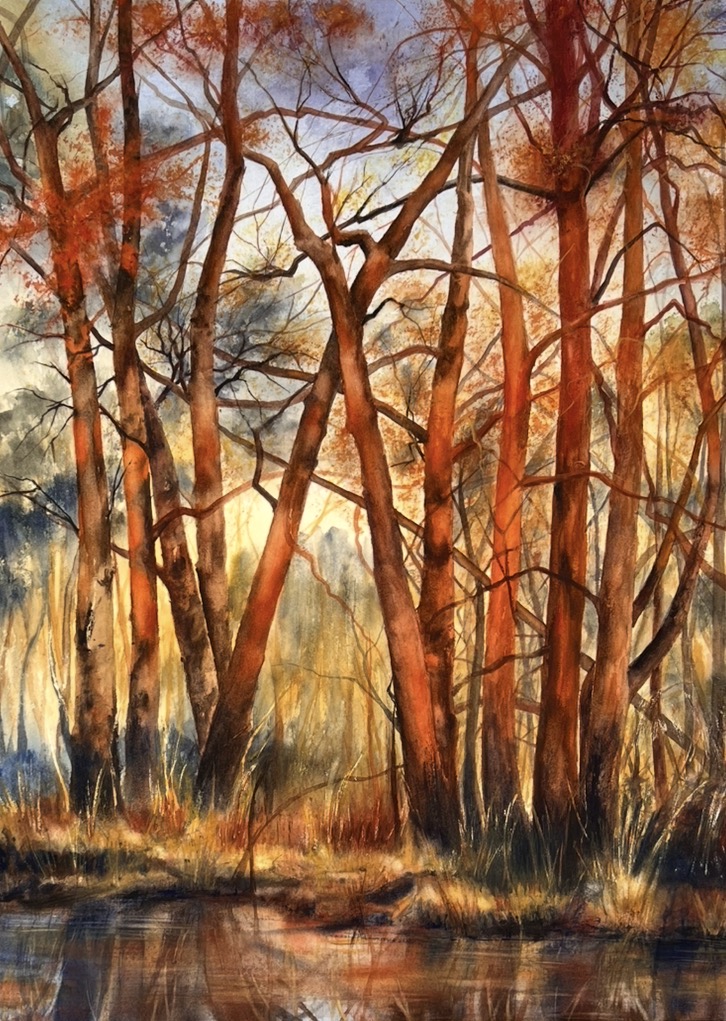
Q6. You offer prints, commissions, and a full professional practice when did you realize art had become more than a passion and truly your career?
Primarily, I offer my original artwork for sale. I now work with Singulart as an online gallery, but I also sell privately and at exhibitions. I participate in many international, juried competitions. These are very high-quality, curated exhibitions. Currently, five of my paintings are on international display: in Canada, Poland, Italy, Great Britain, and Germany. Being selected by high-ranking juries and having already won prizes encourages me to continue my path as an artist.
In addition to selling originals, I also offer limited fine art editions and select commissions. I also now give workshops because more and more people have asked for them, and I really enjoy doing them. So far, I can’t yet live entirely off my art, but perhaps I will in the future. I’m working on it, staying true to my inspiration, and consistently pursuing my artistic vision.
Q7. You teach and share your knowledge with others what do you find most rewarding about introducing people to watercolor?
So far, I’ve only been giving small workshops to try out what the right way is for me to teach people watercolor painting. As a member of the German Watercolor Society, it’s also important to me to raise awareness and establish watercolor painting as a contemporary art form.
Workshops are naturally part of that. People are always completely surprised when they see my art: “That’s watercolor?” They still think watercolor is washed out and pale and can’t imagine the brilliant paintings you can create with this technique and paint. I don’t see myself as a teacher so much as a facilitator: “Look, you can do all this with it, achieve such beautiful results!” And it’s fun and simply feels incredibly good!
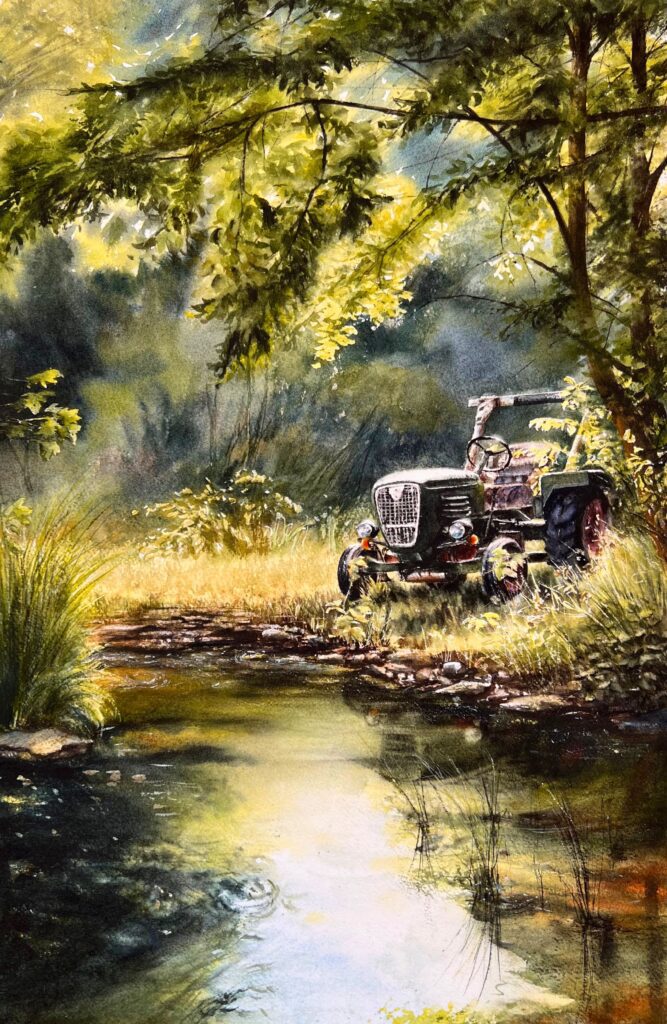
Q8. Do you work from photographs, plein air (outdoors), or memory? What’s your process for translating what you see in nature onto paper?
I work with everything: I observe nature intensely, immersing myself in contemplation. I take photos and videos. Sometimes I compose motifs with the camera and alter them for my art. I consider how to translate motifs, paying particular attention to the mood I want to create and how I can depict the light.
My latest paintings of forests, for example, primarily capture patterns, strong colors (or the absence of color), and light. In my painting, impressions and patterns sometimes flow in as if by magic, indescribable, and I translate them purely intuitively. It’s a process in which I also draw upon my own emotional landscape.
This usually happens quite naturally, for example, the impulse to choose certain colors, to create mixtures. I don’t need color theory for this; colors and tonal values simply come naturally to me. Furthermore, watercolor is painted with water. Chance and a loss of control are also involved. It’s a balancing act between letting go and control—an almost spiritual experience.
Q9. What do you hope people feel or take away emotionally when they spend time with your paintings?
I want them to find something they yearn for, something truly essential: a quiet space for resonance, where peace and connection are possible. I hope they find something authentic in my art, something lost in our modern world. A counterpoint to the digital world. A reminder. Of themselves. It is a meditative invitation. A space for resonance and lightful hope: it evokes something old, good, precious, timeless that we maybe have lost. Maybe a home.
Q10. What advice would you give to emerging artists who are just beginning their creative journey?
I would advise them to delve deeply into their artistic intention, to find what defines them and their art. At the same time, they should try to work on their technique to be able to express what they want to express. They can also draw inspiration from other artists and learn from them, but then they have to return to their own style.
That’s what needs to be developed. It takes a lot of time, leisure, and patience. And they should also become a marketing specialist if they want to be successful. Being an artist is hard work; they are self-employed and have to take care of everything besides their art: visibility, sales, marketing, communication everything. It’s an absolute full-time job if you want to do it properly.
So it’s not a bad thing if they already have a good understanding of these things.
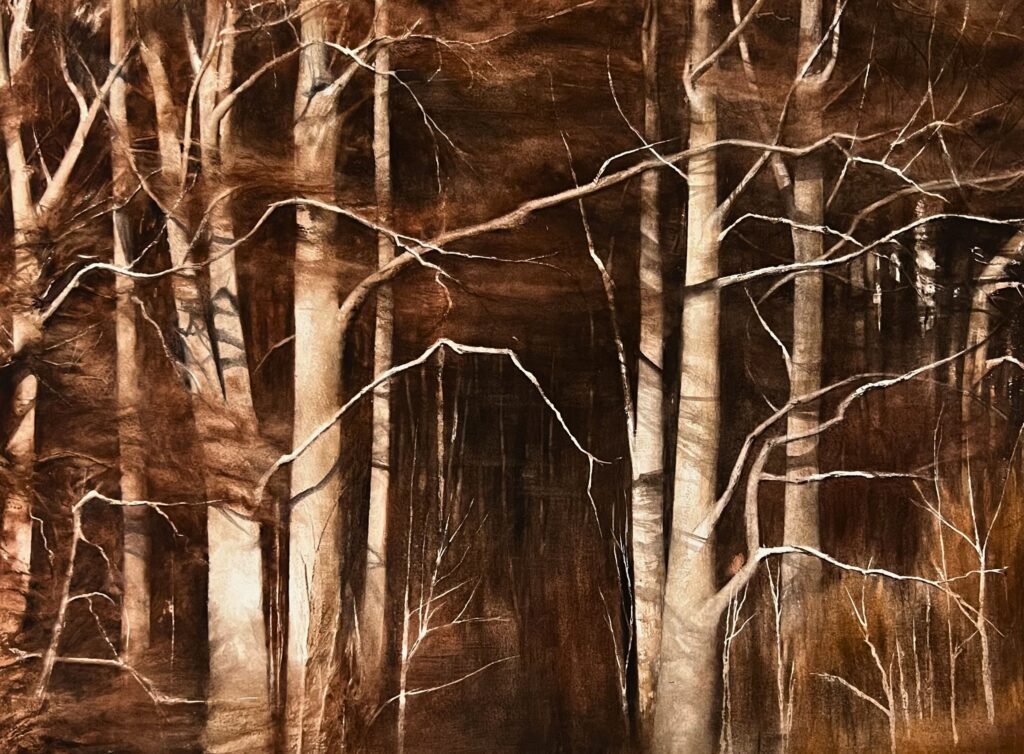
As we wrapped our conversation with Annett, we kept thinking about how much gentleness exists inside her work. Not weakness or fragility, but the kind of gentleness that comes from someone who has lived through difficult moments and still chooses to look at the world with softness, attention, and care. You can feel that in her paintings.
The way light moves through the trees. The quietness inside the mist. The softness of reflections dissolving into water. Nothing feels rushed or forced. The work creates space to slow down for a minute and actually breathe inside what you’re looking at.
And honestly, that feels increasingly rare now. We really loved hearing her talk about painting becoming a place where pain and noise could temporarily disappear. Once you know that, the work begins to feel even more personal. These landscapes aren’t just about scenery or atmosphere. They feel connected to healing, stillness, memory, and finding your way back to yourself through creativity.
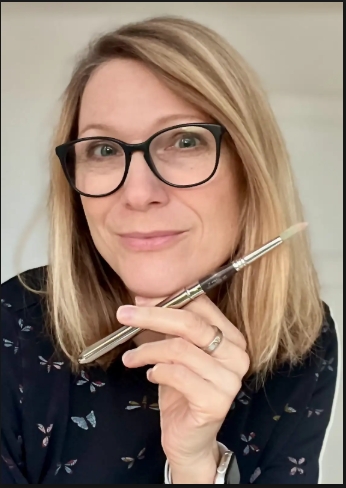
That emotional honesty is what stayed with us most. There’s also something beautiful about the way Annett paints nature without separating herself from it. The forests, fields, mist, water, birds, and changing light don’t feel like subjects being observed from a distance. They feel lived with. Loved. Part of her everyday emotional world. And maybe that’s why the paintings feel so calming to spend time with.
For collectors and people who love surrounding themselves with meaningful art, Annett’s paintings bring a quiet emotional atmosphere into a space the kind that softens a room rather than overwhelms it. And artists who can turn landscapes into spaces of comfort, reflection, and emotional restoration are always worth returning to.
To follow Annett’s journey and see more of her work, find her through the links below.
