Ellie Goodliffe Turns Biology’s Darkest Subjects into Powerful Art
At Women in Arts Network, every exhibition theme we choose is deliberate. We research, we discuss, we look at what artists are actually making and what deserves more space. Our newest exhibition, Love, Life and Everything She Creates, came from something we kept noticing.
That the most interesting work right now isn’t about one thing. It’s about all of it. Love and bodies and joy and mess and biology and heartbreak and the whole chaotic beautiful experience of being alive and female and making things from whatever life hands you.
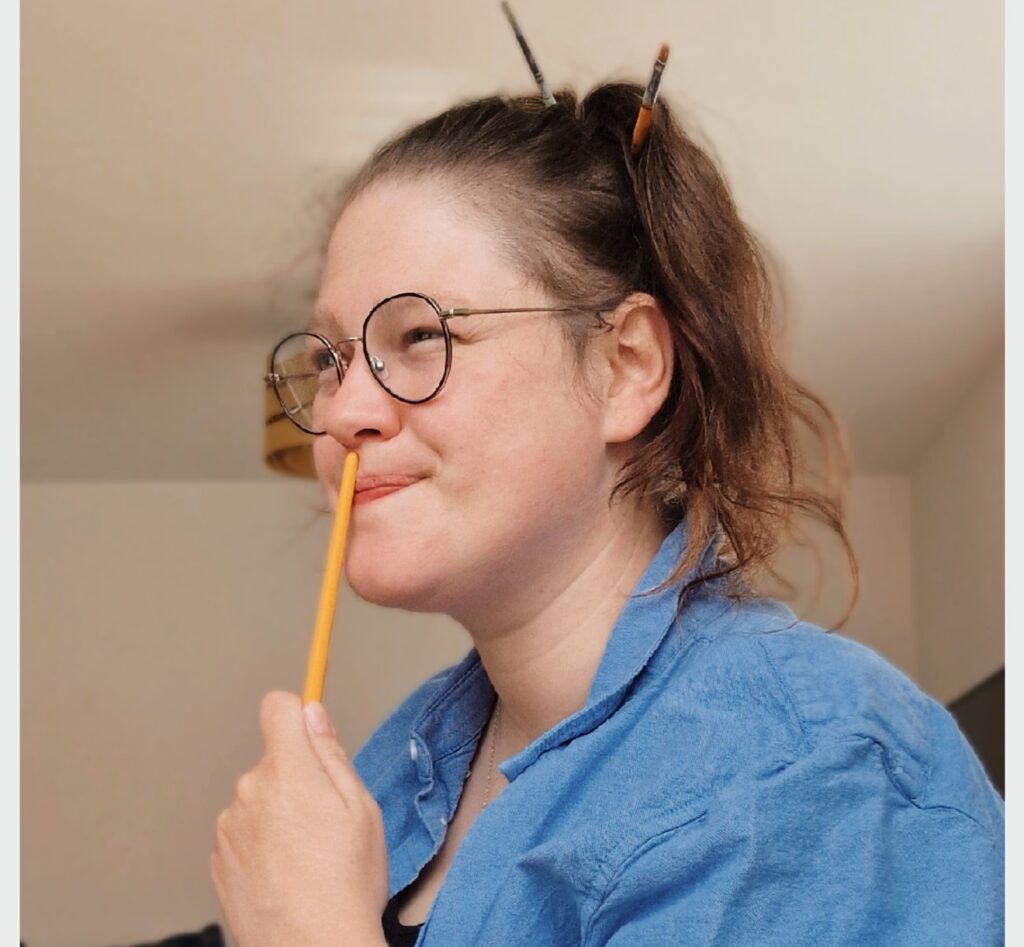
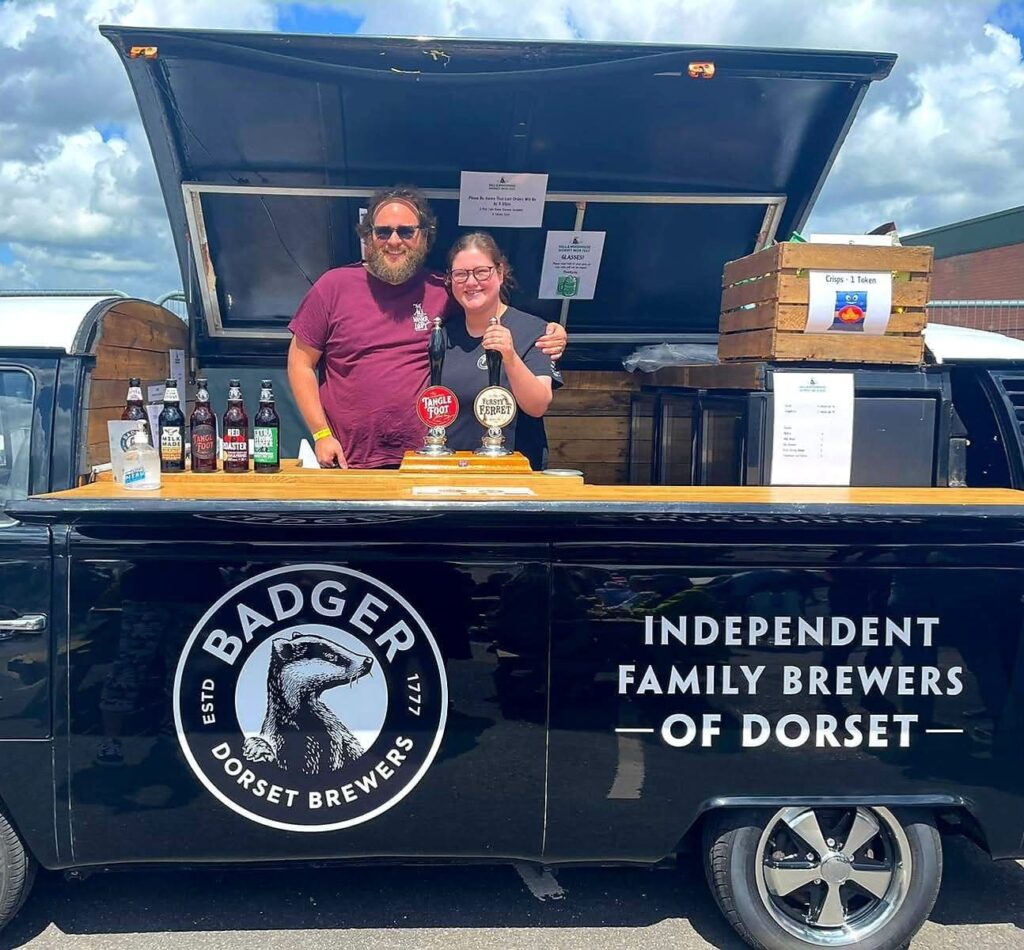
Ellie Goodliffe calls herself an amateur artist, a brewer, a sister, a mumma, a wife. And in that order you can already feel that this is a woman who doesn’t separate who she is from what she makes because for her they’re the same thing.Ellie is a selected artist for the Love, Life and Everything She Creates exhibition and what she does has a name she gave it herself. Sci-Art. A fusion of clinical observation and raw emotional expression.
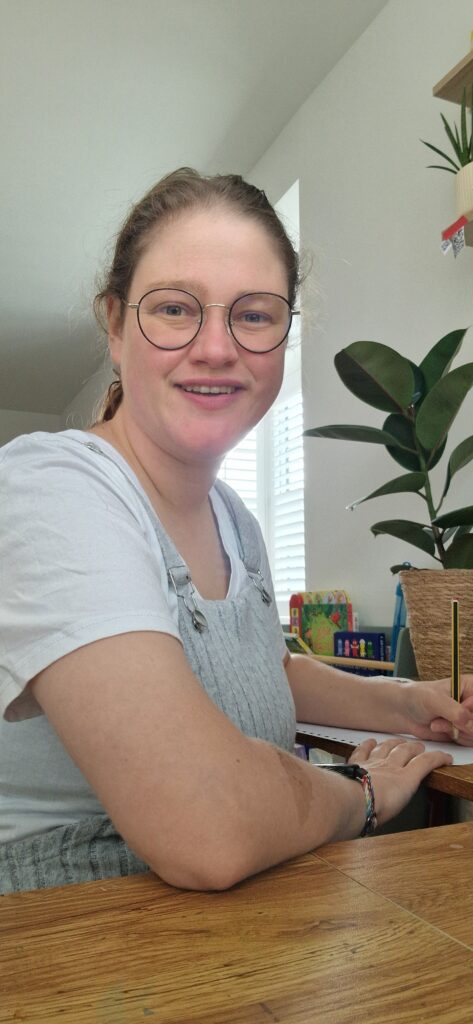
She’s a microbiologist by profession who views the world through a lens of growth and decay and microscopic architecture and then takes all of that scientific seeing and turns it into art that hits you in the gut before your brain has any idea what it’s looking at.
Her practice goes places most artists would never think to go. She paints cancer cells in alcohol ink. Makes vibrant pop art portraits of women in thick acrylic. Creates sad mushrooms about mental health and addiction. Pours abstract pieces about a woman’s first period.
And then this is the part that really got us, she literally grows bacteria and yeast on agar plates in her lab and presents them as art. Actual living organisms cultivated into compositions. The line between her lab bench and her studio doesn’t exist because for Ellie there is no line.
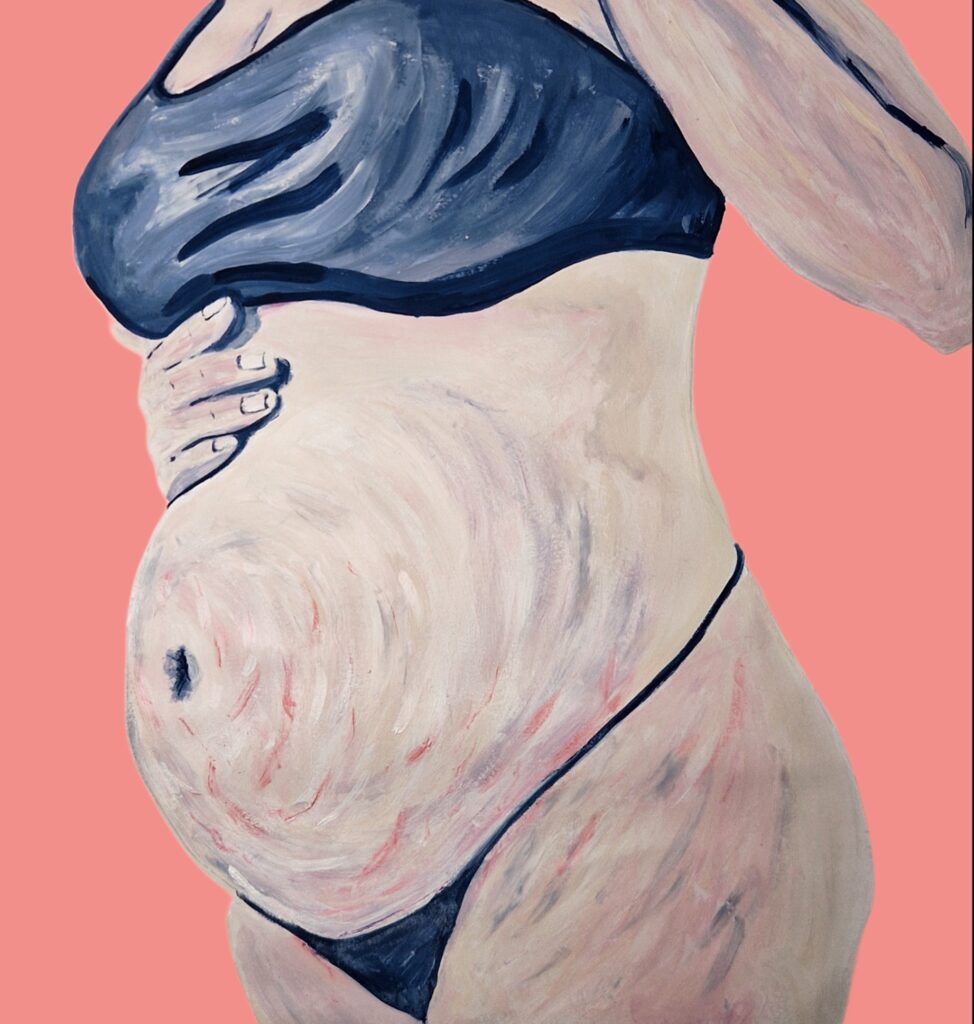
Her palette is what she calls dopamine-heavy. Electric yellows and deep visceral blues and colours so vibrant they feel like they’re doing something to your brain chemistry just by looking at them. And that vibrancy is deliberate. It’s her way of depicting heavy subjects, illness, decay, mental health, through a lens of beauty that dismantles the clinical stigma around them. She makes the miserable beautiful without making it comfortable. That’s a hard line to walk and she walks it perfectly.
Art came first. Before the science. Pencils on scrap paper as a teenager using drawing as a coping mechanism. But the real breakthrough happened on maternity leave in 2024 when painting became the thing standing between her and postnatal depression. Not a hobby anymore. The thing keeping her whole. Nineteen months later she has a toddler and a full-time job at a brewery and a practice that keeps growing because she won’t let it stop.
Now let’s hear from Ellie, about painting cancer cells and first periods and sad mushrooms, about microbiology and motherhood and fighting postnatal depression with a paintbrush, and why the artist who refuses to choose one lane might be the one seeing the fullest picture.
Q1. Ellie, can you share a little about your background and how you found your way from microbiology and brewing into art?
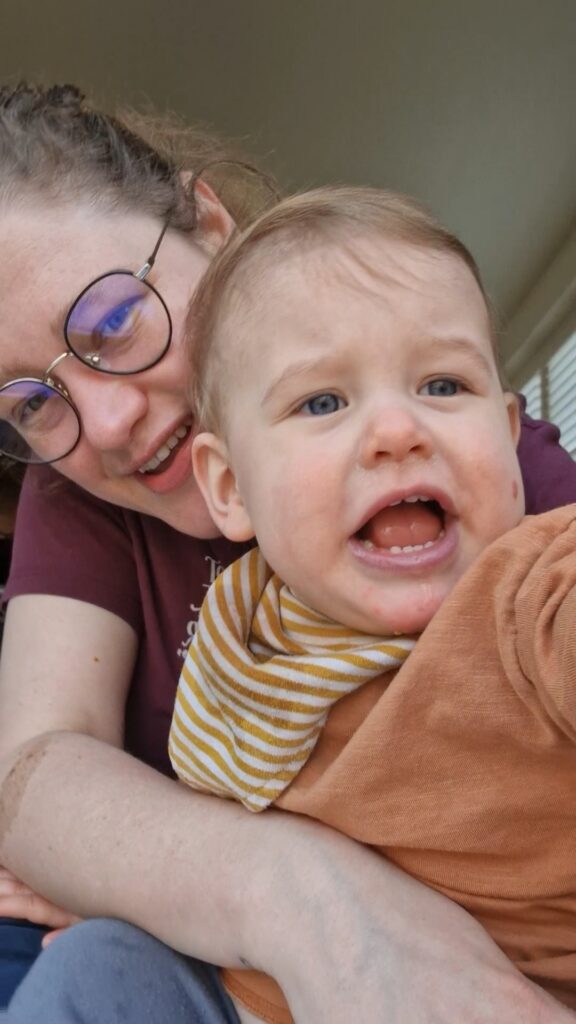
Art came first. I began creating in my early teens as a coping outlet. I started with scratchy pencils and scrap paper drawing things I liked – my early portfolio is very reflective of a teenager. In my 20’s I began to explore and find my own styles. My materials upgraded and so did my confidence. I started working at the brewery as a lab tech/microbiologist in 2018 and quickly learnt the skills to be in my current Continuous Improvement Specialist role.
My art voice really broke through while on maternity leave mid 2024. I started creating again much harder, more consistently and with much more emotion. It was a means to fend of postnatal depression and keep myself grounded. 19 months later, I have a toddler, I am back at work full-time and my strength for art remains.
Q2. Your practice moves between acrylics, alcohol inks, and more experimental materials. What usually leads you toward a particular medium for a new body of work?
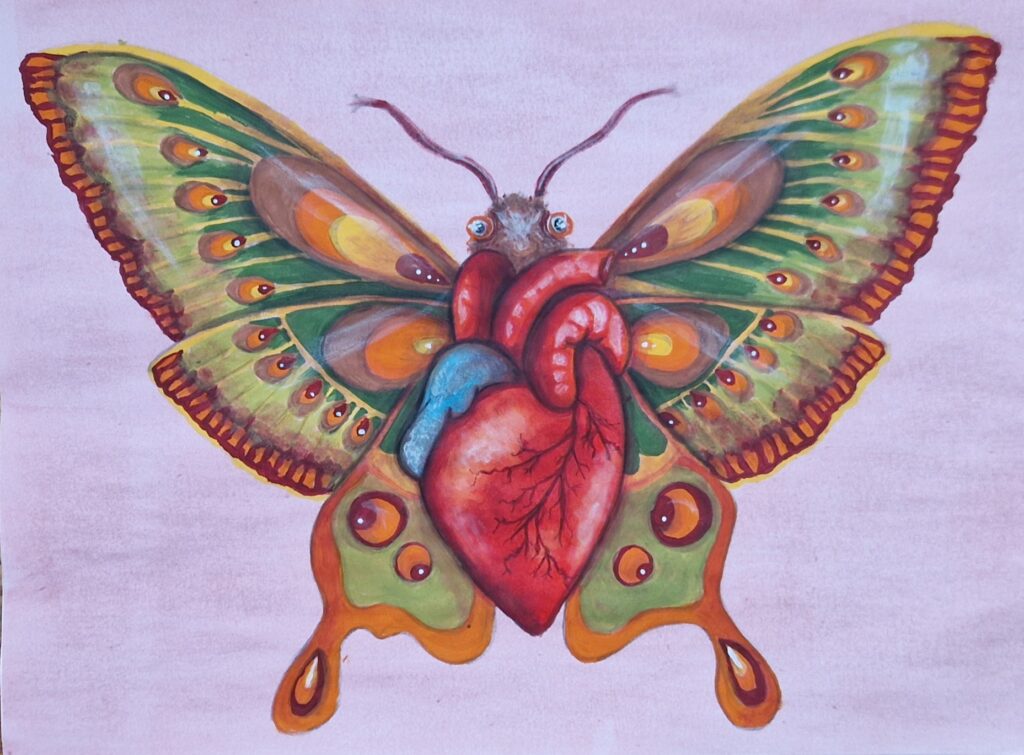
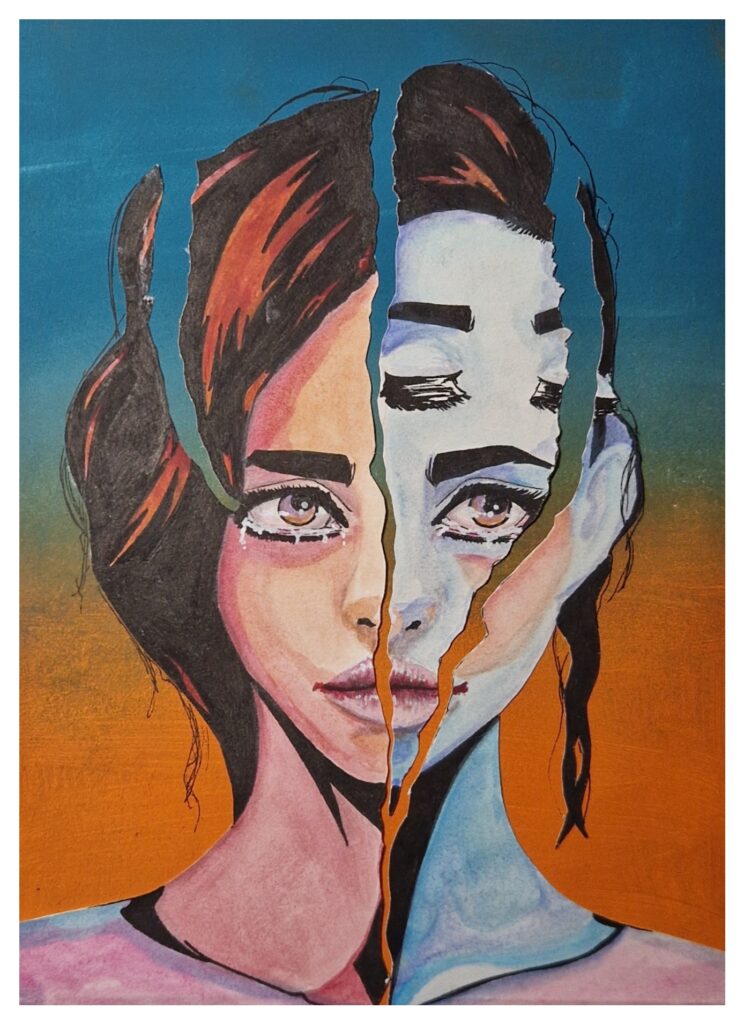
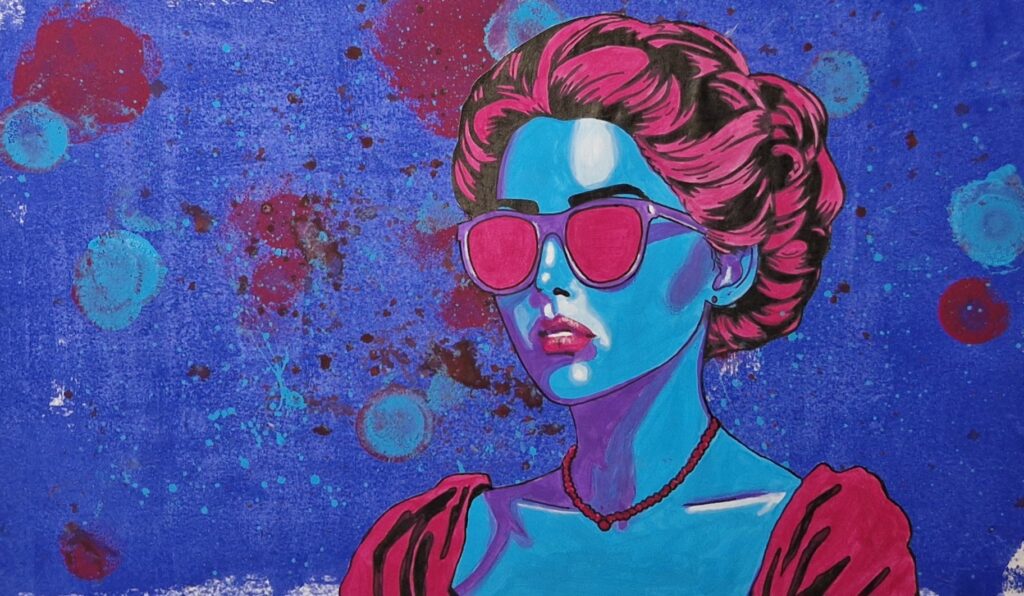
I believe play is the most important part of art. I do not want to be too serious or ridged with mediums. There is so many great materials to explore. Although acrylic paint is my go to, I will decide the type of execution based on the idea I would like to relay. For instance, I used alcohol ink for my ‘Illness’ series as this medium is bold and unpredictable – much like a cancer is or neurodegenerative disease such as Dementia. While for my “Pop-art Women” series I used vibrant acrylics to portray the controlled thick nature of the style.
Q3. Your Illness Series brings together your interests in science and art. What first made you want to explore illness through painting?
I have always been fascinated by the human body and it’s vulnerabilities. I would read and copy pages from human anatomy books (we didn’t have internet growing up). This lead me into science and studying Biology at university. My favorite subject was Pathophysiology – the study of functional, structural and biochemical changes in the body resulting from disease or injury. The ‘Illness’ series brings common ailments into the visual field to empathetically provoke conversation.
Q4. You used alcohol inks for the first time in the Illness Series. What did their unpredictable movement add to the ideas you were exploring?
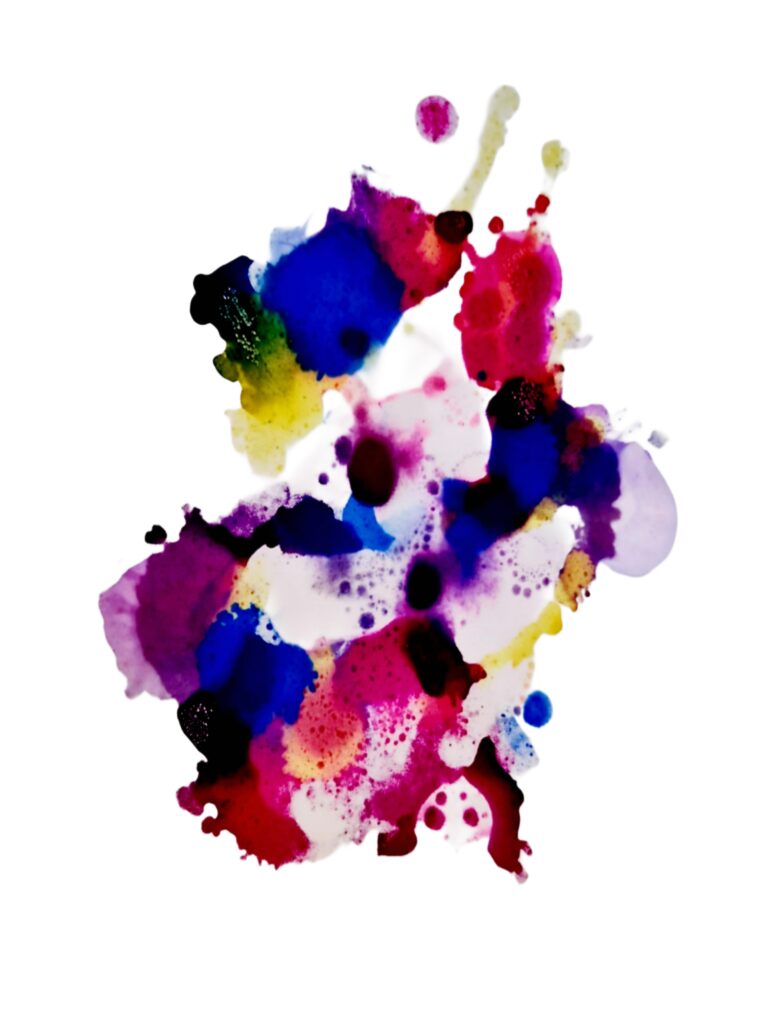
It really was by chance that my first use of alcohol ink produced one of my best pieces of art. I added the inks to photocopy paper and sprayed some isopropyl alcohol. This combination created an unpredictable fluidity of vibrant colours and shapes with depth. Once dried, I looked deeply at them and grabbed my black fine liner pen.
Cancer was my first – simply adding many closely tightknit circles in the red areas bought to life the very real nature of proliferating cells leading to a tumor.
Q5. You combine heavy-body textures with fluid pouring in the Abstracts 2026 series. What interests you about putting controlled and unpredictable processes together?
Combining controlled and unpredictable process is most likely a personal reflection of my life’s journey. It has taken some number of years to fully grasp that most things are not within my control (the weather/other peoples happiness) – so why use energy on them. Instead lean into the things you can control (bringing an umbrella/my own happiness). The same principles apply to my art. For instance I knew I wanted to create a deeply thought provoking and perhaps a still taboo subject to canvas – first period.
I did not know how it would look but I knew I would know. ‘Cycle I’ came out exactly if not better then I could have imagined. The crimson pours interlacing with the peach background perfectly demonstrates the epithelial breakaway. The cellular structures along with the bleed of paint over the boarder and the downward pull illustrates the urgent, unpredictable natures of the first cycle. If I hade controlled the process, it would have been completely different and perhaps less organic.
Q6. Your practice can shift from illness and human biology to mushrooms, Pop Art, and abstraction. What makes these very different bodies of work still feel connected to you?
That is a good question – as I am an artist who does not stay in a particular creative lane (my website blog talks about this more) it could be argued that I do not have a defined ‘style’ or ‘brand’. I admire artists who spend much of their life perfecting one particular style say, Oil for instance.
But my moods, ideas and perceptions change so I feel my art changes with them.
I hope that viewers may see some sort of connection between my projects. Each although so different reflects the human conditions – ‘Miserable Mushrooms’ explores mental health and additions, ‘Illness’ series visualizes pathologies and the ‘Pop-art’ series brings a colorful dopamine heavy kick into the viewers brain. It’s all biology, all science, all human.
Q7. Science and art are often treated as very separate fields. What do you think artists can bring to scientific subjects that scientific images or data cannot?
It is no surprise science and art are seen as separate entities given the modern education and professional systems favouring hyper-specialisation. Additionally pop culture further reinforced the ‘left-brain/right-brain’ thinking pushing them even further apart. when in reality the two subjects are closer than you think – they both spring from the same drive for curiosity, keen eye for detail and a desire to make sense of the world.
For me, science helps give art precise biological metaphors, structured experimentation, and grounding in physical reality. Art humanizes science by turning cold data into emotional stories. They make complex biological systems visually accessible, and transform illness or decay into objects of beauty and reflection.
Q8. Do you think having a career outside the traditional art world has given you more freedom in developing your work?
Probably yes and no. Having a career outside the traditional art world is a double-edged sword – it offers creative freedom but imposes strict physical limitations. On one hand, keeping my artwork financially independent shields my creative space from commercial pressure. A structured role like Continuous Improvement within an organization gives my subconscious room to process and cultivate ideas in the background without the constant anxiety of forcing output.
On the other hand, non-art work commitments eat directly into my available painting hours – this does demand a mentally taxing gear-shift from my day to day into an intuitive artistic flow. I think it comes down to a delicate balance – one I think have achieved over the years.
Q9. As your work has begun reaching publications, open calls, and exhibitions, how has your understanding of success as an artist evolved?
Initially, success felt a bit like a list of external targets – open call acceptances, exhibition dates, published features. Reaching those milestones were great but it shifted what mattered to me – fortunately it did not impact my authenticity and output goals. Now, I view success as consistency, depth, connection and communication. It’s about having the freedom to explore complex, personal themes and trusting that the right audience will find it, rather than trying to paint for the outcome.
Q10. Looking across the very different bodies of work you have created so far, what have you learned about your own creative voice?
At its loudest, I would say rather than keeping science and emotion in separate boxes, I aim to collide and communicate these worlds. I’ll use whatever medium and style that excites me in the moment. I care about my audience and aim for viewers to connect and see my empathy for mental health, disease and decay.
Q11. What advice would you give to someone trying to build a creative practice alongside a career in a completely different field?
Be aware of imposter syndrome. Be super patient with yourself and try to carve out time to relax. You’re probably doing too much!
As we wrapped up our conversation with Ellie, we kept coming back to something simple: she started painting seriously because she needed something to help her through postnatal depression. Not because she was thinking about a career. Not because she was aiming for galleries. She painted because she needed to stay okay. To feel like herself again. And what grew from that difficult time became some of the most honest and unexpectedly beautiful work we’ve come across.
There’s something deeply relatable in that for anyone who’s ever picked up a creative tool not because they planned to make “art,” but because they simply needed to make something. Ellie wasn’t waiting around for inspiration. She had a newborn, a mind that was struggling, and painting became something she could hold onto. That sense of urgency still lives in her work.
Not as darkness, but as aliveness. As proof that something you create to get yourself through a difficult moment can become some of the most genuine work you ever make.
Ellie doesn’t fit neatly into one box, and she doesn’t try to. Cancer cells one week, colourful pop art the next, mushrooms exploring addiction after that. The art world often likes artists who are easy to describe, but Ellie is anything but.
And her range isn’t a sign that she lacks direction. It’s the opposite. She sees the many sides of being human: the cells, the emotions, the biology, the beauty, the decay, and everything in between. She doesn’t feel the need to separate them.
For anyone thinking about collecting Ellie’s work, here’s what you’re getting. An artist who brings a scientist’s precision and a mother’s emotional depth and a rebel’s refusal to be categorised into every single piece. The Illness Series alone is unlike anything we’ve seen, alcohol ink paintings that make disease beautiful without making it comfortable, that force you to look at things most people turn away from and find something compelling in the cellular chaos.
And because her practice spans so many styles and subjects, collecting her work means you’re building a relationship with an artist whose next body of work might look completely different from the last one. That unpredictability isn’t a risk. It’s the reason her practice stays alive. And it means the artist you invest in today will still be surprising you years from now.
To follow Ellie’s journey and see more of her work, find her through the links below.
