
The First and Last Paintings of 4 Iconic Women Artists
Every artist begins somewhere. Before the masterpieces hanging in museums and the works that define art history, there was an early painting that captured a young artist learning, experimenting, and discovering her voice. Decades later, many of these same artists created final works that reflected a lifetime of growth, resilience, changing perspectives, and artistic confidence. Looking at the earliest known and final documented paintings side by side offers a unique way to understand not only how their techniques evolved, but also how their lives shaped the art they left behind.
For many women artists, that journey was anything but straightforward. They navigated limited opportunities, changing artistic movements, personal hardships, and shifting cultural expectations while continuing to create work that challenged conventions and expanded the possibilities of art. Their paintings became visual records of their experiences, revealing how their ideas, influences, and ambitions transformed over time.
In this article, we’re exploring the artistic evolution of four remarkable women artists through two defining moments in their careers: their earliest known surviving works and their final documented masterpieces. While these paintings mark the beginning and end of each artist’s creative journey, it’s everything that happened between them that tells the most compelling story of growth, experimentation, and enduring artistic legacy.
1. Artemisia Gentileschi
Earliest Known Surviving Work: Susanna and the Elders (1610)
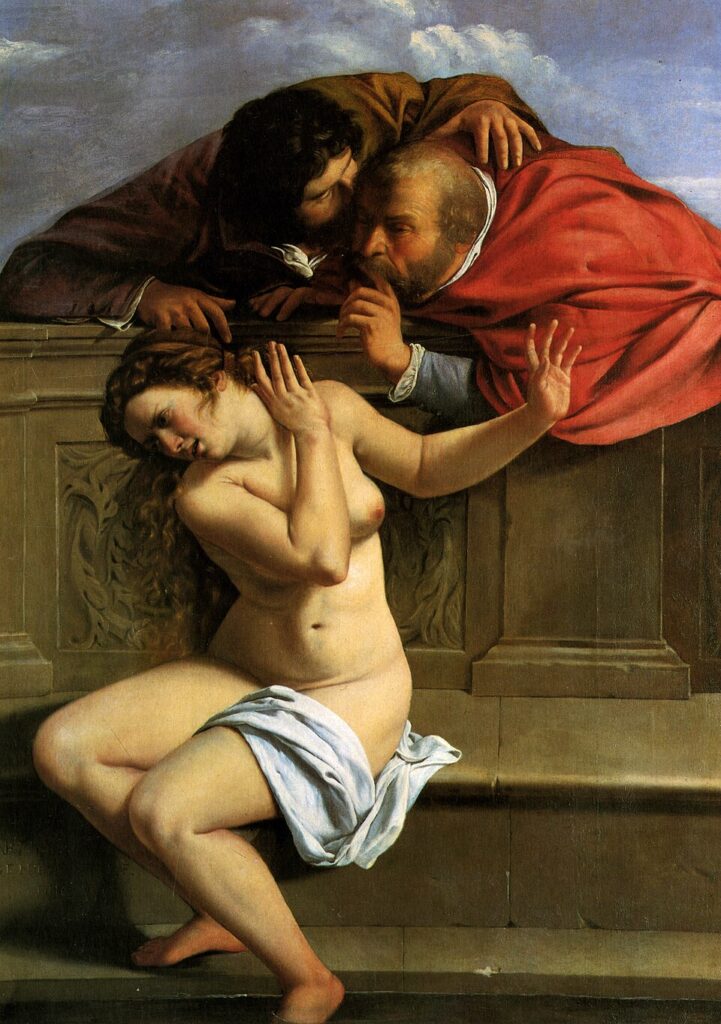
At just seventeen years old, Artemisia Gentileschi completed Susanna and the Elders (1610), the earliest signed and dated painting known to survive from her career. Painted while she was training in the workshop of her father, Orazio Gentileschi, the work already displayed a remarkable command of composition, anatomy, and dramatic lighting.
The painting illustrates the biblical story of Susanna, a virtuous woman who is threatened by two elders after refusing their advances. While the subject had been painted many times before, Artemisia approached it differently. Rather than presenting Susanna as an object of beauty, she emphasized her discomfort and resistance. Her twisting posture, tense expression, and compressed composition place the viewer uncomfortably close to the scene, directing attention to Susanna’s distress rather than the spectacle of her body. Art historians have long noted how unusual this interpretation was within the visual tradition of the subject.
Last Known Painting: Susanna and the Elders (1652)
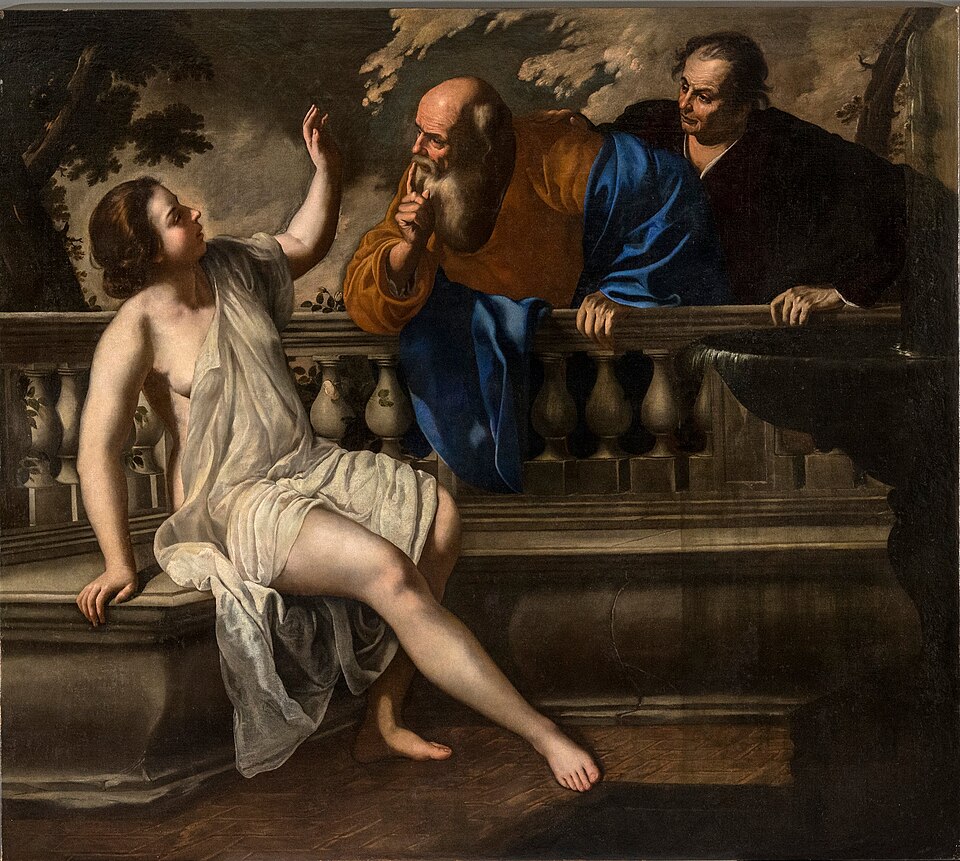
More than four decades later, the final known painting associated with Artemisia’s career returned to the very same biblical story. Dated 1652, this later version of Susanna and the Elders is currently regarded as her last known work, creating a remarkable full-circle moment in her artistic journey.
Although the subject remained the same, the execution reflects the experience of an artist who had spent decades working across Florence, Venice, Naples, and London. The composition is more assured, the handling of light more sophisticated, and the psychological tension is achieved with greater economy. Rather than repeating her youthful interpretation, Artemisia revisited a theme that had accompanied her throughout her career, demonstrating how her artistic language had matured while her interest in powerful female protagonists remained constant.
What Changed Between These Works?
There is something deeply moving about the fact that Artemisia Gentileschi’s artistic journey begins and ends with the same story.
More than forty years separate these two versions of Susanna and the Elders, yet together they feel less like repetitions and more like a conversation between a young artist finding her voice and a master painter who had spent a lifetime refining it. The seventeen-year-old Artemisia approached Susanna with extraordinary empathy, portraying her not as an idealized beauty but as a woman trapped, uncomfortable, and resisting the unwanted attention surrounding her. Even at the very beginning of her career, she saw something many artists of her time overlooked: Susanna’s humanity.
By the time she painted the final known version in 1652, that sensitivity had only grown stronger. The later painting is calmer in its execution, more confident in its composition, and more economical in its storytelling. Susanna no longer feels simply overwhelmed by the advancing men. There is a quiet strength in her presence, a sense of dignity and resolve that reflects an artist who had spent decades mastering not only paint but also the emotional language of her subjects. Without dramatically changing the story, Artemisia transformed the way it was experienced.
Of course, art historians caution against reading these paintings only through the events of Artemisia’s personal life. Her first Susanna and the Elders was completed before the 1612 rape trial that has so often overshadowed discussions of her work. Rather than treating the painting as autobiography, it is more accurate to understand it within its artistic, religious, and cultural context. Yet when viewed across the span of her entire career, the two paintings still reveal something extraordinary: not a change in subject, but the remarkable growth of the artist behind it.
Between these works, Artemisia built one of the most distinguished careers of any painter of the Baroque period. She became the first woman admitted to Florence’s Accademia delle Arti del Disegno, received prestigious commissions from the Medici court, and worked for influential patrons across Florence, Rome, Venice, Naples, and even London. At a time when opportunities for women artists were exceptionally limited, she earned international recognition through sheer talent and determination.
Again and again, she returned to stories centered on women. Judith, Jael, Esther, Cleopatra, Lucretia, and many others appear throughout her paintings, not as passive figures but as complex individuals capable of courage, intelligence, grief, resilience, and action. Whether they were heroines, queens, or saints, Artemisia painted them with a psychological depth that set her apart from many of her contemporaries.
That quiet confidence is perhaps best captured in a letter she wrote to the Sicilian nobleman Don Antonio Ruffo, declaring,
“I will show Your Illustrious Lordship what a woman can do.”
It is a sentence that has echoed through art history ever since.
Looking back at her first and last known paintings, those words feel especially meaningful. Artemisia didn’t need to reinvent herself to demonstrate her growth. Instead, she returned to the very subject that had launched her career and painted it with the assurance of an artist who had nothing left to prove. Her journey comes full circle, but she arrives at that same place with decades of experience, unwavering confidence, and a mastery that transformed not only her own work, but the way generations would understand the women she chose to paint.
2. Frida Kahlo
Earliest Known Work: Self-Portrait Wearing a Velvet Dress (1926)
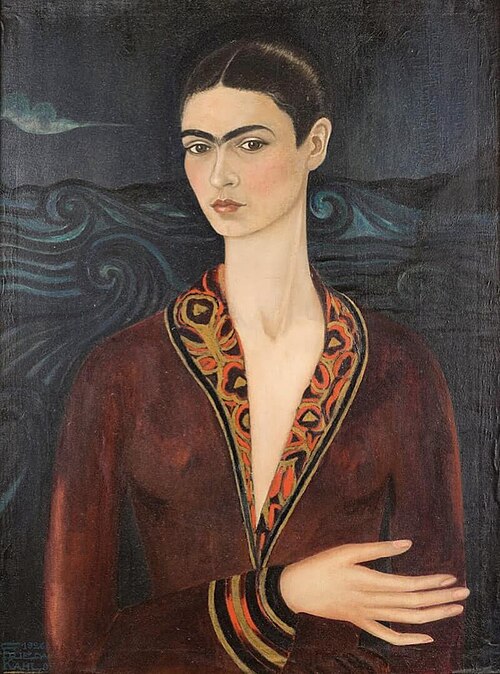
Identifying Frida Kahlo’s very first painting is difficult, as art historians continue to debate which surviving work truly marks the beginning of her artistic career. However, Self-Portrait Wearing a Velvet Dress (1926) is widely recognized as her earliest major surviving painting and the first self-portrait that established the direction her art would take.
Kahlo painted the work at the age of eighteen while recovering from the devastating bus accident that changed the course of her life. Confined to bed for months, she began painting using a specially designed easel and a mirror fixed above her bed. The portrait reflects the influence of European Renaissance painting, with its elongated proportions, carefully modelled features, and restrained composition. Although it differs greatly from the symbolic self-portraits she later became known for, it captures a young artist developing both her technical skills and her artistic identity.
Final Completed Painting: Viva la Vida, Watermelons (1954)
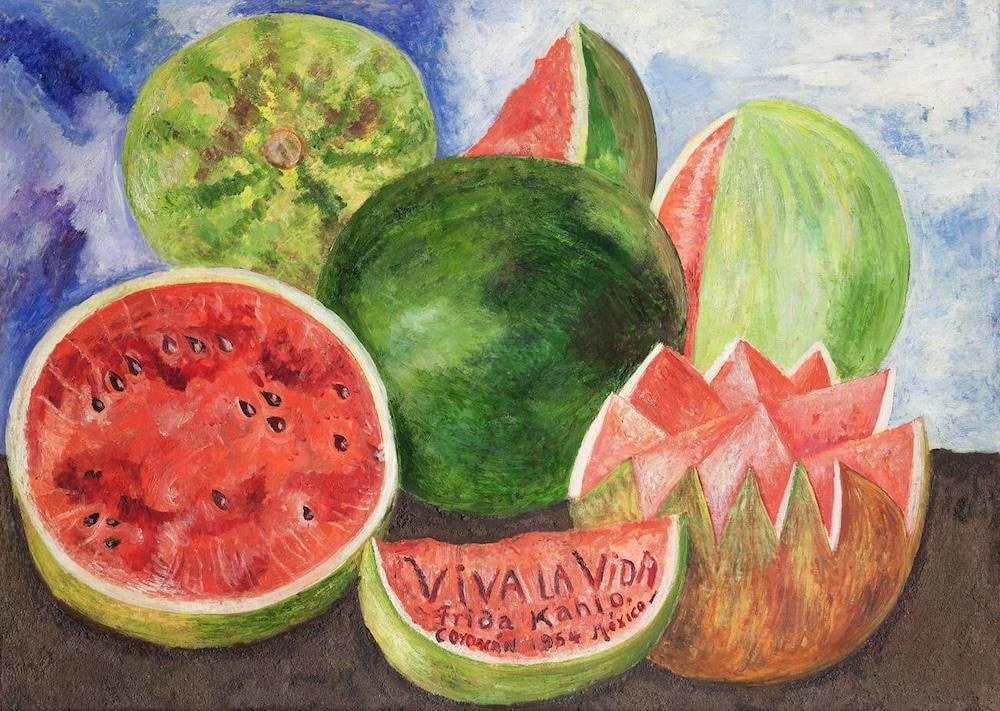
Nearly three decades later, Kahlo completed Viva la Vida, Watermelons, widely accepted as the final painting she finished before her death in July 1954. Created while her health was rapidly declining, the work depicts bright slices of watermelon arranged in vivid reds and greens. On one of the fruits, Kahlo inscribed the words “Viva la Vida” (“Long Live Life”) alongside the date eight days before her passing.
Although physically fragile by this stage of her life, Kahlo’s final painting is strikingly vibrant. Rather than dwelling on suffering, it celebrates colour, vitality, and the enduring joy she found in creating art.
What Changed Between These Works?
Frida Kahlo often explained that her paintings grew directly from her own experiences. She famously remarked,
“I paint myself because I am so often alone and because I am the subject I know best.”
This philosophy became the foundation of her artistic practice, with self-portraits making up a significant portion of her work throughout her career.
Following her marriage to Diego Rivera, her travels to the United States, repeated surgeries, miscarriages, and ongoing physical pain, Kahlo developed a highly individual style that combined realism with symbolism drawn from Mexican folk traditions, Indigenous culture, nature, religion, and personal memory. Rather than aligning herself with Surrealism, she rejected the label, stating,
“They thought I was a Surrealist, but I wasn’t. I never painted dreams. I painted my own reality.”
Seen together, Self-Portrait Wearing a Velvet Dress and Viva la Vida, Watermelons reveal an artist whose priorities shifted from mastering portraiture to expressing lived experience with extraordinary honesty. While her earliest surviving work demonstrates a young painter exploring technique and identity, her final painting reflects the deeply personal visual language she spent nearly thirty years refining, one rooted in resilience, symbolism, and an unwavering commitment to painting her own reality.
3. Georgia O’Keeffe
One of Her Earliest Known Paintings: Untitled (Dead Rabbit with Copper Pot) (1908)
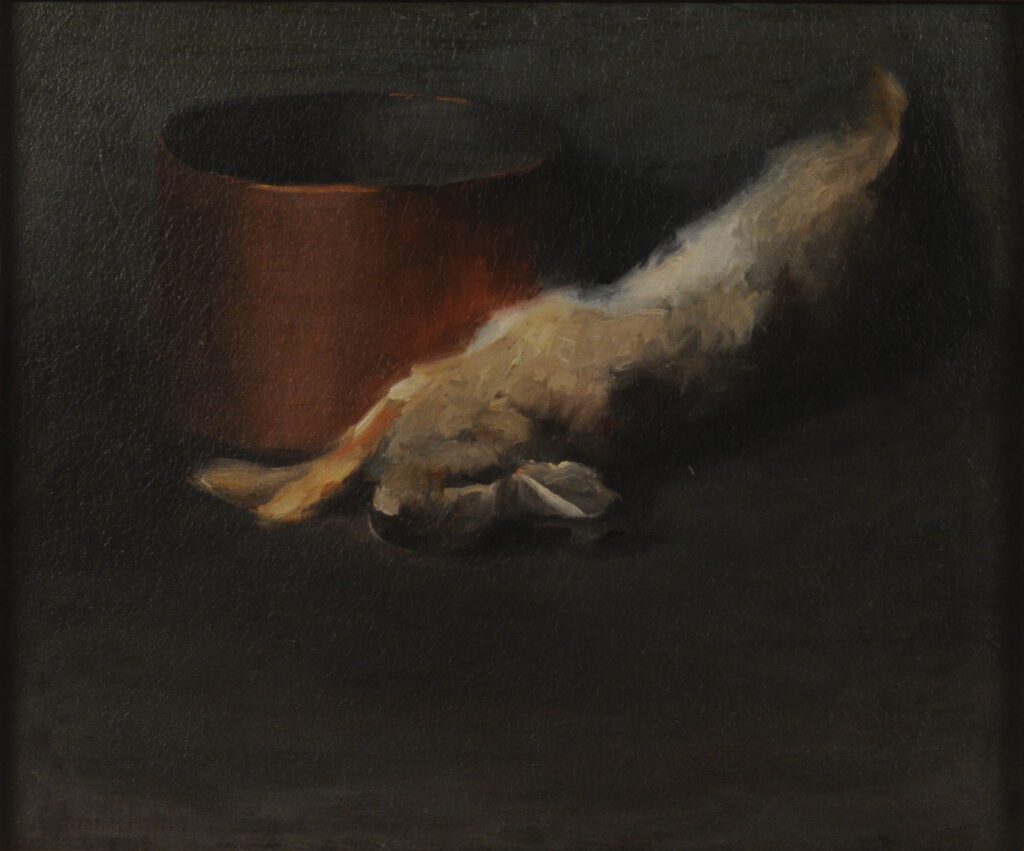
Long before Georgia O’Keeffe became known for her monumental flowers and sweeping desert landscapes, she was a young art student learning the principles of academic realism. One of her earliest known surviving paintings, Untitled (Dead Rabbit with Copper Pot), was completed in 1908 while she was studying at the Art Students League of New York.
The carefully observed still life depicts a rabbit beside a polished copper pot, demonstrating O’Keeffe’s remarkable technical skill at just twenty years old. The painting earned her the prestigious William Merritt Chase Still-Life Prize, a significant achievement for an emerging artist. Yet despite this early success, O’Keeffe soon felt constrained by traditional artistic training. She stepped away from painting for several years, convinced that simply reproducing what she saw was no longer enough. She wanted to discover a visual language that felt entirely her own.
One of Her Final Major Paintings: Sky Above Clouds IV (1965)
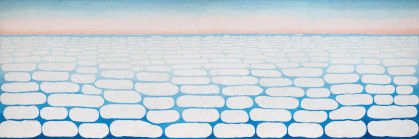
More than fifty years later, O’Keeffe created Sky Above Clouds IV, one of the largest and most celebrated paintings of her career. Inspired by the view from an airplane window, the monumental canvas stretches across an endless expanse of floating white clouds beneath a brilliant blue sky, inviting viewers into a quiet, almost meditative experience.
Painted when she was in her late seventies, the work reflects an artist who no longer felt the need to prove her technical ability. Instead, she distilled the landscape into simple forms, rhythm, colour, and space. Although her eyesight would begin to decline in the years that followed, Sky Above Clouds IV stands as one of the defining achievements of her later career and a powerful expression of the vision she had spent decades refining.
What Changed Between These Works?
Looking at these two paintings side by side, it’s hard to believe they were created by the same artist. One is a carefully rendered academic still life, rooted in observation and traditional technique. The other is an expansive, almost dreamlike landscape where repetition, colour, and scale create emotion rather than simply describe a scene.
Yet the journey between them wasn’t about abandoning skill. It was about finding freedom.
After the success of her early still life, O’Keeffe realized that painting exactly what was placed in front of her no longer satisfied her. She later wrote,
“I found I could say things with color and shapes that I couldn’t say any other way.”
That belief became the foundation of everything she created for the rest of her life.
Instead of following artistic expectations, she developed a visual language that was unmistakably her own. Flowers became vast landscapes of colour. Animal bones became quiet symbols of the American Southwest. Mountains, deserts, and skies were transformed into deeply personal reflections of memory, place, and emotion. Rather than painting what the world looked like, O’Keeffe painted how it felt to stand within it.
She expressed this philosophy beautifully when she wrote, “Nobody sees a flower really… so I said to myself, I’ll paint what I see.” Her paintings invited viewers to slow down, notice details they might otherwise overlook, and experience familiar subjects in entirely new ways.
From the carefully painted rabbit and copper pot of 1908 to the endless horizon of clouds in 1965, O’Keeffe’s career tells the story of an artist who gradually let go of convention in order to trust her own instincts. Her subjects changed dramatically, but her purpose remained the same: to create paintings that expressed something words never could. That quiet confidence, built over decades of experimentation and independence, is what made Georgia O’Keeffe one of the most influential painters of the twentieth century.
4. Hilma af Klint
One of Her Earliest Documented Surviving Paintings: Summer Landscape (1888)
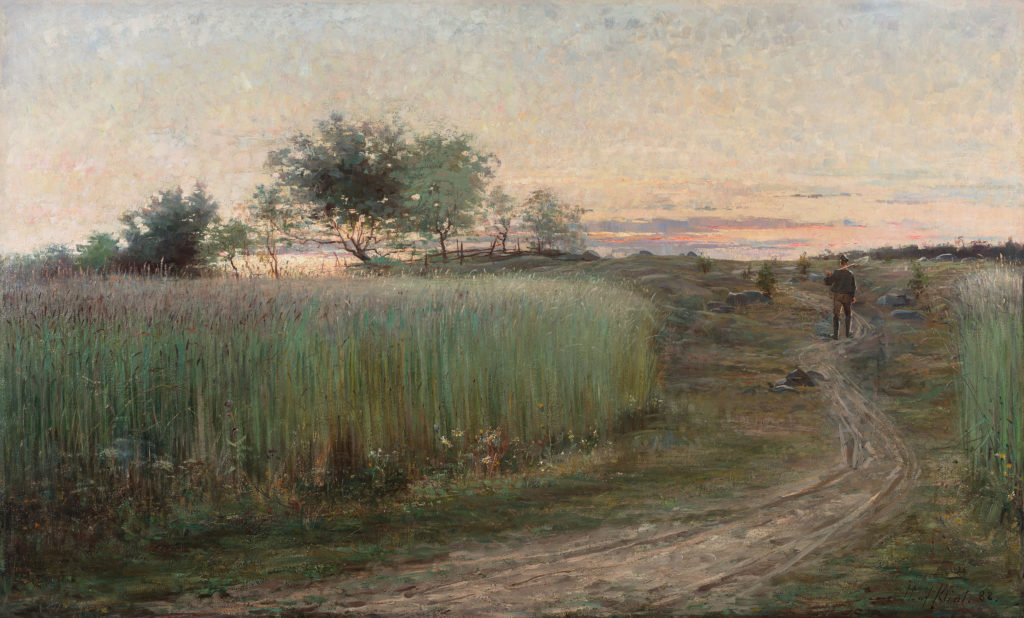
Unlike many artists whose first surviving works can be identified with certainty, Hilma af Klint’s exact first painting remains unknown. Many of her earliest works were not individually dated or fully catalogued, making it impossible for art historians to determine which surviving painting came first. However, Summer Landscape (1888) is one of her earliest documented surviving paintings and is often presented by museums, including the Guggenheim, as a window into the beginning of her artistic career.
Painted shortly after her studies at the Royal Academy of Fine Arts in Stockholm, Summer Landscape reflects the strong academic training that shaped her early years as an artist. The peaceful scene is carefully observed, with natural light, lush greenery, and a balanced composition demonstrating her technical skill and close attention to the world around her. At this stage, af Klint was painting the visible beauty of nature with remarkable precision, giving little indication of the groundbreaking abstract language she would later develop.
Although this early landscape differs dramatically from the symbolic works that made her famous, it reveals the solid artistic foundation upon which her later innovations were built. Before she became a pioneer of abstraction, Hilma af Klint was first an accomplished painter of the natural world.
One of Her Last Known Paintings: Untitled (1941)
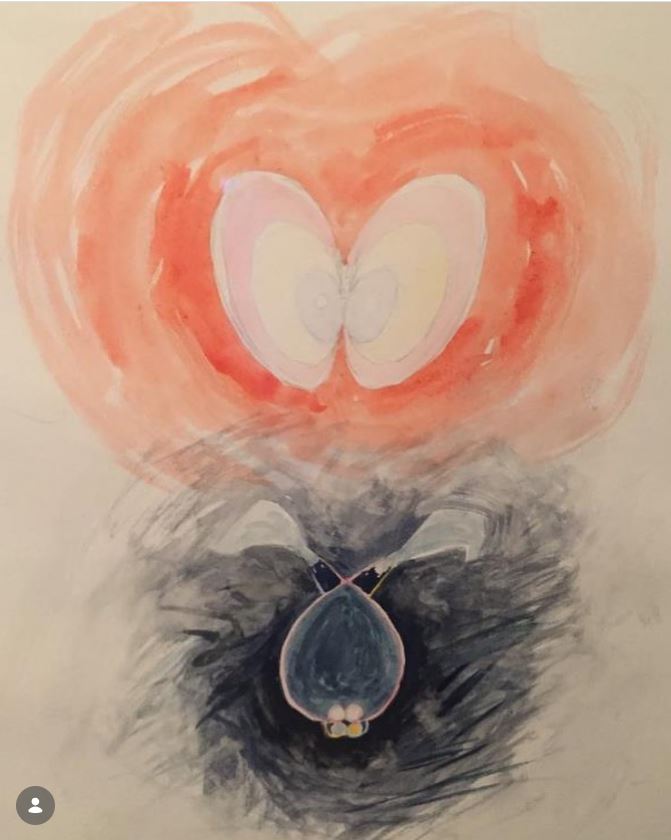
More than fifty years after her early landscapes, Hilma af Klint created Untitled (1941), one of the final known paintings of her career. Unlike the large abstract compositions that had defined much of her artistic life, this quiet figurative work belongs to a small series of paintings depicting nuns, created just a few years before her death in 1944. Art historians consider these four oil paintings to be the last known painting series she completed.
The painting feels intimate and contemplative. Rather than filling the canvas with swirling symbols and geometric forms, af Klint returned to the human figure, creating an atmosphere of stillness, devotion, and quiet reflection. It is a striking reminder that although she is celebrated today as a pioneer of abstraction, her artistic practice was never confined to a single style. Even near the end of her life, she continued exploring new ways of expressing the spiritual ideas that had guided her work for decades.
What Changed Between These Works?
The journey from Summer Landscape (1888) to Untitled (1941) reveals one of the most extraordinary transformations in modern art. At the beginning of her career, Hilma af Klint was a highly trained academic painter carefully observing the world around her. By the end of her life, she had moved beyond visible reality, creating paintings that explored spirituality, science, and the hidden connections she believed existed within the universe.
Yet the change was not as simple as moving from landscapes to abstraction. Nature remained at the heart of af Klint’s work throughout her career. What changed was the way she chose to see and represent it.
In Summer Landscape, af Klint paints the external world with precision. The trees, sky, and atmosphere are carefully observed, reflecting the traditional techniques she developed during her studies at the Royal Academy of Fine Arts in Stockholm. The painting shows an artist learning to capture what the eye can see.
Over the following decades, however, af Klint began searching for a different kind of expression. Deeply interested in spirituality, philosophy, and scientific discoveries of the time, she started exploring ideas about invisible forces and connections beyond the physical world. In 1896, she became part of The Five, a group of women who gathered for spiritual sessions involving meditation, prayer, and automatic drawing. These experiences became a major influence on the direction of her art.
This transformation reached a defining moment in 1906 when af Klint began creating The Paintings for the Temple, a monumental collection of more than 190 works that she believed were guided by a higher spiritual force. These paintings moved away from traditional representation and introduced a completely new visual language filled with geometric forms, spirals, circles, symbols, and vibrant colour relationships.
Works from this period, including the famous Primordial Chaos series (1906–1907) and The Ten Largest (1907), explored themes of creation, growth, humanity, and the relationship between the physical and spiritual worlds. Decades before abstract art became widely recognised, af Klint was creating paintings that abandoned recognizable subjects in favour of ideas, emotions, and unseen energies.
By the time she created Untitled (1941), one of her final known paintings, af Klint had already spent a lifetime challenging traditional ideas about what art could represent. Interestingly, this late work returns to the human figure after years of abstraction, showing that her artistic curiosity never belonged to one single style. The quiet, contemplative nature of the painting reflects an artist who continued exploring spirituality and meaning until the very end of her career.
Looking at these two works together feels like watching an artist move from the visible world into the invisible one. Summer Landscape shows Hilma af Klint as a young painter mastering observation, while Untitled reveals the depth of a lifetime spent searching for something beyond what the eye could immediately understand.
Her career was not simply a shift from realism to abstraction. It was a lifelong exploration of how painting could express both the world we experience and the mysteries we cannot see. Through that journey, Hilma af Klint created a body of work that would eventually place her among the earliest and most visionary pioneers of abstract art.
A Journey Painted Across the Years
Looking at these artists through the lens of their earliest known works and final masterpieces reminds us that artistic growth is rarely a straight path. It unfolds over years of experimentation, changing influences, personal triumphs, and unexpected challenges. What begins as curiosity and technical practice gradually evolves into a deeply personal visual language, shaped by everything an artist experiences along the way.
For Artemisia Gentileschi, Frida Kahlo, Georgia O’Keeffe, and Hilma af Klint, the journey between those two moments tells a story far richer than any single painting ever could. Their final works weren’t simply better versions of their earliest ones; they reflected decades of learning, resilience, and an unwavering commitment to creating on their own terms.
Whether you’re an artist finding your own voice or simply someone who loves exploring art history, these remarkable journeys offer a powerful reminder that every masterpiece has a beginning. Sometimes, the most fascinating part isn’t where an artist started or where they finished, but everything they discovered in between.
If you enjoyed exploring how women artists transformed their creative voices over time, you might also enjoy our article on 5 Self-Portraits by Women Artists Redefining Identity. From personal stories to powerful statements of self-expression, these self-portraits reveal how women artists have used their own image to explore identity, emotion, and the many ways they see themselves and the world around them.
Read the article here:

Michael LaConte
August 5, 2026 at 3:34 amBeautiful article.
Alan J Porter
August 5, 2026 at 8:05 amThe spirit of woman is equal to that of man, All art is a vehicle to express your inner feelings of the meaning and purpose to life.
Carol Ahern
August 5, 2026 at 2:18 pmSo enjoyed “First and Last Paintings of 4 Iconic Women Painters “article. Very informative, with facts in context for a fabulous read. Please continue researching.
Thank You!