
Hiske Tas Bain Uses Art to Turn Difficult Experiences Into Hope
At Women in Arts Network, Portraits brought together artists who turn to the human figure to tell us something true about who we are. A portrait, after all, has never been only a likeness; it can be a figure drawn from dream and memory, a presence that carries a spirit, a feeling, or an entire inner world. Each artist in this exhibition reaches for that in her own way.
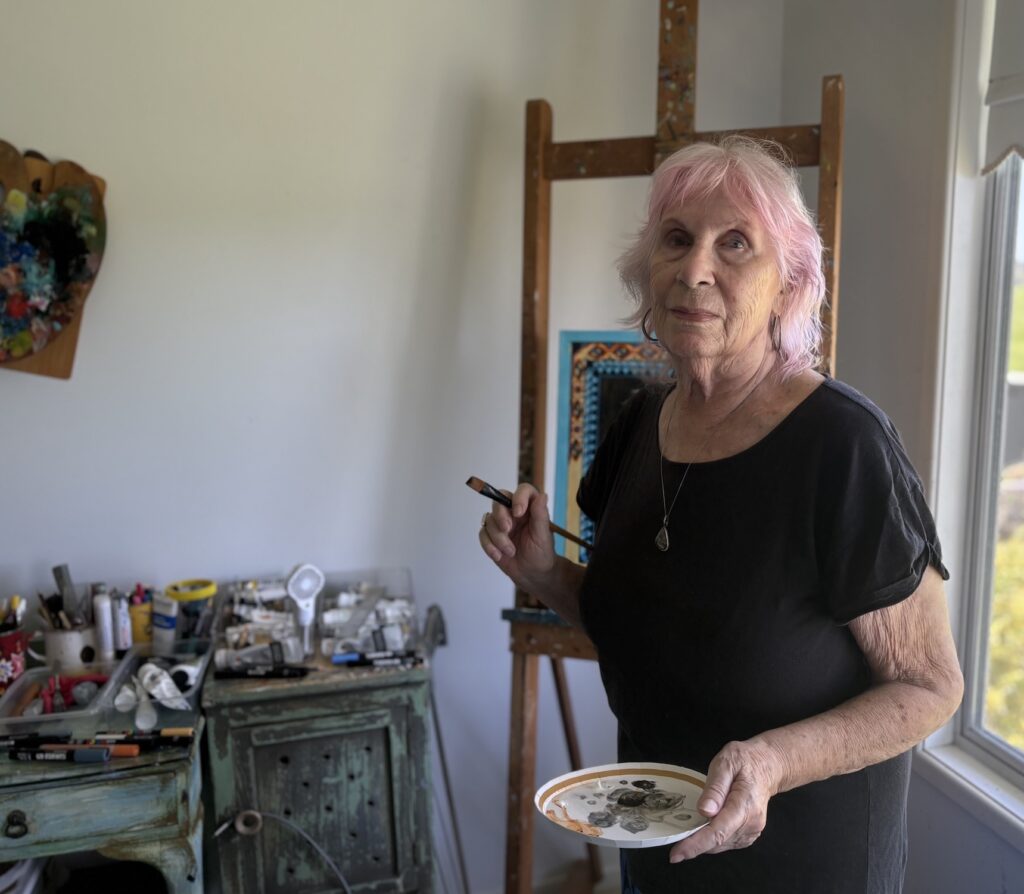
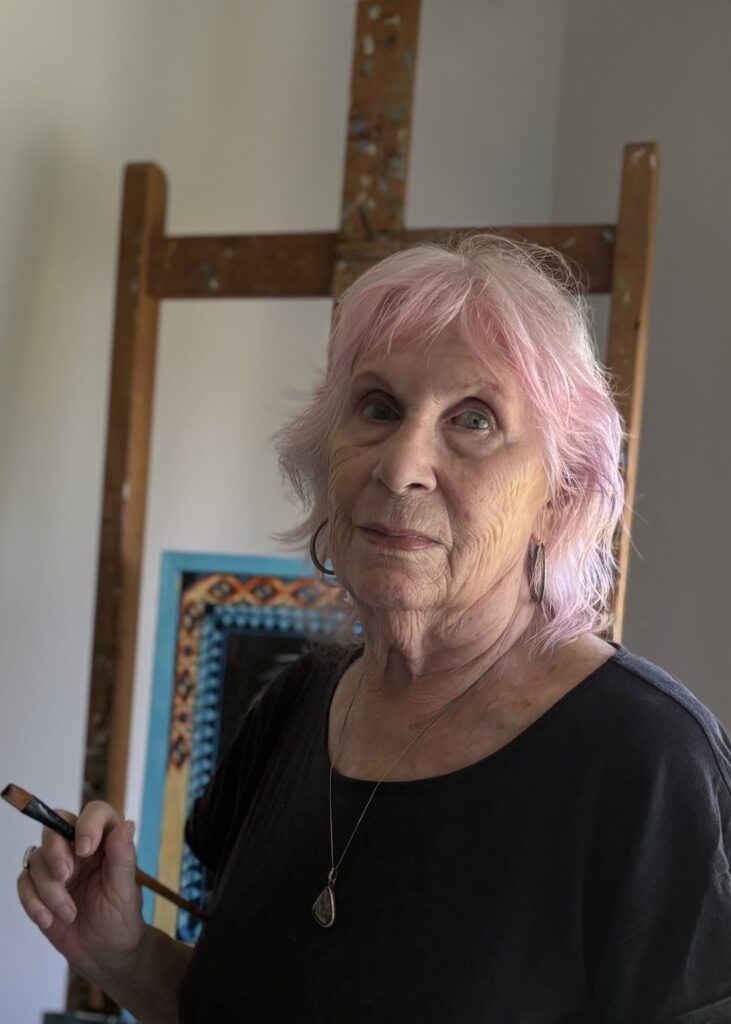
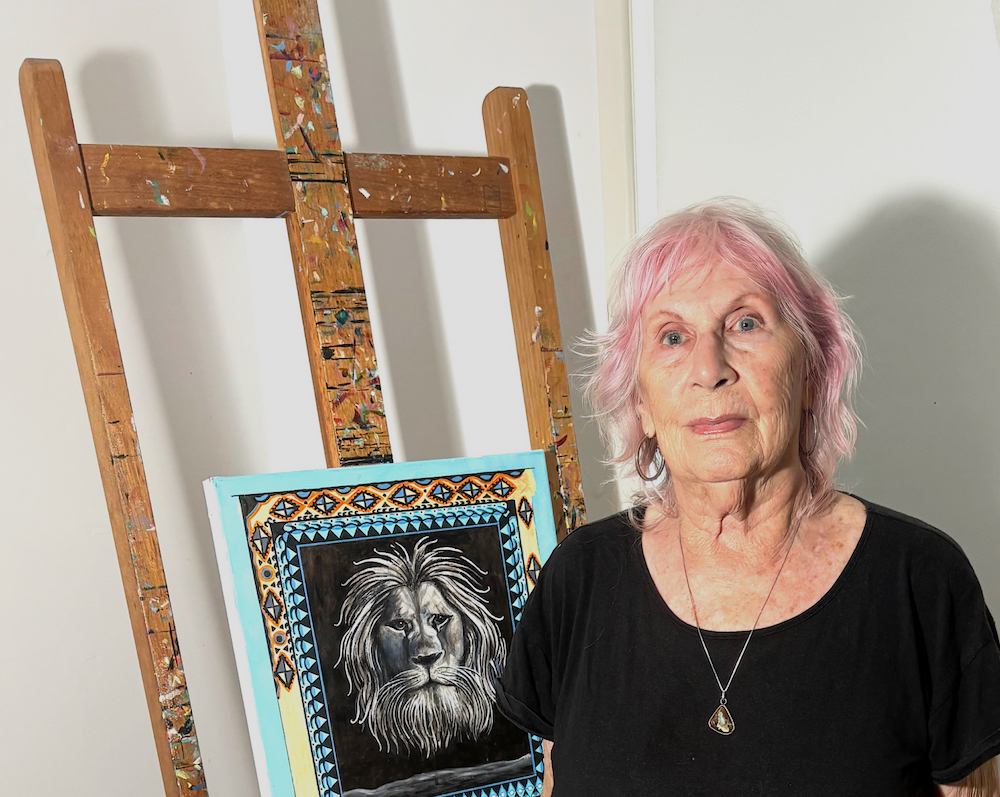
Among the artists chosen for this exhibition is Hiske Tas Bain, a Dutch-Australian painter who conjures dreamlike figures and worlds, portraits not of people as they appear, but of the spirit, the symbols, and the healing forces she senses within nature and within us all.
Hiske’s story begins in Holland, where she was born just two months before the Second World War. With the world outside so often unsafe, she spent much of her childhood indoors, drawing, and at six she painted a frog so striking that everyone agreed she had a gift.
That small painting set a long life’s work in motion, and her parents, warmly supportive, sent her to art school in The Hague and later in London. From there she travelled widely, living in many countries and among people of many backgrounds, gathering a lifetime of images, colours, symbols, and stories that still live in her imagination.
Her paintings grow out of all of it, memory, dream, travel, and encounter, brought together into positive, dreamlike worlds. Nature runs through everything she makes, a constant source of beauty, mystery, and what she sees as genuine healing power, and she rarely begins with a fixed idea, following instead the feelings that rise as she works.
Surrealism, Dadaism, and Magic Realism have all left their mark, yet what has always drawn her is the spiritual, the magical, and the mystical, a fascination sparked early by Europe’s vast inheritance of art.
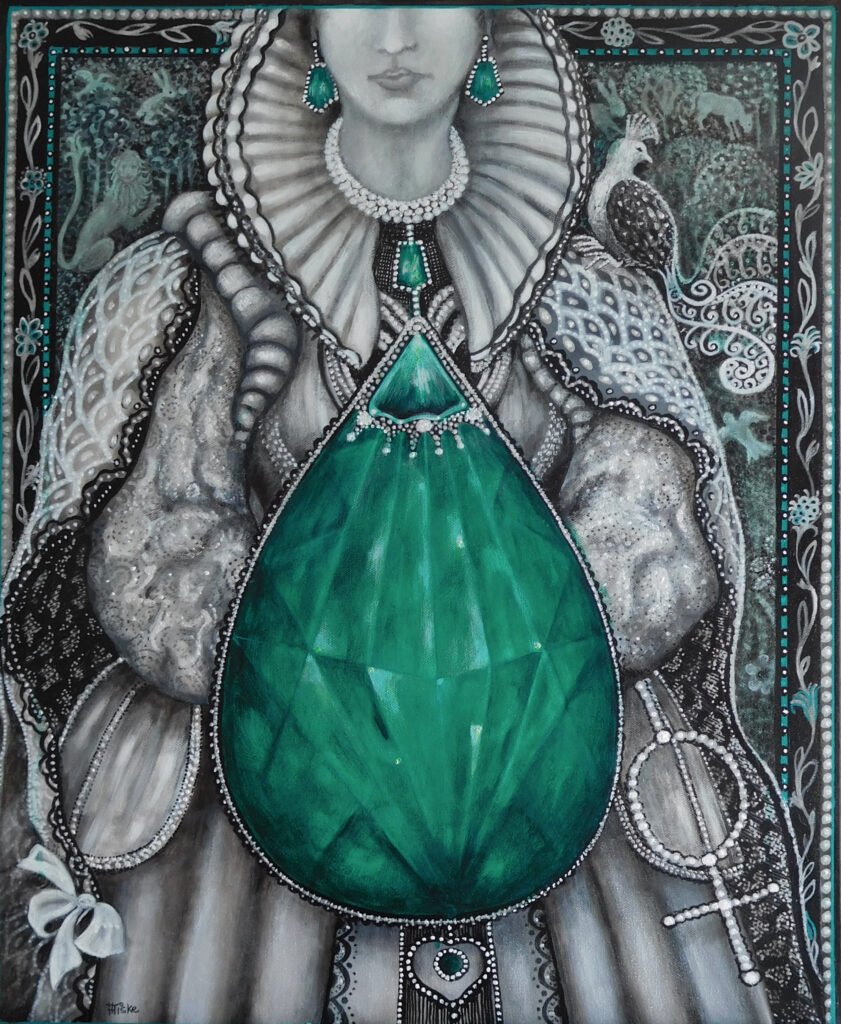
Even when she draws on established symbols, she makes them wholly her own, reimagining an age-old goddess as a living, contemporary presence, or painting the shaman-healer as an emblem of our power to turn difficulty into hope. Running through all of it is a lightness of spirit, a belief that we must meet life with humour, especially when it turns grim, since we are only a speck in the universe and the more positive we stay, the sooner we find our way through.
That openness spills into everything she touches, for creativity, to her, is all-encompassing, and across a long career she has moved freely between painting, murals, fabric, ceramics, and jewellery, happy anywhere she can work with colour and meet a new challenge.
Now let’s hear from Hiske about the frog that began it all, the year in the desert that changed her life, how healing and art became one, and her advice for any artist still searching for their own path.
Q1. Could you take us back to the beginning and share what first inspired you to pursue art?
Born in Holland two months before the Second World War, going outside wasn’t always possible, and so I spent a lot of time inside drawing. One day, at six years old, I made this painting of a frog, and they reckoned I had talent. So, the amazing frog was the beginning of a long career in painting. My parents were very supportive and sent me to art school in The Hague, Holland, and London.
Q2. Your work brings together dreams, nature, cultures, and memories. How do these influences shape your paintings?
My paintings grow out of my memories, dreams, travels, and experiences with different cultures. Having lived in various countries and spent time with people from diverse backgrounds, I have collected many images, colours, symbols, and stories that continue to live in my imagination.
Nature is also a constant source of inspiration for me. I am fascinated by its beauty, mystery, and healing power. In my paintings, I bring these impressions together with imagined figures, animals, landscapes, and spiritual symbols. I do not always begin with a fixed idea; often, the painting develops as I follow the memories and feelings that emerge. In this way, I transform my experiences into positive, dreamlike worlds that invite viewers to connect with their own memories and imagination.
Q3. Surrealism, Dadaism, and Magic Realism have influenced your practice. What continues to attract you to these movements?
As a child, we would always visit a lot of exhibitions and museums, and so I was exposed to a lot of famous artists. Europe is a smorgasbord of beautiful art, and I was especially interested in the spiritual, magical, and mystical aspects. It’s interesting that the local post office had a huge wall painting by Escher, and my art school was designed by Mondriaan.
Q4. During your time with Aboriginal women in Australia, you shared knowledge, art, and traditions. What lessons from that experience have stayed with you?
I spent a year with the Australian Aboriginal women in the desert. We did a lot of painting and rituals together, and they taught me a lot of their secret women’s business, as they call it. That time and the fantastic friendships I had changed my life and my attitude towards my life and place in the world, and it also gave my painting more depth.
Q5. You have worked as a Natural Therapist and taught Healing Art internationally. How did healing become connected to your creative practice?
Healing and creativity have always been closely connected in my life. Through my work as a Natural Therapist and my experiences living among different cultures—including the Indigenous women of Ernabella—I came to understand that healing can happen through nature, beauty, creativity, and human connection. My paintings bring together memories, dreams, spirituality, and the cultures that have influenced me.
Through my art and teaching, I hope to uplift people, inspire wonder, and help them reconnect with themselves and the beauty of life.
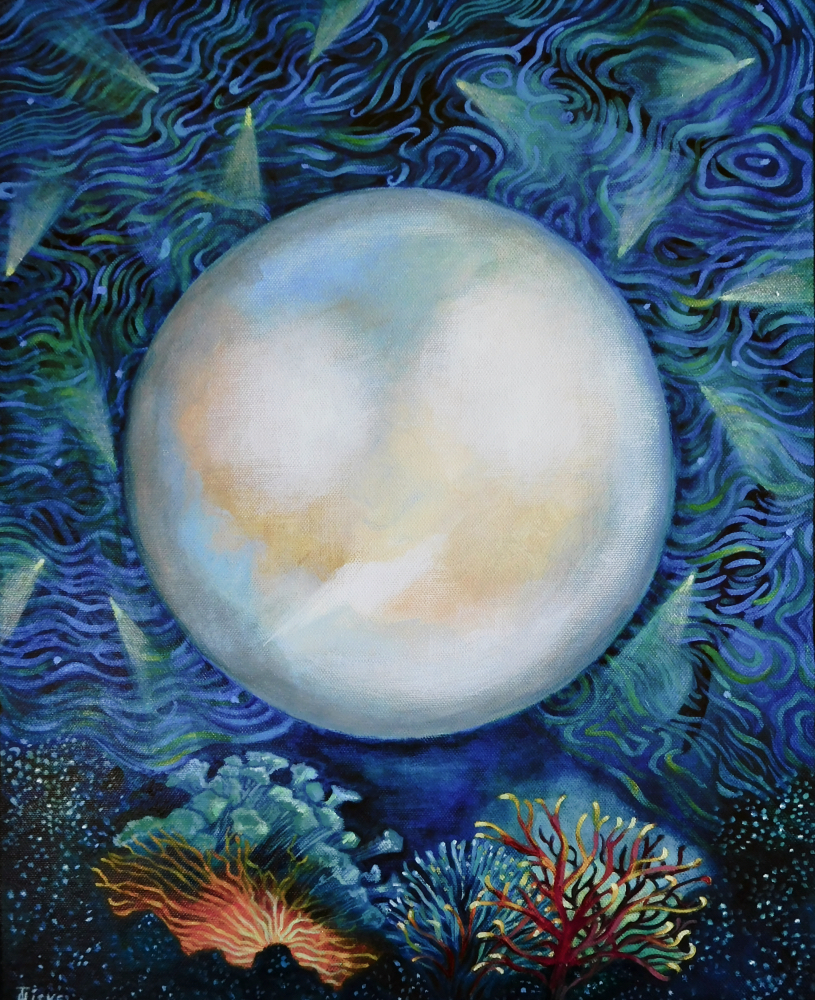
Q6. In The Empress, you use the symbolism of Venus to explore love, peace, fertility, and nature. How have you made this traditional symbol your own?
In The Empress, I take the traditional symbol of Venus—love, beauty, fertility, and nature—and connect it with my own experiences of travel, spirituality, and healing. The emerald colour and the richness surrounding her reflect the life-giving energy of nature, but also inner strength and abundance.
I was inspired by the symbolic language of different cultures, yet I wanted her to feel like a personal, contemporary presence rather than a figure from the past. For me, she represents the nurturing and creative force within nature and within ourselves. She is not only a symbol of fertility, but of healing, compassion, beauty, and the possibility of transforming life into something positive.
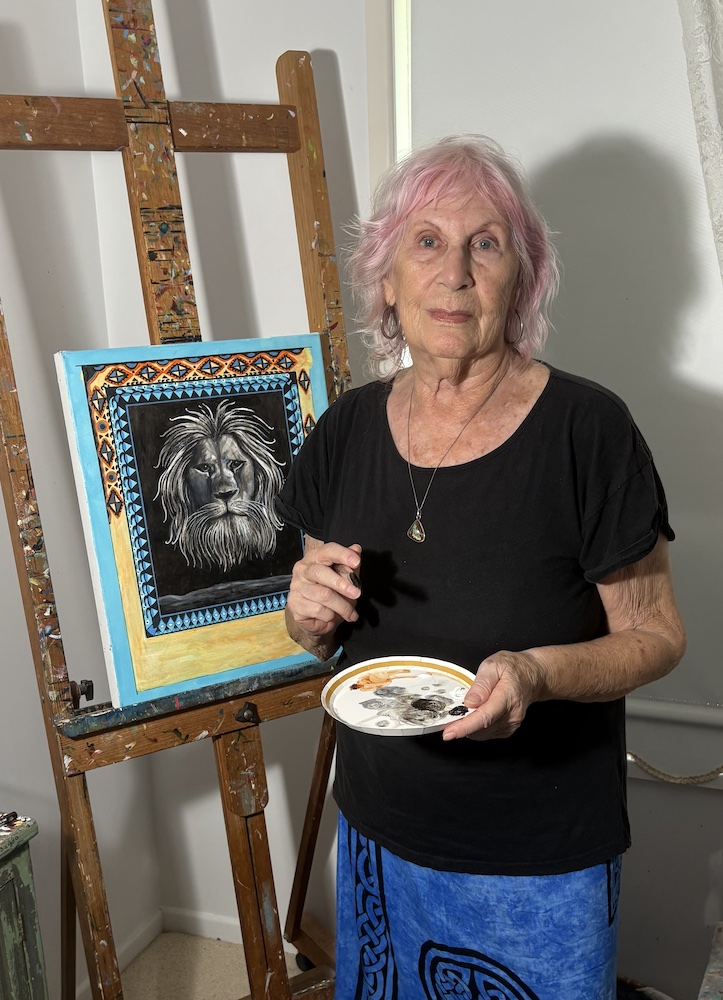
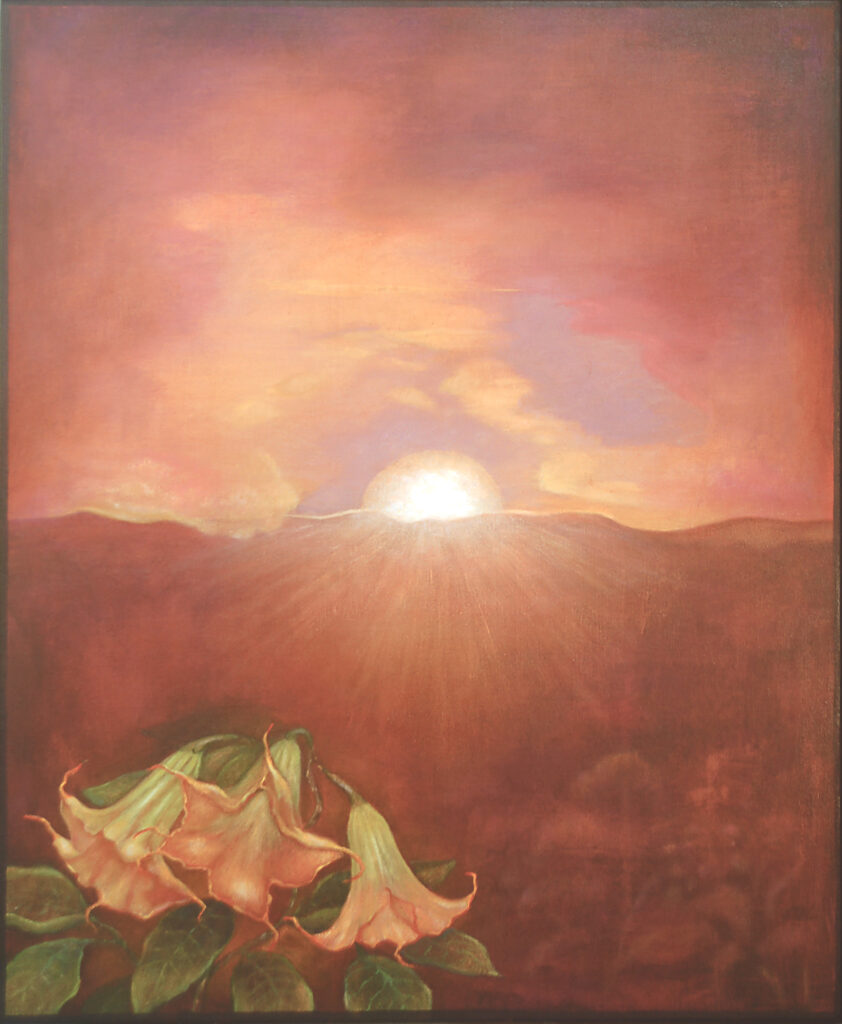
Q7. In The Magician, you explore transforming negativity into something positive. How does this idea reflect your wider artistic philosophy?
In The Magician, I explore the creative power to transform difficult experiences into something positive. This connects with my wider artistic philosophy: through symbolism, colour, and imagination, I try to turn negativity into hope, healing, and new possibilities. Of course, The Magician is the Shaman, the healer.
Q8. Humour often appears alongside deeper themes in your work. How important is it to your outlook on life and art?
There is always one answer to this: you do have to look at life with a bit of humour, especially when things are grim. After all, we are only a speck in the universe, and the more positive we are, the quicker we can solve the problems.
Q9. You have explored many formats, from painting and murals to jewellery, ceramics, and fabric design. What do you enjoy about working across different mediums?
To me, creativity is all-encompassing, so whatever medium I work with, I am happy—even decorating a cake, creating a beautiful dinner, or tending to a lovely garden. As long as I can be creative and work with colours, I am happy. And besides all that, I like the challenge.
Q10. After decades of creating, exhibiting, and travelling, how do you define artistic success today?
Success to me is painting what I want, painting my visions, and not getting stuck in techniques; conquering new ideas and succeeding, selling my paintings and making new ones, and also having the satisfaction of giving pleasure and healing to the people who buy my paintings or come to my exhibitions.
Q11. What advice would you give to artists who are still finding their creative direction and learning to navigate rejection?
Enjoy what you are doing, persevere even when things are slow, and never, ever take rejection personally. Keep going.
As we wrapped up our conversation with Hiske, we found ourselves thinking about what we really want from art, and how often, in difficult times, what we want most is simply hope. For much of the last century, the art world prized the cool, the ironic, and the conceptual, and work that set out to uplift or to heal was quietly dismissed as sentimental. That is beginning to change.
Hiske has spent a lifetime at the meeting point of art and healing, long before the art world was ready to take such an idea seriously. Today, as more and more people turn to creativity for meaning, wellbeing, and a way back to themselves, her instinct looks less like an outlier’s and more like a quiet forerunner’s. The spiritual and the dreamlike, the sense that a painting might actually mend something in us, are finding real value again, and the artists who kept that faith through less fashionable decades are being seen anew.
There is a lesson in the way she has moved through the art world, too, one that speaks to something we often get wrong about comparison. Hiske has drawn on everything, Europe’s old masters, the surrealists, the Aboriginal women who shared their knowledge with her in the desert, not as rivals to measure herself against, but as sources that enriched and deepened her own vision.
And she has never painted for the market or chased what others were doing; her measure of success has always come from within, from following her own visions, refusing to get stuck, and never once taking rejection personally. It is a reminder that the healthiest comparison is the kind that opens you up and feeds your work, not the kind that narrows it to fit someone else’s idea of what counts.
For art lovers and collectors, that spirit is exactly what makes her work so uplifting to live with. Rich in colour, symbol, and dreamlike imagination, her paintings are made to spark wonder and invite you to bring your own memories into them. To keep one in your home is to keep a small daily source of hope, offered with warmth, humour, and the conviction that even grim times can be transformed into something beautiful.
Perhaps that is the quiet power of an artist like Hiske: she reminds us that art does not only have to challenge or provoke. Sometimes its deepest work is to heal, to lift, and to restore our sense of wonder. In a world that could use far more of all three, that feels less like nostalgia than like exactly what we need.
Follow Hiske Tas Bain through the links below and explore more of her work and creative journey.
