
5 Online Libraries Every Artist and Art Lover Should Know About
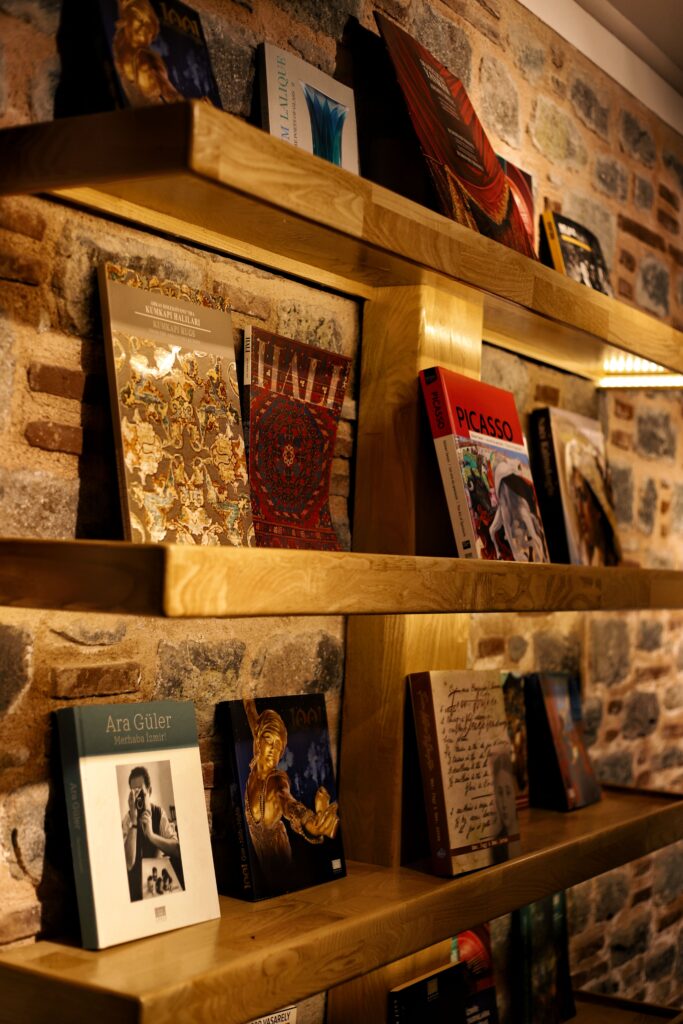
The internet has made it possible to explore centuries of art without stepping inside a museum or travelling across the world. A sketchbook from another era, an exhibition catalogue from a forgotten artist, a collection of historical photographs, or a painting held in a museum thousands of miles away can now be just a few clicks away.
For artists, these resources offer much more than beautiful images to look at. They can help with research, introduce new artistic movements, provide historical context, reveal how artists approached their subjects, and even inspire an entirely new body of work. For art lovers, they offer an opportunity to discover artists, artworks, and stories that might otherwise remain hidden.
While social media and image-sharing platforms are wonderful for discovering contemporary work, they do not always provide the historical information, documentation, and reliable references that artists need. This is where online art libraries become particularly valuable.
From digitised books and archival photographs to museum collections and rare art publications, here are five online libraries worth bookmarking. Whether you are an emerging artist looking for inspiration, an art student researching a particular movement, or simply someone who loves spending time with art, these resources can open up an entirely new world of discovery.
1. Getty Research Portal: A Treasure Trove Of Art History Books And Publications
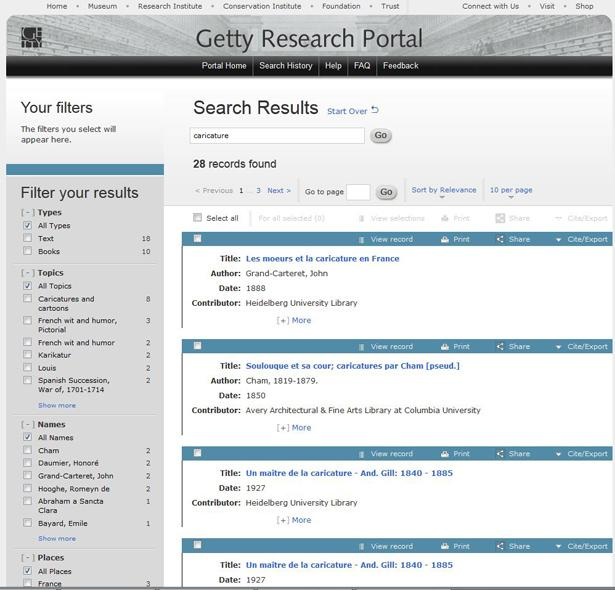
If you enjoy going beyond the artwork itself and understanding the history, ideas, and research behind it, the Getty Research Portal is an excellent place to begin.
Maintained by the Getty Research Institute, this free online platform brings together digitised art-historical publications from leading libraries and cultural institutions around the world. It provides access to complete digital copies of books, exhibition catalogues, auction catalogues, and other scholarly publications covering art, architecture, material culture, and related subjects.
What makes this resource particularly interesting is the opportunity to explore art through the written records that surround it. You can discover older publications, examine how particular artists and movements were discussed in their time, and find research that might be difficult to access through an ordinary internet search.
How artists can use it:
- Research artistic movements: Search for movements such as Surrealism, Impressionism, or Abstract Expressionism to find historical publications and scholarly perspectives.
- Explore exhibition catalogues: Understand how artworks were presented, discussed, and brought together in different exhibitions.
- Develop a stronger artistic vocabulary: Reading art criticism and historical writing can help you articulate your own ideas, influences, and creative decisions.
- Research overlooked artists: Older catalogues and publications can introduce you to artists who receive less attention in mainstream art conversations.
For artists preparing portfolios, writing artist statements, developing research-based projects, or simply wanting to understand the ideas behind the art they admire, this is a resource worth exploring.
2. Smithsonian Open Access: Explore Art Beyond The Museum Walls
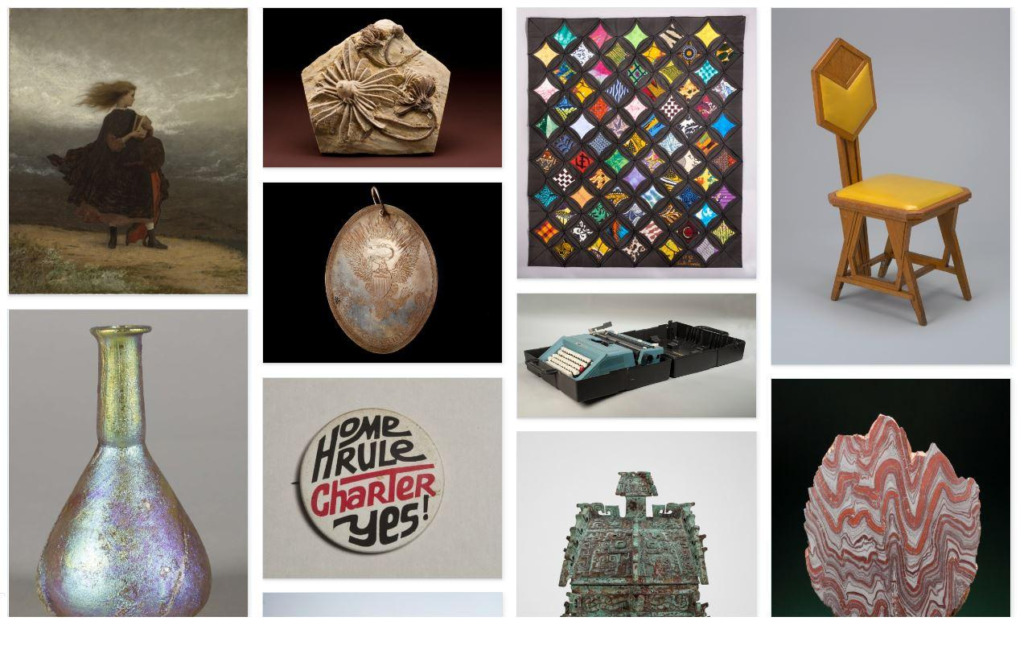
Sometimes, the best way to develop your artistic eye is to look at things you would not ordinarily consider studying. A historical photograph, an intricate textile pattern, a decorative object, or an illustration from another century can all offer unexpected creative possibilities.
Smithsonian Open Access makes millions of digital items available from across the Smithsonian’s museums, research centres, libraries, archives, and the National Zoo. Its collection includes more than 5.2 million 2D and 3D digital items, including images and data that visitors can download, share, and reuse.
Unlike a resource focused exclusively on paintings and sculpture, Smithsonian Open Access allows artists to explore a much broader visual world. You might find historical photographs, decorative arts, objects, scientific illustrations, cultural artefacts, and archival materials alongside traditional artworks.
One particularly useful feature is the ability to explore and download open-access material for creative projects. Many items are released under Creative Commons Zero (CC0), meaning they can be reused without requesting copyright permission, subject to applicable rights and other considerations.
How artists can use it:
- Find reference material: Explore historical objects, plants, animals, textiles, architecture, and photographs for drawing and painting studies.
- Experiment with mixed media: Use eligible open-access images as starting points for digital collages, illustration, and other creative experiments.
- Study visual details: Look closely at patterns, materials, shapes, and decorative elements from different periods and cultures.
- Discover unfamiliar subjects: Browse collections outside your usual artistic interests to find new themes and directions.
If you are an artist who enjoys collecting visual references, this library can become a particularly useful part of your research routine.
3. The Metropolitan Museum of Art Collection: Study Masterpieces Up Close
Most artists have experienced the feeling of standing in front of an artwork and wanting to examine every little detail. The brushwork, the colours, the composition, the way the artist has handled light, or the smallest details in the background can reveal so much about the creative process.
The Metropolitan Museum of Art’s online collection brings that experience closer to anyone with an internet connection.
The Met’s digital collection features hundreds of thousands of artworks and objects spanning thousands of years and cultures. Visitors can search by artist, title, date, medium, and other details, making it easier to find specific works or explore unfamiliar subjects.
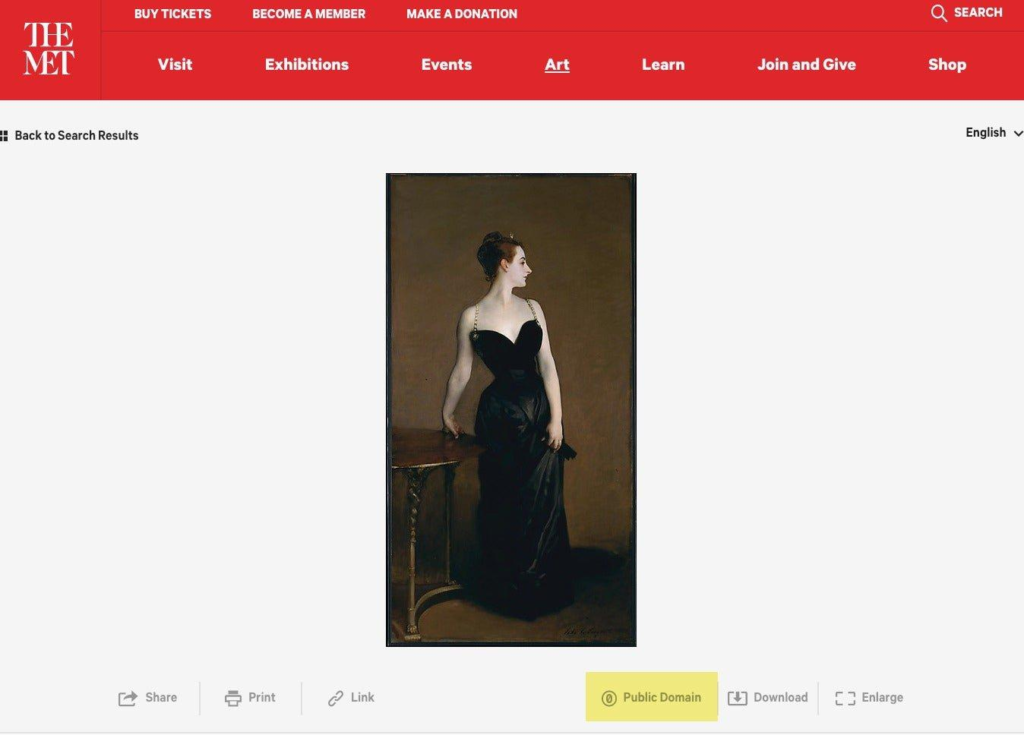
One of its most valuable features for artists is the museum’s Open Access initiative. More than 406,000 high-resolution images of public-domain artworks are available for free download, sharing, and reuse under the Creative Commons Zero (CC0) designation. Look for the Open Access icon on individual artwork pages to identify eligible images.
For artists, this is an opportunity to study artworks in much greater detail than a small image on social media would allow.
How artists can use it:
- Study composition: Examine how artists arrange figures, objects, landscapes, and negative space within a frame.
- Understand colour relationships: Look at how different artists use contrast, tonal variation, and colour harmony.
- Explore different mediums: Compare paintings, drawings, prints, sculptures, ceramics, and decorative objects.
- Create personal reference collections: Save eligible images for future studies, research, and creative inspiration.
Whether you work with traditional painting, illustration, photography, or digital art, studying historical masterpieces can help you make more thoughtful creative decisions.
4. Europeana: Discover Art, Culture, And Visual Stories From Across Europe
Art does not exist in isolation. It is shaped by the places people live, the cultures they belong to, the histories they experience, and the everyday objects that surround them.
Europeana is a wonderful resource for exploring these connections.
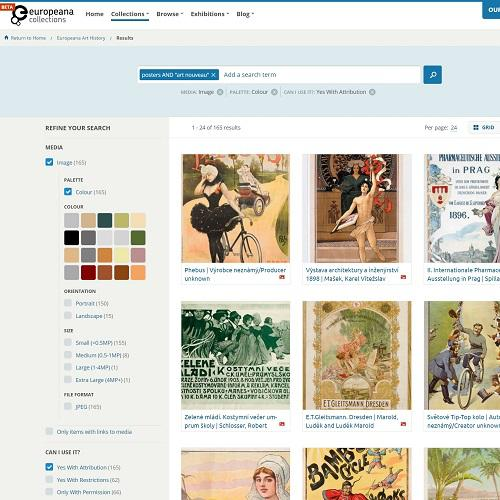
It brings together digital cultural heritage from thousands of European galleries, libraries, archives, and museums. Its collections include paintings, drawings, photographs, books, manuscripts, music, films, historical documents, and much more.
What makes Europeana particularly interesting is the way it allows you to explore art alongside wider cultural history. Rather than looking at individual artworks without context, you can discover the stories, traditions, and historical influences that helped shape them.
The website also has dedicated thematic collections, including art, fashion, architecture, archaeology, manuscripts, and audiovisual heritage. Its art section is especially useful for discovering different artists, movements, and visual traditions.
How artists can use it:
- Explore cultural influences: Research historical clothing, architecture, domestic objects, and decorative traditions.
- Study historical design: Discover vintage posters, illustrations, typography, and graphic styles that can inform contemporary work.
- Find inspiration for thematic projects: Explore subjects such as migration, women’s history, nature, and cultural heritage.
- Develop a broader visual perspective: Compare how different communities and periods have represented similar subjects.
For artists who enjoy storytelling through their work, Europeana is particularly valuable. It can help you find visual material that gives a creative idea more depth, history, and meaning.
5. New York Public Library Digital Collections: An Archive Of Photographs, Prints, And Forgotten Visual Stories
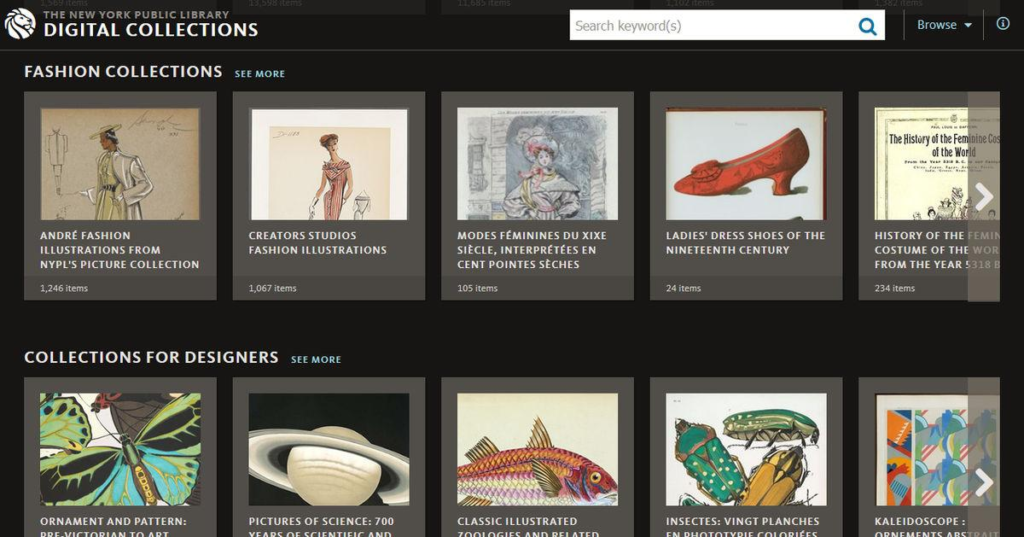
If you love vintage illustrations, historical photographs, old advertisements, maps, and printed ephemera, the New York Public Library’s Digital Collections deserve a place on your list.
The platform provides access to more than a million digitised items from the library’s extensive holdings. Its collection includes photographs, illustrations, historical maps, manuscripts, rare prints, posters, illustrated books, and other archival materials.
There is something particularly fascinating about exploring this archive. You can move from an old fashion illustration to a historical photograph, then discover a vintage advertisement or an illustrated book from an entirely different period. For artists, these materials are valuable because they offer a glimpse into how people once communicated, dressed, documented their surroundings, and represented the world visually.
The platform also makes it relatively easy to find material that can be reused. You can select the Search Only Public Domain filter to narrow your results to items with no known US copyright restrictions. The library also provides rights information on individual items, so it is important to check the specific record before using an image.
How artists can use it:
- Find vintage visual references: Explore historical advertisements, book illustrations, posters, and photographs.
- Study graphic design history: Examine typography, layouts, printing styles, and visual communication from earlier periods.
- Explore fashion and illustration: Find historical clothing references, fashion plates, and drawings.
- Create mood boards and collages: Use appropriately licensed archival material as inspiration or source material for creative projects.
This is a particularly lovely resource for illustrators, graphic designers, mixed-media artists, and anyone drawn to vintage aesthetics.
A Few Tips For Making The Most Of These Libraries
Having access to thousands of artworks and archival materials is wonderful, but knowing how to explore them can make the experience even more rewarding.
Here are a few ways to incorporate these resources into your creative practice:
1. Search with a purpose. Instead of browsing endlessly, begin with a subject, artist, movement, medium, or period you want to understand. Try different search terms to discover material you might otherwise miss.
2. Look beyond the finished artwork. Pay attention to sketches, preparatory drawings, exhibition catalogues, archival photographs, and historical documents. They can reveal details about artistic processes and the world surrounding an artwork.
3. Build your own visual reference library. Save useful discoveries in organised folders. You might create separate collections for colour palettes, composition, textures, historical references, or particular artistic movements.
4. Always check image permissions. An artwork being available to view or download does not automatically mean it can be reproduced or used commercially. Check the individual item’s rights statement and licence before incorporating it into your own work or publishing it.
5. Give yourself time to explore. Sometimes, an unexpected discovery can be more valuable than the reference you originally set out to find. Allow yourself to explore unfamiliar artists, periods, and visual traditions.
Let Your Next Creative Idea Begin With A Little Research
As artists, we are constantly learning from the world around us. Sometimes inspiration comes from a conversation, a place we visit, or an experience we have. Other times, it comes from discovering an artwork created hundreds of years ago or finding an old photograph that makes us look at an ordinary subject differently.
Online libraries make these discoveries more accessible than ever. They allow artists to learn from history, explore different cultures, study artistic techniques, and find references that can bring greater depth to their own creative practice. You do not need to be an art historian or an academic researcher to benefit from these resources. You simply need curiosity and a willingness to look a little closer.
So, the next time you are searching for inspiration, consider stepping away from your usual social media scroll and spending some time in one of these digital libraries. You might discover an artist you have never heard of, an artwork you cannot stop thinking about, or an idea that becomes the starting point for your next creative project.
