
How Linnéa Hällfors Blends Human Figures And Botanical Details In Her Paintings
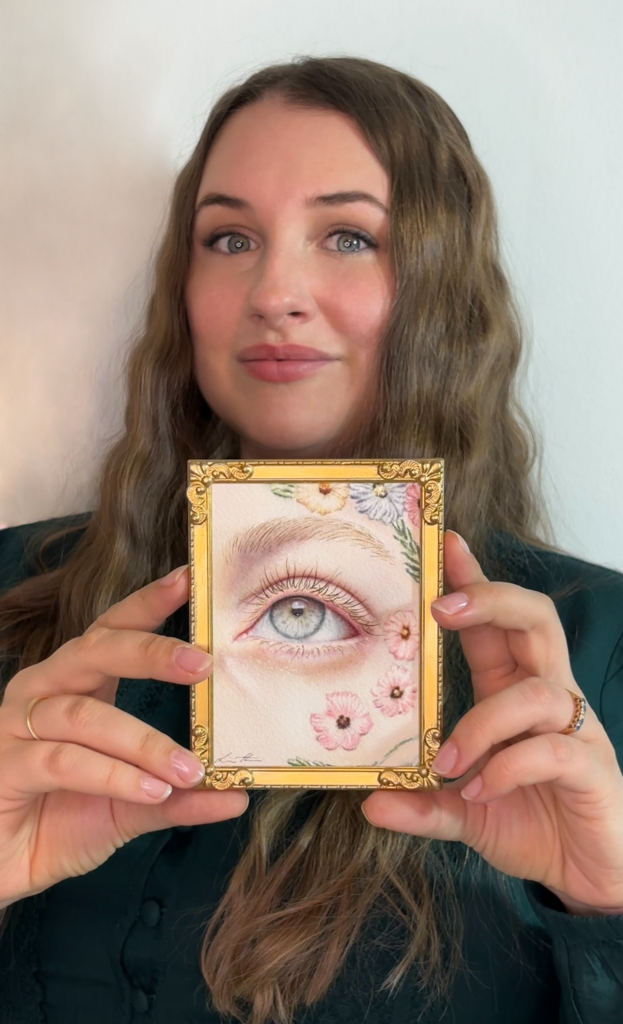
Some paintings stay with us long after we have looked away. Perhaps it is a familiar expression, an unexpected detail, or the feeling that a scene holds a story we cannot quite put into words. The longer we look, the more we begin to wonder what lies beneath the surface.
For Swedish artist Linnéa Hällfors, nature is closely connected to the stories we tell, the emotions we carry, and the ways we understand our place in the world. Drawing inspiration from Nordic landscapes, folklore, and the relationship between humans and nature, she creates paintings that bring these worlds together in thoughtful and sometimes unexpected ways.
Working primarily in oil, Hällfors explores the meeting point between the natural world and human experience. Her paintings invite us to look closely at the details, imagery, and connections within each scene, leaving room for curiosity and personal interpretation. Rather than treating nature as a backdrop, her current practice places it at the heart of the story.
Based in Stockholm, Sweden, Hällfors has followed a creative path shaped by her studies in art history and her earlier career in avant-garde and circus makeup. Having devoted herself fully to her art in 2021, she continues to develop a practice that reflects her interest in nature, folklore, and the connections between people and the world around them.
Who Is Linnéa Hällfors?
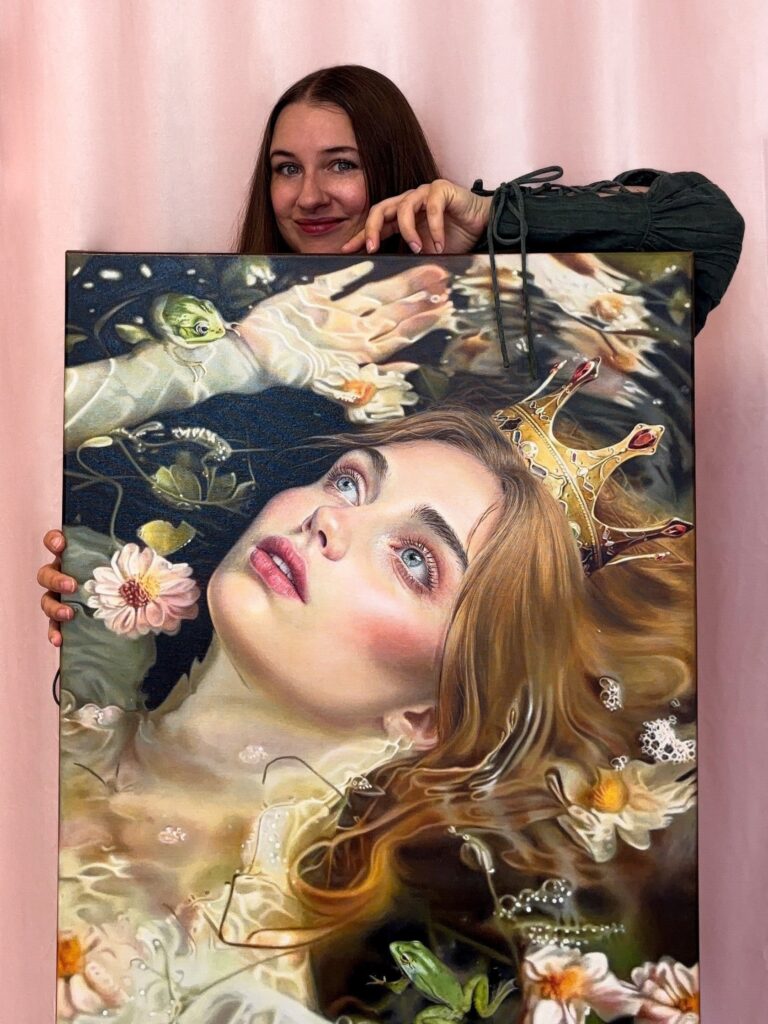
Born in 1988 in a small community in Skåne, Sweden, Linnéa Hällfors began painting at a young age. Her interest in art developed early, and by 2007, she had already held her first solo exhibition. Her path, however, was not limited to painting alone.
Hällfors pursued advanced studies in art history and went on to work as an avant-garde and circus makeup artist, a profession that offered its own relationship with visual expression, transformation, and the human face. She eventually returned to art as the central focus of her professional life, dedicating herself entirely to her creative practice in 2021. She is now based in Stockholm.
What makes her journey particularly interesting is the way it brings together different forms of visual experience. Her background in makeup involved working directly with the human face and its capacity for transformation, while her current paintings explore the human figure in relation to plants, landscapes, and the natural environment.
Although these experiences belong to different fields, they share an interest in how we see, represent, and understand the human form.
Hällfors’ creative journey also reminds us that creative careers do not always follow a straight line. Artists may spend time exploring different professions, learning new skills, or discovering what they want their work to become. Sometimes, these experiences become part of the perspective they eventually bring to their studios.
Painting The Human Connection With Nature
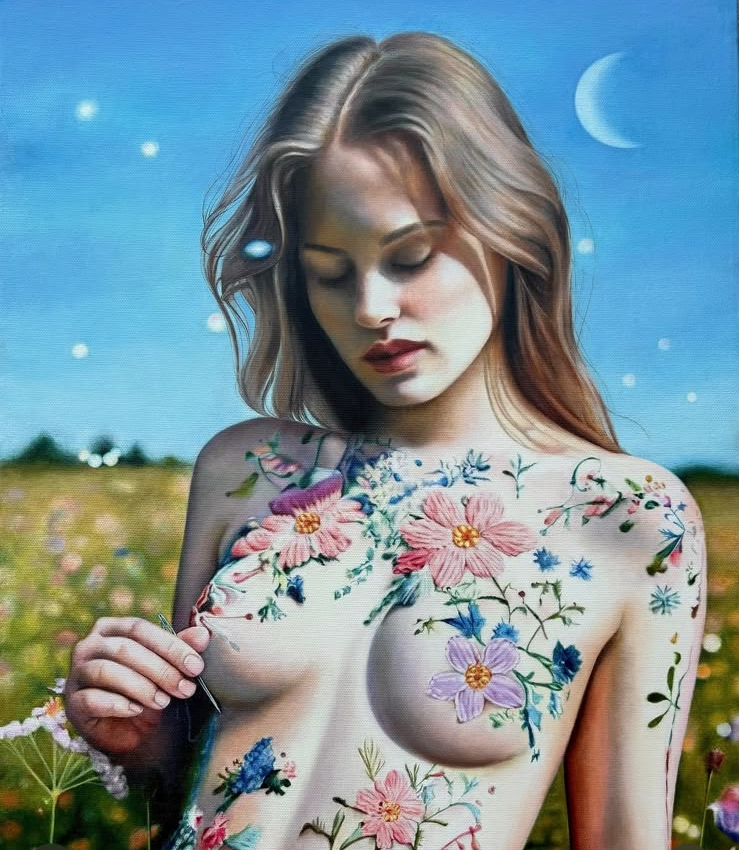
One of the defining qualities of Hällfors’s work is her interest in the relationship between humans and nature. Her paintings often place human figures alongside plants, allowing the natural world to become an active part of the image rather than a simple background.
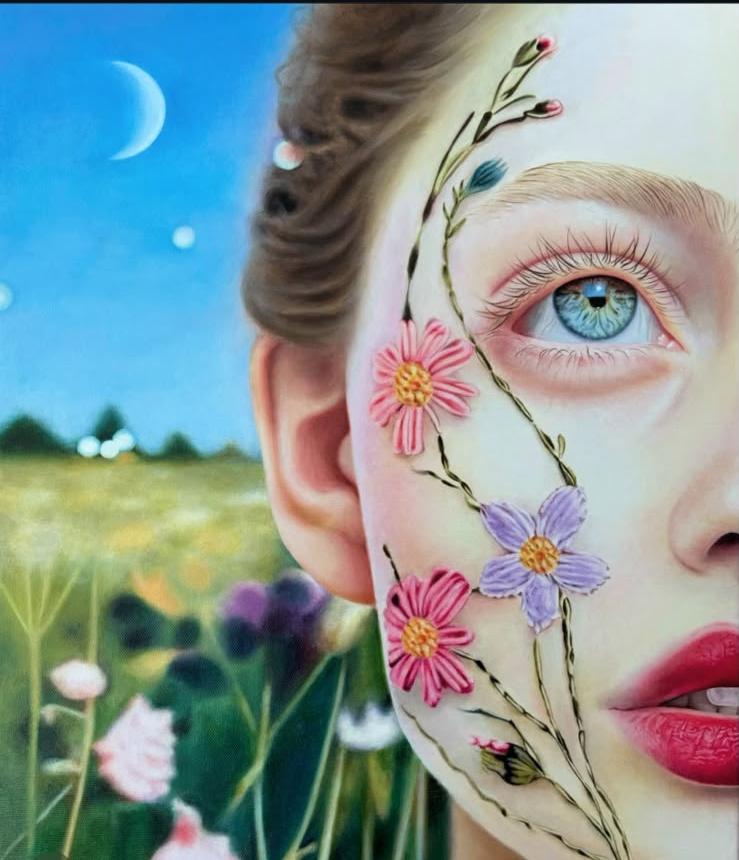
This relationship is particularly evident in her portraits and figurative paintings. Leaves, vines, flowers, and other natural elements appear close to the body, creating compositions in which the human figure seems connected to its surroundings.
There is a sense of intimacy in these works. Rather than presenting nature as something distant or separate from everyday life, Hällfors brings it into close contact with the people she paints. The resulting images invite us to consider how much of our emotional lives is connected to the environments we inhabit.
Her work also looks at the relationship between humanity and nature through ideas of balance, renewal, vulnerability, and rest. These are familiar experiences, but placing them within natural settings gives them another dimension.
A sleeping figure surrounded by plants, for example, can become more than a portrait of someone at rest. It can suggest the need to slow down, the passage of time, or the possibility of finding harmony with the world around us.
Rather than providing a single explanation for these connections, Hällfors allows her imagery to hold several meanings at once. Viewers can respond to the beauty of the composition while also discovering the questions beneath it.
The Intricate Details Of Linnéa Hällfors’s Oil Paintings
While Hällfors has explored watercolor in her earlier work, her practice now revolves primarily around oil painting. Her approach continues to centre on careful observation, intricate detail, and the interplay between human figures and natural forms, creating compositions that feel both intimate and contemplative.
Hällfors’s oil paintings often move beyond straightforward representations of the human figure, bringing together familiar forms and unexpected imagery to create scenes that feel both intimate and otherworldly. In In The Realm Of Dreams and The Gaze, she explores the quiet intensity of looking, the presence of the human figure, and the sense of mystery that can emerge from a single image.
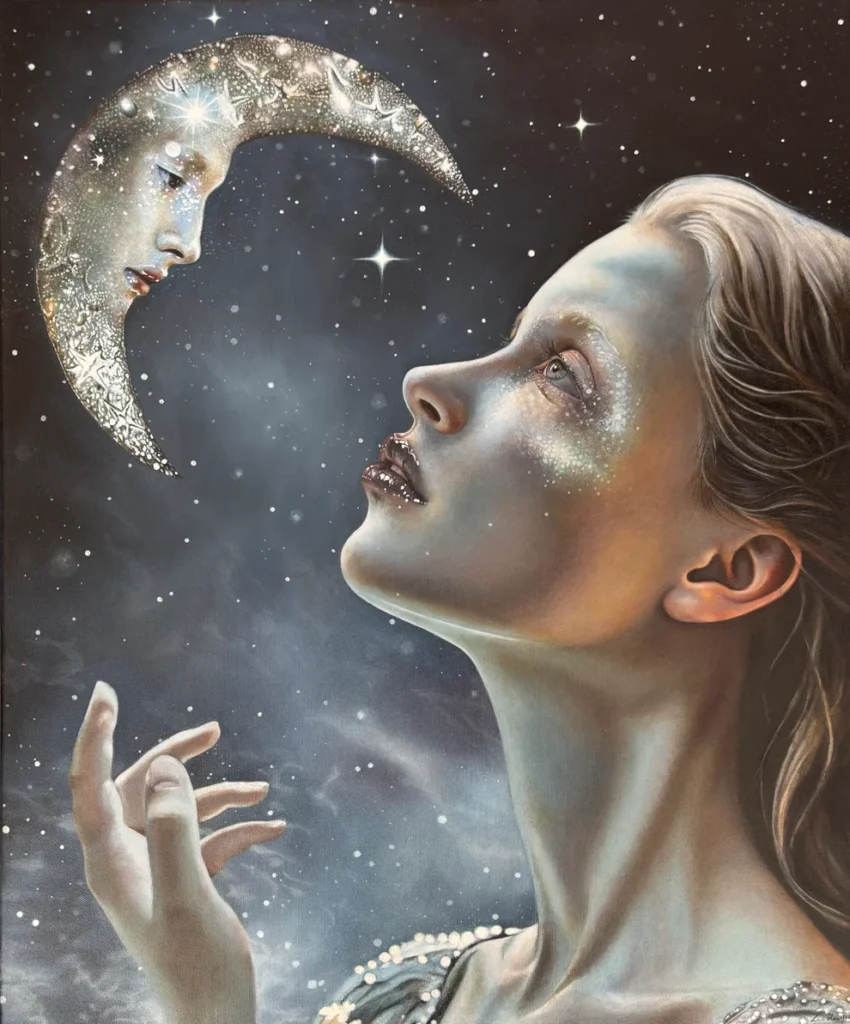
In In The Realm Of Dreams, a woman reaches towards a crescent moon shaped like a human face, their eyes meeting in an unusual encounter. The composition brings the familiar image of the moon into a more personal space, transforming it into something that appears almost capable of responding to the figure. The work balances recognizable forms with surreal imagery, inviting us to consider what might exist beyond the boundaries of ordinary experience.
The connection between the woman and the moon is particularly intriguing because it leaves room for interpretation. Is she reaching towards something distant, searching for a connection, or encountering a presence that belongs to the world of dreams? Rather than offering a definite answer, Hällfors allows the image to hold on to its mystery. The scene feels suspended between reality and imagination, where even the moon becomes something we can encounter rather than simply observe.
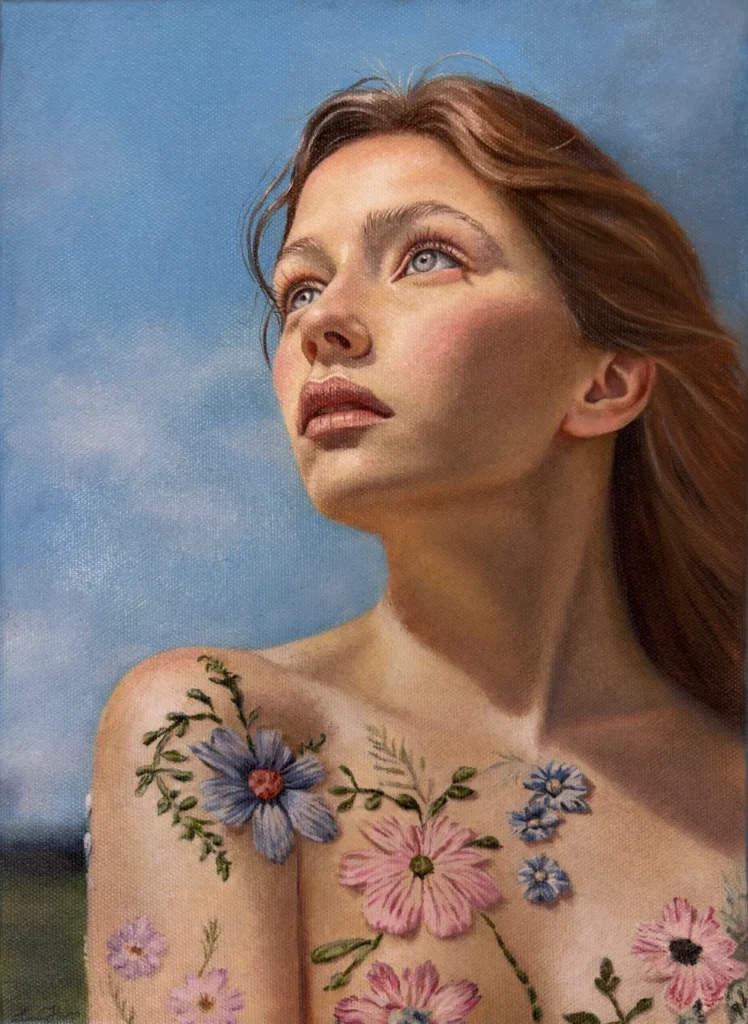
This sense of uncertainty also makes The Gaze an interesting work to consider alongside it. The title itself draws attention to the act of looking and the relationship that develops between an image and its viewer. Through this painting, Hällfors encourages us to think about what it means to observe and be observed, and how a gaze can communicate something that words cannot always express.
Together, these paintings reveal an approach to figurative art that goes beyond capturing physical appearances. Hällfors creates images that encourage us to linger, look more closely, and consider the emotions or possibilities that may lie beneath the surface. Her use of surreal elements does not remove the human figure from our experience. Instead, it gives familiar subjects a sense of wonder, allowing the ordinary and the imagined to exist side by side.
Beyond The Larger Canvas
While Hällfors’s larger paintings offer space for immersive compositions, her practice also includes miniature paintings made with meticulous attention to detail.
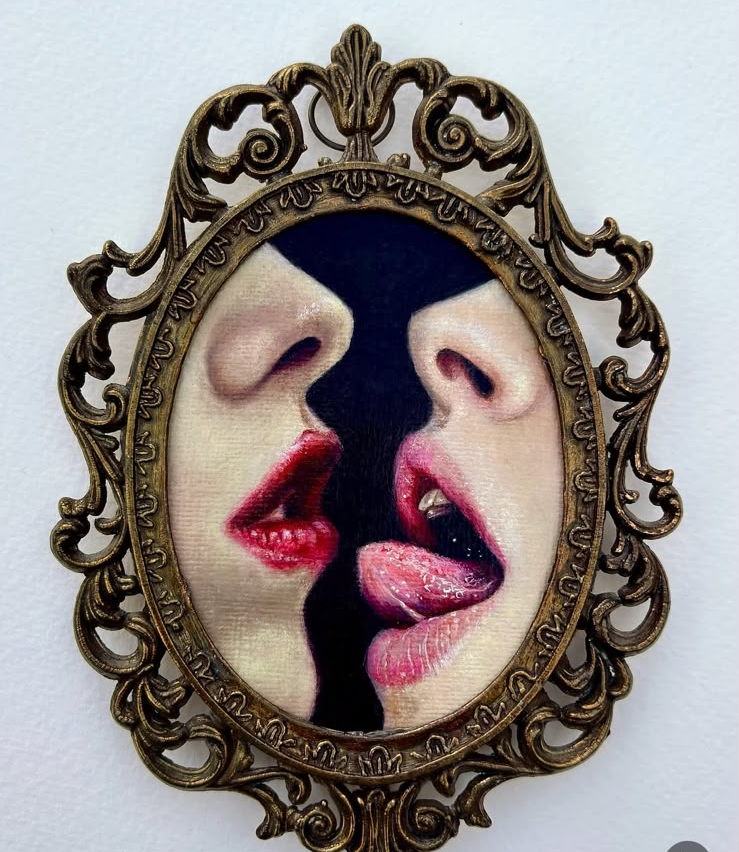
Working at a smaller scale creates a different kind of viewing experience. The viewer must come closer, spend time with the image, and notice details that might otherwise be overlooked. This intimacy suits an artistic practice concerned with quiet encounters between people and nature.
Across her portfolio, the scale of a painting does not determine the significance of its subject. Whether working on a larger figurative composition or a more intimate oil painting, Hällfors returns to the careful observation of forms and the connections they can suggest.
Her Creative Journey And Professional Practice
Hällfors’s experience across different creative fields forms an important part of her professional story. Her studies in art history and her work as an avant-garde and circus makeup artist preceded her decision to devote herself entirely to her art in 2021.
Art history offers ways of understanding how images, symbols, and representations develop across time. Makeup artistry, meanwhile, involves working with the face, the body, and visual transformation. It is interesting to consider these experiences alongside her current paintings, which pay close attention to human figures and use recognizable visual elements to explore more complex ideas.
Her work shows how an artistic practice can develop through different experiences rather than through one continuous, predictable path. The knowledge and skills gathered along the way can become part of an artist’s approach, even when the work itself changes considerably.
Hällfors currently presents her work through her website, LinneaArt, where visitors can explore her portfolio and webshop. The portfolio includes selected paintings, while the website’s accompanying texts provide further context for individual works.
Exhibitions, Recognition, And Opportunities To Learn
Hällfors held her first solo exhibition in 2007, marking an early milestone in her creative journey. Since then, her practice has continued to evolve, with her current work consisting primarily of oil paintings inspired by Nordic landscapes, folklore, and the relationship between humans and nature.
Her recent paintings offer a more representative view of the subjects and ideas shaping her work today. Through her exploration of the Nordic landscape and the stories, traditions, and connections that surround it, Hällfors continues to develop an artistic practice rooted in the relationship between people and their natural surroundings.
For readers interested in following her work, her recent paintings provide a meaningful introduction to her current artistic direction and the themes that continue to inspire her.
Finding A Place Between People And Nature
Linnéa Hällfors’s paintings invite us to look at the relationship between people and the natural world with a little more care. Through hyperrealistic watercolors, intimate portraits, and thoughtfully placed botanical details, she creates images that move beyond representation to explore rest, identity, balance, and belonging.
Her journey from painting at a young age to working in avant-garde and circus makeup, and eventually dedicating herself entirely to art, is also a reminder that creative practices can take time to find their shape. Different experiences can inform the work we make, while the questions that matter to us continue to develop.
What stays with us in Hällfors’s work is the quiet connection between the human figure and the environment around it. A vine crossing a sleeping face or a root held close to the heart becomes a way of thinking about our place in the world, and about the possibility of living in greater harmony with it.
Her paintings leave room for viewers to bring their own experiences to these images. We might see a reminder to rest, a reflection on the ways we understand gender, or simply a moment of stillness within the natural world. And perhaps that is what makes these works so inviting. They do not ask us to arrive with all the answers. They simply give us a reason to pause, look more closely, and consider the connections that are already there.
Discover more of her work on her Website and Instagram:
