
This artist spends hundreds of hours building animal portraits line by line │ Nayeli Lavanderos
At Women in Arts Network, Flora and Fauna often brings us artists who celebrate the beauty of the natural world. But every so often, we encounter work that asks us to look beyond nature itself and consider why certain animals, plants, and symbols continue appearing throughout human history.
Nayeli Lavanderos’ work invited us into that conversation. She is a selected artist for the exhibition, and her intricate animal portraits exist at the intersection of nature, symbolism, intuition, and personal transformation. At first glance, the drawings are remarkable for their precision and detail. But the longer you spend with them, the more they begin to feel like something beyond portraiture. They feel like encounters.
Born in Mexico and now based in Portugal, Nayeli’s practice draws from a rich combination of personal experience, animal advocacy, shamanic traditions, and the concept of the nahual the animal companion or spiritual mirror found within Mexican cosmology. These influences shape the foundation of her Power Animal portraits, where each creature becomes both a living being and a reflection of deeper human qualities.
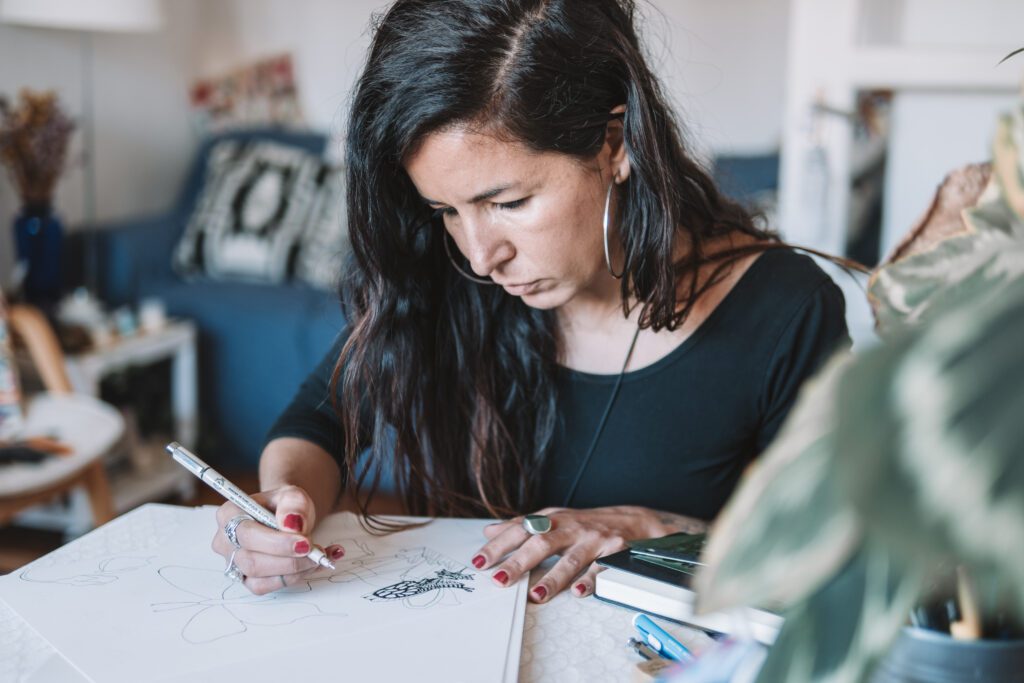
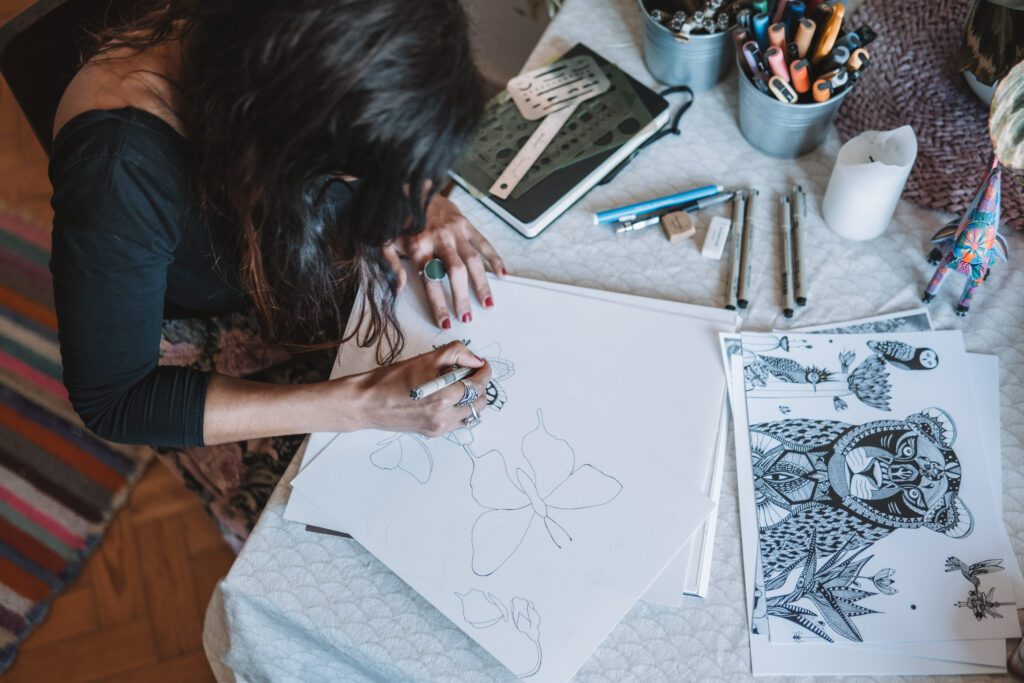
What makes the work particularly compelling is the balance between structure and intuition. Every drawing begins with careful observation and technical precision, yet much of the process unfolds through listening, trust, and repetition. Thousands of individual marks accumulate slowly, creating images that feel both controlled and deeply organic at the same time.
That tension gives the work its unique energy. Working primarily in black ink also plays an important role in her visual language. Without colour, every line carries weight. Every detail matters. The result is imagery that feels timeless, meditative, and deeply focused, inviting viewers into a slower and more attentive way of looking. And perhaps that slowness is part of what makes the work so powerful.
In a world increasingly disconnected from nature, Nayeli’s drawings remind us not only of the beauty of animals but also of the ways they continue to exist within our stories, symbols, memories, and sense of self.
Now let’s get to know Nayeli through our conversation about Power Animals, intuition, symbolism, Mexican traditions, detailed mark-making, and the profound relationship between humans and the natural world.
Q1. Could you share a bit about your background and how your journey led you toward creating these deeply symbolic animal portraits?
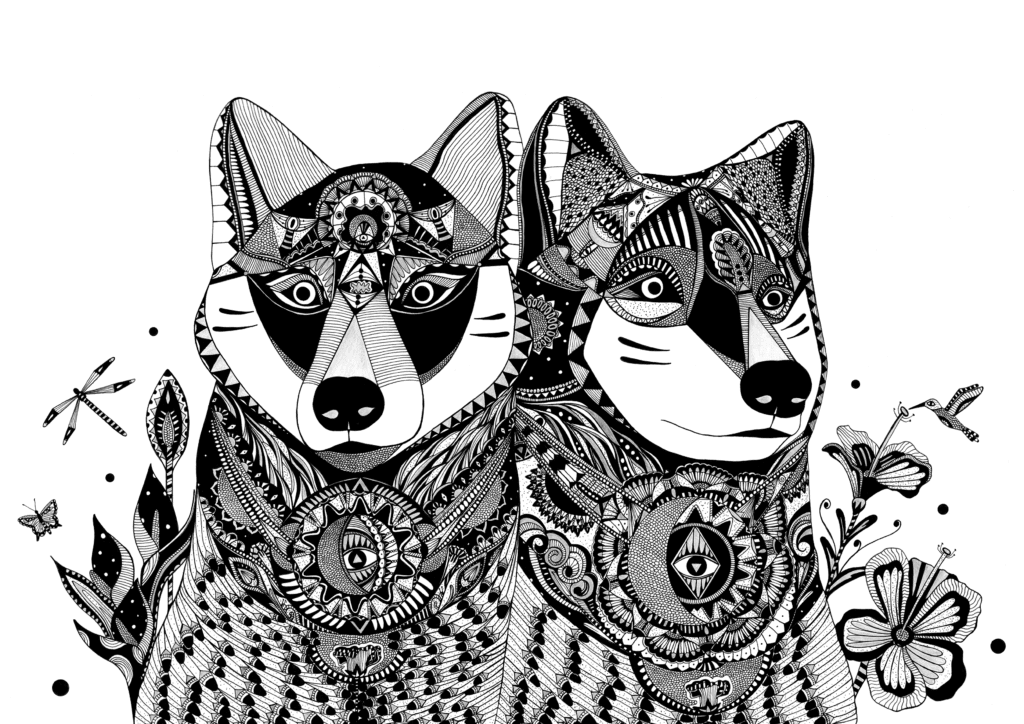
I was born in Mexico, where drawing and animals were part of my world from the beginning — something I was always drawn to, though I didn’t yet understand why. It wasn’t until I moved to New York that this particular way of working found me. I was going through a deep heartbreak, and in that period I discovered Clarissa Pinkola Estés’ Women Who Run With the Wolves. Something in that book cracked something open.
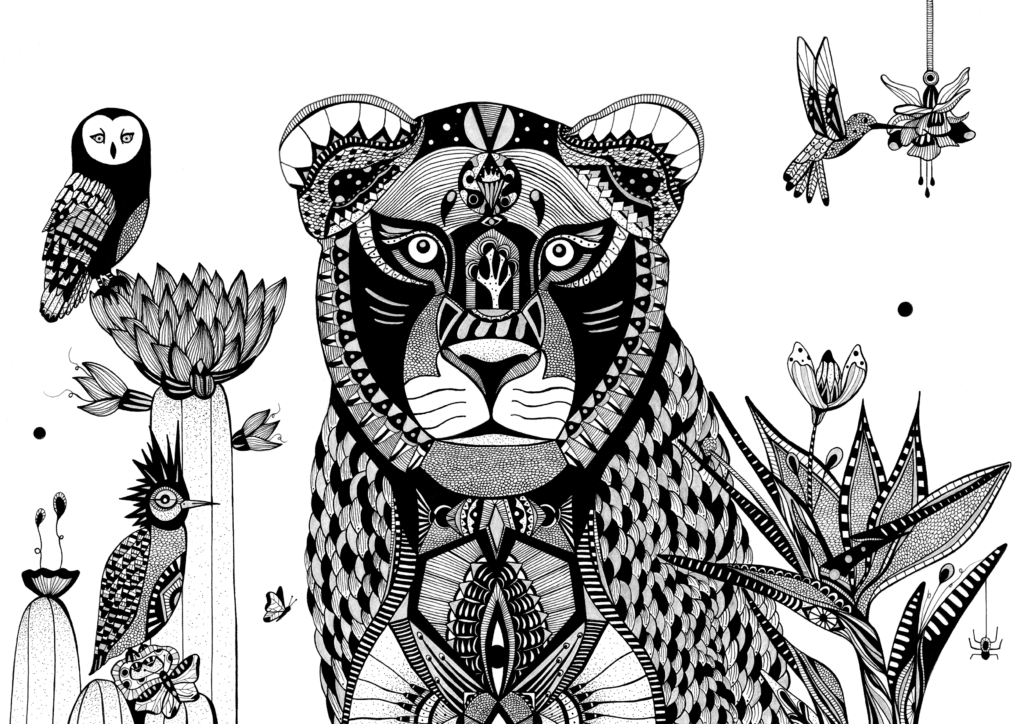
I started drawing animals almost instinctively — each stroke felt like both a way of healing and a way of moving through the grief. The animals became companions in that process. At the time I was also deeply committed to animal advocacy, and I felt called to give animals a voice through my art — to draw them with the attention and reverence they deserved. It wasn’t until I moved to Portugal and trained as a shamanic practitioner that I encountered the concept of Power Animals with real depth and understanding.
That training connected me to something I recognized — not as new, but as mine. In Mexican cosmology, this same idea exists as the nahual: the animal that walks beside you through life, a companion and inner mirror. I had grown up with this concept without having the full language for it. The training gave me that language, and my practice shifted completely. That’s how the Power Animal portraits were born — out of grief, advocacy, healing, and finally, a homecoming to my own cultural inheritance.
Q2. You reference shamanic animal totems in your practice how do these ideas shape the way you approach each piece?
I feel deeply connected to the animal world — and to the idea that animals carry meaning beyond what we can always rationally explain. In my practice, the animals arrive in different ways. Sometimes through a drum journey — a shamanic practice I facilitate for others, where a person meets their Power Animal in an inner landscape. Sometimes through everyday encounters, a moment where an animal simply appears and won’t leave my mind.
And sometimes a particular animal simply arrives with a kind of quiet insistence — present until I pick up the pen. There’s a quality of inevitability to it. Each Power Animal carries its own archetypal qualities — its own way of moving through the world, its own strengths and shadows.
When I sit down to draw, I connect to those qualities and let them guide the work. I don’t plan the piece in a conventional sense. I enter a kind of inner listening, and the drawing unfolds from there — one line at a time, slowly, intuitively. The result is that each piece holds something of the animal’s essence, not just its physical form. That’s what I’m reaching for — not a portrait of how an animal looks, but a portrait of what it carries.
Q3. Your linework is incredibly intricate and precise—what draws you to working with such detailed mark-making?
The detail is inseparable from the practice. To draw with this kind of precision, you have to be completely still — there’s no rushing it, no shortcuts. That stillness is something I actively seek. Each line requires presence, and that requirement is part of what draws me back to the work again and again. There’s also something deeply satisfying about filling space slowly — watching a surface come alive mark by mark, texture building from almost nothing. It’s meditative in the truest sense. I enter a flow state where time dissolves and only the line exists. That feeling is as important to me as the finished piece. In a world that moves very fast, this way of working feels like a quiet act of resistance.
Q4. When you begin a drawing, do you start with structure and composition, or do you allow the image to grow organically as you work?
There’s a structure to how I begin, and then a surrender. I start by searching for a reference — a pose that feels right for that particular animal, that carries the quality I’m reaching for. From there I draw the main outline and establish the key features: the eyes, the nose, the ears. Those anchors matter. They hold the animal’s presence. Once that foundation is in place, I let go of control. The rest of the piece arrives line by line, intuitively — filling space, following an inner logic I can’t always explain. The detail isn’t planned. It accumulates through a kind of listening. So the process is both structured and organic. A container, and then freedom within it.
Q5. Working primarily in black ink creates a very specific visual language what does limiting yourself to this medium allow you to express more clearly?
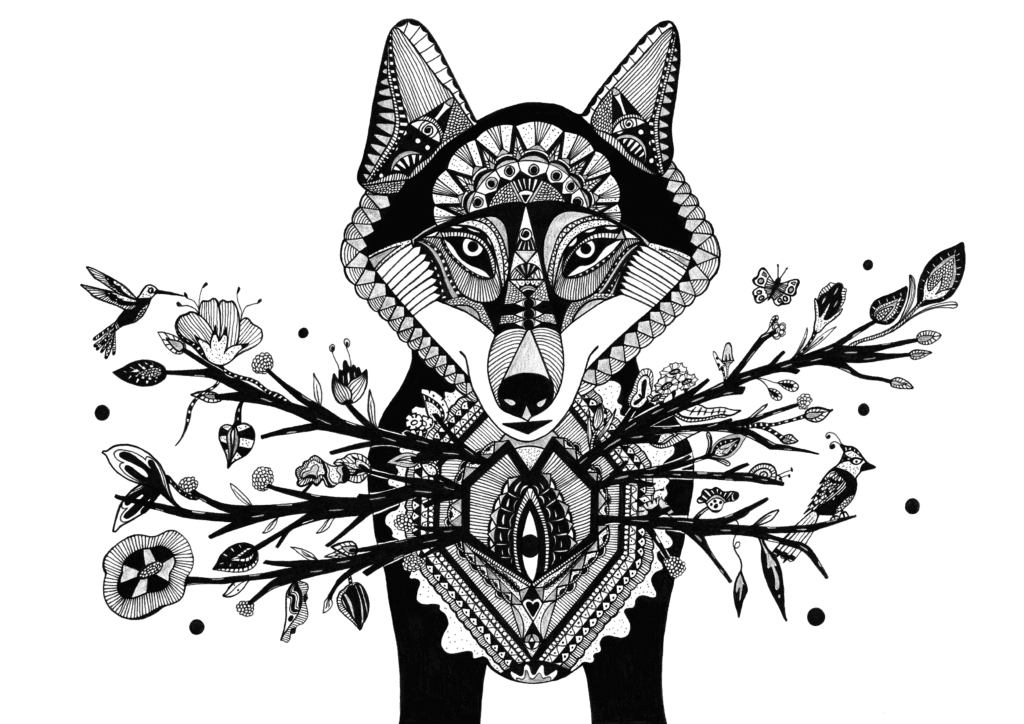
Black ink strips everything back to what’s essential. Without color to rely on, every mark has to carry more weight — the quality of the line, the density of detail, the space left empty. That constraint is clarifying. It asks me to find the spirit of the animal through simplicity rather than surface. There’s also something about black ink that feels timeless to me — ancient, almost. It connects to a long lineage of mark-making that transcends culture and era.
That feels right for work rooted in archetypal imagery. I’m now beginning to experiment with color, working at a larger scale, and that has opened something new. With color comes a different kind of listening — finding the particular palette that belongs to each animal, the shades that carry its specific quality and presence. It feels like a natural evolution rather than a departure. The foundation is still the line. The color is another layer of meaning.
Q6. When someone looks at your work, do you hope they connect with the animal itself, or with something deeper that the image represents?
Both, and I don’t think they’re separable. On one level, I want people to simply stop and look — to feel the beauty of the animal, the detail, the presence of a living creature rendered with care. We live increasingly disconnected from the natural world, and there’s something important about art that returns our attention to it. These animals are extraordinary. That alone feels worth drawing. But underneath that, something else is available if the viewer is open to it.
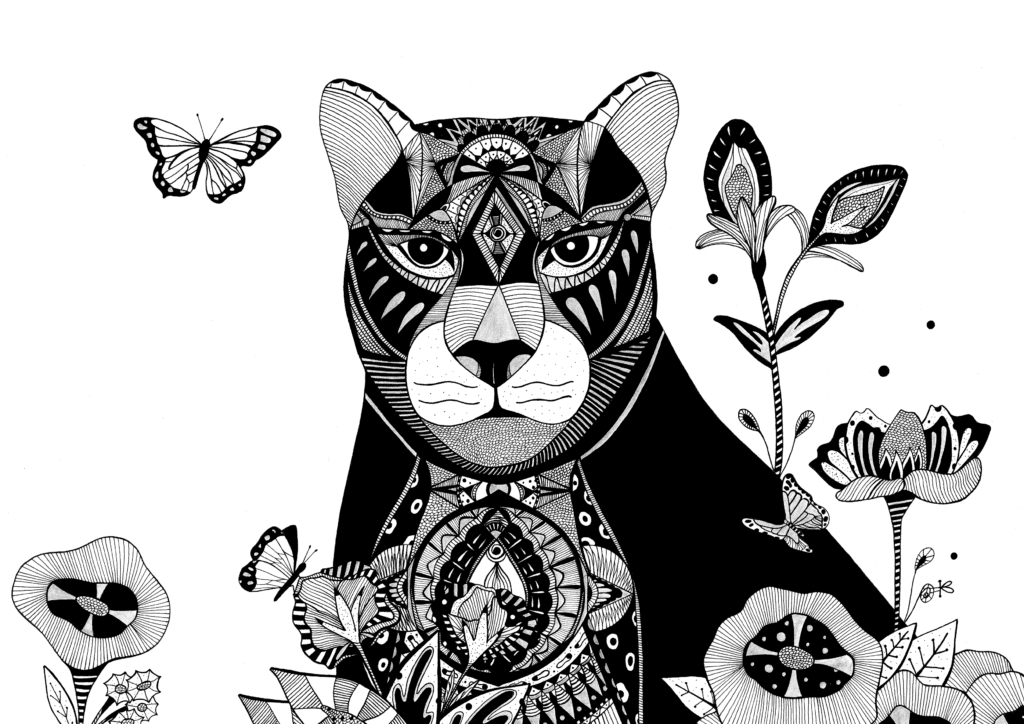
Power Animals function as mirrors — they reflect qualities that already exist within the person looking. Strength, tenderness, intuition, grief, protection. Our subconscious registers symbolism in ways our rational mind doesn’t always track. Someone might feel moved by a piece without fully understanding why, and that response is often the animal speaking to something already alive in them.
So I hope for both: a moment of genuine connection to the beauty and wildness of nature, and beneath that, a quieter recognition a sense of meeting something that was already theirs.
Q7. In a world that feels increasingly disconnected from nature, what role do you think animal-based art plays today?
I think it serves as a reminder, first of all. A reminder that the natural world is extraordinary — that these creatures exist, that they carry their own intelligence and presence, that we share this planet with them. In the middle of urban life and digital saturation, an image of an animal drawn with slow attention can interrupt that disconnection, even briefly. That interruption matters. There’s also the element of curiosity and awe — something that gets flattened when we’re moving too fast. Animal-based art, when it’s made with genuine reverence for the subject, can reawaken that. People remember what it feels like to be stopped by something wild and beautiful.
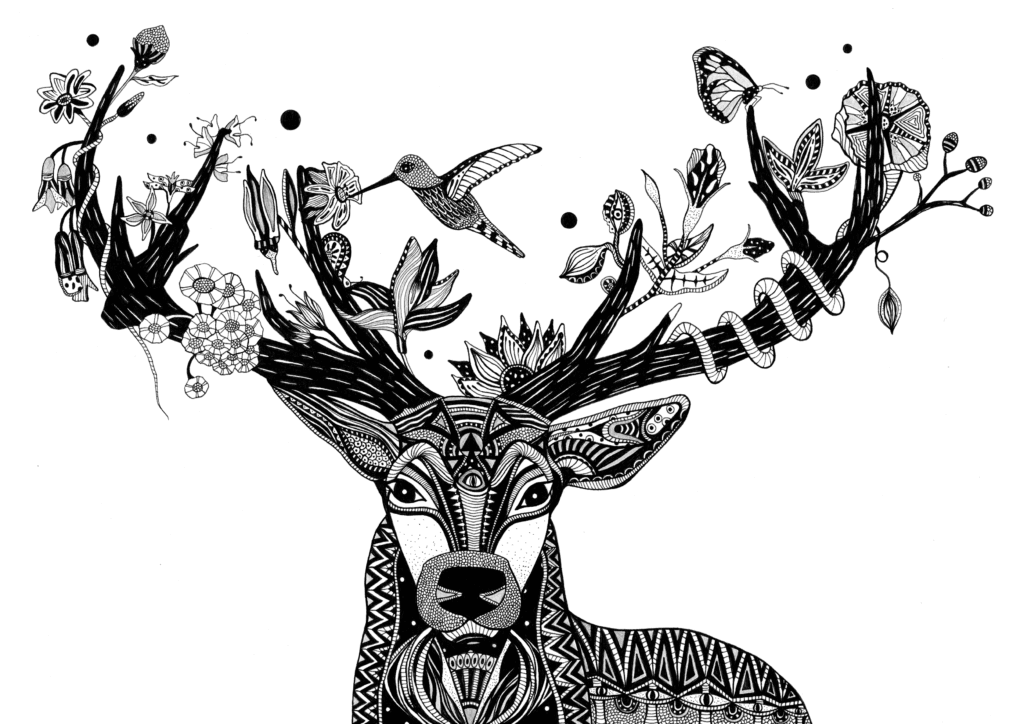
That recognition is powerful. And then there’s the deeper layer I work with — the idea that animals are mirrors. That when we look at them with real attention, we find something of ourselves looking back. The strength of the wolf, the grace of the deer, the quiet watchfulness of the owl. These qualities live in us too.
Art that holds that possibility open invites people back into a relationship with the natural world that is personal, not just aesthetic. I think that’s what animal-based art can do at its best — move someone from observer to participant. From looking at nature to recognizing themselves within it.
Q8. Your work feels very precise but also intuitive how do you balance control with allowing the work to unfold naturally?
I’ve come to see this balance as one of the deepest teachings of my practice. The control is real — the precision of the line, the careful observation, the slow accumulation of detail. That part requires discipline and presence. But within that structure, there’s a constant invitation to let go. To trust the next mark without knowing exactly where it leads.
Over time I’ve realized that sitting down to draw is also a practice of surrender — not just on the paper, but in myself. Every session asks me to connect to something deeper and release the need to control the outcome. It’s like a dance. A freeflow of allowing, of creating space, of trusting what wants to come through.
What I find remarkable is how directly this mirrors my life. The more I practice letting go within the work, the more I build genuine self-trust outside of it. The drawing teaches me something about living — that precision and surrender aren’t opposites. That you can hold structure lightly, and move freely within it. That’s the balance I’m always returning to. Not as something I’ve mastered, but as something the practice keeps teaching me.
Q9. Working with spiritual or symbolic imagery can be very personal does it ever feel risky to share that kind of work publicly?
Honestly, it doesn’t feel risky. I think it’s because the work isn’t asking anyone to believe what I believe. It’s not a declaration or a doctrine. It’s an invitation. The Power Animal concept, rooted in the nahual tradition I grew up with in Mexico, points toward something already inside the person looking — their own inner qualities, their own strength, their own way of moving through the world. I’m not telling anyone who they are. I’m offering a mirror.
That feels safe to share, because in the end I have no control over what someone sees in it — and I wouldn’t want to. The most moving moments in my practice are when someone looks at a piece and recognizes something they couldn’t quite name before. That recognition belongs entirely to them. I just made the space for it to surface.
There’s also something grounding about knowing this imagery has deep roots — in Mexican cosmology, in archetypal traditions across cultures, in the long human relationship with animals as symbols and companions. I’m not inventing something fragile. I’m drawing from something ancient. That gives me a kind of quiet confidence in sharing it. It’s not about looking outside ourselves for meaning. It’s about remembering what was already true.
Q10. What does success mean to you at this stage recognition, connection with your audience, or something more internal?
At this stage, all three — and I don’t think I could honestly separate them. The internal one feels most foundational right now. I’m in an early and precious period of fully devoting myself to my practice, and what matters most is making work that feels genuinely aligned — pieces that reflect where I actually am, not where I think I should be.
The move into color and larger formats has been part of that. These new pieces excite me in a way that tells me I’m moving in the right direction. That internal signal is something I’ve learned to trust. Connection with my audience matters deeply too. When someone looks at a piece and recognizes their own animal, their own strength, something they couldn’t name before — that exchange is why I make the work. It’s not about performance or reach. It’s about genuine resonance between the drawing and the person standing in front of it. And recognition — yes, that too, honestly.
Not for its own sake, but because visibility creates the conditions for the work to keep growing. Exhibitions, collectors, platforms like this one — they allow the practice to sustain itself and reach people it wouldn’t otherwise reach. What I’m learning is that these three things feed each other. The more internally aligned the work becomes, the more honestly it connects. And the more it connects, the more it can be seen.
Q11. What advice would you give to artists who feel drawn to nature, symbolism, or spiritual themes but aren’t sure how to begin exploring them in their work?
Start by building a relationship with your own intuition — and create the conditions that allow you to hear it. For me, that meant paying attention to what I was genuinely drawn to, not what I thought I should be making. The animals arrived because I was in a moment of real vulnerability, reading a book that cracked something open, drawing without a plan or an audience in mind. That’s often how symbolic work begins — not through research or intention, but through honest need.
I’d also say: surround yourself with environments that help you feel grounded and connected. Cities began to overwhelm my senses the noise, the pace, the constant stimulation. Eventually I moved to the coast, to nature, to a slower rhythm. That shift changed everything about how I work. I’m not suggesting everyone needs to move but I do think the conditions you create around your practice matter enormously.
Where do you feel most like yourself? Start there. And don’t rush to make the symbolic meaning explicit. Let the imagery arrive first. Trust that if something keeps returning to you — an animal, a pattern, a shape there’s a reason. Your subconscious is already working. Your job is to make space for it, pick up the pen, and follow what insists on being drawn. The meaning becomes clearer through the making, not before it.
As our conversation with Nayeli came to a close, we found ourselves thinking about how differently her work approaches animals compared to much of what we see within contemporary nature-inspired art. Many artists depict animals as subjects. Others use them as symbols. Nayeli’s work seems to exist somewhere between those two spaces.
The animals remain unmistakably themselves wild, present, and carefully observed yet they also carry something deeper. They become reflections of intuition, memory, resilience, vulnerability, protection, and the parts of us that are often difficult to describe in words.
That duality gives the work its depth. There is also something increasingly meaningful about the pace of her practice. Every drawing is built through thousands of deliberate marks, requiring patience, focus, and complete presence. In a culture driven by speed, instant imagery, and constant distraction, that commitment to slowness feels almost radical. The work asks viewers to slow down too.
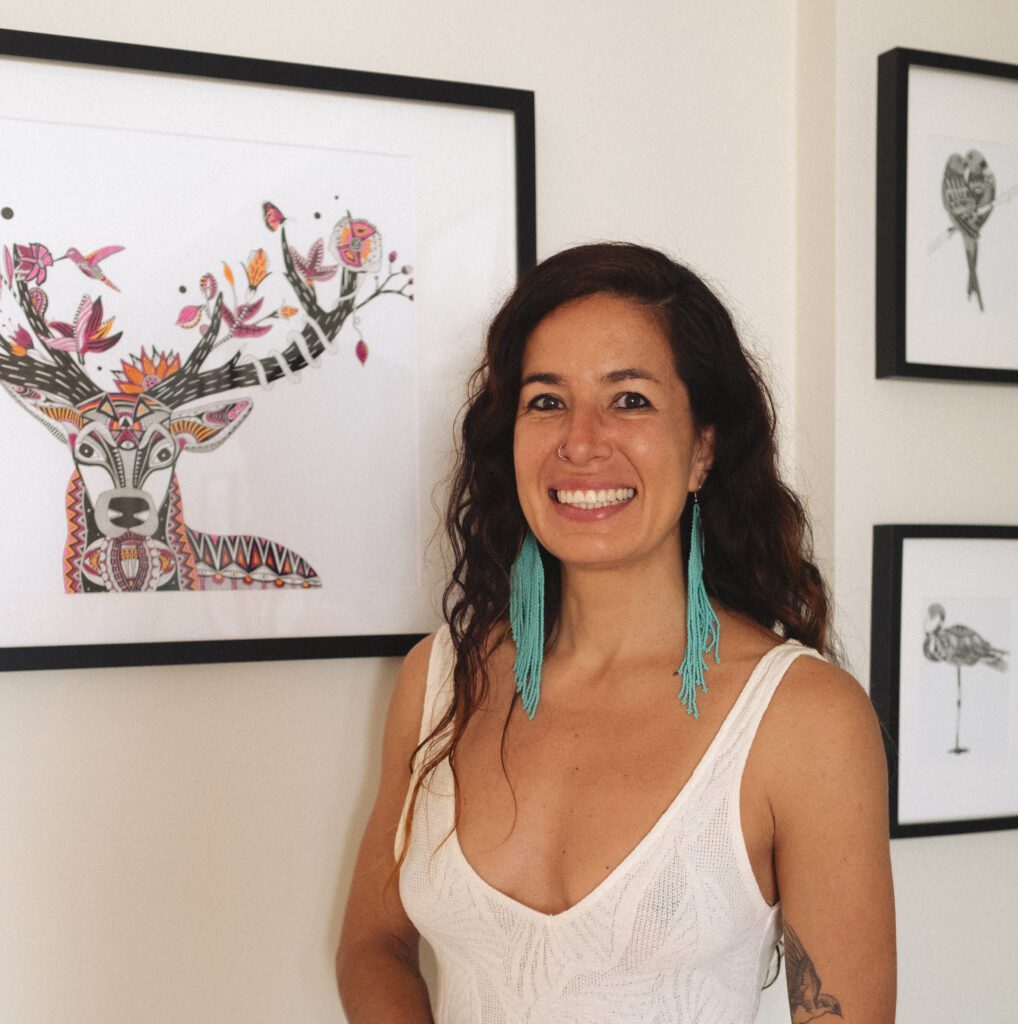
For collectors, these pieces offer something that extends far beyond technical skill or visual beauty. The drawings create a personal relationship with the viewer. People are often drawn toward a particular animal without immediately understanding why, only to discover their own memories, emotions, or qualities reflected back through it over time. That experience makes the work feel deeply individual.
What also sets Nayeli apart is the way she brings together personal history, cultural inheritance, spirituality, and contemporary drawing practice without allowing any one element to dominate the others. The work remains open. Viewers are free to engage with it through symbolism, nature, storytelling, emotion, or simply admiration for the extraordinary detail and craftsmanship.
And perhaps that openness is what makes the work resonate with so many different people. Rather than telling viewers what to believe, the drawings create space for reflection, curiosity, and recognition.
To follow Nayeli’s journey and see more of her work, find her through the links below.
