
This artist turns sewing scraps into tropical collages┃ Jillian Cheong
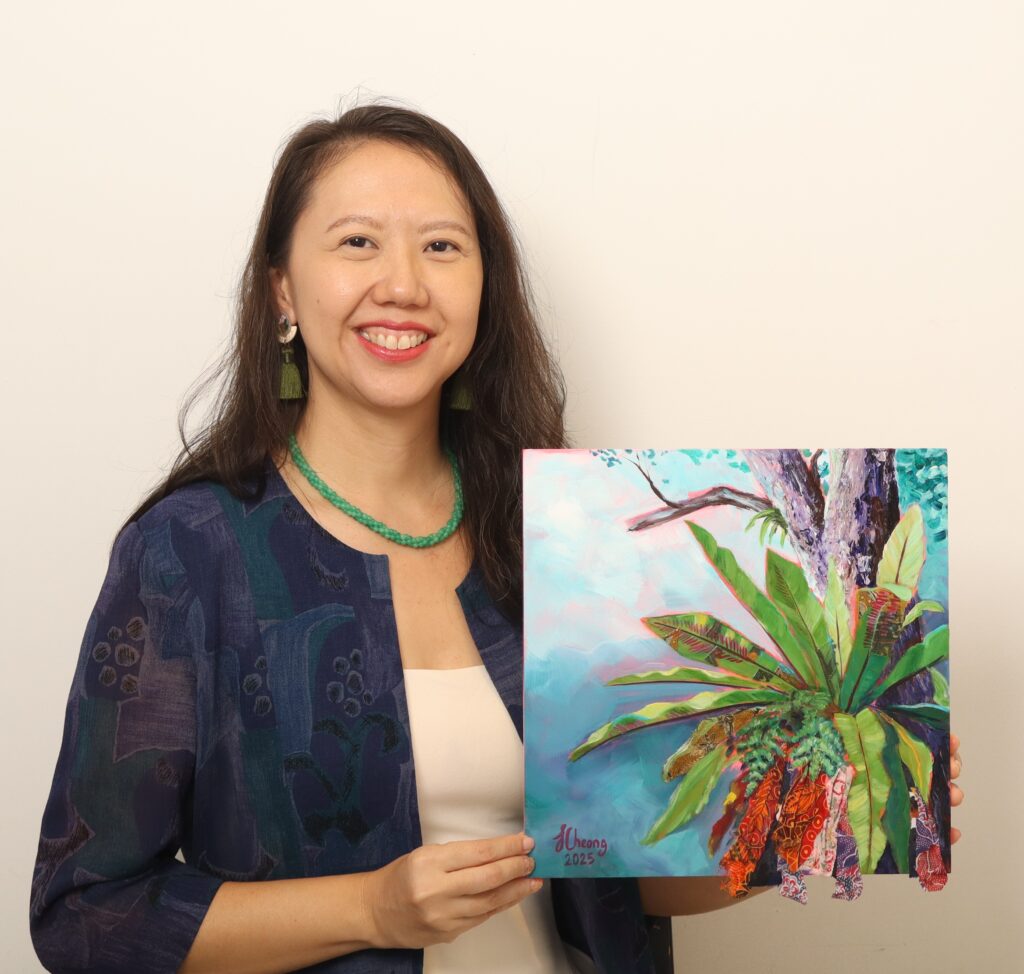
At Women in Arts Network, Flora and Fauna is filled with artists who celebrate nature in different ways. Jillian Cheong’s work begins with a simple but powerful belief: that wonder isn’t something we have to search for. It’s already around us we simply have to slow down long enough to notice it.
Jillian is one of the selected artists for Flora and Fauna, and her practice is rooted in the remarkable biodiversity of Singapore. Birds perched on neighbourhood trees, tropical plants growing along everyday streets, colourful insects hidden among the leaves these are the moments that repeatedly find their way into her work.
Rather than searching for dramatic landscapes or rare wildlife, Jillian celebrates the beauty that quietly exists in ordinary places, inviting viewers to rediscover what familiarity often causes us to overlook.
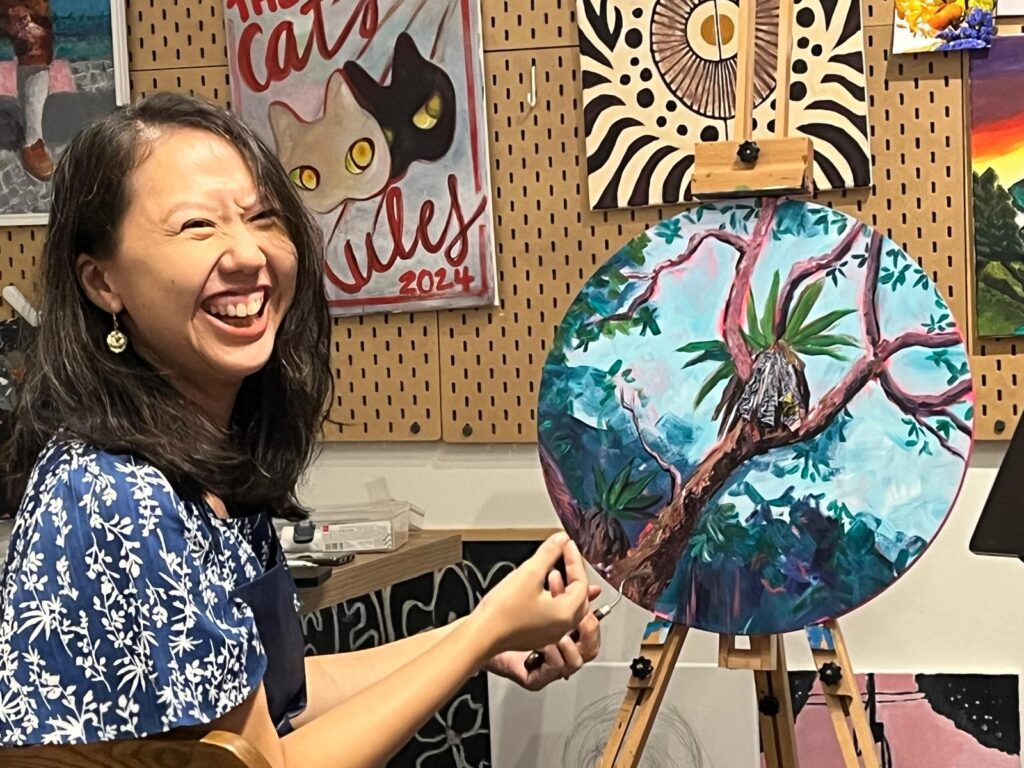
Her paintings are instantly recognisable for their vibrant colour, intricate patterns, and joyful energy. Rich layers of foliage, luminous birds, delicate insects, and bold botanical forms come together in compositions that feel alive with movement and curiosity. Every painting encourages the eye to wander, revealing new details with each glance and rewarding those who choose to spend time looking.
In recent years, Jillian has expanded that visual language through textile collage. Incorporating batik fabrics and sewing scraps left behind by her late grandmother, she weaves memory, family history, and cultural heritage directly into her paintings.
The fabrics become more than decorative elements they carry personal stories while adding texture, rhythm, and another layer of meaning to landscapes already filled with life.
Before becoming a full-time artist, Jillian spent years teaching biology, and that background still quietly informs her practice. Her understanding of plants and wildlife gives her work an authenticity, while her artistic approach transforms scientific observation into something emotional, playful, and deeply human. Rather than teaching people about nature through facts, she encourages them to experience it through wonder.
Now let’s get to know Jillian through our conversation about Singapore’s wildlife, colour, biodiversity, textile collage, family heritage, and finding extraordinary beauty in the everyday
Q1. Can you share a little about yourself and what led you from teaching biology into becoming a full-time artist?
I’ve always loved art, but it was something that I never thought of pursing because I believed that you can’t make a living through art. I think what gave me the push to take the plunge was the desire to be present for my three children. As a biology teacher I found that I was bringing work home all the time, working nights and on weekends. There was no work life balance at all. Being an artist gives me flexibility in my schedule. I paint when the kids are at school, and I parent when they are home.
Q2. Singapore’s wildlife appears throughout your work what keeps inspiring you about the nature that surrounds you every day?
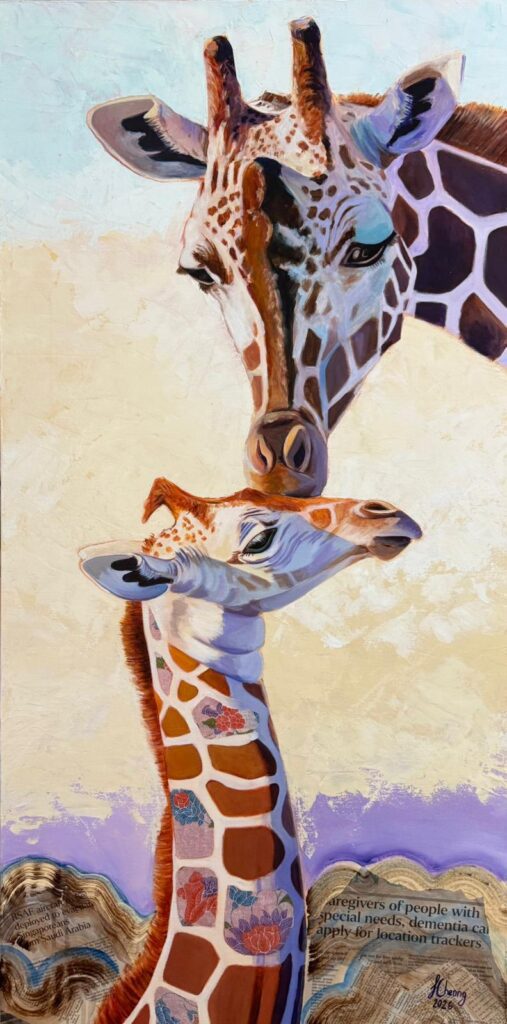
I admire the rich variety of colours and patterns in the plants and birds around me. When you spend time looking there is always something that sparks wonder and joy. I especially love to watch animals, their antics make me smile.
Q3. Color is central to your work how do you approach it when bringing birds, insects, and tropical plants to life?
I love colour. More is better where I am concerned. When I notice subtle shifts in colour I paint to emphasize what I see. I want to share my colourful world with others.
Q4. Your work has a strong sense of curiosity and discovery do you see it as storytelling, education, or something else entirely?
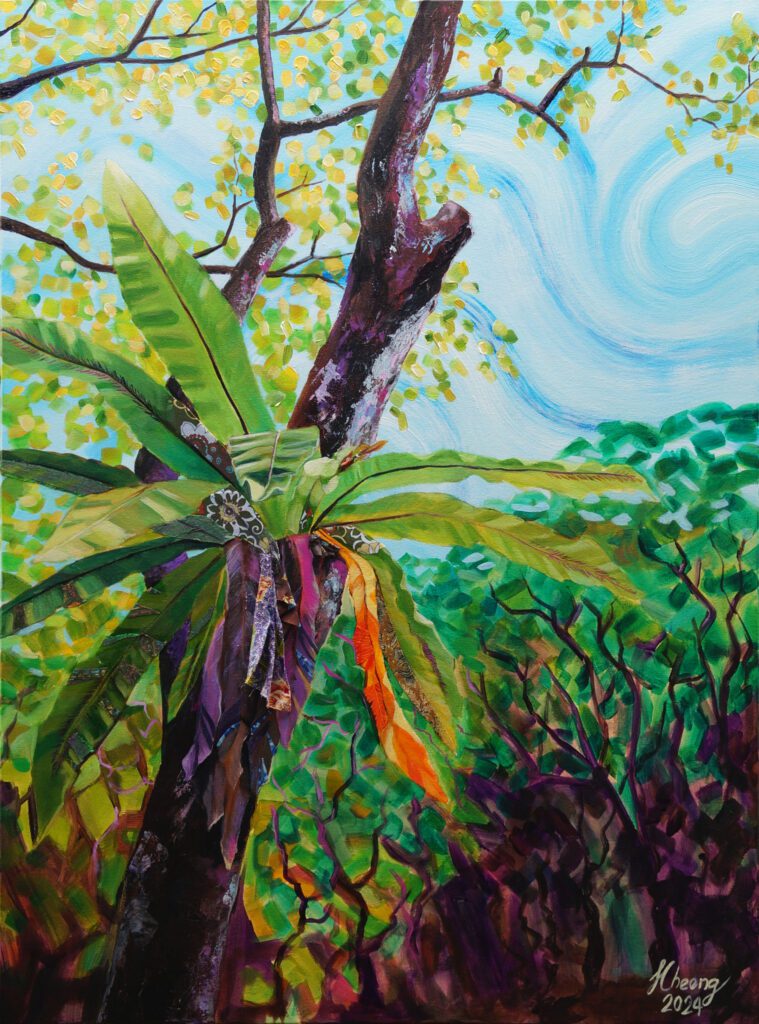
I think the natural biodiversity in Singapore is beautiful and astounding but somehow often overlooked by people in my city nation. It only exists in small pockets in our dense urban country. I paint as a way of asking people to slow down and notice what is around them. To see and appreciate the beauty in the mundane.
Q5.Your recent fabric collages mark a new direction what drew you to working with textiles and stitched materials?
I found some old sewing scraps left behind by my late grandmother. These carry significant memories and meaning to me. Some of the fabric she left me was batik, a traditional cloth used to make clothes in South East Asia. I decided to add pieces of these fabrics to my paintings to imbue the artworks, to give them that message of heritage, memory and place. I also like how the prints in the fabric add pattern and abstraction to the work.
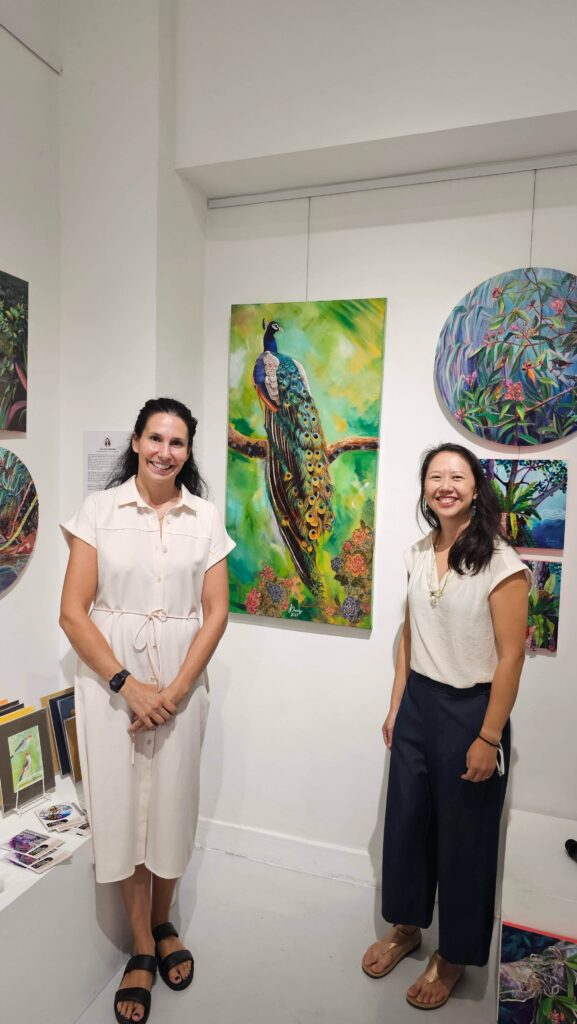
Q6. Many of your works celebrate small and easily overlooked parts of nature. What do you think people miss when they stop paying attention to the natural world around them?
I think they miss out on the peace and joy that comes with slowing down and being present in the moment.
Q7. How has working with textiles changed the way you think about composition and surface?
I now think about the 3D surface of the painting and think about where I might add visual interest by folding, pleating, or bending the fabric. I plan where I should place the fabric so that I can draw the viewer into the artwork and reward the viewer with little details in unexpected places.
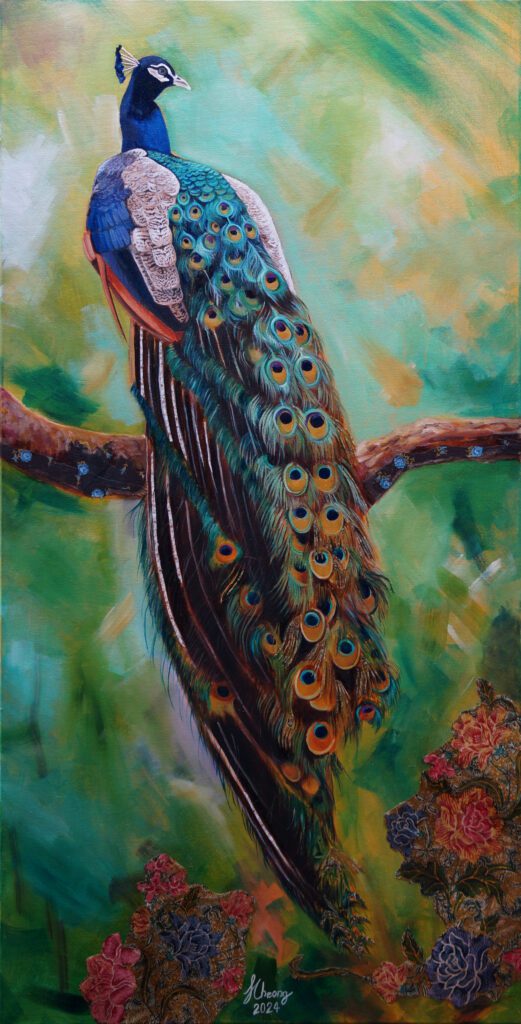
Q8. Do you think handmade art has become more meaningful in a fast-paced, digital world?
I think that there is value in making those slow careful details. The quiet moments I spend painting are like therapy and help me practice being present in the now. And I think when a viewer sees these details it also helps them to slow down too.
Q9. Has your definition of success changed since transitioning from science and education into a professional art career?
I think that the old me measured success by how much I could do and accomplish. When I transitioned to art, I tried to apply these same measures to my new career, thinking very much in terms of how many paintings, how many exhibitions, gallery representation etc. But almost immediately after I quit teaching, I came down with long covid and I found that I lost my ability to “do” things. I had brain fog and was exhausted all the time.
It made me feel completed depressed. It took me some time to realize that I had pegged my self worth to my ability to “do” things. But we are human BEINGS not human DOINGS and our value is intrinsic to who we are and not what we do. I started to value BEING more than DOING. BEING present, celebrating the moment. I see my art as an extension of that. I use art to capture the beauty in the mundane. Success is if I am able to share those moments of BEING with others, to help them see differently.
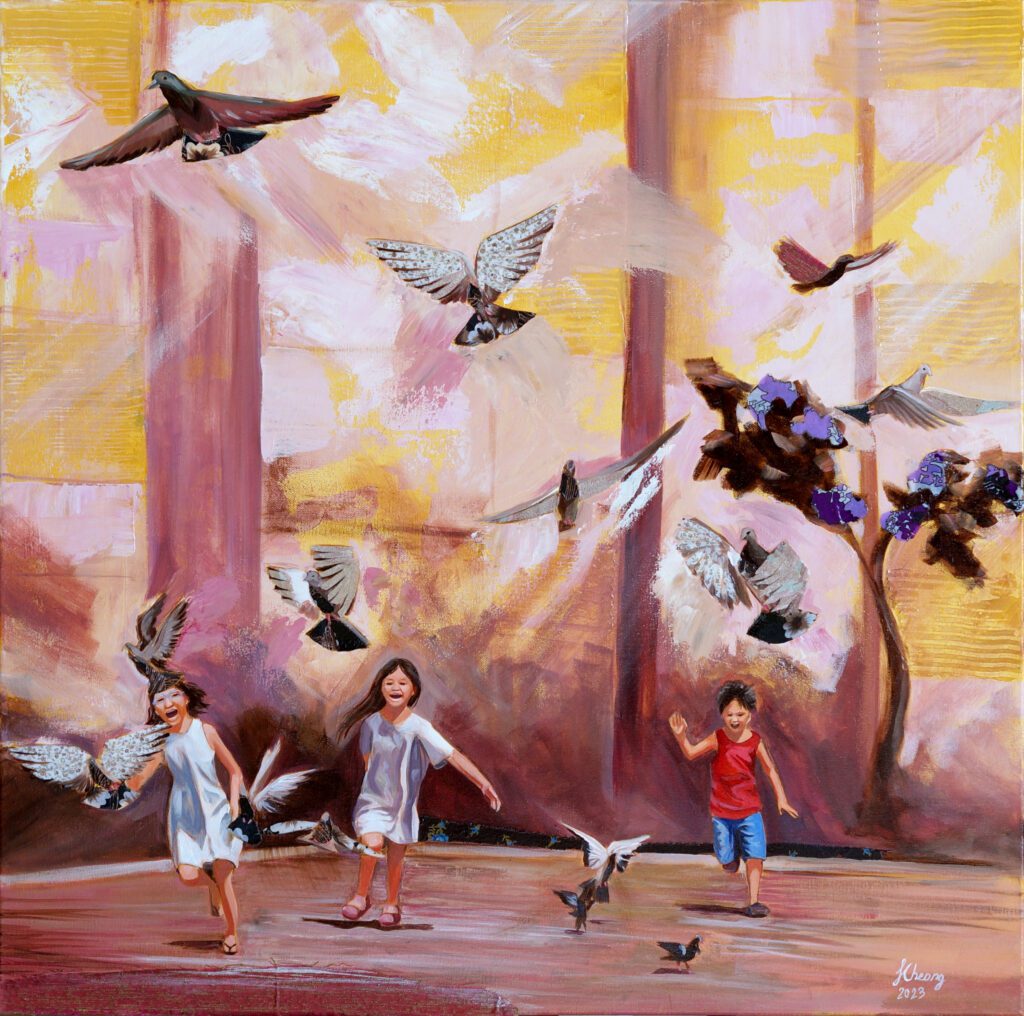
Q10. What has been the biggest challenge in building creative career after coming to it from a completely different profession?
Not knowing where to start and how do even begin. I didn’t have the education, didn’t know the official lingo, didn’t have any contacts with galleries, the list of what I didn’t know was endless.
Q11. What advice would you give to people who feel creatively called toward a new path but are hesitant to leave behind an established career?
Start somewhere, just start. If you wait to know and feel prepared you will never begin. Start creating and keep going. The more you do it the better you become. And share and keep on sharing what you are doing with others, that is how you build momentum.
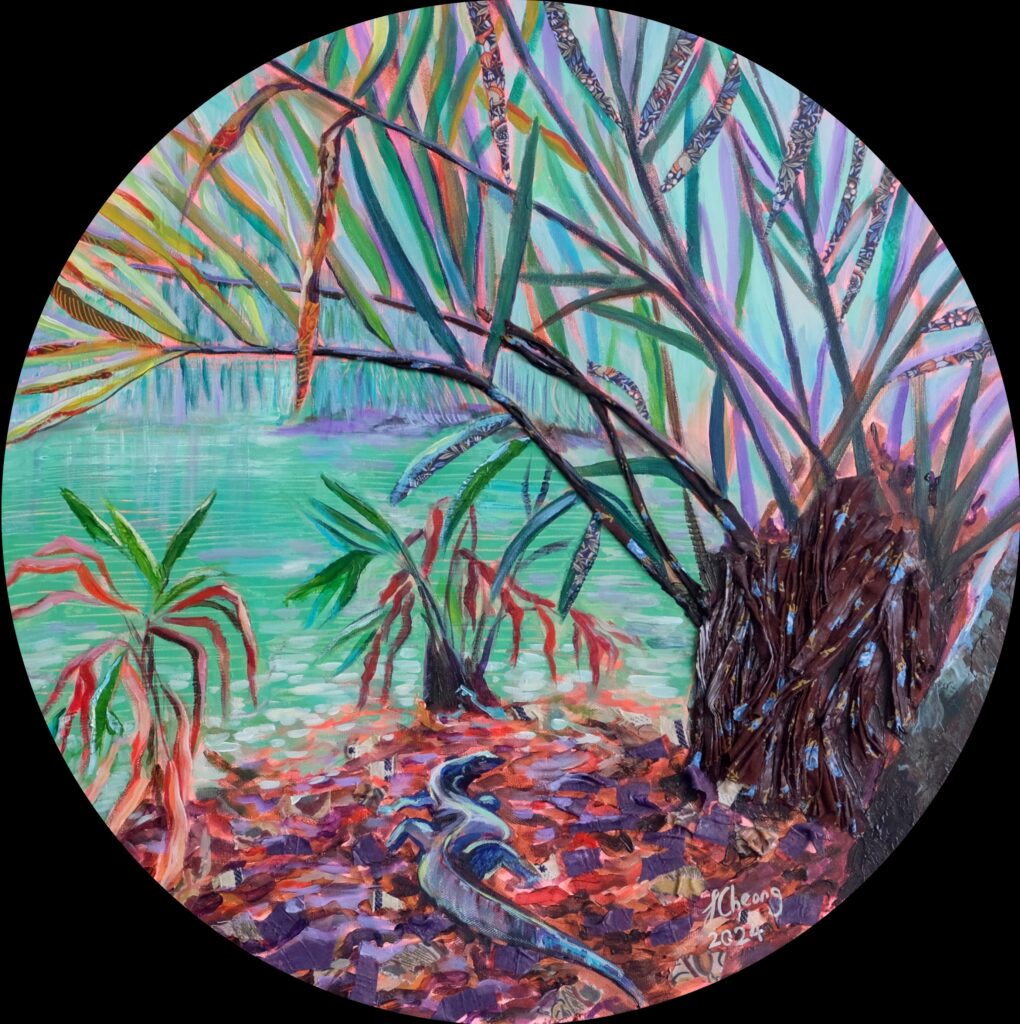
As our conversation with Jillian came to a close, we kept thinking about how easily wonder disappears from our lives. Not because the world becomes less beautiful. But because we become busier.
We rush through parks without noticing the birds overhead. We walk past flowering trees without looking up. We stop paying attention to the insects, the leaves, the shifting colours of the sky, convincing ourselves that extraordinary things only exist somewhere else.
Jillian’s work quietly challenges that way of living. While many artists travel in search of dramatic landscapes or rare wildlife, she reminds us that nature doesn’t have to be distant to be meaningful. Sometimes the most overlooked places hold the richest stories, if we’re willing to slow down long enough to see them.
There can be a temptation to believe that inspiration always lives somewhere beyond our reach in another country, another residency, another experience. Jillian’s practice suggests the opposite. She has built an unmistakably personal body of work by returning, again and again, to the world immediately around her. The familiar became extraordinary because she never stopped looking.
Her work also reminds us that creativity rarely comes from one part of our lives alone. Science, teaching, motherhood, family history, and now the fabric left behind by her grandmother all find their way into her paintings. None of those experiences replaced another. Together, they became her visual language.
For collectors, that makes the work feel especially rewarding to live with. The paintings offer colour, energy, and intricate detail from across the room, but the closer you move towards them, the more they reveal. A hidden insect. A fold of batik fabric. A pattern you hadn’t noticed before. They invite the same kind of slow looking that inspired them in the first place.
Perhaps that is what makes Jillian’s work resonate so deeply. It doesn’t ask us to find a more beautiful world. It simply reminds us to pay closer attention to the one we already have.
To follow Jillian’s journey and see more of her work, find her through the links below.
