
5 Ways To Help Artists Get Out Of A Creative Rut
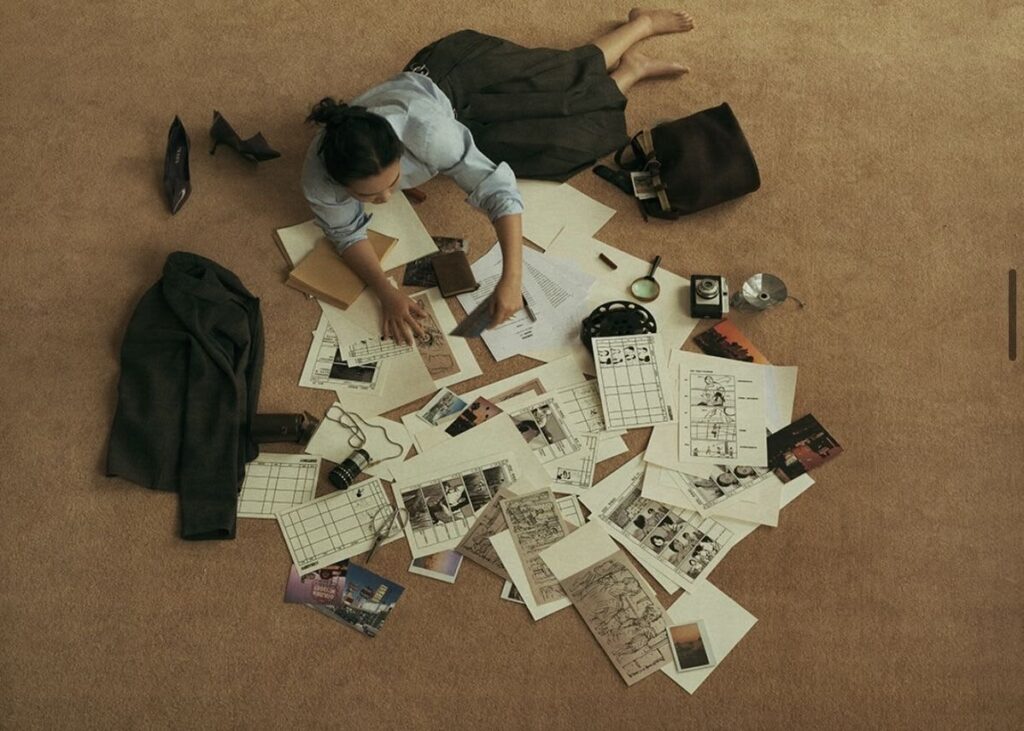
What if you do not need to force yourself out of a creative rut? When you have not made anything good in a while, it can be tempting to panic. You start scrolling through other artists’ work, opening an unfinished canvas, closing it again, watching tutorials, buying new supplies, making ambitious lists, and telling yourself that you simply need to get back into it.
Sometimes, though, the pressure to create can become part of the problem. A creative rut can happen to anyone. It can come after a busy period, a difficult season, a successful project, a disappointing one, or sometimes for no obvious reason at all.
You can love making art and still have days, weeks, or even longer stretches when nothing seems to come easily. That does not necessarily mean you have lost your creativity.
Sometimes your mind is tired. Sometimes you have been making too much and taking in too little. Sometimes you are bored with the way you have been working. And sometimes you simply need to step away long enough to notice what you actually want to make again.
Getting out of a rut does not always require a dramatic burst of inspiration. Sometimes, a gentler approach works better. Here are five ways to begin finding your way back.
1. Stop Trying To Make Something “Good”
How often do you sit down to make art and immediately start judging it?
Is this good enough? Would anyone buy this? Does this look like my work? Should I post it? Is this even worth finishing?
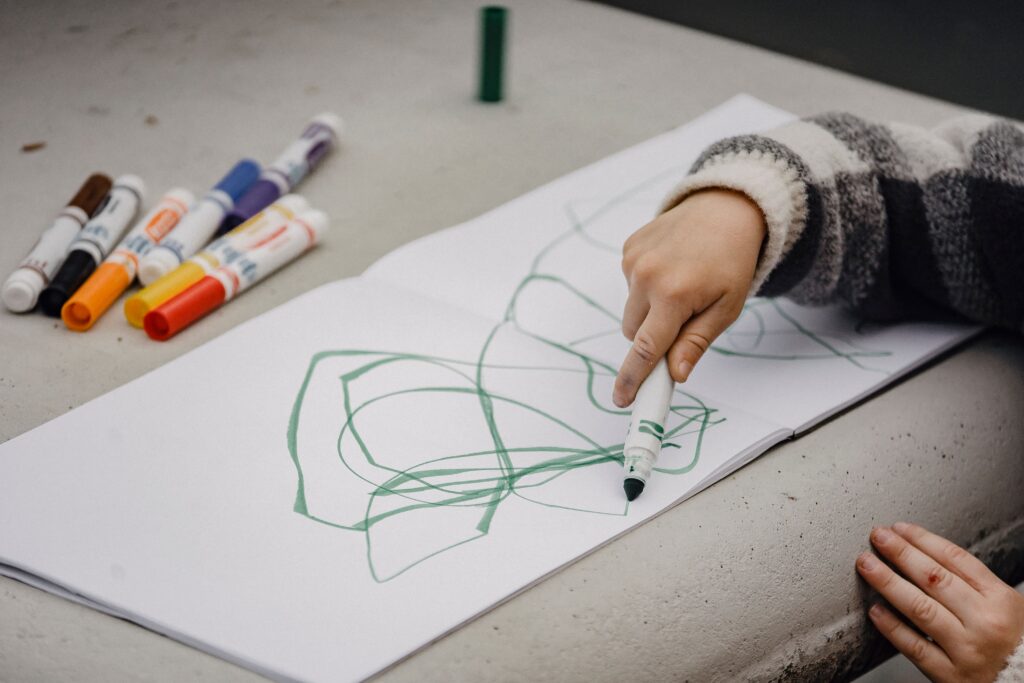
That is a lot to ask from a blank page. When you are already feeling creatively stuck, turning every little experiment into a potential finished artwork can make the process feel even heavier. Instead, give yourself permission to make things that are not supposed to become anything.
Paint something ugly. Draw with your non-dominant hand. Make ten tiny sketches that you would never show anyone. Use a colour combination you normally avoid. Fill a page with marks without worrying about composition. Revisit a technique you have not used in years.
The point is not to secretly produce a masterpiece through this exercise. The point is to remove the expectation that everything you make has to go somewhere. Your sketchbook can be a place where things are allowed to be awkward, unfinished and completely private. Sometimes creativity returns when it realises it is no longer being examined.
2. Go Looking For Something That Is Not Art
When artists feel stuck, the instinct is often to consume more art. You open Pinterest. Then Instagram. Then another artist’s website. Then an exhibition catalogue. You save fifty images and somehow feel even less inspired than before.
Instead, go somewhere completely different. Visit a garden. Sit in a café and watch people. Read a novel. Listen to an album from beginning to end. Cook something you have never made before. Visit a museum that has nothing to do with your medium.

Look at old family photographs. Walk through a market. Notice the colours of clothes drying on balconies or the way afternoon light falls across a room. Creativity does not only come from looking at other people’s finished work.
It comes from living. Artists are constantly collecting things without necessarily realising it: conversations, textures, smells, memories, gestures, buildings, overheard sentences, childhood objects, landscapes, dreams. If you spend all your creative time looking at art, you can sometimes end up comparing your unfinished thoughts with someone else’s finished work. Give yourself something else to look at.
You may return to your studio with a new colour in your head, a strange little story, an interesting shape, or simply a feeling you want to explore. That can be enough.
3. Make Some Changes To The Way You Work
Sometimes the problem is not that you have run out of ideas. You might simply be tired of making them in the same way. If you always work on large canvases, try something tiny. If you normally paint standing up, sit down. If you work alone, spend an afternoon working somewhere outside your usual studio. If you usually start with an idea, begin with the material instead.
Try charcoal if you normally paint. Try collage if you draw. Work in monochrome. Make something with your hands that has nothing to do with your usual practice. Even changing the physical arrangement of your workspace can help. Move your table. Clear the surface. Put your materials somewhere different. Work near a window. Take your sketchbook outside.
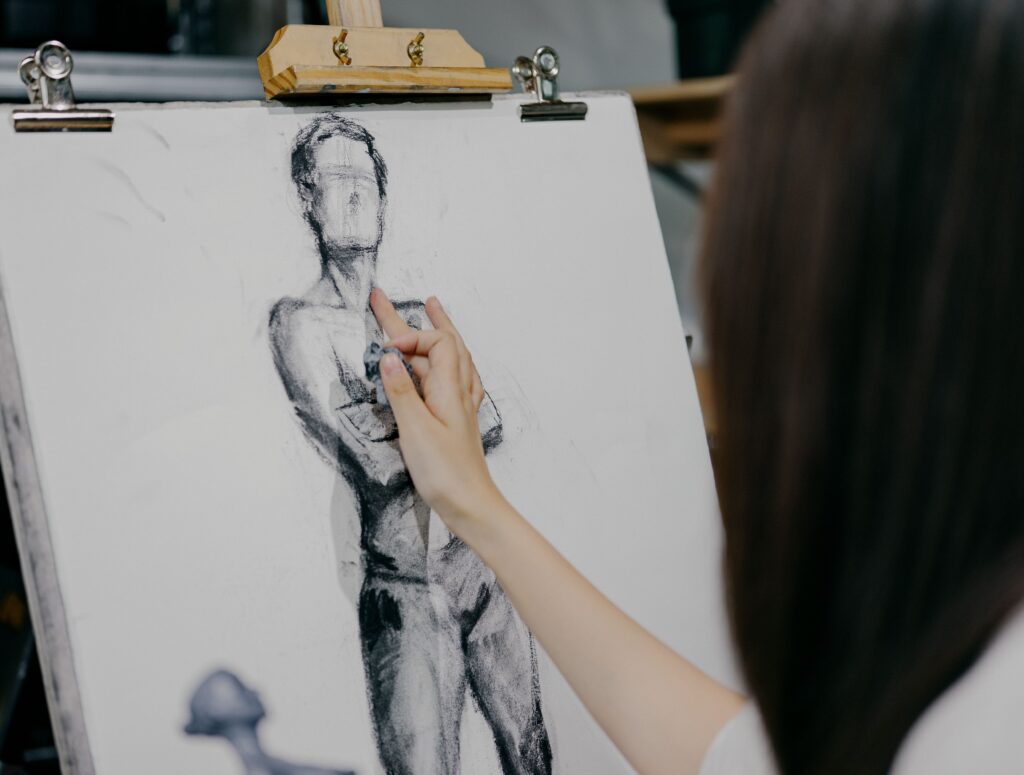
These changes might not produce a finished piece. That is okay. The value is in reminding yourself that there is more than one way to make. A creative practice can become repetitive without us noticing. We develop routines because they help us work, but occasionally those same routines can make the studio feel predictable.
You do not have to reinvent your entire practice. Just give yourself permission to take a different route for a little while.
4. Return To Something You Once Loved
Think back to the version of yourself who first fell in love with making art. What did you enjoy before you started worrying about your portfolio, social media, exhibitions, sales or whether your work looked “serious” enough?
Maybe you used to spend hours drawing faces. Maybe you loved painting flowers. Maybe you made tiny collages from old magazines. Maybe you used to photograph everything around you. Maybe you wrote little stories alongside your drawings.
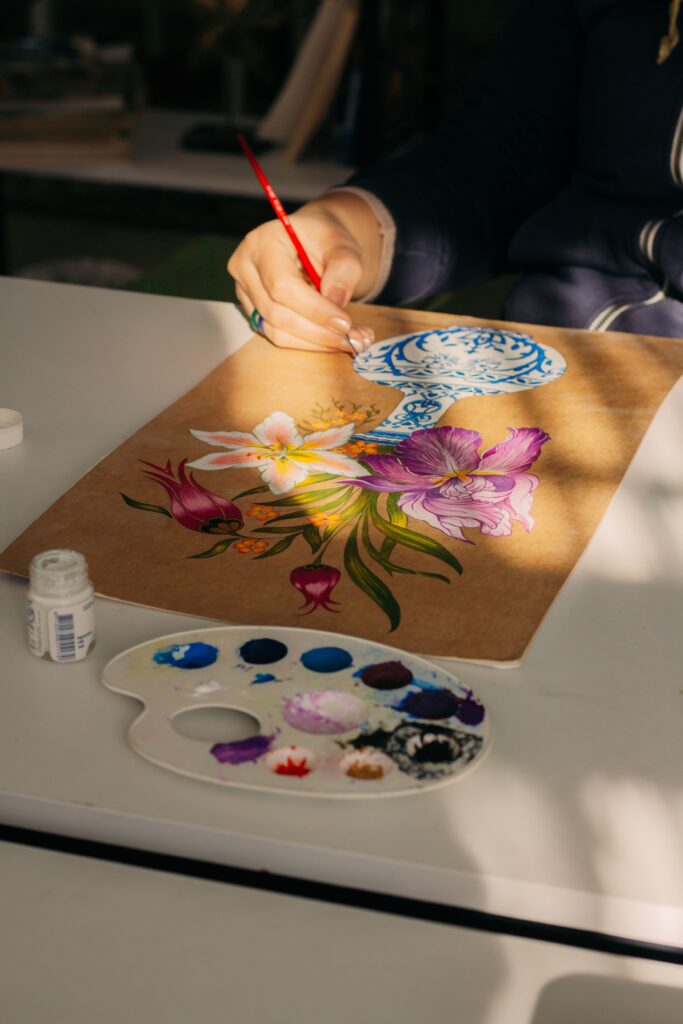
Try doing that again. Not because it needs to become part of your professional practice. Not because you need to turn it into a new series. Just because you remember enjoying it. Artists can sometimes become so focused on developing a recognisable practice that they forget they are allowed to be curious.
Your old interests do not have to stay in the past simply because your work has changed. You might discover that something you abandoned years ago still has a little life in it. Or you might realise that you have completely outgrown it.
Both outcomes are useful. The first brings something back. The second helps you understand where you are now.
5. Let Yourself Have A Proper Break
This one can be surprisingly difficult. When making art is part of your career, taking time off can feel like falling behind. You might think that every day away from the studio is a day when someone else is moving ahead of you.
But rest is not the opposite of creativity. Sometimes you genuinely need to stop. Not “rest” while secretly checking other artists’ work, replying to emails, planning your next collection and feeling guilty about not painting.
Take a day, a weekend or longer if you need it. Sleep. Go outside. Spend time with people you love. Watch something silly. Make dinner. Sit somewhere without taking a photograph of it. Let yourself have a life that does not need to become material for your next artwork. And if you come back after that break and still do not want to make anything, that does not mean the break failed. You may need more time.
Creative energy is not a machine that gives you a predictable amount of output every morning. It changes with your life, your environment, your emotional energy and your physical energy. Sometimes the most productive thing you can do for your practice is acknowledge that you are tired.
You Do Not Have To Earn Your Way Back To Creativity
A creative rut can feel frightening because artists often build so much of their identity around making. When the ideas stop coming, it is easy to wonder whether something has changed permanently. You start questioning your work, your direction, and sometimes even whether you are still as creative as you once were.
But a quiet period does not erase everything you have learned. It does not undo years of practice, curiosity, experimentation or all the work that came before it. You are still an artist when you are not making. You are still an artist when your sketchbook has been closed for three weeks. You are still an artist when the work you made yesterday feels terrible today.
Your practice is bigger than your output. Not every season of being an artist has to look productive from the outside. Some seasons are about making dozens of things. Others are about looking, thinking, resting, changing your mind, or simply getting through everything else life is asking of you.
And sometimes, the gentlest way back is to stop treating the rut like an emergency. Make something without showing anyone. Go somewhere that has nothing to do with art. Change your materials. Remember what you loved before you started calling it a practice. Let yourself be curious without turning that curiosity into a new body of work. Or do absolutely nothing for a while.
You do not have to drag creativity back into the room, and you do not have to prove that you deserve to call yourself an artist by constantly producing. Give yourself a little space. Let the pressure soften. Let yourself notice things again. And when you are ready, let creativity find its way back to you.
Editor’s Note:
We are waiting for your submissions for the first ever print issue of Women In Arts Magazine, the deadline is 31 October, 2026. With an open theme, you can submit the artwork that speaks the most to you and defines your practice the best. Submit now and become part of the inaugural magazine issue!
