
5 Women Artists Who Shaped The History Of Abstract Expressionism
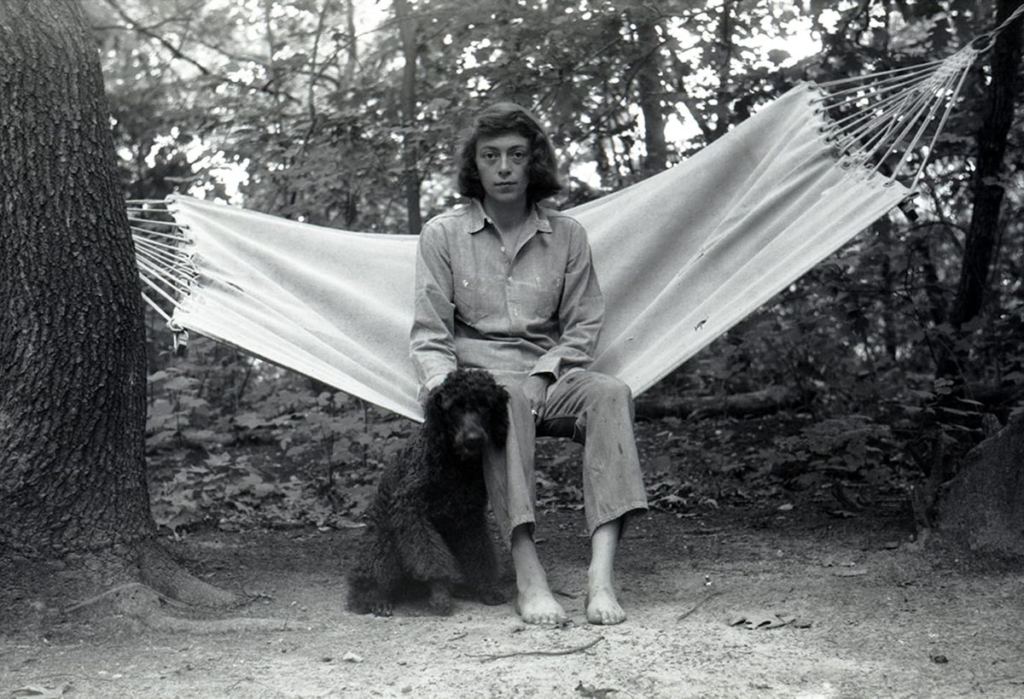
Some paintings tell us a story. Others make us feel something before we have even figured out what we are looking at. A rush of color, a tangle of brushstrokes, or a canvas that seems to hold an entire storm can leave us wondering how a few marks of paint can carry so much emotion.
That was part of the magic of Abstract Expressionism, an art movement that took shape in New York during the 1940s and became one of the defining developments in modern art. Instead of focusing on recognizable subjects or carefully planned compositions, artists explored emotion, movement, intuition, and the physical act of painting itself. Some worked with sweeping gestures and energetic brushstrokes, while others built entire worlds through color and atmosphere.
The movement is often associated with names like Jackson Pollock, Mark Rothko, and Willem de Kooning. But women were there, too, making bold decisions, challenging conventions, and developing artistic languages that would influence generations of painters.
Their contributions were not always given the attention they deserved. Even when women exhibited alongside their male contemporaries, the story of Abstract Expressionism was frequently told as though they had played supporting roles. Today, a closer look at the movement reveals a much richer history, one shaped by artists who brought their own ideas, ambitions, and experiments to the canvas.
Let’s meet five women whose work helped shape that history.
1. Lee Krasner: The Artist Who Never Stopped Reinventing Herself
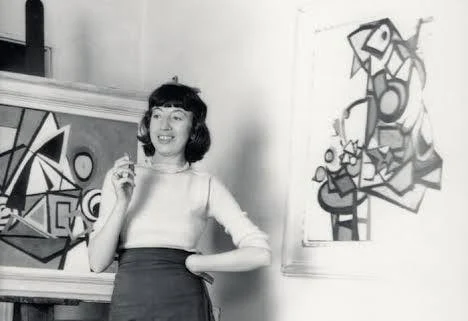
If there is one artist whose story reminds us why we should look beyond familiar art-world narratives, it is Lee Krasner (1908–1984).
Born in Brooklyn to Russian-Jewish immigrant parents, Krasner pursued an artistic education at a time when women faced considerable barriers in the professional art world. She studied at Cooper Union and the National Academy of Design before attending classes with the influential German-born painter Hans Hofmann. These experiences gave her a strong grounding in modern art, but Krasner was never interested in simply following someone else’s ideas.
She became involved in New York’s avant-garde art community during the 1930s and 1940s, experimenting with abstraction and developing a visual language of her own. Her work moved between drawing, painting, collage, and large-scale compositions, reflecting an artist who was always willing to question what she had done before.
One fascinating aspect of Krasner’s practice was her willingness to reuse and transform her own work. She sometimes cut up earlier drawings and paintings, turning them into collages that felt entirely new. Rather than treating an artwork as something untouchable once it was finished, she approached it as material that could be reconsidered, rearranged, and brought back to life.
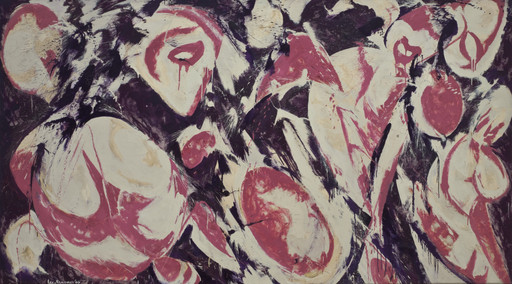
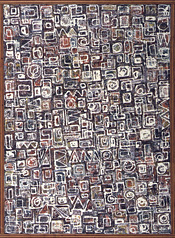
Her Little Image paintings, made largely during the late 1940s and early 1950s, offer a wonderful example of this spirit. Their tightly packed marks and repeated forms create intricate surfaces that invite us to look closely. Later, works such as Gaea (1966) burst with sweeping gestures and organic shapes, demonstrating just how dramatically her approach could evolve.
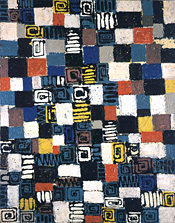
Untitled
1949
Pollock-Krasner Foundation
Composition
1949
Philadelphia Museum of Art
Of course, Krasner’s name is often mentioned alongside that of her husband, Jackson Pollock. Their relationship is an important part of the history of postwar American art, but it can also overshadow her extraordinary independent career. Krasner was an accomplished artist long before they married, and she continued to experiment and produce ambitious work for decades afterward.
Following Pollock’s death in 1956, she worked in his former studio in Springs, Long Island, creating some of her most powerful paintings. She also devoted considerable effort to preserving his artistic legacy.
Yet Krasner’s own legacy deserves just as much attention. Her career shows us that artistic growth does not have to follow a straight line. Sometimes it means tearing something apart, starting over, and discovering a possibility you could not have imagined the first time around.
2. Helen Frankenthaler: The Woman Who Let Paint Find Its Own Way
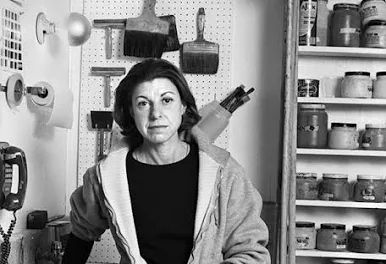
What happens when an artist stops asking paint to sit on the surface and instead allows it to become part of the canvas itself? Helen Frankenthaler (1928–2011) spent much of her career exploring that question, and the results changed the direction of American painting.
Born and raised in New York City, Frankenthaler studied with the Mexican modernist Rufino Tamayo at the Dalton School before attending Bennington College in Vermont. She later encountered the work of leading Abstract Expressionists, including Jackson Pollock, whose unconventional approach to working with canvas laid on the floor encouraged her to consider new possibilities.
In 1952, she created Mountains and Sea, a painting that would become one of the most important works of her early career.
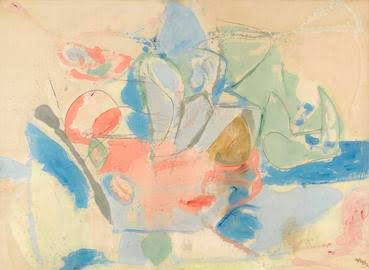
Frankenthaler placed an unprimed canvas on the floor and poured thinned paint directly onto it. Instead of remaining in distinct layers on the surface, the pigment soaked into the fabric, spreading into delicate washes of color. Soft blues, greens, pinks, and other earthy tones seem to drift across the canvas, suggesting a landscape without actually describing one in a conventional way.
The painting’s title hints at mountains and the sea, but nothing is outlined for us. We are left with impressions, memories, and the feeling of looking at a place rather than a literal picture of it.
This technique, often called soak-stain painting, became a major contribution to the development of Color Field painting, a movement that emphasized expansive areas of color and their emotional and visual effects. Artists Morris Louis and Kenneth Noland were among those influenced by Frankenthaler’s experiments.
What makes her achievement especially exciting is that she found a way to build on the expressive freedom of Abstract Expressionism without simply repeating its best-known gestures. Her paintings could feel quiet and spacious, even when they occupied enormous canvases.
Frankenthaler also refused to limit herself to one medium. Throughout her six-decade career, she explored works on paper, woodcuts, ceramics, sculpture, and tapestry, continually discovering new ways to work with color and form.
Her contribution reminds us that innovation does not always arrive with a dramatic flourish. Sometimes it begins with a simple question about materials, followed by the courage to try something that has never quite been done that way before.
3. Joan Mitchell: Painting The Way A Memory Feels
Some memories arrive as clear images. Others are harder to explain. We remember the brightness of a particular afternoon, the movement of trees in the wind, or the feeling of standing somewhere we have not visited in years. Joan Mitchell (1925–1992) found a remarkable way to translate these experiences into painting.
Born in Chicago, Mitchell studied at Smith College and the School of the Art Institute of Chicago before moving to New York in 1949. There, she became part of the city’s energetic avant-garde community and established herself as a significant figure among the second generation of Abstract Expressionists.
Her paintings are full of movement. Vigorous brushstrokes collide with one another, colors gather into dense clusters, and empty spaces allow the eye to wander across the canvas. At first glance, her work can seem spontaneous, almost as if the paint has been thrown onto the surface in a moment of excitement. But look a little longer, and the compositions reveal a remarkable sense of rhythm and control.
Mitchell was particularly interested in the natural world. Landscapes, trees, flowers, water, and changing seasons often informed her work, even when none of these subjects appeared in an immediately recognizable form. Rather than reproducing a view exactly as she saw it, she painted the sensations and memories that remained with her.
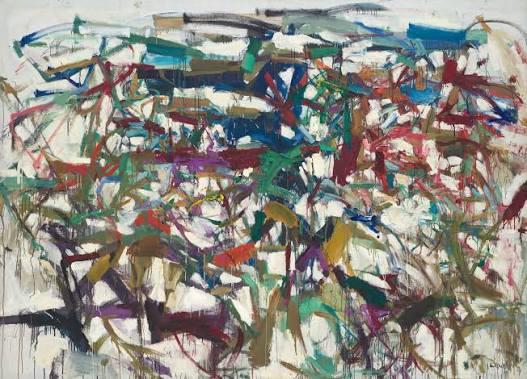
This is part of what makes paintings such as Ladybug (1957) so compelling. Its energetic arrangement of color and brushwork encourages the viewer to experience the canvas rather than search for a single, definitive subject.
Mitchell also spent much of her later career in France, settling in Vétheuil in 1968. The landscape around her home became an important source of inspiration, and her paintings continued to develop through increasingly complex combinations of color, gesture, and space.
Her achievements came despite the gender biases of the art world. She was one of the few women invited to join The Club, a gathering place on East Eighth Street where Abstract Expressionist artists met to discuss art and ideas. Her work also earned the admiration of influential painters, including Franz Kline and Willem de Kooning.
Mitchell’s paintings invite us to reconsider what abstraction can do. It can hold the memory of a landscape without showing us its hills and trees. It can express grief, joy, longing, or the strange way a place stays with us long after we have left it.
In her hands, painting became a way of remembering without needing to explain everything.
4. Elaine de Kooning: The Artist Who Refused To Choose Between Abstraction And The Human Figure
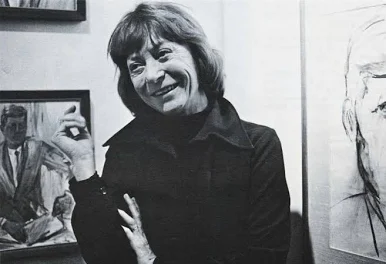
Abstraction and portraiture are sometimes treated as opposites. One moves away from recognizable appearances, while the other tries to capture a particular person. Elaine de Kooning (1918–1989) spent her career showing just how much these approaches could learn from each other.
Born Elaine Fried in New York City, she developed an interest in art early in life and studied painting in the city. She later married Willem de Kooning, one of the most prominent figures associated with Abstract Expressionism, but her work and ideas extended well beyond that relationship.
Elaine was both a painter and an influential writer. As a critic for ARTnews, she wrote about artists including Arshile Gorky, Franz Kline, David Smith, Mark Rothko, and Jackson Pollock. Her writing helped explain the movement’s ideas to a wider audience, making her an important voice in the conversations surrounding postwar American art.
But she was not simply observing the movement from the sidelines. She was actively expanding its possibilities through her own paintings.
While many Abstract Expressionists moved toward nonrepresentational imagery, Elaine continued to explore the human figure. Her portraits, athletic subjects, and later series demonstrate how expressive brushwork could capture the energy of a person or a moment without relying on precise, photographic detail.
Her portraits of President John F. Kennedy are a particularly interesting example. Commissioned for the Truman Library, the project involved repeated sittings, hundreds of sketches, and at least two dozen canvases as she worked to capture his character and presence. The undertaking reveals an artist willing to return to a subject repeatedly, testing different ways to express the personality behind the public image.
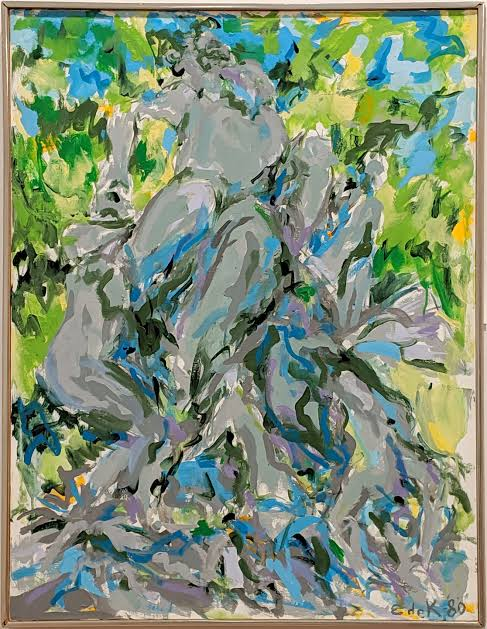
She also explored subjects such as bullfighting and basketball, where bodies in motion offered opportunities to experiment with gesture, rhythm, and color. Her paintings did not have to abandon recognizable figures to achieve the intensity associated with Abstract Expressionism.
Consider her Bacchus series, which she began in 1976. Inspired by a nineteenth-century sculpture of the Roman god, these works combine expressive marks, shifting forms, and broad areas of color. Figures appear and dissolve within the composition, leaving viewers somewhere between recognition and abstraction.
Elaine’s career is a reminder that artistic movements are rarely as tidy as their labels suggest. Artists borrow, question, and combine ideas in ways that resist easy categories. By bringing the human figure into conversation with the freedom of Abstract Expressionism, she helped make the movement’s language more expansive.
5. Grace Hartigan: The Painter Who Made Room For Stories
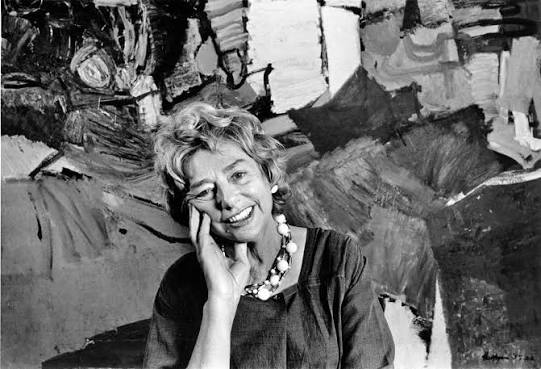
Grace Hartigan (1922–2008) approached abstraction with a restless curiosity about the world around her. Her paintings brought together energetic brushwork, recognizable imagery, literary references, and everyday observations, challenging the idea that abstract art had to leave storytelling behind.
Born in Newark, New Jersey, Hartigan moved to New York in 1945 and became involved in the downtown art scene. She developed friendships with other artists and began exhibiting her work during the years when Abstract Expressionism was gaining attention across the United States.
Hartigan was ambitious, outspoken, and willing to experiment. Although she admired the work of her contemporaries, she did not want to be confined by a single artistic formula. Her paintings often began with recognizable subjects before allowing them to dissolve into layers of color and gesture.
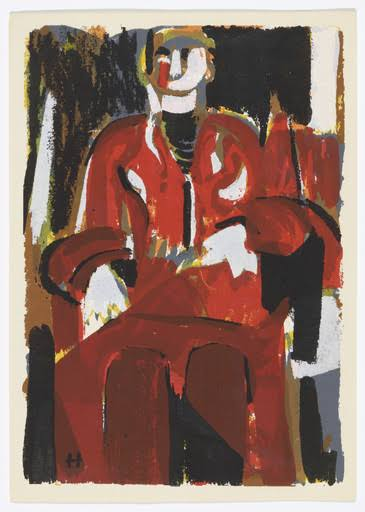
One of her best-known early works, The Persian Jacket (1952), demonstrates this interest in the space between representation and abstraction. The painting combines references to recognizable objects with an energetic, densely worked surface. The result feels less like a straightforward depiction of a subject and more like a meeting point between observation and imagination.
Hartigan also drew inspiration from literature, popular culture, and the visual language of everyday life. She was interested in the images people encountered outside museums, from advertisements to magazine illustrations. Rather than dismissing these sources as unworthy of serious art, she found ways to incorporate their energy into her paintings.
This openness distinguished her from artists who preferred to keep abstraction entirely separate from recognizable imagery. Hartigan could move between the two, allowing a figure or object to emerge from a swirl of paint before slipping back into the composition.
Her career also unfolded against a complicated backdrop. Although she achieved significant recognition during the 1950s, the art world increasingly promoted certain forms of abstraction as the dominant direction for modern painting. Hartigan continued to follow her own interests, even when they did not fit neatly into the expectations surrounding the movement.
In 1960, she moved to Baltimore, where she later became director of the Hoffberger School of Painting at the Maryland Institute College of Art. She continued painting and teaching for decades, influencing students while developing her own artistic practice.
Hartigan’s work encourages us to look at abstraction with a more generous eye. A painting can be full of references to the world and still leave room for uncertainty, emotion, and surprise. Sometimes the most interesting part is not deciding exactly what we see, but enjoying the moment when the image begins to take shape.
Looking Again At The Women Of Abstract Expressionism
The stories of these five artists show us that Abstract Expressionism was never a single style or a movement with only a handful of important voices. Lee Krasner’s restless reinvention, Helen Frankenthaler’s experiments with paint, Joan Mitchell’s deeply felt landscapes, Elaine de Kooning’s expressive figures, and Grace Hartigan’s blend of abstraction and everyday imagery all expanded what painting could become.
Their careers also reveal something important about the way art history is written. Women were exhibiting, experimenting, teaching, writing, and building careers during the movement’s formative years, yet their contributions were often pushed to the margins of its most familiar narratives.
That history is gradually being reconsidered through exhibitions, scholarship, and renewed attention to artists whose work deserves to be seen on its own terms. Their stories are not simply additions to a history that was already complete. They help us understand how much richer that history always was.
And perhaps that is the best reason to spend time with their paintings today. You do not need to know every art-historical reference or recognize every technique to find something meaningful in them. Start with a color that catches your eye, a brushstroke that feels familiar, or a shape that reminds you of somewhere you have been.
Give the painting a little time. Let your eyes wander. You might discover that abstraction has been telling you a story all along.
Editor’s Note:
Our first-ever issue of Women in Arts Magazine is now accepting submissions, and we’d love to see your work. Open to women artists across all mediums, this is your chance to share your art and be part of our debut issue. Submit your work before the October 31 deadline!
