
5 Ways Artists Can Help Their Target Audience Find Their Work
Making good art is only one part of building an artistic career. The other part is helping the right audience actually find it.
For emerging artists, this can be one of the strangest parts of working today. You can spend weeks, months, or even years developing a body of work, only to realize that most of the people who might love it have never come across it.
And being discoverable is not simply about posting more often.
Sometimes it means finding the places where art lovers are already looking. Sometimes it means giving people a reason to remember you after they have seen your work. And sometimes it means creating little pathways between your studio, your online presence, and the physical world around you.
Here are five ways artists can make their work easier to discover, including a few approaches that are easy to overlook.
1. Pay For Targeted Visibility
Yes, artists can actually pay for visibility. But the important word here is targeted.
There is a big difference between paying for a random promotion that promises thousands of impressions and paying to appear somewhere that already attracts the people you want to reach.
Some art platforms offer paid boosts, featured placements, promoted listings, or recurring visibility packages. ArtConnect, for example, offers promotional boosts that can make listings more prominent in search results, pin them at the top of relevant searches, or feature them through its artist-opportunity Instagram account.
For artists, the same principle can be applied when looking for places to promote a portfolio, exhibition, open studio, print release, or other project.
The trick is to ask where the attention is coming from before paying for it.
Is the platform actually used by collectors, curators, artists, or art lovers? Is the audience relevant to your work? Will your work appear in a searchable directory, newsletter, curated feature, or a page people are likely to revisit? Can the service show you examples of artists they have previously promoted?
A small paid feature in a niche art newsletter or a reputable discovery platform may be far more useful than paying for generic social media engagement.
And be careful with anyone selling guaranteed followers, likes, or engagement. Discoverability is valuable when it puts your work in front of real people who might care about it. A larger follower count by itself does not necessarily help an artist build a career.
2. Build A Searchable Artist Profile
Your Instagram can be beautiful and your portfolio can be strong, but what happens when someone searches your name, your medium, or the kind of work you make?
This is where an artist profile becomes more than a collection of pretty images.
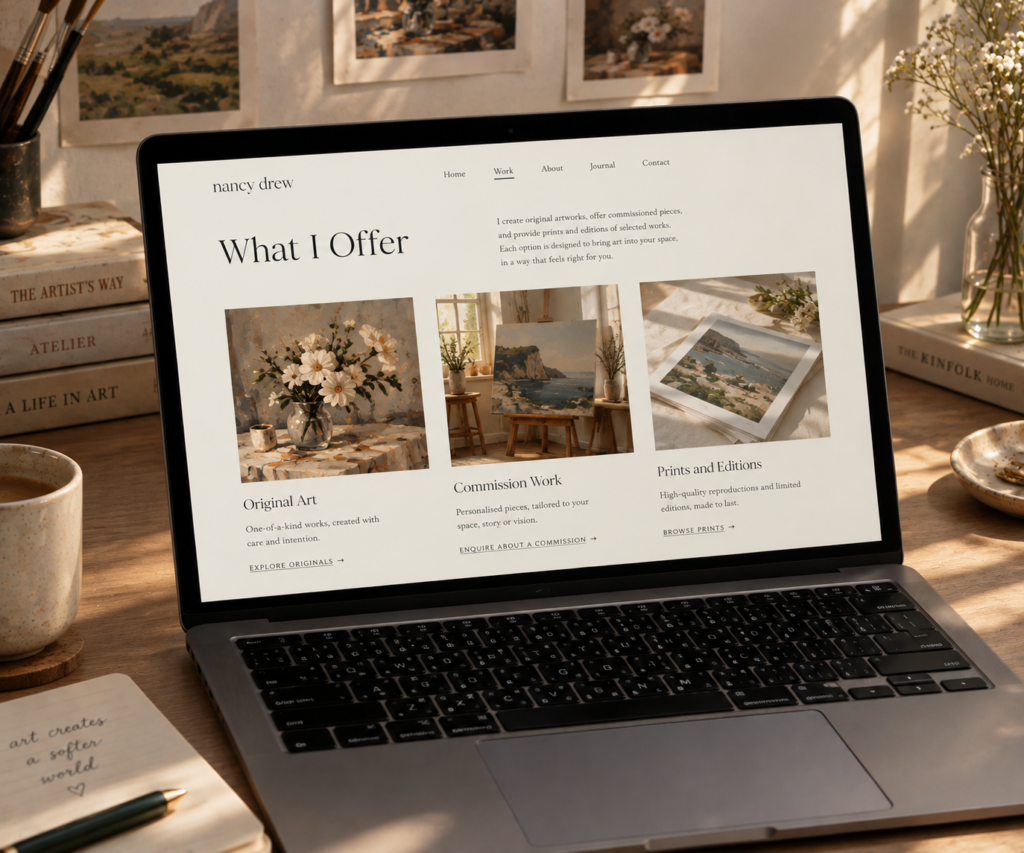
Think of your website, artist directories, online gallery profiles, and exhibition pages as different doors leading back to the same practice. Keep your artist name consistent, describe your medium clearly, and give individual artworks useful titles and information.
Instead of uploading an image simply as IMG_4827.jpg, for example, an artist might have a page titled something like “Blue Room, 2026 | Oil on Linen | 24 × 30 in.”
That information gives both people and search engines something to understand.
Google explains that structured data can help its systems understand the content of a website, while its ProfilePage markup is specifically designed to help identify creator information such as a person’s name, profile image, and other details.
You do not need to become an SEO expert to benefit from this.
Start with the basics. Give artworks their own pages where possible. Write useful descriptions. Mention the medium, year, dimensions, location, recurring themes, and relevant exhibitions. Make your About page actually describe your practice rather than only saying that you have “always loved art.”
And remember that your website can be discovered long after a social media post disappears from someone’s feed.
3. Turn Followers Into A Community
Sometimes the easiest people to help you discover your work are already following you.
Instead of treating Instagram followers as a number, artists can create smaller spaces where people feel closer to the work and the person making it.
Instagram’s Broadcast Channels are particularly interesting for this. They allow creators to send updates directly to followers, and Instagram has added features including replies, prompts, polls, and insights to make these spaces more conversational.
For an artist, that could mean sharing things that would feel too casual for the main feed.
Show the painting that is still half-finished. Ask which colour works better. Share a photograph of your studio table. Tell people about an exhibition before the public announcement. Show the sketch that eventually became a finished painting. Share a little story about why you keep returning to the same subject.
A small group chat or close-friends space can work in a similar way.
The point is not to create another place where you have to constantly perform. It is to give genuinely interested people a more personal way to follow your practice.
When someone feels connected to an artist, they are much more likely to remember their name, share their work with a friend, visit an exhibition, or pay attention when a new body of work appears.
Discovery does not always begin with a stranger.
Sometimes it begins with someone who has quietly been following along for months.
4. Create A Physical Trail Back To Your Work
Artists often think of their business cards as something they hand to people at an exhibition and forget about afterwards. They can be much more useful than that. Think about creating a small physical trail back to your work.
A postcard featuring one of your paintings can have your name, website, Instagram handle, and a QR code on the back. A small artist card can include a photograph of your work alongside a short sentence about your practice. A miniature printed portfolio can be left at a relevant creative space. Even a beautifully designed exhibition card can become something someone keeps instead of immediately throwing away.
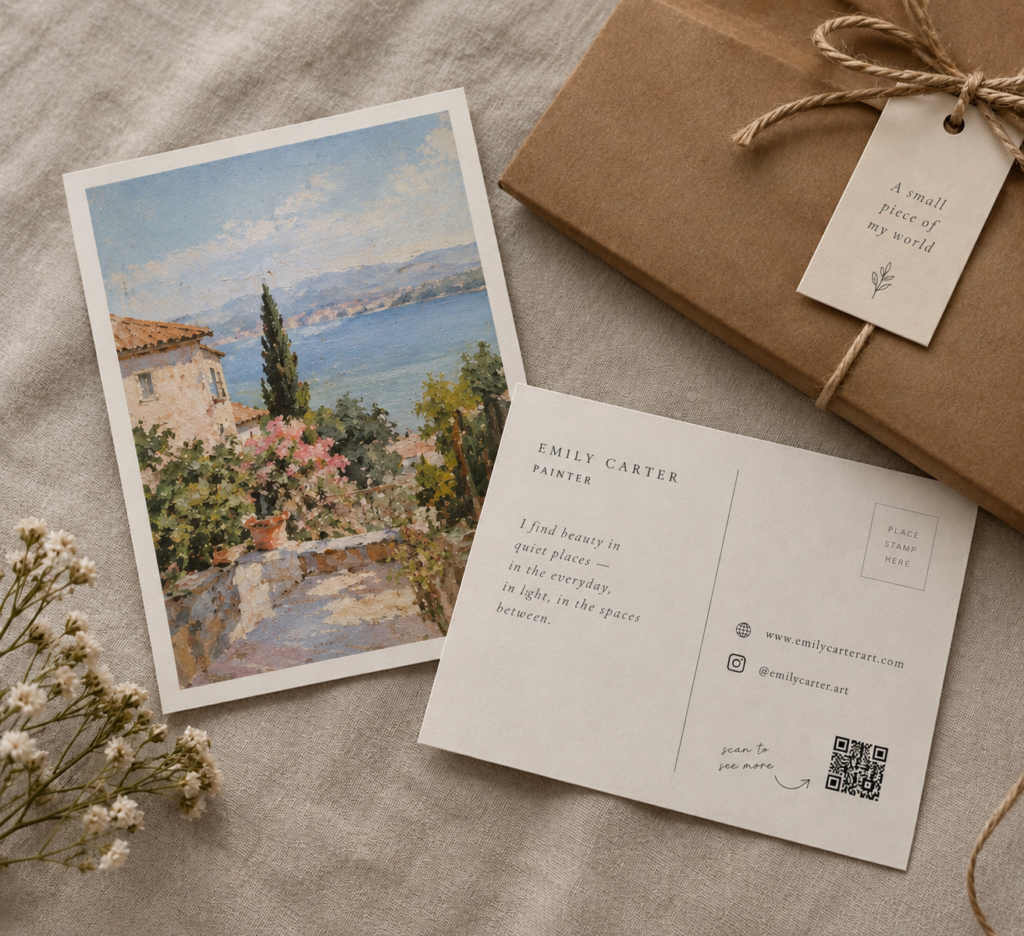
The idea is to make the physical object useful or interesting enough that it has a life beyond the moment when someone meets you.
Imagine someone visiting a group exhibition, picking up your postcard, and putting it inside a book. A month later, they see it again and scan the QR code. Or they give it to a friend who loves the painting.
That is a completely different kind of discovery from someone scrolling past a post.
You can also make these materials specific to the situation. A painter approaching interior designers might create a small card showing several works that suit residential spaces. An illustrator could create a postcard featuring their strongest character work. A ceramic artist might create a beautifully photographed mini card showing a collection of pieces.
The physical object becomes a tiny introduction to your practice.
5. Put Your Art In Unexpected Physical Spaces
A gallery is not the only place where someone can discover an artist.
Think about the places where people already spend time: independent cafés, boutique hotels, bookstores, coworking spaces, libraries, restaurants, concept stores, creative studios, community centres, and even local businesses with blank walls.
A collaboration can be as simple as approaching a café about displaying a small selection of work for a month, speaking with a boutique hotel about rotating artwork, or partnering with a local business for an opening event.
The important part is to make the arrangement useful for both sides.
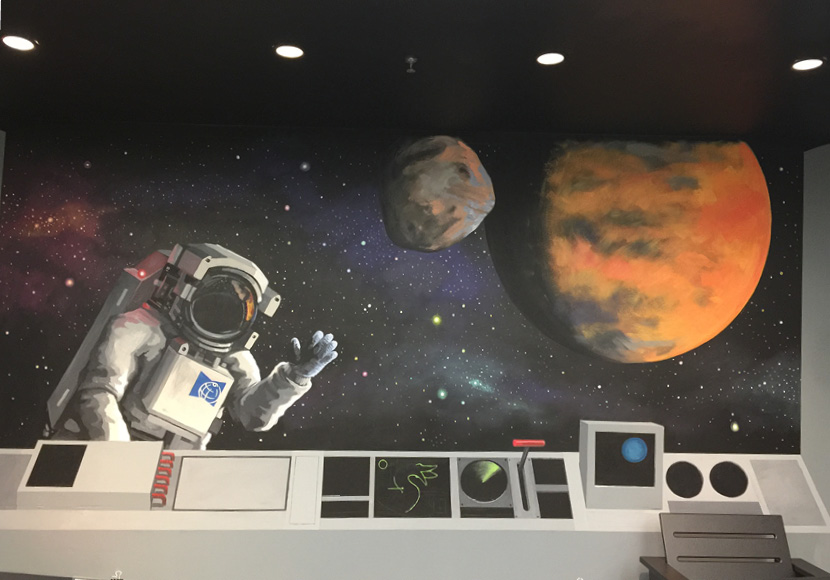
Source: The Seattle Public Library
The business gets an interesting visual environment and something new for its customers to discover. The artist gets to place their work in front of people who may never have walked into a gallery.
And there is an opportunity to make the discovery path extremely simple.
Put a small, tasteful label beside each piece. Include the artist’s name and a QR code leading to the portfolio or website. If the work is available for purchase, say so clearly. If it is part of a larger series, give people somewhere to see the rest.
You can also think beyond simply hanging paintings on a wall.
A café might host a small artist talk. A bookstore might collaborate with an illustrator on a window display. A hotel might feature local artists in its rooms or common areas. A ceramicist might collaborate with a florist. A painter might work with an interior designer on a styled installation.
Suddenly, the artist is not waiting for someone to search for their work. The work is meeting people where they already are.
Read our feature on 5 Unexpected Places Looking for Artists to explore more about spaces that can become home to your art.
Making Discovery Part Of Your Art Business
Being easier to discover does not mean turning your entire artistic life into marketing. It means creating more doors into your practice.
One person might find you through a searchable artist directory. Another might discover your work through a friend’s Instagram channel. Someone else might pick up your postcard at an exhibition and visit your website weeks later. Another person might walk into a café and notice your painting on the wall.
None of these paths needs to replace the others. The strongest approach is often to build a small ecosystem around your work, with different ways for people to encounter it, remember it, and eventually come back to it.
Because sometimes the problem is not that your art is difficult to find. It is simply that you have not yet given people enough places to find it.
