
This Romanian artist makes paintings from her son’s old jeans | Daiana Bruj
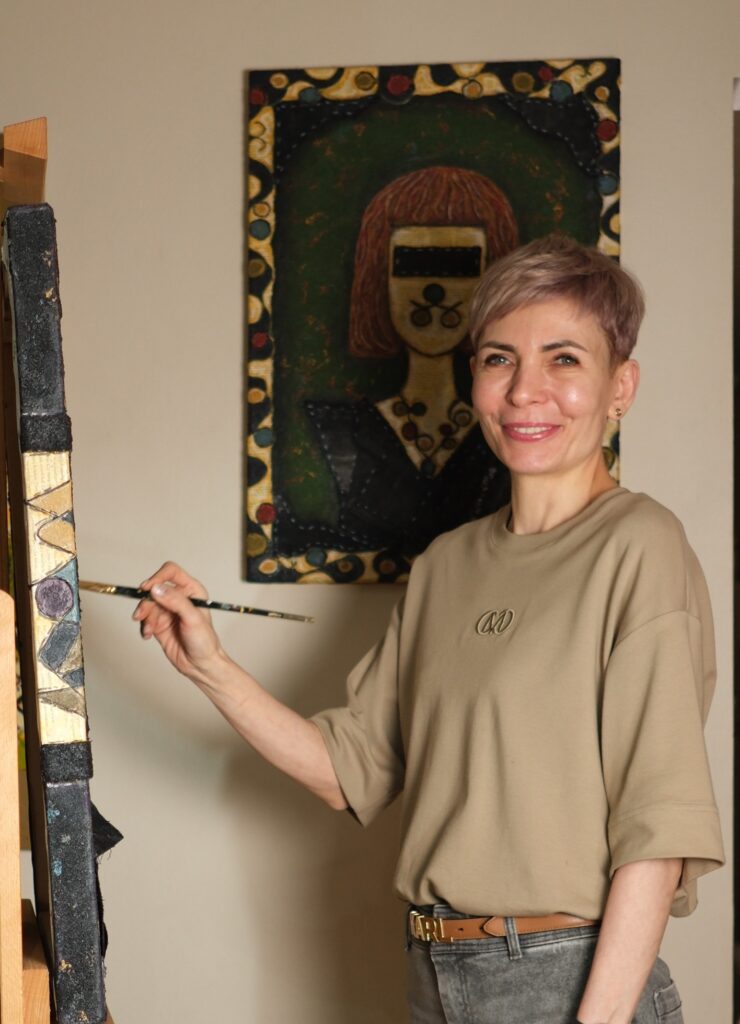
At Women in Arts Network, we thought we knew what Faces would look like. Eyes. Expressions. Skin. Bone structure. The visible architecture of a person looking back at you from a surface.
Daiana Bruj made us realise we were thinking about it too literally. Because sometimes a face isn’t features. Sometimes it’s the warmth left behind in a room after someone walks out.
Daiana is a selected artist for the Faces exhibition and her work contains no faces and we chose her anyway and we’d choose her again without hesitating. Because what she does with acrylic and fabric and collage and upcycled materials says more about human presence than most carefully rendered portraits ever manage to.
She builds paintings the way memory builds. In layers. Not neat ones. Accumulated, overlapping, sometimes interrupting each other, textures sitting on top of textures, colours shifting underneath colours, fabric with its own history woven into a surface that ends up feeling lived-in the way a home feels lived-in after decades.
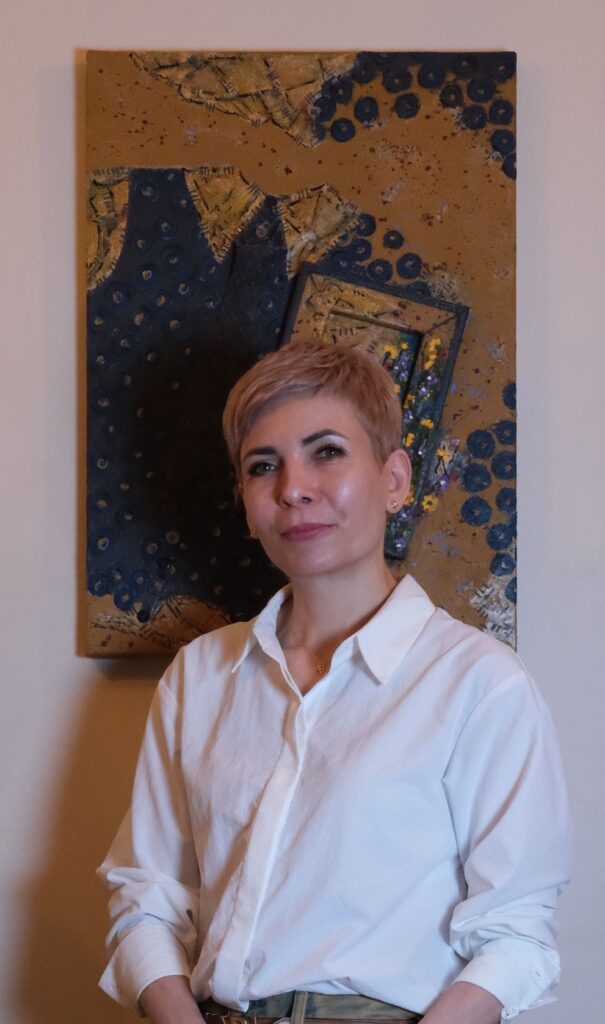
The materials she chooses aren’t random. She uses things that have already been touched and worn and held by someone else because those materials carry a warmth and a history that you can’t manufacture with a fresh tube of paint and a clean brush.
Colour arrives before anything else in her process. Before shapes. Before structure. Before she has any idea what the painting is going to become. She describes it as setting an emotional field, and that’s exactly what it feels like standing in front of her work. You feel the colour before you see the composition. Something in your body responds to the palette before your brain has started trying to figure out what you’re looking at.
She’s been at this for nearly twenty years and what happened over that time is a story about learning to say less. Early on she worked through accumulation, adding and layering and exploring, searching for her language through sheer volume of gesture. Over the years the work got quieter. More selective. More restrained. Fewer marks but each one meaning more. She stopped searching outward and started trusting what was already present. And that’s when everything clicked. Not because she found something new but because she finally understood what needed to stay and had the discipline to let everything else go.
Now let’s hear from Daiana, about rooms that remember who was in them, about fabrics that carry their own stories into the paint, about the courage it takes to keep removing until only the truth is left, and why sometimes the most powerful portrait is the one where no one appears but everyone is felt.
Q1. Could you share your background how your personal journey, including the growth of your visual vocabulary, led you to commit to your art practice?
My commitment to art emerged gradually, alongside a long period of exploration and personal reflection. I have been painting for nearly two decades, but over time my relationship with the work shifted from instinctive expression toward a more conscious and intentional practice. As my personal experiences accumulated, my visual vocabulary began to evolve. I moved away from direct representation and became increasingly interested in abstraction, layering, and material presence as carriers of memory and emotional meaning. Fabric, collage, and assemblage entered my work not as aesthetic choices, but as extensions of lived experience, materials capable of holding history, intimacy, and resilience. This evolution marked a turning point in my practice. Art became less about experimentation for its own sake and more about clarity, about recognizing which visual language felt truthful and sustainable over time. Committing fully to my art practice was a natural consequence of this process: once the language became clear, the need to honour it with consistency, discipline, and depth followed naturally.
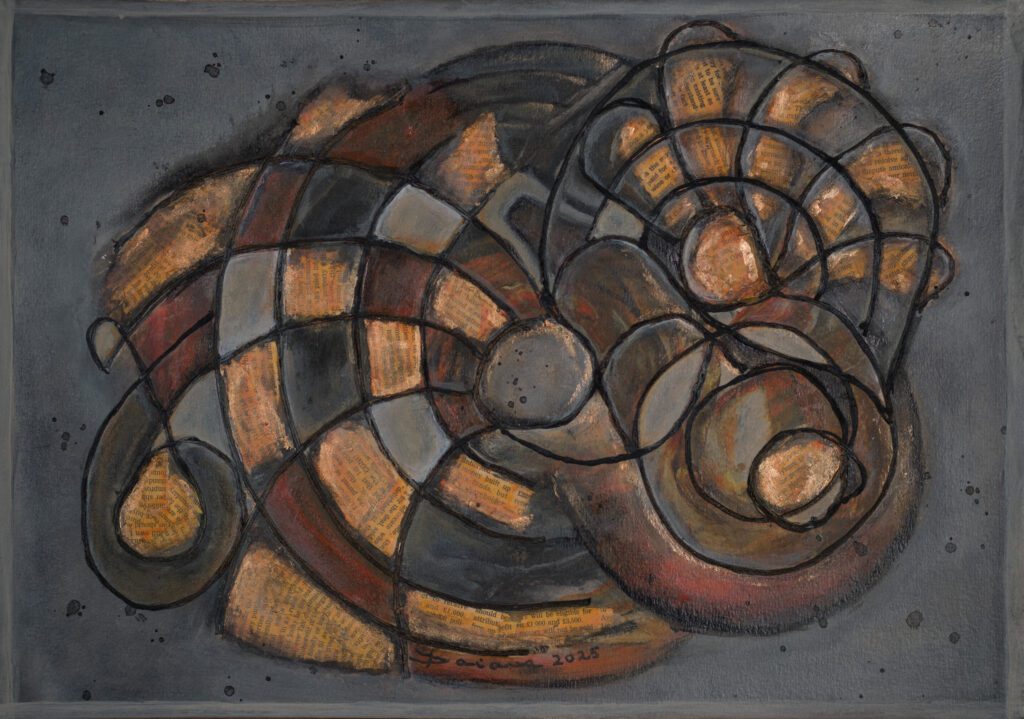
Q2. Your practice blends acrylic paint with fabric, upcycled elements, and collage. How do you decide which non-traditional materials will enter a piece?
Non-traditional materials enter my work intuitively, but never randomly. Each piece begins with an atmosphere or emotional direction, and materials are chosen for what they can carry beyond their physical presence, memory, texture, and lived experience. I am drawn to materials that already hold a history, especially fabrics and upcycled elements, because they introduce a sense of time and human presence into the work. I pay close attention to how a material behaves on the surface, how it interacts with acrylic paint, and whether it strengthens the emotional structure of the piece rather than competing with it. Ultimately, the decision is guided by balance. Materials are introduced only when they deepen the narrative or tension within the work. If a material does not serve the clarity of the composition or the emotional truth of the piece, it remains outside the process.
Q3. Colour is central in your paintings. How do you approach colour as a means of conveying mood or narrative before shapes take form?
Colour is often the first decision in my process, even before form or structure begins to emerge. I approach it as an emotional field rather than a descriptive tool, a way of establishing mood, tension, and rhythm at the earliest stage of a piece. I work intuitively with colour relationships, allowing them to suggest atmosphere and emotional direction. Certain palettes carry a physical response for me; they hold weight, softness, restraint, or intensity. Once this chromatic landscape is established, shapes and materials begin to respond to it rather than lead it. In this sense, colour becomes the underlying narrative of the work. It sets the emotional conditions in which forms can exist, guiding the composition from within rather than illustrating a predefined story.
Q4. In works like Between Stops and Inner Journey, there seems to be a dynamic between movement and stillness. How do you structure that tension?
In works like Between Stops and Inner Journey, the tension between movement and stillness is structured through rhythm, layering, and pauses within the composition. I often think of movement as an internal flow, suggested through repetition, directional lines, and shifting colour relationships, while stillness is created through moments of visual rest and containment. I build this dynamic gradually. Layers accumulate, overlap, and sometimes interrupt one another, creating a sense of progression, while certain forms or areas remain anchored, acting as points of pause. These quieter zones allow the eye to settle, making the surrounding movement more perceptible. This balance reflects how I experience time and inner space: moments of motion interrupted by reflection, transitions held between departure and arrival. The tension is not resolved but sustained, allowing both movement and stillness to coexist within the same visual field.
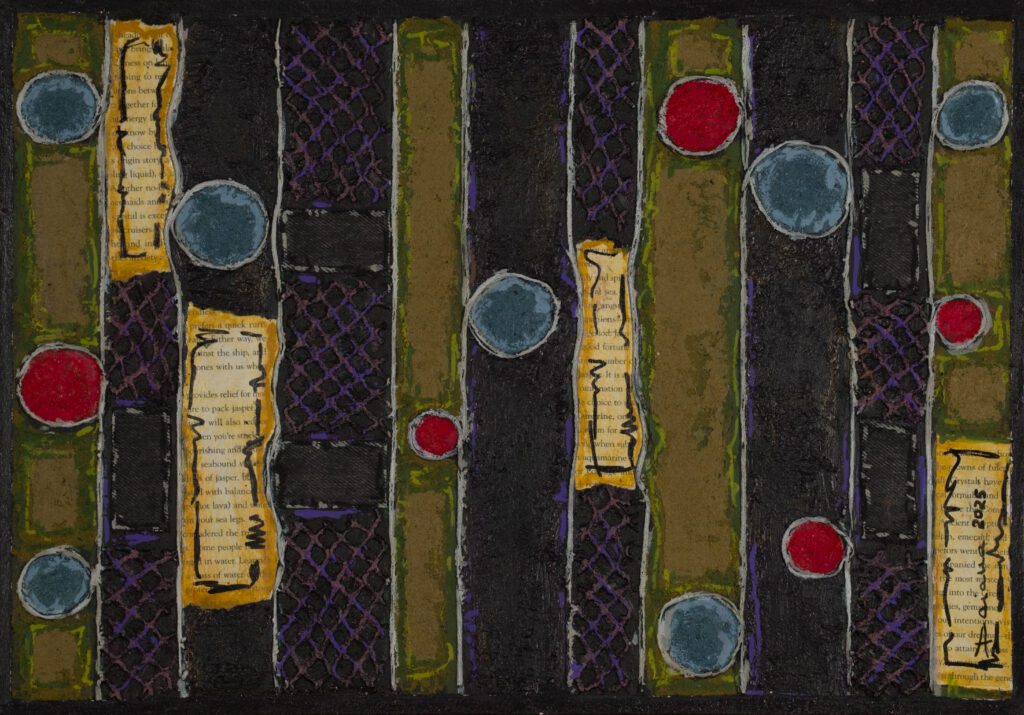
Q5. Do you see your paintings as stories about spaces we inhabit as much as people who inhabit them?
Yes, I see my paintings as stories about spaces as much as about the people who inhabit them. I am interested in spaces not as physical settings, but as emotional containers, places shaped by presence, absence, memory, and time. Rather than depicting figures directly, I allow traces, rhythms, and material relationships to suggest human experience. Surfaces become sites of accumulation, wear, and pause, reflecting how spaces absorb what happens within them. In this way, human presence is implied rather than illustrated. For me, space and person are inseparable. The environments we inhabit shape our inner states, just as our emotions leave subtle imprints on the spaces around us. My paintings exist in this in-between zone, where space becomes a quiet narrator of lived experience.
Q6. Can you walk us through your studio process from first mark to completion? What moments tend to change the direction of a piece?
My studio process begins with an intuitive first mark, often a colour field or a gestural layer that establishes atmosphere rather than form. At this stage, I work quickly, allowing instinct to lead before conscious decisions intervene. As the piece develops, I slow the process down. Layers of acrylic, fabric, and collage are added gradually, responding to what is already present rather than following a fixed plan. I often step away from the work, returning with fresh eyes to sense where tension, imbalance, or silence is needed. The moments that tend to change the direction of a piece usually arise from resistance: when a material behaves unexpectedly, when a colour asserts itself too strongly, or when the composition feels overly resolved. These interruptions force a reassessment, opening space for risk and adjustment. Completion arrives not when everything is explained, but when the work holds its own internal balance and no longer asks for intervention.
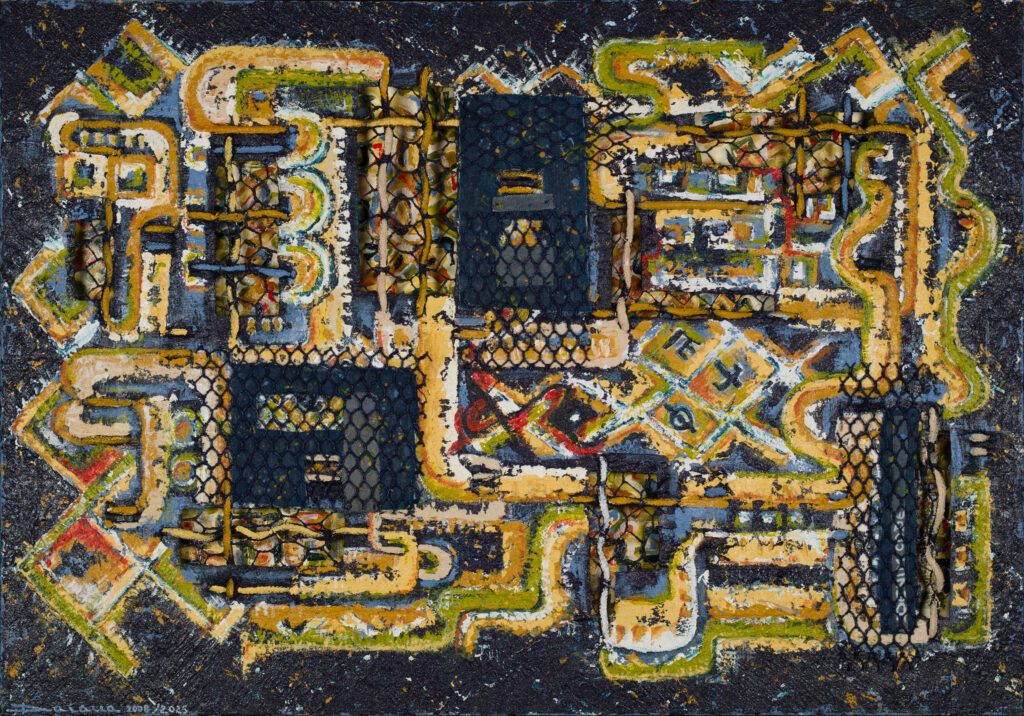
Q7. Your work invites viewers to find meaning in layering, texture, and colour relationships. What kind of engagement do you hope a viewer brings to your work on first encounter?
On a first encounter, I hope the viewer approaches the work with openness rather than the need to immediately interpret or define it. My paintings are not meant to be read as fixed narratives, but experienced as layered environments that reveal themselves through time and attention. I invite viewers to slow down, to notice shifts in texture, colour relationships, and material presence, and to allow their own emotional responses to surface without searching for a singular meaning. Engagement, for me, is less about understanding and more about resonance. If the work creates a moment of pause, recognition, or quiet connection, something that feels personal rather than explained, then that first encounter has already fulfilled its purpose.
Q8. Was there a moment or series that felt like a breakthrough where your approach or voice crystallised?
Yes, there was a period rather than a single moment when my voice began to crystallise. It happened through a series of works where I stopped searching outward and began trusting what was already present in my process. During this time, I became more selective, about colour, materials, and gesture, and more attentive to restraint. Letting go of excess allowed the work to breathe, and patterns began to emerge naturally across multiple pieces. That consistency signalled a shift from exploration to articulation. This series marked a breakthrough not because it introduced something entirely new, but because it clarified what needed to remain. From that point on, my practice felt grounded in a language I could return to, deepen, and sustain over time.
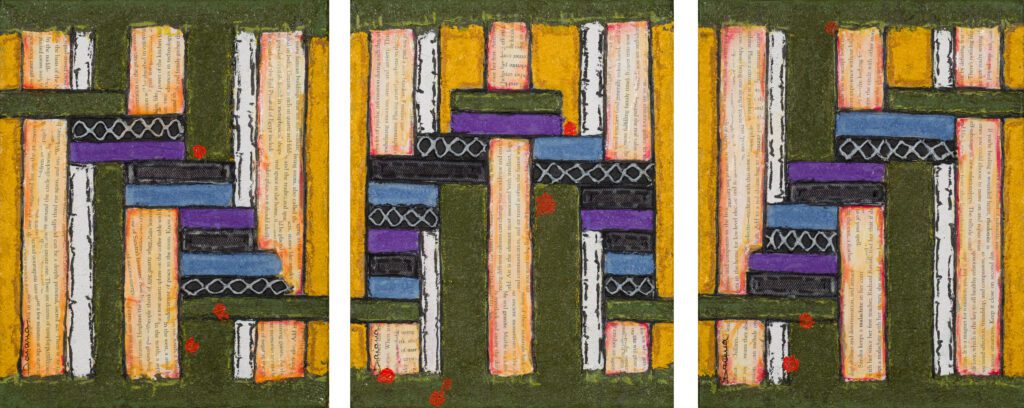
Q9. Looking back at earlier pieces compared to your most recent work, what shifts in methodology or language do you notice?
Looking back at my earlier work compared to more recent pieces, the most noticeable shift is a move from accumulation toward clarity. Earlier works were driven by an urge to explore and test possibilities, often layering instinctively in search of direction. In my recent work, the methodology has become more deliberate. I make fewer gestures, but each carries more weight. Materials are introduced with greater intention, and negative space has become as important as what is present. The language feels quieter, more restrained, yet more precise. This shift reflects a deeper trust in the process and in my own visual vocabulary. Rather than searching for meaning through addition, I now allow meaning to emerge through selection, reduction, and attention to what truly needs to remain.
Q10. What advice would you give to artists who want to build a practice rooted in experimentation and emotional truth without losing clarity of voice?
I would encourage artists to give themselves time, time to experiment freely, to make work that doesn’t immediately resolve, and to sit with uncertainty without rushing toward definition. Experimentation is essential, but clarity doesn’t come from doing more; it comes from paying attention to what consistently resonates. Listening closely to your own responses, emotional, physical, intuitive, is key. Notice which gestures, materials, or colours feel necessary rather than habitual. Over time, patterns will emerge, and those patterns form the foundation of a clear visual language. Clarity of voice is not something you impose on the work; it is something you uncover through honesty, restraint, and commitment. Protecting that clarity means knowing when to explore and when to pause, allowing experimentation and emotional truth to support rather than dilute one another.
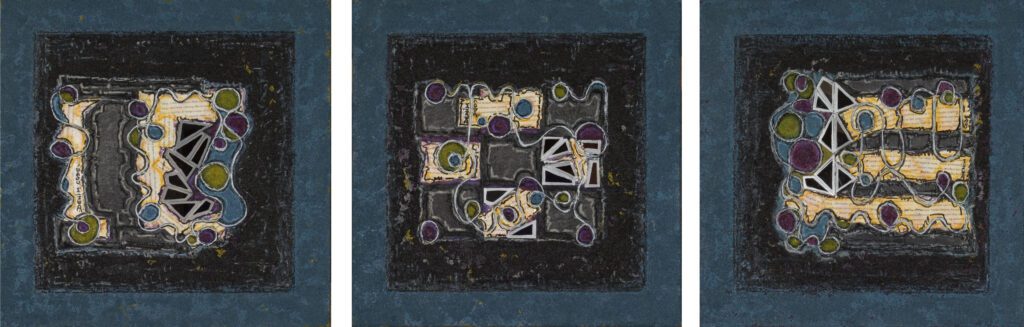
As our conversation drew to a close with Daiana, we sat in the quiet for a moment and realised that the quiet was the whole point.
Because Daiana’s work isn’t loud. It doesn’t announce itself or explain itself or demand that you understand it right now. It just exists in the space, the way the best things in your life exist, without performing, without needing your approval, without trying to be anything other than what it is. And that kind of confidence, the kind that comes from twenty years of making and removing and learning what needs to stay and what needs to go, that’s something you can feel even if you don’t know anything about art.
We kept thinking about those fabrics she uses. Materials that were already held by someone else. Already worn. Already folded. Already part of a life that happened before the painting existed. She weaves those into the surface and suddenly the painting isn’t just made by one person’s hands. It’s carrying the warmth of other hands too. Other lives. Other histories. And all of that accumulates quietly in the layers until the surface holds something that new materials never could.
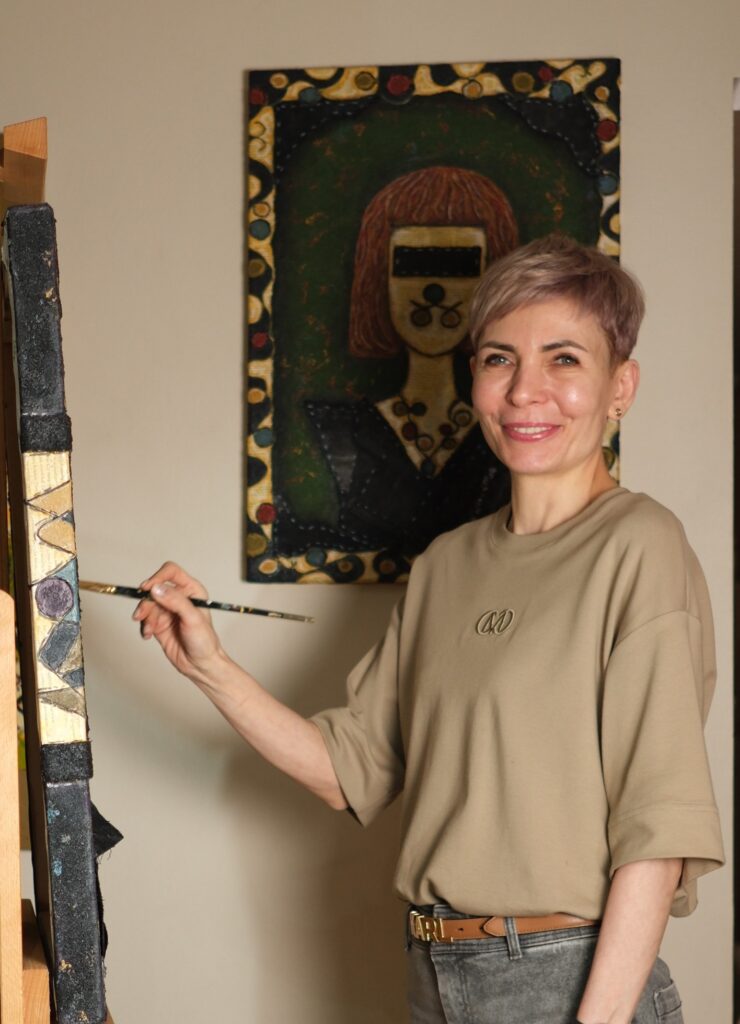
That’s the thing about Daiana’s work that we want anyone reading this to understand. It doesn’t try to impress you. It tries to include you. To make space for your own feelings and your own memories to sit alongside hers. The paintings are open enough that what you bring to them becomes part of what they are. And that openness is intentional and rare and the reason her work gets richer with time instead of simpler.
For collectors, this is work that ages the way the best things age. It becomes more itself. More embedded in your space. More personal. You’ll look at it in January and feel one thing and look at it in July and feel something completely different and both of those feelings will be right because the painting was built to hold all of them. That’s not decoration. That’s companionship. And the people who understand that are the ones who’ll value this work the most.
To follow Daiana’s journey and see more of her work, find her through the links below.
