
Faye Johansen on Drawing 100 Charcoal Faces Over Torn Maps and Music Notation
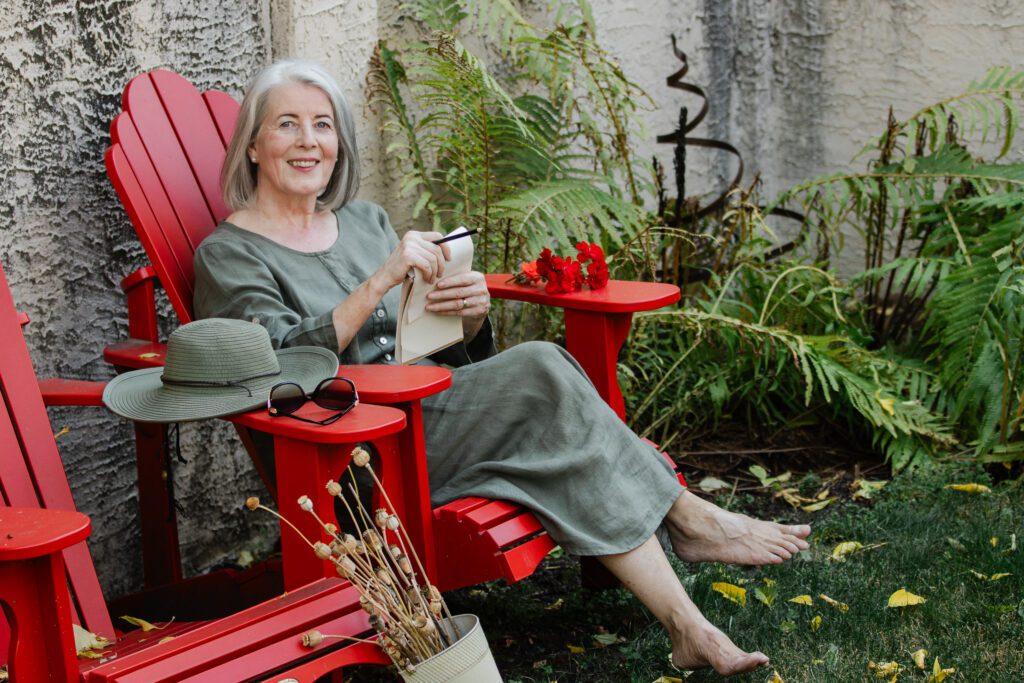
Some artists begin with an idea. Others begin with a material. Faye Johansen begins with attention.
Attention to the way water moves across paper. To the colours found in a single flower. To the marks a feather or a stick can leave behind. To the quiet shifts in landscape from ocean to mountain and how those changes shape the way something is seen, remembered, and painted.
At Women in Arts Network, as part of the Faces exhibition, Faye brings a practice that feels deeply rooted in this kind of noticing. Her work moves fluidly between watercolour, collage, and handmade journals, where every surface holds a trace of where it came from. Papers dyed with natural pigments. Tools gathered from walks. Layers built slowly, often guided as much by instinct as by intention.
There is an openness in the way she works. A willingness to let materials respond, to let watercolour remain unpredictable, to let nature take part in the process rather than simply being represented.
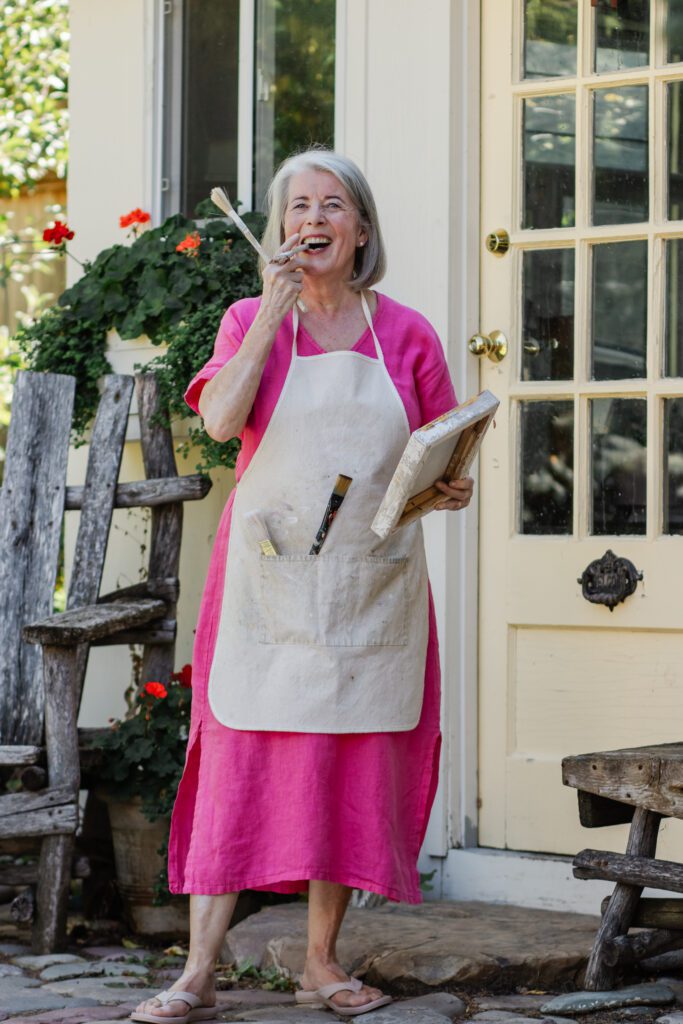
Her journals reflect this most intimately. They are not static objects but tactile ones meant to be touched, turned, experienced slowly. Each page holds its own palette, often shaped by nature itself rather than chosen deliberately.
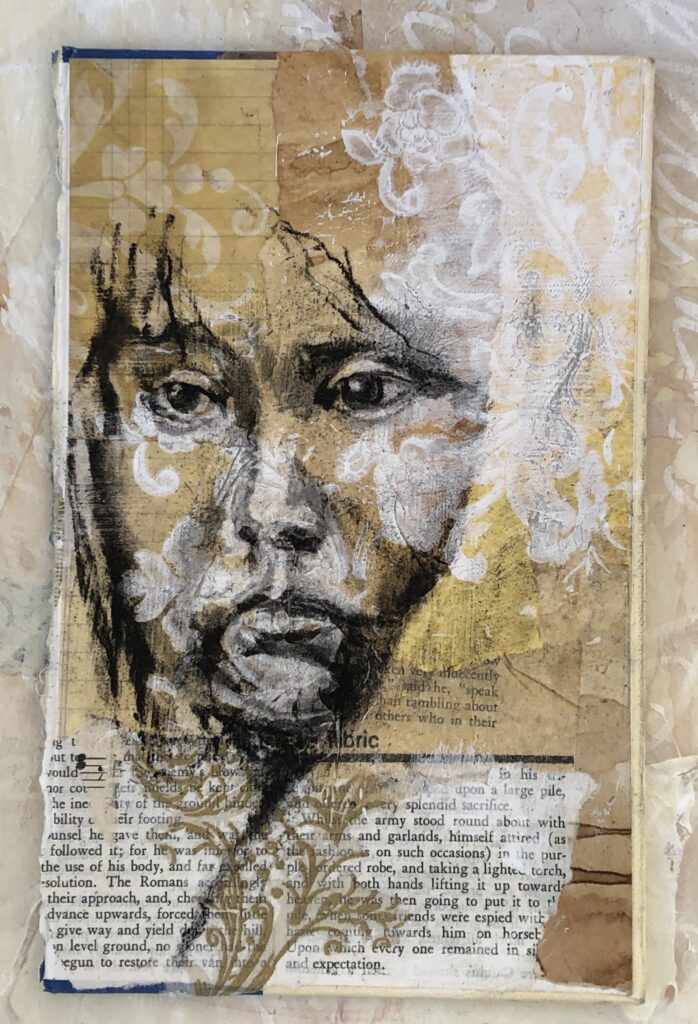
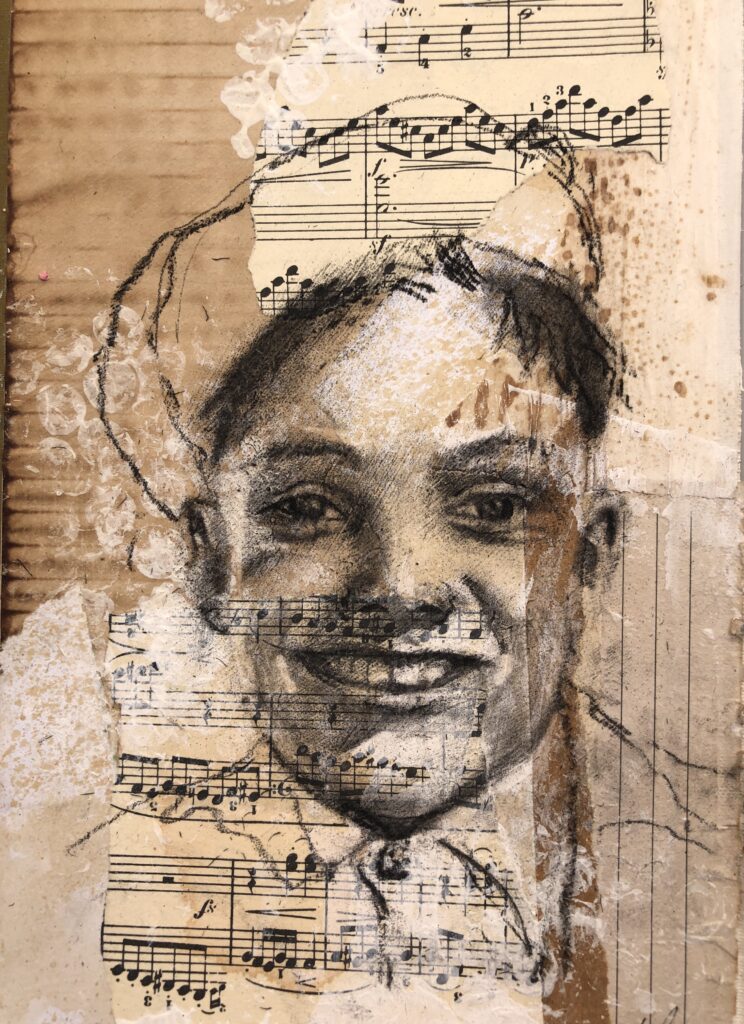
And then there is the series that sits at the centre of her presence in this exhibition. One hundred Indigenous children. One hundred charcoal portraits. Each one drawn onto a discarded book layered with fragments of maps, music, and memory. A body of work that extends her relationship with material into something far more weight-bearing.
This is where her practice shifts from observation to remembrance.
Now let’s hear from Faye about process, place, experimentation, and the moments she chooses to hold onto. And about how a practice built on curiosity and attention can lead to work that carries far more than image alone.
Q1. Can you share how your relationship with nature the mountains, skies, oceans first entered your world as a watercolour artist?
Living near the Atlantic Ocean, and now the Rocky Mountains I have an abundance of inspiration to capture moments surrounded by nature’s finest colour pallets. I find the beauty of imperfections in nature best captured using the uncontrolled nature of watercolour.
Q2. Many of your pieces are painted on recycled book covers. What inspired you to adopt this unconventional surface, and how does it affect the way you compose and paint?
The motivation and purpose behind choosing recycled book covers began when I drew 100 Indigenous faces of Residential School children to promote truth and healing in recognizing the impact Residential Schools had on the Native population of Canada. I used library books stamped “discarded” and began the process of covering them symbolically with torn fragments of maps for places they were torn from and forced to leave, music for the unfamiliar songs they heard and the familiar ones they never heard again. Pages with words they were forced to speak, and torn documents represent how they were torn from their families and all they knew. White gesso, to show how many were forced to be “white”. I used charcoal as it is a product from nature that is subject to being easily erased leaving only a shadow. The collage process created the shadows and marks that I noticed only after I sketched in charcoal to capture the emotions of children during a moment in history where innocence was lost and trust was gone.
Q3. In your watercolour journals and art journals, what do you think collage and paint say to each other that paint alone cannot?
Applying paint using a variety of unconventional tools from nature such as feathers, seed pods, wooden sticks, leaf imprints, creates a special beauty when applied over the unpredictable surfaces of collage. Most of the pages in the art journals are created from eco dyed paper where nature’s paint found in flowers, becomes imbedded and layered in the process. Each page has a unique colour palette often chosen by nature, not me.
Q4. Your landscapes, floral studies, and prairie skies often carry a sense of quiet presence. How do you decide which moments in nature are worth holding onto in paint?
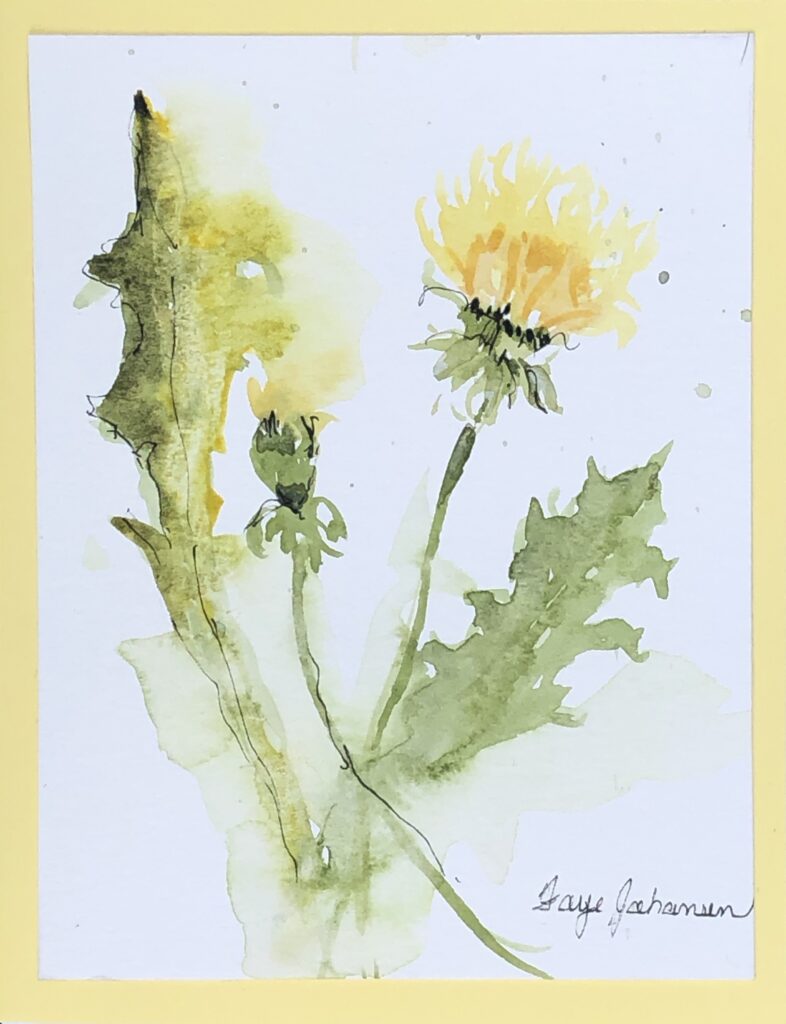
Allowing watercolour to act as it does, flowing and mixing on the page, creates a special beauty reflecting my experiences in nature at one moment in time, that I witness again and again with every season I experience. The unexpected arrival of the first flower of spring never loses its breathtaking beauty and motivation to capture this moment in watercolour once again. I strive to capture the special, often fleeting moments nature presents, year after year.
Q5.You explore materials and ideas constantly. How has learning online and experimenting outside traditional classroom settings shaped your evolution as an artist?
I have been inspired by numerous online artists who share not only their processes, but their love of art materials and the endless possibilities. I take what they teach and ask myself WHAT IF. What if I painted over collage, What if I combined, created and layered materials in a different way on a different surface. What if I made marks with this stick I found on my walk. What if I created swatches of colour from this mushroom, or seashell… What if I made lines like those revealed in the mountain’s rock formation.
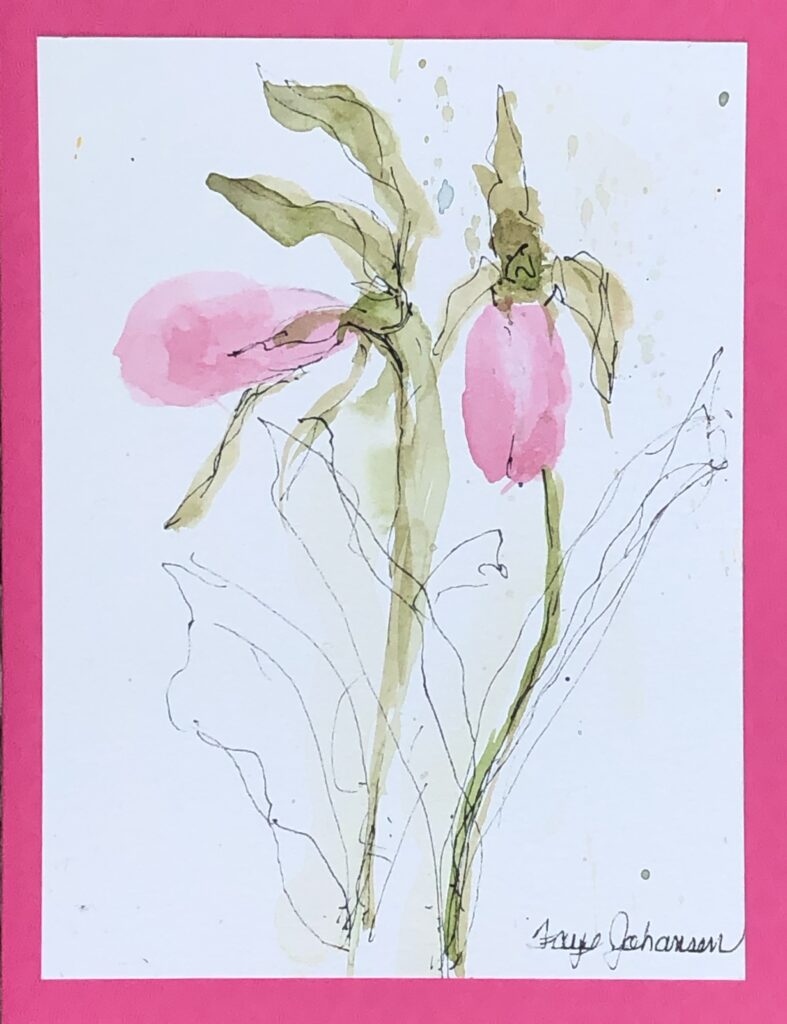
Q6. How has your long-term commitment to sketching “drawing everywhere” helped refine your watercolour language?
Like acquiring any language, practice is the key, along with a willingness and desire to improve through practice. In the moment when what you have created resonates with someone else, connection happens.
Q7. When a piece doesn’t come together as you hoped, what helps you reshape or reframe it?
I always paint two pieces at a time. While one watercolour is drying I move on to create it again, often with slight variation from what I learned from the first. I am looser and more fearless in my approach. I move back and forth between them, allowing myself to learn from each one.
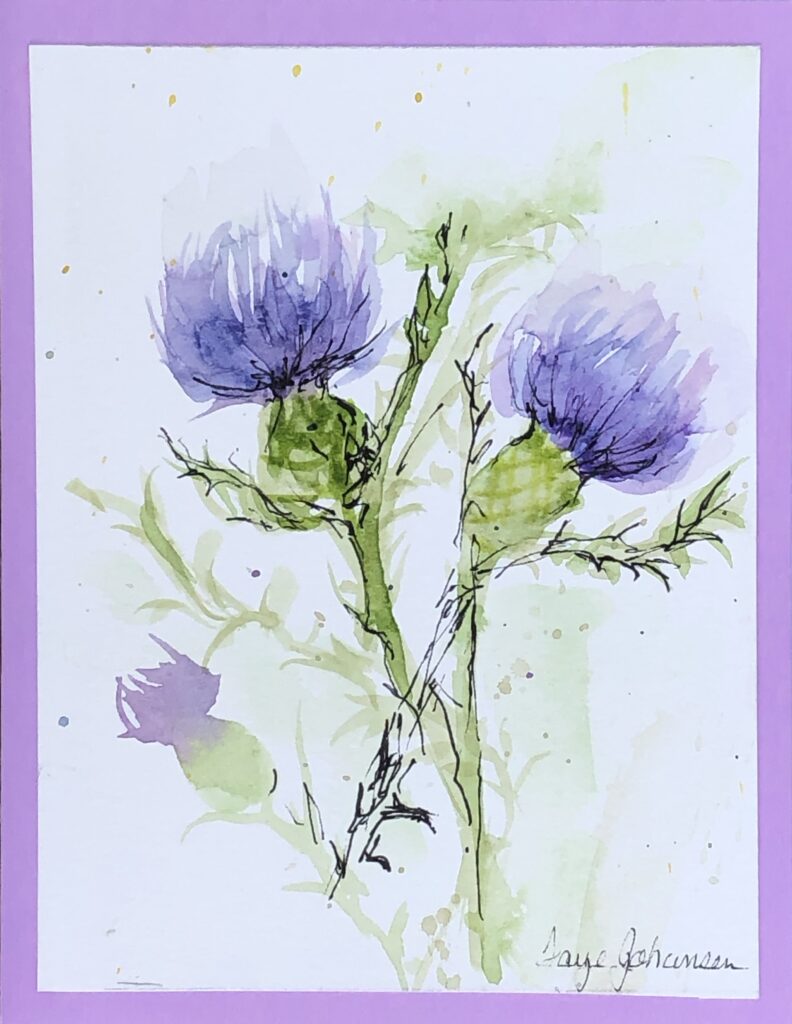
Q8. When someone first encounters your watercolour journals or mixed media pages, what do you hope they notice first gesture, texture, colour, or narrative?
My art journals are meant to be held and pages stroked with an inquisitive touch of the hand and perhaps a stroke from the pen.
Q9. Looking back on your earliest journal pages and paintings, what shifts in style or approach stand out most to you?
I now strive to have each page in my journals made by my hand and not from designs from purchased papers. I listen to the quiet promptings of what to create next, and I collect tiny bits of inspiration as I move through my life. A new grandchild on the way turns my interest to the morning sky and I capture the peach and blue in watercolour, for a series of delicate pages in a baby book. A well used discarded cookbook inspires a series of sketches of the ingredients used in the recipe. Returning home with a collection of small stones from the beach inspires stitching in those shapes and colors.
Q10. What advice would you give to artists who want to build a practice rooted in observation, material exploration, and a sense of mindful presence in their work?
Slow down and notice what you are drawn to as well as what is uninspiring to you. Begin a collection of these things that can be displayed in a bowl, or on a display board and add to it over time. Explore your memories that evoke emotions and connections.
As we come to the end of this conversation, what stays with us isn’t just a single body of work it’s the way Faye approaches making itself.
There’s a kind of steadiness in how she works. Whether she’s painting a shifting horizon, building a journal page from eco-dyed paper, or layering meaning into a surface before a portrait even begins, it all comes back to the same place. Paying attention. Letting the material do what it wants to do. Not forcing it.
And that kind of intention is rare. It changes how you see everything else she makes. Once you understand the care behind that series, you start noticing it everywhere. In the watercolour landscapes of the Atlantic and the Rockies. In the hand-made journals dyed with flowers she’s gathered on her own walks. Even in the way she paints with sticks, with seed pods because for her, the tool should belong to the same world as the subject. There’s a quiet kind of respect running through all of it. The kind you can’t fake.
Nothing feels rushed. Nothing feels distant. Spending time with her work feels different too. It doesn’t demand anything from you, but it does ask you to slow down. Not because it’s complicated, but because it reveals itself slowly. If you just glance at it, you might miss it. But if you sit with it, things start to show up the texture of the paper, the faint traces underneath, the marks left by something as simple as a leaf or a feather.
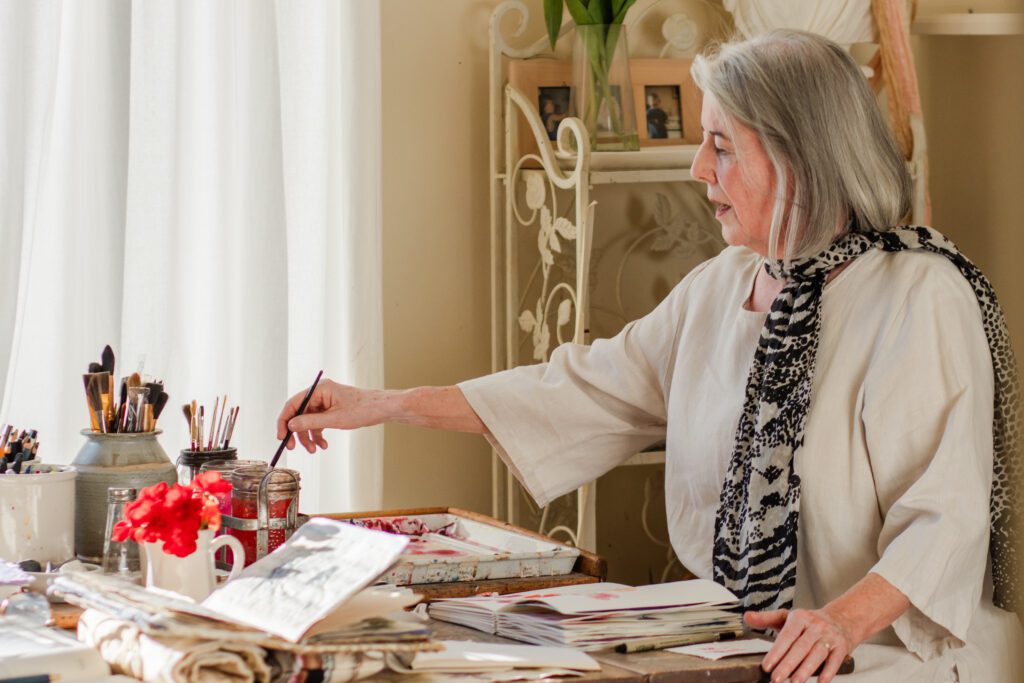
That kind of experience feels rare right now. And if you live with art or are thinking about it there’s something important in that. This isn’t just work that fills a wall. It changes how a space feels over time. It brings a kind of stillness with it. In a world that’s constantly speeding up, that kind of slowness starts to matter in a different way.
She’s been building this practice for years, and you can feel it deepening. The hundred-face project is heavy, and it stays with you. The journals feel personal, almost like something you’re not meant to rush through. The landscapes sit somewhere in between.
And whatever she does next, it’s going to come from the same place. The same curiosity. The same way of noticing. The same trust in letting things unfold instead of controlling them.
Because that’s really what her work does. It unfolds. And if you spend enough time with it, you become part of that too.
To follow Faye’s journey and see more of her work, you can find her through the links below.
