
This artist’s non-figurative abstracts show female identity in shapes & colours | Irina Forrester
At Women in Arts Network, we bring a different theme with every exhibition because we believe every artist deserves the chance to respond to something that actually speaks to them. Some themes are intimate. Some are expansive.
Some ask artists to look inward and some ask them to look at the world around them. For Landscape and Places, we asked artists to show us how place lives inside them. Not postcards. Not views. The emotional reality of standing somewhere that changed you or shaped you or held you in a way you didn’t fully understand until you tried to paint it.
The submissions we received genuinely moved us. Artists from everywhere showing us places we’d never been and making us feel like we’d stood there ourselves. But Irina Forrester’s work did something slightly different from the rest. It made us miss places we’ve never even visited. And that’s a rare thing for a painting to do.
Irina is a selected artist for the Landscape and Places exhibition and her paintings hold onto the kind of moments most people let slip by without noticing. Not sunsets. Not drama. The quiet ones. Light doing something unexpected on an ordinary morning.
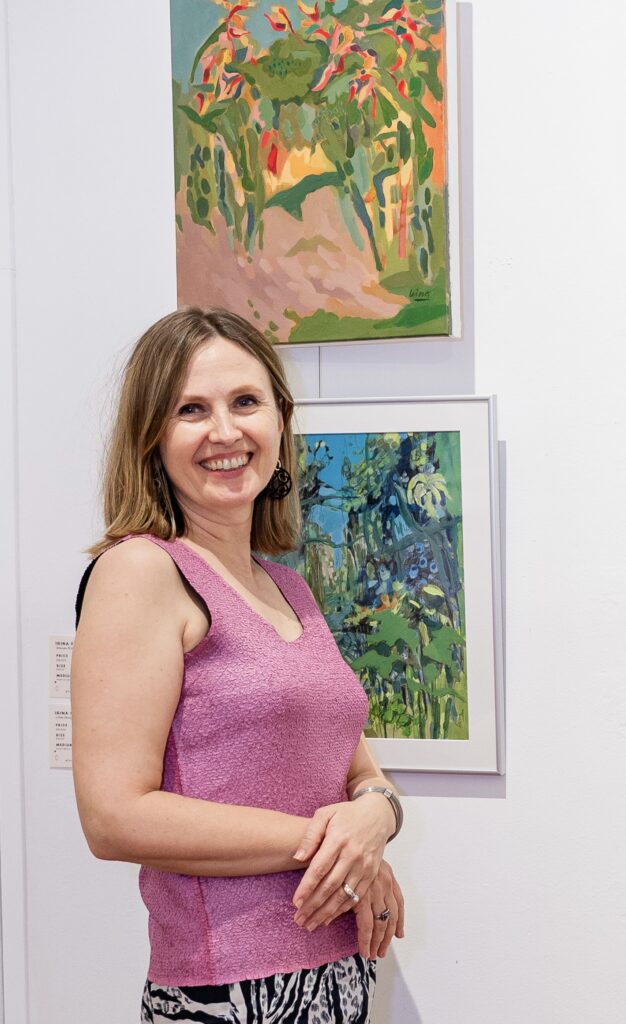
Colours sitting next to each other in a way that stops you mid-step. A familiar object in a familiar room that suddenly feels like it’s saying something it’s never said before. She catches those moments because she knows they won’t come back in quite the same way and if nobody pays attention they just disappear.
She works primarily in oil but she’ll move between acrylics, oil pastels, ink, monotype, whatever the subject asks for. She trained classically in Russia, learning to work from direct observation, and that foundation is in everything she makes.
When she paints a place she’s not copying it. She’s choosing what matters and leaving the rest behind. Her canvas holds her version of the place, the way it felt to her, not the way a camera would have recorded it.
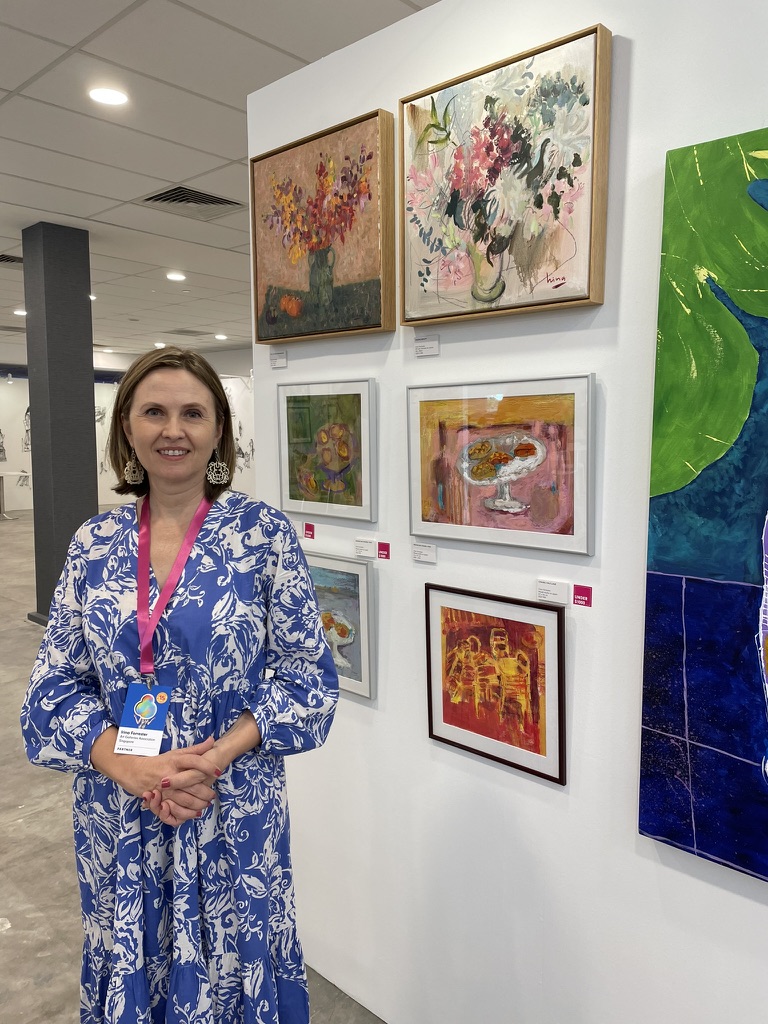
She stepped away from painting for years to raise her two sons. Doesn’t regret it for a second. But the return was hard. The longer she stayed away the more intimidating it became. Skills felt lost. Confidence faded.
And then she came back and something clicked and now she describes herself the way her favourite artist, Anthony Eyton at 102, describes himself. A painting machine. No distractions. Painting with urgency because the second act is here and she’s not letting a single day of it go to waste.
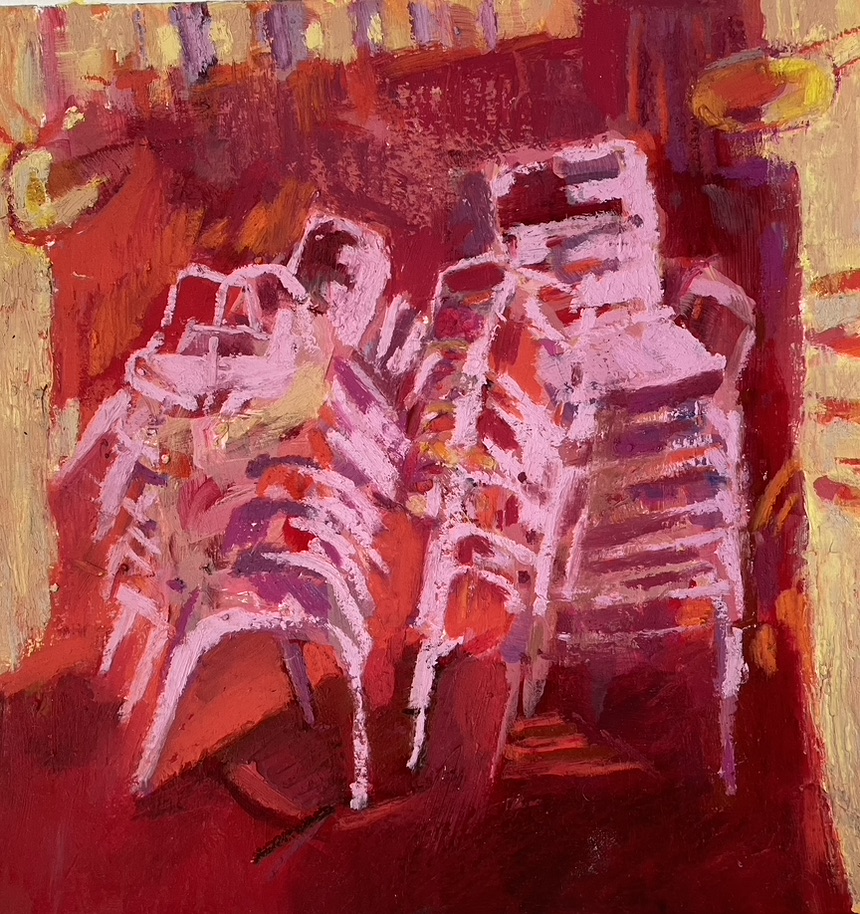
She lives as an expat and that changes how she sees everything. She notices things locals have stopped seeing because they pass them every day. Chairs. Mooncakes. Small ordinary objects that become markers of belonging and time when you’re living somewhere temporarily and paying attention to everything because you know none of it is permanent.
Now let’s hear from Irina, about stepping away and fighting back, about painting from life because photographs can’t hold what she’s after, about the ordinary moments nobody else stops for, and why the artist who sees the most might be the one who knows she won’t be standing in this place forever.
Q1. Can you share how starting your creative training early in Russia, stepping away from painting for several years, and then returning later in life has shaped the way you approach your work today?
Yes, I took time off to raise my two beautiful boys, and by no stretch of the imagination do I regret it. I only wish I had had the foresight to keep my practice going in some small way while being a full-time mother — even minimally.
The longer I left it, the harder it felt to return. It became intimidating, because I knew that inevitably some of the skills would have been lost. I recently heard one of my favourite British artists, Anthony Eyton, now 102 years old, describe himself as “a painting machine”, with no other distractions at this stage in his life. That is exactly how I feel now: having returned to art, there is no stopping me. Art has become my second act – and I am painting with urgency and conviction.
Q2. You work closely from life, whether landscapes, interiors, or people. What draws you to direct observation rather than working from photographs or memory?
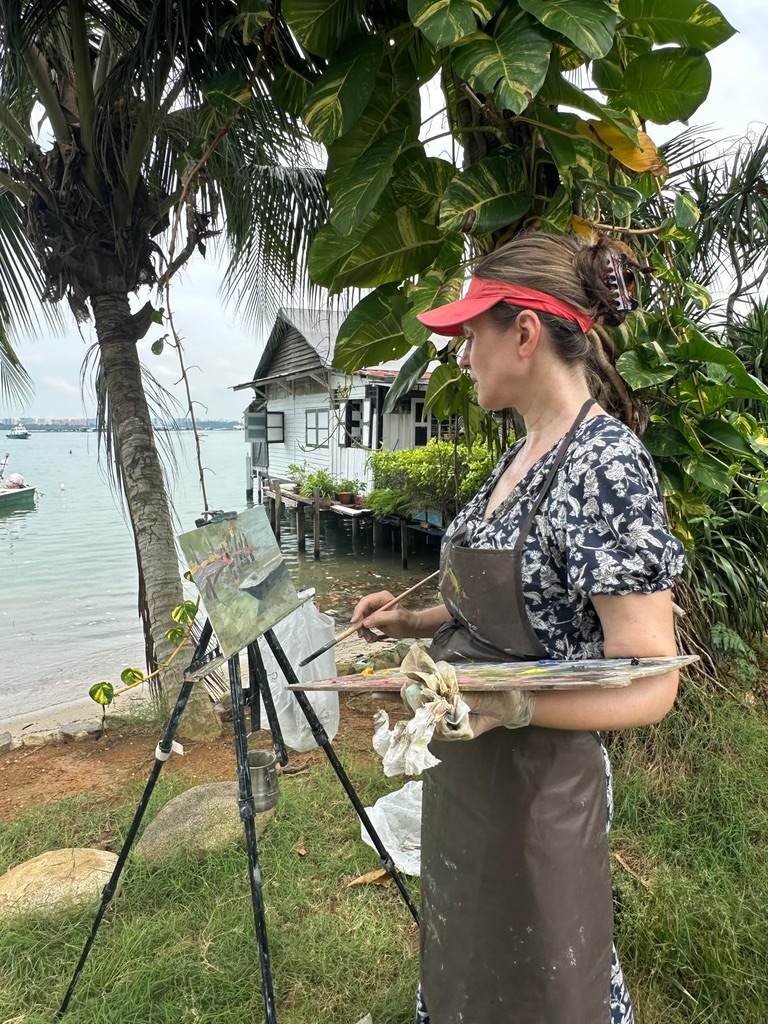
This was the traditional approach taught at art schools in the past. At the time, we did not question it, and I still believe it is the right way to begin — particularly during the foundational stages of one’s education. When I work on location or from life, I am in charge of what I choose to see and what to leave behind. It becomes my story, my narrative.
I am not merely copying what is in front of me; I make deliberate choices about what I want to say on each canvas. Photographs and memory may support the process, alongside life drawing sketches made on location, when developing a painting further in the studio.
Q3. There’s a calm, reflective quality in your work as if the paintings are holding onto something fleeting. What makes a moment feel worth painting for you?
A moment feels worth painting when it creates a quiet emotional shift in me. It is rarely something dramatic. More often, it is a subtle alignment light falling in a particular way, colours unexpectedly resonating with each other, or an ordinary scene suddenly feeling deeply present.
I am drawn to moments that might otherwise pass unnoticed. Painting them becomes a way of slowing them down and understanding why they moved me. It is not about recording facts, but about preserving a feeling — something fragile and temporary that I sense will not repeat itself in quite the same way again. If I feel that pause that slight stillness I know it is worth painting.
Q4. You work across several mediums, though oil appears to hold a particular importance what continues to draw you back to it?
I often say that I speak many visual languages, choosing the one that feels most appropriate to the subject at hand. I am currently working with oils, acrylics, oils pastesl, soft dry media, ink, monotype. Growing up in the USSR, we did not have much choice when it came to art materials. I was trained in oil painting, and it remains the medium I know and feel best. I value it for its versatility in application and its deeply expressive quality.
Q5. Your work often feels like a response to everyday life rather than dramatic scenes. Do you find yourself drawn to these quieter, more subtle moments intentionally, or does that come naturally to you?
I think of myself as a visual storyteller — illustrating the diary of my life through everything that surrounds me. As an expat living in a country temporarily, I tend to notice things that may seem mundane or ordinary to locals. I am less interested in what appears on a tourist’s radar and more drawn to the quiet, everyday subjects and places that shape daily life. I want to draw attention to these overlooked details and, in doing so, tell my own story of the place I call home — for now. That is how my mini series Chairs and Mooncakes came to life: small, familiar objects becoming markers of time, belonging, and observation.
Q6. You’ve spoken about painting as a way of capturing a feeling rather than just what you see. How do you balance observation with interpretation in your work?
The balance between reality and artistic interpretation has shifted significantly in my recent work. I now lean more towards interpreting and transforming what I see, rather than simply stating it. Reality remains the starting point, but it is no longer the final destination. I am more interested in reshaping it — distilling, adjusting and sometimes simplifying — so that the painting reflects not just what was there, but how it felt to experience it.
Q7. When you draw or paint a figure, are you more interested in accuracy, or in capturing a sense of presence or mood?
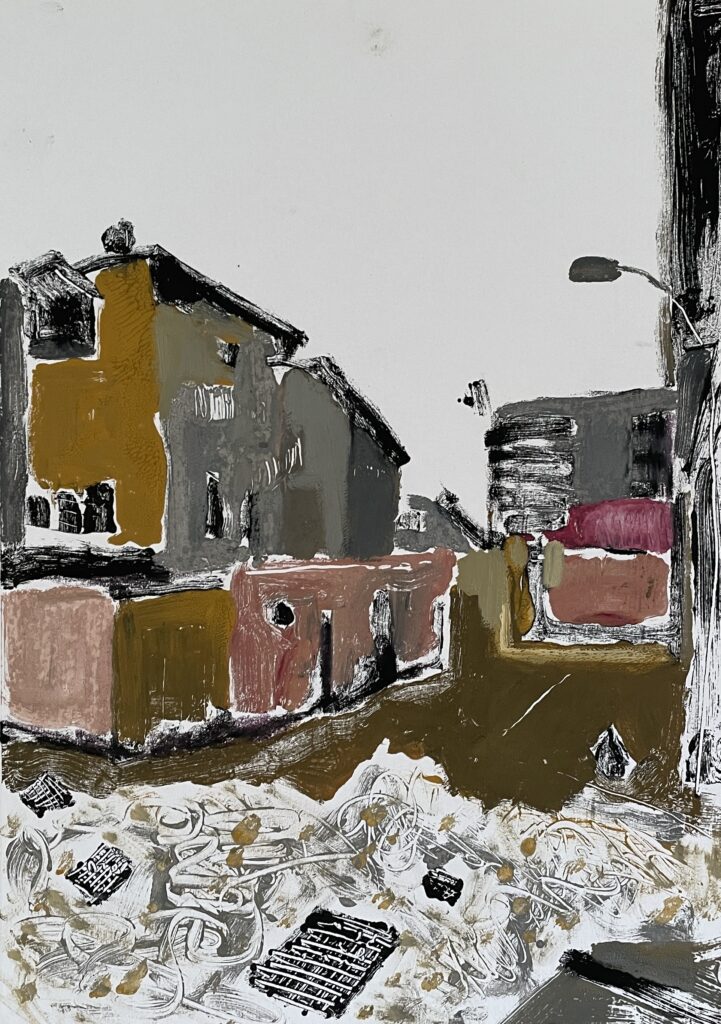
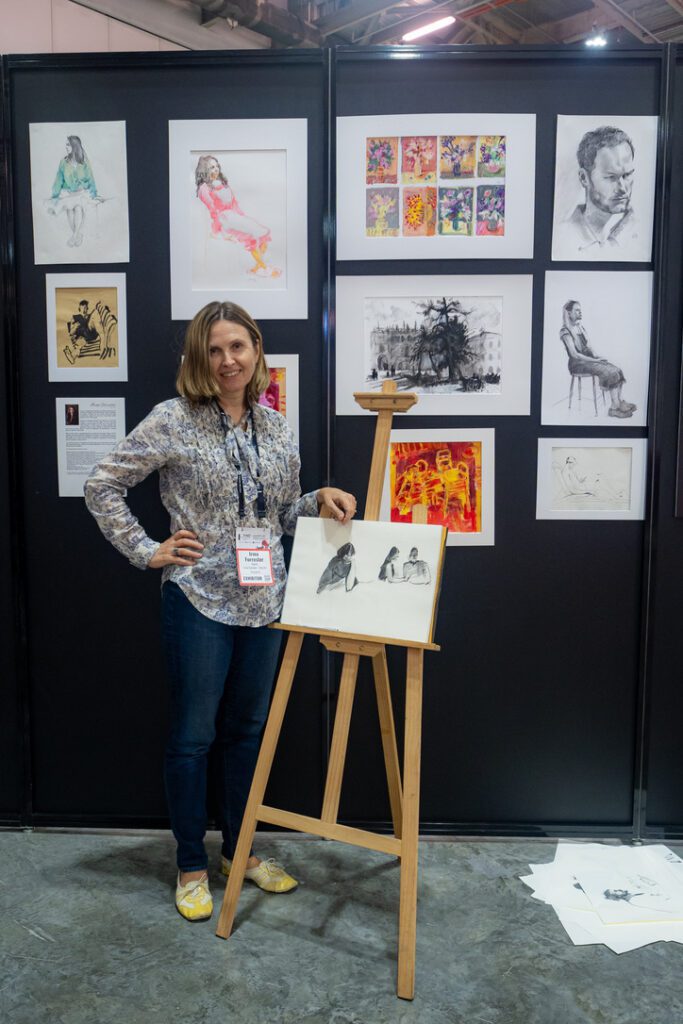
Figure life drawing is a great passion of mine, I devote six to eight hours a week to it, in addition to my studio practice. I have moved beyond merely trying to draw the human body accurately; I am now far more interested in capturing character and overall gesture, in making expressive marks and keeping a drawing alive, rather than faithfully recording every detail.
I feel in command of the process, choosing deliberately what to place on the paper what serves what I am trying to say, and what is better left unsaid. A quote attributed to Mary Newcomb feels particularly fitting to my current approach: “Drawing is what I am saying, and not what everyone hopes or expects to see.”
Q8. When you begin a painting, do you have a clear sense of where it’s going, or does it unfold gradually as you work?
I usually begin with a mental image of how the painting might look once completed. However, more often than not, it takes a different direction. There is little point in resisting it I have learned to follow where it leads.
That shift can be both frustrating and exciting. It asks for flexibility and trust, but it is often in those unexpected turns that the work becomes more honest and alive.
Q9. Your still life works, in particular, have a strong sense of atmosphere and light. When you’re working on a piece like that, what are you most focused on?
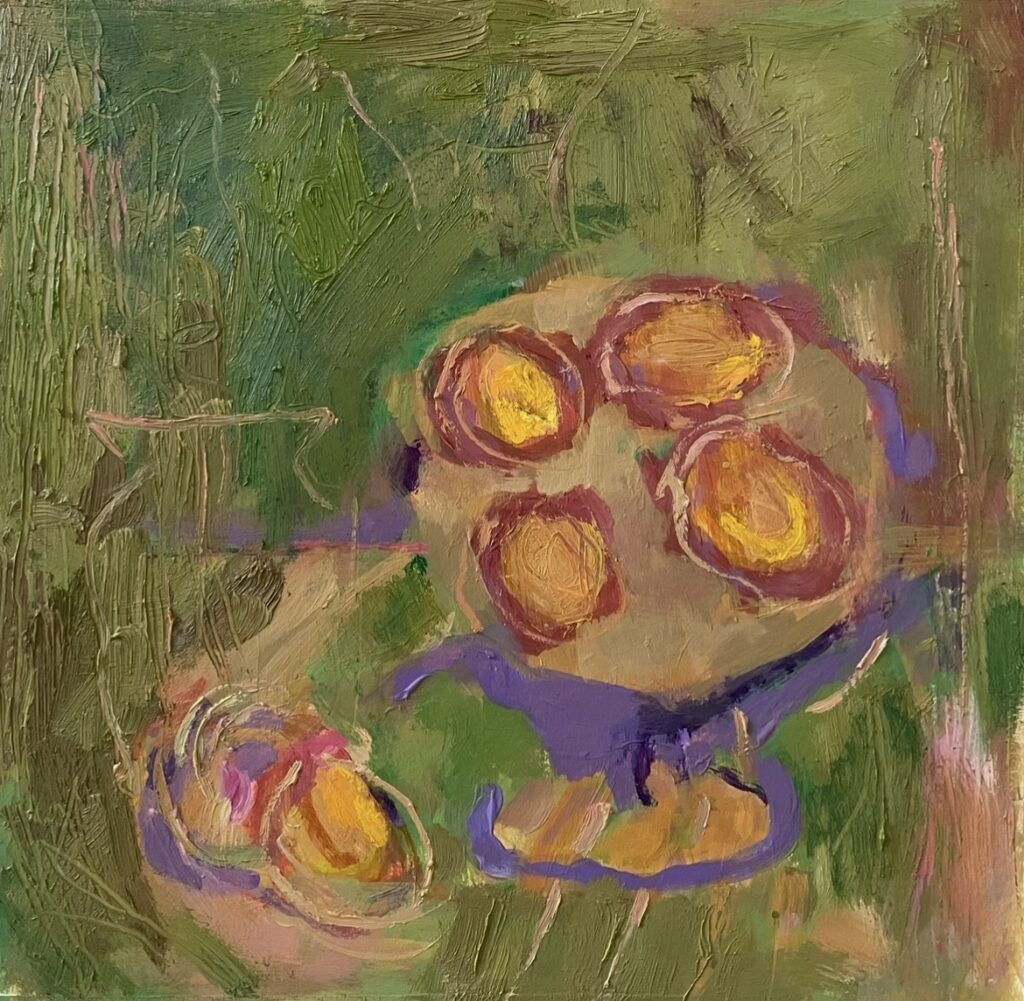
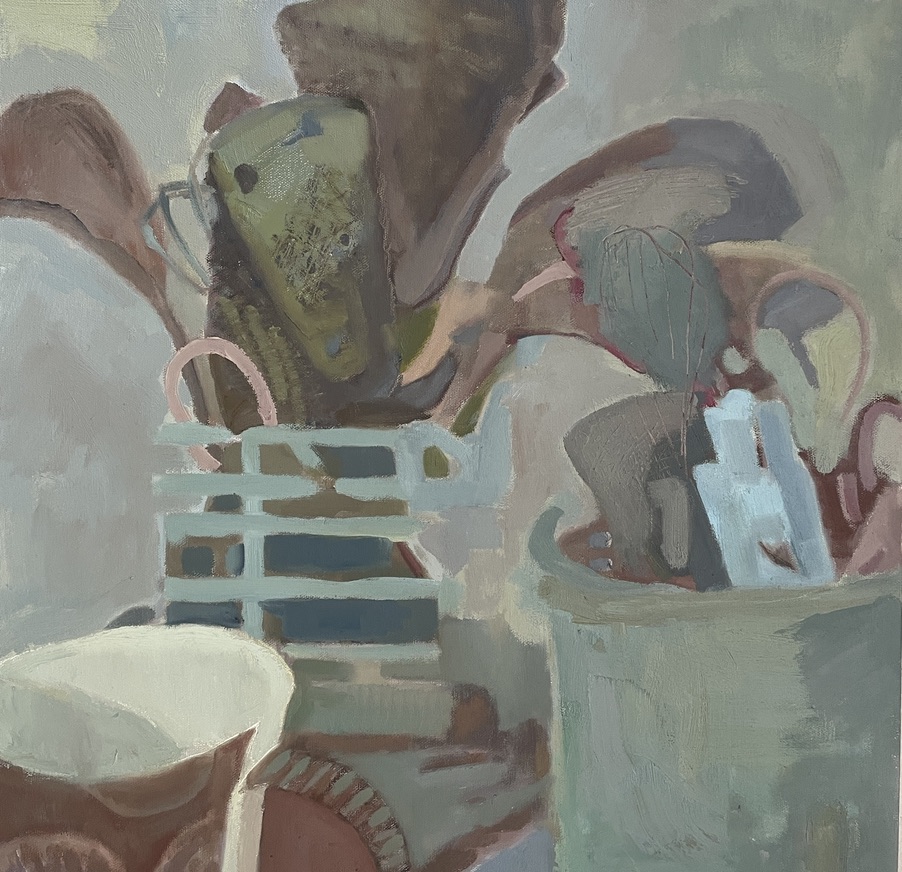
I love painting still life. When I work on it, I look for the way colour, light and shadow create new and unexpected forms how familiar objects can transform into something abstract, almost architectural. I am interested in discovering fresh shapes within the ordinary, allowing the composition to shift beyond simple representation.
My recent painting The Shape of Chores is a good example of this approach, where everyday objects become an exploration of structure, rhythm and space rather than just a depiction of domestic life.
Q10. Have you ever received a response from someone that made you see your own work in a different way?
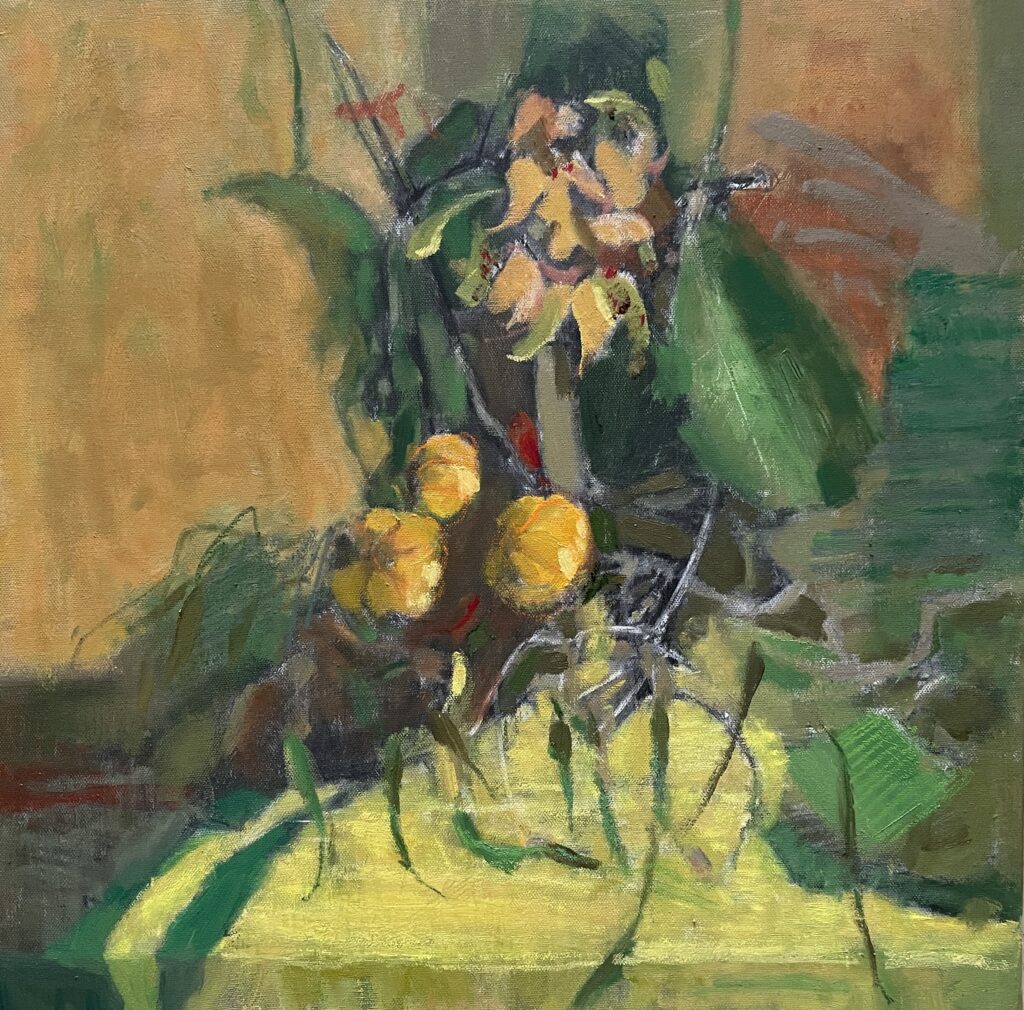
A recent visit to my studio by a potential client led to a very interesting conversation. She stood before one of my non-figurative abstracts and sensed a strong female identity in the shapes and choice of colours.
She questioned me about my state of mind and my feelings at the time the painting was made, but, quite frankly, I had nothing to offer that would confirm her interpretation. The painting is still in my studio, and I find myself returning to it and to that conversation in my thoughts.
Q11. Looking at your work today, what feels most important to you now that perhaps didn’t feel as important when you first began?
In my early years, I concentrated on capturing the likeness of my subjects whether animate or still. At the time, accuracy felt essential. Now, I am far more concerned with the emotional element of each painting. I look for interesting shapes and forms, but also for colour harmony using colour deliberately to reflect the mood and help tell the story. The likeness still matters, but it no longer leads; feeling, structure and atmosphere have taken its place.
Q12. For artists who may have stepped away from their practice or are trying to return to it, what would you want them to understand about building or rebuilding a creative life over time?
I often return to the saying, “A journey of a thousand miles begins with a single step.” Do as much or as little as time allows, and slowly rebuild your confidence. Find and get involved in your local art community; you will discover like-minded people and valuable support there. As your confidence grows, start showing your work at local art fairs, exhibitions and events, and build it from there.
As our conversation drew to a close with Irina, we kept thinking about second acts. About the woman who stepped away from painting to raise her sons and spent years watching the distance grow between herself and the thing she was trained to do. The confidence fading. The skills feeling rusty. The intimidation of returning to something you used to be good at when you’re not sure you still are.
And then she came back. And she came back not carefully, not timidly, but with the urgency of someone who knows exactly how much time she lost and has no intention of losing any more. A painting machine. Her words. No stopping.
We think every woman who’s ever put her own practice on hold for her family needs to hear Irina’s story. Not as inspiration in the generic poster sense. As proof. That the years away don’t erase what you built before them. That the skills come back faster than you think once your hands remember what they were made to do.
That the intimidation of returning is real but temporary and the work waiting on the other side of it is deeper and more emotionally honest than anything you made before because now you’ve lived. You’ve raised children and moved countries and watched ordinary moments pass and understood for the first time how fragile and unrepeatable each one of them was.
That’s what Irina paints now. The unrepeatable. The light that won’t fall that way again tomorrow. The chair that won’t be in that spot next year. The mooncake that means nothing to a tourist and everything to someone paying attention.
She paints from life because photographs can’t hold what she’s after. What she’s after is the feeling of being present somewhere knowing it’s temporary. And that feeling, that bittersweet awareness that you’re in the middle of something you’ll miss later, that’s in every brushstroke she makes.
For anyone who lives with art, Irina’s paintings bring something into a room that most landscapes don’t. Stillness that isn’t empty. Quiet that isn’t boring. The feeling of a specific moment in a specific place that somehow feels universal because we’ve all had mornings where the light did something we can’t explain and we wished we could hold onto it. Irina holds onto it. That’s her whole practice. And the people who hang her work on their walls get to keep those moments permanently.
To follow Irina’s journey and see more of her work, find her through the links below.
