
This Artist Left a 35-Year Career to Make Art About Menopause┃ Abigail Hammond
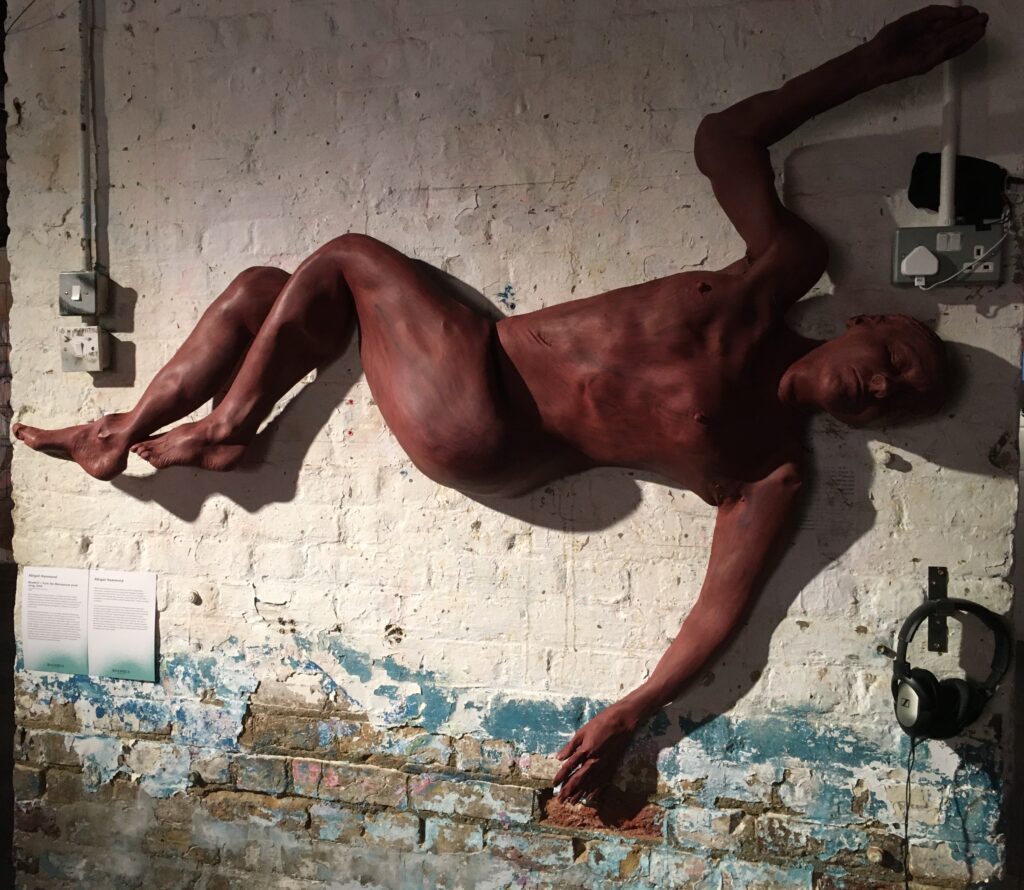
Most of the artists in our Faces exhibition at Women in Arts Network gave us something you could hang on a wall and admire from a comfortable distance. Abigail Hammond gave us something that refuses comfort entirely.
Plaster casts of her own menopausal body. Installations that put the nightly hot-flush ritual on a screen. And a punk song born from pure rage at a body that stopped making sense. This is not comfortable work. It’s not supposed to be.
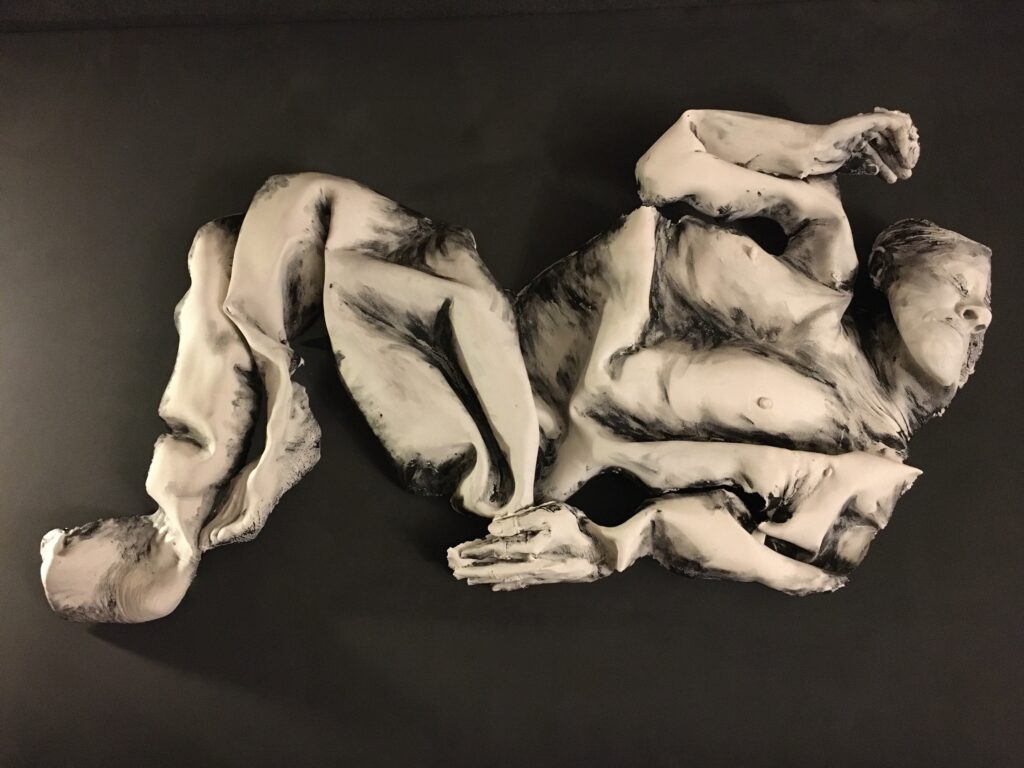
Abigail is a selected artist for the Faces exhibition, and her work does something that almost no art about women’s bodies does. It refuses to make it pretty. She makes sculpture and video and soundscape and installation about menopause as she actually lived it and she casts her own body in Jesmonite, every wrinkle and fold of skin in extraordinary detail, because if she was going to break the silence she was going to do it with the truth and not a softened version of it.
She works with her own body as material the way other artists work with paint. Casts it. Films it. Moves it. Her sculptures capture movement in stillness and her installations layer video and soundscape over the forms until you’re not looking at art about menopause, you’re standing inside the experience of it.
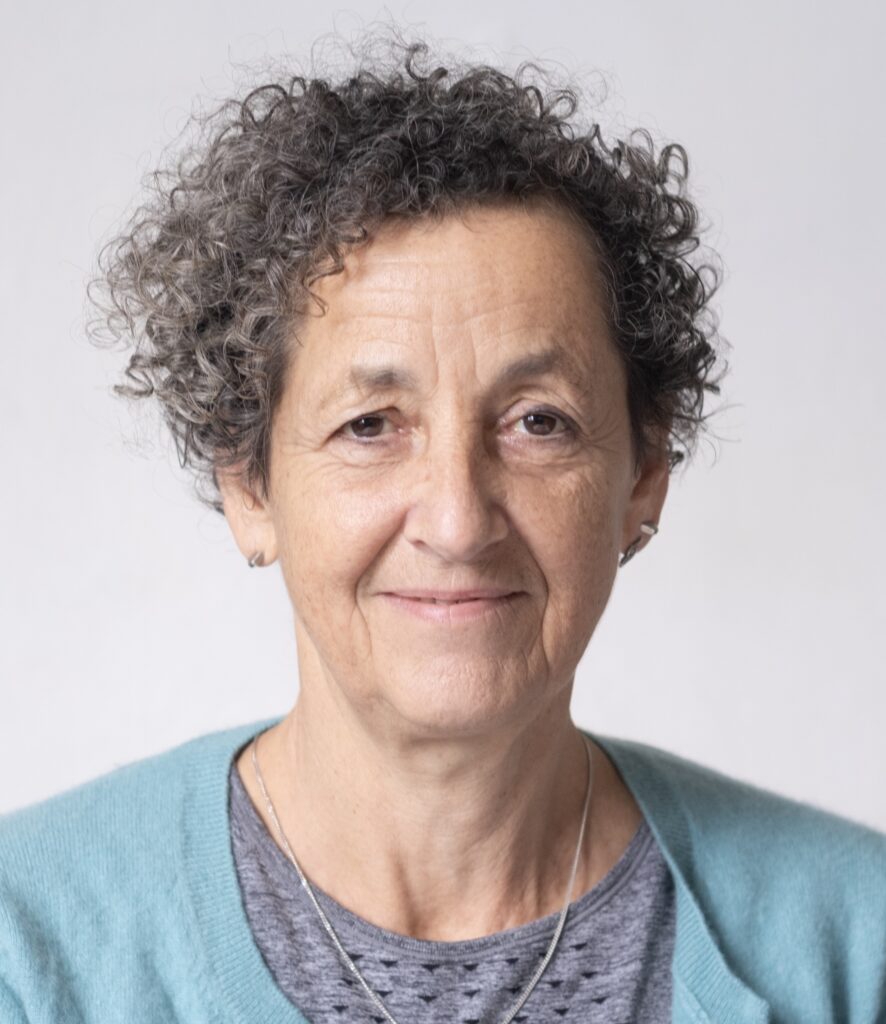
And when someone at a show once called her work beautiful and meditative she went home and made a punk song called Fuck the Menopause because beautiful and meditative was exactly wrong and if that’s what people were taking away then the work wasn’t being honest enough.
She came to this from thirty-five years in costume design for contemporary dance and theatre. A whole career understanding bodies in motion, how fabric and form and movement tell stories together. Course leader at Wimbledon College of Arts. Academic researcher.
And then redundancy at fifty-four and a Masters at Camberwell and perimenopause arriving right in the middle of everything and refusing to be politely ignored while she figured out her next chapter.
She shows work in galleries but also in libraries and health clinics and pop-up spaces where the conversations that happen around the art are sometimes bigger than the art itself. Men talking about their partners. Young women asking questions nobody answered for them. Strangers opening up about something they’d been carrying privately because an artist was brave enough to show it first.
Now let’s hear from Abigail, about casting her own body at sixty, about punk songs and fury and the moment she decided comfortable art was failed art, about thirty-five years in dance costume and the day everything became personal, and why the most uncomfortable work in this exhibition might be the most important thing in it.
Q1. Can you share your background and the journey that led you to explore menopause through art?
I grew up in the south east of England countryside with a Mum who made beautiful clothes to sell and who encouraged me to be creative and to dance, which included the experimental dance at Dartington College of Art in the 1970’s. I went to London to study BA Hons Dance Theatre at the Laban Centre. Building on my experience of creating costumes for school shows, I discovered that I was not cut out to be a dancer but that with movement as my language, designing costumes for dance was a vital additional layer of visual language that I could contribute. I had a 35 year career as a costume designer and lecturer and became course leader of the BA Hons Theatre & Screen Costume Design course at Wimbledon College of Arts, University of the Arts London.
As an academic I developed a field of research in the uniqueness of costume design in contemporary dance and took part in various national and international research dissemination activities, in conjunction with the Society of British Theatre Designers, the Victoria & Albert Museum, the Association of Courses in Theatre Design and the University of the Arts London.
I was made redundant from Wimbledon College in 2017, aged 54, and enrolled on a Masters degree course at Camberwell College of Art – Designer Maker. I was keen to explore what I would make as a solo artist in contrast to my past creative role as a collaborator, and also to move from the theatre world to fine art. My application proposal focused on my creative journey and childhood memories of designing and making and the question What next?
I was aware at this point of career change that I was not in a great place and perimenopause had been mentioned to me but it wasn’t until I was on my course that I realised how all-consuming the experience of perimenopause was. While exploring my artistic expression opportunity I could not deny it and decided I would try to express my experience through making.
Q2. What was the experience of peri-menopause like for you personally, and how did that lived experience evolve into a creative practice rather than just a topic of reflection?
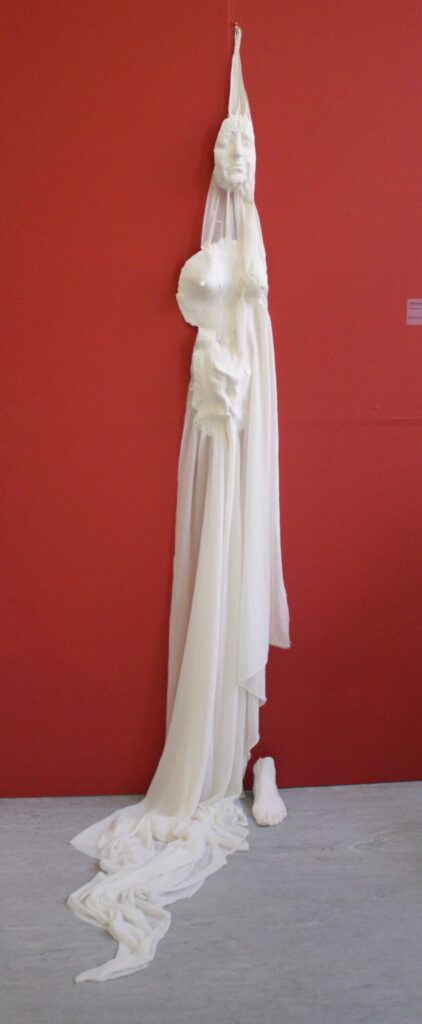
Perimenopause was hell, horrendous bleeding, brain fog, hot flushes, irritability, vaginal atrophy and emotional upheaval. My research led to discovering there are at least 36 identified symptoms. I reckon I went through them all. Material qualities had been key in my costume design practice and now I needed to experiment with materials and form to communicate my experience.
I had started making objects in ceramic and was then introduced to Jesmonite, an acrylic based plaster, which when layered into silicon moulds, would produce extraordinarily detailed reproductions, and in my choice, these were of my body, the site of my physical and emotional experience.
Q3. Your work spans sculpture, video, soundscape, and installation. How do you choose which medium best expresses a particular facet of the menopause experience?
I don’t choose a material or medium in relation to a facet. I think of it more as the mediums I like to work with are my tools and I decide how best I might use them to communicate an intention. My sculptural work aims to capture movement in stillness and, linked to my dance background, to hopefully elicit kinaesthetic empathy in the viewer.
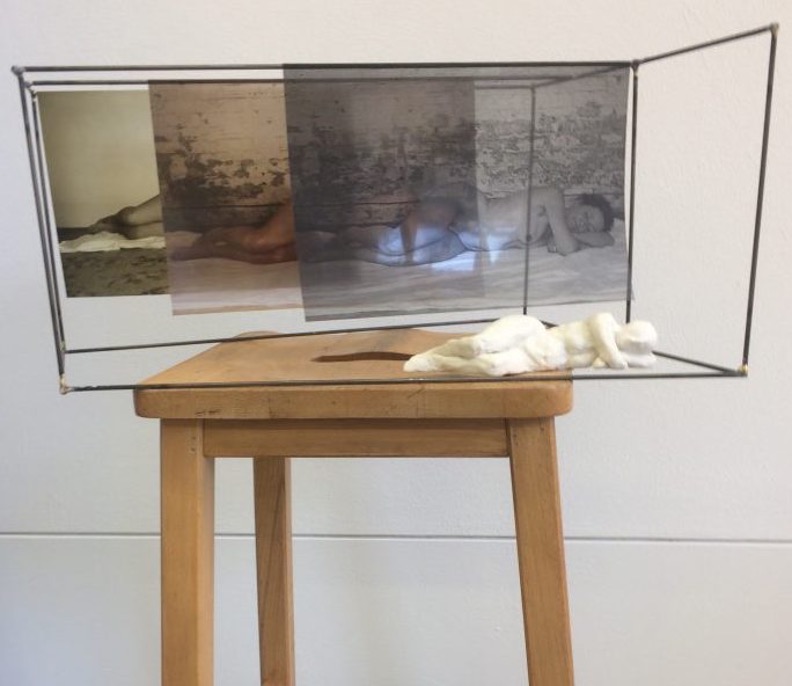
The installation works build on this by layering video of ‘performance’ / enactment of the nightly ritual of covers on, covers off while suffering repeated hot sweats. Sound is very important to me in expressing emotion and I am fortunate to have a partner who is a musician and willing to work with me, creating soundscapes. I choose Jesmonite because I want to show reality, of my body, every wrinkle and fold of skin.
I choose to move because I know I can express myself through movement. I experiment with other materials and objects to tell the stories I want to tell. I chose to make a punk song and video called Fuck the Menopause because I heard some people saying a piece my work was beautiful and meditative. Menopause is not, that work failed. I wanted to say it loud and clear, with anger and a vitality that I had, on a good day.
Q4. Your pieces have been shown in public pop-ups and experiential settings. How does context gallery vs street vs community space change the way the work interacts with viewers?
In pop up situations, like in libraries or health clinics, people who are not necessarily going to visit galleries interact with me and the work and talk more about menopause than they do the work. I have had numerous conversations with men about their wives and partners. Interesting, less conversations with mature women, mostly younger. In a gallery setting, people come to experience art and whilst appreciative of the activism of visualising the menopause, the interaction is intentional as opposed to interventional. In both settings, I hear appreciation for provoking dialogue about this period of women’s lives.
Q5. Many women experience menopause privately. What has it been like to bring such a personal experience into public discourse through art?
I think my ability to be so public, with reproductions of my naked body, is again linked to my dance background – the desexualising of my body and using it as a performative tool. It has provided me with a vehicle to not be private, not to suffer alone and to hear others sharing their experiences or appreciation for insight has given purpose to my 9 years of peri and post menopause.
During my research I discovered that other women, the other side of the world, had also used the words ‘ I feel like I’m dying’. Words I had found myself saying to myself, and reluctant to tell my partner as I was shocked myself. Despite being ‘through’ the menopause, continuing to exhibit my work gives me purpose.
Q6. When someone encounters your work for the first time whether familiar with menopause or not, what reaction or internal conversation do you hope it sparks?
Empathy, solidarity, curiosity.
Q7. What has been the most meaningful moment of connection you’ve witnessed between people in response to your work?
The response to the music video Fuck the Menopause – it makes women laugh. There’s not much to laugh about during menopause!
Q8. Your project is grounded in empathy and feminist theory. How do you integrate research, lived experience, and theory into a coherent creative practice?
Well, is it a coherent practice? I don’t know. I know I just make work that is meaningful to me as an expression of experience and that I hope will give others a valuable experience. I have always felt the need to be seen and heard – that if I have the confidence to voice things I should.
It’s difficult to answer this, but I think that as I have been a creative practitioner all my life, that process of integrating research, lived experience and theory are habitual. Being curious about myself and others, society, the positioning of women, material qualities and communication is my daily life.
Q9. In retrospect, was there a specific piece or moment that felt like a turning point in how you understood the project’s purpose?
I think my most successful piece is the one least seen because it is an installation, ‘It comes in waves’, that successfully brought together the element of sculpture, video of performance projected on to them and with a soundscape.
It worked. But that isn’t really the answer to your question. I think I realised early on, during my MA course, that I was not going to become a successful gallery artist, people were not likely to buy my work and that activism was my purpose.
Q10. What challenges have you faced in maintaining this project emotionally, physically, or intellectually and how have you sustained momentum?
With a growing interest here in the UK in arts and health and networks of women artists making work about issues affecting women I have felt sustained by being part of this community with opportunities to share work. Getting funding is more difficult and frustrating, so finding other ways to earn a living while doing my practice unfunded, as, now a 60+ woman, is not so easy.
Making work from a personal perspective requires space to tap into feelings and figure out how to express them creatively. For a couple of years I didn’t make anything partly due to other things going on but also because I was, for the most part, through the menopause. I had wondered what I would make when that happened.
When I did have space recently I heard myself saying ‘I’m not who I was’ and knew this was the name for a piece of work. I then had to figure out how I would make that. It was great to be back in my studio making.
Creative processes can be so meditative and cathartic.
Q11. What advice would you offer artists who want to explore deeply personal and socially complex themes in their work while inviting open, empathetic conversation?
Just do it. Say what you want to say. Explore different ways to say it. Find other women who are saying things through any medium. Don’t be afraid to be messy, being a woman is messy. Your experience matters, your voice matters.
As our conversation drew to a close with Abigail, something kept sitting with us that we couldn’t shake. That women on opposite sides of the world, women who will never meet, have said the exact same five words about menopause. I feel like I’m dying. Said alone. Said quietly. Said to themselves because saying it to anyone else felt too frightening or too dramatic or too much.
And that right there is why Abigail’s work matters beyond any gallery or exhibition or art conversation. Because when millions of women go through the same thing and each one thinks she’s the only one, that’s not a medical issue anymore. That’s a silence issue. And silence is exactly the thing Abigail has spent nine years refusing.
She could have made elegant work about this. She has the training. Thirty-five years of costume design for contemporary dance. She knows how to make bodies look extraordinary in space. She knows beauty. She knows grace.
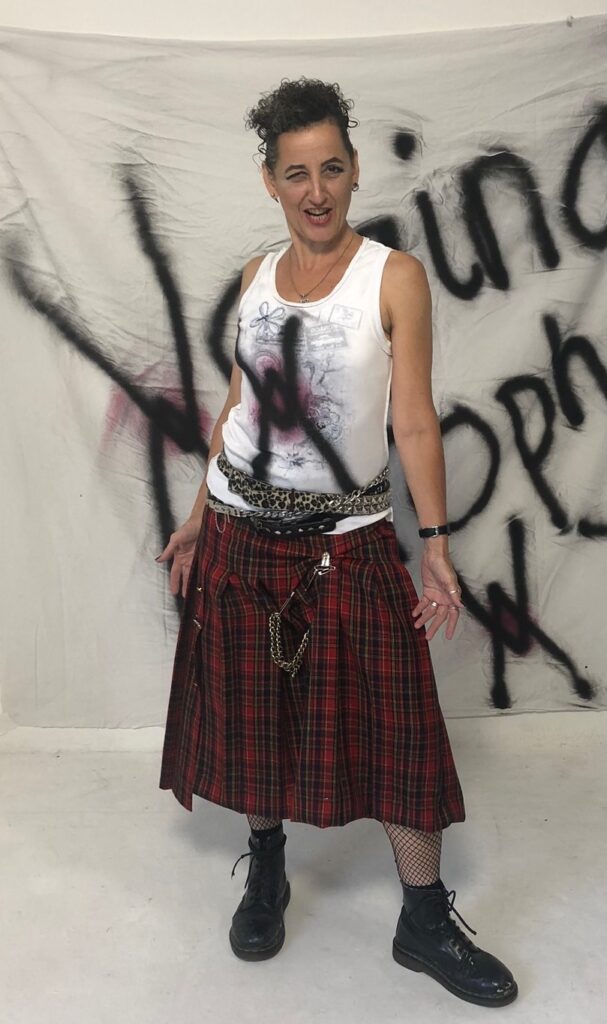
She chose not to use any of it. Because menopause isn’t graceful and pretending it is would be another form of lying about what women actually go through. So she cast her own body in plaster, every fold and wrinkle, and made a punk song at sixty because the rage deserved rage, not aesthetics.
Someone once called her work beautiful and she took it as failure. We keep thinking about that. About how many artists would kill for that compliment and Abigail heard it and thought I’m not being honest enough. That tells you everything about what drives her. Not beauty. Not sales. Not gallery approval. Truth. The uncomfortable, messy, unglamorous truth of what’s happening inside women’s bodies while the world looks the other way.
She figured out early that this wasn’t going to be commercially successful work. Nobody’s buying plaster casts of a menopausal body for above their fireplace. And she made peace with that because the work was never for fireplaces. It was for the woman in the library who stops and stares and for the first time in years feels like somebody actually understands. For the man who walks past and suddenly thinks about his wife differently. For the stranger who starts talking about something they’ve never talked about because someone else went first.
That’s what Abigail does. She goes first. So the rest of us don’t have to suffer it alone.
To follow Abigail’s journey and see more of her work, find her through the links below.
