
From painting murals on her kids’ walls to room-sized florals: The creative journey of Julia Kulish
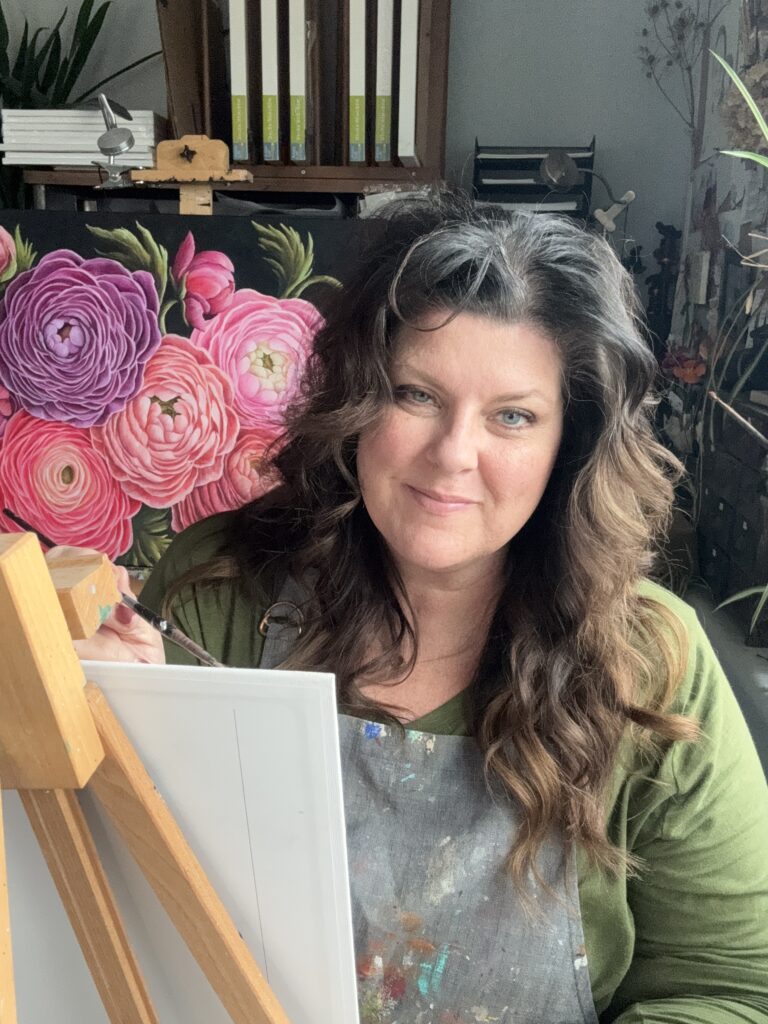
At Women in Arts Network, every exhibition theme we build comes from real research and real intention. We look at what artists are feeling, what the world needs to see, what conversations haven’t been given enough room yet.
When we began imagining Spring Through My Eyes, we kept returning to one thought: no two people experience spring in quite the same way. For some, it’s found in the first flower that appears after winter. For others, it’s a feeling of renewal, a childhood memory, or simply the way the world seems to soften. We wanted this exhibition to celebrate those deeply personal interpretations of the season through the eyes of artists.
As we explored the submissions, Julia Kulish’s work immediately caught our attention. Her paintings radiated a warmth and vitality that perfectly captured the spirit of the exhibition while offering a perspective that felt deeply personal.
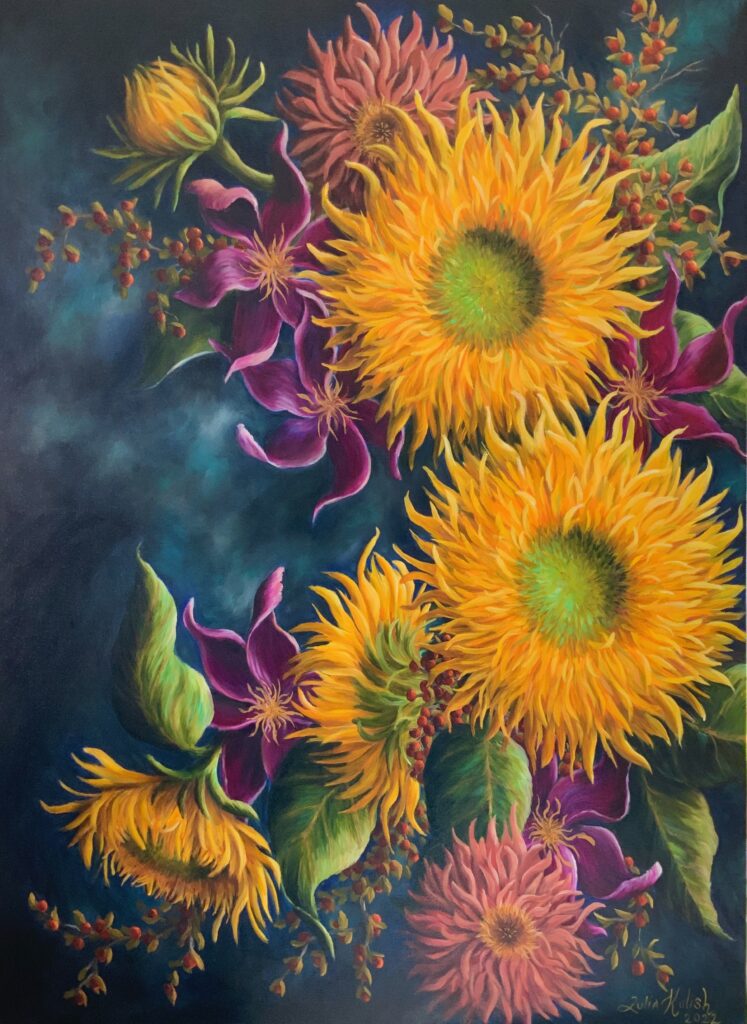
Her flowers don’t quietly occupy the canvas they seem to bloom beyond it. Working on a large scale, she creates compositions that surround the viewer with colour, movement, and the joyful abundance of nature.
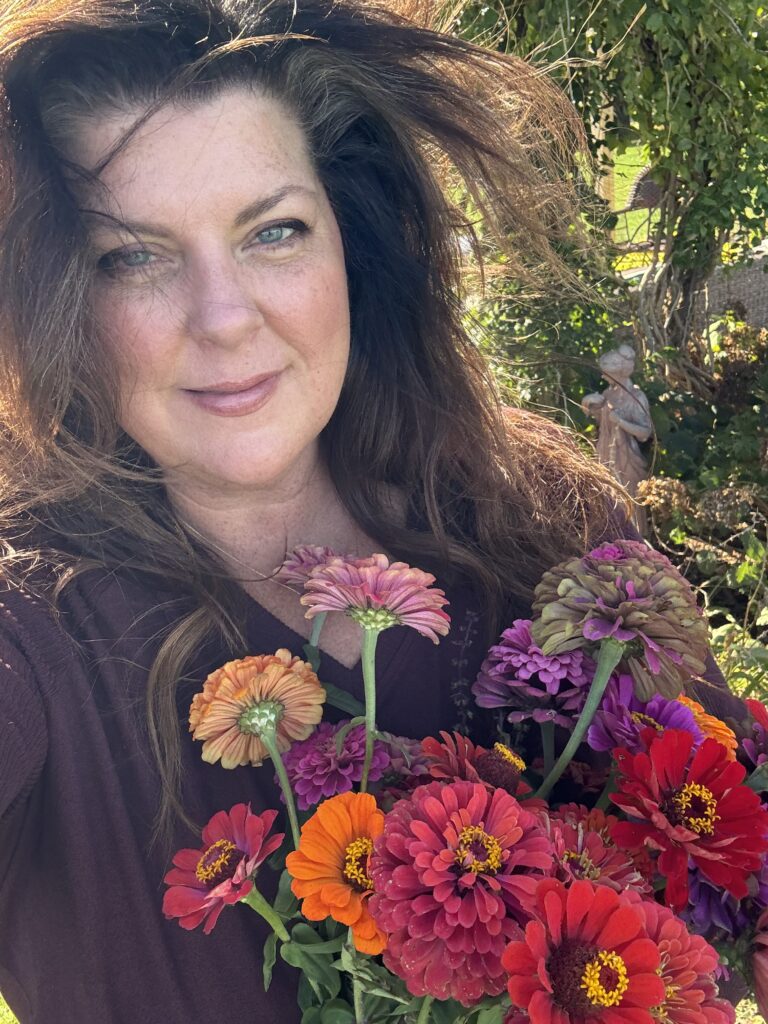
Rather than painting flowers as delicate still-life subjects, Julia captures the feeling of standing in a flourishing spring garden, where blossoms, vines, and leaves spill into one another in what she affectionately calls the “beautiful chaos” of nature.
That sense of abundance has been part of Julia’s life for as long as she can remember. Raised by two artist parents, she grew up in a home where creativity was simply part of everyday life. Yet her own artistic journey unfolded gradually. While raising her young children, she began with small sketches and hand-painted murals before exploring watercolour, acrylic, and eventually oil painting—the medium where she discovered the freedom and richness she had been searching for.
Flowers have remained a constant companion throughout that journey. First came the memories of wandering through her mother’s flourishing gardens as a child, and later the experience of cultivating gardens of her own. Over time, they became far more than a favourite subject to paint. They became a way of expressing the joy, movement, and quiet sense of renewal that nature continues to offer, season after season.
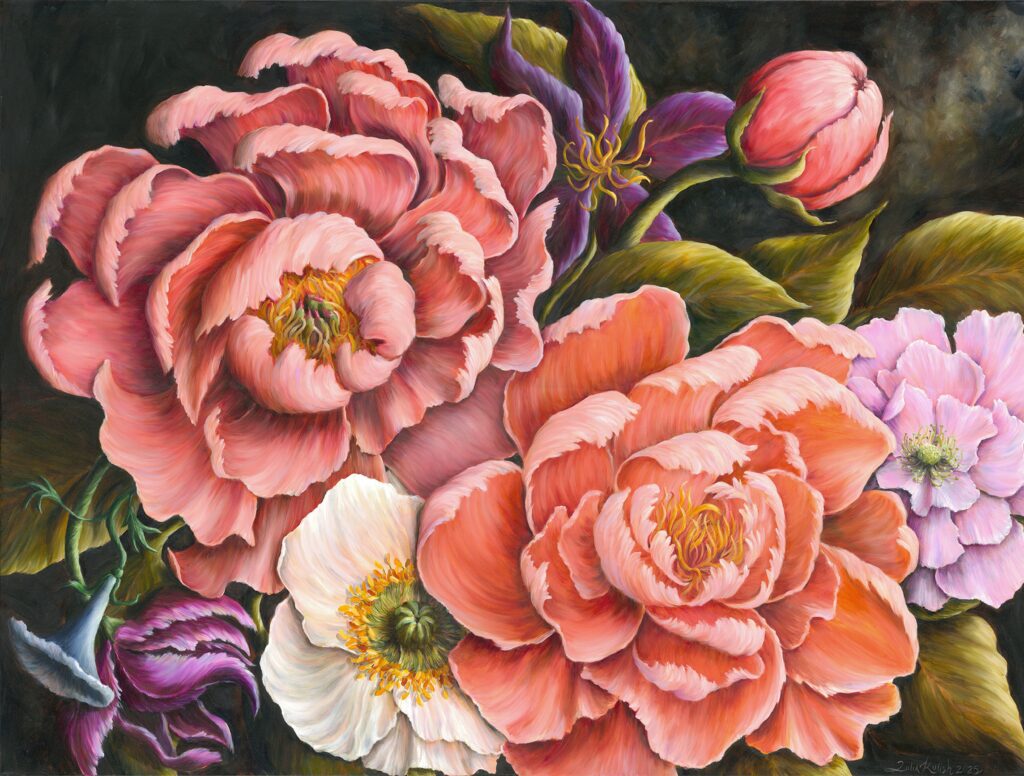
For Julia, that connection to flowers has never been purely visual. It is rooted in memory, experience, and a lifelong relationship with the natural world. The gardens of her childhood weren’t simply beautiful places they were places of wonder, curiosity, and quiet joy.
Those early experiences continue to shape her work today, giving her paintings a warmth and authenticity that reaches beyond botanical accuracy. Before you notice the individual flowers, you feel the atmosphere they create.
While Julia draws inspiration from the rich floral traditions of the Dutch Golden Age and the flowing decorative language of William Morris, her work feels unmistakably contemporary. Rather than arranging flowers neatly within the boundaries of a traditional still life, she allows blossoms, leaves, and winding vines to move freely across the canvas in what she affectionately calls the “beautiful chaos” of nature.
Now, let’s get to know Julia Kulish through our conversation about flowers, beauty, faith, and creating art that brings hope into everyday life.
Q1. Julia, can you share a little about your journey and how flowers became such an important part of your work?
I was raised in a home with both parents being artists, so I was surrounded by art from an early age. But it wasn’t until my kids were small, and I needed a creative outlet, that I began to explore creating art – doing small sketches, painting simple murals on my kids’ walls.
Over the years, I began to dabble in watercolor and acrylic painting, and finally, oils, which has become a real passion for me. I’ve always had a love for flowers because I associated them with days spent as a child in my mother’s immense flower gardens, and then as an adult, creating my own gardens.
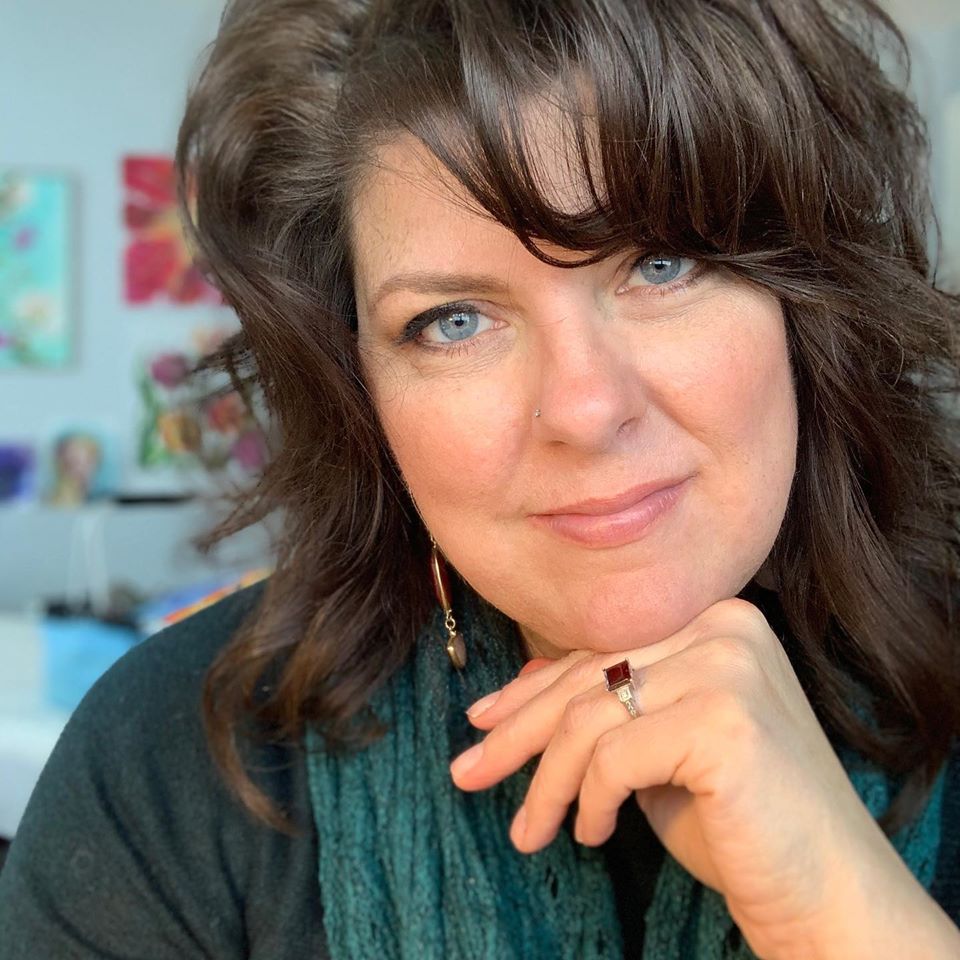
Q2. Many artists paint flowers, but you’ve returned to them throughout your career. What keeps inspiring you about them?
I find flowers to be facinating, in both their gracefulness and power. The sinuous lines found nature, and in particular in the petals, leaves and stems of flowers are mesmerizing to me. I’m always drawn to them. And the colors, of course, are so intense and powerful in flowers. I love the freedom of not having to hold back or be subtle. Flowers make no apologies for their boldness, and I love that.
Q3. Beauty is central to your work. What first inspired you to pursue beauty through painting?
Honestly, I think that comes from my faith. I really believe we were created in God’s image and that He is a God of truth and beauty. And we are most fulfilled when we are reflecting that beauty in some way. One way for me, it’s through art. And I think often the beauty of art transcends in a way that is deeper than just a “pretty picture” but really speaks to our soul, reminding us of who we were created to be.
Q4. Flowers have a long history in art. How do you make them feel personal?
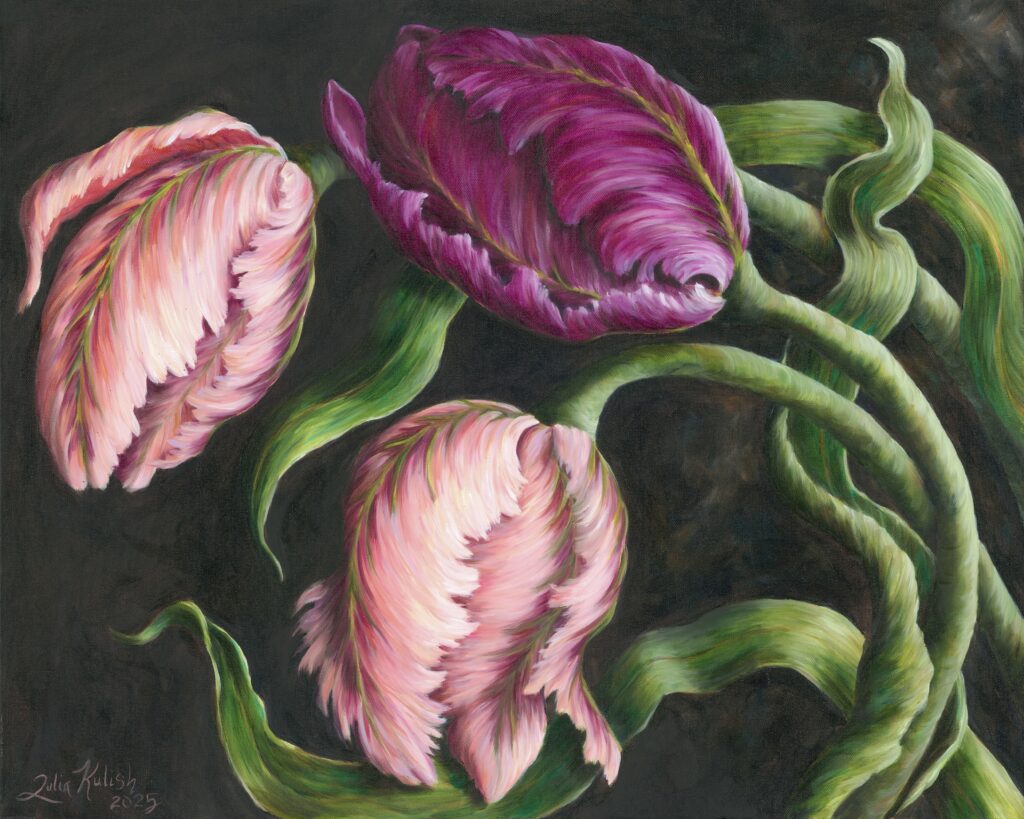
Well, I am deeply influenced by the floral still life painters of Dutch Golden Era, such as Rachel Rausch. But I think my approach is mine because I don’t always feel the need to contain the flowers in a vase – I like the almost free floating floral design with all the flowers and leaves and vines grouped and twisted together in what I like to call the “beautiful chaos” of nature. I think, also, the larger scale my work, with the goal being to make the flowers come right at the viewer, makes is feel a bit more contemporary.
Q5. When you choose a flower to paint, what captures your attention first?
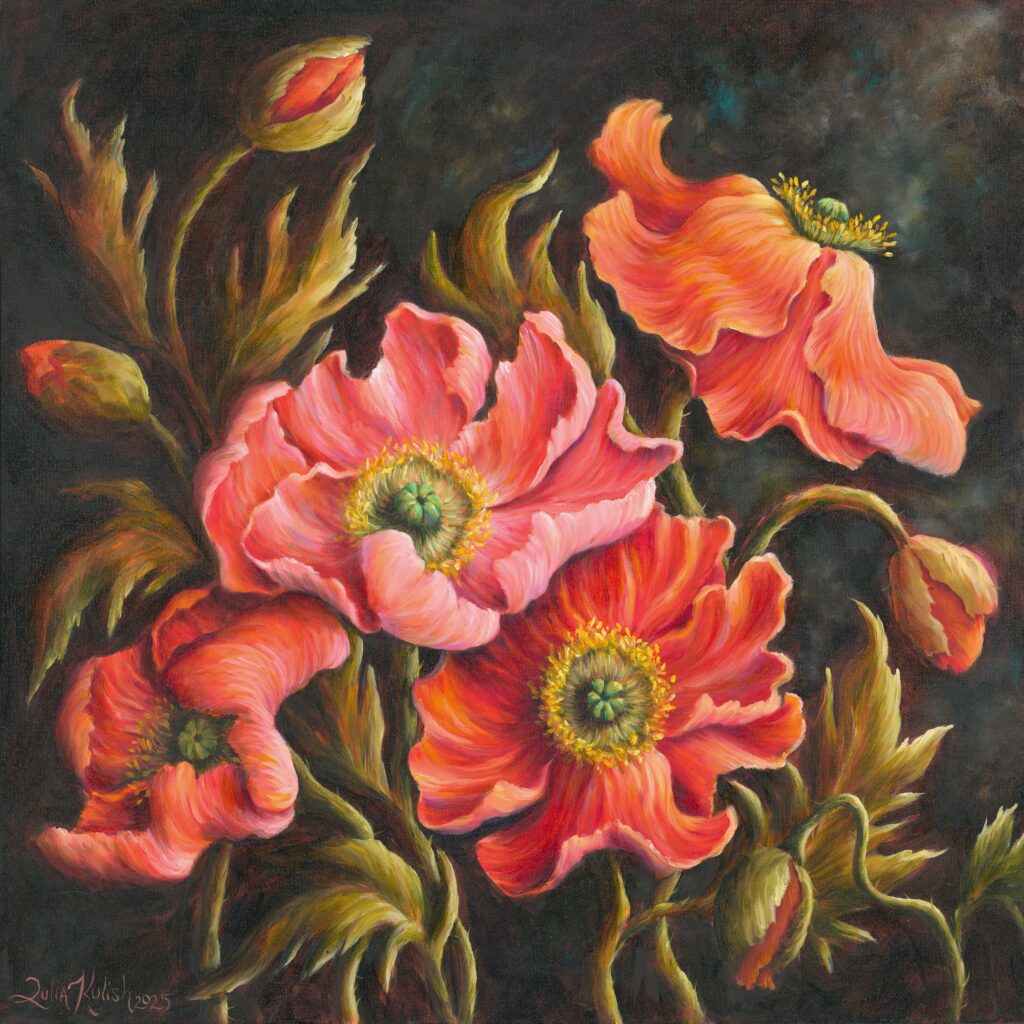
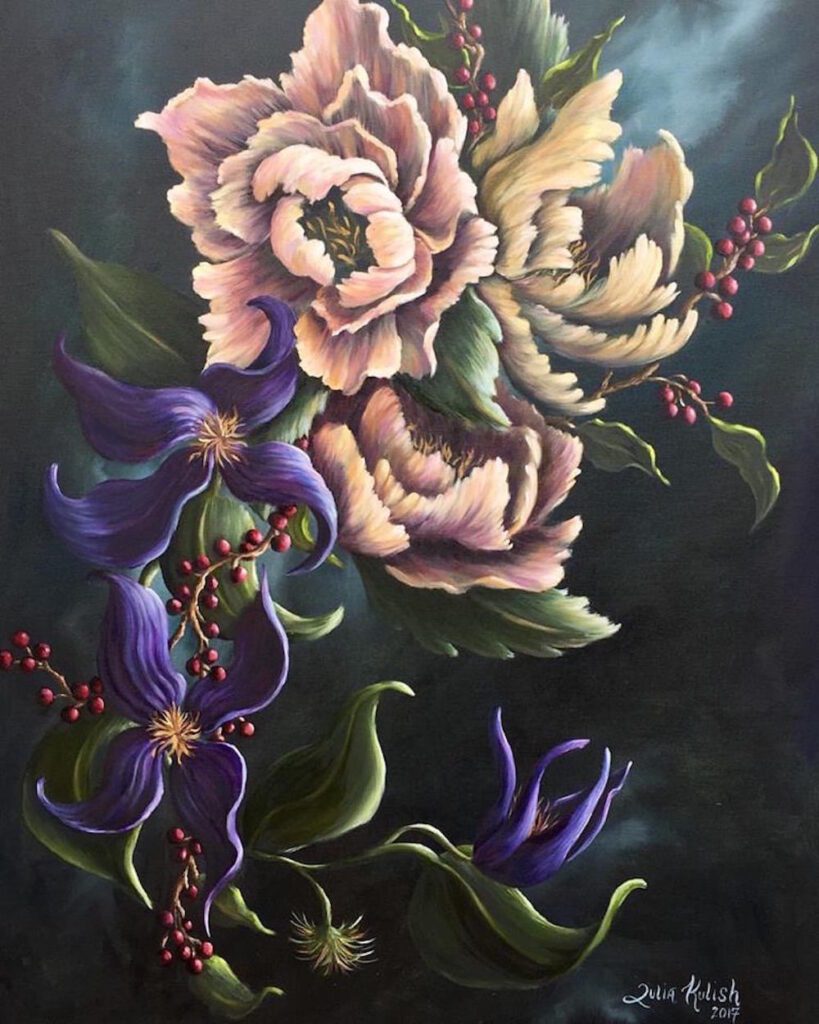
I usually think in “groups” of flowers – what will go together best. I love a big bold rounded flower to be the anchor, and enjoy ones with unique interest ( like the centre of a Poppy, or the frilliness of the edges of a Peony). I also usually need a smaller flower with a shape that emphasizes the individual petals – such as a Clematis. And finally, I like to round it all out with something delicate that not only fills the space but contains sinuous lines that draws the viewers’ eyes through the painting – so vines, berry branches, or things like that.
Q6. You’ve mentioned William Morris as an influence. What about his work continues to inspire you?
He was a master of the sinuous line. And while I am not quite as passionate about the exactness of patterns as he was, I just love those curvy lines that seem to run through most of his work. He had a way for seeing the beautiful “flow” of nature that resonates with me.
Q7. What is the biggest challenge when painting flowers on a large scale?
I think movement is the trickiest for me. It’s such an important part of my work, but when working on a large canvas, I want to just fill it up so it feels like it almost comes out at the viewer. But this often causes a struggle when I’m lying in the design, to be able to have room for the delicate vines and flowers on the edges of the painting.
Q8. In contemporary art, beauty is sometimes treated with suspicion, yet it sits at the centre of your work. Why do you think it still matters today?
We need beauty. I believe this with all my heart. We are living in a world that can, too often, feel pretty ugly and even hopeless. Our lifestyles are fast paced and often driven. Technology, although wonderful in some aspects, can almost separate us from the fact that we have souls.
Beauty in art, whatever the subject may be, is so grounding. It speaks to us in such a deep way. It is a reprieve from the chaos around us. It can remind us of our humanness. It can restore some hope to us.
Q9. Your paintings feel joyful yet emotionally rich. How do you strike that balance?
Well, I feel things deeply, and for me, the things I am thinking about when I stand in front of that canvas, comes out on the canvas. I usually listen to music or audio books while I paint. I pray a lot. I think through the things that are going on in my life. These all have a huge effect on the painting itself. I know it might not be obvious to anyone else, but I definitely see my thoughts and emotions ninth brushstrokes of my paintings.
Q10. Has your idea of success become more about recognition, or the impact your work has on others?
Definitely the experiences of others. It makes me very happy to hear from others who felt moved by my work, felt inspired to begin creating art themselves because of it, or let me know that one of my paintings hanging in their home has brought some sort of joy or even peace.
Q11. What advice would you give artists who feel pressured to follow trends instead of their own interests?
I have felt this pressure – for sure! I guess my advice would be to remind yourself often that the very best art you will ever do, will be the art that comes from your unique perspective. And you will never be everyone’s cup of tea, but there are people out there that your art will speak to. So just be patient with yourself while you figure out what kind of art makes you passionate to make (because the takes time). But when you do find “your’ art – do it boldly and unapologetically.
As we wrapped up our conversation with Julia, we kept returning to one simple idea that sits at the centre of everything she creates: beauty matters.
It’s a surprisingly bold belief to hold onto today. In contemporary art, beauty is sometimes dismissed as decorative or uncomplicated, as though it can’t carry depth alongside delight. Julia sees it differently. For her, beauty isn’t an escape from reality; it’s one of the ways we make sense of it.
It offers hope when life feels heavy, creates moments of stillness in a world that rarely slows down, and reminds us to notice what we might otherwise overlook.
We admire the confidence with which she embraces that philosophy. She doesn’t feel the need to justify painting flowers or make them darker, louder, or more complicated to prove their value. Instead, she allows them to exist exactly as they are bold, expressive, full of movement, and unapologetically alive.
In doing so, she reminds us that joy can be just as meaningful as melancholy, and that wonder deserves a place in contemporary art too.
There is another quiet layer running through Julia’s paintings that many viewers may never consciously recognise. Every canvas carries the rhythm of the life being lived while it was created the music playing in the studio, the prayers, the reflections, the ordinary moments that found their way into each brushstroke.

Those experiences aren’t visible in a literal sense, but perhaps that’s why the paintings feel so personal. They hold something of the artist herself, inviting us to respond with our own memories and emotions.
For collectors and art lovers, Julia’s work offers more than vibrant floral paintings. It brings a lasting sense of warmth into a space. The rich colours catch your eye, the flowing compositions keep you looking, and over time the paintings reveal something even more valuable: a feeling of optimism that quietly becomes part of everyday life.
Like a flourishing garden returning each spring, they remind us that renewal is always possible and that even the smallest moments of beauty have the power to change how we experience the world around us.
Perhaps that’s the gift of Julia’s work. It encourages us to slow down, look a little longer, and remember that beauty has never been something frivolous. Sometimes, it’s exactly what helps us feel most alive.
Follow Julia Kulish through the links below and discover more of her work.
