
5 Books for Artists That Will Make You Rethink Your Creative Process
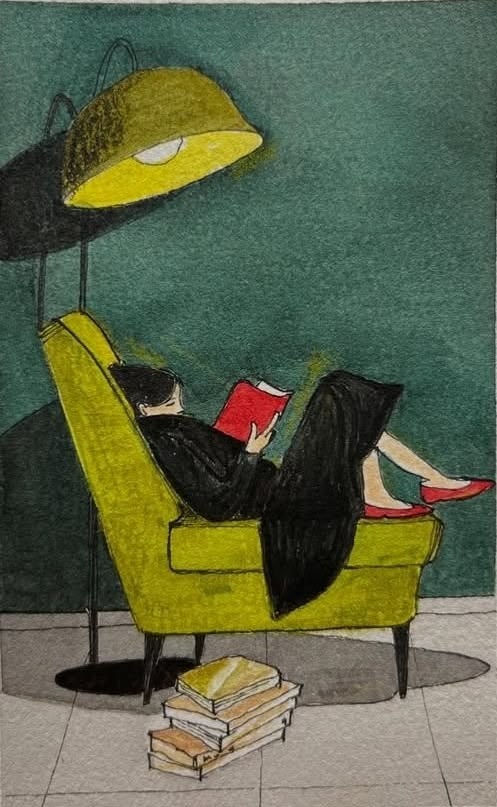
Some books, you finish and put back on the shelf. And then there are the ones that quietly follow you into the studio. You find yourself thinking about a sentence while working on a painting. You remember an idea when you are tempted to abandon something halfway through. You look at your own creative habits a little differently. Maybe you stop worrying so much about whether an idea is original, or whether the work is good enough, or whether you are “creative” enough to call yourself an artist in the first place.
Making art can be wonderfully exciting, but it can also be full of questions. Where do ideas come from? How do you find your own voice? What happens when you lose motivation? How do you keep making when the work is not turning out the way you imagined?
Sometimes, a good book can help answer those questions. These five books approach creativity from very different directions. Some are about fear and self-doubt. Some are about discipline and routine. Others ask us to rethink originality, inspiration, and even what it means to live a creative life.
They are not instruction manuals for becoming a better artist. They are invitations to think differently about the person who is already making the work.
1. The Creative Act: A Way of Being by Rick Rubin
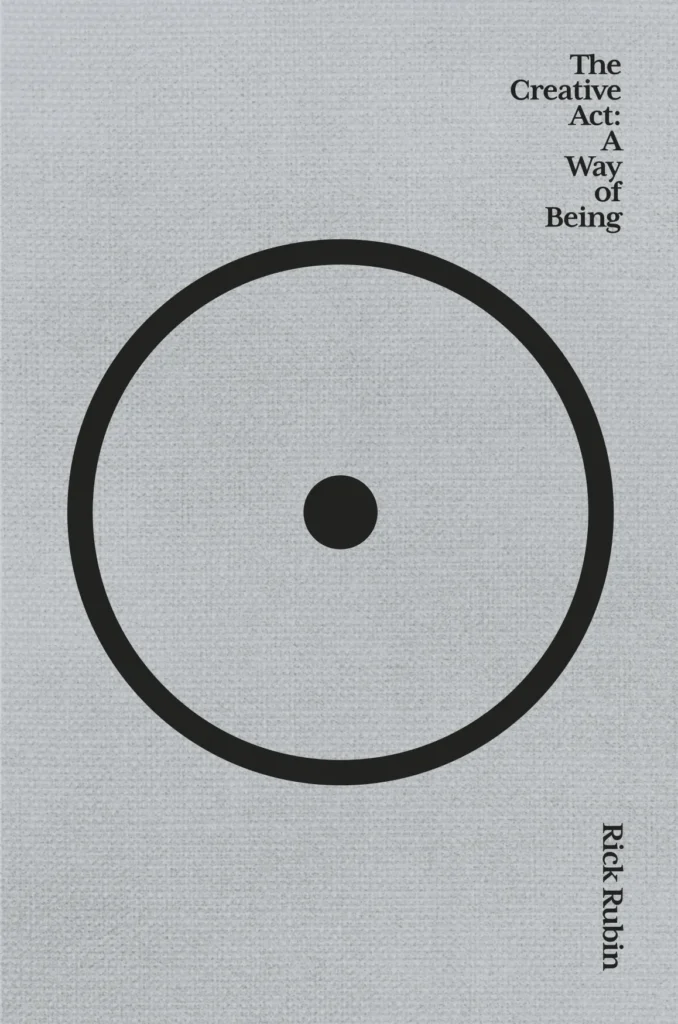
What if creativity is not something you switch on when you enter your studio? That is one of the beautiful ideas at the heart of The Creative Act: A Way of Being by music producer Rick Rubin.
Rubin, known for working with artists across wildly different musical worlds, including the Beastie Boys, Johnny Cash, Adele and the Red Hot Chili Peppers, approaches creativity less like a formula and more like a way of paying attention.
One of the book’s central ideas is what Rubin calls “Source”, his way of describing the seemingly endless stream of ideas and inspiration available to us. Rather than treating inspiration as something rare that occasionally arrives, he encourages artists to become more receptive to what is already around them. That makes the book particularly interesting for visual artists. A color combination you notice on the street. A strange shape on an old building. A conversation you overhear. The way light falls across your studio floor. A feeling that stays with you for no obvious reason.
Maybe creativity begins with noticing. The Creative Act is a reminder that making art is not always about forcing an idea into existence. Sometimes it is about becoming quiet enough to recognize one when it appears.
2. Art & Fear by David Bayles and Ted Orland
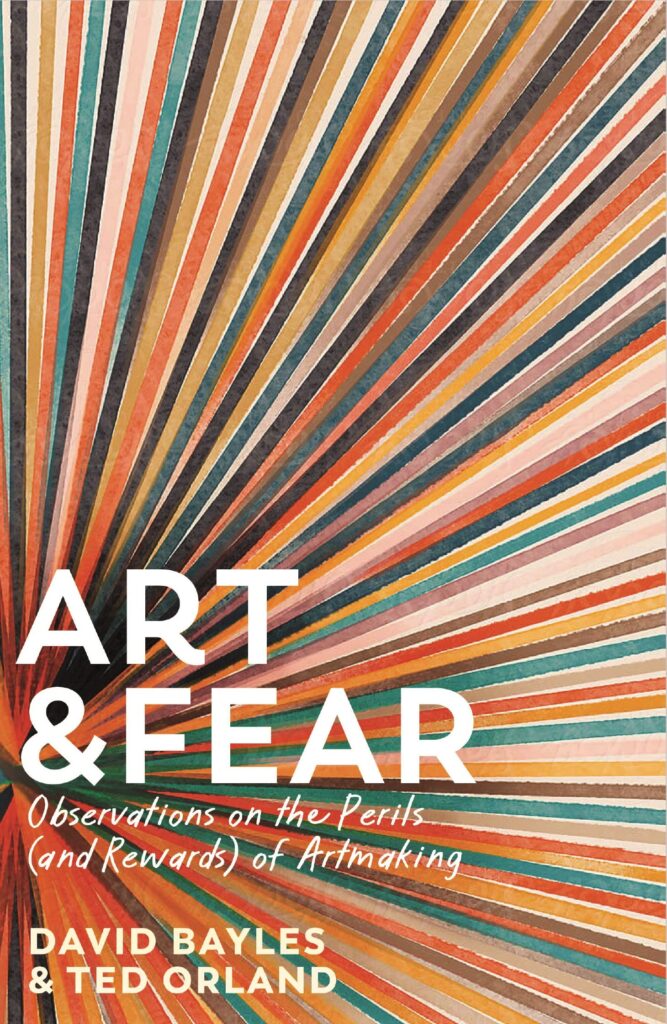
Every artist knows that feeling when you make something and immediately wonder whether it is good enough. You compare it to someone else’s work. You start questioning your abilities. You think about abandoning the entire idea. You wonder whether anyone will understand what you were trying to do.
Art & Fear, written by artists David Bayles and Ted Orland, has become something of a classic precisely because it talks about these very ordinary fears of making art. First published in 1994, the book became an underground classic largely through word of mouth.
Its opening makes an important point by talking about “ordinary art” rather than genius. The authors argue that good art gets made all the time, and that treating artmaking as something only extraordinary people can do makes the process feel unnecessarily unreachable.
One of the book’s most useful ideas is that artists become artists by continuing to work. Not by waiting until they feel completely confident. Not by producing a masterpiece every time. By making the next thing.
There is something incredibly comforting about that. For an artist who has been staring at unfinished canvases, second-guessing a new series or wondering why the work is not coming together yet, Art & Fear can feel less like a lecture and more like someone sitting beside you in the studio saying, keep going.
3. Steal Like an Artist by Austin Kleon
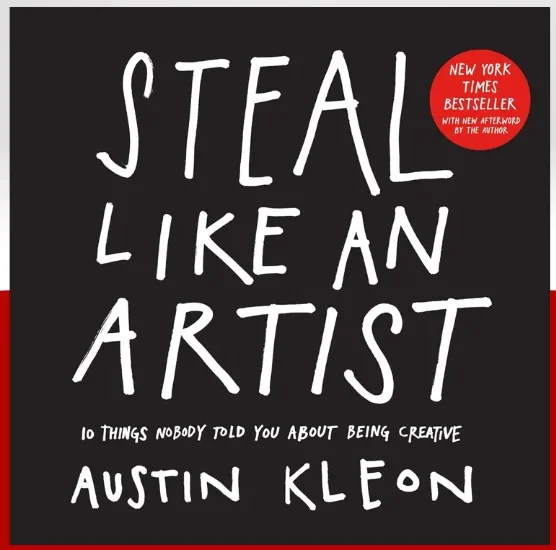
The title alone is enough to make you curious. Steal Like an Artist by Austin Kleon takes one of the biggest anxieties surrounding creativity, the fear that everything has already been done, and turns it on its head.
Kleon’s original list of ideas began as a talk he gave to students in 2011. The talk spread online and eventually became the bestselling book we know today. His argument is not that artists should simply copy other people’s work.
It is about influence. Artists look. They collect. They notice. They borrow ideas, combine them with other ideas, reinterpret them and eventually turn them into something of their own. One of the book’s ten principles is simply “Use your hands.” Another is “Side projects and hobbies are important.” And perhaps one of the most useful is “Creativity is subtraction.”
That last idea is especially interesting. Sometimes making better work is not about adding more. It can be about removing what is unnecessary, simplifying an idea, taking away the noise and allowing the important part to breathe.
The book also encourages artists to follow their interests wherever they lead. Something that begins as a side project or strange little obsession might eventually become an important part of your creative practice. So perhaps the next time you find yourself thinking, “Someone has already done this,” you can ask a better question:
What can I do with what I have discovered?
4. The Creative Habit by Twyla Tharp
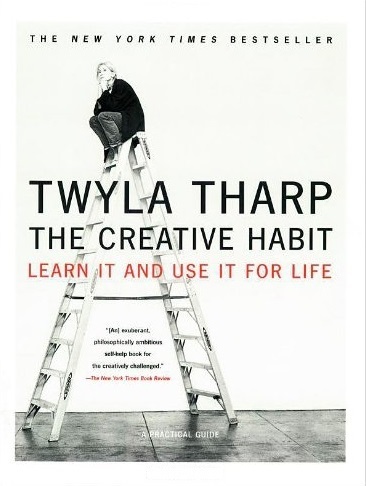
We often talk about creativity as though it arrives in flashes. The perfect idea appears. The mood is right. The artist feels inspired. And then the work begins. Twyla Tharp’s The Creative Habit offers a very different perspective.
The legendary choreographer argues that creativity can be developed through habit, preparation and effort, rather than being treated as something that only appears when inspiration strikes. The book contains 32 practical exercises based on lessons from her decades-long creative career.
And one of the most memorable things about the book is that Tharp does not romanticize the creative routine. She talks about showing up. About preparation. About building structures that make creative work easier to begin.
This can be surprisingly freeing for artists. You do not necessarily need to feel inspired before you enter the studio. You can make entering the studio part of the habit. A creative practice can have rituals. It can have routines. It can have ordinary, boring parts. And that does not make the resulting art less magical. If anything, it creates the space in which the magic can happen.
For artists struggling with consistency, The Creative Habit offers something much more useful than another motivational speech. It gives creativity somewhere to live in your everyday life.
5. The Art Spirit by Robert Henri
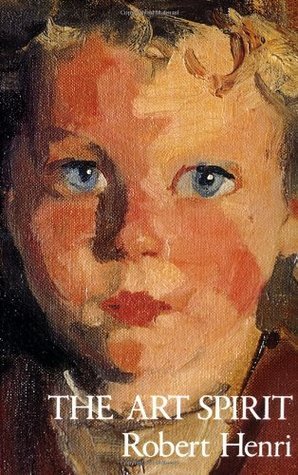
There is something deeply encouraging about The Art Spirit by Robert Henri because it does not treat art as something that exists only inside the studio.
Originally published in 1923, the book brings together Henri’s thoughts, teachings and conversations about art, creativity and what it means to develop an artistic life. Henri, one of the most influential American teachers of his time, believed that artists should learn to look closely, think independently and remain genuinely curious about the world around them.
One of the ideas that runs throughout the book is that being an artist is not simply about producing beautiful or technically impressive work. It is about developing a way of seeing. Henri encourages artists to pay attention to life itself. To notice people, movement, light, ordinary moments and the things that might otherwise pass without a second thought.
That idea can be surprisingly grounding. When you spend so much time thinking about whether your work is good enough, whether people will understand it, or whether it fits neatly into your portfolio, it is easy to forget the reason you started looking in the first place.
The Art Spirit brings you back to that. It reminds artists that growth does not happen only when they are making finished work. It happens when they are observing, experimenting, asking questions and allowing themselves to become more curious about the world.
And perhaps that is one of the most useful things an artist can be reminded of. You do not always need to know exactly where your work is going. Sometimes, you just need to keep looking.
A Different Way Of Looking At Creativity
What makes these books worth picking up is that none of them promises to give you a perfect formula for becoming an artist. There is no five-step process here that guarantees a stronger practice, a successful career or a masterpiece waiting at the end. Instead, each book asks us to look at the creative process a little differently, and sometimes that shift in perspective can be more valuable than any practical formula.
The Creative Act reminds us that creativity begins long before we sit down to make something. It can begin with paying attention, staying curious and noticing the small things that might otherwise pass us by. Art & Fear takes us somewhere much more vulnerable, reminding us that doubt, frustration and the fear of not being good enough are not unusual experiences reserved for beginners. They are part of the process, and learning to keep working through them can matter just as much as learning a new technique.
Then there is Steal Like an Artist, which gives us permission to stop treating originality as complete isolation. Artists have always looked at other artists, collected ideas, borrowed influences and transformed what they found into something personal. The Creative Habit takes another important part of the process, showing us that inspiration does not always have to arrive first. Sometimes, the simple act of showing up, creating a routine and making space for the work is what allows inspiration to find us. And The Art Spirit leaves us with a quieter reminder: that becoming an artist is not only about making more work, but about learning to look more closely, think more freely and stay curious about the world around us.
Together, these books offer something that artists often need more than another tutorial: a different way of thinking about the act of making. They remind us that being an artist is not only about what happens on the canvas, in the sketchbook, behind the camera or inside the studio. It is also about how we look at the world, how we respond to uncertainty, how we deal with our own expectations and how willing we are to keep following an idea even when we do not know where it will lead.
Maybe that is what the best books about art can do. They do not make the work for us, and they certainly cannot tell us exactly what our next painting, photograph, sculpture or series should look like. What they can do is give us a new thought to carry back into the studio. They can make us question an old habit, loosen a fear we have been holding onto or remind us why we started making art in the first place.
And sometimes, that is exactly what we need.
Because the next idea does not always arrive when we are searching desperately for it. Sometimes it appears when we have stepped back, looked around, read something that stayed with us and allowed ourselves to see our own creative practice a little differently.
So if you have been feeling stuck, uninspired or simply curious about your own creative process, perhaps pick up one of these books and spend some time with it. You may not come away with all the answers. You might come away with a better question.
