
Why this artist avoids vivid colour to keep her portraits intimate ┃ Amélie Yerly
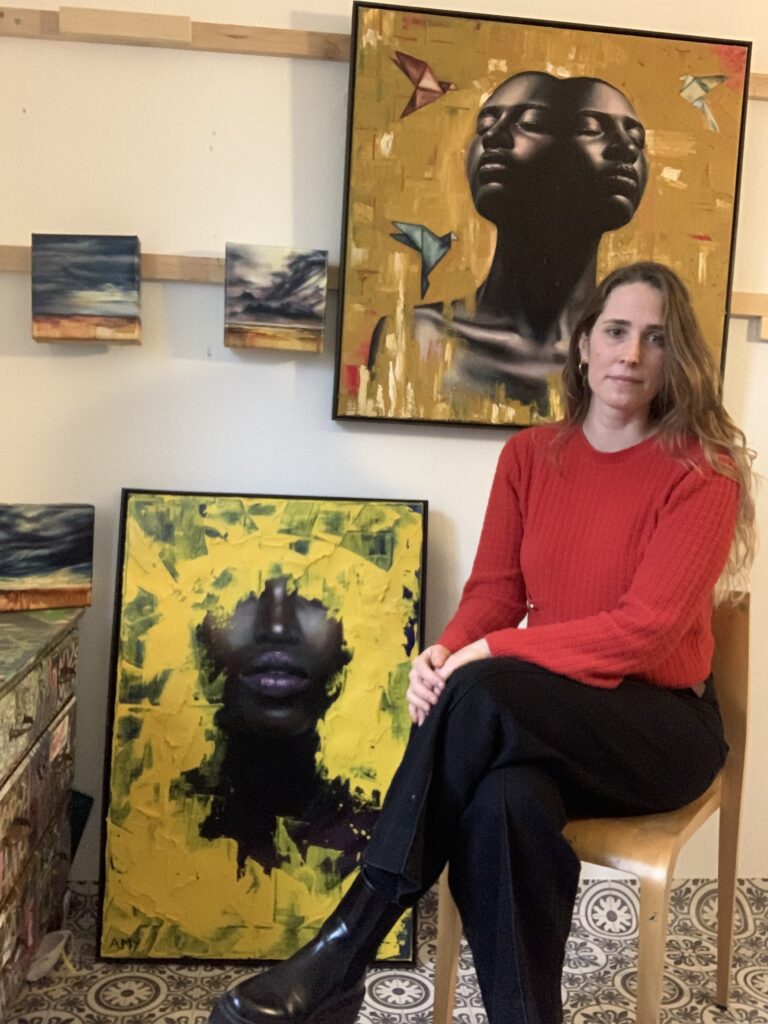
At Women in Arts Network, for our Faces exhibition, we see a lot of portraits that hit you immediately. Bold colour, strong expression, the kind of work that grabs you from across the room and doesn’t let go.
Amélie Yerly’s work doesn’t do that. It waits for you. And that’s exactly why we can’t stop thinking about it. She is a selected artist for the Faces exhibition, and her portraits are the kind of thing you almost walk past and then something catches you and you stop and you lean in and ten minutes later you’re still standing there, and you don’t fully understand why.
There’s a presence in her faces that has nothing to do with drama or technique showing off. It’s quieter than that. More personal. Like the painting knows something about you and is waiting to see if you’ll notice.
She paints in oil using glazing, which means she builds her faces in thin transparent layers one on top of another over weeks. You can’t rush it. Each layer has to dry before the next one goes on. And that slowness isn’t a limitation for her, it’s the whole philosophy.
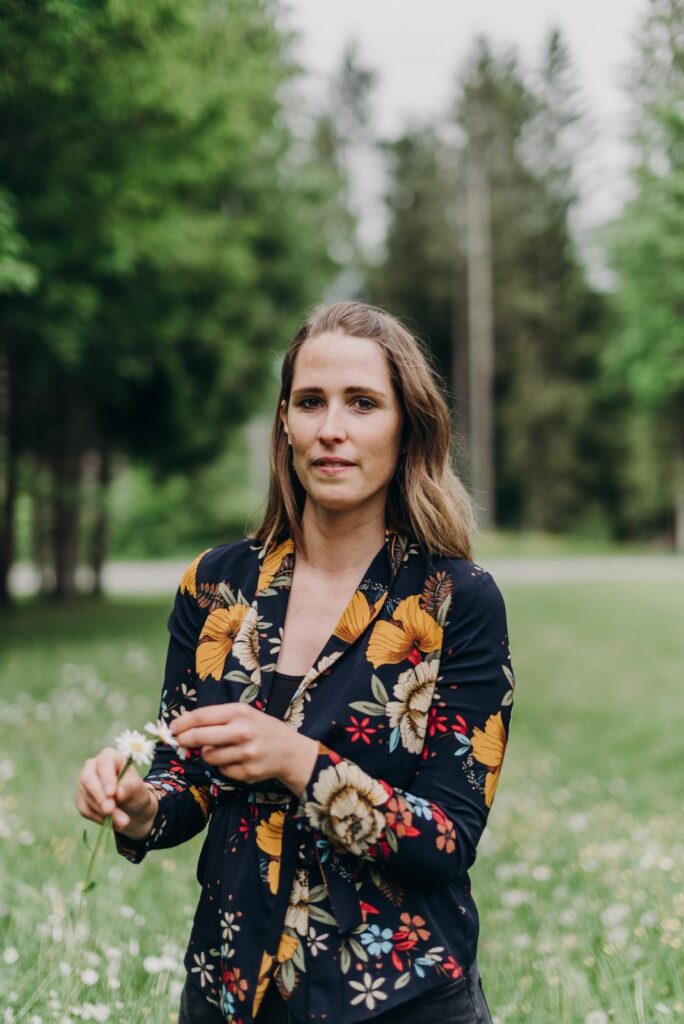
Because a face built fast looks painted. A face built layer by layer over time looks real. Looks lived in. Looks like it has an actual history sitting under the skin.
She’s interested in duality. The idea that we’re all made of parts that contradict each other, the strong and the fragile, the public and the private, the person we show and the person we hide, and her portraits hold all of those contradictions without trying to resolve them. She doesn’t paint what a face looks like. She paints what it’s carrying.
And here’s the thing about Amélie that makes her work hit differently once you know it. She’s been painting for years but showing her work is new. She’s reserved. It took her a long time to let anyone see what she was making. And that gap between years of private making and the courage it took to finally go public, that’s in every painting. You can feel it. This tenderness of someone sharing something that cost them something to share. You can’t fake that.
Now let’s hear from Amélie, about glazing and patience and painting faces layer by layer the way you get to know a person, about duality and the contradictions we carry, and why the quietest portrait in this exhibition might be the one that follows you home.
Q1. Can you share what led you to oil painting early on, and how did those formative years shape the way you now approach portraits and landscapes?
I began oil painting because I was drawn to its richness, its colours, and the depth it allows. It taught me to observe light, form, and emotion with great care. I loved the possibility of returning to the work, layering it, and letting things transform. Today, this directly influences my approach to portraiture, where I seek what lies beneath the surface, going beyond what is visible in order to convey an emotion, a soul, layer by layer. Oil painting taught me to trust intuition and the process.
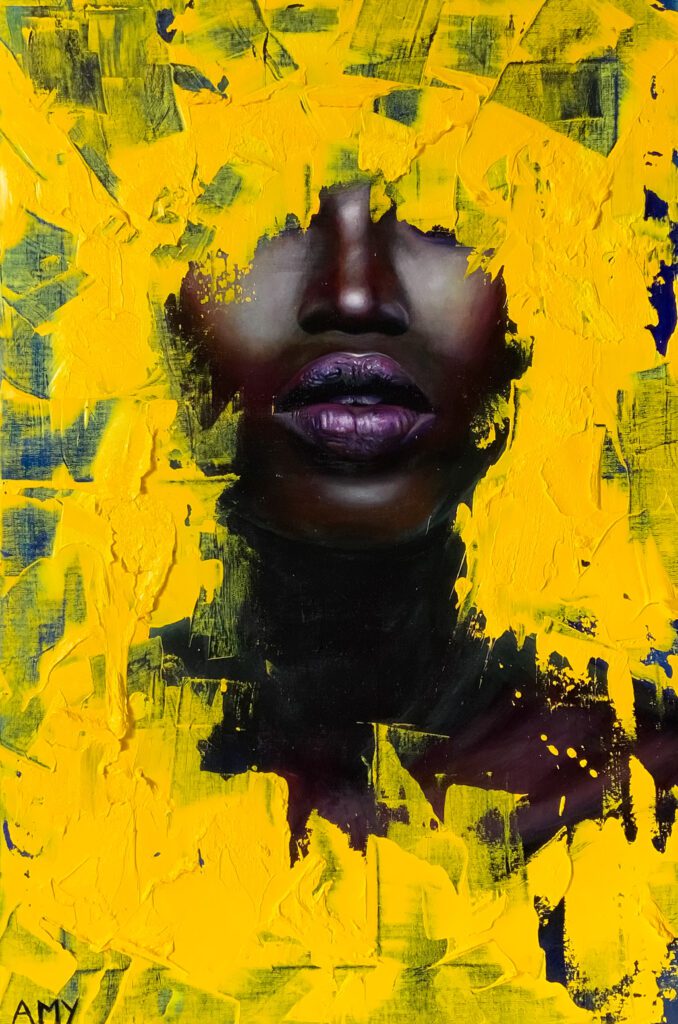
Q2. What was the first painting you felt truly represented your voice as an artist and what changed in your approach after that moment?
The first painting in which I truly felt my artistic voice emerge was a portrait centered on duality. This work reflected an idea that resonates deeply with me: we are made up of multiple facets, sometimes opposing ones, that we must learn to accept.
Through oil painting, I explored this duality by playing with layers and reflections, creating a dialogue between different parts of the self. This process made me realize that I was not merely painting a face, but seeking to reveal a presence, a soul in transformation. After this stage, I learned to trust the process more fully, relying on the layering of paint and allowing the image to build slowly, so that what is often invisible could gradually emerge.
Q3. Can you describe your typical oil-painting process, from initial sketch or reference to final varnish?1 response
I work using glazing techniques. First, I sketch my project on paper or in Procreate, then I create an underpainting on the canvas using turpentine. I gradually apply layers with a medium until I achieve what I want to convey. I often add texture to the background to enrich the depth and atmosphere of the work.
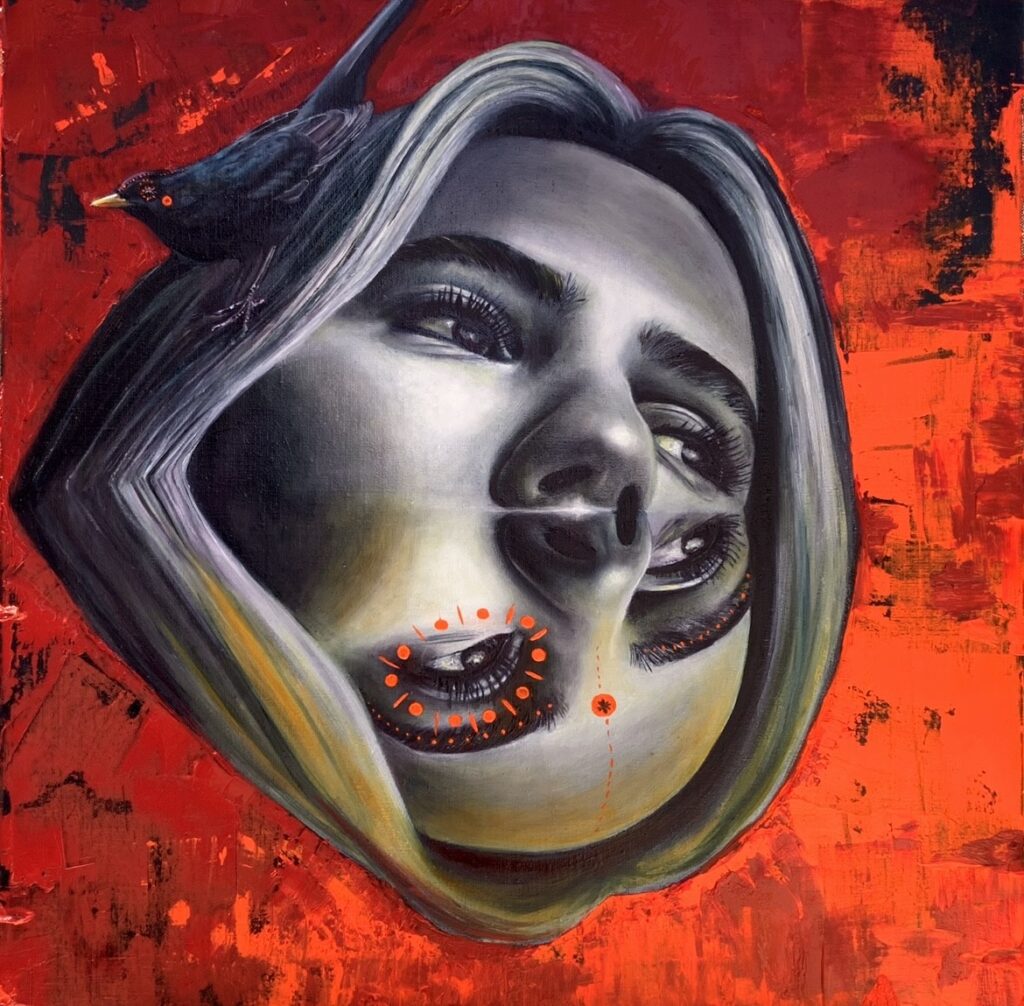
Q4. Some portraits feel quiet and introspective. How do you think about the emotional space surrounding a subject in a portrait?
For me, the emotional space within a portrait is almost as important as the face itself. I reflect on what unfolds around the subject—the silence, the tension, the light, the subtleties that reveal their inner world. I try to create a balance between what is seen and what is felt, sometimes leaving areas more open or more textured so the emotion can breathe and the viewer can connect with the figure.
Q5. Oil paint can be forgiving and demanding at the same time. What technical challenges do you still wrestle with, and how do you stay patient through them?
Finding the balance between control and letting go—especially in the final layers—is an ongoing challenge. Oil painting demands precise decisions, particularly knowing when to stop. Managing the texture and transparency is a constant challenge: knowing when to add, when to remove, and when to let the paint breathe. Patiently, I try to accept mistakes as part of the process and to trust in time.
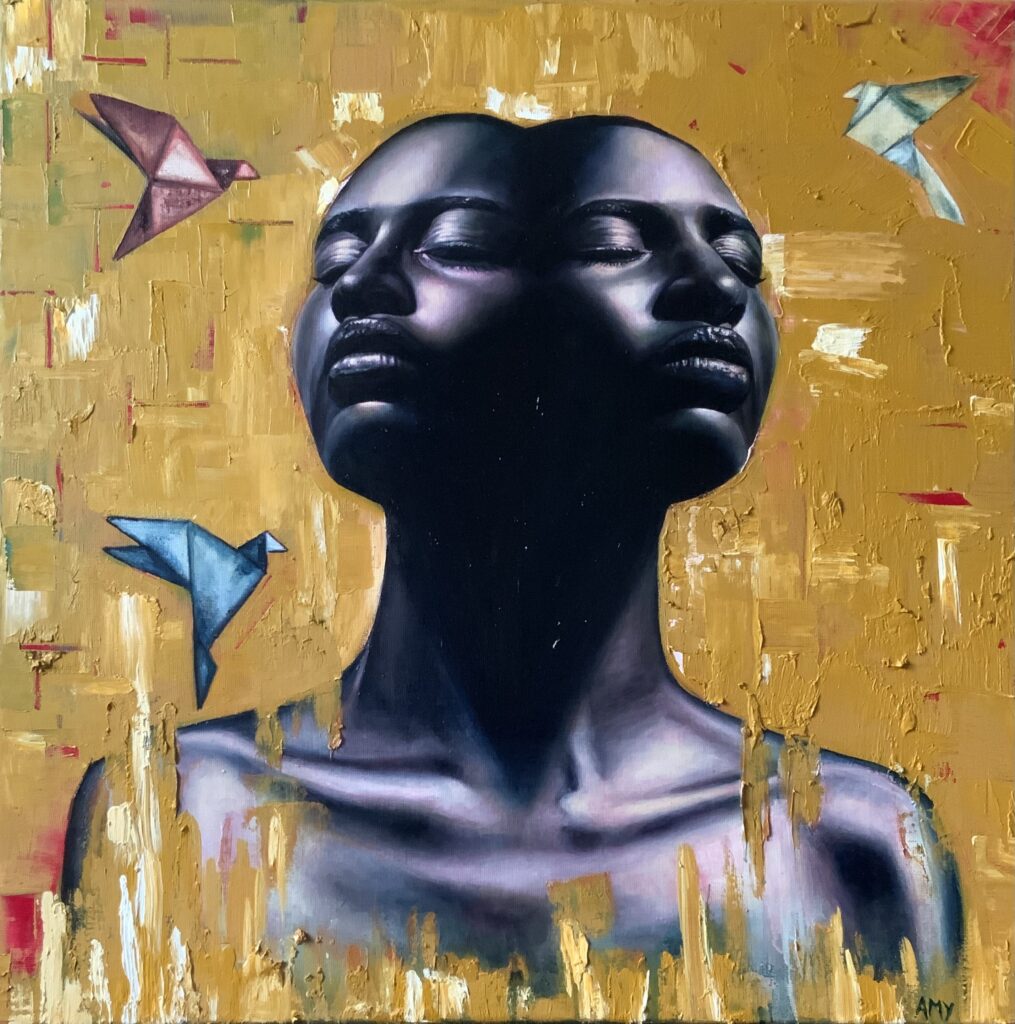
Q6. When someone stands in front of one of your paintings, what do you most hope they notice first presence, colour, brushwork, or something subtler?
I’m a reserved person, and it took me time to dare to show my paintings. Perhaps that’s why, above all, I hope the viewer feels a presence—something alive. If even a subtle emotion is created, that’s what matters most to me. Color and brushwork come afterward, but it’s these more delicate sensations that truly interest me.
Q7. Looking at your work over the past year, what do you see as the most significant shift in style, subject, or technique?
Over the past year, I’ve focused primarily on deepening my work with glazing. This has allowed me to embrace a more surreal aspect in my portraits. I feel freer to explore more intimate subjects, giving more room to spontaneity while maintaining a solid technical foundation. This evolution has also allowed me to play more freely with light and emotion, creating images that are both sensitive and surprising.
Q8. As an artist with a relatively intimate audience and niche practice, how do you navigate visibility — balancing personal expression with sharing work publicly?
I’ve been painting for a long time, but it’s only recently that I’ve started exhibiting my work. I now dare to show my paintings and fully embrace their intimate nature, even if some people around me don’t always know what I’m painting 😉 I’ve learned that receiving the gaze of others can be enriching, and that sometimes you just have to take the leap to share your world.
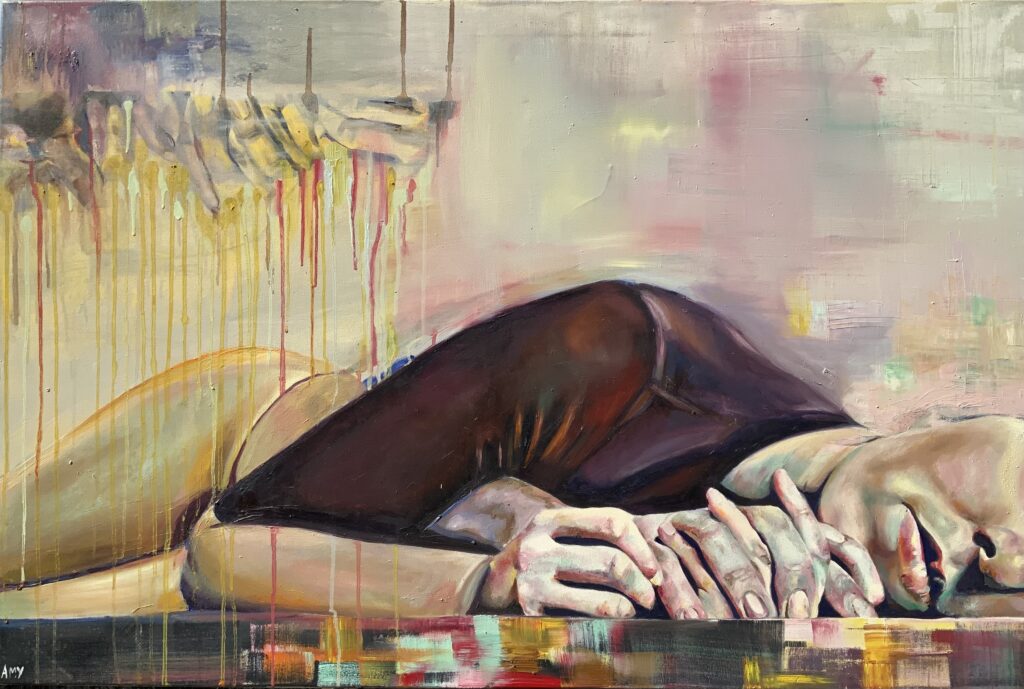
Q9. When viewers encounter your work, what kind of physical or emotional response do you hope they experience first?
Above all, I hope my paintings evoke an emotion, even a subtle one, that reaches the viewer. Sometimes it’s a shiver, a smile, or simply a moment of pause and attention. My wish is for them to feel something alive and sincere, as if the painting were speaking to them softly.
Q10. What advice would you offer to emerging artists who want to build a practice that is patient, meaningful, and grounded in observation and emotion?
I would tell them to take the time to really look at the world and feel what they feel. There’s no need to rush—each image builds gradually, layer by layer, trusting your intuition. Accepting mistakes and moments of hesitation is part of the process and makes the practice richer and more sincere. You also have to dare, even if you fear others’ opinions, because that’s how you grow.
Since oil painting is a demanding technique, taking classes or attending a school can be very helpful for mastering the basics and exploring its subtleties. And above all, don’t hesitate to put a bit of yourself into what you create—and have fun doing it 😉
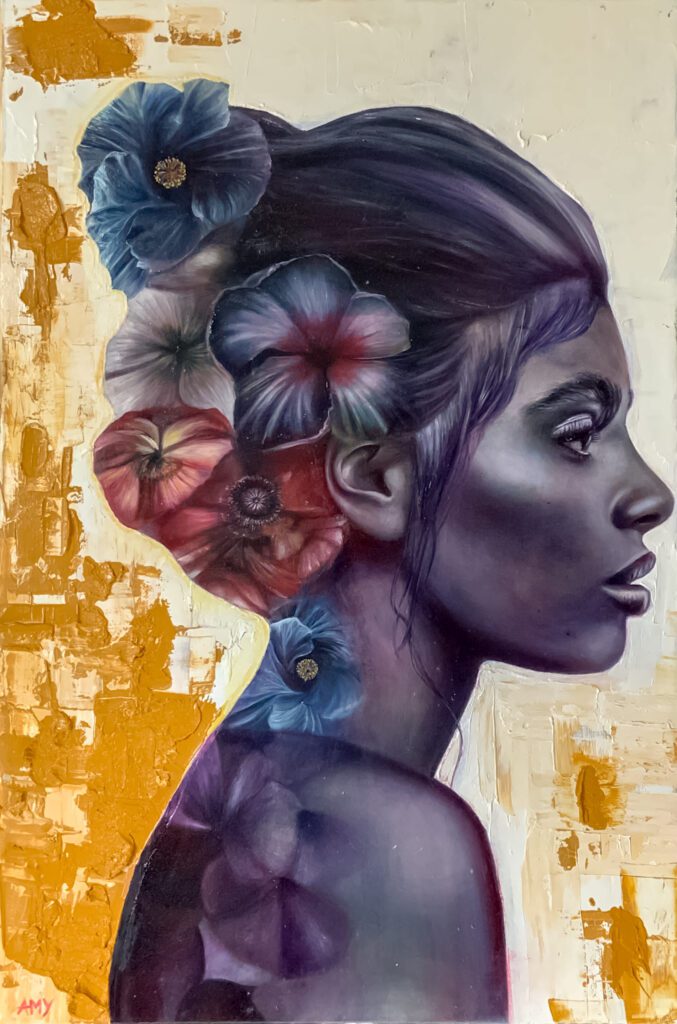
As our conversation drew to a close with Amélie, we just sat there for a second thinking about what it takes to be quiet in a loud world.
Because that’s what she does. She makes quiet work. Deliberately, stubbornly quiet. In a world that keeps rewarding the biggest gesture and the boldest colour and the most provocative statement, Amélie paints faces that whisper. And the funny thing is the whisper is the thing you remember after all the shouting fades.
She painted privately for years. Didn’t show anyone. Just made the work because she needed to. And then she finally took the leap and honestly thank god she did because what she’s been making in private is some of the most genuinely tender portraiture we’ve seen. Not sentimental. Tender. There’s a difference. Sentimental tells you what to feel. Tender just feels something real and trusts you to meet it there.
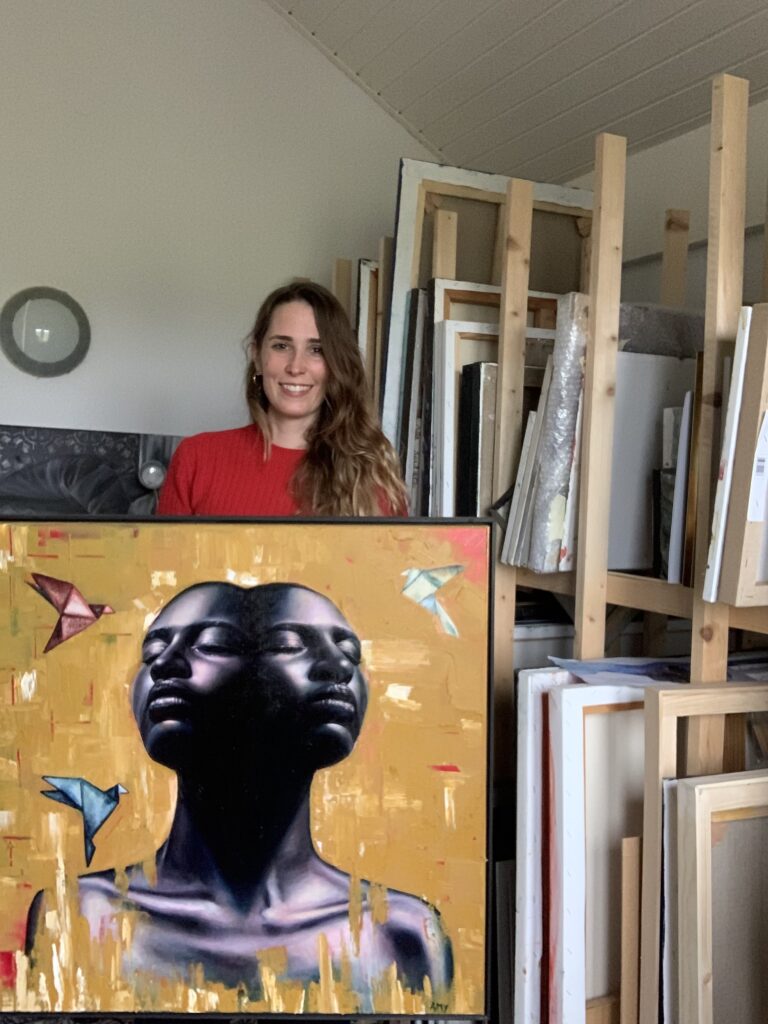
For anyone thinking about living with her work, here’s what we’d say honestly. If you want something that impresses your guests in the first five seconds, this probably isn’t it. But if you want something that you’ll walk past every morning for a year and still notice something new in, something that shifts with your mood and the light and where you are in your own life on any given Tuesday, that’s Amélie.
Her glazing builds depth that literally reveals itself over time. The painting you see today has layers underneath it you won’t discover for months. And by then it’ll feel less like something you bought and more like something that’s always been part of your home.
To follow Amélie’s journey and see more of her work, find her through the links below.
