Anna Klatt Creates Atmospheric Art That Feels Both Fragile & Powerful
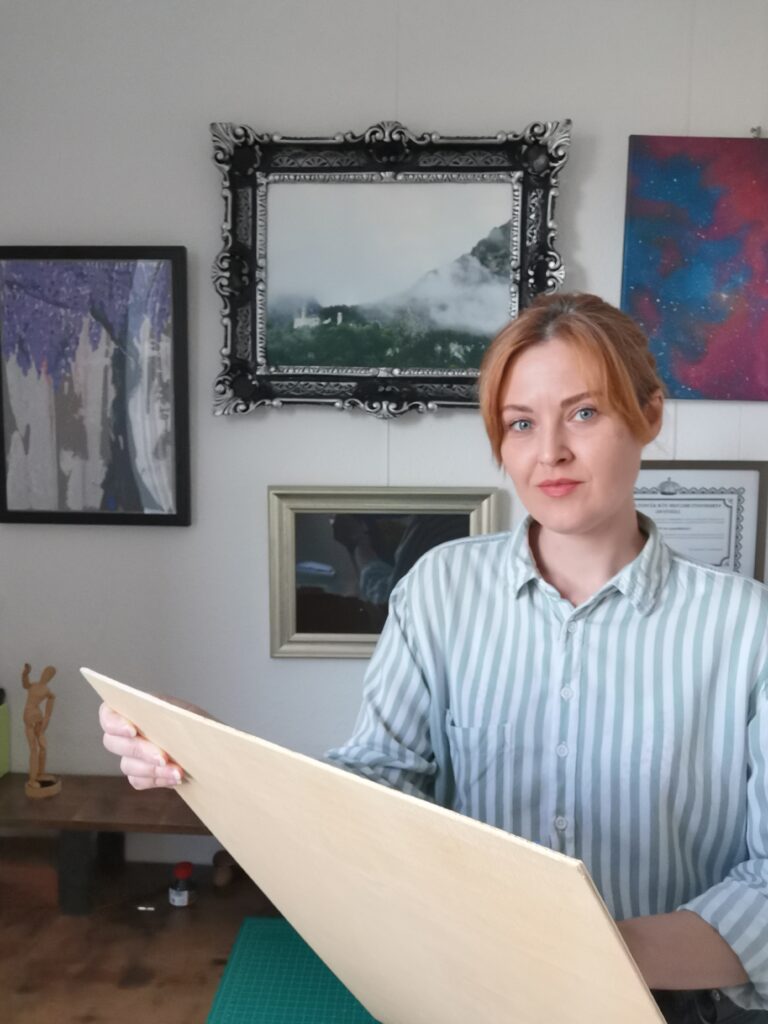
At Women in Arts Network, most of the landscapes in our Landscapes and Places exhibition want you to think how beautiful. Anna Klatt’s work wants you to think how honest.
She has a German word for it. Ehrlich. And once you understand the difference between beautiful and honest, you can’t really look at her paintings the same way anymore.
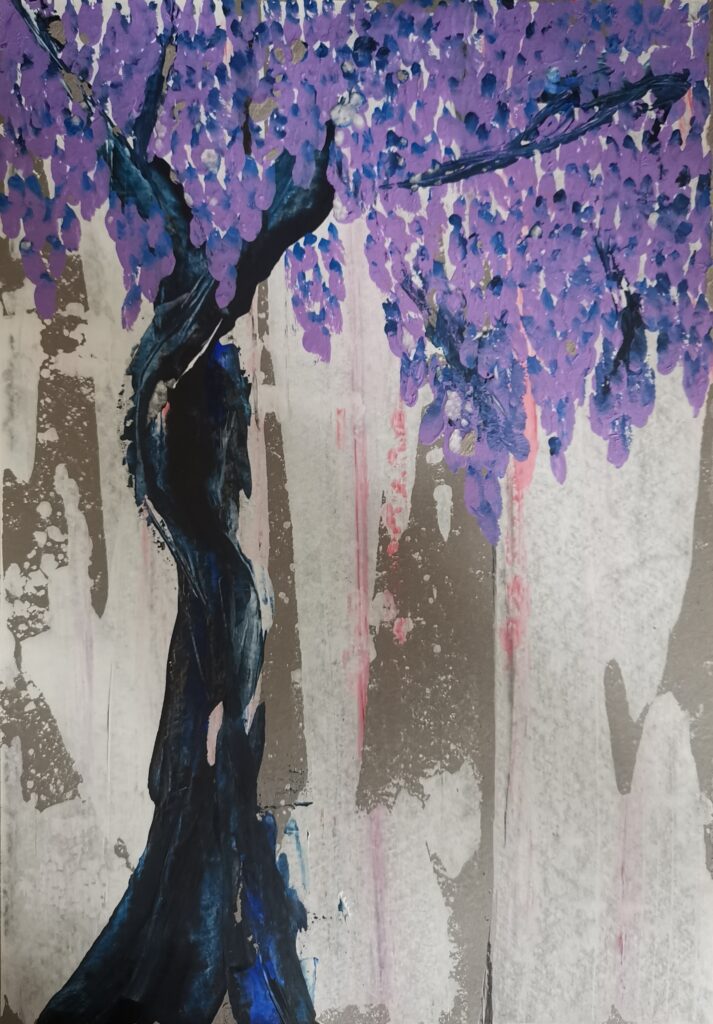
Anna is a selected artist for the exhibition, and her work carries something raw underneath the softness. The skies dissolve into colour, the landscapes blur at the edges, the surfaces hold scratches, layers, traces of change. Nothing feels polished just for the sake of looking finished. The paintings feel lived through. And honestly, that’s intentional.
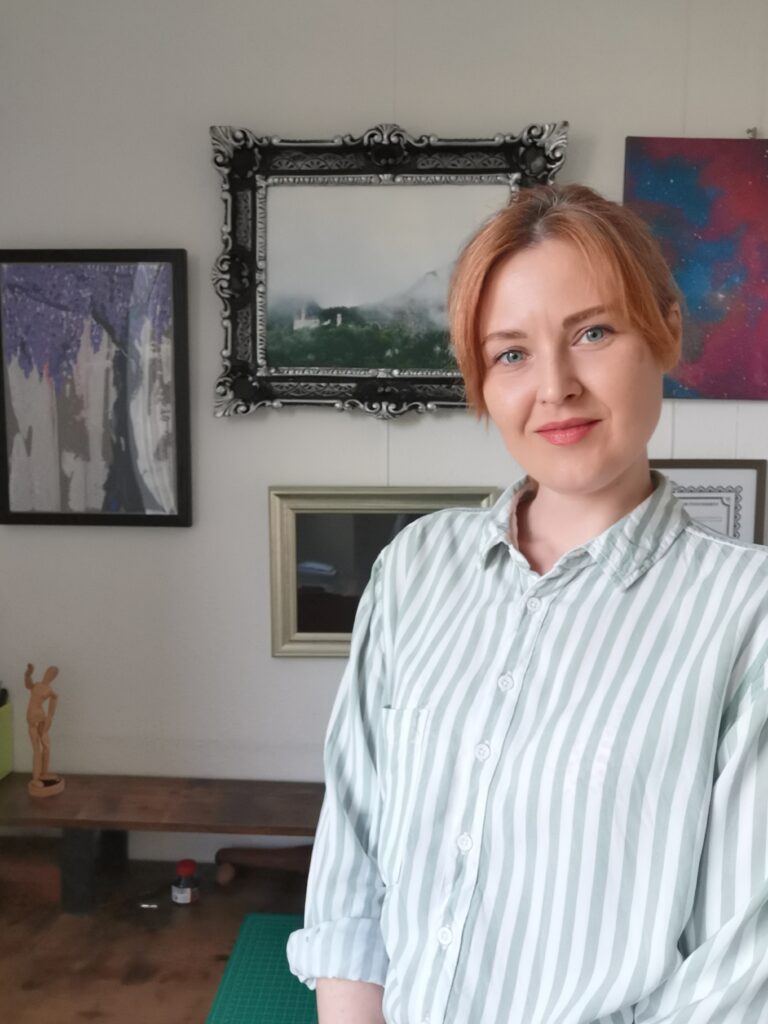
For a long time, Anna focused on realism and technical precision. She wanted things to be correct. Balanced. Perfect. But eventually she realised the paintings she connected to most were often the imperfect ones the ones where emotion stayed visible beneath the technique.
That shift changed everything. Now her work moves through intuition, memory, atmosphere, and feeling instead of exact representation. Even when she begins with photography, she isn’t interested in simply recreating what was in front of her. The image has to hold something emotional first. A mood. A tension. A silence she can feel herself returning to.
That emotional layer becomes the real landscape. And maybe that’s why her collections feel less like physical places and more like inner states. The paintings don’t ask you to admire scenery. They ask you to sit with a feeling for a while.
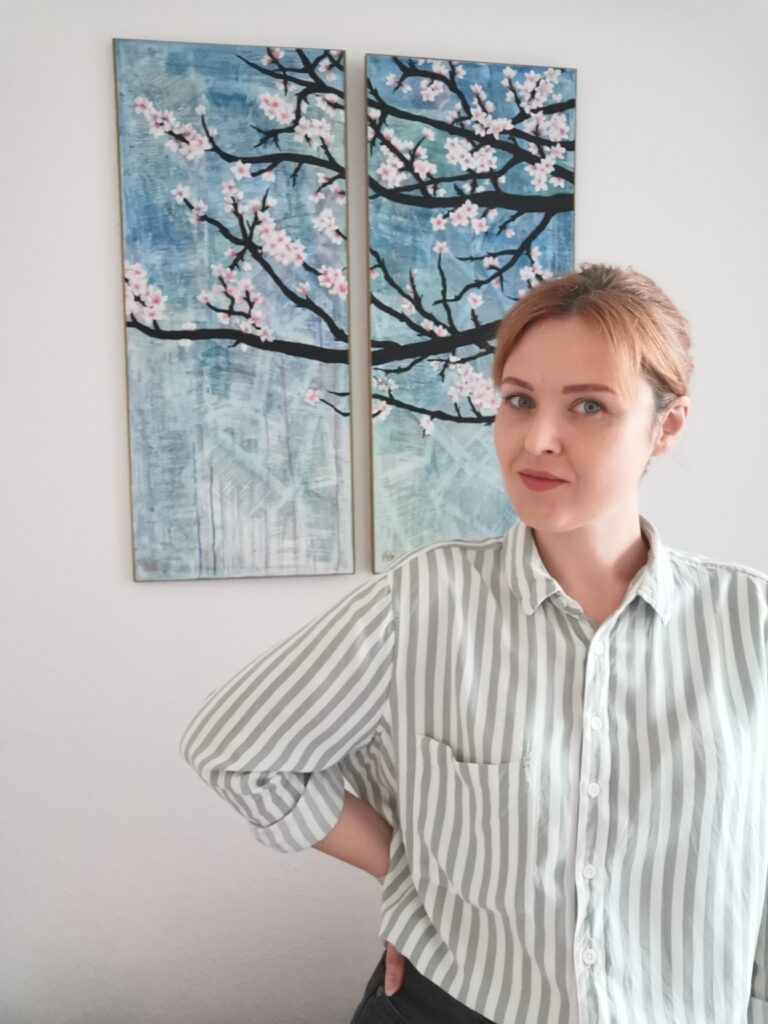
The pandemic years also pushed her back toward art in a deeper way. In the stillness and isolation of that time, she found herself reconnecting with the need to express emotions visually instead of trying to control or perfect them. You can feel that freedom inside the work now.
The paintings breathe differently because of it. Anna’s work feels rooted in the idea that landscapes are not always remembered visually sometimes they stay with us as emotions first.
Now let’s get to know Anna through our conversation with her about honesty over perfection, emotional landscapes, and learning to trust the unfinished parts of the creative process.
Q1. You discovered your love for drawing as a teenager, what first pulled you toward art, and did you sense how important it would become to you?
At that time, I was mostly drawing graffiti characters and portraits—basically anything that sparked my curiosity. It was a very intuitive process, without much of a plan, more about exploring and discovering. Back then, I wouldn’t have thought that painting would become such an important part of my life—it was simply something I felt drawn to.
Q2. You’ve said the pandemic drew you back to art, what was it about that period that reconnected you with your creative self?
During that time, everything was stripped back you were confronted with yourself, with fewer distractions and a slower pace. In that stillness, I found my way back to my roots, and to the urge to express emotions through images.
Q3. When did honesty become more important than perfection in your art, and was there a particular work where that shift became clear to you?
I carried that conflict within me for a long time. I used to draw very realistically, and a lot of what I created never felt good enough to me. At some point, I consciously wanted to break away from that. A few years ago, I started working on a self-portrait.
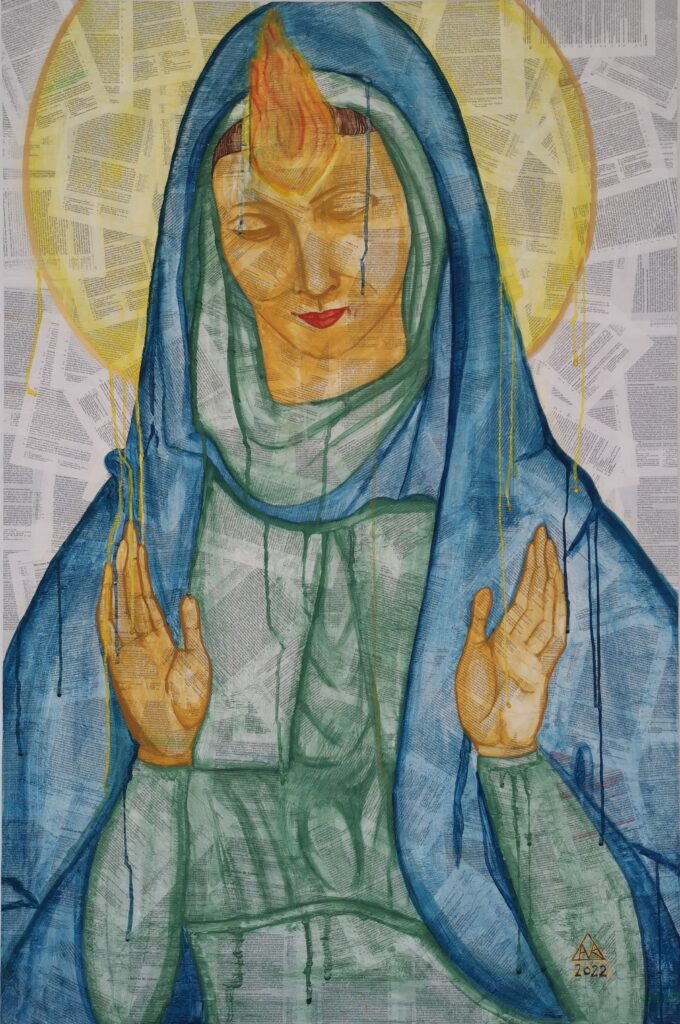
The expression was incredibly intense, but the proportions weren’t correct. I kept repainting it over and over again, trying to ‘fix’ it—and eventually realised that I actually preferred the imperfect version. That was a turning point for me. I began to understand that honesty in an image can be far more powerful than technical perfection. Discovering Picasso’s sketches had a huge impact on me as well—they completely shifted my perception of what I find compelling.
Q4. Your paintings carry scratches, layers, and traces like lived experiences is there one work that holds more of your own story than the others?
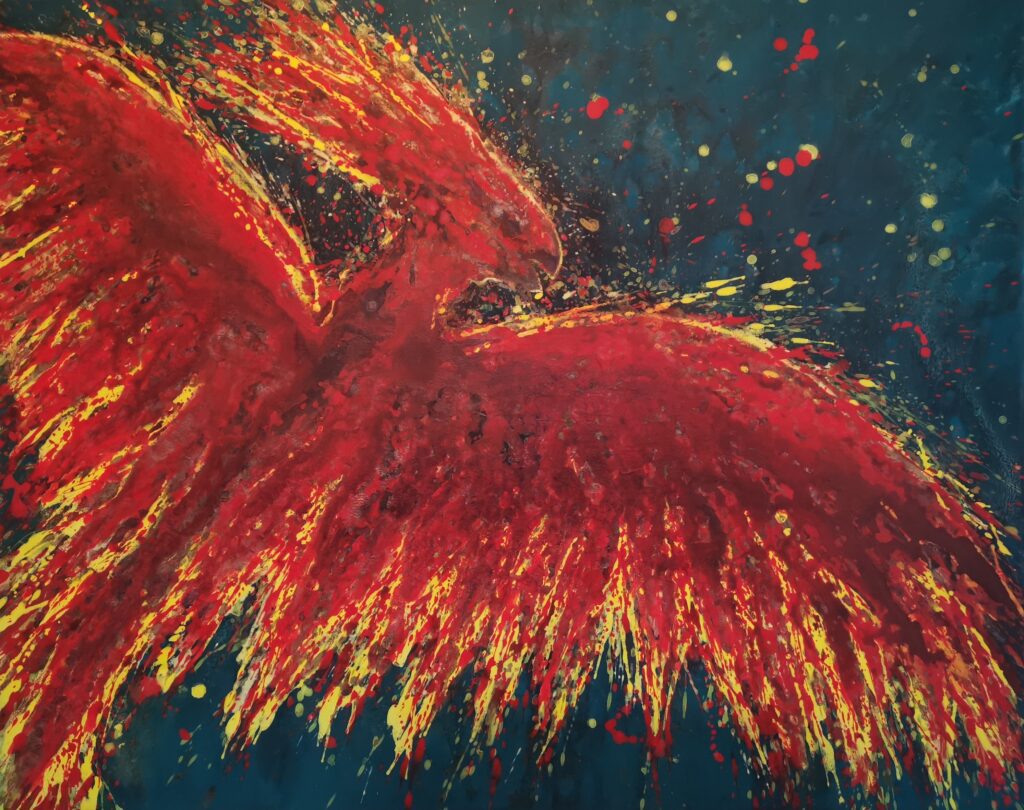
My self-portrait definitely carries a lot of my own story—it’s still not finished, by the way. I keep returning to it, adding, changing, letting it evolve over time. There’s also a painting of a phoenix that I worked on repeatedly over a long period. That piece has at least six layers. I never fully know what will come next in these works, and I think that’s part of it—they grow with me, carrying traces of different moments and states.
Q5. You photograph moments that reveal something real, how do you know when a photograph is ready to become a painting, and what happens in that shift between the two?
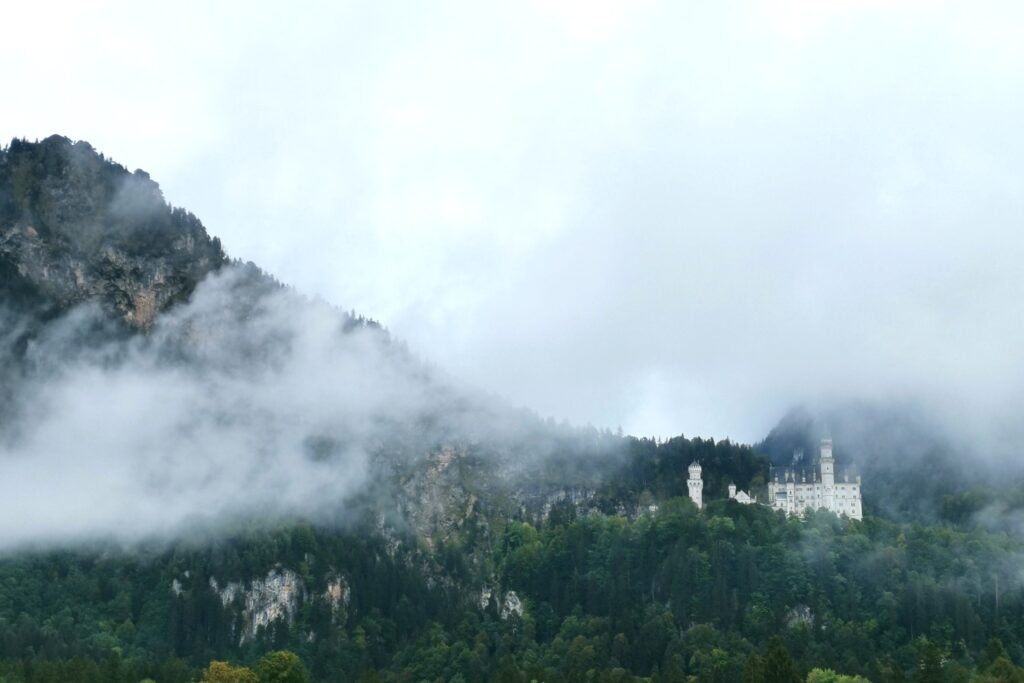
For me, every photograph carries a certain atmosphere but not all of them truly open something. It’s very much about intuition and personal perception. Even if I photograph a beautiful landscape, I won’t keep it if I can’t feel anything in it. The image has to hold a certain mood, something that resonates beyond what is visible. That emotional layer is essential it defines both my photographic and my painterly work.
Q6. Collections like Nature Dreaming, Fragments of Becoming, Winter Calm, and Skies Above feel more emotional than literal how do the titles emerge, and do they come before or after the work?
The titles of both my individual works and my collections usually come afterwards. I spend time with the pieces, sometimes really sitting with them, and let them unfold. Over time, certain feelings or meanings begin to surface. It’s less about naming something directly, and more about recognising what is already there. For me, the works come first and the language follows.
Q7. As a self-taught and emerging artist, what has been the hardest part of finding your own path?
Technical gaps are something I don’t see as the biggest challenge—you can close them. There are courses, and most of all, you keep learning through the process of working itself. Self-doubt is definitely part of it. For a long time, it even held me back from showing my work, and it still comes and goes. But I think the real challenge is having the courage to fully commit to art. If you can only do it part-time, the path naturally takes longer. At the same time, I feel confident that I will find my way.
Q8. You balance a social profession, art education, and your own creative practice how do you protect your energy and space for your own work?
That’s a very important point—and something I’m still figuring out. At times, it has felt overwhelming, which is why I’m currently looking for a more stable and structured way to balance everything. Art itself helps me reconnect with myself, but I’ve also learned that sometimes I need to step back from it in order to return with more clarity.
Interestingly, my work in art education often gives me energy rather than taking it away. The participants bring in their own ideas, and there’s a very open, supportive exchange that feels quite grounding.
Q9. If you could go back and talk to the teenage version of Anna who first picked up a pencil, what would you tell her about the road ahead?
I think I wouldn’t say much. Maybe just to trust what draws her in—even if it doesn’t make sense yet. And to let go of the need to get everything right. What feels imperfect at first might actually be the most honest part.
Q10. You describe AK Studio as a space where freedom matters more than perfection. What kind of world are you trying to build through it?
For me, freedom always comes with responsibility. In AK Studio, I want to create a space where people can be open, intuitive, and not driven by the need to be perfect. What matters to me is real dialogue—an honest exchange, where people feel seen and understood. I believe that through engaging with emotions, people can begin to understand themselves more deeply—and through that, also understand others better. If I could build something through it, it would be a small world with more openness, more trust, and a deeper sense of connection.
Q11. What advice would you give to artists who feel pressured to make their work “perfect” rather than honest?
I think it’s important to question where that pressure comes from. The idea of perfection often has little to do with what we actually feel or want to express. For me, honesty creates a much stronger connection both to myself and to others. What feels imperfect might actually be the most real part of the work. So my advice would be to trust that and to allow things to be unfinished, raw, or uncertain.
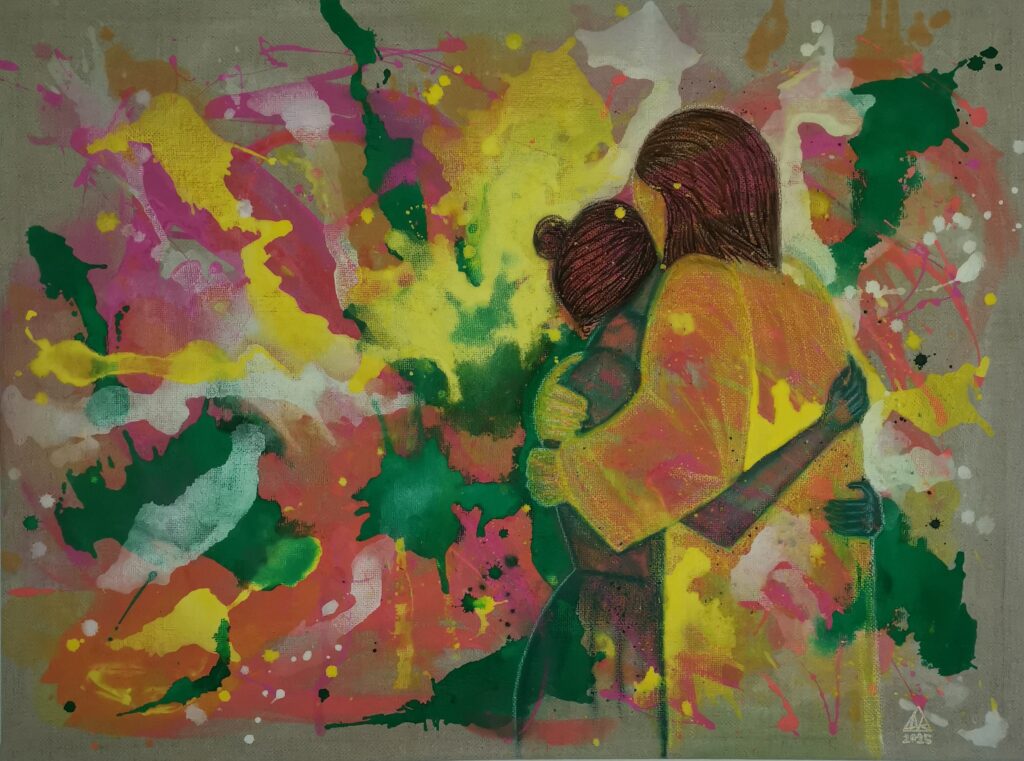
As our conversation with Anna came to a close, we kept thinking about how rare it is to hear an artist talk so openly about letting go of perfection.
So many people spend years trying to correct themselves in art, in life, in how they present themselves to the world. Anna seems to be moving in the opposite direction now. Toward honesty. Toward leaving certain edges rough if they feel real.
And you can feel that shift in the paintings. Nothing feels overworked. The layers stay visible. The scratches stay. The softness stays. Even the uncertainty stays sometimes. Instead of hiding those things, she lets them become part of the work.
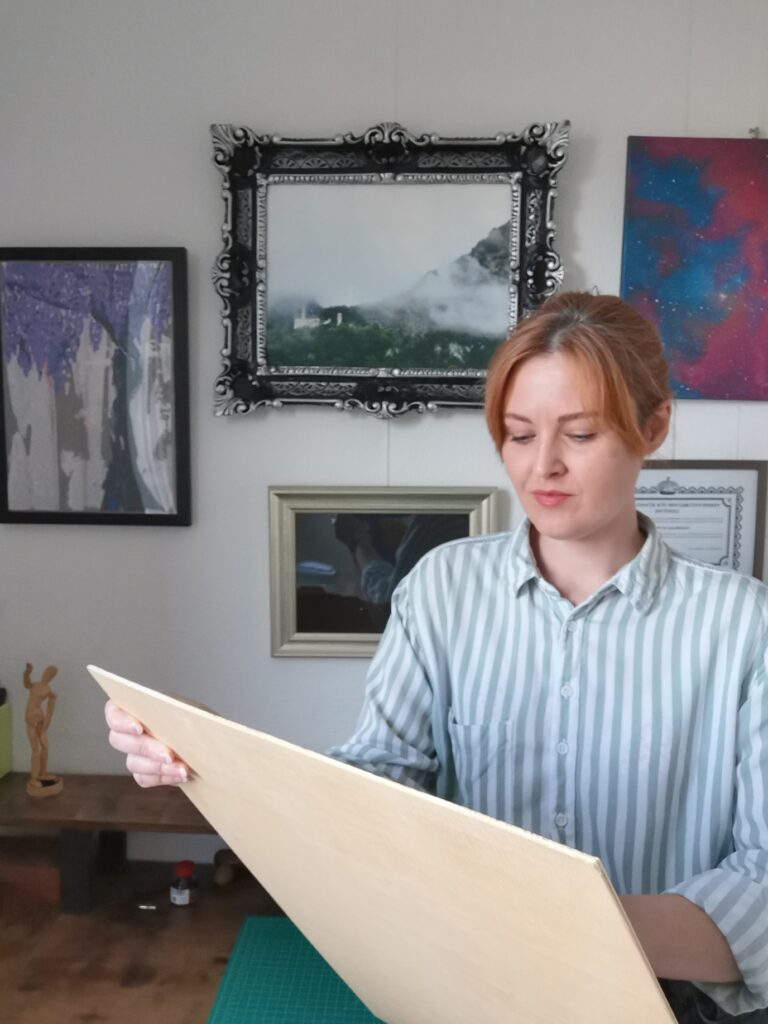
That’s probably why the paintings feel so human. We really loved what she said about discovering that the imperfect version of a painting sometimes carried more emotion than the “correct” one. Once you hear that, the work starts opening differently. You stop looking for perfection and start noticing feeling instead.
And honestly, that changes everything. Because these landscapes don’t just feel like places. They feel like moments of becoming. Of figuring things out slowly. Of allowing yourself to evolve without needing every part of the process to look polished all the time. There’s something comforting in that.
For people living with art, Anna’s paintings feel like the kind you keep returning to quietly over the years. Some days you notice the colour first. Other days it’s the atmosphere. Other days it’s simply the feeling that the work understands something unresolved in you too. That kind of connection can’t really be forced. And maybe that’s exactly what makes her work feel so honest in the first place.
To follow Anna’s journey and see more of her work, find her through the links below.
