
Why Karen Gemming uses limited colour palettes in her serene watercolour landscapes
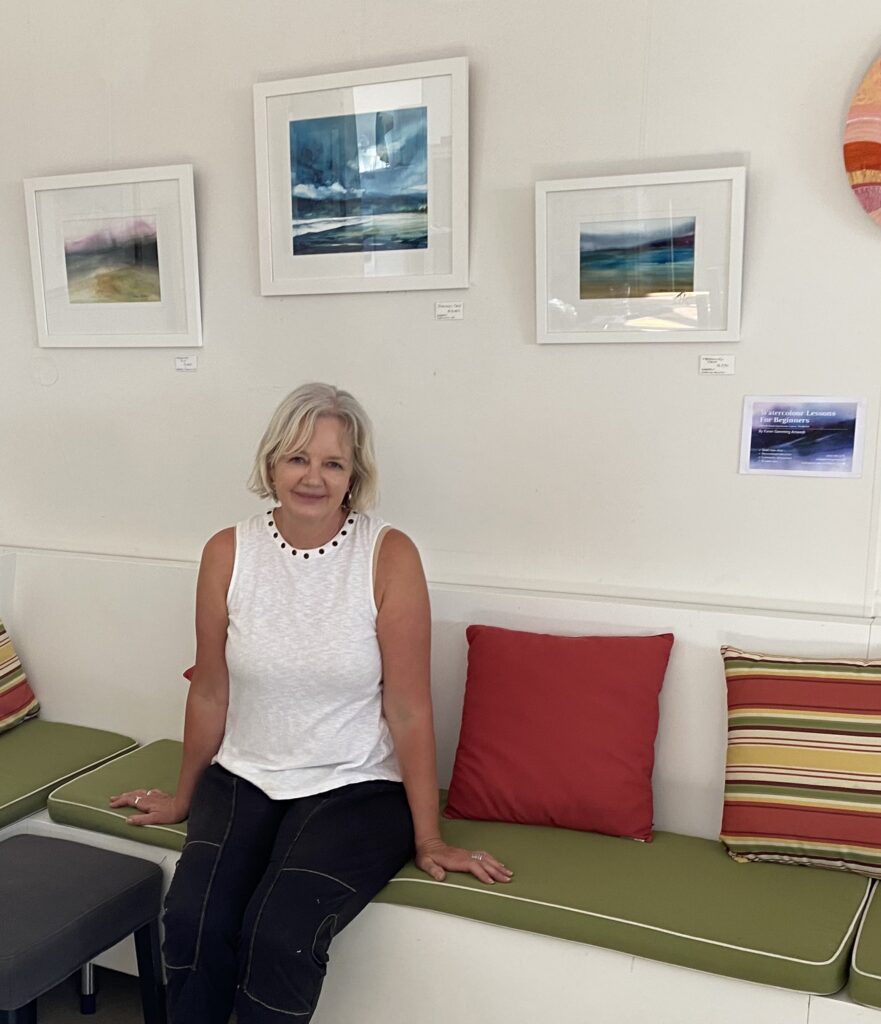
At Women in Arts Network, one of the most interesting things about curating Landscape and Places is seeing how differently artists define the word “landscape.”
For some, it’s about geography. For others, it becomes something much more personal. Karen Gemming’s work belongs firmly in the second category.
Karen is a selected artist for the exhibition, and while her paintings are inspired by coastlines, wilderness, changing weather, and open spaces, what stayed with us was how closely those landscapes seem connected to memory and feeling. The places she paints are real, but they also feel remembered, longed for, and emotionally experienced. That duality runs throughout her practice.
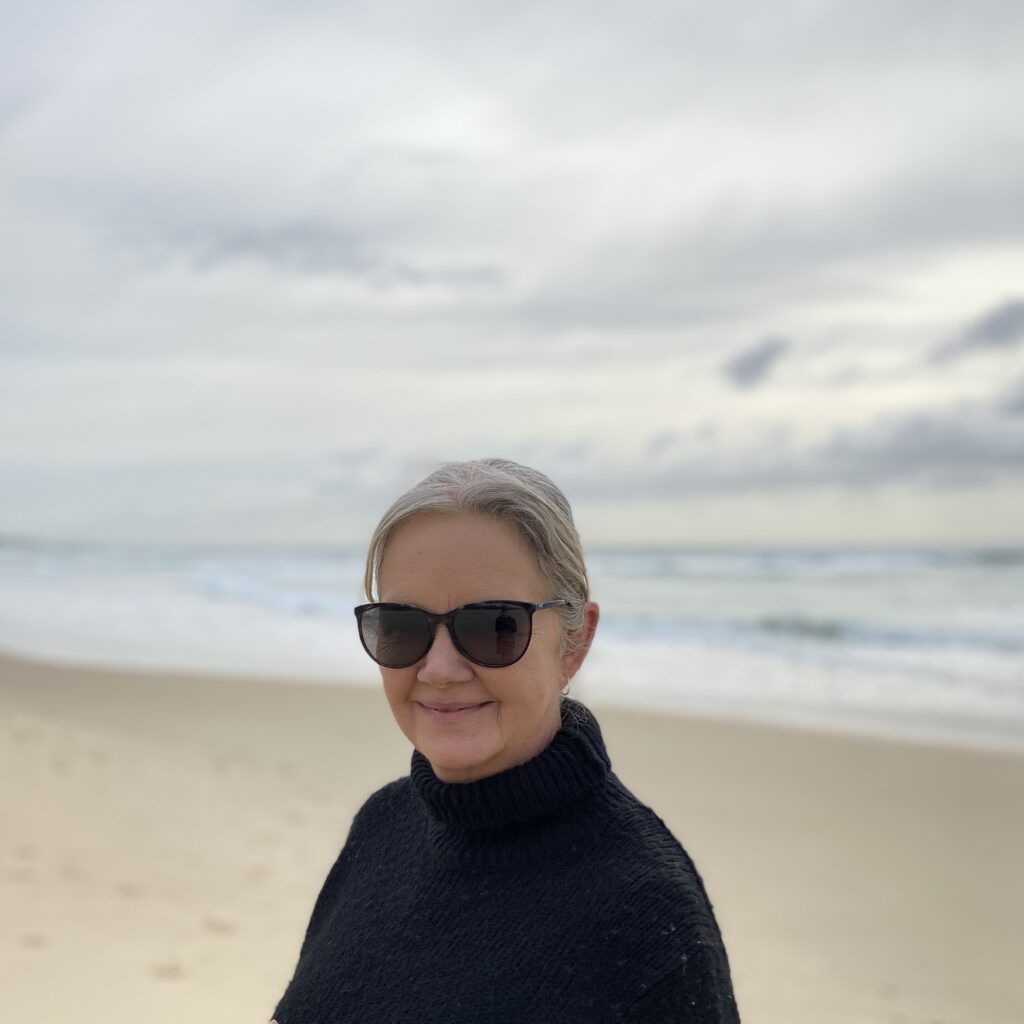
Having lived between New Zealand and Australia, Karen carries both environments with her. The wild coastlines, mountains, rivers, and expansive landscapes of New Zealand remain deeply present, while the colours, heat, light, and atmosphere of Queensland have become equally important influences. Rather than choosing between them, her work allows both places to coexist.
You can sense that relationship in the paintings. Another aspect of her practice that stood out to us was the way technical skill and intuition work together. Karen speaks openly about moving between structured observational painting and the freedom of her Dreamscape series, where colour, water, memory, and instinct guide the process more naturally.
Neither approach exists without the other. The confidence to let watercolour move freely comes from years of understanding the landscape first. And the Dreamscapes, in turn, seem to bring a greater emotional depth back into the representational work.
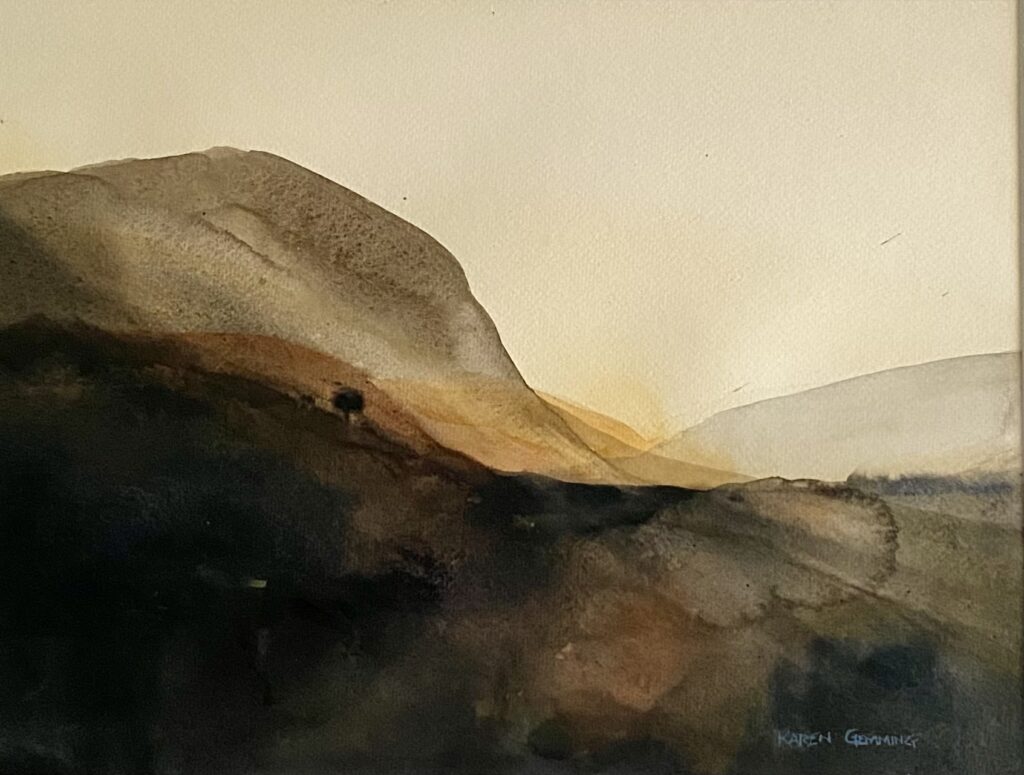
That conversation between observation and imagination gives the paintings their distinctive character.
We were also struck by her belief that art can genuinely offer people a sense of solitude and calm. In a culture that often rewards noise and constant stimulation, Karen’s paintings create the opposite experience. They offer space. Room to breathe. Room to pause. Room for the eye to wander without being overwhelmed.
Now let’s get to know Karen through our conversation about watercolour, memory, wilderness, intuition, and creating paintings that capture not only what a landscape looks like, but how it feels to stand within it.
Karen! Could you walk us through your background and how it shaped your sensitivity to landscape, mood, and the quiet emotional spaces within your paintings?
I grew up in a city but spent much time travelling between coastlines. The east coast has beaches with white sand and crystal waters where the west coast is wild and rugged with black sand. Travelling around New Zealand there is a lot of space to breathe and feel the power of the weather and the beauty of the countryside. This is where my love of the landscape, the moods of the weather and my yearning for wilderness come from.
Q2. You moved from New Zealand to Australia’s Sunshine Coast—how has that change in landscape and light influenced your work?
When I moved to Australia the colours seemed faded and the heat felt dangerous, the wildlife was noisier and magnified. I have since grown to love this land the blue green grey of the trees, the blood red earth, the warm rain and the balmy air.
Memories of New Zealand are held in my body, a land of wilderness, in mountains and a coastline that I still long for. The taste and smell of rivers, deserted black sand beaches with Toi toi , little baches and the green so green. My heart is with both and I hope my art reflects that love and those differences in colours and light.
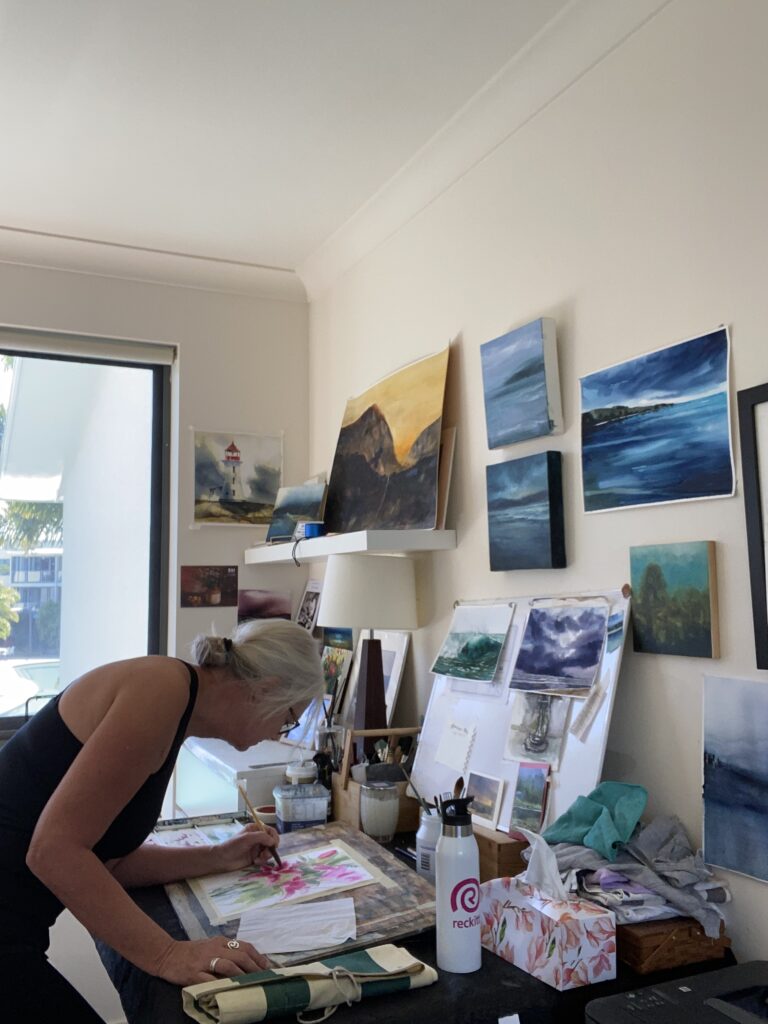
Q3. You’ve described watercolour as a balance between intention and chance how much do you control, and how much do you let go?
50/50
Q4. You work in both observational landscapes and intuitive Dreamscapes how do those two approaches influence each other?
They feed each other, my representational work and the elements of that proficiency enable me to paint with more expression, evoking a more emotional response hopefully in my Dreamscapes.
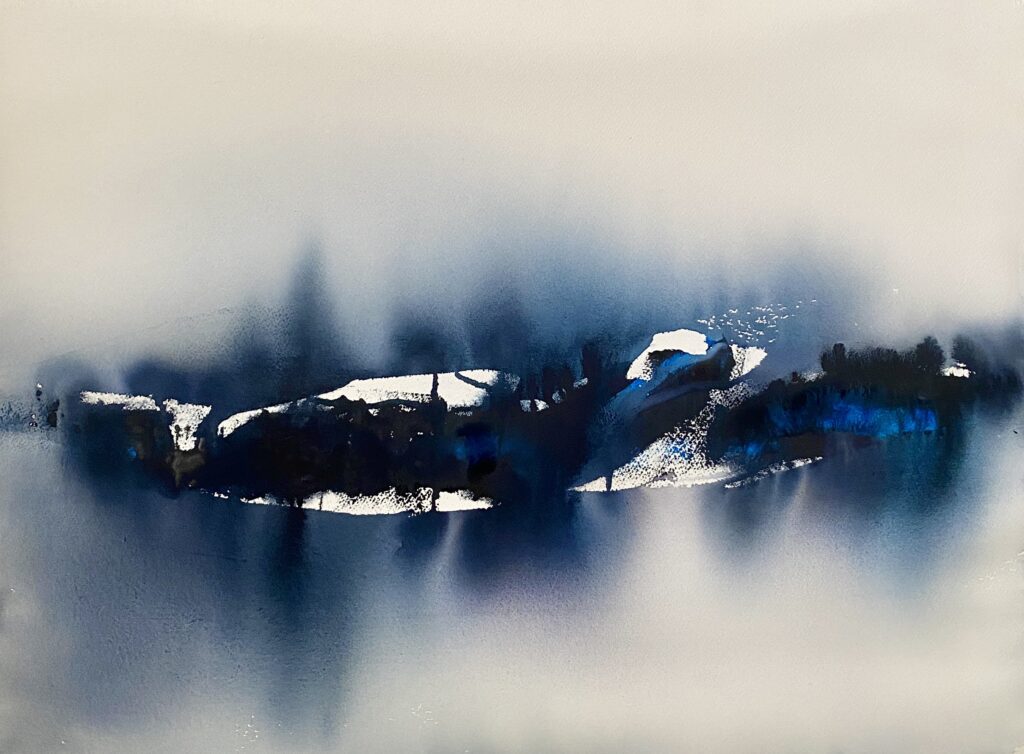
Q5. Light plays a powerful role in your paintings do you consciously place it, or does it emerge naturally as you work?
Where the light falls in a painting is a decision for me, an observation of where the light hits the landscape and the direction of where the shadows lay.
Q6. You’ve said your work celebrates wilderness and solitude do you think a painting can actually give someone a sense of solitude?
Id like to think it can actually give the viewer that feeling. A feeling of depth with aerial perspective, suggested forms and space in a painting to move your eyes around but also to rest. I also don’t often include people in my paintings for this reason.
Q7. Dreamscape titles like Glacial Blue and Bridge of Dreams feel very intuitive has a title ever revealed something about a painting that you hadn’t consciously seen before?
Yes often, my dreamscapes are very intuitive, my titles come sometimes days after they are finished after I have observed them awhile. In Bridge of dreams the bridge was not planned it just appeared and I expanded on that. Another painting ‘Wings of Ascension’ the title came after I realised I had what looked like a flock of birds rising from a lake.
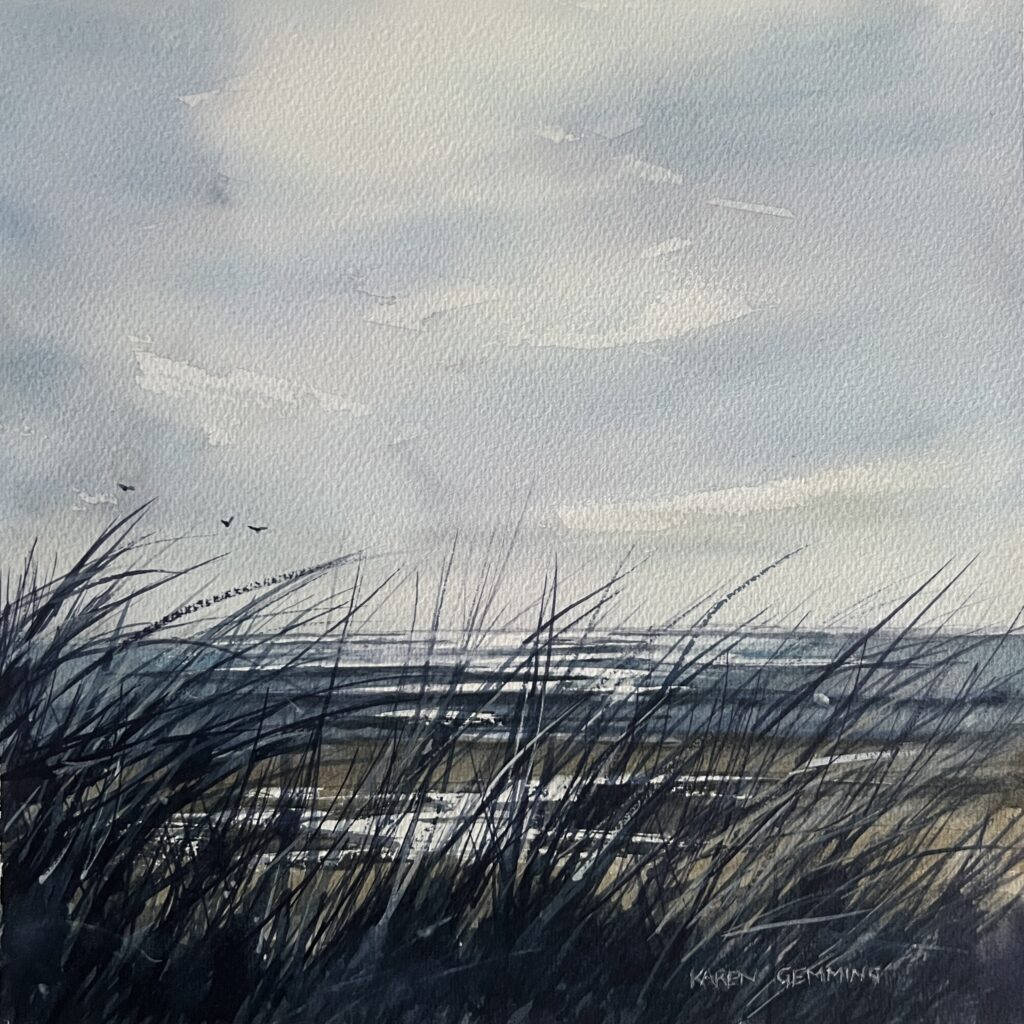
Q8. When someone lives with one of your paintings every day, what do you hope it quietly brings to their life?
I would love them to feel a huge sense of calm like a deep breath before the business of their day.
Q9. What does the beginning of a painting look like for you structured, intuitive, or somewhere in between?
My more representational paintings begin structured, I spend awhile making sure everything is drawn correctly, my palette is chosen and I have in my mind how I will progress. It is then that I feel the freedom to paint quickly and fairly intuitively. In my Dreamscapes I choose a fairly limited palette before painting intuitively. I use lots of water, I scrape and splash, tilting the board without much brushwork to move the pigments around.
Q10. Do you think success in art is something that can be defined, or does it remain constantly shifting?
I think success in art for me is constantly shifting, I think to be authentic is to paint what you love while continuing to experiment and grow and hopefully what you create will connect with people. That connection whether it is a feeling or a memory is success for me.
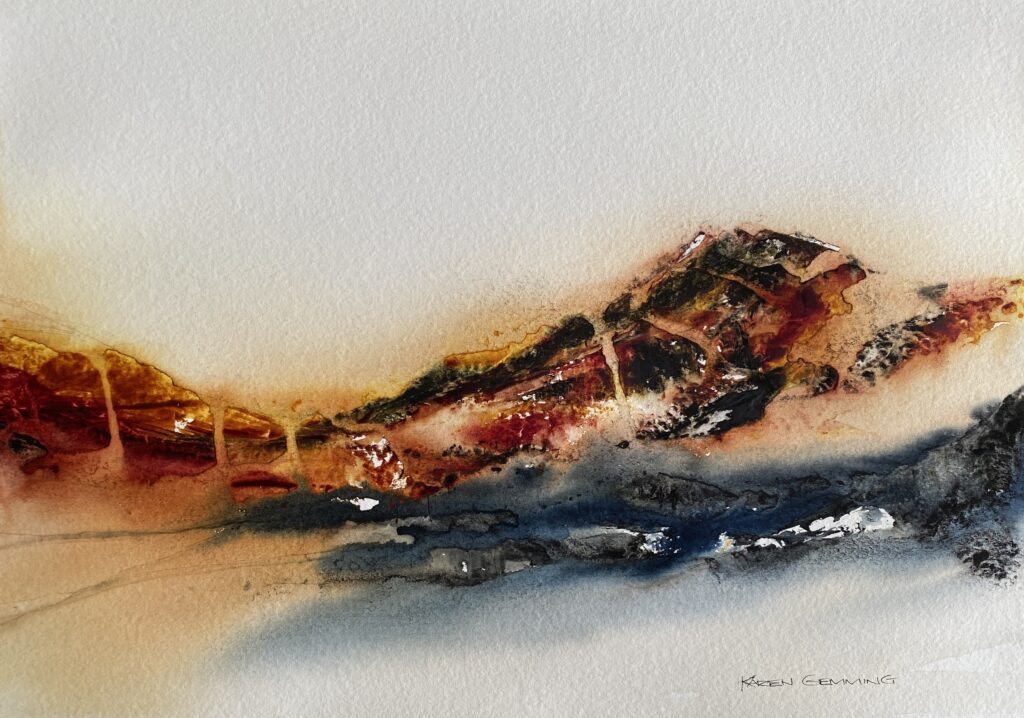
Q11. Is there a particular piece that feels especially meaningful or pivotal in your journey?
I entered my first dreamscape painting into an art show, it won first prize in the watercolour section and it sold. It was called Golden Hour and it was pivotal for me to know that this new direction was where I wanted to go.
Q12. What advice would you give to a watercolour artist who is still learning to trust intuition and move beyond simply painting what they see?
My advice would be to paint as much as they can, to understand that once they have reached a stage of proficiency they will then realise that what they have learnt will enable more freedom to follow their instincts.
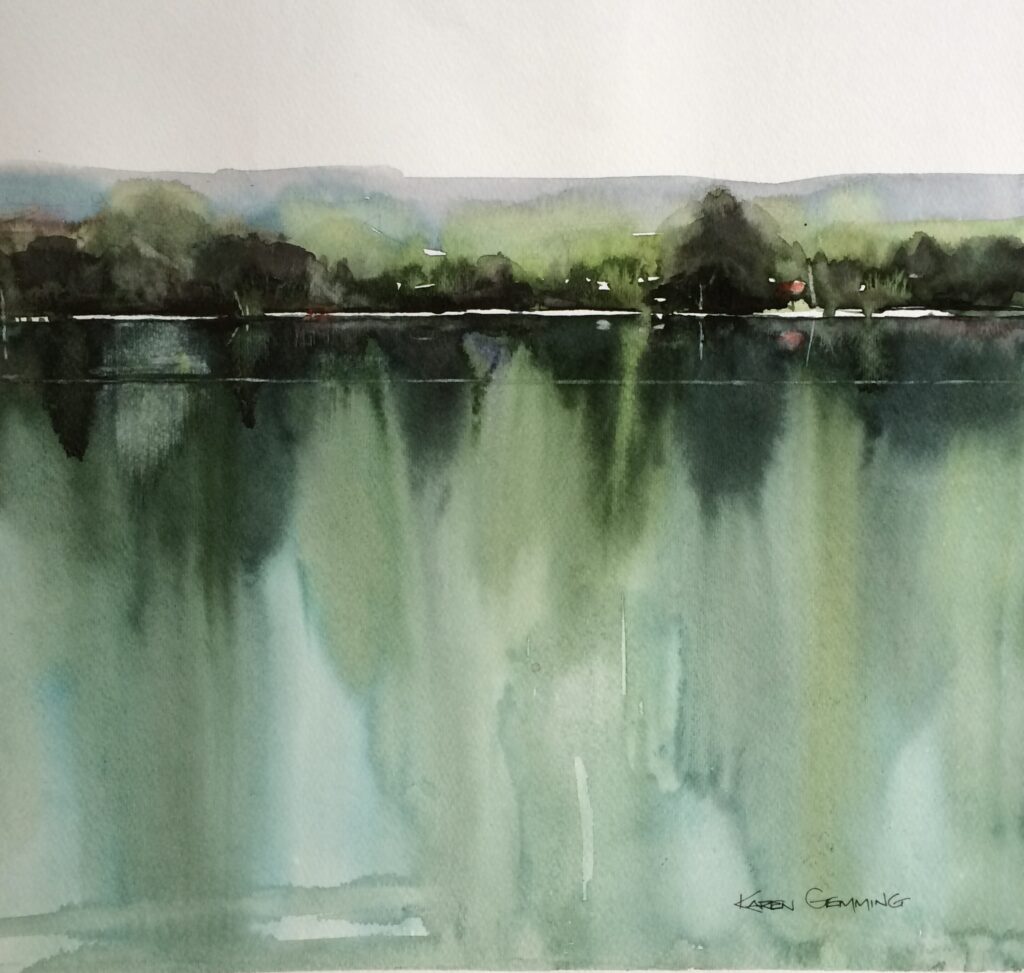
As our conversation with Karen came to a close, we found ourselves thinking about how differently her work approaches landscape compared to much of what we see today.
Many landscape paintings focus on describing a place accurately. Others lean so heavily into abstraction that the connection to place almost disappears altogether. Karen’s work seems to exist in the space between those two approaches.
The landscapes remain recognisable, but they are equally shaped by memory, intuition, atmosphere, and emotion. The paintings are not only about where a place is. They are about what a place leaves behind inside us long after we have left it. That distinction feels important.
There is also something refreshing about the way Karen embraces both structure and freedom. Rather than choosing between observation and intuition, she allows them to work together. The technical understanding of landscape gives her the confidence to let water, pigment, and instinct take over when necessary.
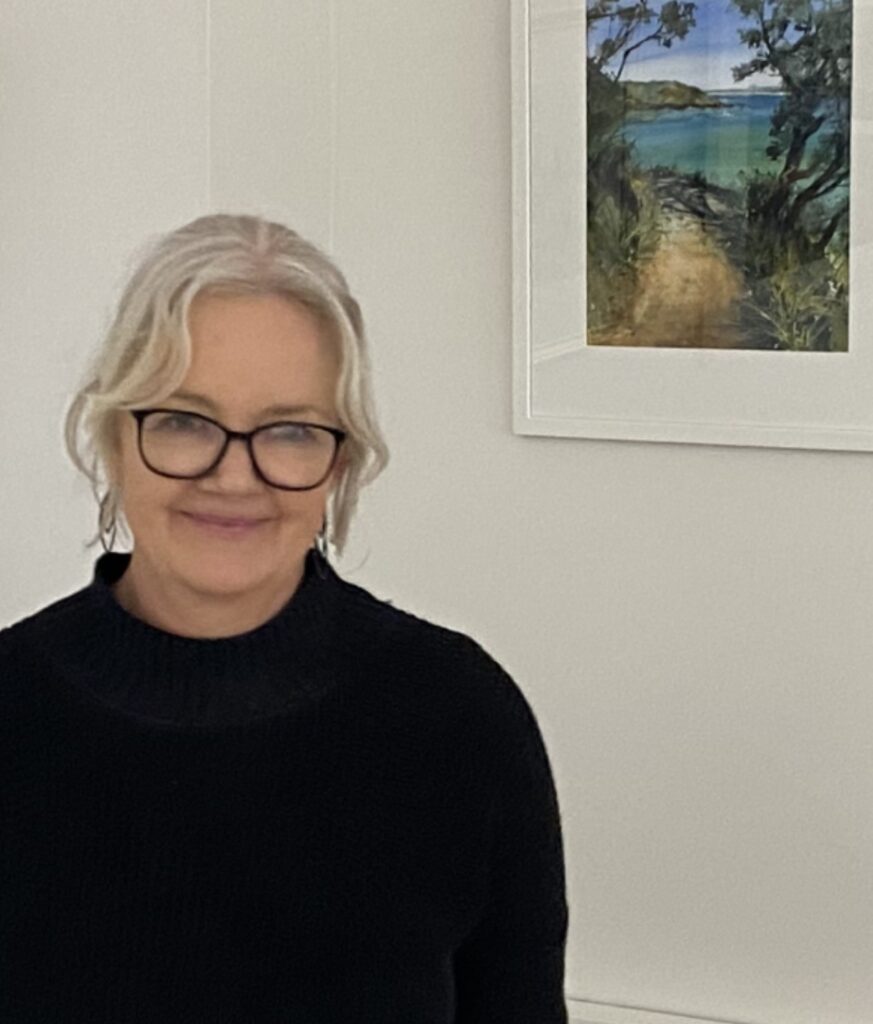
The result feels effortless, even though it is built on years of experience. And perhaps that is what gives the work its sense of calm. Nothing feels forced. The paintings unfold gently, allowing viewers to enter them at their own pace rather than demanding attention immediately. In a world that often feels crowded, noisy, and fast-moving, that quality becomes increasingly valuable.
For collectors and viewers, Karen’s paintings offer more than a representation of nature. They create a quiet presence within a space. The colours, light, and open expanses continue revealing themselves over time, often reflecting different moods and emotions depending on the day and the person living with them. And perhaps that is why the work lingers.
Not because it asks to be noticed loudly, but because it offers something many people are searching for without realising it a sense of stillness, space, and connection.
To follow Karen’s journey and see more of her work, find her through the links below.
