
This artist combines coral shapes, sea anemones & feminine energy in textile art │ Tine Rosa Ebdrup
At Women in Arts Network, every exhibition theme begins long before the open call itself. We spend months researching, observing conversations in contemporary art, and thinking carefully about what artists are trying to express right now. The theme Flora and Fauna came from wanting to explore nature not simply as something decorative or beautiful, but as something deeply connected to identity, memory, the body, transformation, and human experience itself.
We received so many beautiful submissions for the exhibition. Paintings inspired by gardens, botanical studies, landscapes, wildlife, and organic forms. But when Tine Rosa Ebdrup’s work arrived, we immediately stopped scrolling.
Because honestly, it felt like the exhibition suddenly opened in an entirely new direction.
Tine is a selected artist for the exhibition, and her practice feels deeply personal, instinctive, playful, and politically aware all at once. Trained in textile and fashion at Design School Kolding in Denmark, she spent years working away from yarn before returning to knitting during the pandemic almost by accident after her daughter encouraged her to try it again.
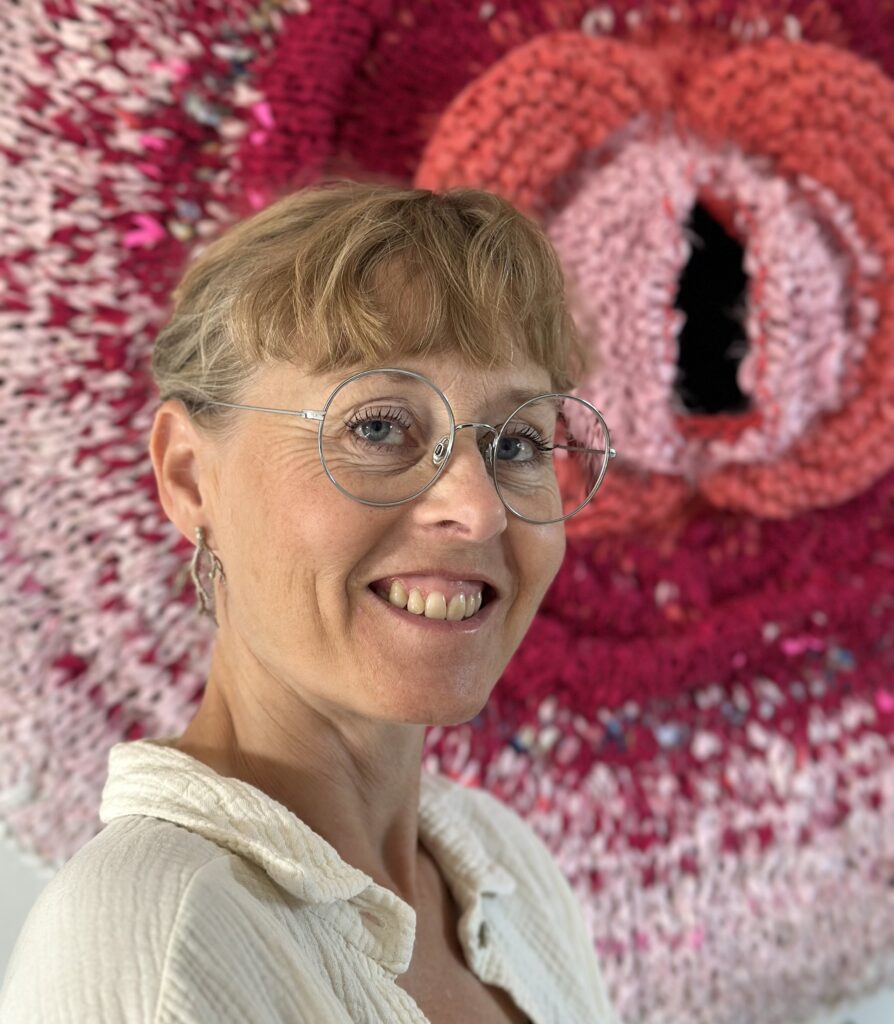
What emerged from that return was something she hadn’t fully planned.
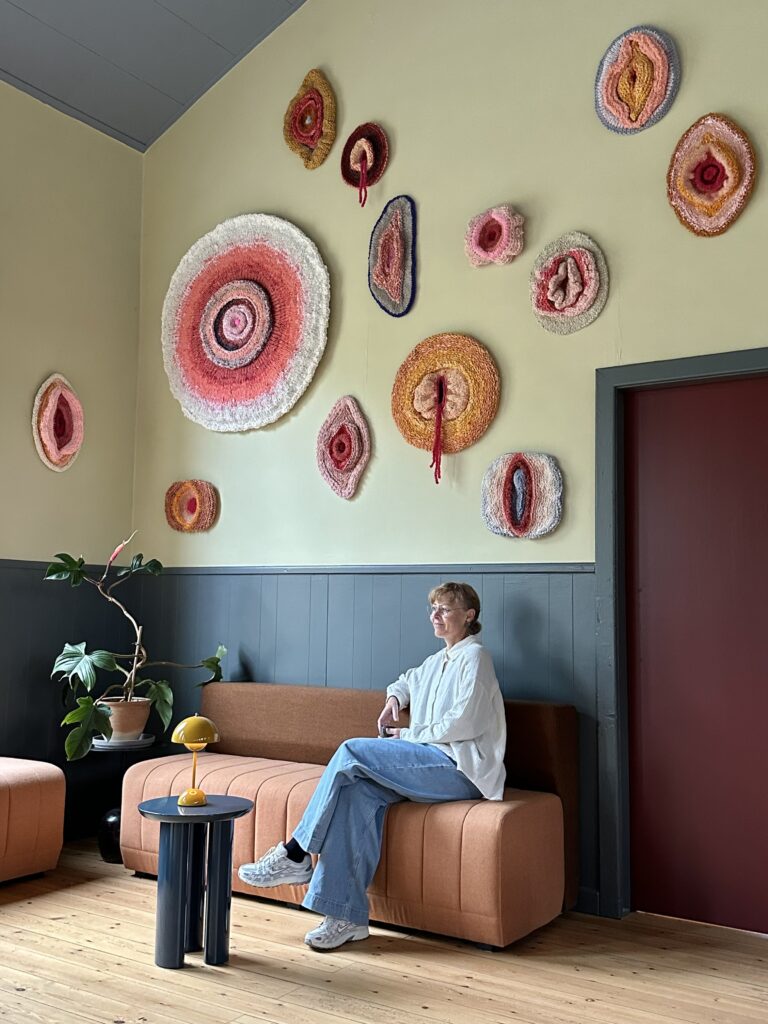
Her work began moving toward ideas surrounding femininity, fertility, vulnerability, bodily experience, and what she calls kvindekraft women’s power. Through organic sculptural forms created from recycled textiles, she explores subjects that many societies still struggle to speak about openly, especially around the female body and the emotions, histories, and expectations attached to it.
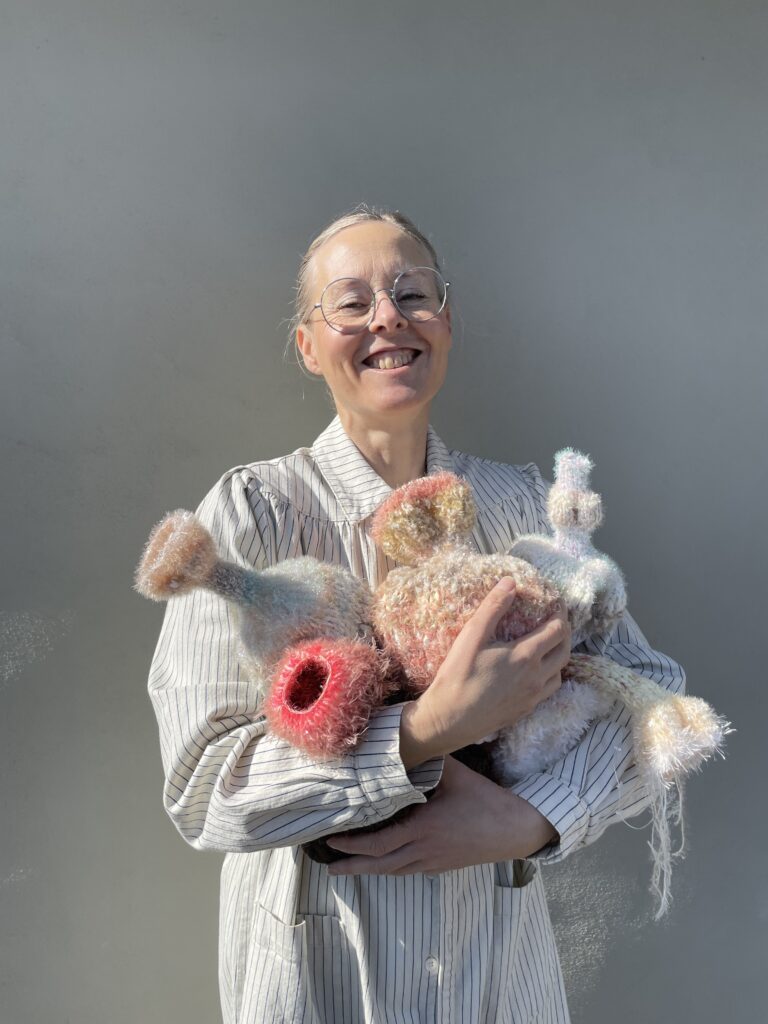
And yet nothing about the work feels heavy or closed off. There’s softness in it. Humour in it. Curiosity in it. Tine also works almost entirely intuitively. She rarely sketches beforehand and instead allows each piece to slowly develop through movement, colour, texture, and instinct as she works.
That freedom gives the sculptures a sense of unpredictability and life, as though they are growing naturally rather than being tightly controlled into shape.
The materials themselves also carry meaning. Recycled bedsheets, tablecloths, clothing, and glitter yarn all become part of the conversation around domestic labour, care, femininity, memory, and transformation. Things once overlooked or ordinary are reworked into forms that feel impossible to ignore.
Now let’s get to know Tine through our conversation with her about feminist sculpture, recycled textiles, organic forms, and celebrating the female body through softness, craft, and intuition.
Q1. Could you share a bit about your background and how your practice has evolved into working with materials, textiles, and personal archives alongside more traditional forms?
In 2004 I graduated from the Design School Kolding in Denmark. I have a bachelor’s degree in fashion and a master’s degree in textile. I wove and loved constructing textiles, having the materials in my hands, seeing them formed from the yarns and becoming the expression I desired. After my education, I worked with decorating spaces, research, and interior design, but not with textiledesign. It was only during the corona pandemic that I again got yarn between my hands. My adult daughter learned to knit and also thought I should knit.
Once I started constructing textiles again, having the materials in my hands, I could feel that it was the right thing! It was the way forward, and I quickly went from knitting sweaters to experimenting with knitting for the wall. With a background in both fashion and textiles, I am interested in creating both form and surface.
My design background means that I constantly explore possibilities, use techniques in new ways, and thereby develop my own techniques to create form in the surface. I find it interesting to use an old handicraft like knitting, which is normally used for clothing, in a completely new way. Namely, for relief works that are meant to hang on the wall and carry a message.
Q2. Your work is deeply feminist, it’s about kvindekraft (women’s power) and feminine energy. When did you realize this was your mission?
When I began experimenting with knitting for the wall, it was as if everything I created was inspired by the female sex, it just came out of my hands! And I let it come. I wanted to explore what female power is. What feminine energy looks like. I had a sense that it was urgent, because it is lacking in the world. The world is out of balance. Masculine energy takes up too much space. There needs to be a balance between the masculine and the feminine.
Q3. You’ve said “the female sex needs to come into the light! It should hang on the wall as a symbol of power and fertility.” That’s a bold statement! When did you come to that belief?
My need to express and explore female power and feminine energy arose because I became absorbed in women’s conditions in the world, in the social structures created by men for men. It was as if I truly began to see clearly how masculine values and dominance still keep women trapped in patterns that are limiting and oppressive.
Even in societies like Denmark, where on the surface and legally there is equality. The old norms and patterns that have kept women in place for centuries, if not millennia, are so internalized – also in women themselves – that it requires a lot of self-examination and awareness to first begin to see them and then to let them go. With my works, I wish to inspire women to look inward. To examine their feelings of shame about their own sex, of not being allowed to take up space, not being allowed to claim their rights.
I want everyone, and especially women themselves, to look at their own sex with a desexualized gaze. To see the female genitalia, the placenta, the umbilical cord, the egg cell, as symbols of fertility, symbols of life, which therefore should be honored and have a place on the wall. Just think about what an achievement it is to create, give birth to, and breastfeed a child. The value of the female must be highlighted. The female sex must be honored not hidden away in shame. Put it on the wall, where we can see it and rejoice! We must find our “kvindekraft” our female power so we can stand in our own right and change the world in a more sustainable direction.
Q4. You work with a combination of yarn and recycled textiles specifically bedding, tablecloths, and women’s clothing. Why those materials specifically?
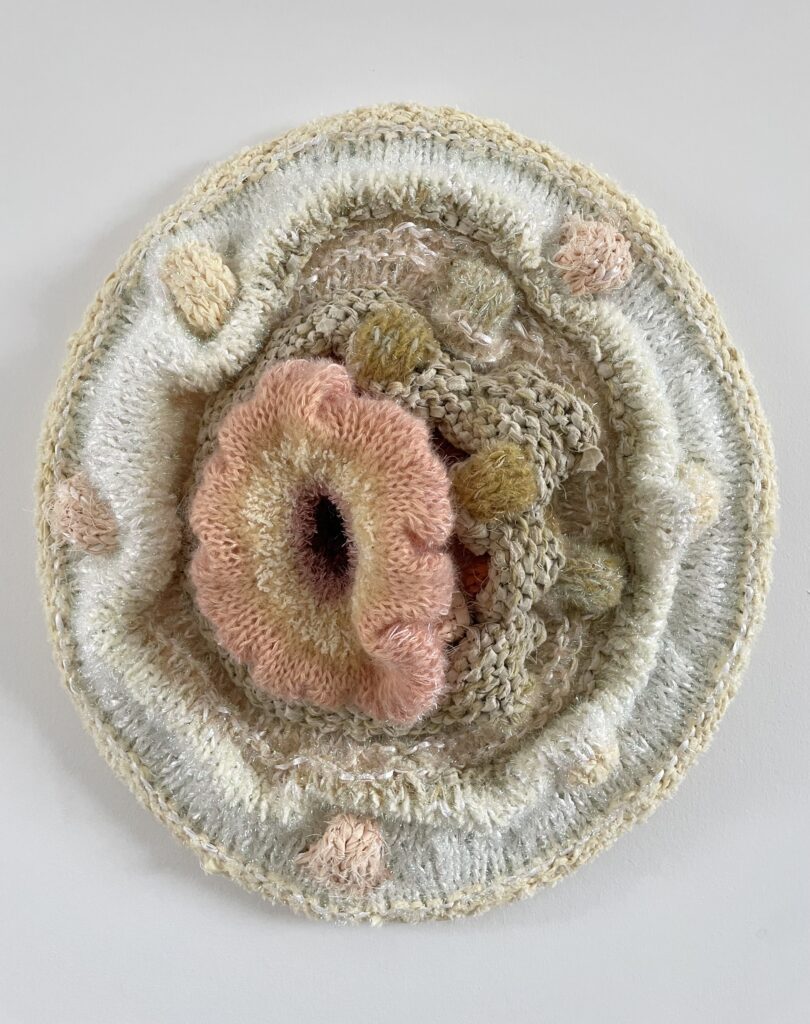
I really like the idea of taking recycled textiles or discarded fabrics and transforming them into something completely different and valuable. Giving them a new expression. A new life! By using bedding and tablecloths, I refer to the extensive work involved in processing, washing, and ironing these textiles.
Work that has mainly been carried out by women over time. Symbolically, I only use women’s clothing to reinforce and highlight the feminine. I combine the textiles with yarn to achieve a contrast between the somewhat rustic and the delicate in surface and texture. I also love using glitter yarn to enhance the contrast.
Q5. In your work, colour often feels tied to the material rather than imposed on it how do you approach colour when working with existing fabrics or textures?
I think of the existing colors of the textiles and yarns as colors I can mix. I see it as a good challenge that I can’t just choose whatever I want, but must combine the textiles I have with the yarns I have and thereby achieve the color I desire. Therefore, sometimes color effects arise that I couldn’t have imagined. It is a gift and makes it incredibly exciting. I love working with colors; they are a great driving force for my work.
Q6. Walk us through creating a Kvindeblomst from beginning to end. Do you sketch first, or just start knitting?
It is a very intuitive process when I knit. I don’t make sketches because I simply cannot foresee how the work will look. I choose what the inspiration is – genital organ, egg cell, placenta, hara chakra, etc. – and the main colors. The rest happens along the way. I am in the process and make use of my knowledge of colors, composition, and contrasts to make choices along the way. Sometimes it also becomes something different than I thought. But I let it come, whatever is meant to come.
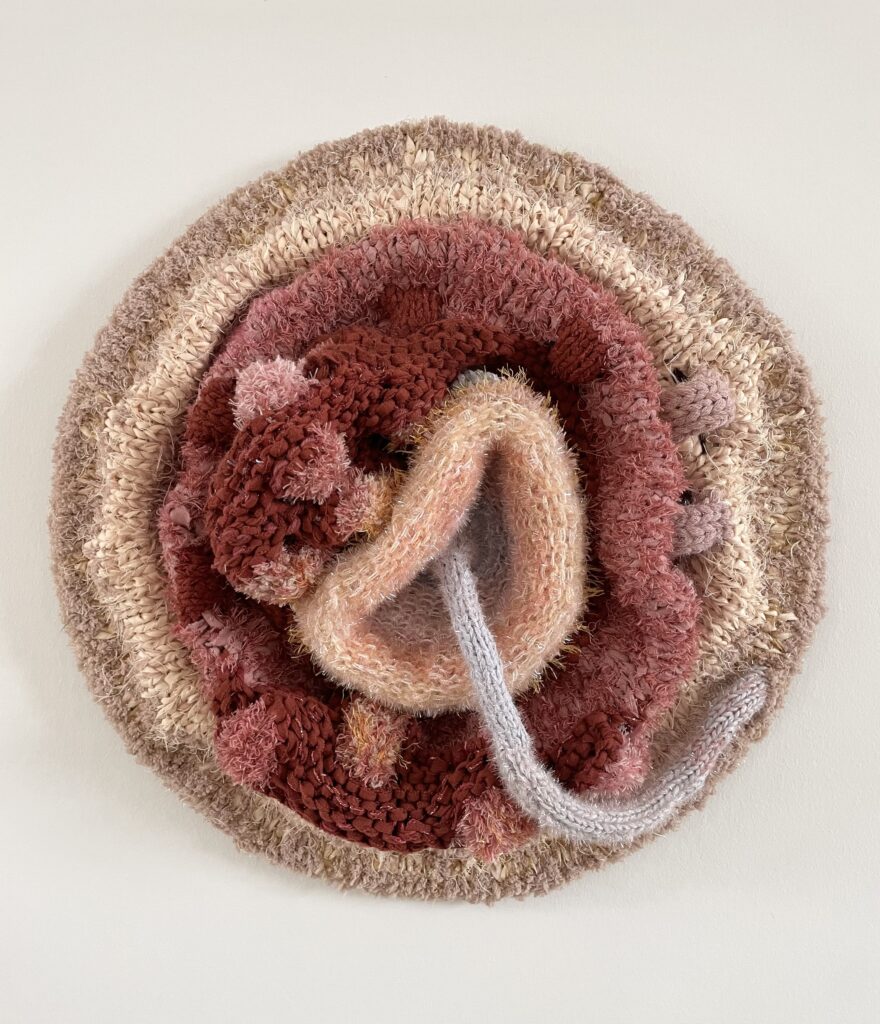
Q7. How do you create these organic, body-like forms in knitting? How do you know what shape it will take as you’re working?
I have developed techniques to create the shapes. I use known techniques in different ways. Usually, I start in the middle of the work. That way, I can knit both inward and outward, which gives the greatest freedom to create freely along the way. I have so much experience by now that I more or less know how I can create the different shapes.
But I always let the materials and colors guide me if something interesting suddenly appears. That is why it continues to be exciting. I cannot foresee what will happen. Actually, I have to step “aside” and let the work come into being through my hands. I also combine my female inspiration with other sources of inspiration. For example, I am very inspired by corals, sea anemones, and other underwater growths at the moment. I love creating specific expressions through the materials.
Q8. You seem deeply committed to teaching, not just making your own art but empowering other women to create. Why is that teaching work so important to you?
I love opening other people’s eyes to free creativity. The fact that there are no rules. I want to pass on my knowledge, experience, and techniques so that others can find joy in expressing themselves through textiles and creating freely. I teach “Relief Knitting”, which I call the knitting for the wall, and I teach “Knitting a vase”. Both encourage free play with materials, colors, and shapes. It is so wonderful to see people completely absorbed in creating their own unique expressions.
Q9. Beyond the physical knitted object, what do you hope women take away from your workshops?
I hope they will want to continue experimenting with colors, materials, and shapes. Some are very uncertain and find that it is not dangerous to knit without a pattern. Others dive right in and immediately see the possibilities. I hope it will give all of them increased creativity and joy!
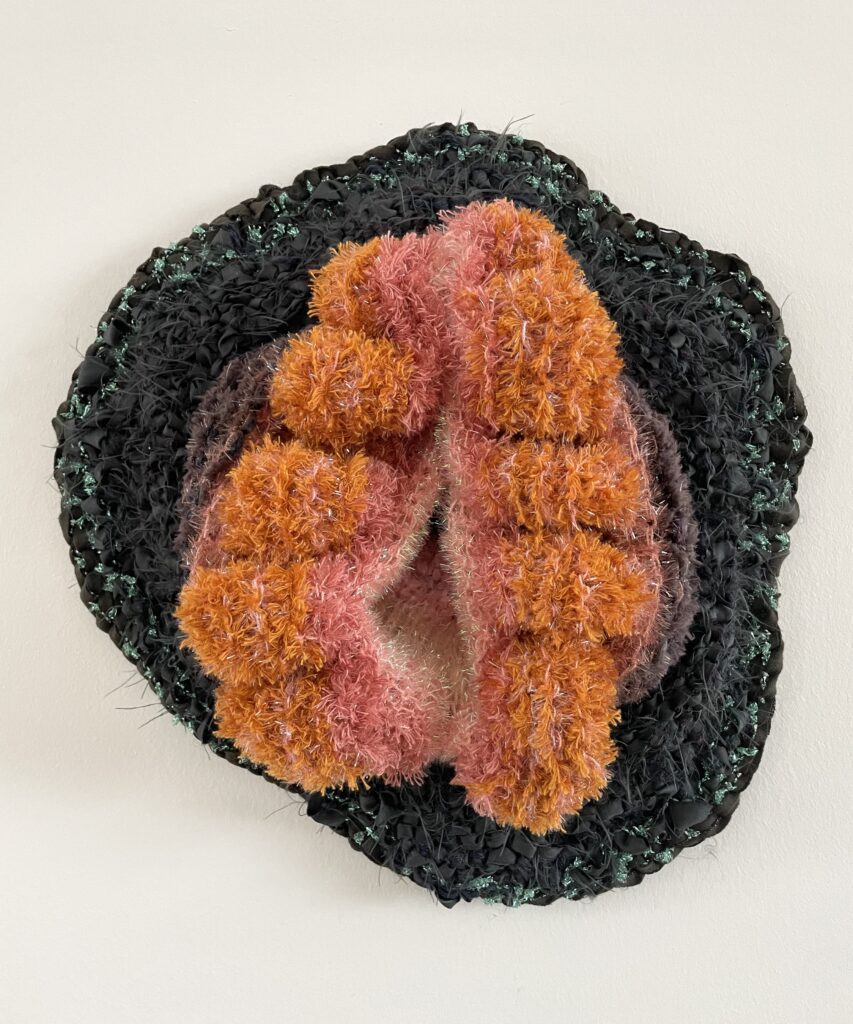
Q10. What brings you pure joy in this work not the political message or activism, but the actual making?
Creating with my hands. Being in the body instead of in the head and going with the process. Working with the colors and their combinations. Creating an aesthetic expression that speaks to my senses and hopefully to others’. It brings me pure joy and has become absolutely necessary for me to feel well.
Q11. What would that world look like a world where women’s power symbols were as common and accepted as any other kind of art?
Women’s power represents, for me, respect for and protection of life. We give life and will not sacrifice life. So I believe it would be a world with less violence and exploitation. If women were recognized for their strengths and values and had the same influence as men, I think the world would come into balance. The focus on growth and power would decrease and a more cyclical perspective would increase with more focus on the greater good and care for the individual. We really need equality between the genders.
Q12. You create art that reminds women of their own strength and worth. Has making this work reminded YOU? Have you discovered or reclaimed your own power through creating it?
Yes, definitely! It has been a parallel process, where the creative work itself, based on female power and feminine energy, has influenced my own feelings, consciousness, and self-esteem in relation to being a woman. It has made me see the feminine qualities as indispensable for a better world.
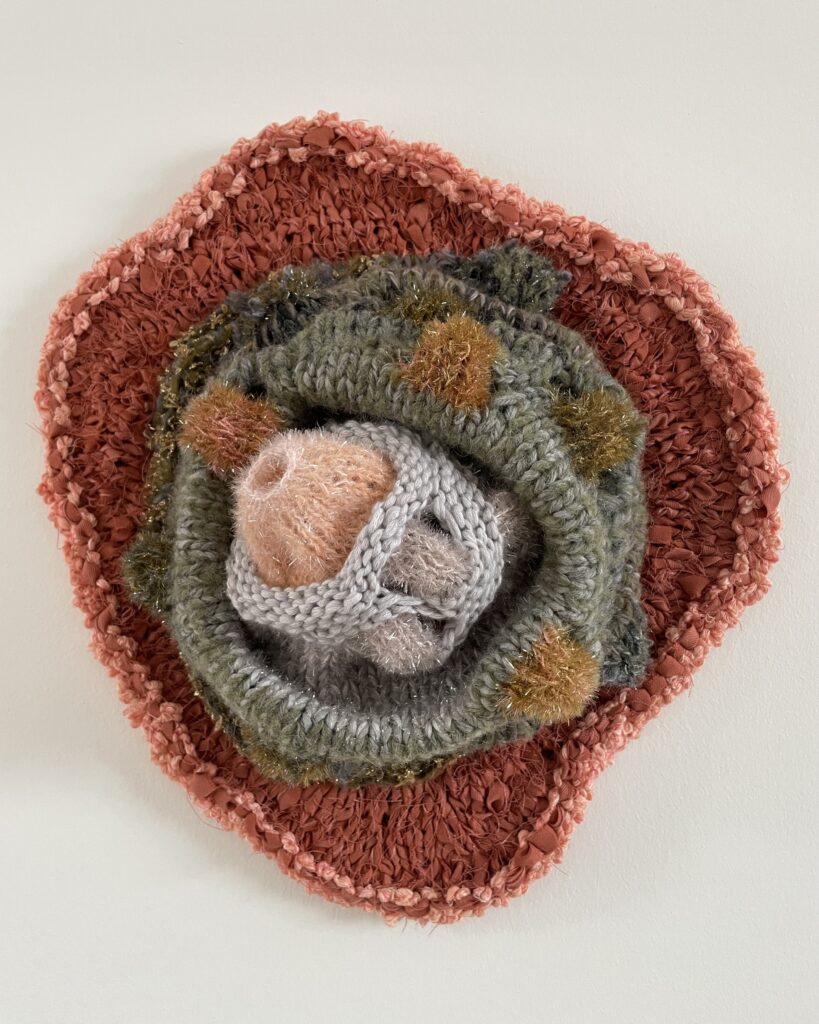
Q13. When a woman stands in front of one of your Kvindeblomster for the first time, what do you hope happens for her in that moment?
I hope she is reminded that the female sex is beautiful and that the feminine should be celebrated. That she should not be ashamed of her sex and that she herself decides how she views the female body. That she sees there does not need to be anything sexual about the female body and the reproductive organs.
Q14, Do you feel meaning in your work is something you define, or something that emerges through the viewer’s interpretation?
My works are interpretations of my inspiration, sensations, and feelings. I create an expression. How it is received and what impression it makes, I cannot control. When I create a work, I strike a chord. If that tone resonates with the viewer, then they can continue to compose a melody of their own and create their own interpretation.
Q15. What advice would you give to artists who want to work with personal materials and memory, but aren’t sure how to begin?
If personal materials are recycled materials, I would advise other artists who want to work with recycling to look for the beauty in everyday materials. Think about how recycled materials can be combined with the materials they usually use. Find materials that speak to you and just start experimenting and see what happens. I work with a deep collective and personal memory that lies more or less unconsciously in many women. And, of course, you can work with memory in countless ways. You have to find the way that speaks to you and leads you further in your artistic practice.
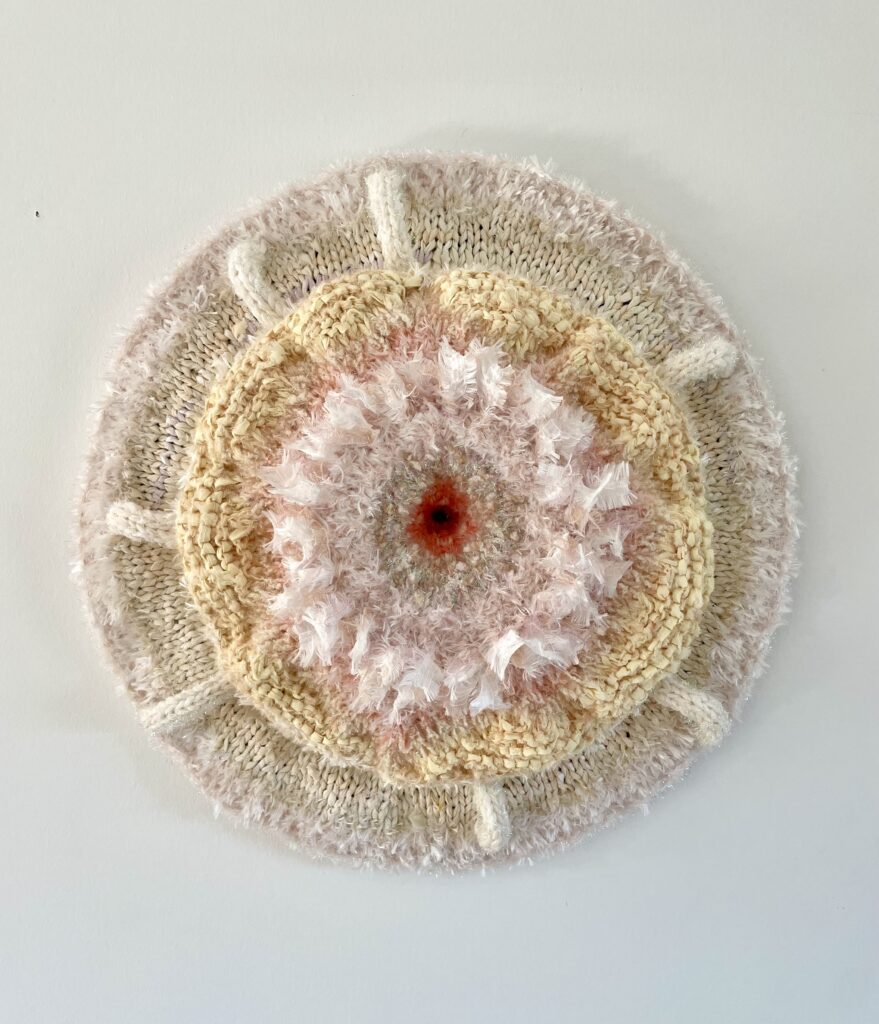
As our conversation with Tine came to a close, we found ourselves thinking about how differently her work approaches conversations around femininity and the body compared to so much contemporary art today.
A lot of artists explore these subjects through confrontation or visual heaviness. Tine’s work takes a completely different path. It approaches deeply layered themes through softness, humour, tactility, colour, and organic beauty without losing any emotional or political depth along the way.
And honestly, that balance is what makes the work so memorable. The sculptures feel playful at first glance, almost joyful, but underneath them are conversations about shame, fertility, domestic labour, vulnerability, and women’s power that continue unfolding the longer people spend with the work.
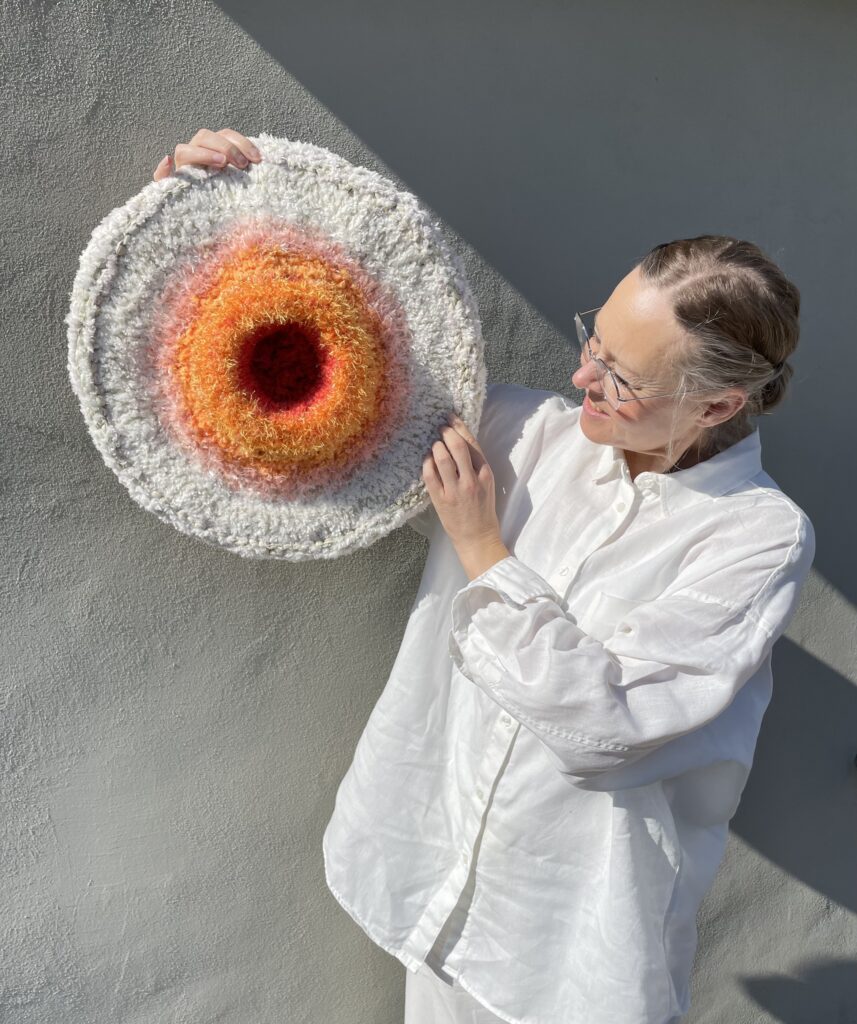
That layered experience gives the pieces real emotional life. There’s also something powerful about her choice of materials. Recycled bedsheets, tablecloths, clothing, and glitter yarn carry traces of care, routine, femininity, and invisible labour already within them. Instead of hiding those histories, Tine transforms them into forms that feel unapologetically alive and visible.
The work reclaims softness rather than rejecting it. And maybe that’s what stayed with us most throughout the conversation. In a time where so much contemporary work feels focused on shock, speed, or immediate impact, Tine’s sculptures invite curiosity first. People pause. Smile. Move closer. And only then do the deeper emotional and cultural conversations slowly begin revealing themselves. That quiet transformation feels incredibly meaningful.
For collectors and viewers, her pieces become more than sculptural objects. They create atmosphere, dialogue, reflection, and emotional presence within a space while continuing to shift depending on who is standing in front of them. And artists who can hold beauty, humour, discomfort, vulnerability, and cultural conversation together this naturally are always worth following.
To follow Tine’s journey and see more of her work, find her through the links below.
