
This artist’s dreamlike art begins with waves, light & four tubes of paint │ Valeria Ocean
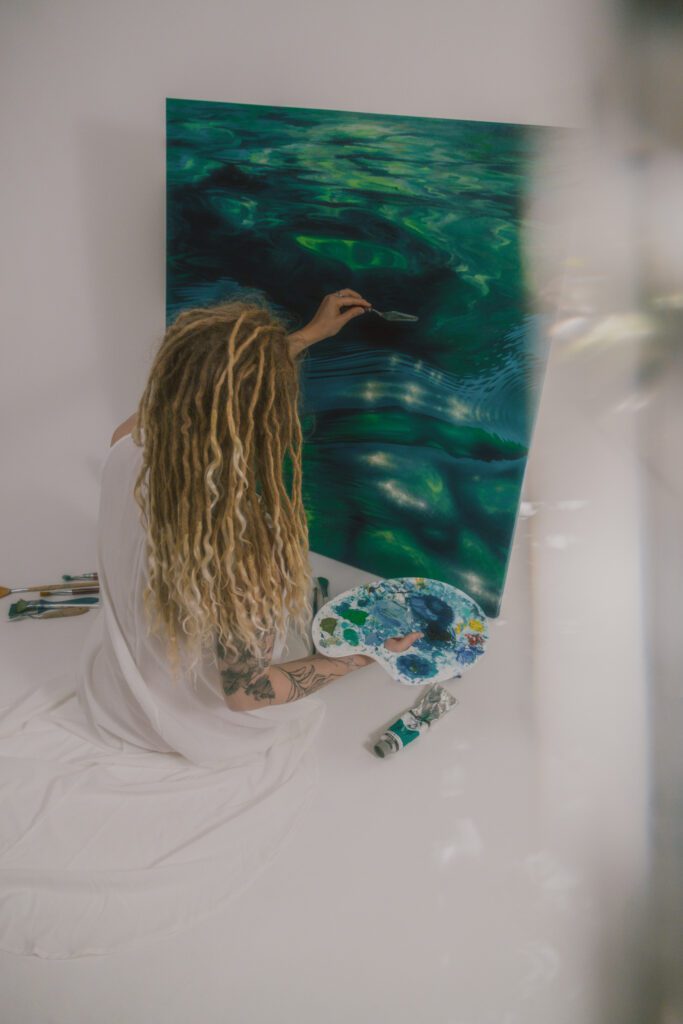
At Women in Arts Network, for our Landscapes and Places exhibition, we received landscapes, coastlines, and paintings of nature from every angle imaginable. And then there are artists like Valeria Ocean, who don’t really paint the sea as a place at all. They paint it more like a state of mind.
Valeria is a selected artist for the exhibition, and what stayed with us about her work wasn’t just the technical skill or the realism of the water. It was the feeling underneath it. The sense that every wave, reflection, and fragment of light was carrying something emotional alongside it.
Her relationship with the ocean started early. Every year on her birthday, her family travelled to the Black Sea, a tradition that began when she was just one year old. So for her, the sea was never distant or symbolic in an abstract way. It was tied to memory from the very beginning. Celebration. Family. Wind. Space. The feeling of standing in front of something larger than yourself before you even have words for why it affects you.
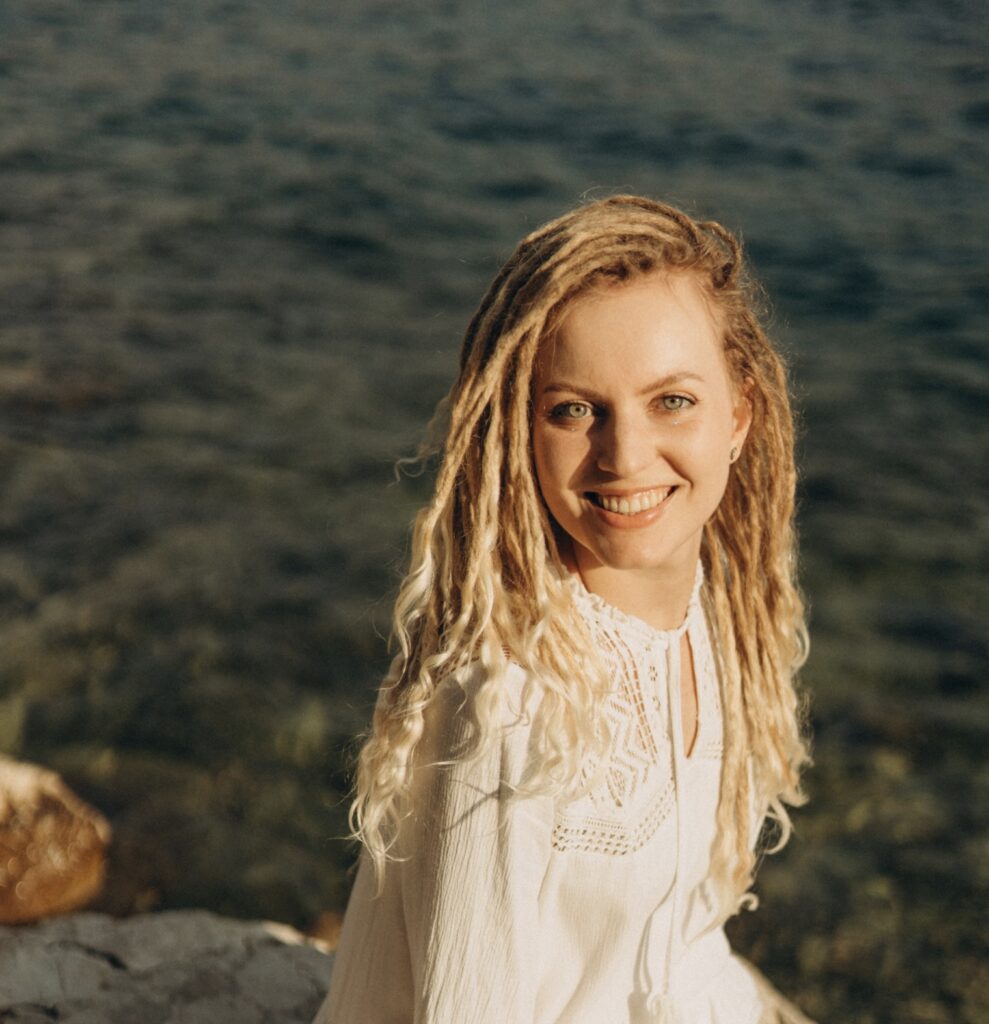
And somehow that emotional connection never left. Over time, she noticed water returning to her work again and again. Not deliberately at first. Just naturally. Waves, reflections, changing surfaces, moments where light dissolves into movement so completely the image almost becomes abstract.
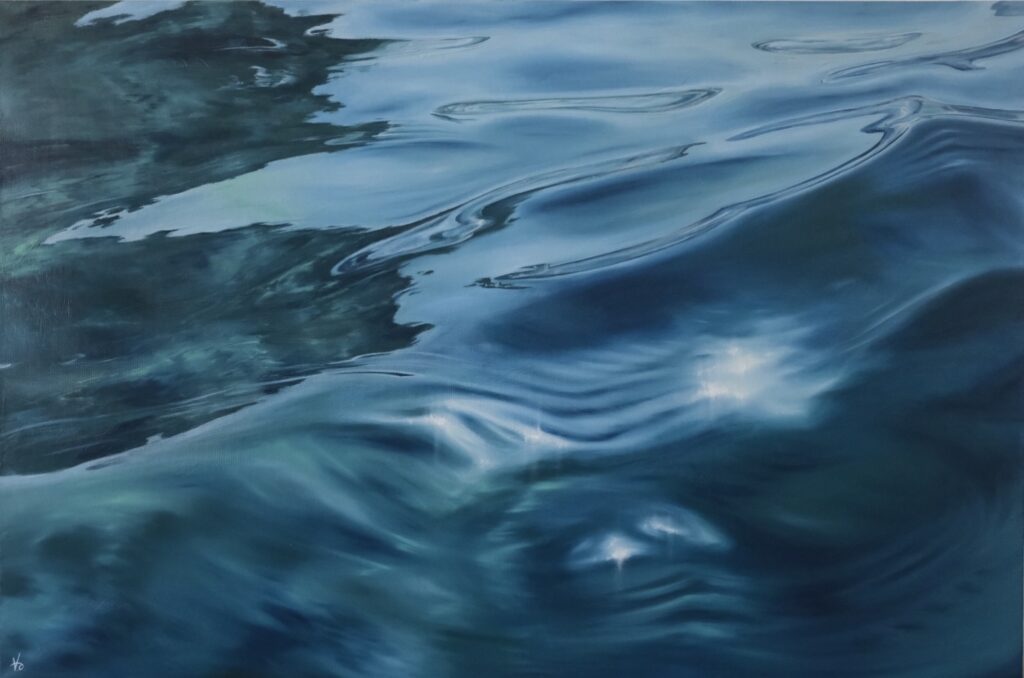
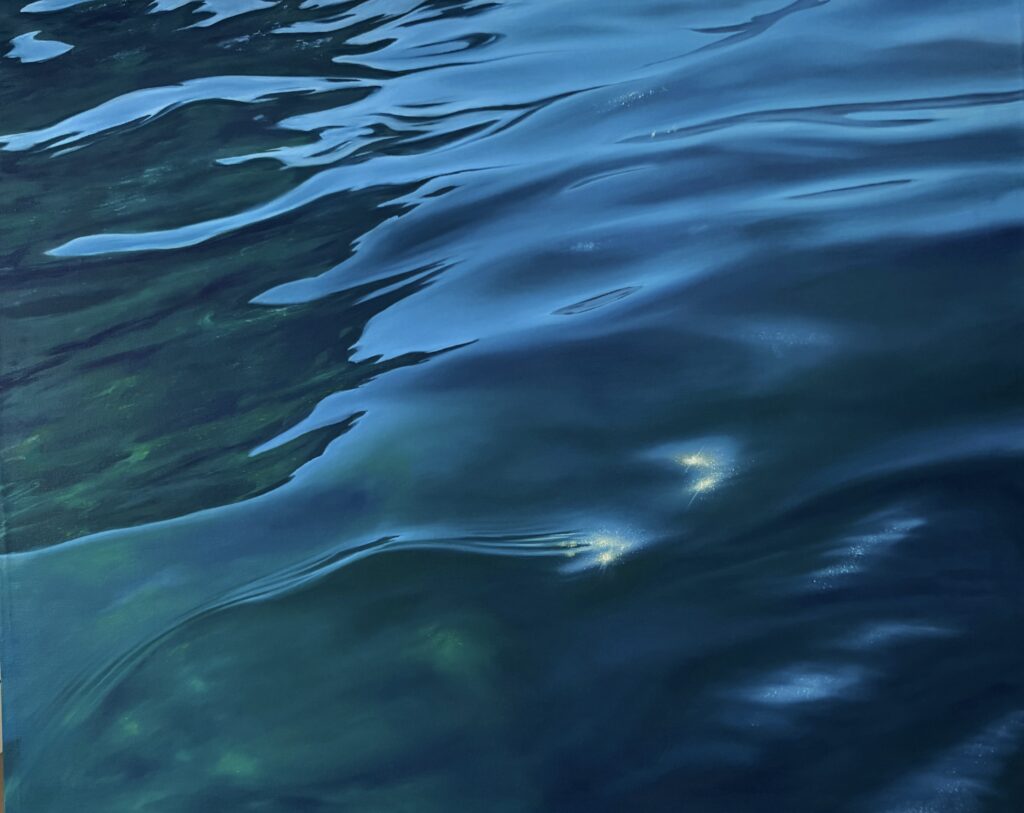
That’s where her work starts becoming interesting. Because when you look closely at her paintings, they stop behaving like traditional seascapes. She rarely gives you the full horizon or a complete landscape. Instead, she moves closer and closer into the surface itself until water becomes texture, rhythm, fragments of colour and light constantly shifting against each other.
It feels intimate instead of distant. And the closer you look, the more the paintings move between realism and abstraction at the same time. From far away you see the ocean. Up close you see broken shapes, soft transitions, painterly gestures, pieces of movement held together by light.
That tension gives the work its pull. There’s also something deeply calming about the way she paints. Not passive calmness, but the kind that comes from standing near water long enough for your thoughts to slow down naturally. The paintings hold that feeling quietly.
And maybe that’s why people respond to them so emotionally. Because in a world that moves too quickly most of the time, her work feels like a pause.
Now let’s hear from Valeria, about painting memory through water, about why the sea keeps returning to her work, and about finding stillness inside something that never stops moving.
Q1. Can you share a little about your journey? At what point did painting the ocean stop being a hobby and start feeling like the thing you were meant to do?
My journey with painting the ocean was not something I planned. I worked with many subjects and ideas while developing my practice as a painter. At some point I noticed that water kept returning to my work again and again. Waves, reflections, surfaces that are constantly changing. It slowly became clear that the ocean was the subject through which I could express the most.
The moment it stopped feeling like just a theme and started feeling like something deeper happened when I realized how naturally I could speak through this imagery. Water carries so many emotional states. Calm, tension, depth, uncertainty, light. It reflects the inner landscape of a person in a very honest way.
As my work evolved I became more interested not only in painting the sea as a place but in exploring what it represents. Movement, memory, transformation and the fluid nature of consciousness. The ocean allows me to explore these ideas visually through light, layers of paint and the physical movement of the brush. At some point I understood that this was not just a motif I enjoyed painting. It was the visual language that felt the most true to my way of thinking and feeling about the world.
Q2. You grew up visiting the Black Sea every year with your father, how much do those early memories still shape the way you paint today?
Those early memories are still very present in my work. Every year on my birthday our family traveled to the Black Sea. It became a small tradition that started when I was just one year old. Because of that the sea was never something distant for me. It was connected to childhood, celebration and a feeling of being together. I think those experiences shaped the emotional way I see the ocean. When I paint water I am not only looking at waves or light on the surface.
I am also remembering the feeling of being there. The smell of the sea, the wind, the wide horizon and the sense of space. At the same time my paintings are not literal memories. I am not trying to recreate a specific place or a specific day. What stays in the work is more the atmosphere and the emotional trace those moments left. The ocean in my paintings becomes a place where memory, feeling and imagination meet. So in many ways those early trips to the Black Sea are still present in my work. They were probably the first moments when I felt how powerful and emotional the sea can be and that feeling stayed with me.
Q3. Your work focuses almost entirely on water and waves. What is it about the ocean that continues to captivate you creatively and emotionally?
What continues to captivate me about the ocean is that it never repeats itself. Water is constantly changing. Light shifts every second, waves appear and disappear, the surface can feel calm one moment and powerful the next. As a painter this endless movement makes it a subject that never becomes static or predictable. At the same time the ocean carries a strong emotional presence. It can feel peaceful, mysterious, overwhelming or meditative depending on the moment. I am interested in that emotional range and in how something as simple as water can reflect very complex inner states.
Q4. Your very first oil painting lesson happened to be a wave study. of all the subjects they could have picked. Do you believe in that kind of timing, or was it just luck?
It is funny to think about now. My very first oil painting lesson was a study of a wave. At the time it felt completely random. It was just an exercise like any other to try a new medium. I am not sure if I would call it fate. It was probably just chance. But sometimes these small moments stay with you in ways you only notice years later.
Q5. Many of your paintings focus closely on the surface of water rather than full seascapes, what draws you to those intimate, almost abstract moments of waves and light?
I am drawn to these close views because the surface of water holds an incredible amount of movement and complexity. When you look closely at waves and light, the scene almost stops being a traditional landscape and becomes something abstract. By focusing on a smaller fragment of the ocean I can explore the details that usually disappear in a wide seascape. Reflections, transparency, layers of color, the way light breaks and dissolves on the surface.
These moments feel very alive and constantly changing. This perspective also creates a more intimate experience. Instead of looking at the ocean from a distance the viewer feels almost inside the water, surrounded by movement and light. For me these fragments of the sea are also a way to explore emotion and perception. When you zoom in closely the image begins to move between realism and abstraction. It becomes less about a specific place and more about sensation, memory and the feeling of water itself.
Q6. Water is often associated with emotion and transformation. Do you see your paintings as reflections of inner emotional states as much as they are depictions of nature?
Yes, I think they are both. I am painting nature, but at the same time I am also painting emotional states. Right now I feel that I am in a period of calm in my life, or at least I am trying to preserve that feeling and share it. Because of that many of my recent paintings focus on quieter moments on the surface of water. Soft light, gentle movement, a sense of stillness. I am interested in capturing that peaceful state and offering it to the viewer. The ocean allows me to translate this feeling visually through light, transparency and slow movement. In that sense the paintings are not only about the sea but also about a state of mind.
Q7. You use a very limited palette for some pieces; Underwater Rocks uses just five colours. How do you get an entire ocean out of five tubes of paint?
Most of the time I actually work with a very small group of colors. Usually it is just blue, red, yellow and white, and sometimes turquoise. I like mixing colors from the very beginning instead of using many ready-made tubes. When you mix everything from a few basic pigments you can create a surprising number of variations.
Small shifts in temperature, transparency and value start to matter much more. For me this process feels very natural and it helps keep the painting visually unified. Some of the references I create for myself are also quite monochromatic. I am often drawn to a quieter palette. To me it creates a feeling of calm and balance. When too many opposite colors appear on the canvas the energy becomes much stronger and more dramatic.
Sometimes that can be interesting, but in many of my works I am looking for a softer and more meditative atmosphere. So working with 4-5 colors is not really a limitation. It is more a way to stay focused on light, movement and the subtle shifts that make water feel alive.
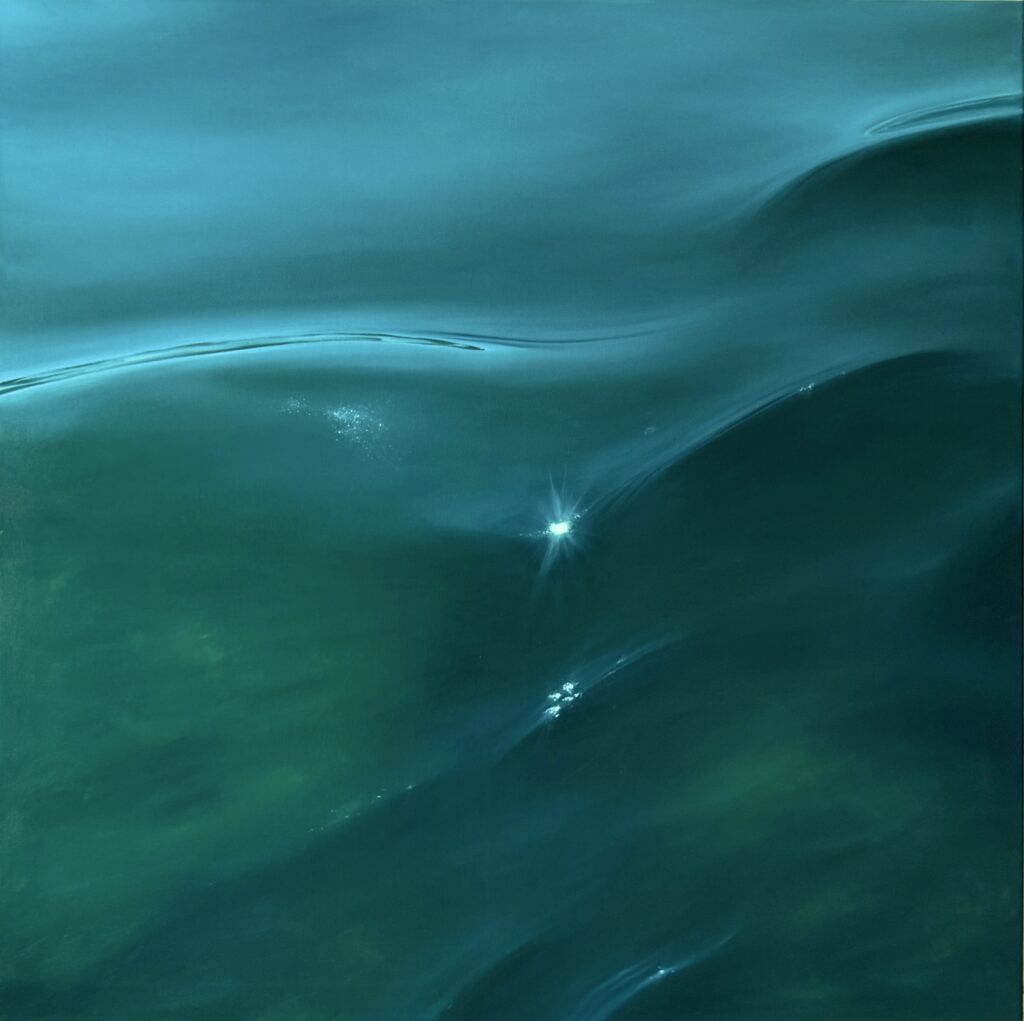
Q8. You’ve described water as a symbolic language in your work, what are you trying to express through it that words can’t fully capture?
When I stand in front of a blank canvas the idea is already clear to me. By that point I usually know exactly what will appear in the painting. So for me the time at the easel is mostly a technical process of translating that vision onto the canvas. The real work begins much earlier. I travel to the sea and spend time observing the water in different places around the world, looking for moments that feel visually and emotionally unique.
Sometimes I capture these moments in photographs that later become references for my paintings. It is less about documenting a landscape and more about recognizing a very specific situation of light, movement and atmosphere. When I find an image that resonates with me it can stay with me for a long time. I prepare it, study it and visualize the future painting. Sometimes more than a year passes between the moment I take the photograph and the moment I finally paint it.
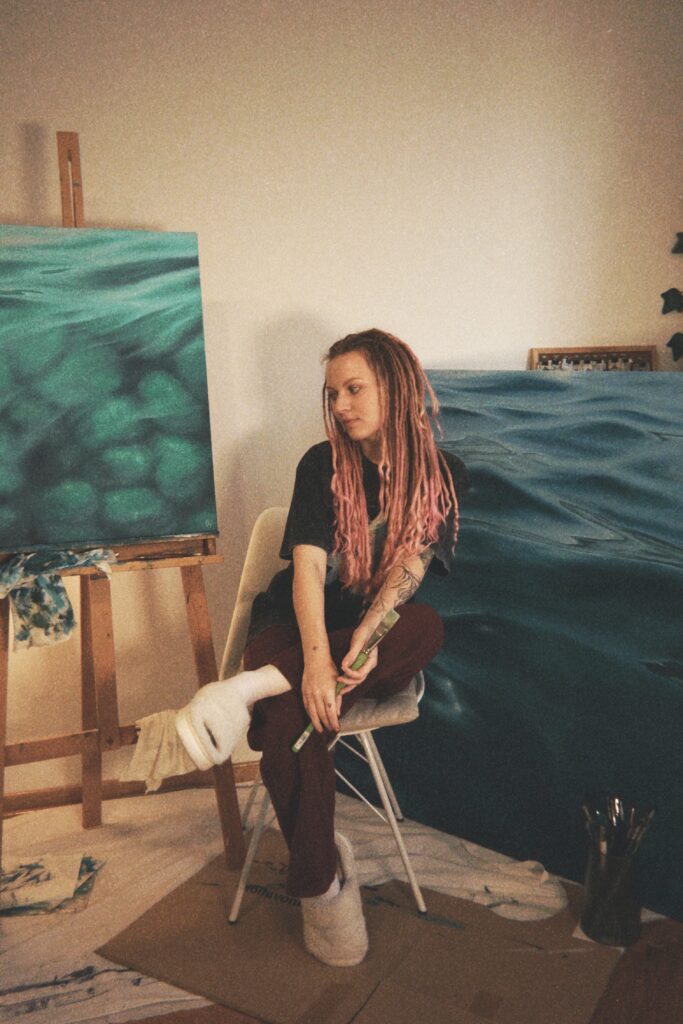
These images live with me for months. I remember them and return to them again and again until they feel ready to become a painting. For me they represent very unique emotional moments. Many of them have a grounding and calming quality. They reduce anxiety and create a sense of stillness. This is something I hope viewers can also feel.
We live in a time that often feels fast and overwhelming. I like the idea that paintings can offer small islands of calm and grounding. Not necessarily only through my work, but as a general experience people can find in nature, in water, or in quiet moments that help them feel more balanced and present.
Q9. You work from your own reference photos before transforming them into paintings, at what point does the painting begin to move beyond the original image and take on a life of its own?
I do start with my own photographs, but by the time the painting is finished it is rarely an exact copy of the image. The photo is more like a starting point that captures a specific moment of light, movement and atmosphere that I want to work with. Before painting I usually crop and adjust the image quite a lot. I simplify the composition, remove elements that feel unnecessary and focus on the fragment of water that carries the strongest feeling.
This step is important because it already moves the image away from documentation and closer to a painting. Once I begin painting the process becomes more intuitive. Oil paint has its own physical behavior and the way light appears in paint is different from photography. Colors shift, edges soften, some areas become more abstract.
At that stage I start responding more to the painting itself than to the original photo. So the photograph holds the memory of the moment, but the painting develops its own life through the materials, the brushwork and the decisions that happen while I work. The final image often keeps the atmosphere of the photograph, but it becomes something more tactile, slower and more interpretive.
Q10. Your paintings often feel both realistic and abstract at the same time. How do you balance observation with interpretation?
For me water is not one single object. It is made of many small abstract forms that together create the surface we recognize as water. When I observe waves closely I see fragments of color, reflections, broken lines of light, small moving shapes. All of these pieces combine to form what we perceive as the ocean. But if you look closer and closer the image becomes more abstract.
This is something I try to keep in my paintings. From a distance the viewer can recognize water and waves, but when you come closer the surface breaks into many small painterly forms and color relationships. In a way this is how water actually behaves. The closer you look the more complex and abstract it becomes. I like working with that transition between something recognizable and something almost purely visual.
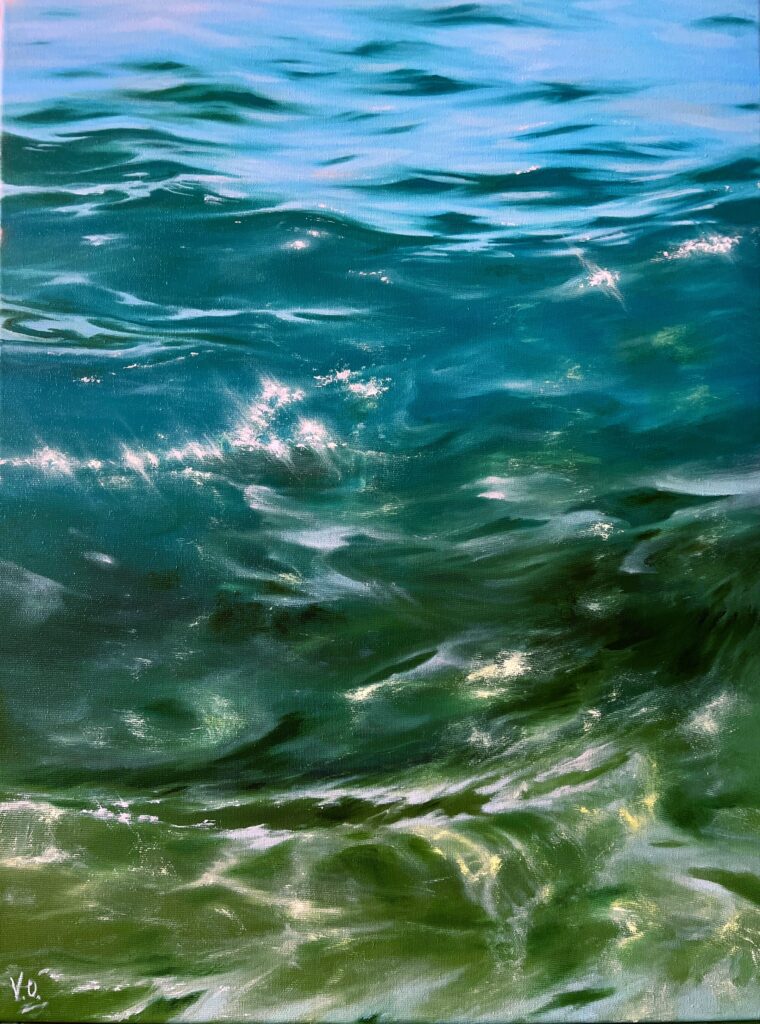
Q11. Many people find your work calming and meditative, when someone says a painting brought them peace, does that feel like the highest compliment to you?
When people say my paintings feel calming or meditative it means a lot to me because creating that feeling is very close to what I hope the work can offer. If someone stands in front of a painting and feels a moment of quiet or relief from the noise of everyday life, that already feels very meaningful.
At the same time I like that viewers can see different things in the work. Some notice the movement of water, others the light or abstract shapes. But if the painting gives someone even a small moment of peace and grounding, I consider that a beautiful compliment.
Q12. What does success look like for you right now, is it the number of paintings sold, the feeling in the studio, or something harder to measure?
The number of paintings sold is important and I cannot deny that. I am deeply grateful to the people who support my work financially. When someone chooses to live with one of my paintings it tells me that what I create truly resonates and that it matters to someone beyond my studio. At the same time success for me is not only something that can be measured in numbers.
I had a 10 years long pause in my creative life, and during that time I clearly felt how essential this process is for me. Without creating I felt incomplete, and that experience convinced me that making art is not just a profession for me but a very important part of who I am. So even if painting did not bring income I would still do it, just probably in much smaller volumes.
For me success is being able to keep creating and to share that work with people who connect with it.
Q13. What advice would you give to an artist who’s been sitting on their dream for years, too afraid to start?
A career as an artist is honestly not the easiest path. In many ways it requires a bit of madness and courage at the same time haha. But if you feel a real pull toward it, it is probably not something worth postponing. I personally stepped away from painting and painting for ten years and looking back I would not recommend waiting for the perfect moment. That moment rarely arrives. What matters is starting, even if it feels uncertain or imperfect. If the desire to create keeps returning to you, it usually means it is an important part of who you are. And the sooner you allow yourself to follow that path, the sooner it can become a real part of your life.
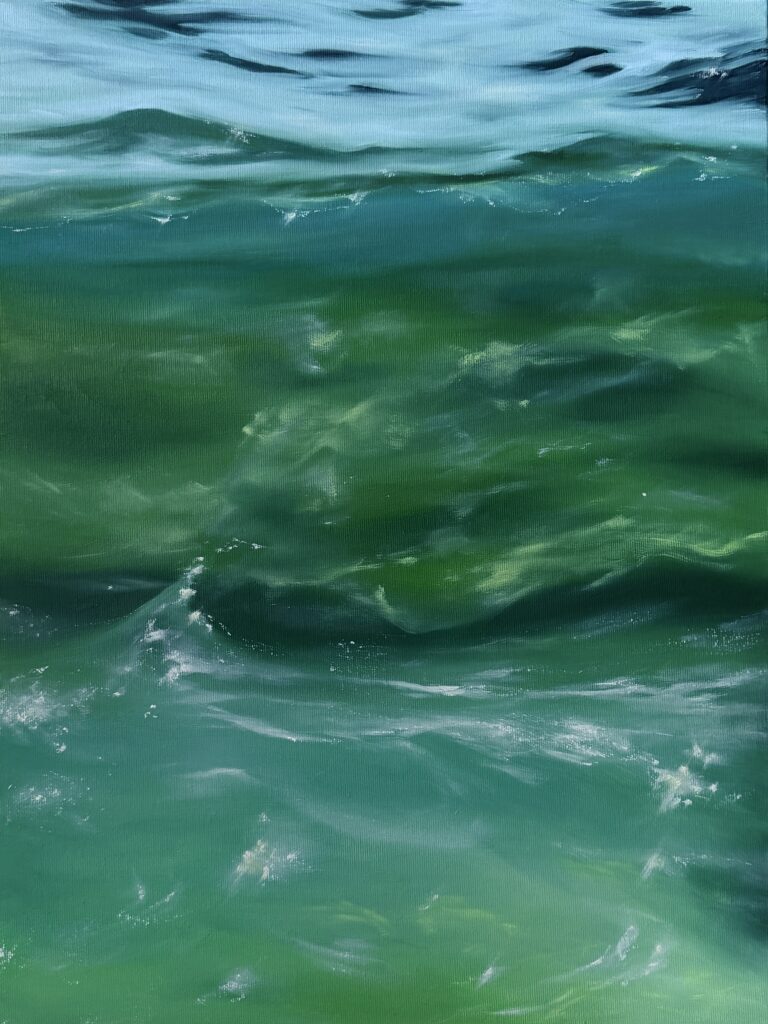
As our conversation with Valeria came to a close, we kept thinking about how difficult it is to paint something that never stays still.
Water changes every second. Light disappears almost as quickly as it arrives. Waves form and vanish before you can fully hold onto them. And yet her paintings somehow manage to slow those moments down without taking the life out of them.
That balance stayed with us. Because the work doesn’t feel frozen or over-controlled. It still feels fluid, shifting, alive. You can almost feel the movement continuing beyond the edge of the canvas.
But underneath all of that technical understanding of water, what really holds the work together is emotion. The paintings aren’t only about the sea. They’re about calmness, memory, quietness, grounding. About the feeling certain places leave inside you long after you’ve left them behind physically.
And maybe that’s why so many people describe her work as meditative. Not because it tries to force peace onto the viewer, but because it creates enough stillness for people to find their own version of it while looking.
For collectors and people living with art, that kind of work becomes part of a space very differently. It doesn’t overwhelm a room. It changes the atmosphere of it. You notice yourself slowing down in front of it without meaning to. Returning to it after difficult days. Looking at the same surface of water and somehow finding something slightly different in it each time.
That’s rare. And artists who can create that kind of emotional quietness without losing depth or complexity are always worth paying attention to.
To follow Valeria’s journey and see more of her work, find her through the links below
