
Sepideh Shahgholi uses wire & organic materials to create wearable art
At Women in Arts Network, we received many beautiful works inspired by home, landscape, and memory. But Sepideh Shahgholi’s practice felt different because every painting and sculpture seemed to carry traces of lived experience, emotion, and personal history within it.
Sepideh is a selected artist for the exhibition, and her work moves fluidly between painting, sculpture, wearable objects, and installation. Abstract landscapes, layered marks, birds, houses, branches, and organic forms appear throughout the work, creating this deeply personal visual language shaped by memory, identity, migration, and emotional experience.
And honestly, the more we listened to her speak about her process, the more the work stayed with us.
For Sepideh, paintings rarely begin with a fixed image. They begin with something much more emotional and sensory a memory, a smell, a feeling, or the sudden return of a place once lived in long ago. The colours, marks, and layered forms grow slowly from there, almost like fragments of memory resurfacing through emotion rather than logic. You can feel that layering throughout the work.
There’s also something beautiful about the looseness in her mark-making. The work never feels overworked or controlled too tightly. Sepideh spoke very honestly about learning to trust the first marks, unfinished spaces, and rawness before perfection starts removing the emotional energy from the work.
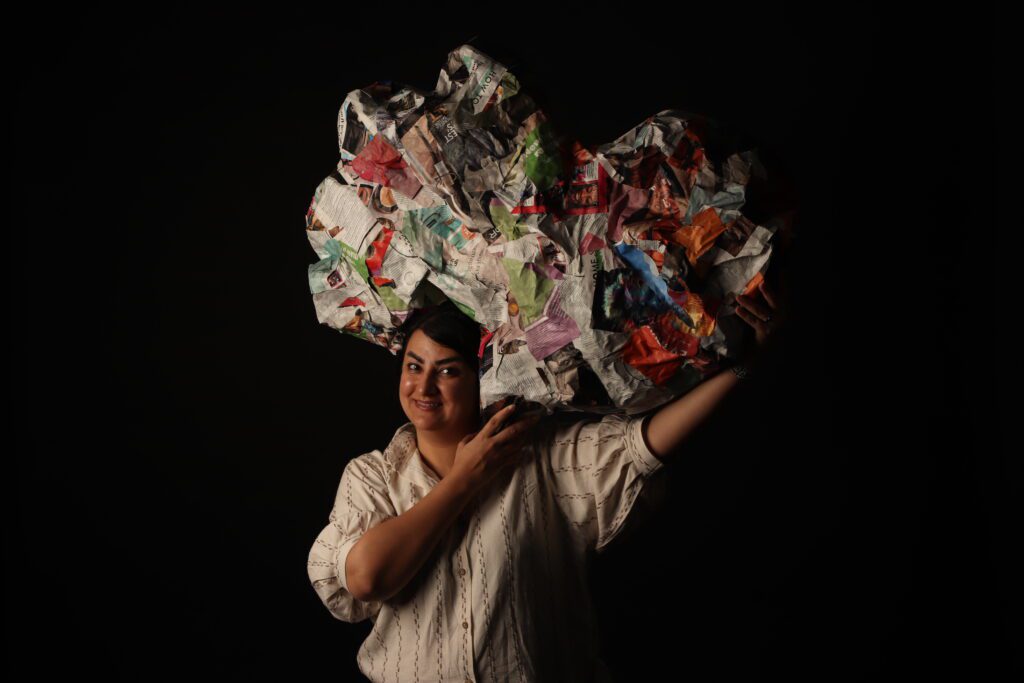
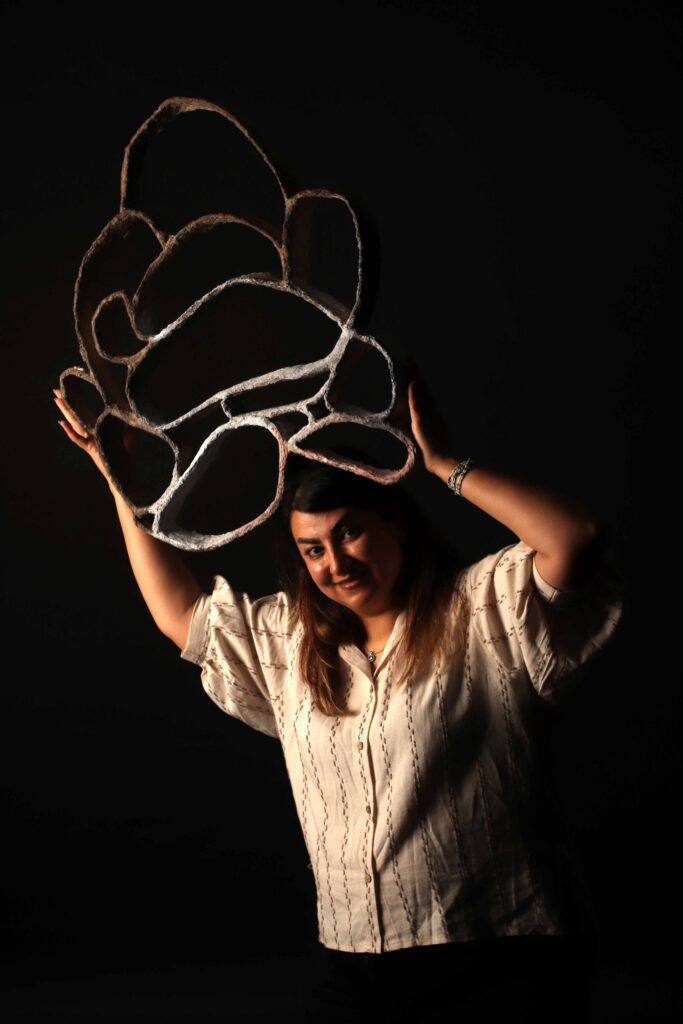
That openness gives the paintings their freedom. And then there are the wearable sculptures intricate wire and twig headpieces and gloves that exist somewhere between sculpture, ritual object, performance, and emotional experience. What we loved about these works is that they aren’t simply meant to be observed. They invite physical presence, touch, participation, and reflection about distraction, attention, technology, and what it means to feel fully present again.
Everything in her practice seems connected by the same question:
How do we stay emotionally connected to ourselves, our memories, and the world around us?
Now let’s get to know Sepideh through our conversation with her about memory, identity, emotional landscapes, wearable sculpture, and creating art that feels both deeply personal and universally human at the same time.
Q1. For someone coming across your work for the first time, how would you describe what you do and what your art is really about beneath the surface?
I’m a multidisciplinary artist, working across different media like photography, painting, and sculpture. I usually move between these forms depending on what I feel the work needs. At the heart of what I do is giving shape to my concerns through art. Lately, I find myself thinking a lot about home, culture, and identity. These are not just ideas for me—they come from my lived experience, things I’ve felt and carried with me. I’m interested in sharing that experience in an honest way.
I often reflect on the similarities and differences between my own life and the place I’m living in now, and I try to bring those into my work. When I talk about “home,” I don’t just mean a physical space. It’s something deeper—the place that has shaped me, my emotions, my culture, everything that has made me who I am. Through my work, I’m trying to speak from that place, in my own visual language.
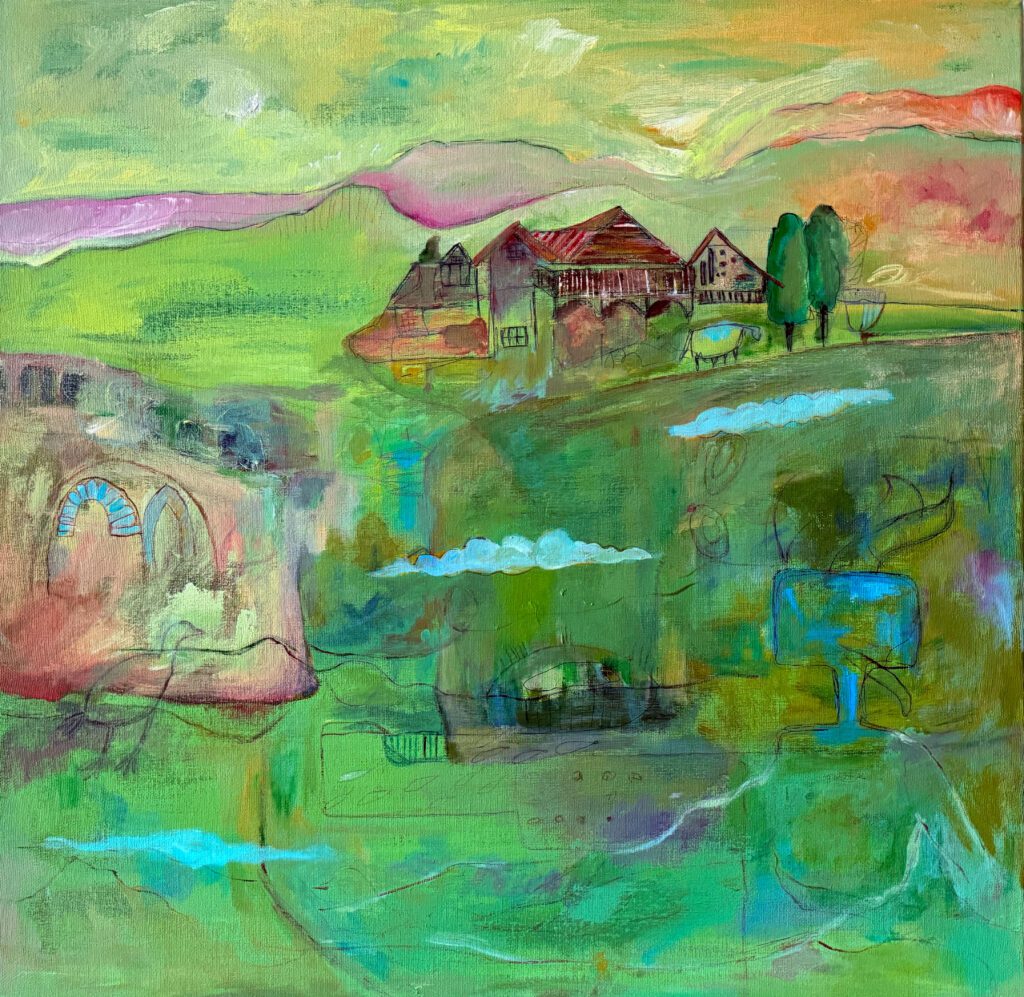
Q2. Your paintings layer mark-making, colour washes and drawn line on top of each other. Where does a painting start for you the mark, the colour, or something you already see in your head?
A painting for me usually begins with a feeling; sometimes a smell, a memory, or something that suddenly takes me somewhere far away. A place I’ve lived in long ago, but the feeling of it comes back so vividly, almost like I’m there again.
The colours I use are closely tied to those memories. Each one carries a certain mood or trace of something I’ve felt before. And the forms or lines… they come like layers of memory in my mind- sometimes faint, sometimes more intense, pulling me deeper into that space. In those moments, it feels very real, as if I’m reliving it. I keep building the painting layer by layer, letting my emotions settle onto the surface, until the canvas feels full, holding the same feeling I experienced inside.
Q3. Your abstract landscapes often include houses, birds, and organic forms do those elements appear intentionally, or do they naturally keep returning in the work?
Honestly, I try to let things come to the surface on their own. The elements in my work come from within me; my lived experiences, the places I’ve been, the landscapes I’ve seen, even the smells I’ve carried with me. I don’t force them into the painting. I let them find their own place on the canvas.
Sometimes it’s like flying with a bird, or suddenly being taken back by a familiar scent, like my mother’s perfume. Those moments stay with me, and when they return, I place them into the work with the same feeling they came with. It’s less about deciding what should be there and more about allowing what already exists inside me to appear.
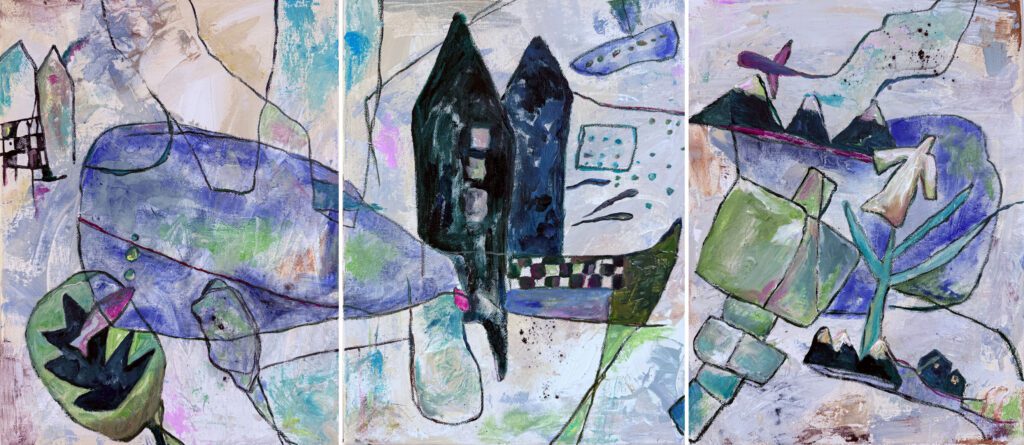
Q4. You create both paintings and sculptures does working in three dimensions feel creatively different from painting for you?
For me, they come from the same place, but they feel different in the body. Painting is quieter and more internal. It feels like I’m moving through memories and emotions in a softer, more fluid way. Everything happens on the surface, but it goes very deep inside. Sculpture, on the other hand, is much more physical.
I feel more connected to my body while I’m making it—touching, shaping, building. It’s like the work is not only coming from inside me, but also through my hands in a more direct way. So I wouldn’t say it’s a completely different part of me, but maybe a different way of expressing the same inner world.
Q5. Your wire and twig sculptures involve such slow, detailed repetition, what does that process feel like mentally and emotionally?
This body of my wearable sculptures is focused on experiencing and physically connecting with the world around us, and being present in the moment, rather than overusing social media in this distracted world. For me, that slow and repetitive process is almost meditative. When I’m working like that, I lose track of time. My mind becomes quieter, and I feel very present in the moment. Each small movement, each coil or placement, feels important in its own way.
Sometimes it feels like I’m processing things without even thinking about them directly, like emotions or thoughts are moving through my hands instead of my mind.
There’s also something very comforting in the repetition. It creates a kind of rhythm, and within that rhythm, I feel both calm and deeply connected to what I’m making.
Q6. Your mark-making feels very free and instinctive, how do you stop yourself from overworking a piece?
I think it comes from trust, from something very internal. It comes from within me. I feel like my spirit naturally leans toward freedom, and I try to let that show in my work. I want there to be a sense of imagination in what I do, like when you’re lost in a soft, sweet thought. Sometimes your mind feels empty, quiet… and sometimes it fills up with different emotions and sensations. I try to reflect that same feeling in my work.
That’s why I try to stop at the right moment, even if it feels a bit unfinished. I’ve learned to trust the first marks, the first movements, because they are often the most honest. When I go back too much and try to “fix” things, the work loses its energy. I also remind myself that not everything needs to be controlled. Leaving space, letting things stay a bit raw and open—that’s an important part of my process.
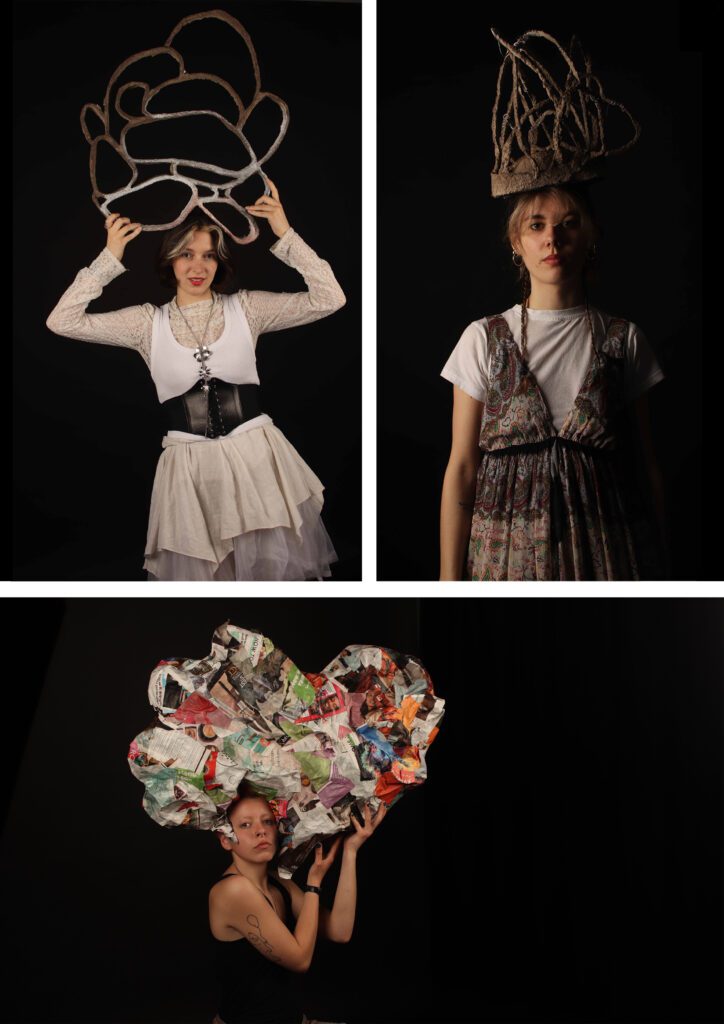
Q7. Your wearable headpieces feel almost ritualistic, what do they become or represent once someone puts one on?
The idea for these wearable sculptures (hats and gloves) came from thinking about the attention economy and the lack of focus in this digital world. I wanted to find a way to practice being present in the moment. I started paying more attention to details, to my inner voice, to nature, and to everything happening around me, and to bring art more into my everyday life. Because these days, we’re all constantly surrounded by news, social media, and endless scrolling.
I chose headpieces and gloves as symbols because they relate directly to this experience. The head, as the centre of the body, is where all this information enters and can create stress. And the gloves cover the fingers, almost limiting the act of scrolling. Through this process, I used art as a way to return to the present, to touch, to experience, and to enjoy the moment more consciously. Anyone can wear them, touch them, and share how they feel in that moment.
The feedback I received from people was really interesting; some would spend hours engaging with these wearable sculptures, without feeling the need to go back and check their phones or social media.
Q8. There’s a real sense of playfulness in your work alongside something more serious and emotional, how do you balance those two energies?
I think both come from the same place for me, and they’re also very connected to who I am as a person. I feel like I carry both of these qualities in myself, and they naturally find their way into my work. Playfulness helps me stay open, curious, and free, and allows me to explore without overthinking. And the seriousness comes from what I’m truly feeling and thinking about on a deeper level.
So they don’t threaten each other. In fact, they need each other. Without playfulness, the work can become too heavy. And without that deeper layer, it might feel empty. I just try to stay honest with what I feel in the moment, and let my personality reflect itself naturally through the work.
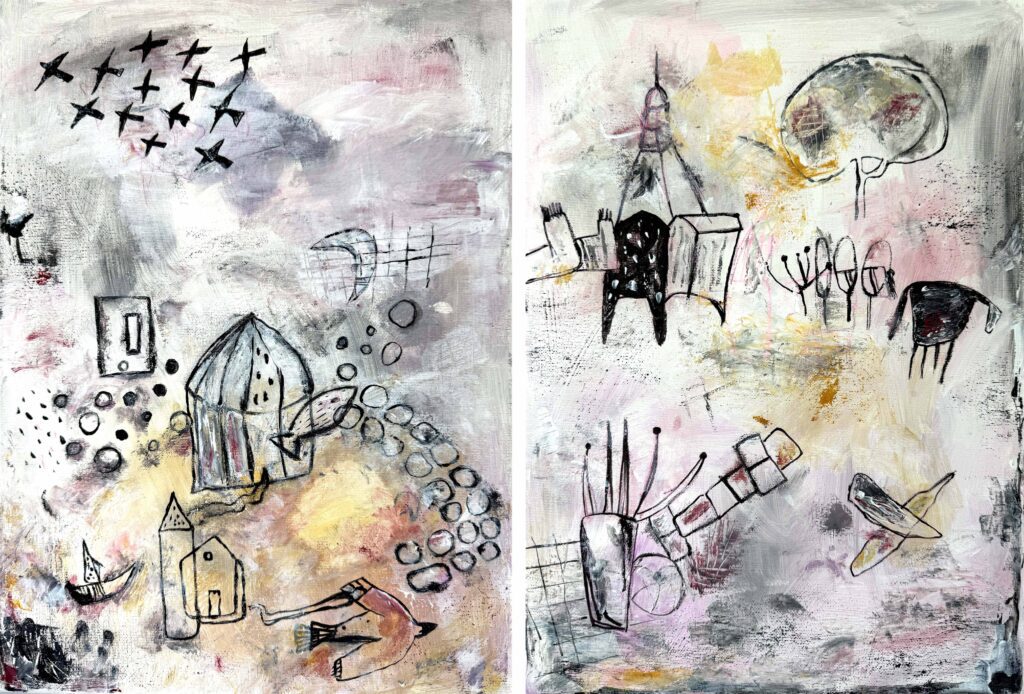
Q9. Your wearable sculptures sit somewhere between art and performance what do you hope people feel when they see someone wearing them?
One of my intentions is to understand what people feel when they encounter the work, so I don’t want to limit them to a single emotion. I like the idea that everyone can experience something different. Maybe curiosity, maybe a bit of unease, or even a sense of playfulness or wonder. It can also be joy.
Sometimes they feel inspired to try and create their own wearable piece, and that is very meaningful to me, because it means they want to bring art into their own lives and enjoy it. For me, what matters most is creating a moment where something shifts inside the viewer. A pause. A question. A feeling they can’t fully explain.
Q10. What does a good day in the studio actually feel like for you not a productive day necessarily, just a good one?
A good day in the studio for me is when I feel connected. Not necessarily productive, but when I feel present and in flow. When time passes without me noticing, and I’m fully inside what I’m doing. Sometimes it’s just small moments; mixing colours, touching materials, or even sitting and looking at the work quietly. Those moments feel enough. I think a good day is when there’s no pressure, no expectations. Just me, the work, and a sense of calm and honesty in the process.
Q11. For artists who are still trying to find their voice, what has your own journey taught you about that process?
I think finding your voice takes time, and it’s not always easy. Sometimes you feel lost, but I think that’s a natural part of the process. For me, it really came down to something very simple that my tutor used to say: just do it. I used to spend a lot of time thinking and developing ideas, but everything started to change when I actually began working.
When I started, my hand found its own way. The process itself guided me, and slowly my voice began to take shape. I think it’s important to stay honest with yourself and not limit yourself too much. Through doing, through trying, your experiences start to build, and that’s what forms your voice over time.
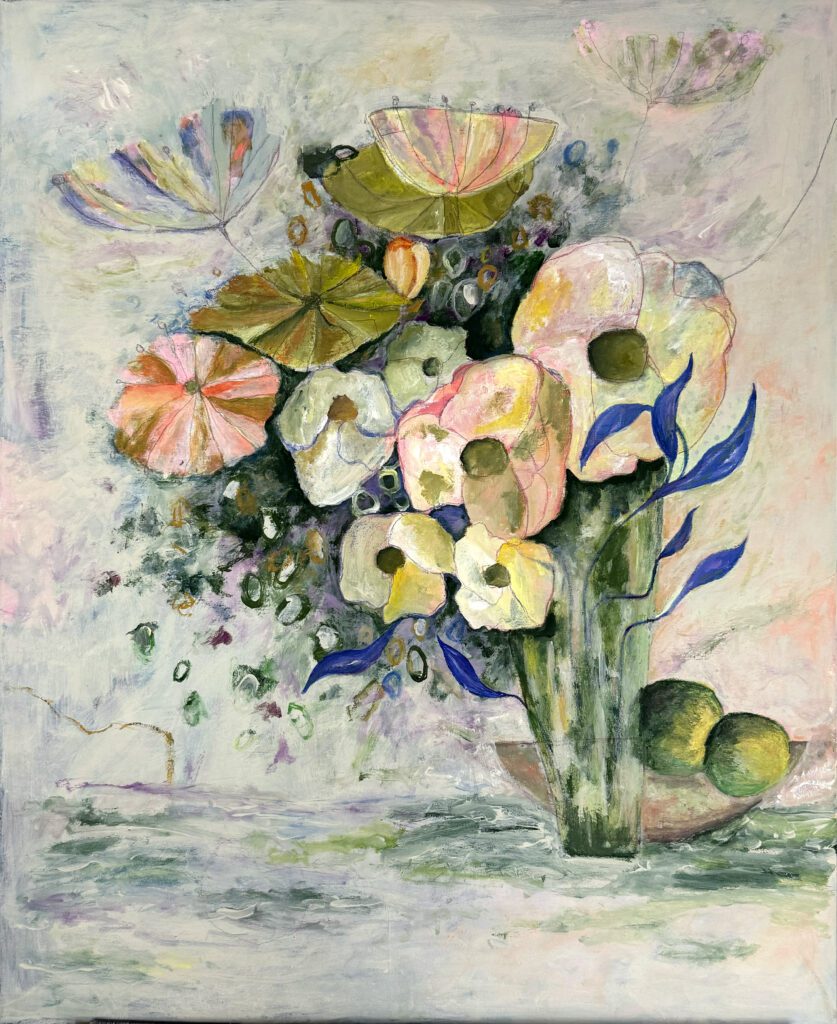
As our conversation with Sepideh came to a close, we kept thinking about how differently her work approaches the idea of landscape compared to so much contemporary work today.
A lot of artists paint places as something we look at from a distance. Sepideh’s work feels more like a place we carry inside ourselves.
The landscapes, houses, birds, marks, textures, and sculptural forms never feel separated from emotion or memory. They feel tied to lived experience in a way that makes the work feel deeply personal without ever becoming closed off to the viewer.
And honestly, that balance is difficult to achieve. We really loved the way her work allows playfulness, vulnerability, freedom, and seriousness to exist together naturally. The paintings feel instinctive and open, but underneath them is this deeper conversation about identity, belonging, displacement, attention, and emotional connection to the world around us. Nothing feels decorative for the sake of it.
Even the looseness in her mark-making feels intentional emotionally, almost like she’s protecting the honesty of the first feeling before overworking it into something too controlled. That gives the work its life.
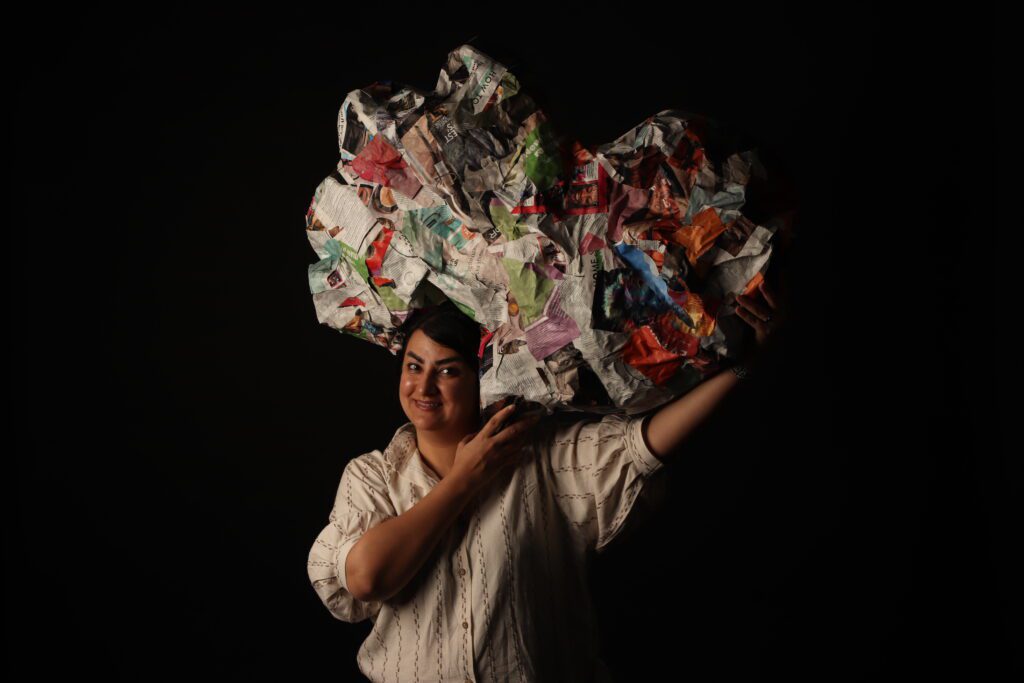
There’s also something incredibly meaningful about the way her wearable sculptures function compared to more traditional sculptural practices. Instead of existing only as objects to observe, they ask people to physically slow down, touch, participate, and become aware of their own presence again. In a world constantly pulling attention away from the body and the present moment, that feels surprisingly powerful.
And maybe that’s what stayed with us most about her practice overall. Everything she creates seems connected to returning people back to feeling feeling memory, feeling place, feeling emotion, feeling their own inner world more honestly.
For collectors drawn toward contemporary work with emotional depth and conceptual sensitivity, Sepideh’s practice offers something incredibly layered. The paintings and sculptures continue unfolding emotionally over time because they leave space for personal interpretation, memory, and lived experience to enter the work alongside the artist’s own.
That kind of emotional openness stays with people.
And artists who can hold complexity, vulnerability, playfulness, and reflection together this naturally are always worth returning to.
To follow Sepideh’s journey and see more of her work, find her through the links below.
