
Women and the Art Academy: How the 19th Century Changed Art Education
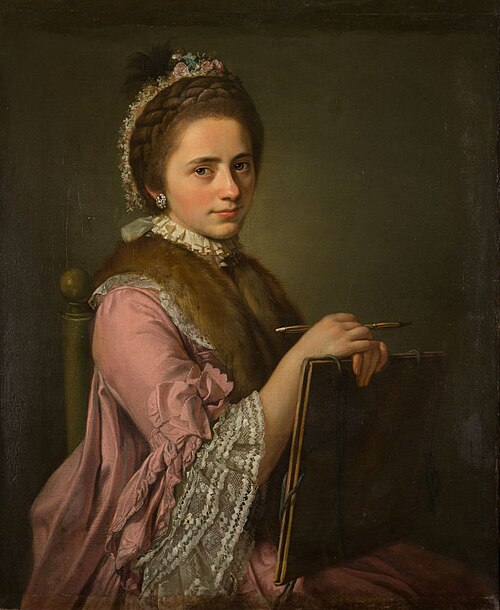
For a long time, women were allowed to make art, but they were not necessarily allowed to become artists.
Drawing, painting and music were considered perfectly respectable accomplishments for women of a certain social class. A young woman might be taught to sketch flowers, copy a landscape or paint in watercolour as part of a well-rounded education. But pursuing art as a serious profession was another matter entirely. Professional ambition could be seen as unfeminine, unnecessary or even disruptive to the life a woman was expected to lead.
The problem became even more serious when women tried to enter the institutions that actually trained professional artists. Across nineteenth-century Europe, major academies and art schools restricted women’s access to the education that gave artists status, technical training and a path into the professional art world.
And yet, by the end of the century, the situation was beginning to look very different.
The change did not happen because the art world suddenly decided women belonged there. Women had been pushing for that change for decades.
When Art Education Was Built Without Women
The nineteenth-century European art academy was not simply a place where students learned how to draw and paint. It was one of the institutions that decided what counted as serious art.
In France, the École des Beaux-Arts represented the highest level of official artistic education. Its curriculum was built around the academic tradition, including anatomy, perspective, sculpture and, most importantly, the study of the human figure from the live model. This training mattered because history painting, which involved large and complex compositions of human figures, was considered the highest and most prestigious form of painting.
Women were largely shut out of this system.
They could not receive the free state-sponsored education offered by the École des Beaux-Arts until 1897. Instead, women who could afford it turned to private studios and academies, often receiving a less complete education at considerably greater expense. Even there, one of the most important parts of academic training remained difficult to access: life drawing. Women were generally not permitted to study nude models because the practice was considered incompatible with the standards of respectable femininity.
This was more than an uncomfortable rule about what women were allowed to look at.
If an artist could not study the human body properly, she was disadvantaged in the very subjects that the academic system considered most important. Without the same anatomical training as male students, women had fewer opportunities to compete in history painting, win prestigious prizes or receive official commissions. The restriction on education therefore became a restriction on professional opportunity.
Britain had its own version of the problem.
Women had been involved with the Royal Academy from its earliest years. Angelica Kauffman and Mary Moser were even among its founding members. Yet women were not given the same educational opportunities as male students. Life classes, where artists studied the nude figure from a live model, were considered inappropriate for women.
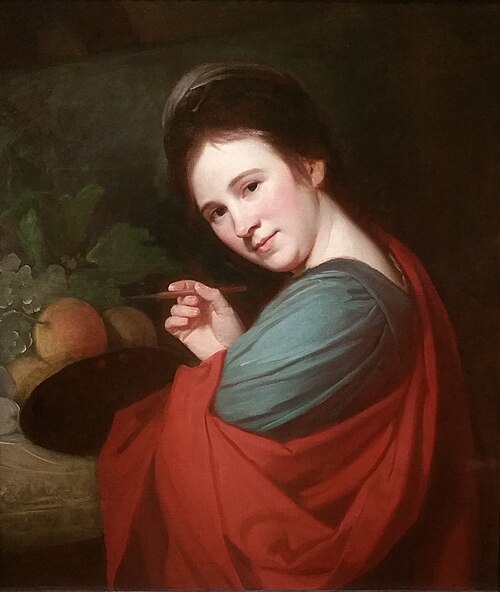
This contradiction is important. Women could be talented enough to exhibit their work, and they could be celebrated as artists, while still being told that the education required to become one was unsuitable for them.
The situation was not identical everywhere. In the United States, the Pennsylvania Academy of the Fine Arts took a considerably more progressive approach. PAFA actively promoted women artists from its first annual exhibition in 1811, and during the nineteenth century more than 1,400 women studied there. Women also participated in teaching, exhibiting, collecting and other parts of the institution’s life.
That difference is worth remembering. There was no single experience of being a woman artist in the nineteenth century. Some institutions opened doors earlier than others. Some created separate classes. Some offered women considerably more freedom than their European counterparts.
But the larger problem remained: the institutions that held the greatest authority in the art world were overwhelmingly designed around male students.
It Wasn’t Only About the Classroom
Even outside the academy, being a woman could determine what an artist was able to see, study and paint.
Marie Bashkirtseff, a Russian artist who studied in Paris, wrote about wanting the freedom to move through the city alone, enter museums, walk through old streets and simply observe the world without the restrictions placed on women. For an artist, this freedom was not trivial. It affected the subjects available to her.
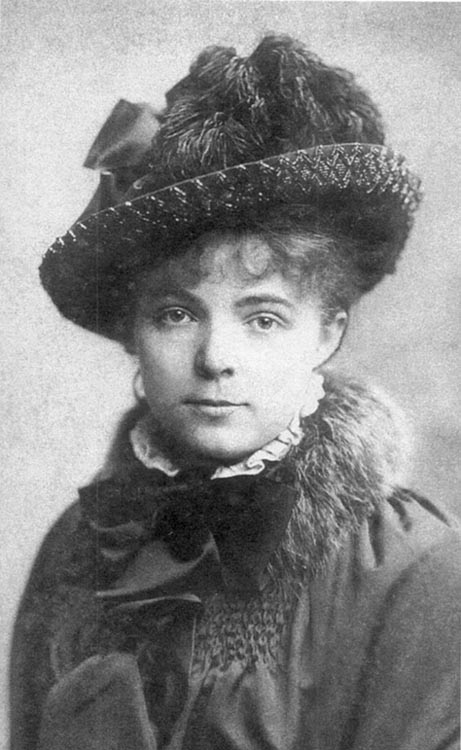
Men could move through public life more freely. They could study crowds, cafés, streets, theatres and other parts of urban life that women were often discouraged from entering alone. Women were more likely to work within spaces considered socially acceptable for them: homes, gardens, private gatherings and domestic interiors.
This helps explain why so much nineteenth-century women’s art was associated with portraits, still lifes, flowers, domestic scenes and everyday life. It is easy to look back at those subjects and assume that women simply preferred them.
Sometimes they did.
But sometimes the available subject matter was shaped by the boundaries around them.
Even Marie Bracquemond’s experience as a student reveals how deeply these expectations ran. She recalled that her teacher, Jean-Auguste-Dominique Ingres, doubted women’s courage and perseverance in painting and directed female students toward flowers, still lifes, portraits and genre scenes.
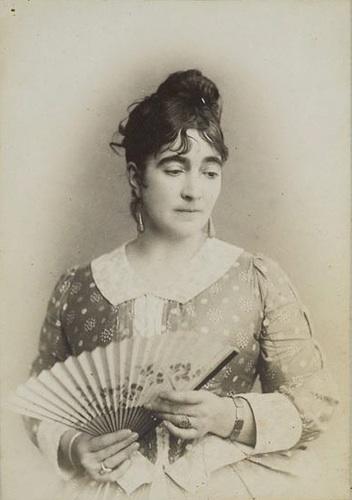
The message was clear: women could make art, but there were limits to how seriously they were expected to take it.
And then, women began challenging those limits.
Women Started Pushing the Door Open
One of the most memorable stories from Britain involves Laura Herford.
In 1859, a group of women artists petitioned the Royal Academy for access to its schools. Their request was rejected, with the issue of separate life classes becoming one of the major objections.
The following year, Herford submitted drawings to the Academy using only her initials: “L. Herford.” Her work was accepted, and the Academy initially assumed the successful applicant was a man. Once the mistake was discovered, the Academy had to confront a rather embarrassing problem: the rules did not provide a straightforward reason to remove her simply because she was a woman. Her admission was allowed to stand.
Herford did not single-handedly transform the Academy. Women had already been campaigning for admission, and more women followed her. But her story became a turning point.
The door had opened. And women kept walking through it.
Barbara Leigh Smith Bodichon was another important figure in this movement. She was both a painter and a campaigner for women’s rights and education. In 1857, she founded the Society of Female Artists, and she was part of the wider network of women working for better educational and professional opportunities.
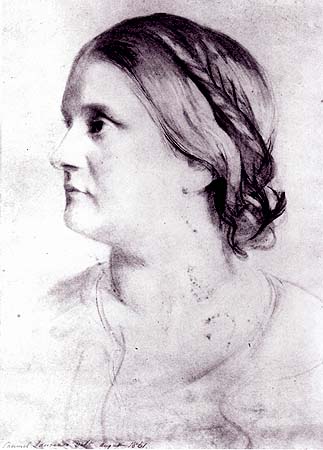
Her life shows that the fight for women in art was connected to a much larger nineteenth-century movement. Women were not simply asking to be better painters. They were questioning why education, employment and professional independence should be restricted by gender in the first place.
In France, that campaign became even more organized.
When Women Built Their Own Institutions
Hélène Bertaux is one of the women we should remember whenever we talk about this history.
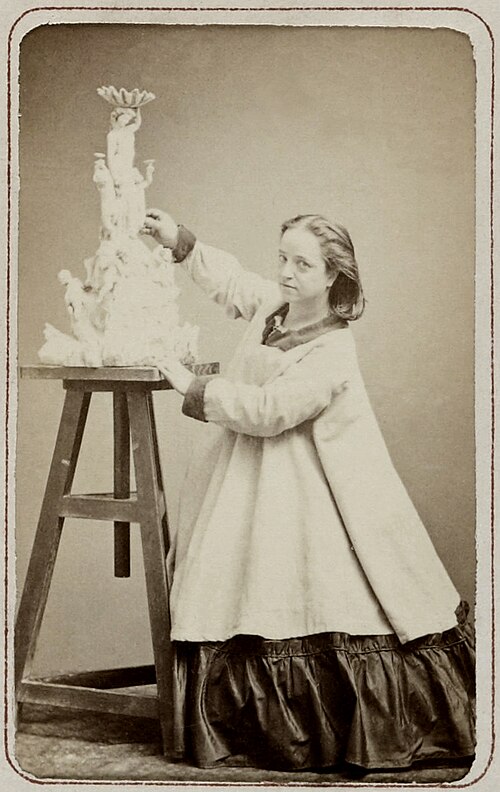
A sculptor herself, Bertaux understood that simply waiting for established institutions to change was not enough. She created opportunities for women to study and exhibit their work, and in 1881 she founded the Union des Femmes Peintres et Sculpteurs, the Union of Women Painters and Sculptors.
The organization gave women a platform for exhibitions, but it also became a vehicle for a much larger demand: women should have access to the same professional artistic education and honours as men.
This was not a short campaign.
Bertaux and, later, artist Virginie Demont-Breton spent around two decades pushing for access to the École des Beaux-Arts. They were supported by feminist newspapers, education reformers and political figures. Their goal was not simply admission. They wanted women to receive equal instruction and to participate in the official systems that determined artistic success.
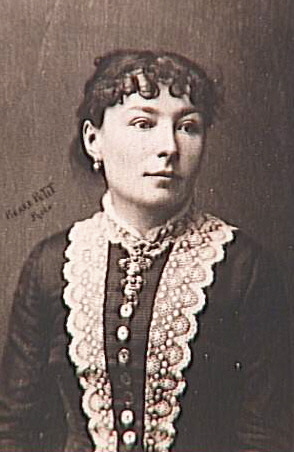
In 1897, the École des Beaux-Arts finally opened its doors to women.
But the women who entered did not immediately receive the same education as the men. Female students were initially separated from male students and excluded from painting and life-study classes. Equal opportunities came only gradually in the opening years of the twentieth century.
The victory, in other words, was real. It just wasn’t complete.
If these women have inspired you, you might also enjoy our article on The First and Last Paintings of 4 Iconic Women Artists.
By the End of the Century, Something Had Shifted
The nineteenth century did not solve the problem of women’s exclusion from art, but it changed the direction of the conversation.
Women were entering academies. They were establishing their own organizations. They were exhibiting together, petitioning institutions and demanding access to professional training. Women such as Berthe Morisot, Mary Cassatt and Rosa Bonheur were building careers that could no longer be dismissed as the accomplishments of talented amateurs.
Rosa Bonheur’s career is particularly striking. She became internationally successful through her paintings of animals and received the Legion of Honour, becoming the first woman to receive that distinction. She even obtained police permission to wear men’s clothing so she could move through places such as horse fairs and slaughterhouses to study animal anatomy.
Women were not simply entering the art world. They were changing what it was possible for a woman to do within it. And perhaps the most satisfying part of this history is how ordinary some of those victories eventually became.
Today, a woman can walk into an art school and study anatomy. She can join a life-drawing class, apply for a residency, enter a competition, exhibit internationally or decide that art is going to be her profession. These things can feel so normal that it is easy to forget they were once arguments.
Someone had to argue for the classroom. Someone had to argue for the life model. Someone had to argue that women could study anatomy. And when institutions refused, women created their own schools, societies, networks and exhibitions until refusal became harder to defend.
The women who fought for access did not know exactly what their victories would look like generations later. Laura Herford could not have known how many women would eventually study at the Royal Academy. Hélène Bertaux could not have known how ordinary a place in an art school would become. Virginie Demont-Breton could not have known how many women would eventually compete on the same artistic ground she had spent years trying to enter.
They simply knew that the door should be open. And because they kept pushing it, it eventually was. For women artists today, freedom in the studio can feel natural. That is not because exclusion was ever natural.
It is because generations of women worked very hard to pave the road that women artists walk through freely today.
Editor’s Note
Good news for artists! The deadline for the Women in Arts Virtual Exhibition: The Beauty of Still Life has been extended to August 30. If you have been meaning to submit your work, now is your chance. Submit your still life artwork and be part of this special virtual exhibition celebrating the beauty of everyday moments.
