
Why Isabel Aguado olive greens, dusty blues & ochres feel so familiar
At Women in Arts Network, while curating Landscapes and Places, we found ourselves looking through hundreds of submissions filled with skies, coastlines, forests, mountains, and beautifully painted scenery. A lot of them captured places exactly as they appeared.
But every now and then, an artist sends work that feels less interested in showing you a landscape and more interested in making you feel what it’s like to stand inside one.
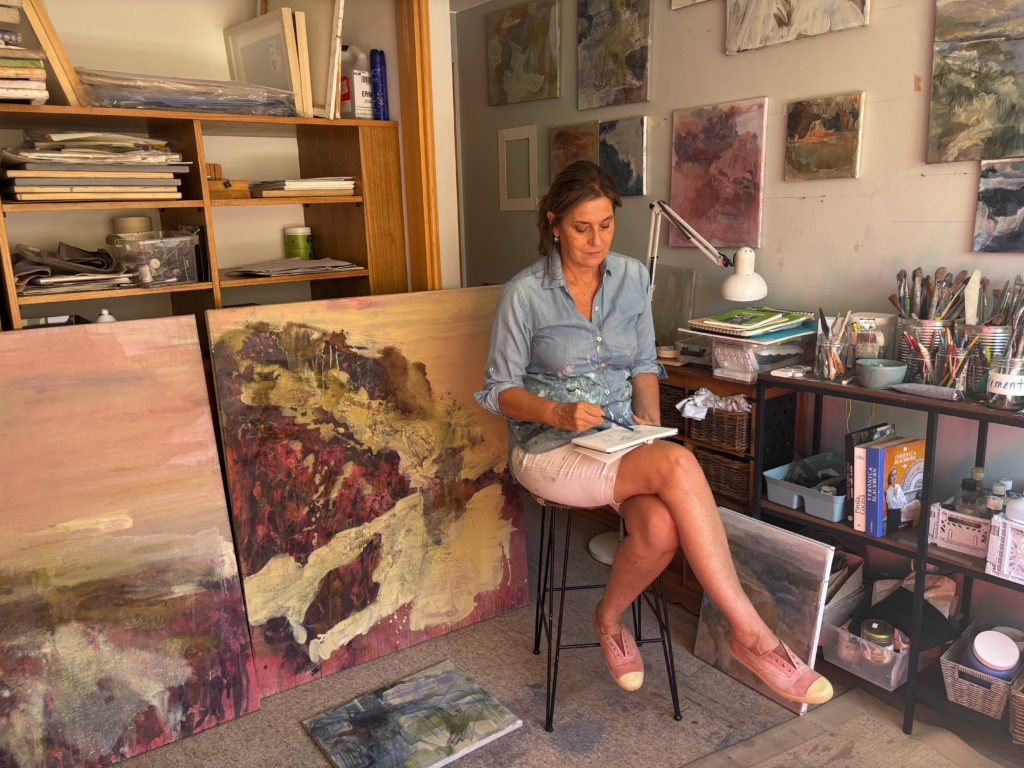
That’s what happened when we came across Isabel Aguado’s paintings. Isabel is a selected artist for the exhibition, and her work immediately pulled us toward the land itself the folds of hills, dry grasses, winding paths, shifting terrain, the quiet rhythm running underneath nature when you actually stop long enough to notice it.
There’s something very physical about the way she paints landscape. You can tell she’s someone who has spent years really looking at the world around her.
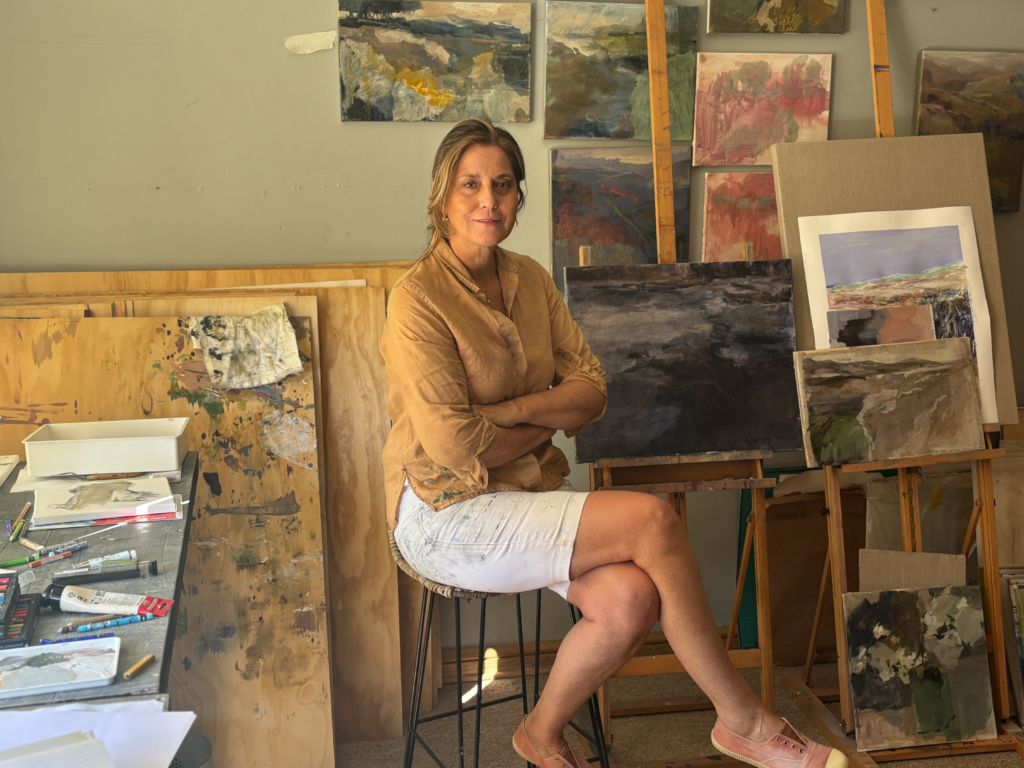
She grew up in the countryside surrounded by mountains, trees, fields, and open land, and listening to her speak about nature, you realise those environments shaped the way she sees completely.
Even as a child, she was paying attention to the movement of leaves in the wind, the lines of hills, the changing colours across the land. And somehow that attentiveness stayed with her.
What’s interesting is that although her work begins with observation and photography, the paintings slowly move away from exact reality once she enters the studio. The brushwork loosens. Shapes dissolve slightly. Colour begins taking over structure. The landscapes stop feeling documentary and start feeling emotional instead. That balance is what gives the work its energy.
One moment you’re looking at a hillside or valley, and the next moment the painting slips toward abstraction, gesture, atmosphere, memory. The land remains visible, but so does the process of feeling your way through it. And honestly, that tension makes the paintings feel alive.
Now let’s get to know Isabel through our conversation with her about painting terrain and rhythm, balancing control with chaos, and finding emotional truth somewhere between observation and abstraction.
Q1. Can you share a little about your background and how art first became part of your life?
I grew up in the countryside, surrounded by fields, pastures, trees, shrubs, and mountains. I could spend hours watching how the leaves changed shape in the wind, tracing the lines of the grass and the hills with my eyes. That quiet observation was my first studio.
At home, music and art were everywhere. We had lots of books on artists from different eras and styles, and my parents—who are great art lovers—never hesitated to invest in pieces that brought our rooms to life. Living with those paintings taught me to read brushstrokes, feel colors, and recognize atmospheres.
At school, art was my favorite class, and later I studied graphic design at university. About ten years ago, I started painting with more intention—at first once a week, almost like a ritual. Since then, painting has become part of my everyday life: I can’t go a single day without painting something. That’s how art entered my life—simply, inevitably, and very much alive.
Q2. Your work often captures landscapes and natural scenes. What draws you to these subjects?
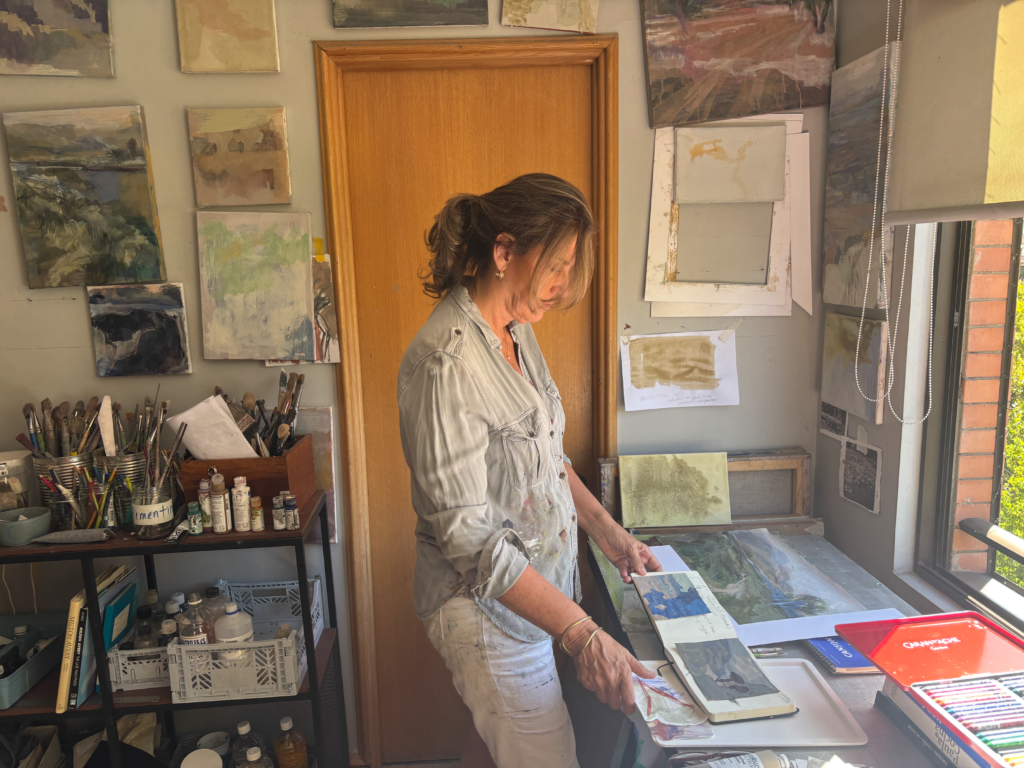
Honestly, nature feels like a complete language to me—forms, colors, lines, rhythms. Out there I find everything I need to paint. I move between the places I inhabit—countryside, mountains, hills, the sea, lakes—and each one brings its own energy. I’m drawn to the way a horizon cuts the sky, to how grass makes a soft line in the wind. I work from my own photographs; taking them is part of the artwork—it lets me frame what I want to emphasize.
Back in the studio, the painting takes over, and the image breathes beyond the photograph. Ultimately, landscape is my way of engaging with the world and our place in it—how we belong to it, how it holds memory and movement. It’s a practice of paying attention. That’s why I keep returning to these subjects: they’re alive, and they keep bringing me back to myself.
Q3. Your work carries rich, earthy palettes ochres, browns, muted greens, soft blues. Are you drawn to certain light or atmospheres, or does the palette emerge naturally as you paint?
I’m drawn to the naturalistic colors around me, but the palette really comes alive on the canvas. I usually begin from a photograph, and sometimes from memory. I lay down an undercolor to set the temperature, letting those undertones breathe through the layers.
From there I let the pigments talk to each other—it becomes a conversation between colors. With every new hue, I check how it shifts the balance—value, temperature, and saturation—and adjust as the painting builds. So observation anchors me, but the final palette always emerges in the act of painting.
Q4. Your work pays close attention to terrain, geology, and the structure of land what draws you more to those grounded elements of landscape than to skies or water?
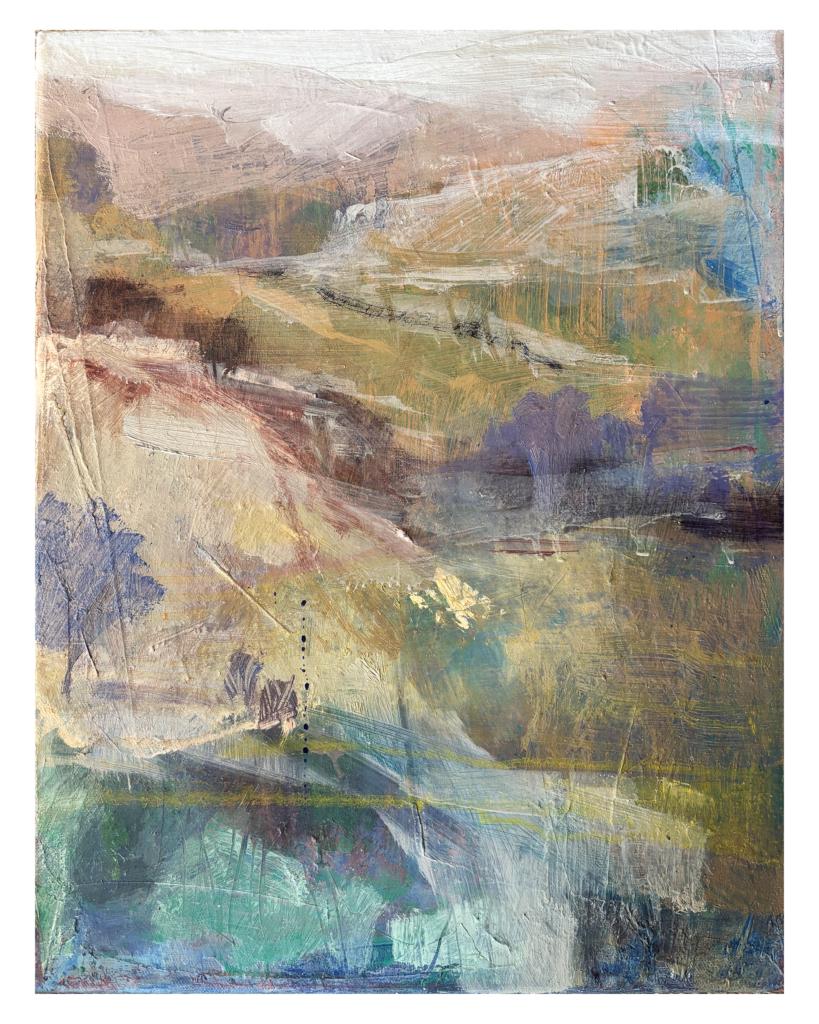
’m a bit obsessed with the structure of land the folds, ridges. It gives me line, weight, and rhythm to push paint against. Geography is my excuse to paint: a framework where I can interpret stains and washes, edges, and color relationships.
I usually start from what’s around me dry grasses,valleys, distant hills, trees and let the image evolve from there. Depending on my mood, I pick a reference and let the structure lead the mark-making. Skies and water do inspire me they’re slipping into new sketches.
Q5. When you look at a finished painting, what tells you it’s successful? Is it about capturing a specific light, a mood, or something more intuitive than that?
For me, a painting works when there’s harmony, it feels expressive, and it has an energy I recognize as mine. Sometimes it’s about a specific light or weather, but most of the time it’s more intuitive: the colors play well together, the values read, and the marks have rhythm. I want the paintings to carry the energy of nature—and mine. If that’s there, it’s done.
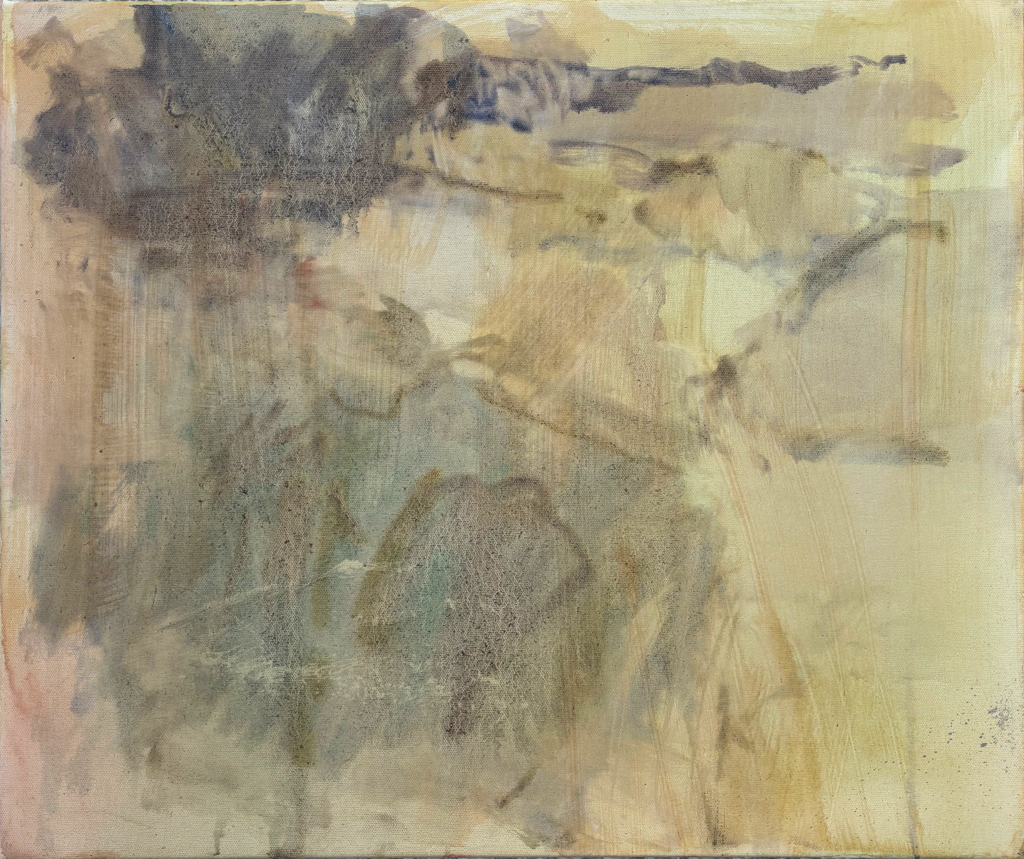
Q6. Your brushwork feels loose and gestural, yet the sense of place remains strong how do you balance representation and abstraction in your work?
All the way through, I move back and forth—if it drifts too abstract, I restate a contour or push the values so the form reads again. It’s a practice built on observation and years of painting. For now, I’m not aiming for one side; I want representation and abstraction in conversation, and each painting finds its own balance. In the future, I’d love to go fully abstract.
Q7. Can you walk us through your creative process when beginning a new painting?
I usually begin by laying a soft ground—thin oil washes, subtle brushstrokes, and gentle shapes that set the temperature and mood. Those first veils create the atmosphere and give me something rich to paint into.
On a practical level, when I pour or lay down color, I treat pigment as something that reacts to light. Every time I add a new hue, I ask, “How does this work now?” Then I adjust value, temperature, or saturation to keep it balanced. There’s always a little jolt when I drop a bold shape—the “is this too much?” moment—but that risk keeps the surface alive. I work in many layers. Oil helps me slow down; the drying time eases the anxiety and makes me wait before the next move.
My process is a constant push and pull: I lay paint on, then lift some off with a rag, blur an edge, or restate a contour. As I add, I also subtract, so traces of earlier layers remain visible. That surface “history” is what gives depth and richness.
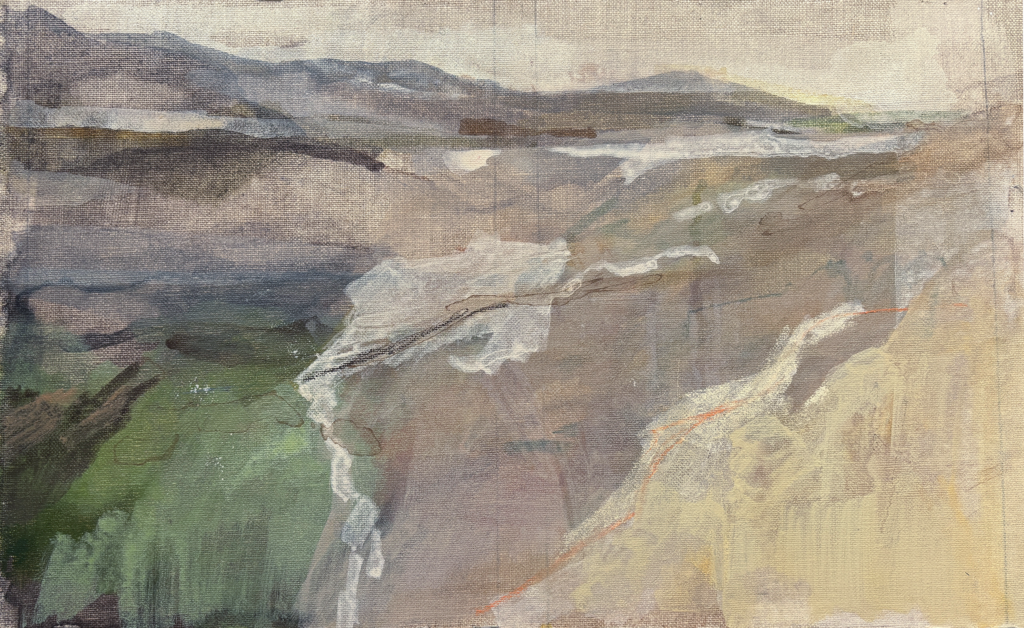
Q8. Looking back at your earlier paintings, how do you feel your artistic voice has evolved over time?
Looking back, I used to care that viewers could recognize the exact place I was painting—specific hills, paths, shorelines. Over time I’ve let that go. I’m moving toward abstraction, letting color, marks, and gestures carry what I feel and see.
Now I simplify and refine: fewer details, a clearer structure, and a palette that builds a sense of space and the stillness of nature. It’s about describing the world in my own way—I want the painting to show my way of seeing.
Q9. What challenges have you faced along your creative path, and what helped you continue forward?
Honestly, the biggest challenge for me is walking the line between control and letting go. I can plan, but the moment the brush hits the surface, things shift—and that’s where the real work starts. That means a lot of practice and a very hands-on process. When it flows, it’s almost meditative; when it doesn’t, it can be tough and honestly frustrating.
What helps me keep going: – Showing up often, even for short sessions – Letting layers dry and coming back with fresh eyes – Stepping back, squinting, and editing without fear (add, remove, try again) – Staying open to inspiration—walks, photos, notes—and trusting there’s always a way through if I keep working It’s control versus chaos. That tension is the challenge—and also the engine that keeps me painting.
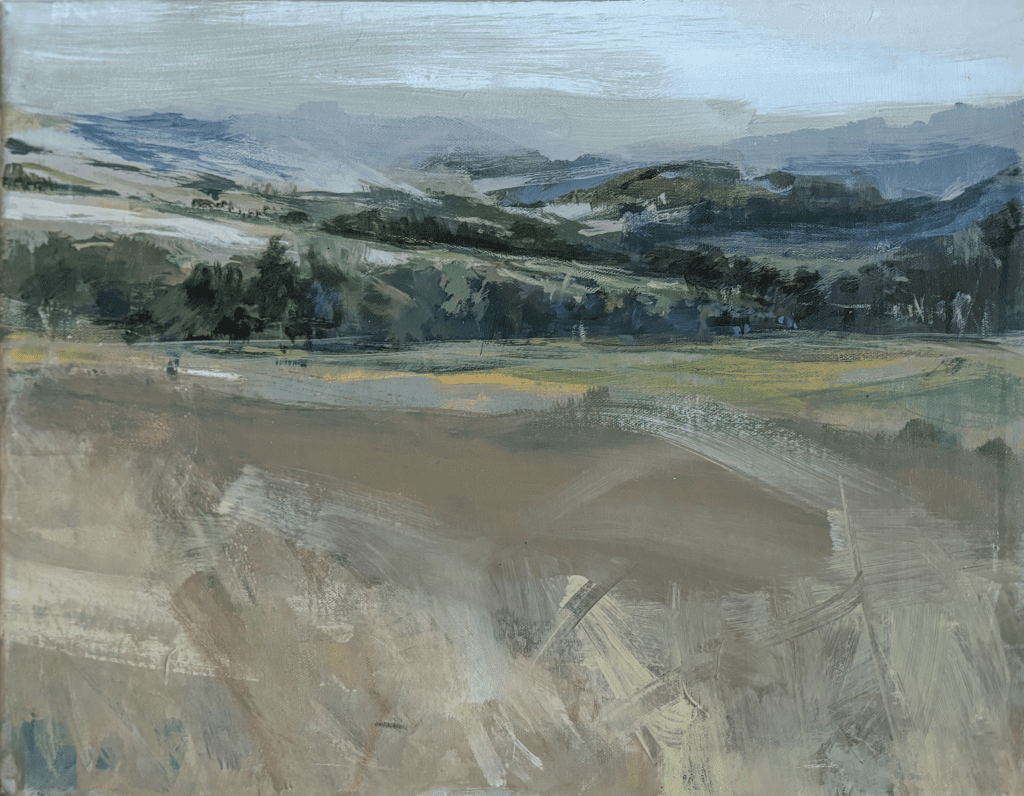
Q10. What advice would you give to emerging artists who are just beginning their creative journey?
First thing: enjoy the process . Painting is learned one stroke at a time. Every mark you make, every color you add—even the ones you hate—teaches you something. A few things that helped me: – Don’t judge mid-process. Step away, come back later, look with fresh eyes. – Sit with uncertainty.
The answers show up as you work, not before. – Take a risk in every piece. One bold move. When you’re not being safe, you actually discover. Coming back the next day can save a painting. – Keep a little reference bank—photos, notes, quick sketches—but let the painting have its own say. – Be kind to yourself. Each piece is a small surprise—that’s what keeps us coming back.
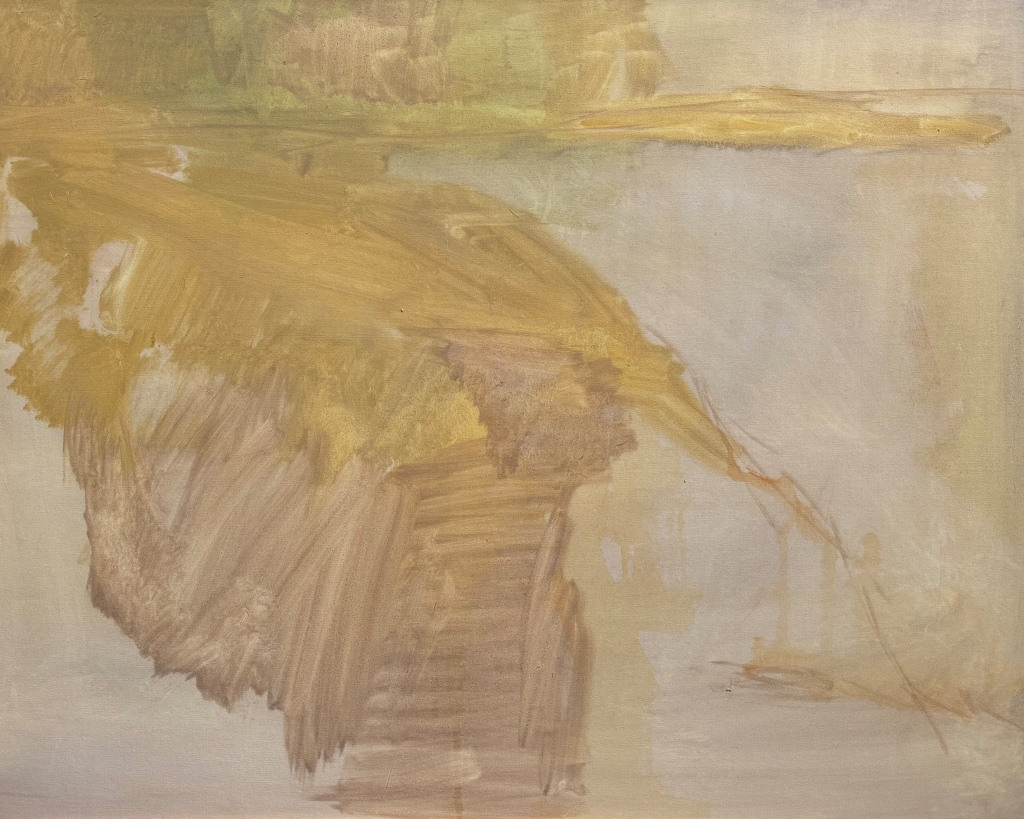
As we wrapped our conversation with Isabel, what stayed with us most was how deeply connected her work feels to observation like real observation.
The kind that happens when someone spends years paying attention to the same hills, grasses, colours, and shifting light over and over again until they stop being “scenery” and start becoming part of how you understand the world emotionally. You can feel that closeness to nature in the paintings.
Nothing feels generic or detached. Even in the more abstract moments, the work still carries the rhythm of real terrain underneath it the movement of land, the pull of pathways, the softness of distant hills disappearing into atmosphere. And somehow the paintings manage to feel both grounded and free at the same time.
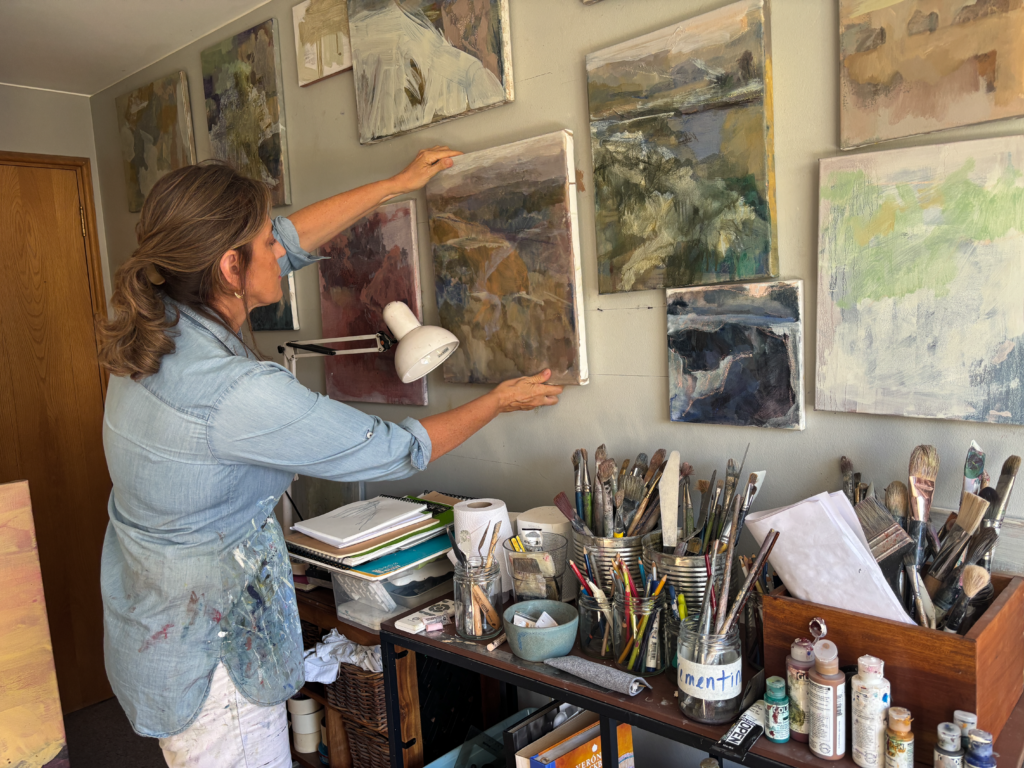
We also loved hearing her speak about painting as a balance between control and letting go. That tension feels visible in every canvas. Certain marks feel deliberate, others feel instinctive, and together they create surfaces that feel alive instead of over-planned. That’s not easy to do.
For people living with art, Isabel’s paintings feel like the kind of works that create calm without becoming passive. They hold attention quietly. You notice new colours, textures, and movements the longer you spend time with them, and the atmosphere they create inside a room feels soft and deeply natural. That kind of work stays with people.
And artists who can make landscapes feel this emotional without losing their connection to the physical world are always worth paying attention to.
To follow Isabel’s journey and see more of her work, find her through the links below.
