
This artist uses messy edges & loose backgrounds to build depth in her Floral paintings │Robyn Palescandolo
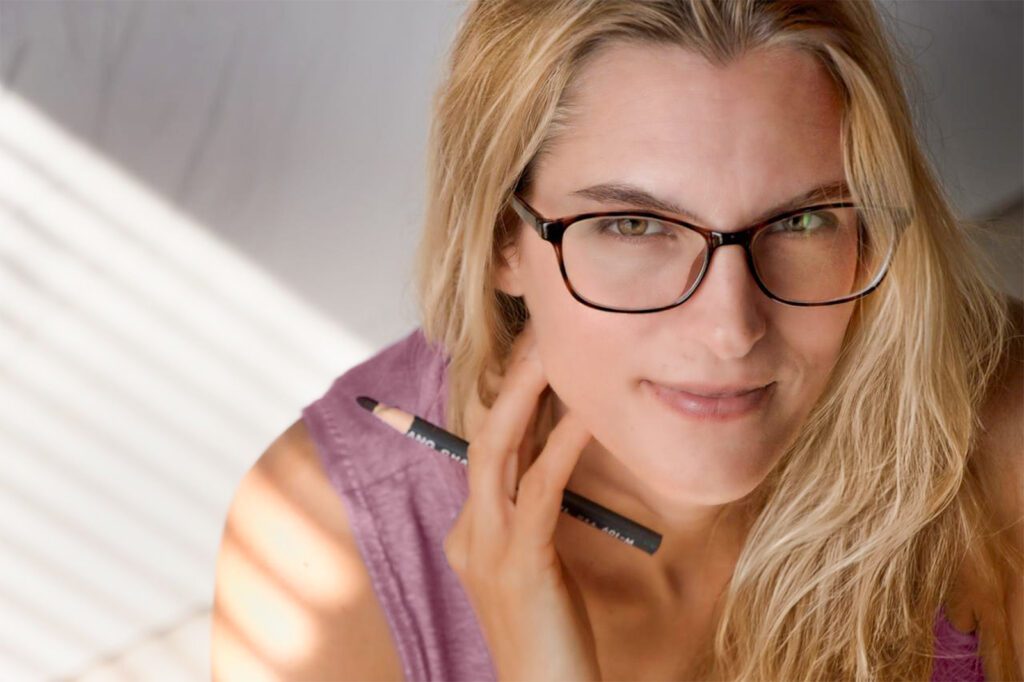
At Women in Arts Network, Flora and Fauna is always one of the most interesting themes to curate because it reveals how differently artists connect with the natural world.
Some artists paint nature as observation. Others use it as symbolism. Robyn Palescandolo’s work feels much more personal than either of those approaches.
Robyn is a selected artist for the exhibition, and her paintings are rooted in a deep appreciation for beauty, light, colour, and the emotional experiences that often exist within everyday moments. Flowers, fruit, branches, and natural forms appear throughout her work, but they become vehicles for something larger memory, restoration, connection, and the search for wonder.
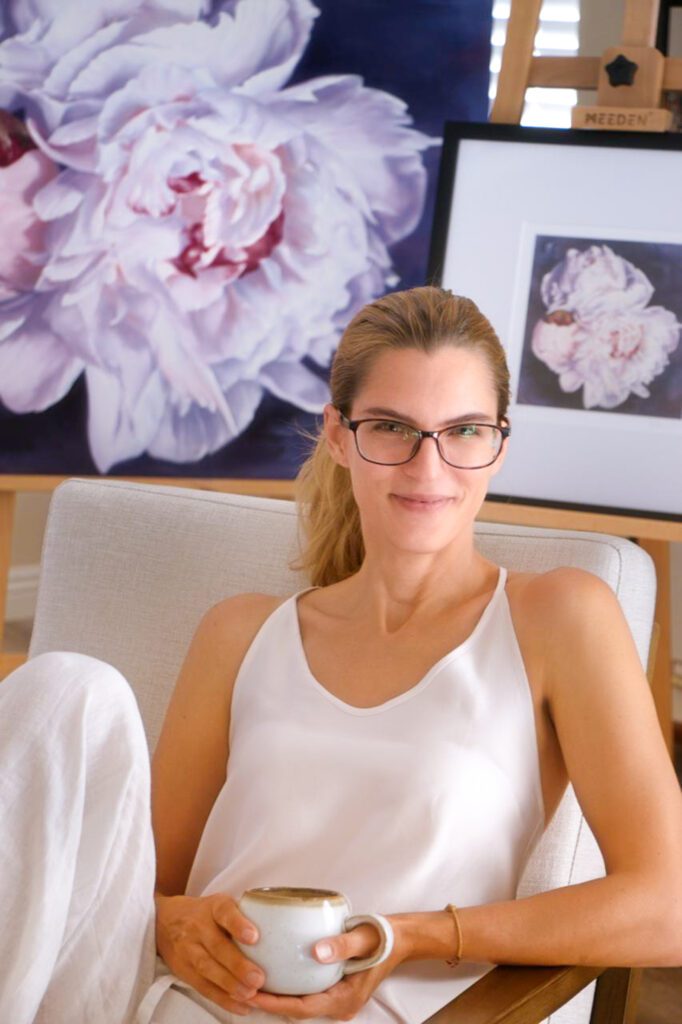
Her journey as an artist has taken many forms over the years. Alongside painting, she studied art history, worked as a designer, ran a painting retreat in rural Italy, raised a family, completed a master’s degree, and continually returned to painting whenever life pulled her away from it.
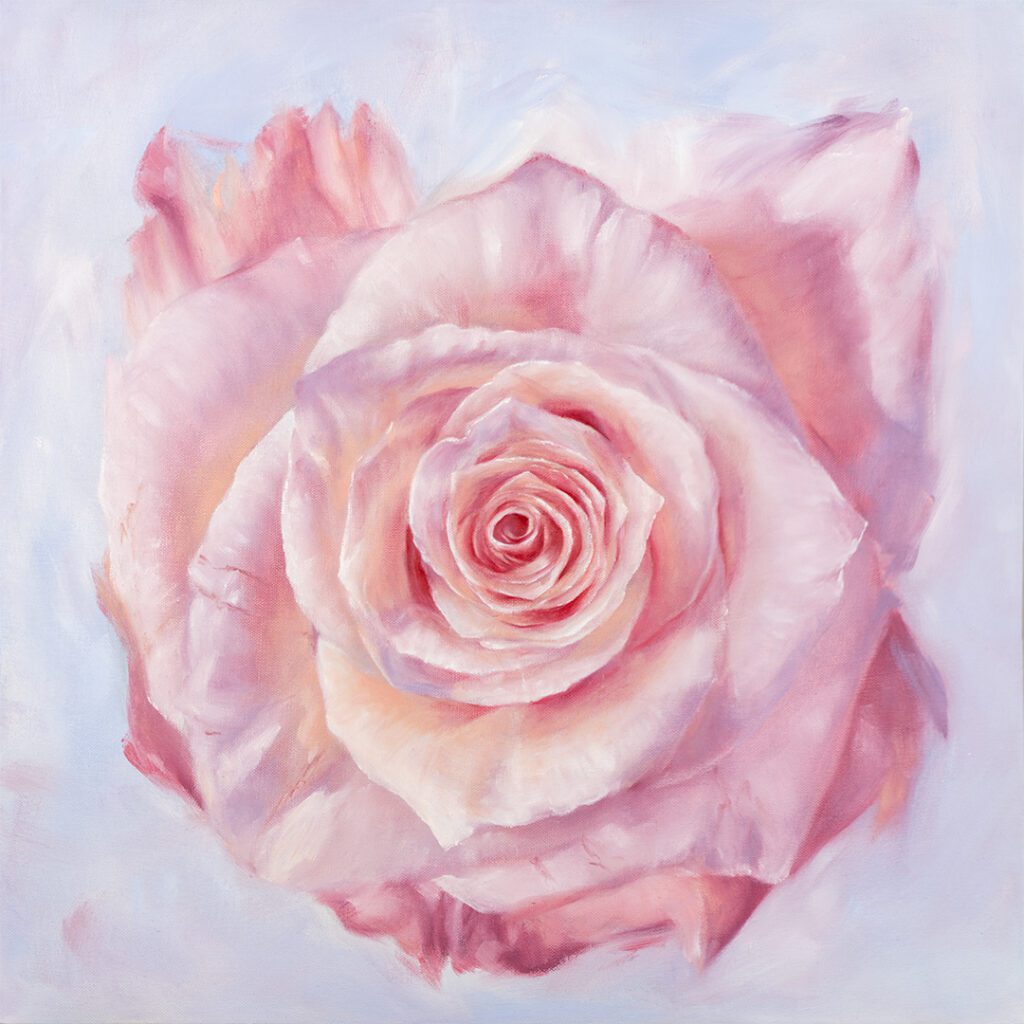
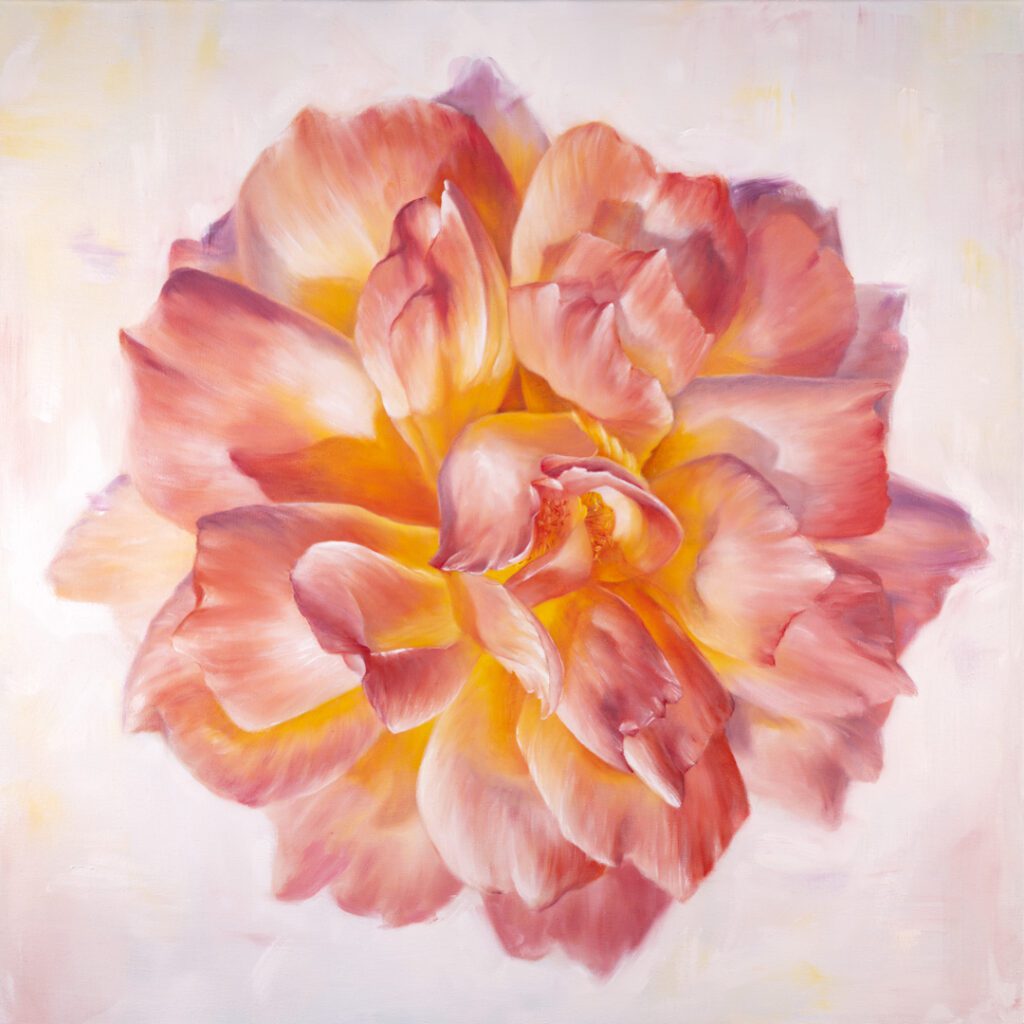
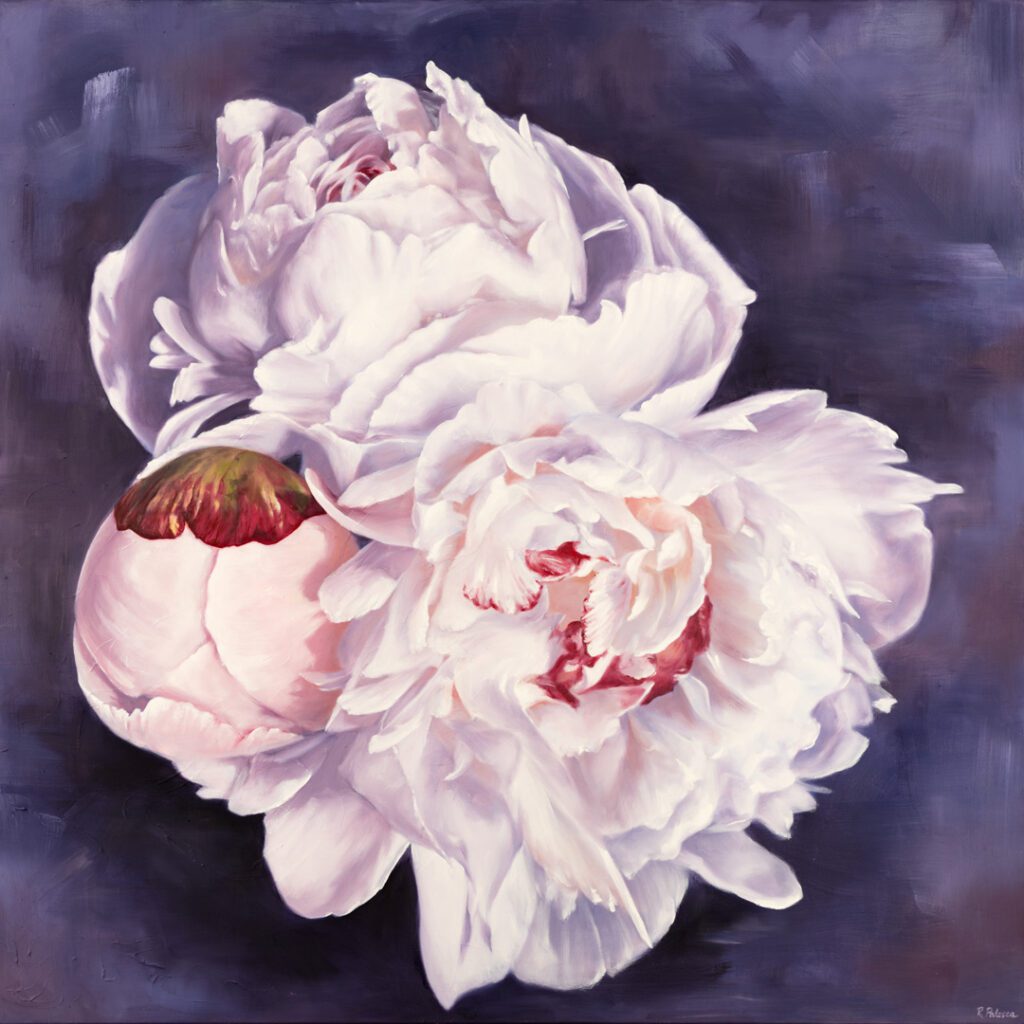
There is a maturity and confidence in the way she balances realism with expressive brushwork. The paintings never feel trapped by perfection. Details draw viewers in, while visible paint marks, softened edges, and layers of colour allow the work to remain alive and emotionally open.
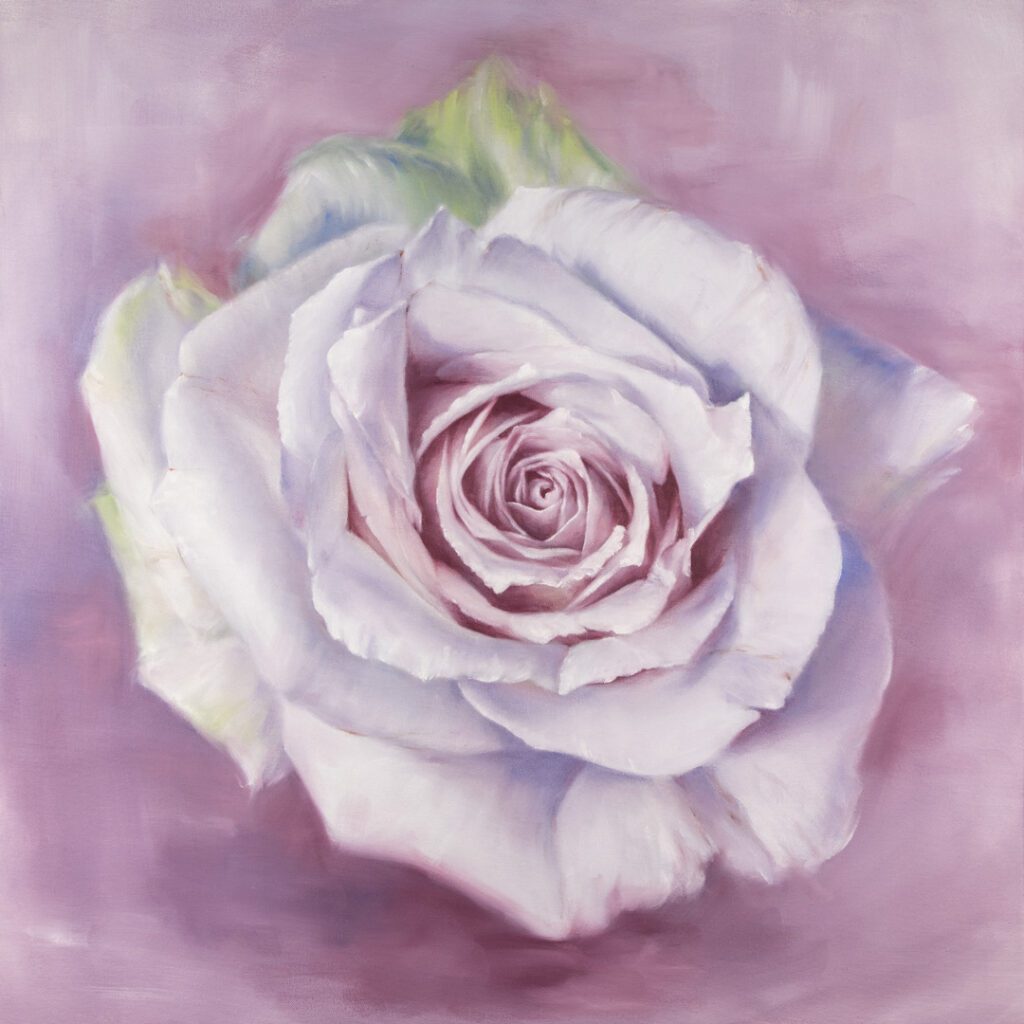
Colour plays a particularly important role in her visual language. The soft pinks, lavenders, blues, greens, and luminous whites that appear throughout her paintings are not invented palettes detached from reality. They come from close observation of the natural world, gently heightened to capture the emotional experience of seeing rather than simply recording what is there.
That sensitivity gives the paintings their atmosphere. Robyn also speaks openly about painting as a place of healing, reflection, and reconnection. Her work exists in a space where technical skill and emotional expression support one another rather than compete for attention. The result is artwork that feels both refined and deeply human.
Now let’s get to know Robyn through our conversation about colour, nature, painterly realism, creative reinvention, and building a life around the things that continue calling us back to ourselves.
Q1. Can you take us back to the beginning when did art first enter your life, and when did you realize it was more than just a hobby?
It’s hard to boil it down to specific moments. Art has been a part of my life for as long as I can remember. My mother bought me little black books as a child that I’d fill with my drawings. I won local competitions as early as the 3rd grade. My high school art teacher taught me real skills that instilled confidence in me as an artist. I would create portraits, colored pencil drawings, or hand-painted housewares as gifts.
Wanting a more ‘practical’ career, I studied art history in college and work as a designer, continuing to create and exhibit art in the background. My creative life has gone through many hills and valleys, taking breaks for motherhood and survival work and taking center stage in moments when I simply could not go on without painting.
I really do feel unalive when I’m not creating in some way. About 3 years ago, I sold my painting retreat in rural Italy (my dream!), moved back home to the states, and began returning to myself, focusing on healing, creating a collection, getting my master’s degree, and building a business around my work, the work that truly fulfills me.
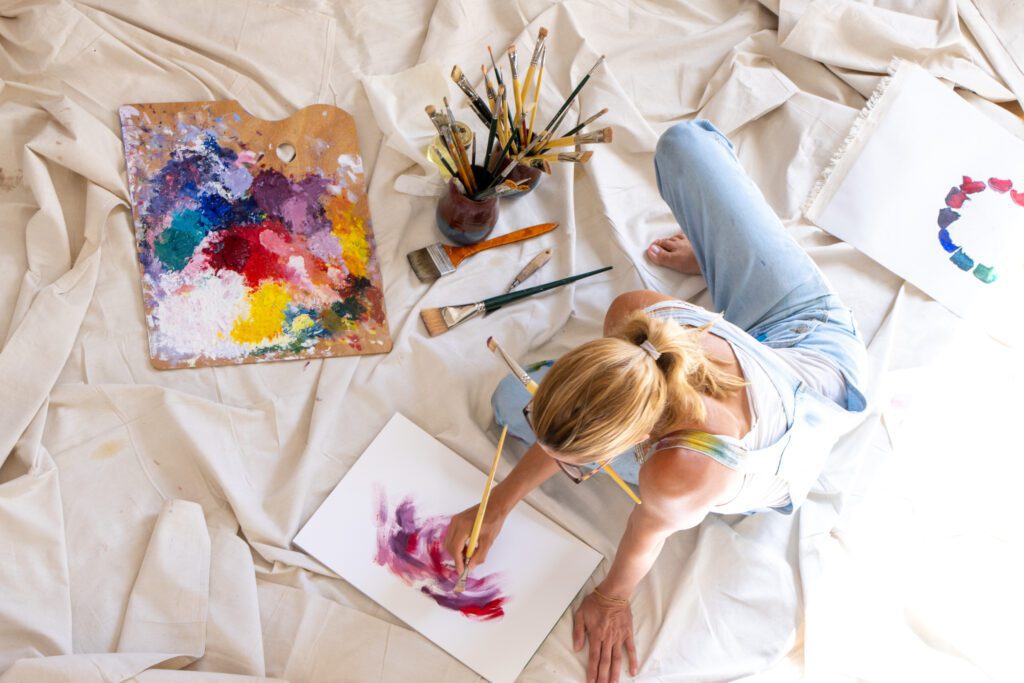
Q2. From 2016 to 2021, you ran a painting retreat in rural Italy what drew you there, and what did that experience teach you as an artist?
That was a fun chapter, full of challenges, but also full of wonder. I moved to Italy seeking a slower pace, a closer connection to nature, and a business venture that could support that as well as my creative life. I wanted to create a space where artists could step away from noise and reconnect with their work in a meaningful way.
I wanted to share the simple pleasures of picking fruit fresh from the trees and wearing olive branch crowns as we harvested the year’s crop. It was both a business and a shared experience, something I could offer that also nourished me deeply. It’s still very much a part of who I am today. It shaped not only how I live but also how I see and create.
Q3. Your process balances spontaneity with careful refinement where does the real discovery happen for you?
It really feels like surrender for me. Surrendering to the brush, letting the paint tell the story rather than trying to control the entire process. I’m not trying to copy a photograph. I’m trying to depict emotion through the forms of everyday things. It is part inspiration, part technical skill, trying to satisfy both parts without letting either lead.
My favorite parts of paintings often lie in the background or around the edges, where the brushwork remains messy and visible. The fine details draw you in. The beauty of the paint marks seduces you and keeps you engaged.
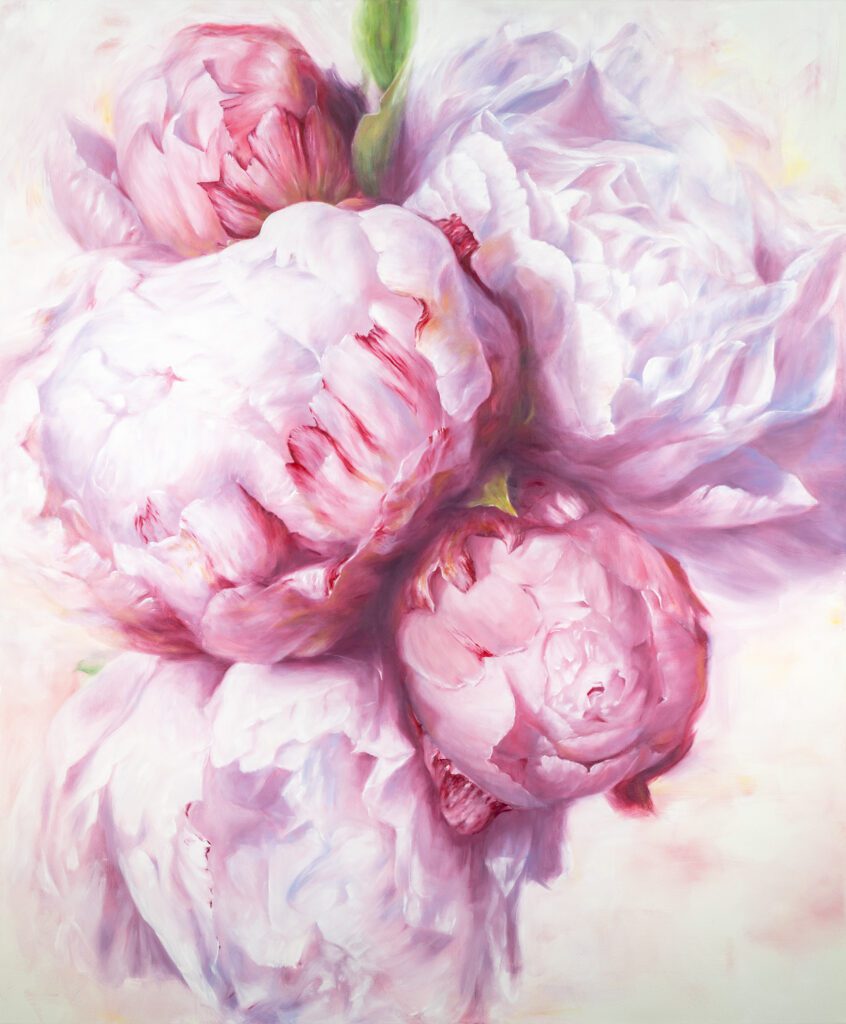
Q4. Your paintings have a very distinctive palette what keeps drawing you back to these oft pinks, lavenders, muted whites, and gentle greens?
I am totally in love with color! Those around me tell me I see it in a very special way, and I spend a lot of time in my daily life just observing the way light illuminates objects and the surprising colors that emerge from the shadows. I am very sensitive to it and feel like, while form and value are important in painting, color is the most essential carrier of emotion. It is for me.
Most of my palette is inspired by the colors I actually find in nature, subtly exaggerated to add that emotional pull. The blues and lavenders and crisp white backgrounds are the same. They represent the real background of the sky or the pavement or the garden wall, simplified to their most essential color profiles.
Q5. You work primarily in oil. What is it about oil paint its behavior, its history, its slowness that feels right for the kind of work you want to make?
I’m deeply drawn to oil. The richness of color, the feeling of the paint as you mix it, the transparency, the way it lights up when light hits it. My work is slow and meditative, built in layers, and oil thrives on that slowness. There’s quite a bit of technical understanding needed to work with it effectively, and I honor that, too. It allows me to appreciate a long history and sort of transcend time. I’ve worked in other media for graphic or illustration projects, but oil is without question my favorite for fine artworks on canvas.
Q6. You also draw in charcoal. How does drawing feed your painting practice, and are they two different conversations for you, or really one?
I used to use charcoal much more as a way to explore and understand form. I still use it for the simple pleasure of drawing, but I rarely perform charcoal studies anymore. I usually dive right into an artwork, and though I still sketch rough outlines on the canvas as a guide, I’m even working to eliminate that. To see where my painting goes when I fully release control. I’m not quite there yet…
Q7. Your work is often described as painterly realism. How do you balance realism with the freedom of visible brushwork?
I’m deeply inspired by the work and technique of John Singer Sargent, whose paintings appear polished until you step closer to see the sensuous handling of paint. He was a direct painter, completing a painting almost entirely wet-on-wet. I think I admire that so much because I’m not entirely capable of doing it! …but more and more,
I’m getting closer. I’m very much drawn to depicting an actual living subject, and the more loose I’m able to approach it, ironically, the more alive it appears. It’s still represented in a realistic way, but by not going for full polish and perfection, I feel I’m able to capture more of the moment. More of the life.
Q8. Many collectors describe your work as calming and restorative what do you think they find in it?
I can’t fully speak for the collector experience, but I know what the work has given me. This collection has been integral in my healing. It has provided me with a release and a return to a sense of beauty and wonder in the world. It has allowed me to rediscover myself. I love being surrounded by my paintings, having them drying on the easel in the studio and displayed (albeit temporarily) in my home.
I love looking at them, letting my eye wander, discovering new details or brushstrokes that I didn’t notice even as I was creating them. I’d like to think collectors feel a similar sense of calm or restoration that comes from that same place. The work holds a kind of stillness that I needed, and perhaps they do, too.
Q9. Do you feel the art world today makes enough space for quiet, contemplative work or does it still reward the loud and the provocative?
I feel that, yes, for a long time, the art world has rewarded loud and sensational artists and artworks… but with the world as it is today, a lot of people are returning to calm, beauty, and connective artwork. Beauty that resists trends and persists through time. That said, collecting is deeply personal. Some are drawn to energy and disruption, others to stillness and refuge. I think there’s space for both, but maybe now, more than before, quiet work is finding its place again.
Q10. How do you view the rise of AI-generated imagery as a painter committed to making things by hand?
I have a somewhat layered relationship with AI. I was encouraged to explore its full capabilities in grad school, and it allowed my thesis project to have much more depth than I would have been capable of producing on my own in the given timeframe. I use it for editing text, planning, and just talking through ideas. I even do freelance work training new models…
However, I think there’s an important limit to honor there. AI is a great facilitator, and it certainly has its place, but that place is not to substitute human ideas or creativity. The purpose of art is to connect us, to carry something deeply human from one person to another. There is value in that. I think, at its best, AI is teaching us just how much we need each other. Just how much personal interaction and handmade items are needed in our society.
Q11. Looking back fifty years from now, what do you hope people understand about your work and the person behind it?
What an interesting question! I hope that person looking back on my work from 50 years in the future would feel a sense of timeless beauty and quiet connection to it. I hope they’d still see the sensuality in the brushwork, the details handled just enough to convince you they’re there without fully defining them.
I hope they’d appreciate the work to balance technical skill with emotion while creating, as well as finding a sense of balance in the finished work. In short, I hope it continues to move people. As for the woman behind it, I hope they see someone who lived fully. Someone who experienced both struggle and beauty and chose, again and again, to look for the light. A person who found meaning in creating and in offering that experience to others across time.
As our conversation with Robyn came to a close, we found ourselves thinking about how differently her work approaches beauty compared to much of what we see today.
Beauty can sometimes be dismissed as something simple or decorative. But Robyn’s paintings remind us that beauty can also be an act of attention. An act of slowing down. An act of choosing to notice.
Her work doesn’t rely on spectacle or grand gestures. Instead, it finds meaning in flowers, fruit, light, colour, and the quiet moments people often overlook in everyday life. And somehow, through that simplicity, the paintings carry a surprising amount of emotional depth.
There’s a sense that these paintings were not created in a rush. They were built through experience, reflection, and a continued decision to keep choosing creativity even when life pulled in other directions.
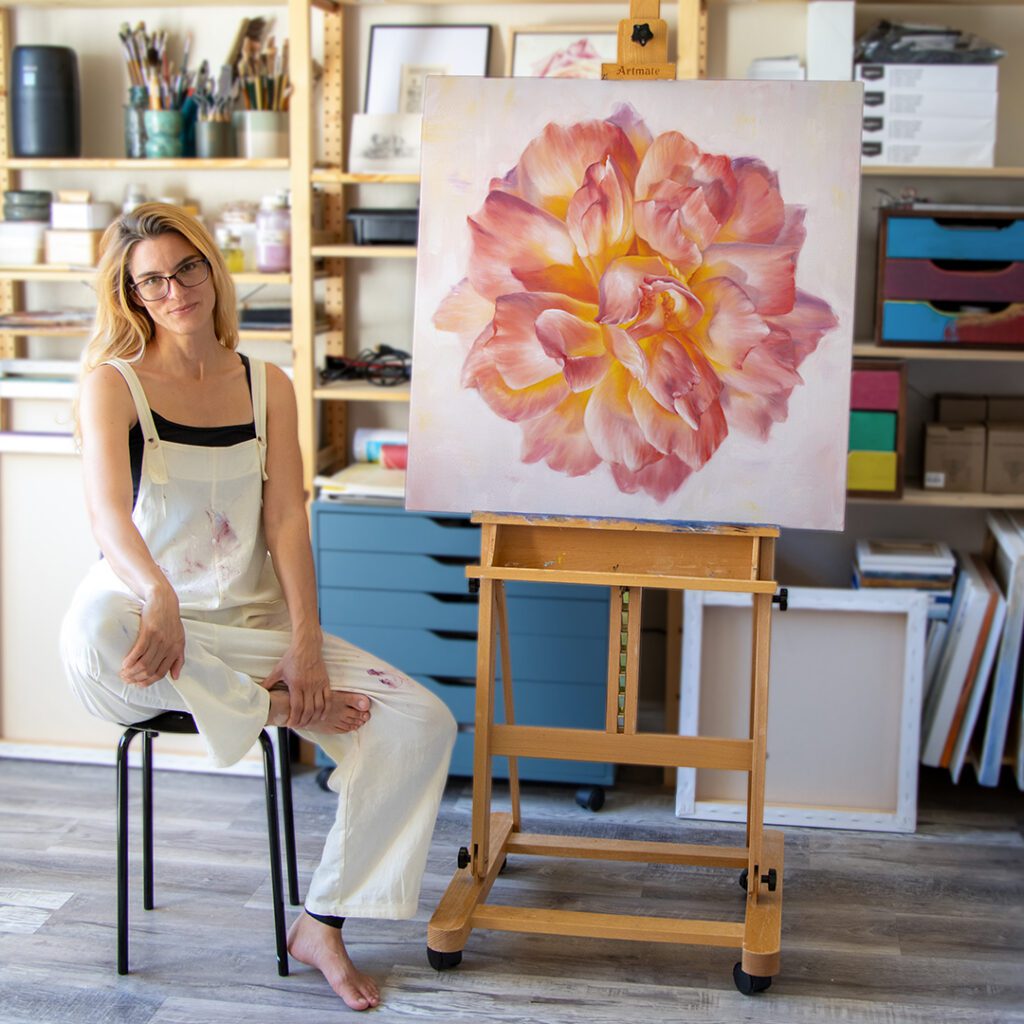
You can feel that patience in the work. Compared to artwork that seeks to provoke immediate reactions, Robyn’s paintings seem more interested in creating lasting relationships. They reveal themselves gradually through colour, brushwork, atmosphere, and the small details viewers continue discovering over time.
That slower connection feels increasingly valuable. And perhaps that is why her paintings resonate with so many people. They don’t ask viewers to escape reality. Instead, they invite them to look more closely at it to notice beauty, light, and wonder that already exist around them. Sometimes that is enough.
For collectors and people who genuinely love living with art, Robyn’s paintings feel like companions rather than statements. They don’t compete for attention. Instead, they quietly become part of daily life, offering moments of beauty, calm, and reflection whenever your eyes happen to land on them. The longer you live with them, the more they seem to reveal.
To follow Robyn’s journey and see more of her work, find her through the links below.
