At Women in Arts Network, Spring Through My Eyes gave us the chance to discover artists who experience renewal, beauty, and nature in deeply personal ways. For some, spring appears through flowers, colour, and landscapes; for others, it can be found in patterns, memories, textures, and the feeling of seeing something familiar in a new way.
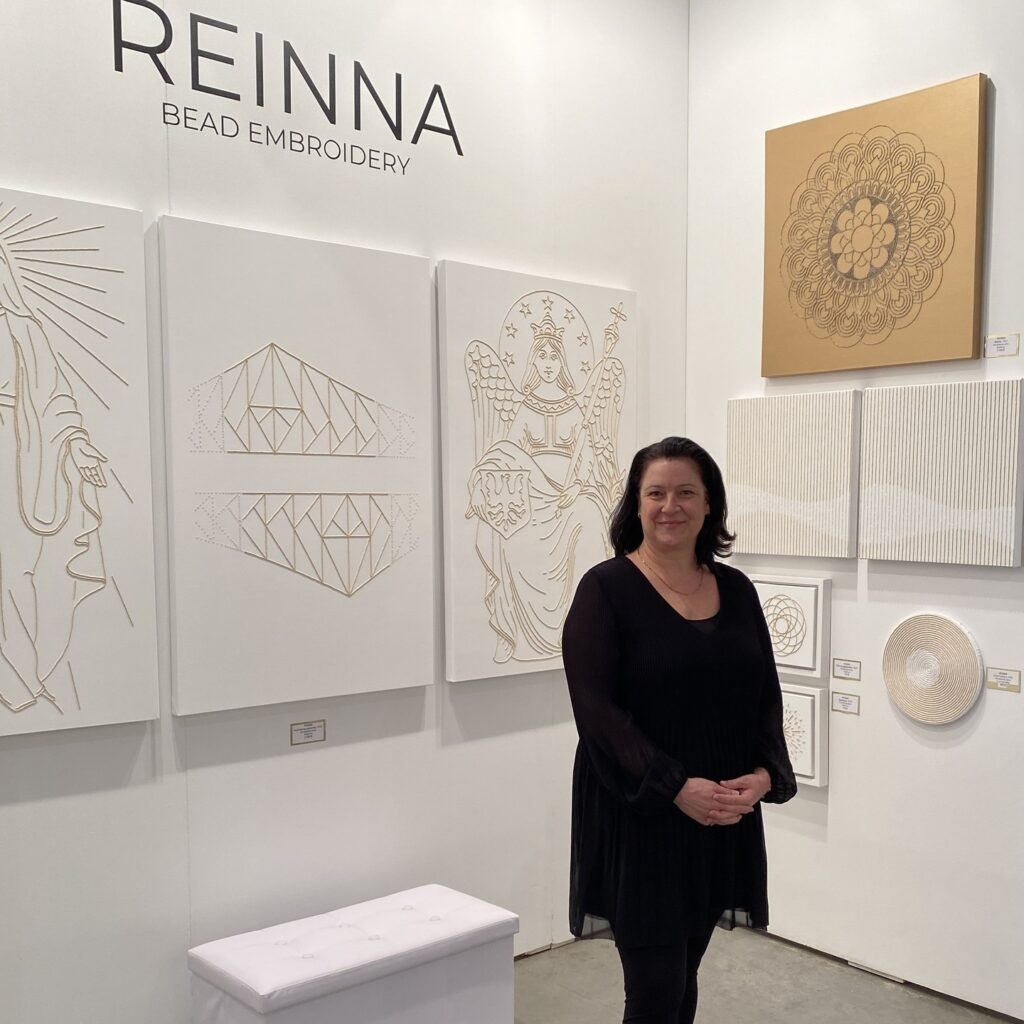
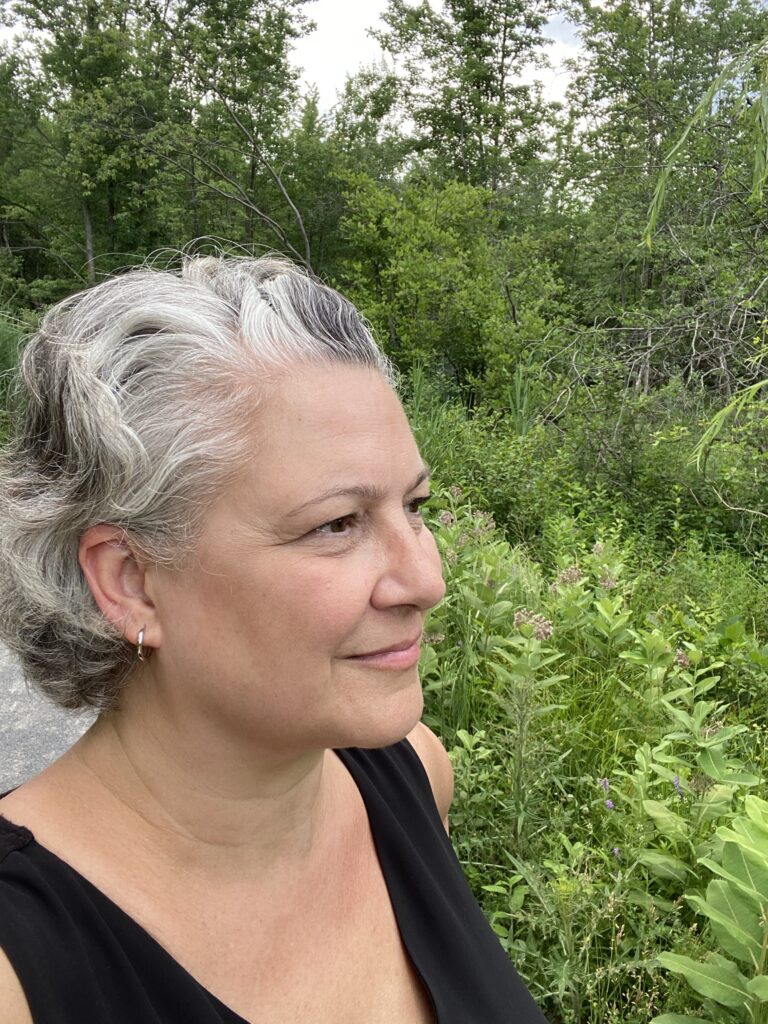
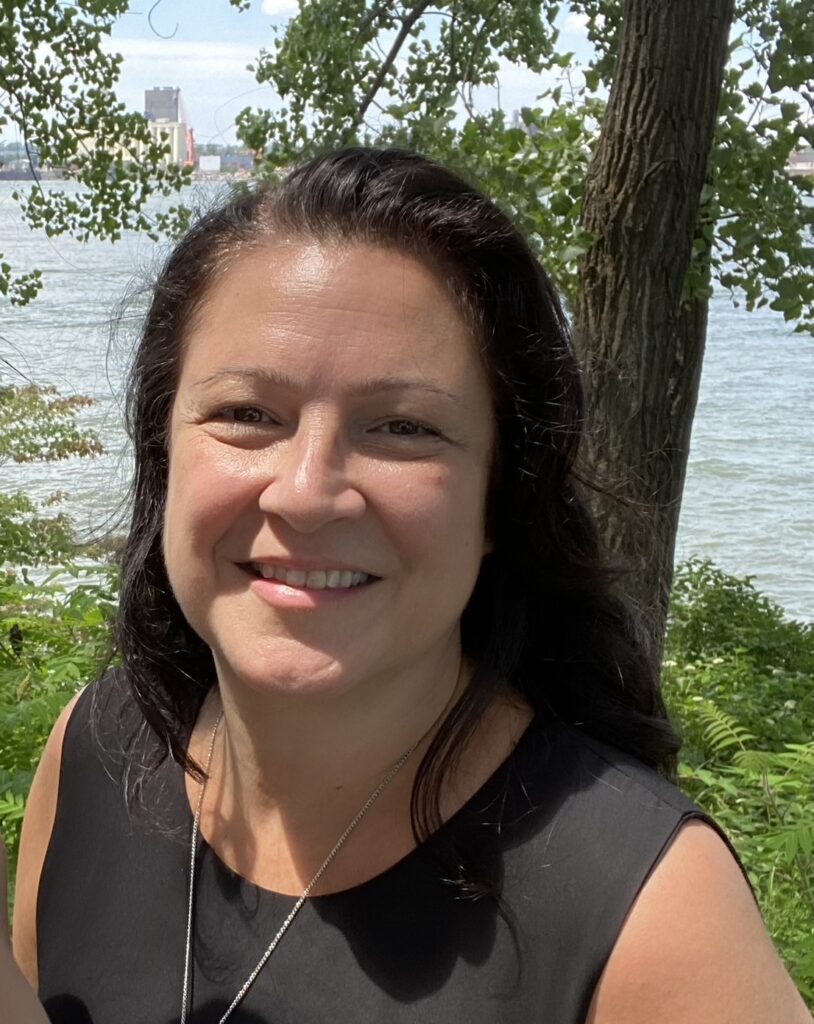
Annie Richard is one of the selected artists whose beadwork brings together nature, geometry, mathematics, and an incredible attention to detail.
Annie’s journey into beadwork began in 2019, when an idea she had carried for years suddenly found its solution. She had once imagined creating a gold artwork covered in something resembling magic dust and had tried gluing glass beads onto a canvas, but the beads fell off. Years later, she woke up with the idea of sewing them instead. She tested the technique, created her first work, and immediately knew she had found something that felt right.
Interestingly, beadwork had already been part of Annie’s world long before she began working with it herself. Her mother wore beads throughout her life, owned a large bead-embroidered belt, and had beadwork around her home. Annie only realised later how deeply those childhood experiences had influenced the aesthetic she was naturally drawn to as an artist.
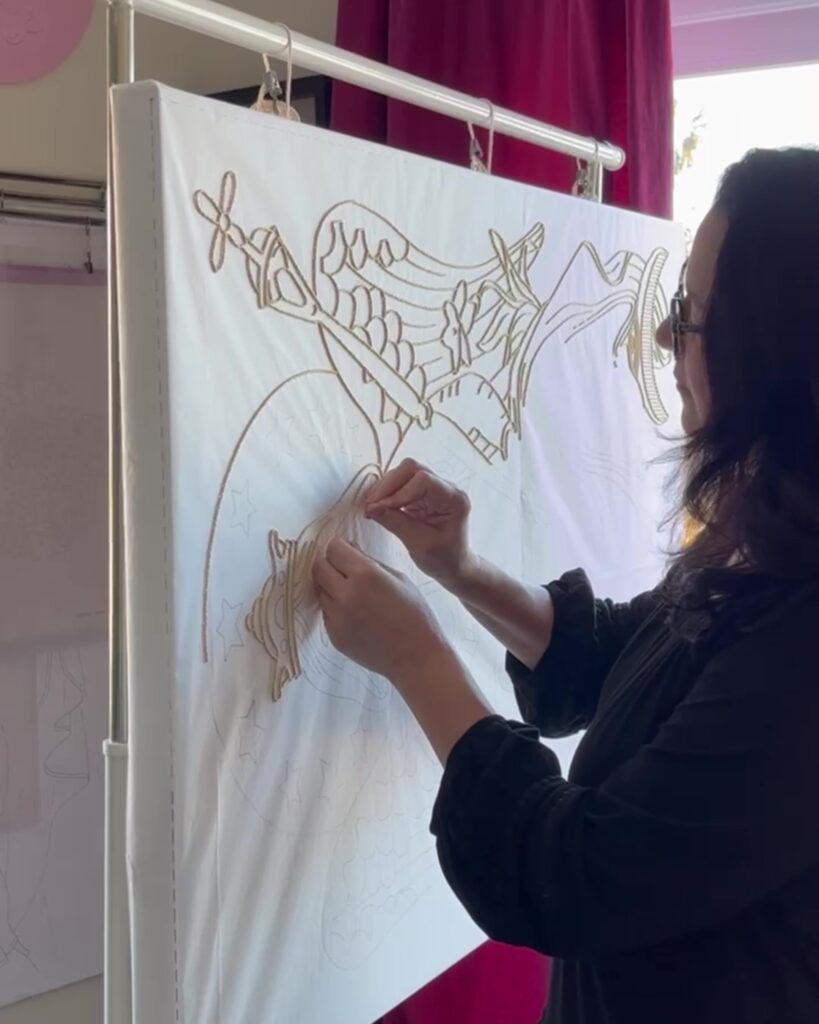
Today, Annie works with thousands of individual glass beads, building her compositions through a slow and highly detailed process. She enjoys the repetitive movement of sewing and the meditative space it creates, allowing her to work patiently on pieces that may take a great deal of time to complete. For Annie, the process itself is an important part of the artwork.
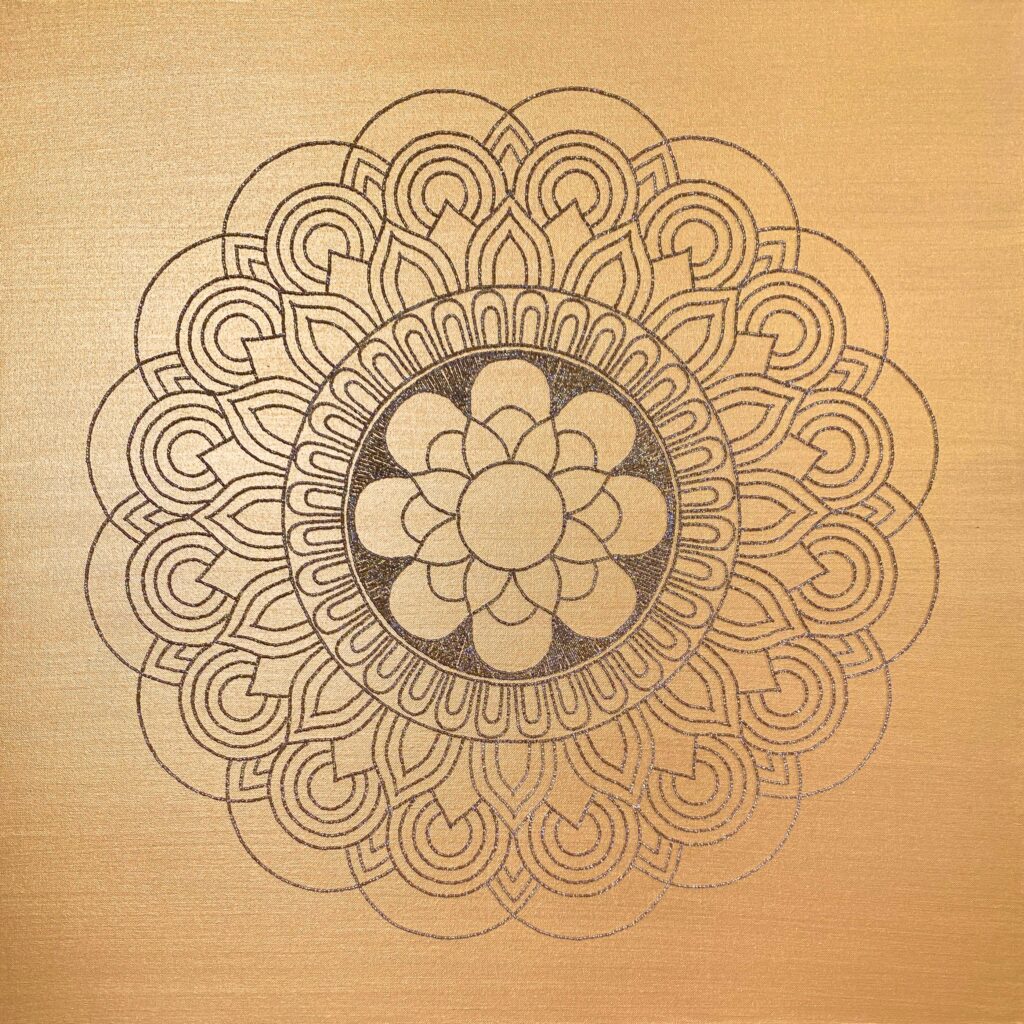
Geometry and mathematics also have an important place in her work. She is naturally drawn to circular forms and mandalas, finding something calming in their sense of order and balance. Her interest in mathematics comes from the same place, as she sees art and mathematics not as opposites, but as two different ways of understanding the world.
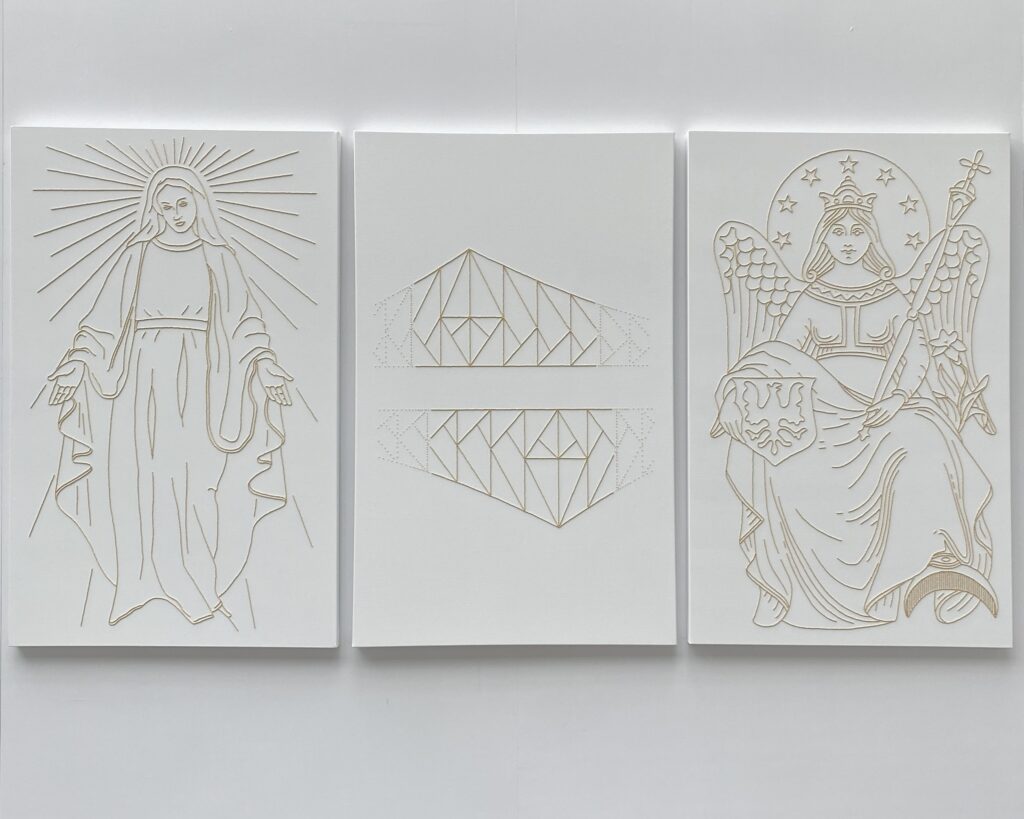
Triptych Bridge of my nightmares, 2024, 48×90, Bead embroidery and acrylic
There is also a balance between structure and experimentation in Annie’s practice. Her work is carefully planned and precise, but she has recently begun incorporating watercolor underneath her beadwork, bringing a more fluid and unpredictable element into the process. This has allowed her to reconnect with a medium she had used before and discover new possibilities within her beadwork.
Annie’s work also speaks to the changing place of textile and needle-based art within the contemporary art world. While bead embroidery has traditionally been viewed as craft, she sees her work as fine art because of the meaning, personal influences, and artistic sensibility contained within each piece. At the same time, she recognises the growing appreciation for textile practices and the craftsmanship involved in creating them.
Now, let’s get to know Annie Richard through our conversation about beadwork, mathematics, nature, patience, creativity, and the ideas behind her work.
Q1. Annie, can you take us back to the beginning and share how beadwork became part of your creative journey?
Short answer is : In 2019, I had an epiphany ! About two years before that, I had a vision in my mind of a gold art work with a kind of magic dust, to create a representation of the concept of magic. I tried to glue glass beads on the canvas, but I did not use the right glue and the beads fell off. At that time, my life was busy and so I did not test other glues, and just put the project aside. Fast forward to 2019, I woke up one morning and had the idea to sew the beads to make sure they stayed on.
I did a little test of my embroidery technique, and immediately after that, I created my first work. It was perfect and exactly as I had envisioned; I was hooked to bead embroidery. “It’s your mother” said a family friend I bumped into at an art event and to whom I was explaining what my art practice was. He made the connection instantaneously.
But it’s only a few years into my art practice that I realised that the aesthetic of bead embroidery was embedded in my soul from my childhood. My mother wore beads as jewelry all her life, she had a large bead embroidery belt and you could find bead embroidery and beadwork all around her home, for all her life.
Q2. Bead embroidery has traditionally been viewed as craft rather than fine art. What inspired you to embrace this medium as the primary language of your practice?
I just love everything about it, the process as much as the final result. I love the motion of sewing, the repetitiveness of it, the precision that my technique requires, the meditative space I find myself in, the soft tactility of the beads, the femininity and elegance of the final work, and the sense of wonder the beads evoke. There was no way I would stop. Additionally, I find it quite interesting that beads are among humanity’s oldest decorative artifacts, predating even agriculture. Beyond what draws me to it personally, I also think about its place in the art world. Personally, I think of my beadwork as fine art.
There is meaning embodied in it, and my personal sensibility is expressed through each work. Various influences through out my life are poured into their designs. And I think that there is a shift in this perception of bead embroidery viewed as craft, as textile art is making its way in the fine art world. I personally don’t care if my work is perceived as craft. It has been.
That said, I am aware that this limited perception may interfere with opportunities to bring my work to broader audiences, if the gatekeepers of the art world still adhere to this kind of segmentation.
Q3. You bring mathematics and art together in your work. What connection do you see between the two?
I think mathematics is magical ! Also, a big part of my practice is bringing opposites harmoniously together, a habit I also inherited from my childhood experiences. I am interested in science, mathematics, and also in art. For me, both sides of the spectrum bring valid interpretations of the meaning of reality. As I am getting older, I feel an urgency to apprehend the essence of my existence and the more points of view, the richer the understanding.
In my work, geometric figures are a direct and simple reference to my love of mathematics. Historically, there are a lot of artists who have tapped into the maths/science realm to nourish their practice. There are a few books about them, and about the intersection between the two worlds.
I cannot better express it than this following citation explaining the title of one of those books; Lumen Naturae, by Matilde Marcolli : “ … Lumen Naturea, …This nonsupernatural Enlightenment is what one may envision as a form of higher insight and awareness that emanates from poetry and art, or the contemplation of the beauty of abstract concepts.” Mathematics and art are not opposites. They are accomplices.
Karma, 2020, 30×30, Bead embroidery and acrylic
Q4. Mandalas appear throughout your work as more than decorative forms. What do they represent for you personally?
I’ve always been drawn to round shapes like the circular openings in the walls of Japanese gardens or the rose windows in old churches. There’s something about these forms that calms me, that feels reassuring, even before I could explain why. Over time, I came to understand what draws me to them: a simple complexity, an order that emerges out of chaos. That sense of calm and comfort is what I try to share through my work with circular design and mandalas.
Q5. Your process involves thousands of individual beads. What does that slow, repetitive rhythm gives you creatively?
This slow, repetitive process puts me in a sort of trance. It makes the process enjoyable, allows to me create without being limited by the scope of the project. It allows me to focus on the anticipation of the joy I’ll feel when I finally see the final result. My work is created with intention, and with dedication. It’s a long journey toward the finished work.
It allows me to create what I see in my mind, even if it’s a complex and long project. I am not deterred by it. I show up, I do a little bit at the time. This kind of patience is not something I experience in all aspects of my life. But for my artwork, it is endless, and it gives me the opportunity to do extensive projects because I enjoy the process. My creativity is not restrained.
Q6. You’ve recently introduced watercolor beneath your beadwork. How has this added a new element of unpredictability?
I must admit that my beading technique doesn’t allow a lot of free flowing creativity. The creativity is involved before I start to sew. Abstract art is more associated with emotions than figurative work. It is generally accepted as being a truer reflection of the unconscious part of ourselves. I am more drawn to order and I think the calmness and security that the sense of order provides are as valid emotions as any other.
Furthermore, I created a lot of my works under time constraints, to be ready for art fairs. Consequently I did not have the latitude to risk experimenting, as I needed to get the work done on time. But now that I have taken time off from art fairs, I have incorporated watercolor onto my canvases, underneath my beadwork.
It was a project I had in mind since I started my beading practice. Watercolor on paper was my medium of expression before. The fluidity of this material surely adds unpredictability and leads to discoveries. So, yes, watercolor led my artwork in happily unforeseen directions.
Q7. Textile art is gaining more recognition today. Why do you think people are reconnecting with handmade work?
Yes, as textile art is more and more celebrated. The amount of time required is certainly intriguing to people, and it is the most frequent question I am asked when presenting my work at art fairs : How long did it take you? As for the craftsmanship involved, it is certainly recognised by the broader and growing “needle community”.
I think the pandemic gave a lot of people time and learning opportunities to try time consuming activities and thus, sparked a comeback of these more traditional handmade works. If you create work with a needle yourself, you understand better what it involves.
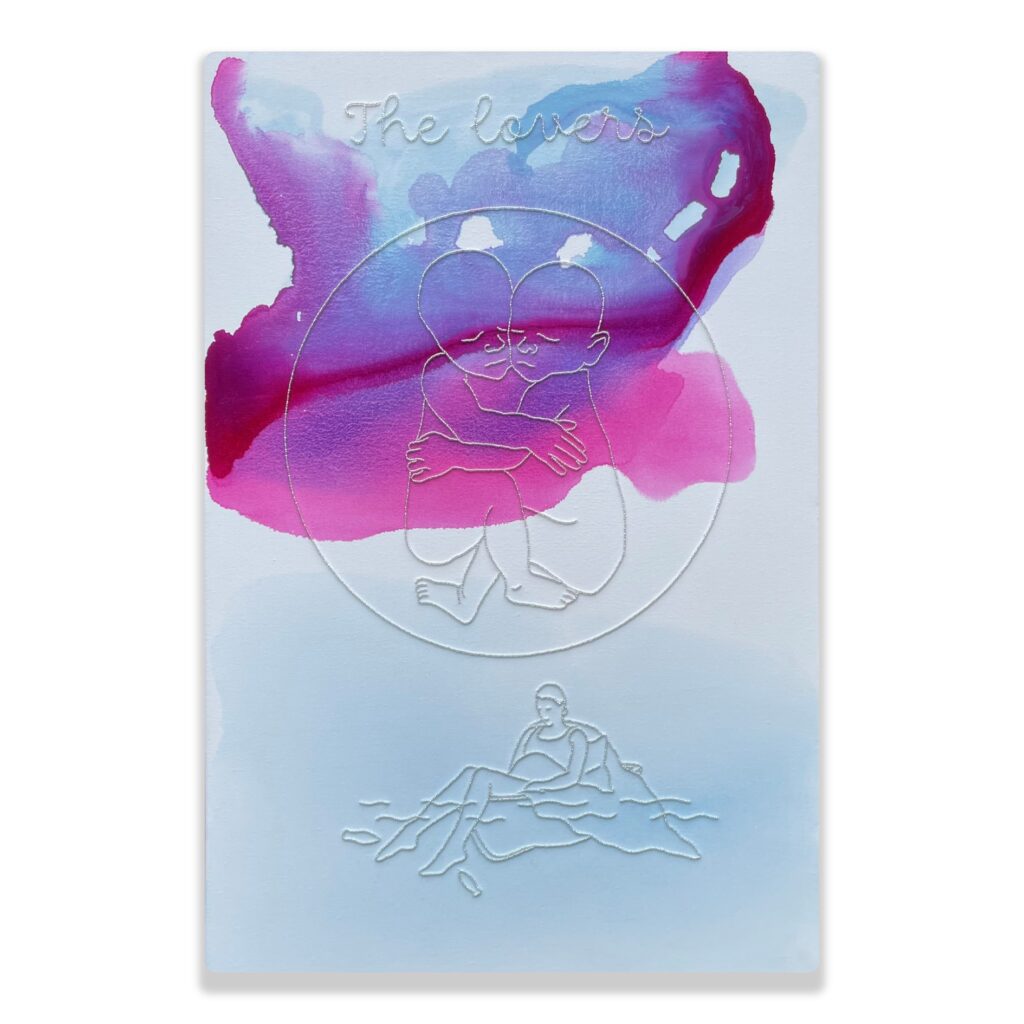
The lovers,2024, 36×24, Bead embroidery and acrylic
Q8. Your process begins analytically but becomes intuitive during the design stage. How do those two sides work together?
That’s hard to say precisely. If anything has changed, it’s that I now understand why I work this way. Otherwise, it has always been both. It usually starts analytical. I sit with a question I’m trying to work through until the concept is clear in my mind. Once I move to the actual design, however, the process becomes intuitive.
My compositions are built almost exclusively with lines, a choice that also traces back to childhood. I grew up with a copy of La Fontaine’s Fables, illustrated by Gustave Doré, and I’d spend hours studying those images, struck by how line alone could render such weight and materiality. My work definitely has an aesthetic that leans more toward drawing than painting.
Q9. Do you see your work as inviting contemplation, meditation, or simply a different way of looking at the world?
Absolutely all of it ! I often sit and just stare at one of my works for long minutes, gliding my eyes over the lines and motifs. Circular forms, mandalas especially, have long been used as tools for meditation and I think that function is present in my work too, whether the viewer is consciously aware of it or not.
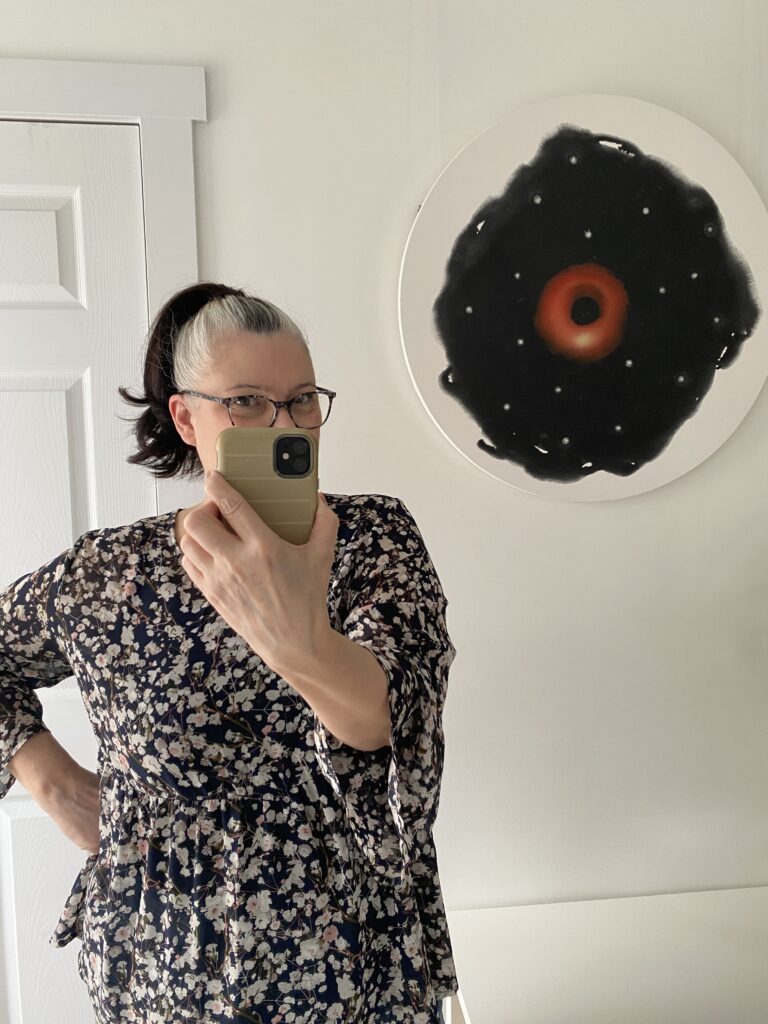
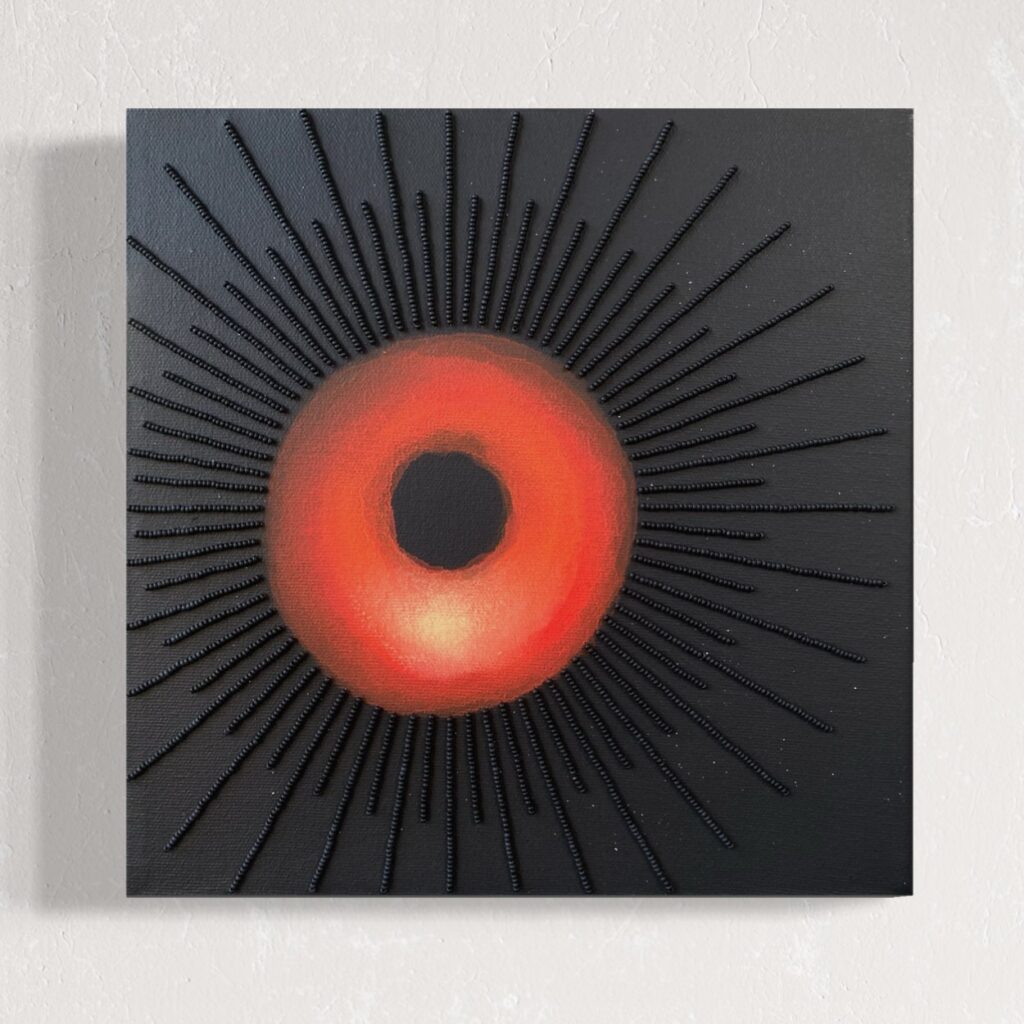
My most recent series about black holes is an invitation to zoom out from our daily troubles and realize that we are on a ball floating through empty space, that the universe is mysterious, and that we will possibly never fully understand it. But that it is an amazing thought ! Mystery delights me. And the beads, as always, represent the magic and the mystery that is out of our reach.
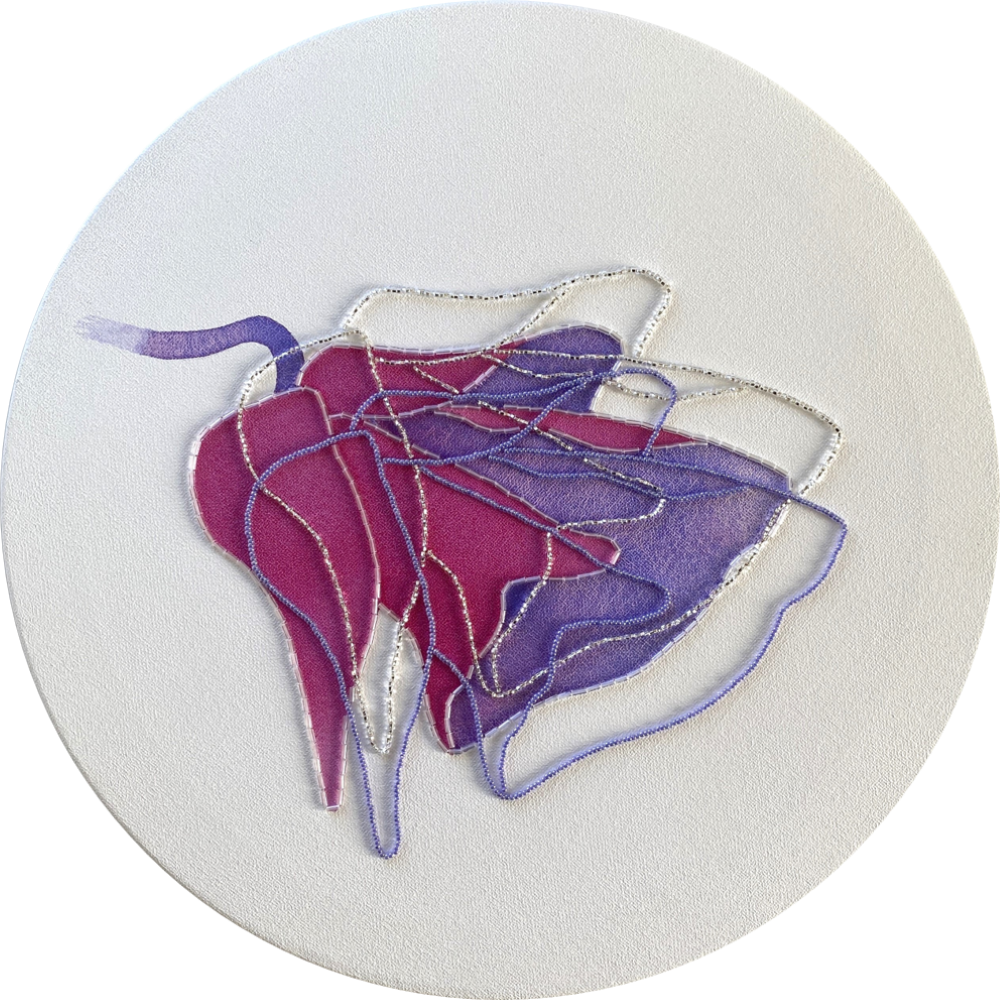
New wave bloom, 2024, 13 diameter, Bead embroidery and acrylic
Q10. What does success mean to you at this stage of your creative journey?
First, it is when my finished work is like I imagined it. And also, when it touches viewers, and my fellow artists. I have already experienced those forms of success. What still evades me is the ability to make a living from my art practice. This will be the ultimate success for me: spending most of my time doing what I love. Everything else is exactly what you said; milestones towards that ultimate success.
Q11. If you could speak to the artist, you were at the very beginning of your journey, what would you tell her to worry less about?
I’d tell her to stop worrying about what other people think her success should look like. Along the way, people close to me, and even other artists I met at art fairs, hinted that something must be wrong with my work just because I hadn’t made big sales yet. That still hurts, being misunderstood and judged like that. But I know the work is not the problem, and that it could be attributed to many factors. So I’d tell her: don’t try to please everyone, and trust that you’ll find your people eventually.
Black Hole A, 2025, 10×10, Bead embroidery and acrylic
As our conversation drew to a close, we found ourselves thinking about how much meaning can grow from something so small. A single bead may seem insignificant on its own, but thousands of them, placed patiently together, can become something that holds memory, mathematics, beauty, and a very personal way of seeing.
There is something special about the amount of time Annie gives to her work. In a world where so much happens quickly, her process asks for the opposite. One bead, one stitch, one small section at a time. The finished work carries all of that time within it, even if we don’t immediately see how much went into making it.
Her work also sits within an interesting moment in the art world, where textile and needle-based practices are increasingly being recognised beyond their traditional association with craft. Annie’s perspective makes that conversation even more interesting because she isn’t trying to separate craftsmanship from fine art. For her, the meaning, intention, and personal history within the work are what matter.
There is also something lovely about the way mathematics and beauty meet in her work. The geometric forms and mandalas bring structure and order, while the thousands of individual beads give the pieces warmth, texture, and a sense of wonder. What looks incredibly precise from a distance becomes even more fascinating when you move closer and begin to notice the individual details.
For artists, collectors, and anyone who spends time with handmade work, Annie’s practice opens up a wider appreciation for the things that take time to make. Her work shows how patience can become part of an artwork’s character, and how a familiar material can become something entirely personal when an artist finds their own way of working with it.
And perhaps that is what makes her work so satisfying to spend time with. The longer you look, the more you find.
Follow Annie Richard through the links below and explore more of her intricate beadwork and artistic journey.