
How Mairéad Robb Turns Nature into Art About Memory and Healing
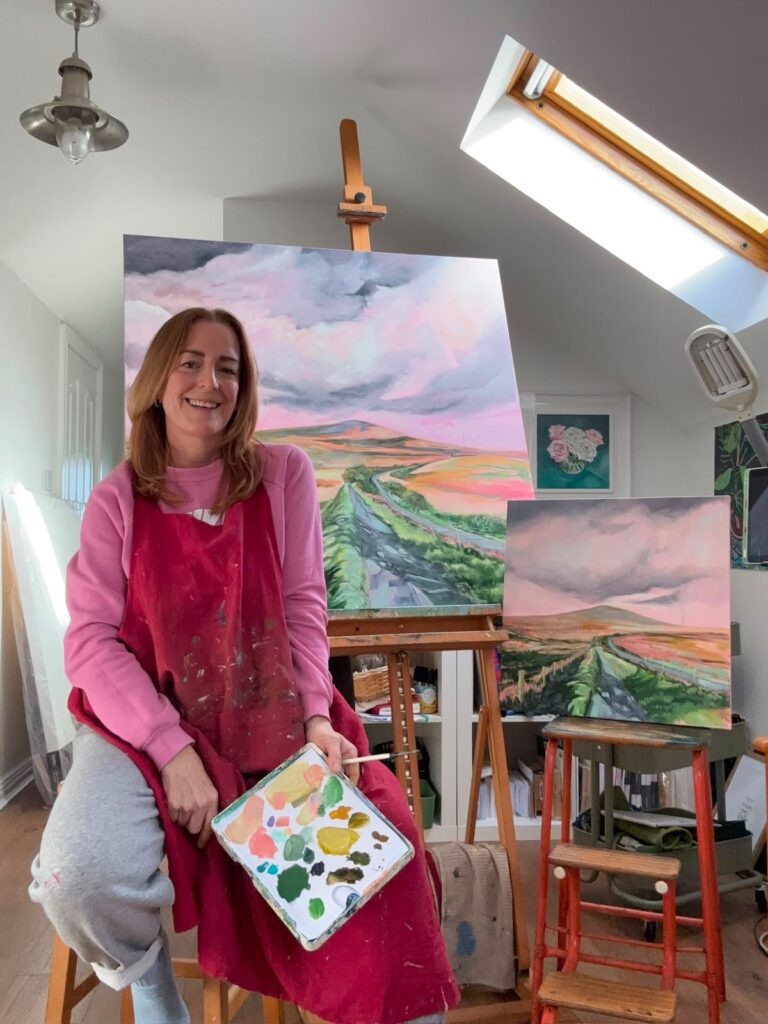
At Women in Arts Network, Spring Through My Eyes gave us the chance to meet artists who each see the season in their own way. For some, spring is about flowers and new growth. For others, it is about colour, memories, light, or simply the feeling of being outdoors again.
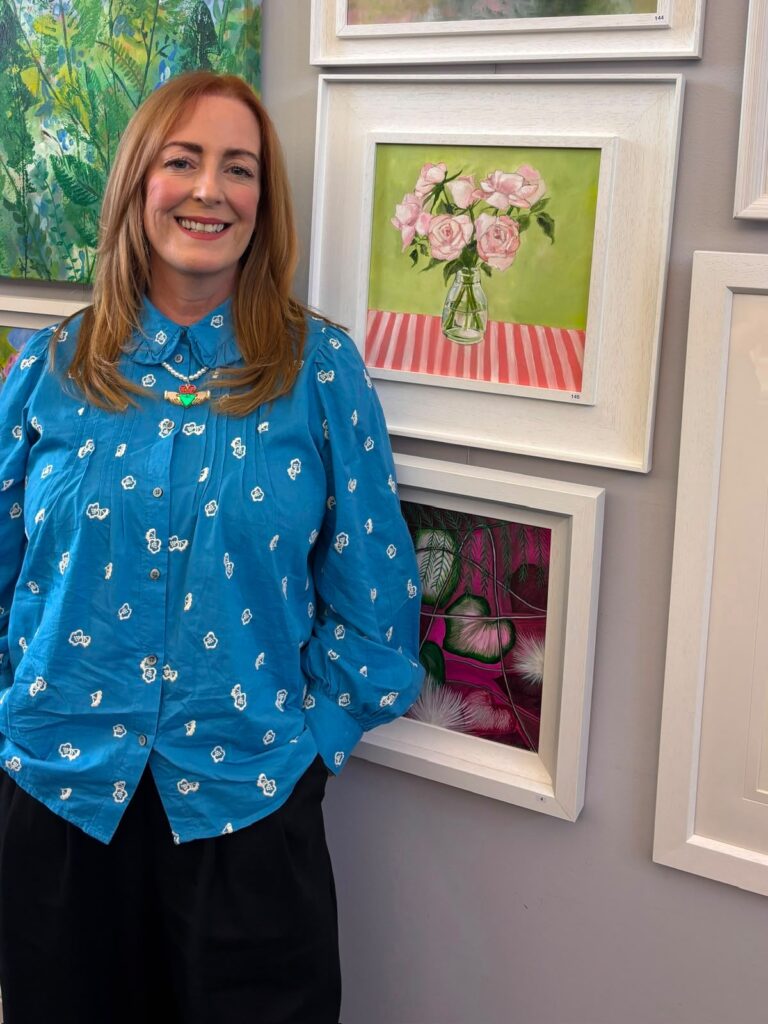
Mairéad Robb is one of the selected artists whose work comes from a very personal relationship with nature, turning the small details she notices around her into paintings filled with colour and feeling.
Mairéad’s connection with nature goes back to childhood. Growing up in Belfast during the Troubles, art became a place where she could escape and create a world filled with beauty and imagination. Time spent with her family in parks and across the Irish landscape gave her another kind of escape.
The green hills, beaches, forests, and wild spaces became places where she could feel free, safe, and connected. Those memories have stayed with her and continue to find their way into her work.
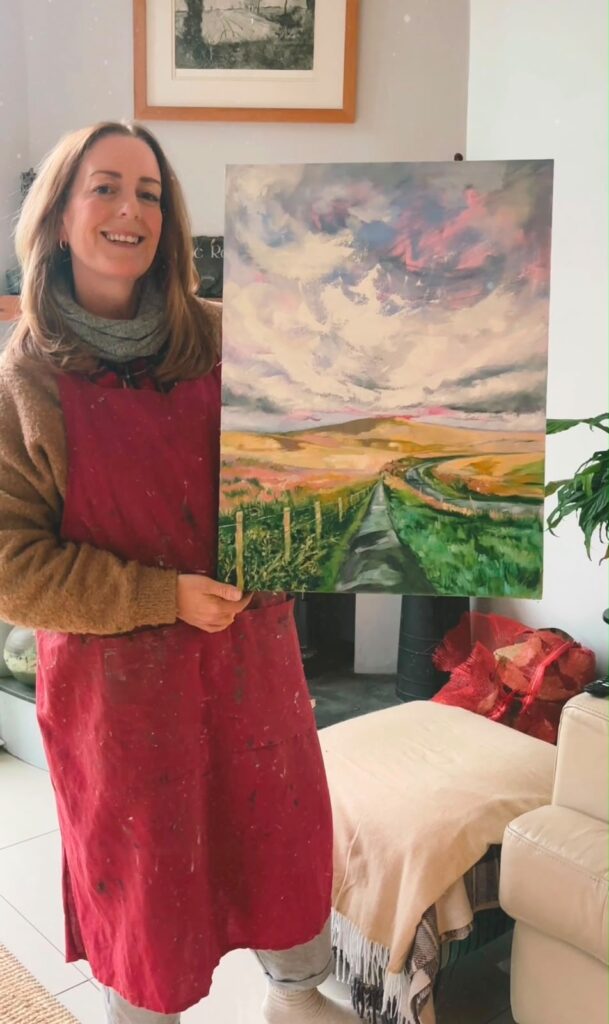
Today, Mairéad is drawn to the things we often walk past without really seeing. A leaf, moss changing colour, wildflowers growing through a crack, or sunlight falling through the trees can be enough to make her stop and look. She believes we often miss the beauty around us simply because we are moving too quickly, and her paintings encourage us to slow down and notice it.
That sense of looking closely is at the heart of her work. She pays attention to the colours, textures, and patterns of plants and landscapes, but she is also interested in the feelings they bring back. A flower can remind her of a place, a landscape can carry a memory, and a familiar plant can open the door to a whole world of imagination. Her paintings sit somewhere between what she sees and what she feels.
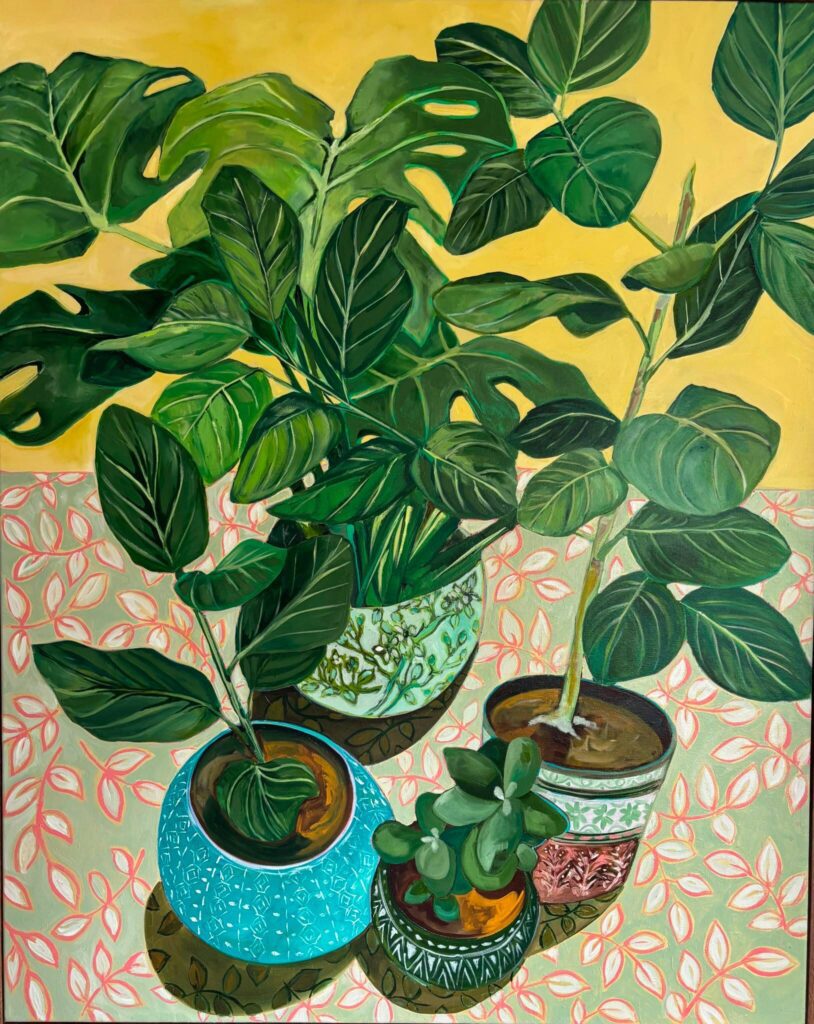
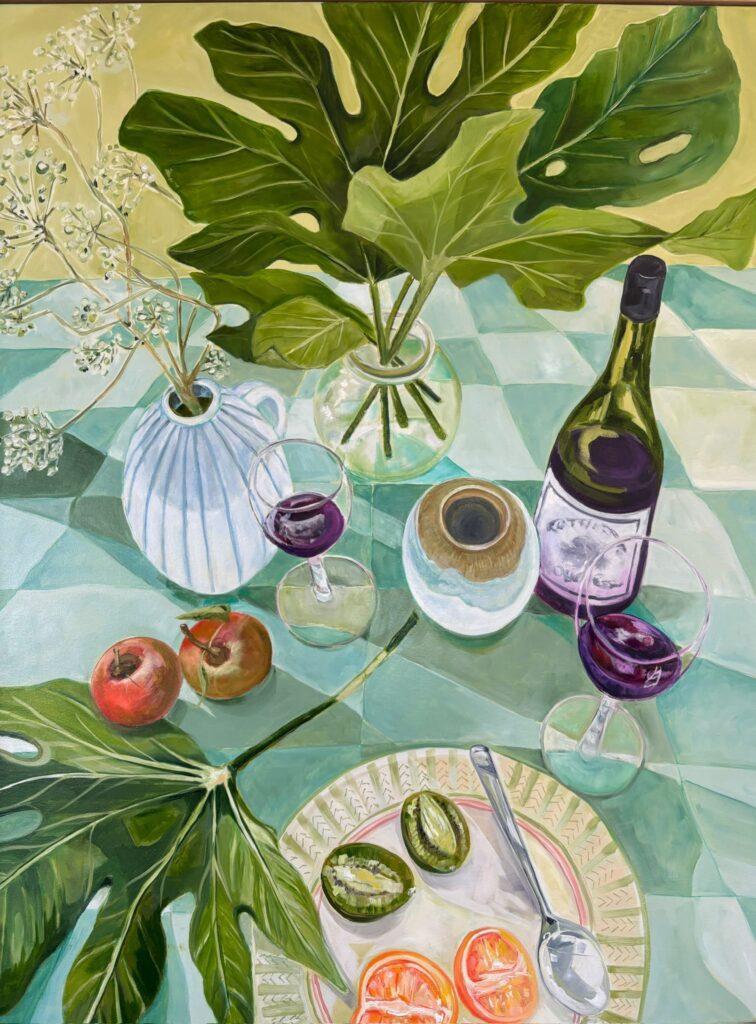
And then there is colour. Mairéad loves it, and it is impossible to miss that joy in her paintings. She uses vibrant colour to bring energy and warmth into her work, celebrating the vitality she finds in nature while creating paintings that can bring that same feeling into the spaces where they live.
For Mairéad, flowers and landscapes are never simply things to paint. They are connected to memory, emotion, identity, and the feeling of being at home in the natural world. Her work asks us to pause for a moment and notice what might already be right in front of us.
Now, let’s get to know Mairéad Robb through our conversation about nature, colour, memory, and finding beauty in the everyday.
Q1. Mairéad, can you tell us how your journey as an artist began and how nature became part of it?
My journey as an artist began at a very young age. Art became my sanctuary and a form of escapism. Growing up in Belfast during the 1970s and 1980s, at the height of the Troubles, was incredibly difficult. The violence and uncertainty had a profound impact on my childhood. Through art, I could step into a world of my own, making a place where beauty, imagination, and hope existed beyond the reality around me.
My mum recognised how important this was. She would often take my sister and me to our local park, where, even for a little while, we could find peace and beauty amidst the chaos. Those moments in nature became deeply restorative and taught me that the natural world could offer comfort, healing, and a sense of belonging. Every summer, despite having very little, my mum would save throughout the year to take us away from Belfast. Those holidays felt like a different universe. The endless rolling green hills of Ireland, its sandy beaches, forests, and wild landscapes gave us a chance to breathe. They were places of safety, freedom, and wonder.
My granny was from County Mayo, in Ireland’s beautiful Gaeltacht, so I think my connection to the Irish language and landscape has always been part of who I am. Those early experiences planted the seeds for what would later become the heart of my artistic practice. Today, nature is not simply the subject of my work, it is a place of memory, resilience, healing, and home. It continues to inspire me, just as it did when I was a child seeking refuge in its beauty.
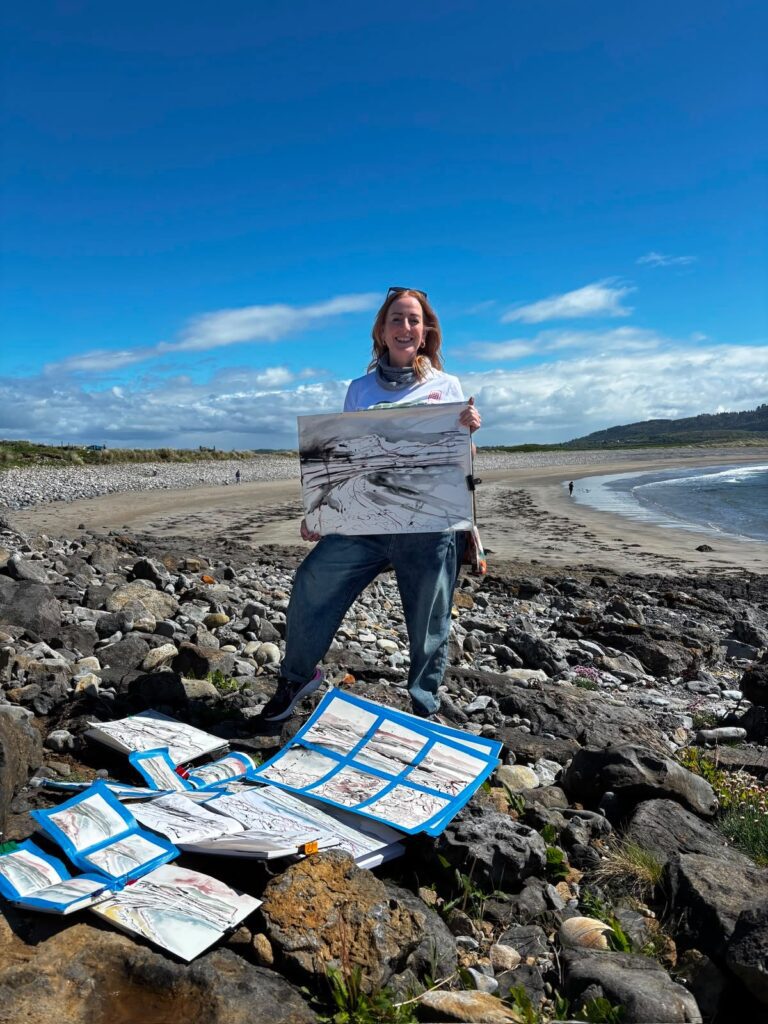
Q2. Your work finds beauty in everyday elements of nature. What draws you to these familiar subjects?
My art teachers always taught me to never stop looking. That simple piece of advice has stayed with me throughout my life and continues to shape how I see the world. I think we often rush past the small things in nature without really noticing them, the delicate structure of a leaf, the changing colours of moss, wildflowers growing through a crack in the pavement, or the light filtering through trees.
These everyday moments hold extraordinary beauty if we take the time to pause and really observe them. For me, painting is an invitation to slow down. I want people to experience that same sense of wonder and appreciation that I feel when I’m out walking in nature.
The natural world has always been a place of healing and reflection for me, and through my work I hope to encourage others to reconnect with it. There is something incredibly powerful about finding beauty in what is familiar. It reminds us that we don’t always have to search for extraordinary places, the extraordinary is often right in front of us, quietly waiting to be seen.
Q3. When exploring a landscape or studying a flower, what details capture your attention first colour, texture, light, or something else?
The first thing that captures my attention is always the way colour changes with the light. The same landscape or flower can look completely different depending on the time of day, the weather, or the season. Those subtle shifts fascinate me and often inspire an entire painting. I’m also drawn to texture and pattern.
Nature is full of intricate details, the veins of a leaf, the roughness of bark, the delicate petals of a flower, or the rhythm created by grasses moving in the wind. These patterns tell their own stories and reveal the incredible complexity of the natural world. Beyond that, there’s something less tangible that I respond to, the feeling a place gives me.
Sometimes it’s a sense of peace, sometimes nostalgia or awe. I try to capture not just what I see, but what I experience emotionally. My hope is that viewers feel that connection too and are encouraged to pause and really look at the beauty that surrounds them.
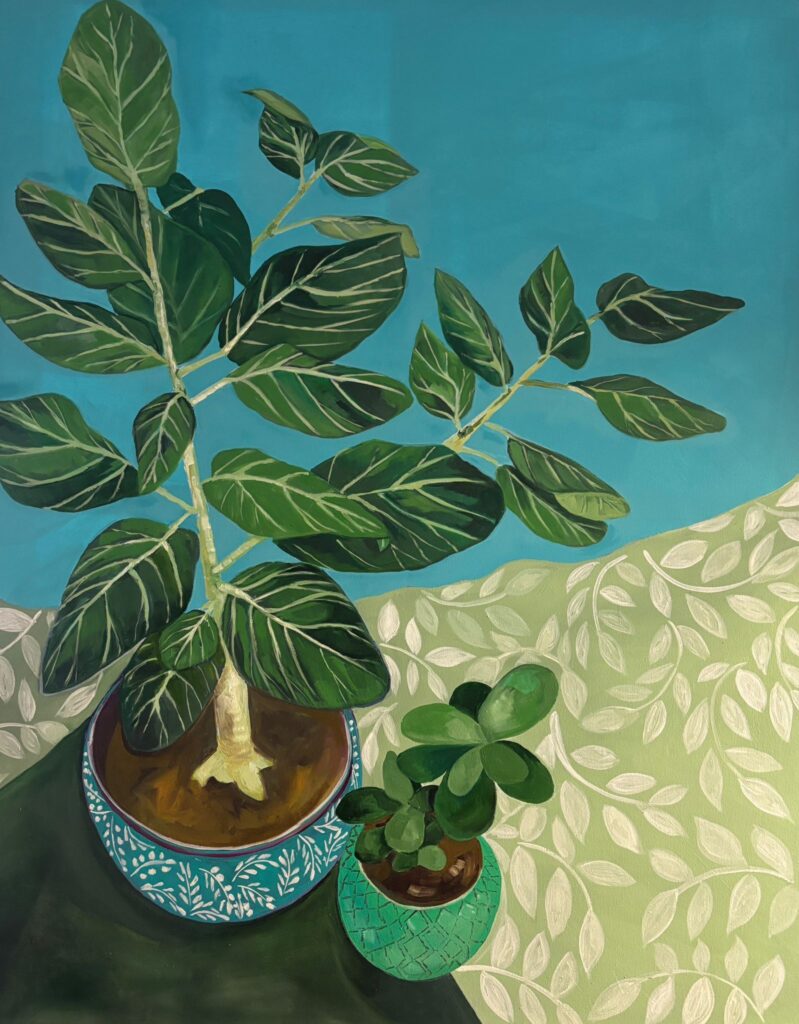
Q4. How do you decide what to keep realistic and what to interpret in your botanical work?
As a child, I was captivated by the paintings of Henri Rousseau. His lush, dreamlike jungles fascinated me, and I would often visit the Botanic Gardens in Belfast, imagining they were filled with wild animals and exotic creatures. It was another form of escapism, a place where my imagination could roam freely, away from the realities of growing up during the Troubles. As I grew older, those visits continued with friends, and that sense of wonder gradually became part of my artistic practice.
While I carefully observe the plants I paint, I’m equally interested in capturing the memories, emotions, and imagination they evoke. I’ve also become fascinated by our relationship with plants and our desire to bring nature indoors through houseplants. I love the idea that a simple plant can transform a space, creating a connection with the natural world even within our homes.
My work begins with close observation, but I don’t aim for scientific accuracy alone. Instead, I want to create a sense of atmosphere and invite viewers into a world where memory, imagination, and nature exist together. In many ways, I’m still that child wandering through the Botanic Gardens, seeing something magical beyond what is physically there.
Q5. Your work is bright, uplifting, and full of life. What role does colour play in creating this atmosphere?
Colour is at the heart of everything I create. I’ve always loved colour and often think what a boring world it would be without it. It has the power to lift our mood, spark memories, and completely change the atmosphere of a space. In my own home, I tend to keep the walls calm and neutral because they become a blank canvas.
That allows me to introduce large statement artworks filled with vibrant colour, creating energy while still maintaining a sense of balance. I think colour should enhance a space rather than overwhelm it. That’s very much how I approach my paintings. I use colour to express the joy, vitality, and beauty I experience in nature.
Even when I’m painting something familiar, I want the colours to evoke a positive emotional response and encourage people to see the natural world with fresh eyes. For me, colour isn’t just decorative, it’s a way of bringing life, warmth, and balance into both a painting and the spaces we live in.
Q6. Flowers have inspired artists for centuries. What continues to make them a meaningful subject for you today?
Flowers continue to inspire me because they represent so many aspects of life, they are beautiful yet fragile, constantly changing with the seasons, and deeply connected to our memories and emotions. A particularly significant influence on my work was the exhibition I See His Blood Upon the Rose at The MAC Belfast, which was inspired by the poem of the same name by Joseph Mary Plunkett.
The exhibition explored the relationship between nature, spirituality, memory, and Irish identity, and it really resonated with me. It reminded me that flowers are far more than decorative objects, they can carry stories, symbolism, and powerful emotional meaning. When I paint flowers, I’m interested in more than simply capturing their appearance.
I want to celebrate their colour, structure, and vitality, while also expressing the feelings they evoke. They encourage us to slow down, observe closely, and appreciate the beauty that exists in everyday life. For me, flowers are a reminder that even the simplest things in nature can hold extraordinary significance, and that is something I hope people feel when they experience my work.
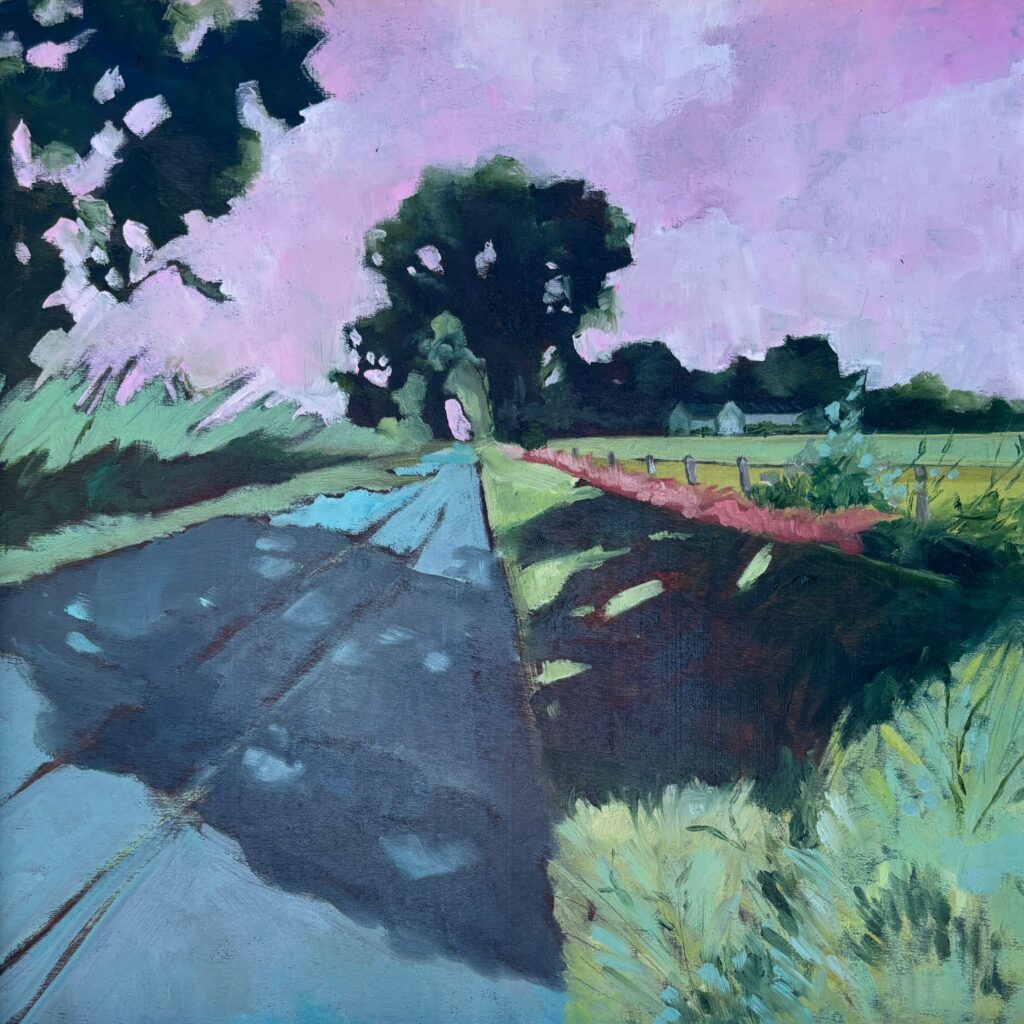
Q7. In a world dominated by screens, why do you think nature-based art continues to resonate so deeply?
The COVID pandemic reminded us just how much we need a connection with the natural world. For so long, our lives were confined to screens, and many of us realised that what we missed most was human contact and the simple pleasure of being outdoors, feeling the earth beneath our feet, breathing fresh air, and reconnecting with nature. I think that experience made many people appreciate the importance of slowing down and noticing the world around them again.
Nature has an incredible ability to restore us, offering moments of peace, reflection, and hope that are difficult to find in our increasingly digital lives. I hope my work encourages people to pause, look more closely, and reconnect, not only with nature but also with themselves and with one another. We are part of nature, not separate from it, and I believe we all have a responsibility to nurture and contribute to the world we share. Nature-based art resonates because it reminds us of something we instinctively know: that we need beauty, connection, and the living world to truly thrive.
Q8. Why do you think people feel such a strong emotional connection to flowers and natural landscapes?
I don’t think people always need to explain that connection. Sometimes it’s enough just to experience it. Flowers and natural landscapes have a unique ability to bring us joy, calm our minds, and create a sense of peace. They invite us to slow down, to be present, and simply enjoy the moment. That emotional response doesn’t need words, it is something we feel instinctively. For me, that’s one of the wonderful things about art. I don’t expect everyone to see the same thing in my paintings.
If someone pauses, smiles, feels a sense of comfort, or is reminded of a special place or memory, then the painting has done its job. I hope my work creates a space where people can simply enjoy the beauty of nature and reconnect with the joy it brings, without feeling the need to analyse or explain why. Sometimes the most meaningful experiences are the ones we simply allow ourselves to feel.
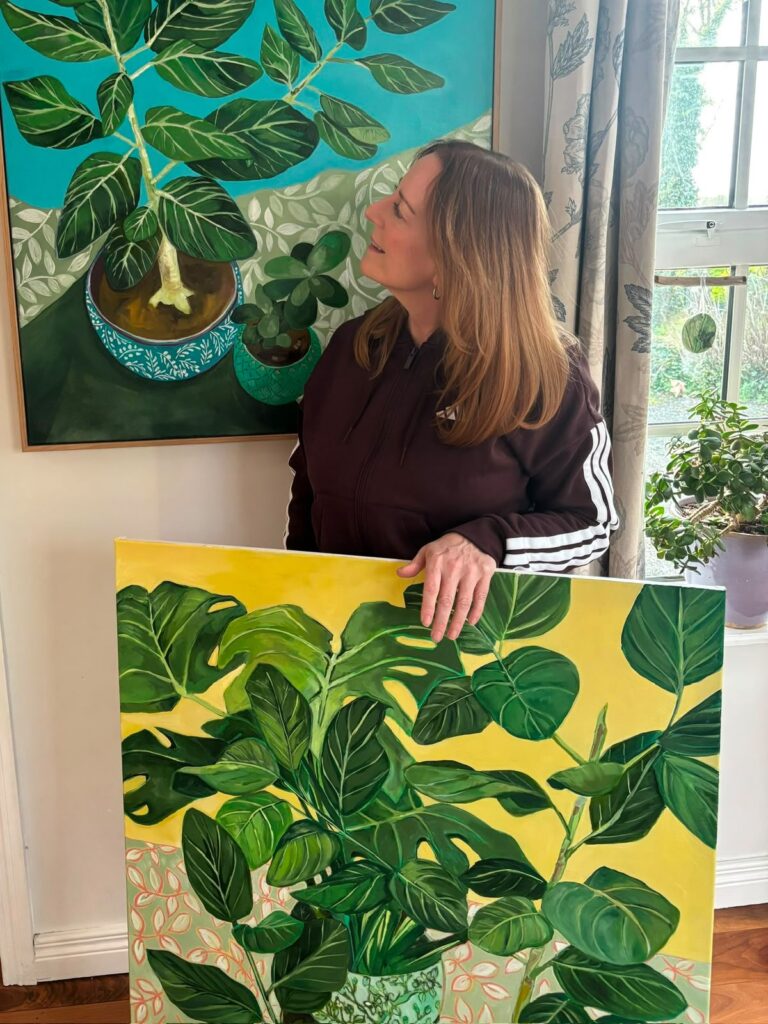
Q9. Has social media changed the way you connect with your audience and share your work?
Social media has definitely made it easier to connect with people who love my work, wherever they are in the world. It’s wonderful to be able to share my creative process, exhibitions, and new paintings with such a wide audience, and I’ve met many lovely people through it. That said, I try very hard not to get caught up in the numbers, the likes, views, or followers.
They can be encouraging, but they don’t define the value of the work or why I create. For me, the real connection happens when someone tells me that a painting has reminded them of a special place, brought them a sense of calm, or simply made them smile. Those genuine conversations mean far more than any algorithm. At its best, social media is a way of bringing people together through a shared appreciation of nature and art, and that’s what I try to focus on.
Q10. Has your definition of success changed since you first started sharing your work publicly?
Absolutely. When I first started sharing my work, I think I measured success in the ways many artists do, gallery sales, recognition, or whether people liked what I created. But over time I’ve realised that success means something much deeper. Is it money? Is it likes on social media? Is it selling a painting through a gallery? Those things can be rewarding, but they aren’t what truly define success for me. The greatest success is knowing that my art has brought joy to someone else.
When someone connects with a painting, smiles because of it, or tells me it reminds them of a cherished memory or a place they love, that’s what matters most. Art has the power to make people feel something, to brighten a home, to start conversations, and to create moments of happiness. When that happens, everyone involved, the collector, the viewer, and me as the artist, shares in that joy. For me, that’s the real measure of success.
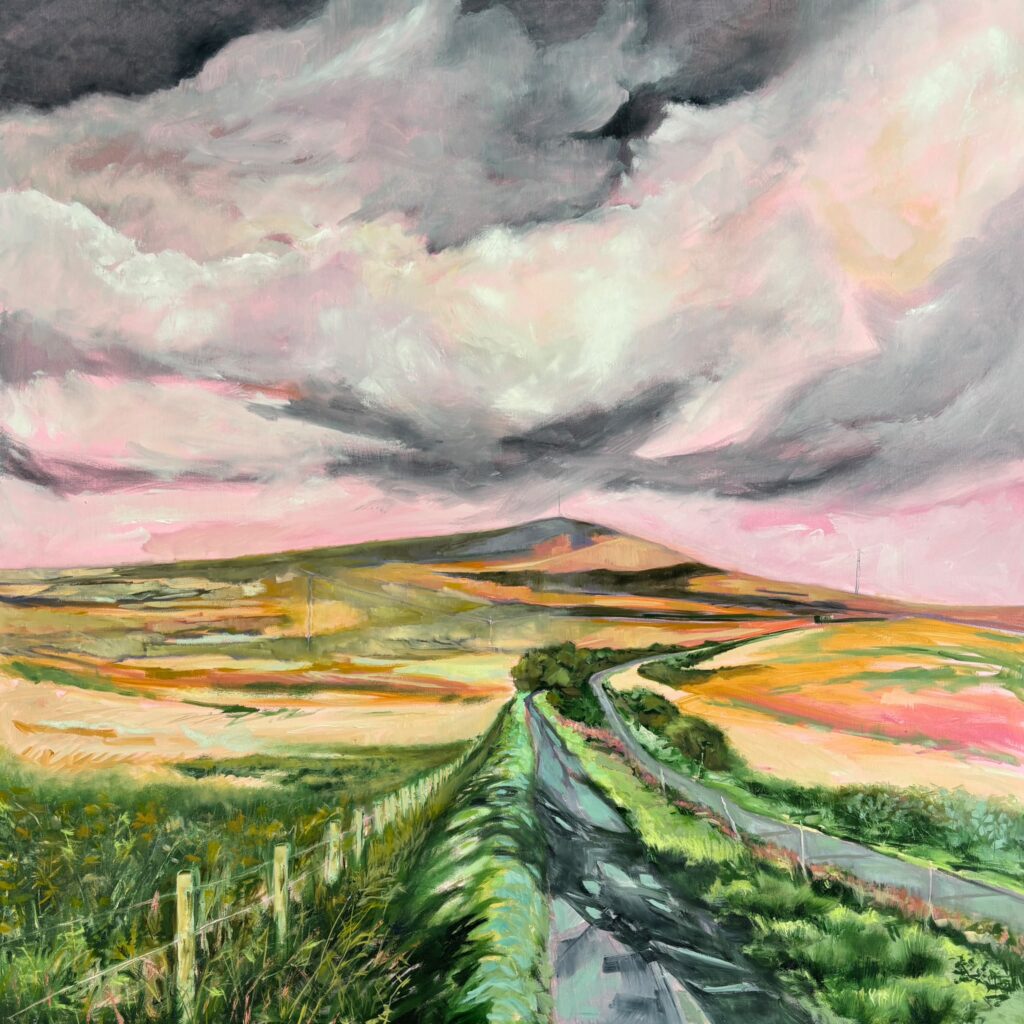
Q11. Looking back, what would surprise your younger self most about your creative journey today?
I think what would surprise my younger self most is how much less I worry about what other people think. That’s one of the gifts that comes with age and experience. When you’re starting out, it’s easy to seek approval, to wonder if people will like your work, whether it will sell, or if you’re good enough. Over the years, I’ve become much more confident in my own voice and my own ideas.
Of course, it’s always wonderful when someone connects with a painting or chooses to take it home, but the first question I ask myself now is, Do I like it? If the answer is yes, then I’ve stayed true to myself as an artist. I’ve learned to trust my instincts and create the work that feels honest to me. Ironically, I think that’s when people connect with it the most. Authenticity is something you can’t force, it comes from having the confidence to create from the heart.
Q12. What advice would you give artists who are still searching for their own creative voice?
Don’t rush it. Your creative voice isn’t something you find overnight, it’s something that grows with you through experience, curiosity, and making lots of art. Look at the work of artists you admire, but don’t compare yourself to them. Learn from them, then allow yourself the freedom to discover what excites you and what feels authentic.
Most importantly, create work that you love, not what you think other people want to see. Trends come and go, but authenticity lasts. Don’t be afraid to make mistakes or change direction. Every painting, whether it’s successful or not, teaches you something. I truly believe your own voice emerges when you stop trying to please everyone else and start trusting yourself. As I’ve grown older, I’ve realised that confidence comes from creating honestly. If your work brings you joy and feels true to who you are, you’re already on the right path. Everything else will follow.
As we wrapped up our conversation with Mairéad, we found ourselves thinking about how easily we can move through the world without really seeing it. We see the trees, flowers, changing seasons, and landscapes around us every day, but it takes a certain kind of attention to stop and notice what is actually there.
That attention is such an important part of Mairéad’s work. She doesn’t need to look for something extraordinary to paint. A leaf changing colour, moss growing quietly, wildflowers appearing where we least expect them, or sunlight moving through the trees can all become enough to spark an idea. Her paintings come from that simple act of looking a little longer.
There is also something very personal in the way she connects nature with memory. The landscapes she remembers from childhood aren’t simply beautiful places in her story. They are connected to freedom, comfort, imagination, and a sense of home.
That gives the natural elements in her paintings another layer, because they carry both what she sees and what those things mean to her.
And perhaps that is why her work feels so uplifting. The colour, flowers, and landscapes aren’t there simply to make a painting beautiful. They bring forward a feeling a reminder that there is still so much around us that can make us pause, feel something, and reconnect with the world outside ourselves.
In a time when so much of our attention is pulled towards screens and constant movement, that kind of pause feels increasingly valuable. Mairéad’s paintings give us a reason to look again at things we might otherwise walk past, and sometimes that is all it takes to make an ordinary moment feel a little less ordinary.
Follow Mairéad Robb through the links below and explore more of her vibrant, nature-inspired work.
