
This Artist paints analogue TV texture directly into oil paintings ┃Heidi Weiss
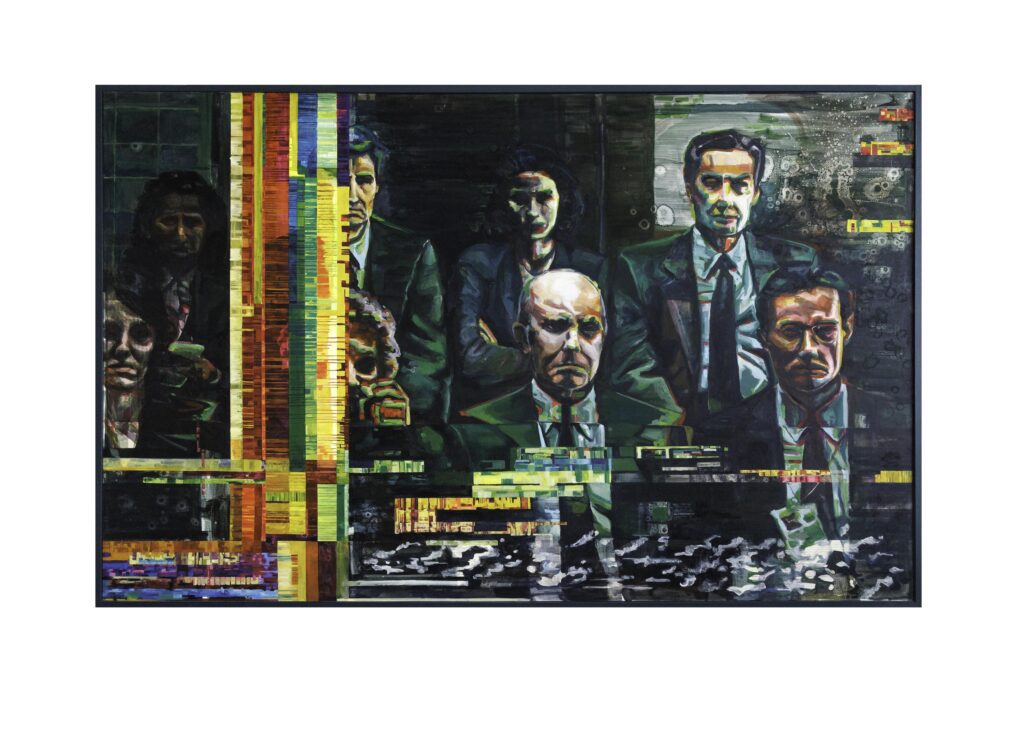
At Women in Arts Network, we’ve seen every kind of face in this exhibition. Painted from life, painted from memory, painted from imagination, painted from loss. And then Heidi Weiss sent us faces painted from paused television and made us realise we’d been thinking about portraiture too narrowly the entire time.
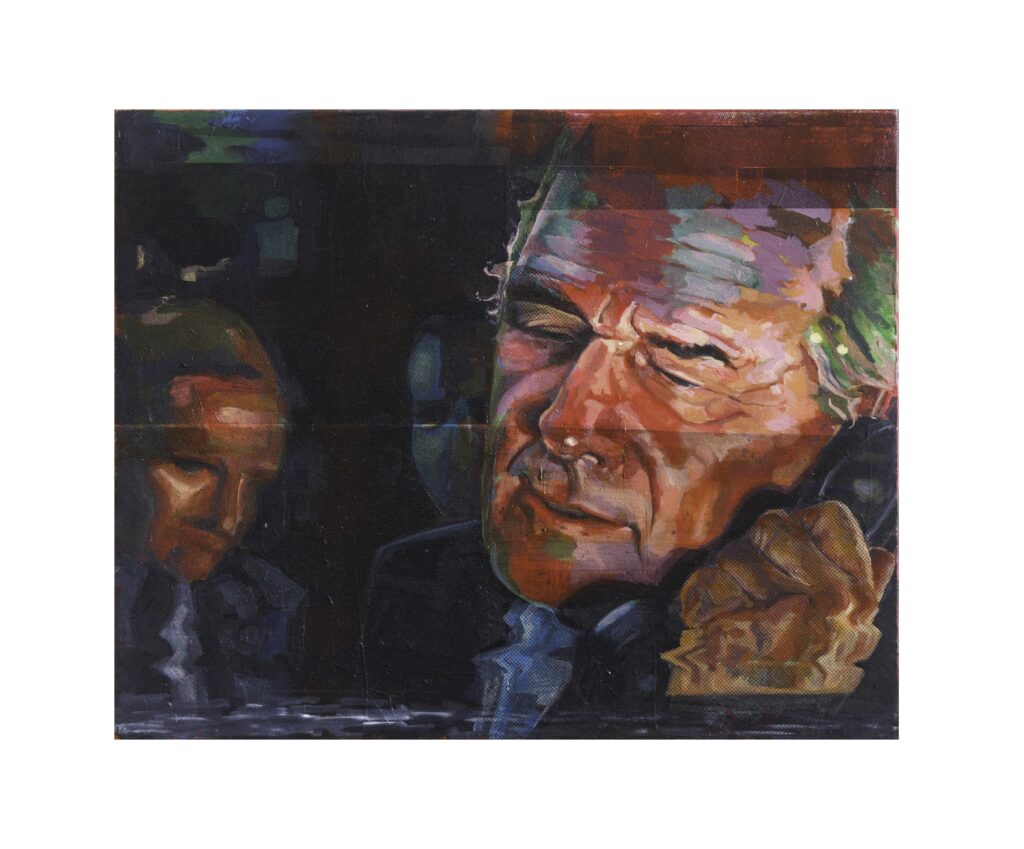
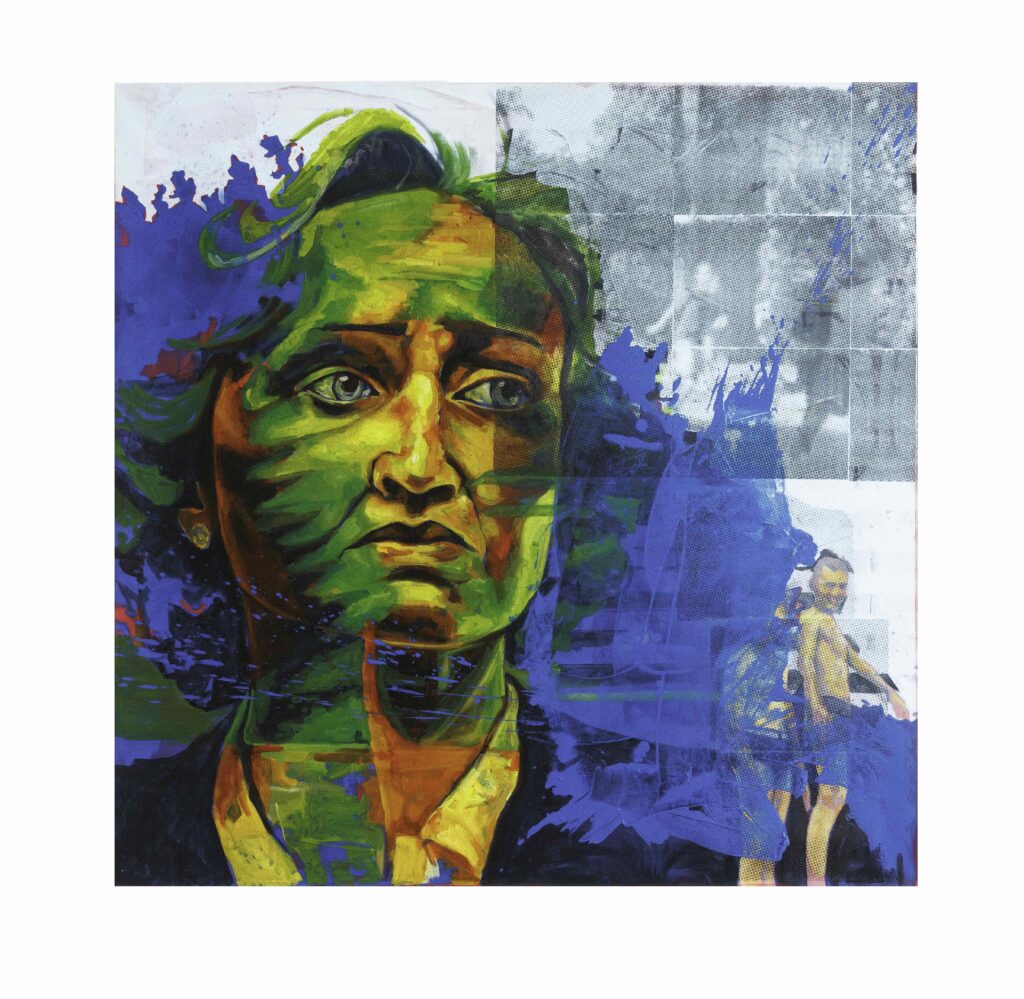
Heidi is a selected artist for the Faces exhibition and what she does sounds simple until you stand in front of the work. She paints from frozen stills of Law & Order episodes. Takes a paused frame and crops it, distorts it, withholds information until what’s left on the canvas is a fragment so charged with tension you feel like you just walked into a conversation you weren’t supposed to hear.
Her oil paintings move at different speeds depending on what the scene demands. When there’s urgency in the still, the brushwork is fast and physical. When the moment is slow, a figure reaching for a door, someone turning a corner, the marks are measured and careful and almost hesitant. The way she paints IS the emotional content. The surface doesn’t just show you the scene, it recreates how the scene feels from the inside.
She crops like a cinematographer who doesn’t trust the audience to be comfortable. Edges are cut at strange places. Figures are half in, half out of frame. You never see the whole picture because Heidi doesn’t believe the whole picture is something we ever actually get in life or in memory.
We get fragments. Blurred half-views. The feeling that something happened just before we walked in. Her paintings live in that gap between what you can see and what you’re trying to fill in, and she’s comfortable leaving you there without resolution.
Heidi started painting at fifteen and spent years thinking that being good meant achieving realism. She chased accuracy until it drained the joy out of making, and that frustration pushed her toward experimentation.
She earned a BFA, an MA in painting, and later an MFA in fibre art, a path that felt like a detour at the time but taught her everything about repetition and process and labour that now defines how she works in oil. The fibre degree trained her to trust slow, repetitive movement, to build through accumulation rather than single decisive gestures, and that patience shows up in every surface she makes.
What she’s really working through is memory. How it degrades. How it holds onto strange details and drops important ones. How the images that shaped us growing up, the shows playing in the background, the sounds of familiar theme songs, the glow of a television in a living room, all of that sits inside us as emotional material whether we chose to absorb it or not. She paints that. The distance between what was on the screen and what it felt like to be in the room watching it. The gap between content and experience. And that gap turns out to be enormous and endlessly paintable.
Now let’s hear from Heidi, about frozen television and oil paint, about memory that won’t stay sharp, about fibre art teaching her how to think about painting, and why a paused frame from a procedural crime show might hold more emotional truth than you’d ever expect.
Q1. Can you start by sharing your background and early relationship with painting, and when it became something, you committed to seriously?
I was lucky to grow up in a family that encouraged creative play, which led to my first oil painting class at 15. Like a lot of beginning painters, I thought being good meant mastering realism. I spent a long time chasing that—with a lot of failed attempts—until I realized that fixation was taking the joy out of painting and in turn pushing me toward experimentation. The work stopped being about getting a perfect result. Making a great painting was a bonus, however the alchemist quality was what kept me coming back to oil. Within the first few years of studying oil painting, it became a commitment. I earned a BFA and an MA in painting, and later an MFA in fiber art. The fiber work was still a way of thinking about painting, just through different materials. It let me work smaller and lean into repetitive, process-driven methods. At the time, the degree felt like a side quest from my original plan, but the logic behind it eventually circled back into oil. Repetitive movements—doing the same thing over and over—helped me absorb techniques and build habits. The work became more rooted in labor and in a lack of immediacy, and that shift helped solidify what I’m after in oil painting.
Q2. Many of your paintings feel like fragments of larger narratives, yet they resist clear storylines. How intentional is that sense of interruption or incompleteness?
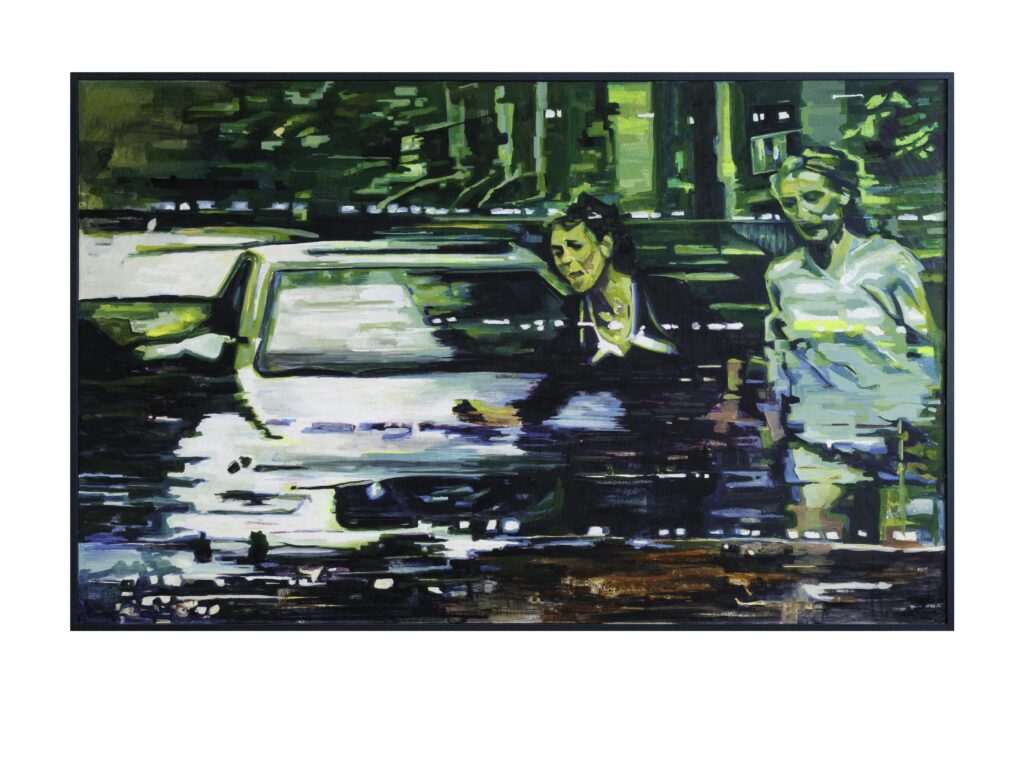
That sense of interruption is very intentional. I’m interested in what happens when you only get part of a scene, or when something feels cut off before it resolves. Our eyes are good at trying to fill in missing information, but they can’t always do it, and that gap is where a lot of the tension lives for me. I like disrupting flow and predictability. A single painting doesn’t have to carry a whole story. It can stop short and still feel complete on its own terms. That also lines up with how I think about memory. I tend to treat painting like hitting a pause button on a fleeting moment. In that pause, some information is always lost or blurred, and I’m more interested in holding onto that unstable part than pretending it’s all clear. I’m dealing with a lot of unresolved things in my own life, and the work lets me sit with that lack of resolve instead of fixing it. The interruption stays visible in the image, and the viewer can decide how far they want to go in filling in the rest.
Q3. Titles like Patient Zero, Aftershock, and Indifference suggest emotional states rather than literal narratives. How do titles function alongside the image for you?
I like that you’re reading them as emotional. To spill the tea a bit, the choice is actually very literal. Those titles come straight from Law & Order episodes and stay tied to the specific still I’m painting from. For me, the title is there to acknowledge the source and keep track of where the image came from. I’m pulling from something that already exists in the world, and using the original episode title is my way of being upfront about that. Lately I’ve started including the original air date, almost like a catalog line, so each painting reads as a fragment pulled from a larger archive.
Q4. There’s a subtle humour in some compositions, but it’s never overt. How do you balance seriousness and levity without tipping the work into irony?
I think the humour comes out of how strange ordinary life already is, not from trying to be clever in the work. I’m drawn to uncomfortable observations, and those moments sometimes make me laugh even when they sit next to heavier material. There’s a bit of dark humor in that. A lot of what I’m working with is rooted in memory, and as i get older i realize that isn’t stable. Things blur or fall out of place, and that slight distortion is where the humour shows up for me, right alongside the unease. I’m also very aware that I’m painting Law & Order episodes. There’s something inherently ridiculous about treating a procedural TV show as serious source material. I’m pulling from something very ordinary and familiar, and trying to catch these quiet in-between moments inside it. If there’s levity, it sits in small shifts—a gesture, a cropped edge, a slightly awkward pose—rather than a big punchline. The seriousness comes from what I’m actually thinking through: memory, grief, and the way certain images stay with you. The humour just threads through that without taking over.
Q5. Your compositions often use unusual cropping or framing, almost as if the viewer has arrived mid-scene. How conscious are you of the viewer’s position when building a painting?
I’m very aware of the viewer, but not in a “front row seat” kind of way. I’m interested in what it feels like to walk into a moment that’s already in motion, or to only catch part of what’s happening. That’s how life works most of the time—we never see the whole thing, we just get fragments. Working from screen stills reinforces that. I’m already dealing with a paused frame, and then I crop and distort further to see how much I can withhold while the image still holds together. Edges matter a lot to me. I’m always thinking about what gets cut off, what almost slips out of the frame, and what’s sitting just out of view. That’s where the tension comes from. I like things to feel a little off-kilter, as if the camera shifted a second too late or too soon. That echoes how memory works for me: you don’t get the clean, centered shot, you get a partial view that’s eroding over time. So the viewer’s position is built into that—you’re arriving mid-scene, filling in what you can, and living with what doesn’t fully resolve.
Q6. Do you see your paintings as self-contained moments, or as part of a larger ongoing conversation across your practice?
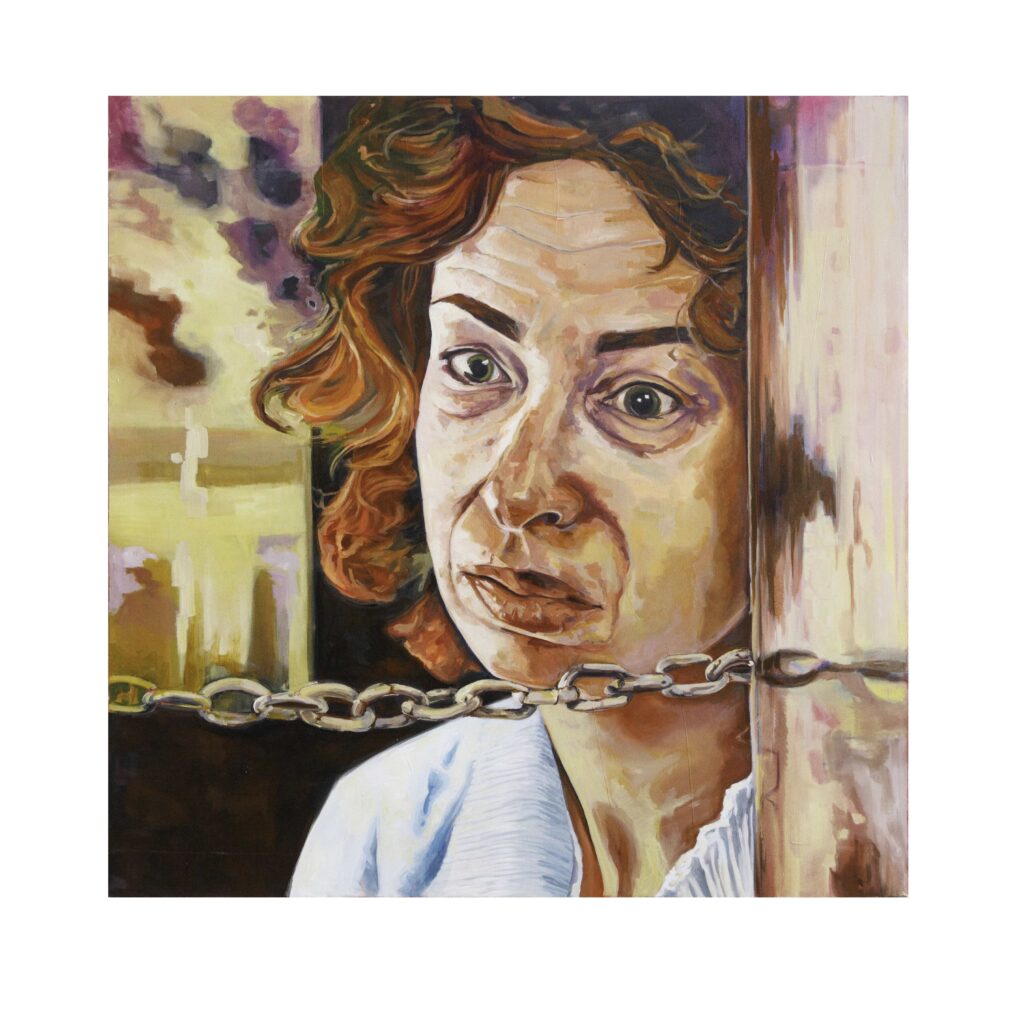
Both, but in different ways. Each painting has to stand on its own first. I still care about the fundamentals—composition, color, surface, the internal logic of the image. I want someone to be able to sit with a single work and feel like they’ve entered a specific moment that has its own weight and atmosphere. When the paintings are grouped, though, they start to chatter. There’s a kind of visual noise that builds up—little echoes, repeated gestures, shifts in scale—that changes how each piece reads. They feel like different fragments from the same overloaded timeline. I’ve been thinking more about what happens when they’re stacked, clustered, or treated almost like components of a larger structure. The individual paintings feel like fixed moments, but once they’re together, they become part of a bigger, ongoing attempt to make sense of memory and repetition.
Q7. The psychological space in your work feels as important as the physical one. How consciously do you think about inner life versus external appearance while painting?
I think about it a lot, but not in a checklist way. I usually start from how the scene feels on the inside and let that affect how I move while I’m painting. With a piece like Patient Zero, there’s so much running and urgency in the still that the painting came together fast and with a lot of motion in the brushwork. Indifference is the opposite for me—someone slowly moving toward a door—so the marks were slower and more deliberate, like a tiptoe. The pace of the painting, how dense or thin the surface gets, is one way the inner life comes through. The external image—the hallway, the door, the figures—is almost a container for that. Because I’m pulling from Law & Order, there’s often an implied psychological weight in the scene, but my own relationship to it is complicated. I first encountered those episodes in a very ordinary, safe setting at home, so there’s a disconnect between what’s being depicted and how I experienced it. That tension is important to me. I’m not trying to reenact trauma on the canvas, but I am interested in how distance, habit, and repetition shape our response to it. The psychological space sits in that gap: the unease, the slowness to open a door, the way something feels wrong even when everything looks familiar.
Q8. When viewers bring their own memories or interpretations to your work, how do you feel about that openness?
I’m pretty open to it. I like hearing what people bring to the work, especially when they start talking about their own memories or something the image jogs loose for them. A lot of what I’m thinking about—grief, loss, being shaped by what we watch or grow up around—isn’t unique to me, so it makes sense that people find their own way in. Because I’m pulling from television, there’s already this strange shared ground. Once someone realizes a painting is based on Law & Order, there’s often this, “Oh, I watched that with my dad,” or “I remember that sound being on in the background all the time.” We end up talking as much about when and how they watched TV as the actual scene in the painting. I don’t feel the need to correct anyone or steer them back to some “right” reading. As long as the response feels honest and not wildly off-base, that openness is the whole point—it means the image is doing some work beyond my own specific memory.
Q9. When a painting takes an unexpected turn, how does that surprise influence the way you approach future work?
Sometimes a painting drifts away from what I pictured, and the new version works better than what I set out to make. When that happens, I try to treat it as information, not a mistake. It pushes against those old ideas I had as an oil painter—that a piece had to lean toward realism or look “finished” in a very specific way. Letting parts of the image fall apart a bit has become part of the appeal, both in terms of the medium and what I’m saying about memory. Things don’t stay sharp or intact in our heads, and I’m more comfortable letting the painting reflect that. Those moments stick with me. I’ll carry a certain edge or way of scraping back into the next painting, not as a trick but as something I know is available. The surprise mostly changes my tolerance. Each time it happens, I’m more willing to leave the painting in a state that feels open and to stop before everything is fully nailed down.
Q10. What advice would you give to artists who want to make work that is open-ended and emotionally layered without being overly explained?
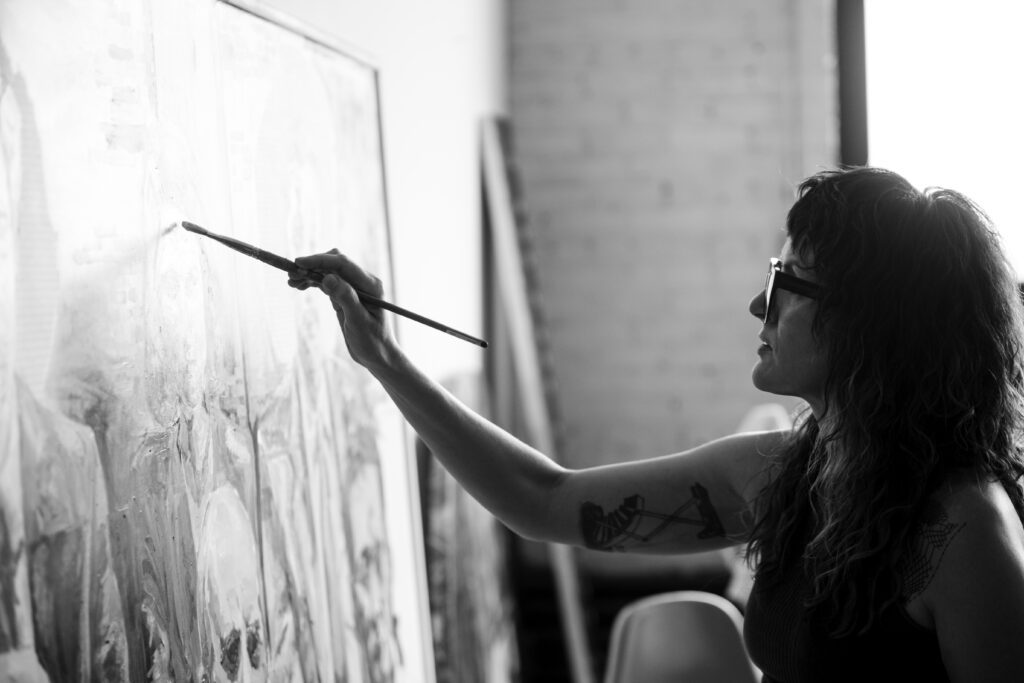
One thing that has helped me keep the work more open and emotionally layered is slowly unlearning perfection. Working larger plays into that, but it’s less about strict rules and more about paying attention to each pass. I’ll often stop after a first or second round and really look at how much information is already there before I go back in. That pause keeps the gesture more intact and keeps me from grinding everything down into small, fussy detail. I also lean into the idea that things can stay unresolved. I’ll leave material exposed, let built-up layers show through, and not fully cover earlier decisions. The surface becomes a kind of archaeological site—you can see where the painting has been. That messiness feels right for the subject matter I’m working with. I don’t expect one painting to solve everything, either. You can’t cram every idea into a single piece. Thinking in terms of a series helps. Each painting adds to the story and shifts the language a little, so the emotional weight builds over time across the body of work.
After talking with Heidi we found ourselves thinking about all the images that shaped us without our permission. The shows that were always on. The movies we half-watched from the hallway. The sounds and colours and paused moments that seeped into us just because we were in the room when they happened.
Most of us never think about that material. We file it under background noise and move on. Heidi doesn’t move on. She pauses there. Literally. She takes the frozen frame and she sits with it and she paints what it left behind in her, not the plot or the drama or the narrative but the feeling. The strange quiet between scenes. The hand on a doorknob. The hallway that feels wrong even though nothing visible is happening. The emotional residue of growing up in front of a screen that was always telling stories your body was absorbing even when your mind wasn’t paying attention.
That’s a brave place to make art from. Because it’s not dramatic. It’s not obviously important. It’s the kind of source material that would make most people apologise before mentioning it. And Heidi doesn’t apologise. She treats it with the same seriousness and craft and emotional intelligence that other artists bring to landscapes or figures or abstract emotion. And the result is work that feels hauntingly familiar even when you can’t place why.
For anyone thinking about collecting her work, understand what you’re getting. These paintings don’t behave like normal paintings. They don’t sit politely on a wall being beautiful. They create this low-level hum of unresolved tension that keeps pulling you back.
You’ll walk past one in your hallway a hundred times and on the hundred and first you’ll notice something you never saw before, a layer underneath, a cropped edge, a mark that tells you exactly how fast or slow that brush was moving. That’s the kind of art that earns its place on a wall over years, not days. The kind that becomes part of how your home feels rather than just how it looks.
Heidi has spent her whole career learning to trust the unfinished. To leave things open. To stop before the painting tells you everything. And that restraint, that willingness to let the gap stay empty, that’s what gives her work its power.
Because the viewer doesn’t just look at a Heidi Weiss painting. They complete it. With their own memories and their own half-remembered living room and their own version of the television that was always on. And that exchange between the painting and the person standing in front of it is something that never stops happening. It just keeps going, every time you look, finding something new in the space she left open for you.
To follow Heidi’s journey and see more of her work, find her through the links below.
