
This artist reveals the restless beauty of sea & sky in her layered oil paintings | Victoria Curling Eriksson
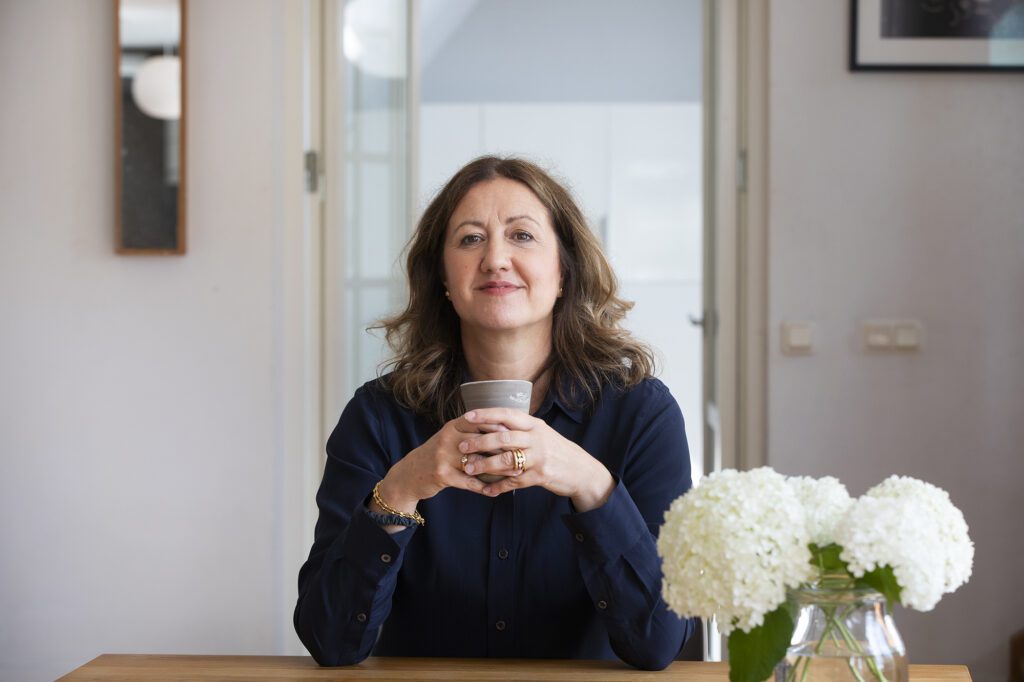
Among the many submissions we received for Landscape and Places, Victoria Curling Eriksson’s work stayed with us because the paintings felt almost meditative soft, open, atmospheric, and emotionally calming without ever feeling empty.
Victoria is a selected artist for the exhibition, and her paintings carry this beautiful sense of stillness, movement, and emotional presence all at once. Quiet coastlines, layered horizons, shifting skies, woodlands, sea energy, fading light everything in the work feels deeply connected to atmosphere rather than exact geography. And honestly, listening to her speak about her process made the paintings feel even more personal.
Although she grew up in Bath surrounded by green hills and countryside, it wasn’t until moving to Sweden that her connection to art and nature deepened fully. Now living in Viken on the northwest coast of Skane, surrounded by sea, forests, and nature reserves, she paints entirely from memory and intuition rather than sketches or photographs. That really fascinated us.
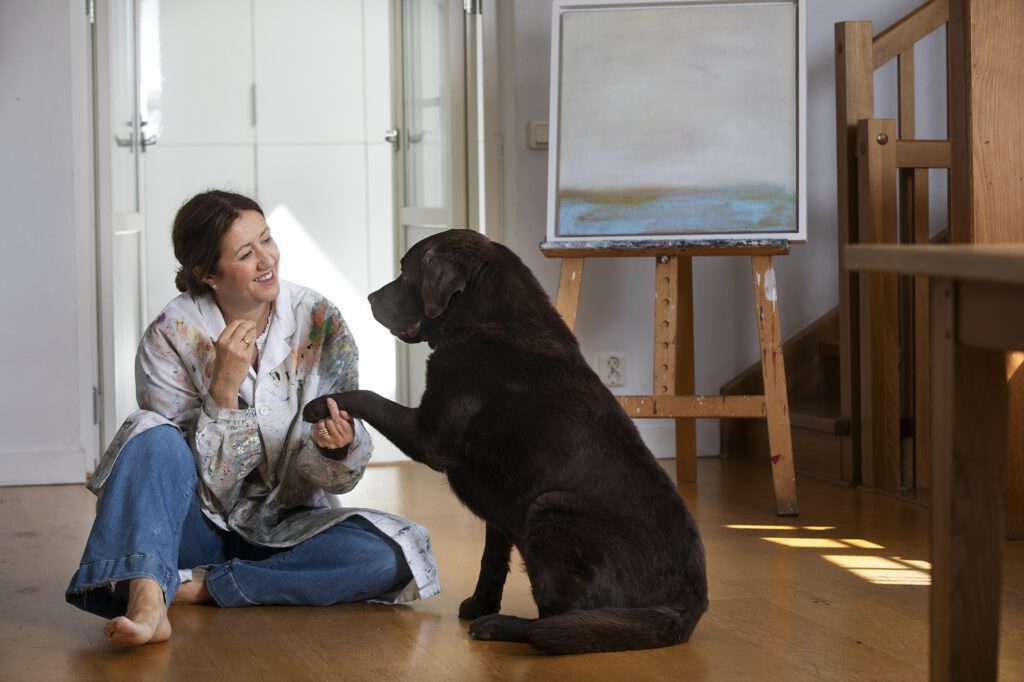
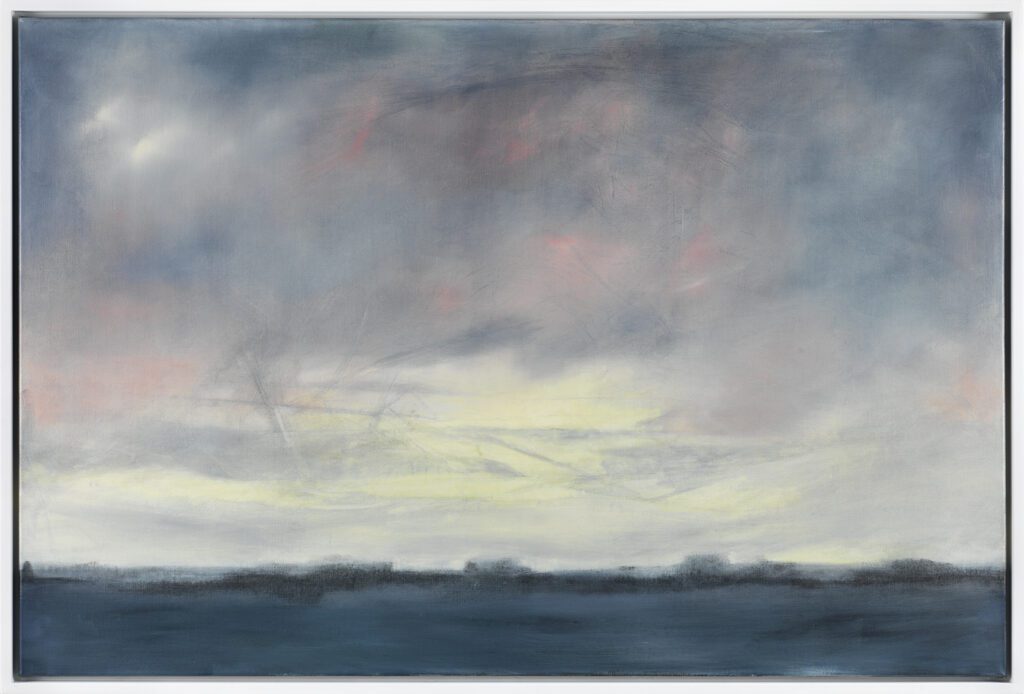
Victoria described standing in front of a blank canvas not with a finished image already planned, but with a feeling, an atmosphere, or a colour palette she wants to follow. The paintings emerge slowly through thin oil layers over time, sometimes beginning as landscapes and unexpectedly transforming into seascapes during the process.
There’s something beautiful about that openness. The work never feels forced or overly controlled. Instead, the paintings seem to reveal themselves gradually through patience, intuition, and emotional connection to place.
You can also feel how deeply connected she is to colour emotionally, especially the blues and greens inspired by the sea, Swedish coastlines, and memories of the landscapes surrounding Bath. Even the quieter paintings seem to hold movement underneath them.
And beneath all of it is this belief that art can genuinely shift the atmosphere of a space and the emotional feeling of the people living with it. That feeling stays with you when you stand in front of her work.
Let’s get to know Victoria through our conversation with her about memory, movement, layered landscapes, and why quieter paintings sometimes stay with us the longest.
Q1. Can you share how growing up in England and being surrounded by nature shaped the artist you became?
I was lucky enough to grow up in Bath, which is a beautiful roman city with incredible architecture. I went to a girls school in Bath and later to university in Leicester and Cambridge, where I studied Biotechnology. It wasnt until I had actually moved to Sweden that my love for Art really grew and I felt such a pull to work with something more creative.
I visit Bath regularly as I have friends and family living there, and it only now as an adult that I feel I really appreciate its beauty. Bath is surrounded by so much natural beauty and so many hills..Bath is positioned rather like ina basin and surrounded by green hills and beautiful countryside. I can feel after every visit back to Bath that I always return to the studio so inspired and feel drawn to the green colours that I have been immersed in whilst in and around Bath.
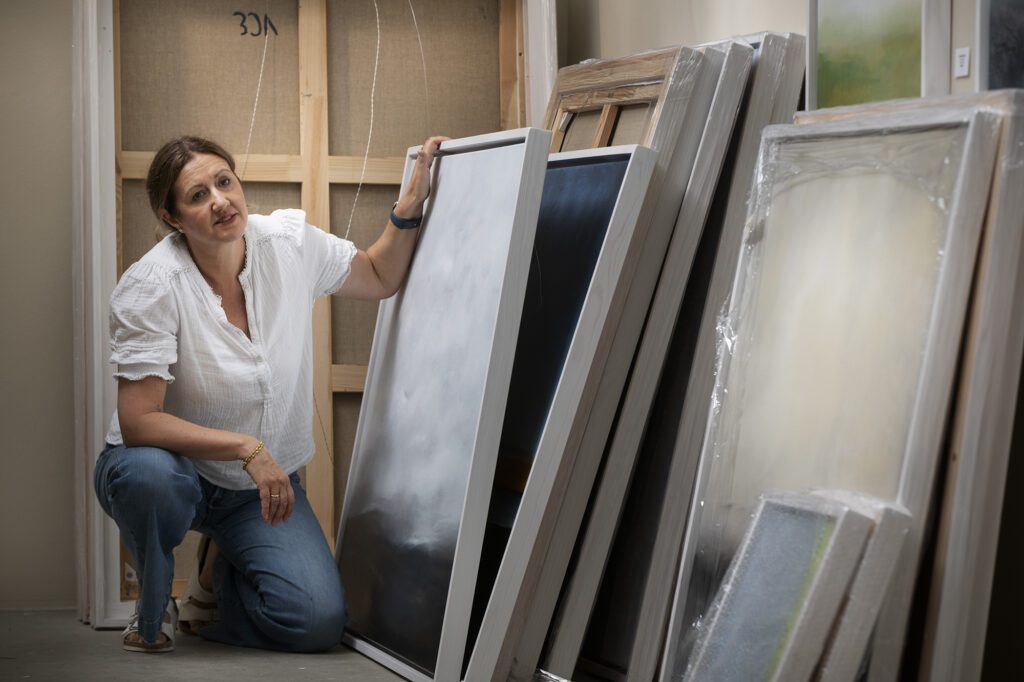
Q2. You’ve devoted yourself more deeply to your art for the past 17 years. What happened 17 years ago was it a decision, a moment, or did it creep up on you?
I was working in a clinical role at the time that enabled me to travel extensively-and feel really challenged, but I started to have a such a desire to want to try something creative..like a sense that I really wanted to do something practical with my hands- so originally the plan was that I would apply to art school and just stay a year and return to clinical work, however, I absolutely loved my first year at art school where I got to try painting, sculpture, ceramics and photography – a year turned into 2 years and then gradually over time, I was able to moved from working and art to only art-which I am so grateful for !
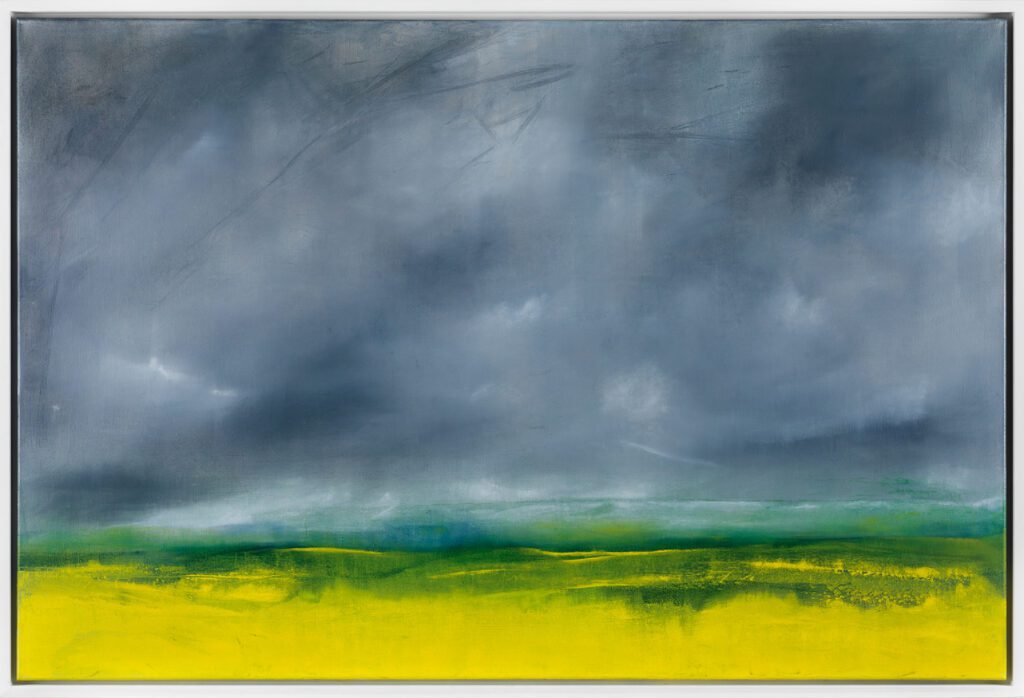
Q3. You work from a studio on the coast of northwest Skåne how deeply does that landscape shape the way you paint, even from memory?
Viken and its surrounding sea and landscapes has been incredibly important in my work,. I never grew up by the sea and today I am literally 1 minute from the sea…which I find fascinating as it is really so different from one day to the other, depending on the weather..from soft sunsets to stormy wild waves crashing…
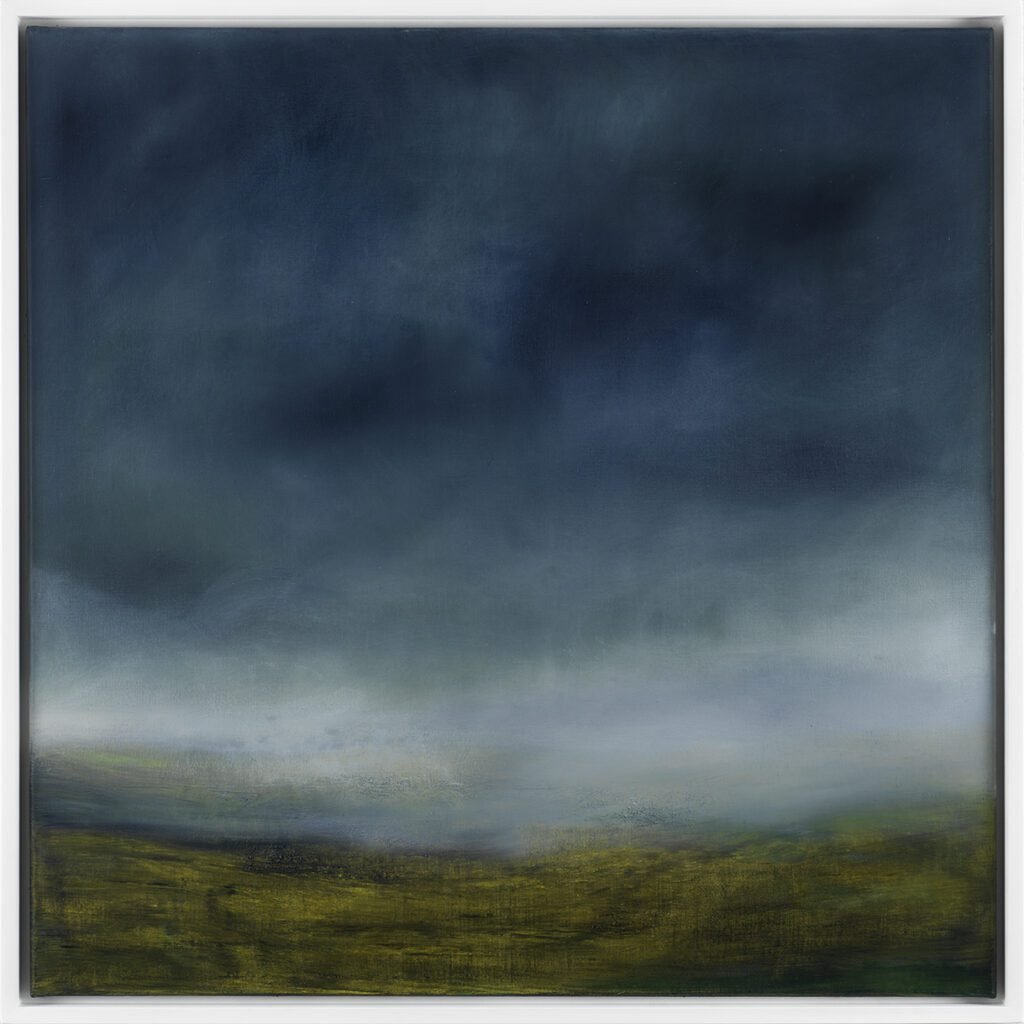
The surrounding landscape is also really inspiring as I am surrounded by a few different nature reserves of woodlands, which I find incredibly calming. I feel incredibly grateful that I live both by the sea and woodlands as I love the contrast.
Q4. You paint entirely from memory and intuition, when you face a blank canvas, does the work begin with an image, a feeling, or something less defined?
Thats such a wonderful question…so when I first look at that blank canvas, I never actually see an image..no final painting, its usually always a feeling or a a colour palette that I am drawn to. I can also see that over time my colour palette of choice is really affected by the seasons.. so in winter time I am really drawn to the whites and cool blues and in the spring and colours the colours start to get brighter.
Once I start, I then just gradually let the painting appear to me, so I paint a thin layer and let the painting dry whilst I start on the next artwork, and return for the next layer and after rotating various paintings, the paintings gradually appear and then I have a much clearer idea of the direction. Its also so that I have started a painting with a feeling that it will be a landscape but during its development it has changed to a seascape- I never really know until close to the end ..each painting is usually about 10 thin layers, so they take time and I have to be patient to allow the layers to dry.
Q5. Oil paint has a very particular quality it stays workable, it blends, it takes time to dry. What does that slowness give you that a faster medium couldn’t?
I love this question as painting with oils has helped me be much more patient and present with my work. I cant rush anything and I have to let the painting develop slowly over time as I add the layers . It also gives me a possibility to trust the process and be open for changes- like a seascape becomes a landscape..
Q7. You create both landscapes and seascapes, does the sea ask something different from you emotionally or creatively than the land does?
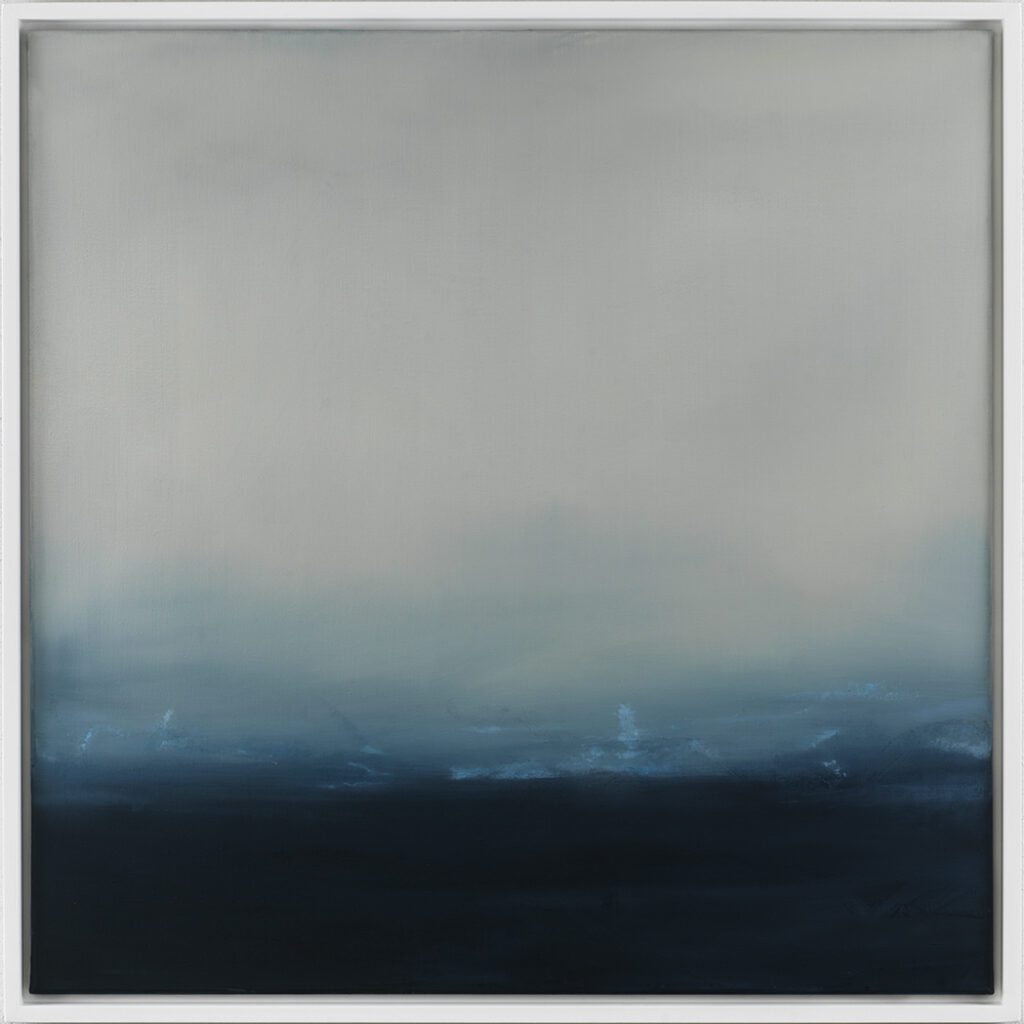
That’s a super interesting question, and I think the answer is yes ! they do ask something different of me..as they have very different qualities and a different energy creating a different atmosphere. The woodlands and landscapes are almost easier for me to paint but the sea requires that I try and incorporate the energy …there’s such a hidden force in the sea and even if the sea appears calm..its important for me to try and capture that energy .
Q8. You’ve said art can transform the energy of a space, have you experienced that transformation most strongly in your own spaces or in other people’s homes?
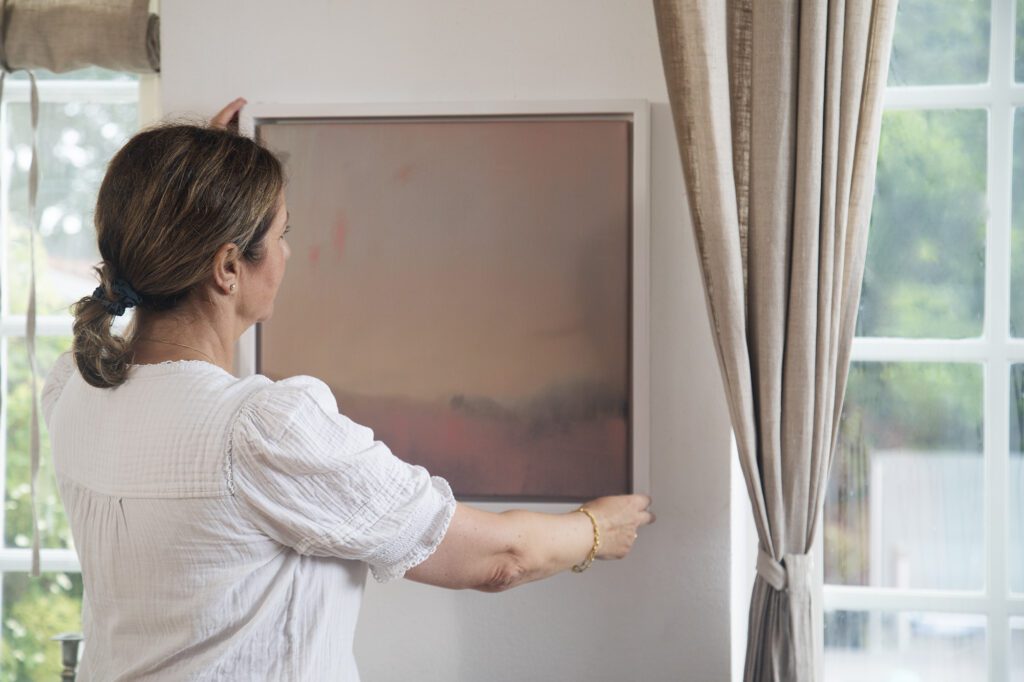
Yes- I really feel that as my works are are not literal representations but rather vessels of energy – creating calm, strength, reflection, movement- I am fascinated by how a painting can change the feel of a room, how the colour can anchor us, soothe us or quietly shift the atmosphere around us. Its certainly something that I feel in my own home and also in other peoples spaces. For example – .it can the feedback that a landscape helps people feel really grounded or seascapes that help people feel a sense of calm…or a small painting of bright colour can really lift a space and energise a space..
Q9. Your work has been featured in publications like Vogue, Tatler, and The World of Interiors what does it mean to see your art become part of those conversations around beauty and interior life?
To me, being featured in publications that focus on beauty and interior life means my work has found a place not just in galleries, but in the rhythm of everyday living, It becomes part of how people shape their environment and, in turn how they feel within them. That feels deeply meaningful- thats something i’ve created can quietly contribute to s sense of atmosphere, identity, and belonging in someone´s personal space.
Q10. Has a collector ever told you something about a piece they bought that surprised you described what it meant to them in a way you never anticipated?
Yes- one moment that really stayed with me was a commission I created for a local buyer. He asked me to paint the landscape surrounding their home, something they saw every day on their walks. When he received the finished artwork, he told me that it gave him goosebumps – that it captured a feeling of ” home ” in a way they hadn’t been able to put into words before. that surprised me and moved me deeply. It made me realise that my work can reflect back something back to people that is already part of their lives, but perhaps not fully seen or felt. To be able to translate something so familiar into something emotionally resonant – that feels incredibly meaningful to me.
Q11. What role do you think painting still holds in helping people reconnect with nature or themselves?
I think painting holds a quiet but powerful role in helping people reconnect – with nature, but also with themselves. In a fast paced, often digital world, it invites a slower way of seeing and feeling. When I paint landscapes- i´m not just capturing a place, but a sense of atmosphere and emotional presence. and I think thats what people respond to – that feeling of recognition.
It can remind them of somewhere they’ve been , or simply evoke a sense of calm, belonging or stillness. In that way – painting becomes more than an image – it becomes a space where people can pause, reflect and reconnect- both with the natural world and with something more personal within themselves.
Q12. As your practice continues to grow, what are you most curious about exploring next?
That’s a wonderful question. as my practice continues, I feel increasingly curious about the space between our outer landscape and the inner one – how a place is not only seen but felt remembered and carried within us. that leads me to continue to be curious about the idea of belonging – what makes a place feel like home and how that feeling can be translated onto the canvas.
Q13. What advice would you give to artists making quiet, subtle work and worrying that people may not slow down enough to truly feel it?
I think if you are drawn to creating work that is simple or quiet, it´s worth paying attention to that rather than question it – follow that instinct as it will be coming from a place of honesty and clarity. It will require the viewer to slow down abit and look closer and feel something rather than just reacting. Simplicity isn’t the absence of depth but rather it oftens distils something down to what really matters.
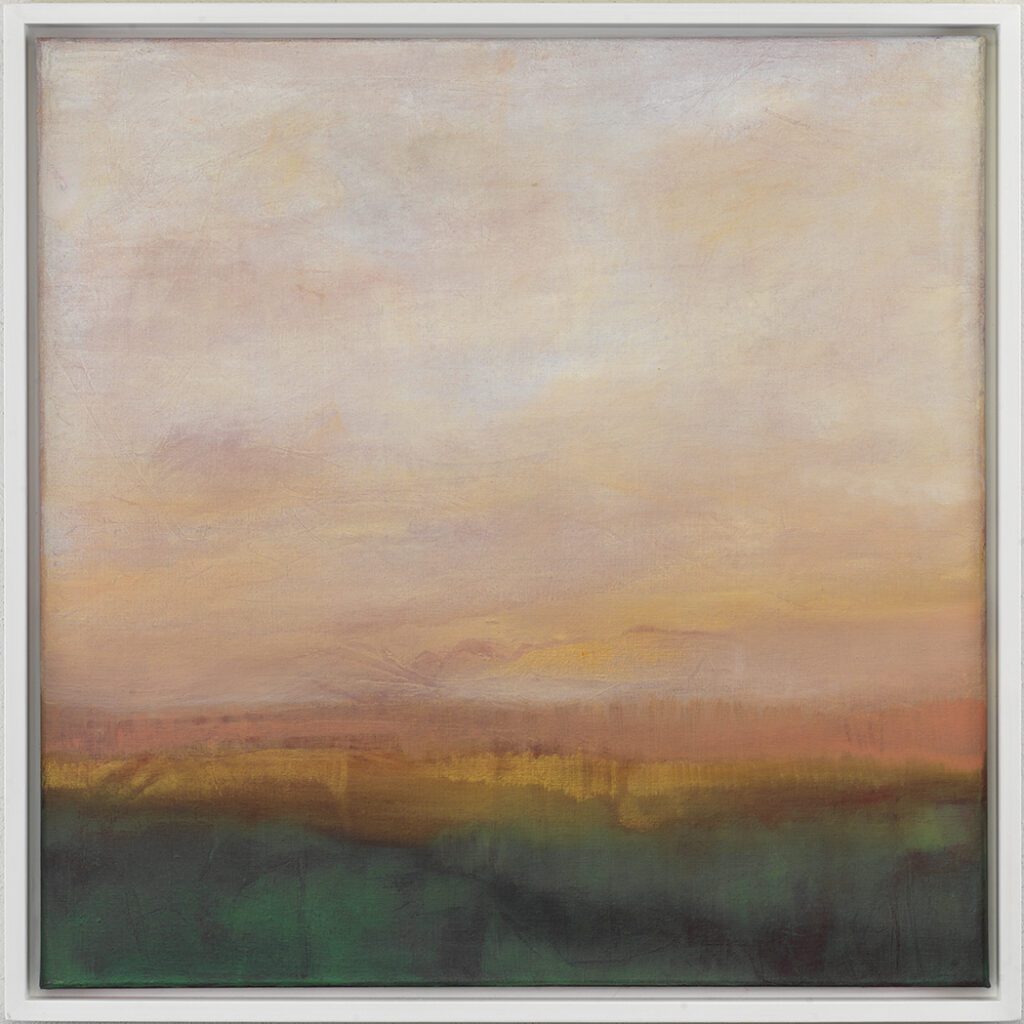
As our conversation with Victoria came to a close, we found ourselves thinking about how differently her work moves compared to so much contemporary landscape painting today. A lot of landscape work asks to be admired for its detail or drama.
Victoria’s paintings ask something quieter from the viewer. They ask you to slow down long enough to actually feel them. And honestly, that’s what makes them memorable.
The paintings aren’t trying to recreate nature perfectly or impress through spectacle. Instead, they seem focused on atmosphere, emotional memory, and the subtle relationship between people and the places that shape them internally over time.
We really loved that about her work. There’s something deeply human in the way she paints from intuition rather than fixed references. The landscapes and seascapes feel emotionally lived-in, almost like memories surfacing slowly through colour, light, and layered movement rather than exact geography.
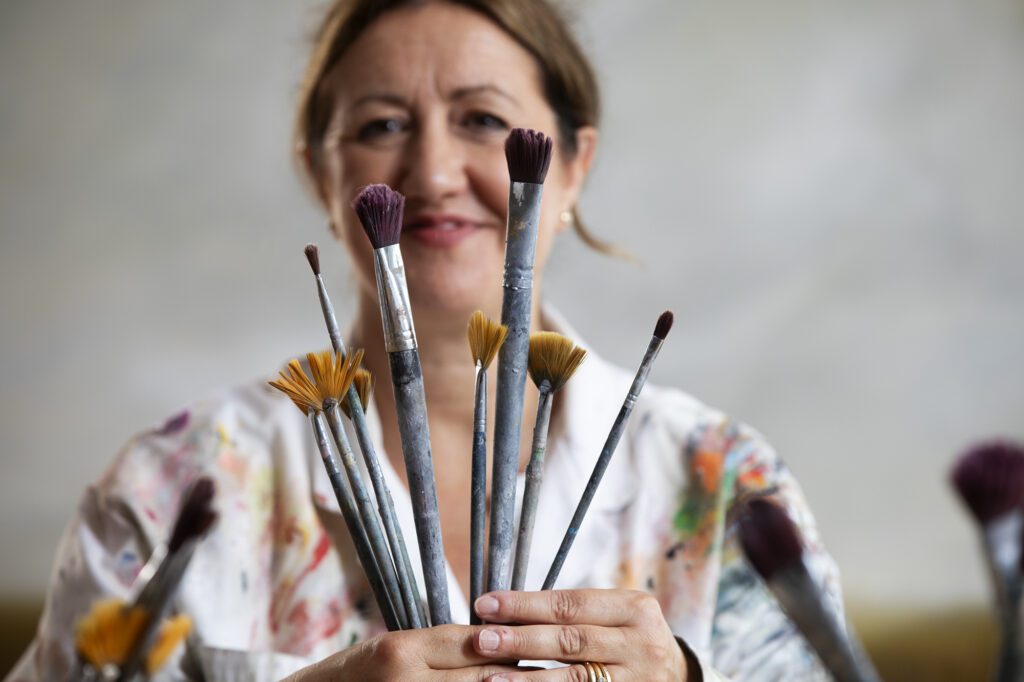
You can sense the patience inside them. And maybe that’s why the paintings create such a calming emotional presence. They leave room for stillness, reflection, and personal connection instead of demanding immediate attention.
For collectors and art lovers who connect with calm, atmospheric work, Victoria’s paintings feel like the kind you continue discovering over the years. The colours, layers, and atmosphere seem to change quietly with the light, the weather, and your own emotional state.
That kind of relationship with art lasts. And artists who trust quietness enough to let it speak this honestly are always worth returning to.
To follow Victoria’s journey and see more of her work, find her through the links below.
