
This Artist creates collages focused on women and human experience │Cristina Rodriguez
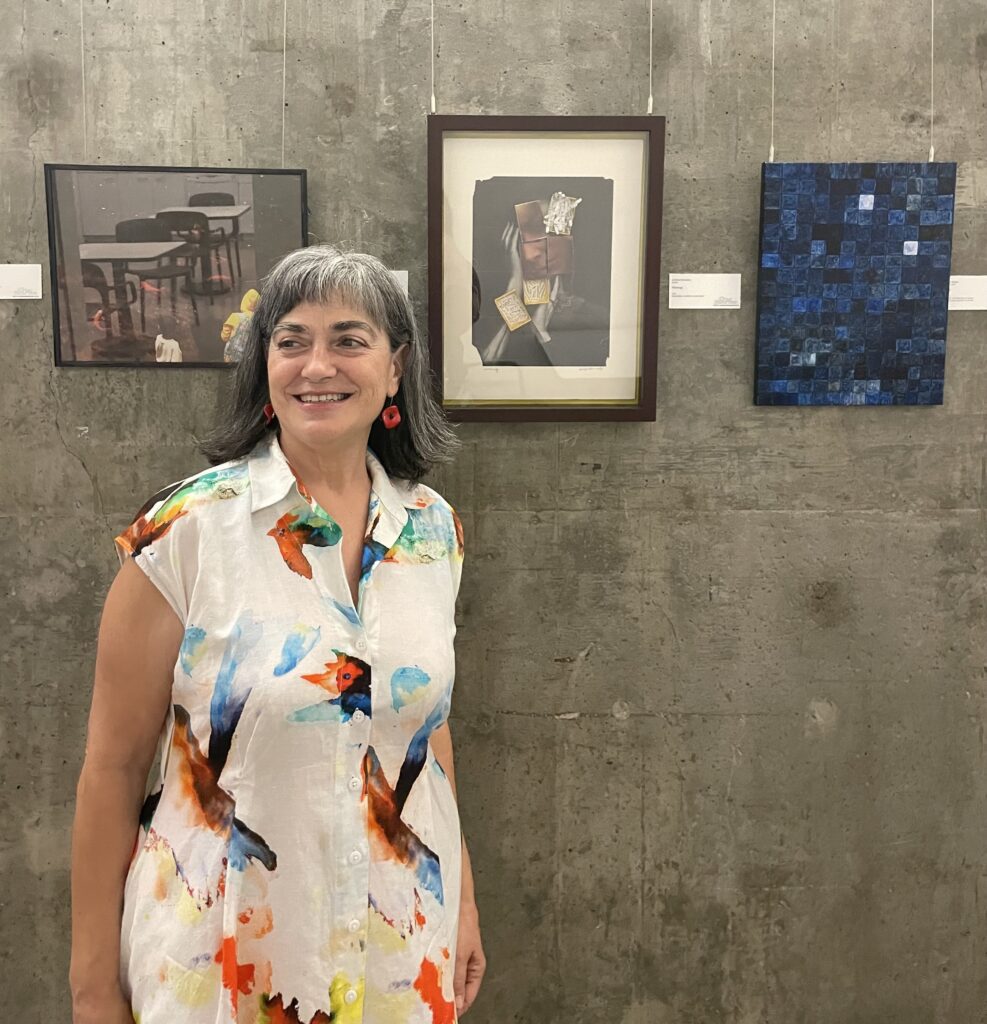
At Women in Arts Network, for our Faces exhibition, most artists gave us faces they’d painted or drawn or sculpted. Whole faces. Complete faces. Faces you could recognise across a room.
Cristina Rodriguez gave us faces torn from magazines and reassembled into something the original images never intended to become. And standing in front of her work you realise the torn version says more about what it means to be a woman than the original ever could.
Cristina is a selected artist for the Faces exhibition and we have to tell you, her collages do something that’s hard to describe until you’ve experienced it. They look chaotic at first. Fragments everywhere. Torn edges. Images pulled from completely different worlds sitting next to each other with no obvious reason to be neighbours. And then you stay with it for a minute and the chaos starts making sense. Not neat sense. The messy honest kind. The kind where you realise oh, this is actually what it feels like inside my head most days.
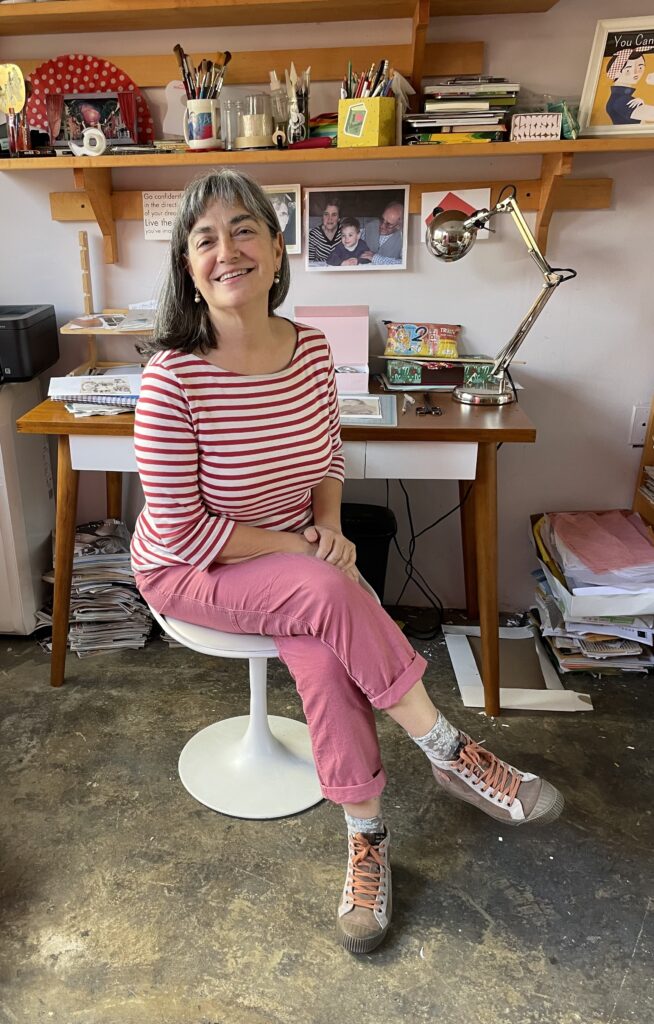
She works entirely by hand. Scissors, paper, found images, her own fingers doing the tearing. In a world that’s gone completely digital she chose the most physical process possible because she needs to feel the paper. Needs the imperfection of a torn edge. Needs the unpredictability of what happens when you put two images together that were never meant to meet.
Her work is about women. But not in the way you’re expecting. We’ll let her tell you what that means and how she got there because her path to collage, through her sister and through museums and through a pandemic that fragmented the world the same way she fragments her paper, that story deserves to be heard in her own words.
What we will say is this. Cristina’s influences include Virginia Woolf and Matisse and Barbara Kruger and once you know that, you look at her collages and it all makes sense. The interiority of women’s lives. The fearlessness of colour. The collision of image and meaning. All of it torn up and reassembled into something that feels more true than any of the original pieces did on their own.
Now let’s hear from Cristina, about tearing paper as a way of telling the truth, about women’s stories built from fragments, about a pandemic that gave her a language, and why the most honest face in this exhibition might be the one made from pieces that were never supposed to go together.
Q1. Can you share your background and early relationship with art particularly how exposure through your sister, museum visits, and later experiences during the pandemic led you to collage as your primary mode of expression?
My relationship with art began early, largely through my sister, who was my first point of exposure. Watching her create and engage with art made it feel accessible and alive rather than distant or academic. Frequent museum visits further shaped how I saw art—as layered, dynamic, and full of stories. Museums became spaces of curiosity, where I learned to look closely, connect ideas, and appreciate how different materials and narratives could coexist in a single work. During the pandemic, my practice shifted in a more personal, intuitive direction. With limited resources and a need to process uncertainty and isolation, collage became a natural language for me. Working with found images and fragments mirrored how the world felt—disconnected, overlapping, and constantly being reassembled. Collage allowed me to work instinctively, combining memory, emotion, and observation without needing perfection or a fixed outcome. Over time, it became my primary mode of expression, reflecting how I make sense of the world: through layering, re-contextualizing , and finding meaning in fragments.
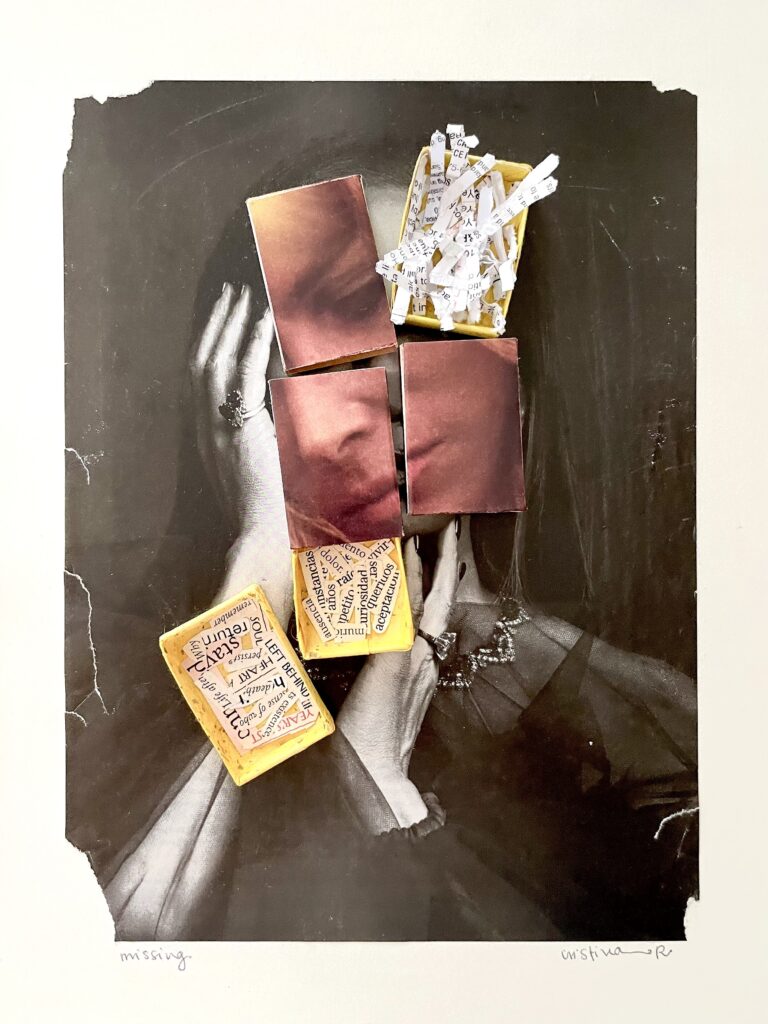
Q2. When you pick up paper, magazines, or ephemera, what is the first question you ask yourself before layering or tearing them into a composition?
Sometimes an idea comes first; other times, a visual element sparks the beginning of a new piece. My process is very spontaneous and intuitive. As I explore an idea or concept, the images themselves guide me toward the final composition. When I approach collage, I aim to let my creative self unfold naturally through the process, without forcing outcomes.
Q3. You describe the physical act of cutting and tearing as central to your work. How does that tactile process affect your emotional engagement with an idea?
In an increasingly digital world, I choose a tactile, hands-on approach to my work. Cutting, tearing, and layering paper deepens my emotional connection to an idea and keeps me grounded in the process. This physical engagement mirrors the fragmentation and reconstruction of personal and collective identities. By manipulating and reusing images, I can disrupt their original meanings and create new narratives. Working with paper gives me both freedom and intimacy with the material, allowing the stories within my work to continuously evolve.
Q4. Your work often explores women’s issues and human experience. What personal or cultural narratives are you most compelled to unpack through collage?
My work is rooted in women’s rights and in amplifying women’s experiences, achievements, and struggles that have often been invisible or ignored. I’m especially compelled to address issues of representation, diversity, and equity, using collage as a way to question dominant narratives. At the same time, my practice is deeply personal. Collage allows me to explore my own inner landscape and emotional history while connecting it to broader cultural and political realities. By layering personal and collective stories, I aim to create work that reflects both resistance and vulnerability within the shared human experience.
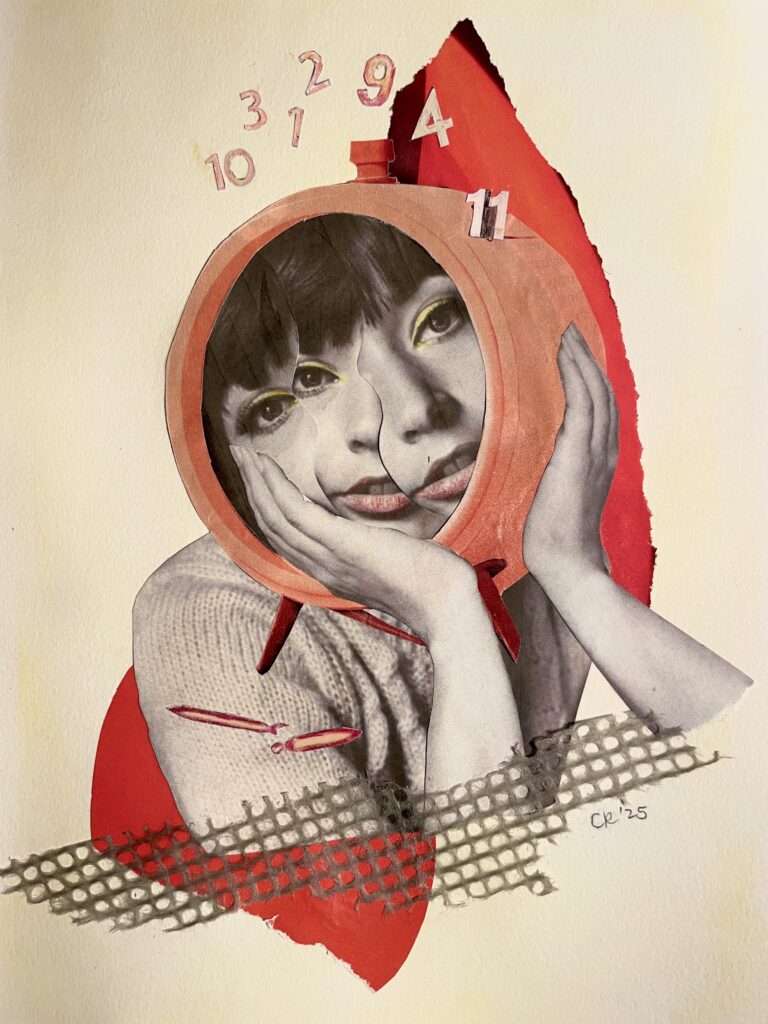
Q5. Many of your pieces juxtapose unexpected imagery. How do you navigate tension between chaos and meaningful narrative?
My collage process is intuitive and fluid—like a conversation with the materials. I start with several images and backgrounds, letting them guide me. Juxtaposing unexpected elements creates tension, a productive chaos that pushes the work toward new meaning. As I experiment with layers, colors, and torn fragments, the composition evolves. Taking photos along the way helps me step back and refine the narrative. In this balance between chaos and structure, I discover not just the story within the work, but also insights about myself.
Q6. Your list of influences spans literature, music, and art from Matisse to Barbara Kruger to Virginia Woolf. How do these diverse sources inform your visual language?
My influences span literature, music, and visual art, but they all resonate with my own sensitivity and personal philosophy. Writers like Virginia Woolf explore identity and women’s experiences in ways that deeply inspire me. Visual artists such as Matisse and Barbara Kruger captivate me with their use of color, composition, and imagery. Together, these diverse sources shape my visual language, guiding how I structure narratives, convey emotion, and explore ideas through collage.
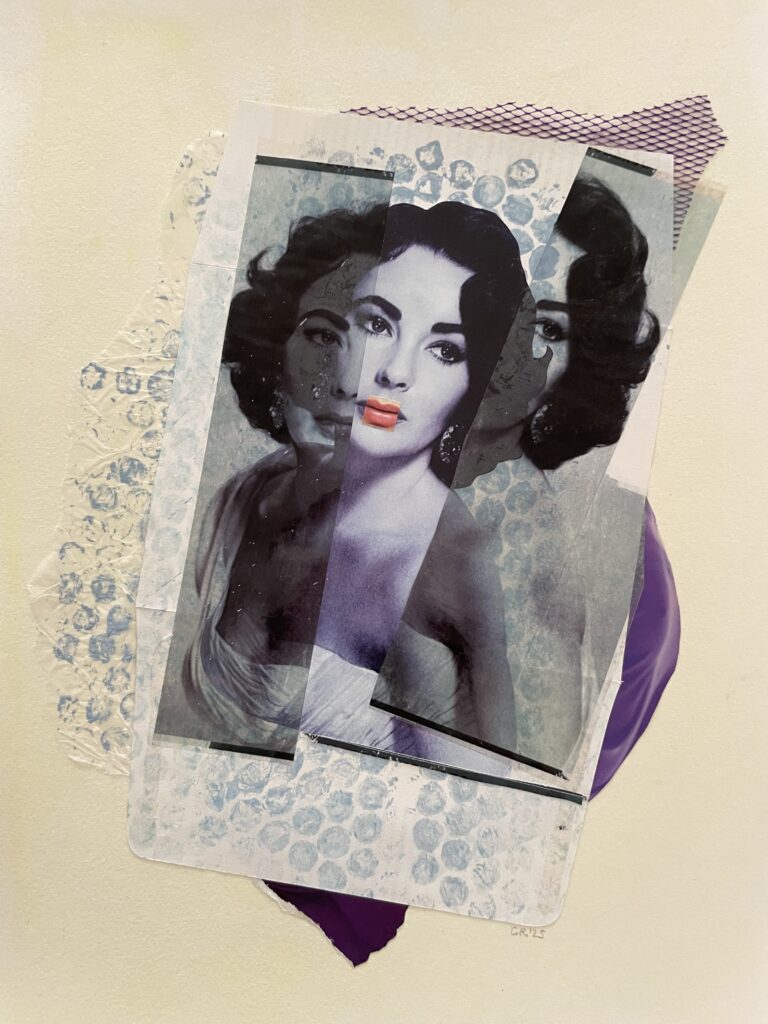
Q7. Color plays a subtle but powerful role in your work. How do you use color to guide emotional tone or narrative without overpowering the composition?
Color in my work is both intuitive and purposeful. I use it to set mood and guide the eye, creating subtle connections between images and layers. Rather than dominating, it supports the narrative, letting the textures and imagery remain central. Color becomes a quiet storyteller, shaping emotion and meaning without overwhelming the composition.
Q8. How does your creative process respond to uncertainty when a piece isn’t working, how do you regroup or redirect your energy?
When a piece isn’t working, I try to embrace the uncertainty instead of resisting it. I step back, take photos, or let the work sit for a while, which often reveals new directions. These moments push me to experiment and take risks, allowing the collage to evolve organically and sometimes in ways I hadn’t anticipated.
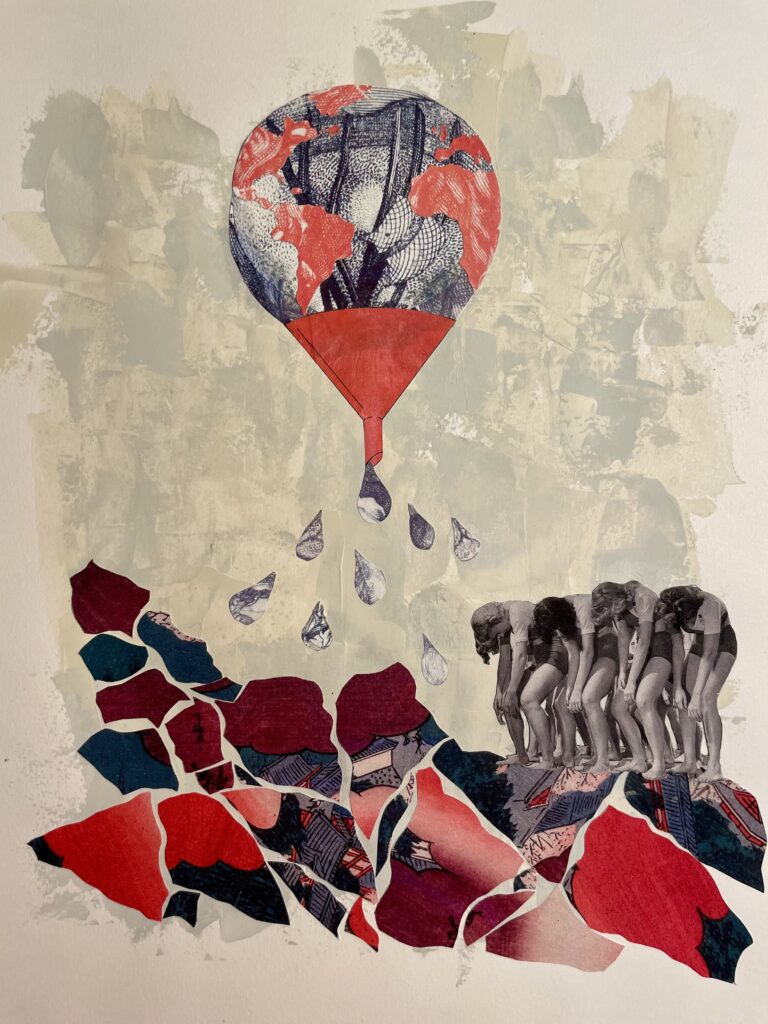
Q9. What have been some of the most meaningful reactions you’ve received from people who connect deeply with your collages?
Some of the most meaningful reactions come when viewers see themselves in my work. People have called my collages “feminine and feminist at the same time,” “powerful and authentic,” or shared that they resonate with personal experiences—like losing a loved one or feeling their heart in two places. Knowing my layered, fragmented narratives can spark reflection and connection is deeply moving and continues to inspire my practice.
Q10. Looking at your work today, what feels most different from when you first began making collage seriously?
When I first began making collage seriously, it was mostly about experimenting and exploring materials. Today, my work feels more intentional and layered, with stronger narrative and emotional depth. While I still embrace spontaneity, I now approach each piece with confidence, letting intuition and purpose guide the stories and emotions within the composition.
Q11. What advice would you offer artists working with collage or mixed media who are trying to develop a voice that feels honest, layered, and their own?
My advice is simple: trust your intuition, let the materials guide you, and enjoy the process. Collage naturally invites experimentation, so explore freely without overthinking. Pay attention to what resonates—colors, textures, images, or themes that reflect your experiences. Take risks, make mistakes, and revisit pieces—over time, these choices help your voice emerge authentically, layered, and uniquely your own.
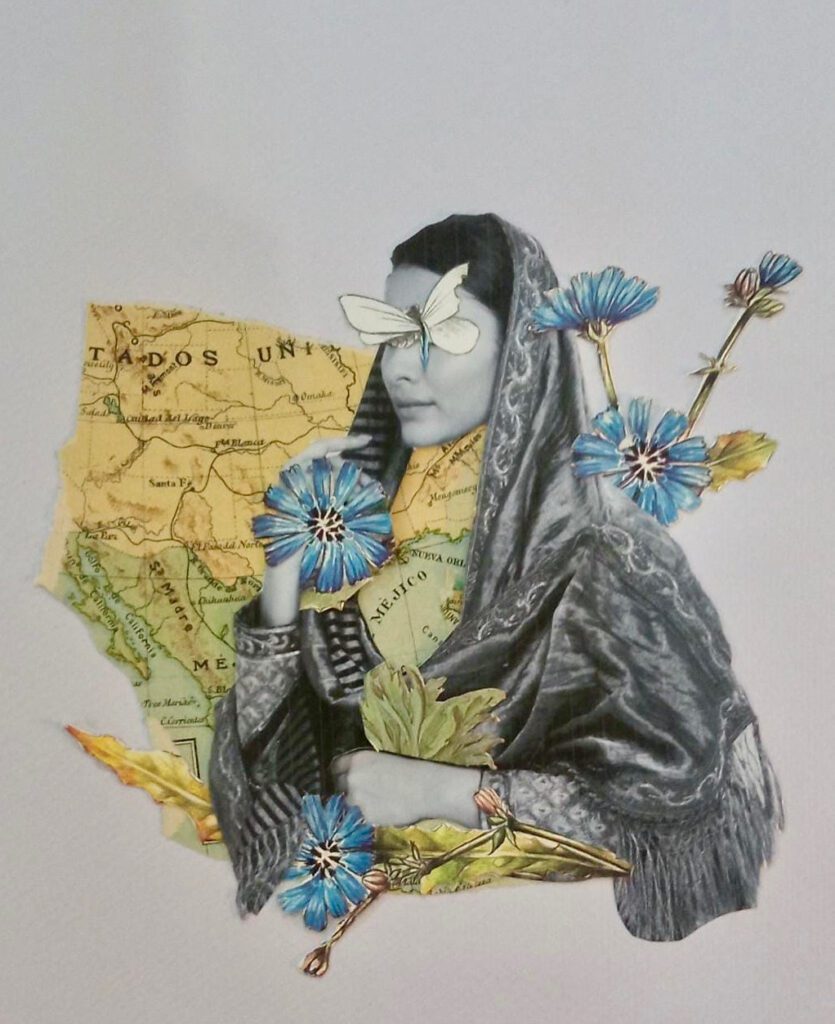
As our conversation drew to a close with Cristina, we kept thinking about that word she uses. Fragments. And how it describes not just her materials but something true about every woman we know.
Because we’re all walking around made of fragments aren’t we. Pieces of our mothers and our sisters and the women we admired and the ones we were warned not to become. Pieces of the roles we play and the ones we refuse. Pieces of the stories we were told about ourselves and the ones we had to rewrite from scratch. None of it fits together neatly. None of it was designed to. And most of the time we spend so much energy trying to make it look seamless that we forget the torn edges are the most honest parts.
Cristina doesn’t forget. She puts the torn edges right there in front of you and says this is what it actually looks like. This is what being a woman actually feels like. Not smooth. Not resolved. Layered and contradictory and held together by something stronger than glue. By stubbornness. By love. By the refusal to let anyone else tell your story with their version of the pieces.
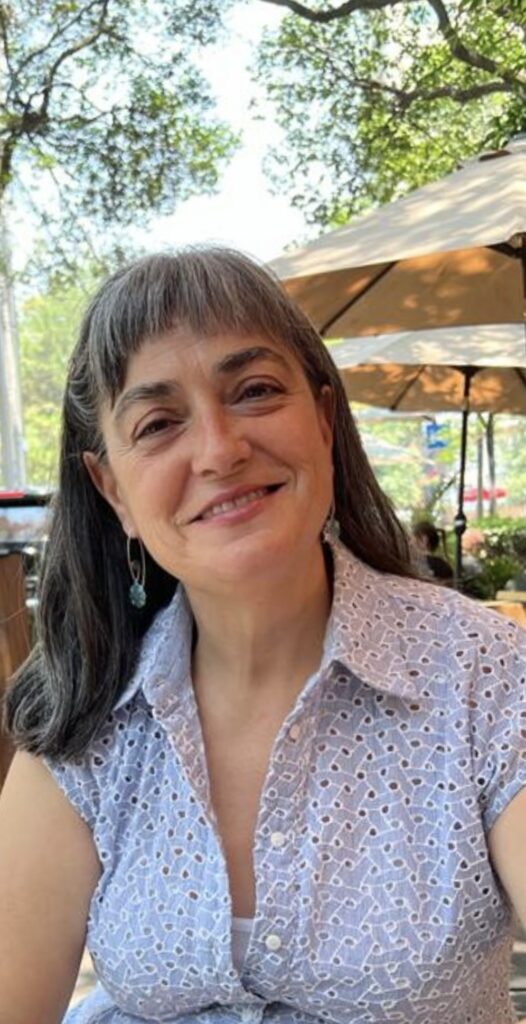
People tell her they see themselves in her work. That the collages feel feminine and feminist at the same time. That a torn image of a stranger somehow reminds them of their own mother or their own loss or their own heart living in two places at once. That’s not coincidence. That’s what happens when someone makes art from a place that’s genuinely personal and genuinely political at the same time without forcing either one to take the lead.
For collectors, here’s what matters about Cristina’s work. It doesn’t age the way decorative art ages. It doesn’t become background. Every fragment in the composition holds its own story and those stories shift depending on when you look and what you’re carrying that day. A piece that felt bold and defiant in March might feel tender and fragile in October.
That’s not inconsistency. That’s depth. The kind of depth you only get from work made by hand, from real materials, by someone who tears paper the way the world tears at women and then puts it back together more beautifully than it was before.
To follow Cristina’s journey and see more of her work, find her through the links below.
